Brookshire’s injury claims and lawsuits in Texas: a BGC litigation guide
How a Texas Brookshire's or BGC injury claim is built: the right defendant, store notice, video, experts, settlement, trial, and appeal.
Written by Aaron A. HerbertTexas Bar #24036761 · Board Certified in Personal Injury Trial Law by the Texas Board of Legal Specialization since 2008. The Law Firm of Aaron A. Herbert, P.C. · Dallas, Texas
Home > Personal Injury Blog > Brookshire’s injury claims and lawsuits in Texas: a BGC litigation guide
Brookshire’s injury claims and lawsuits in Texas: a BGC litigation guide
A claim for an injury at a Brookshire's or another Brookshire Grocery Company (BGC) store works only when the evidence ties a specific hazard to a responsible party and to an injury the law lets you recover for.
What a claim needs
What doesn't supply it
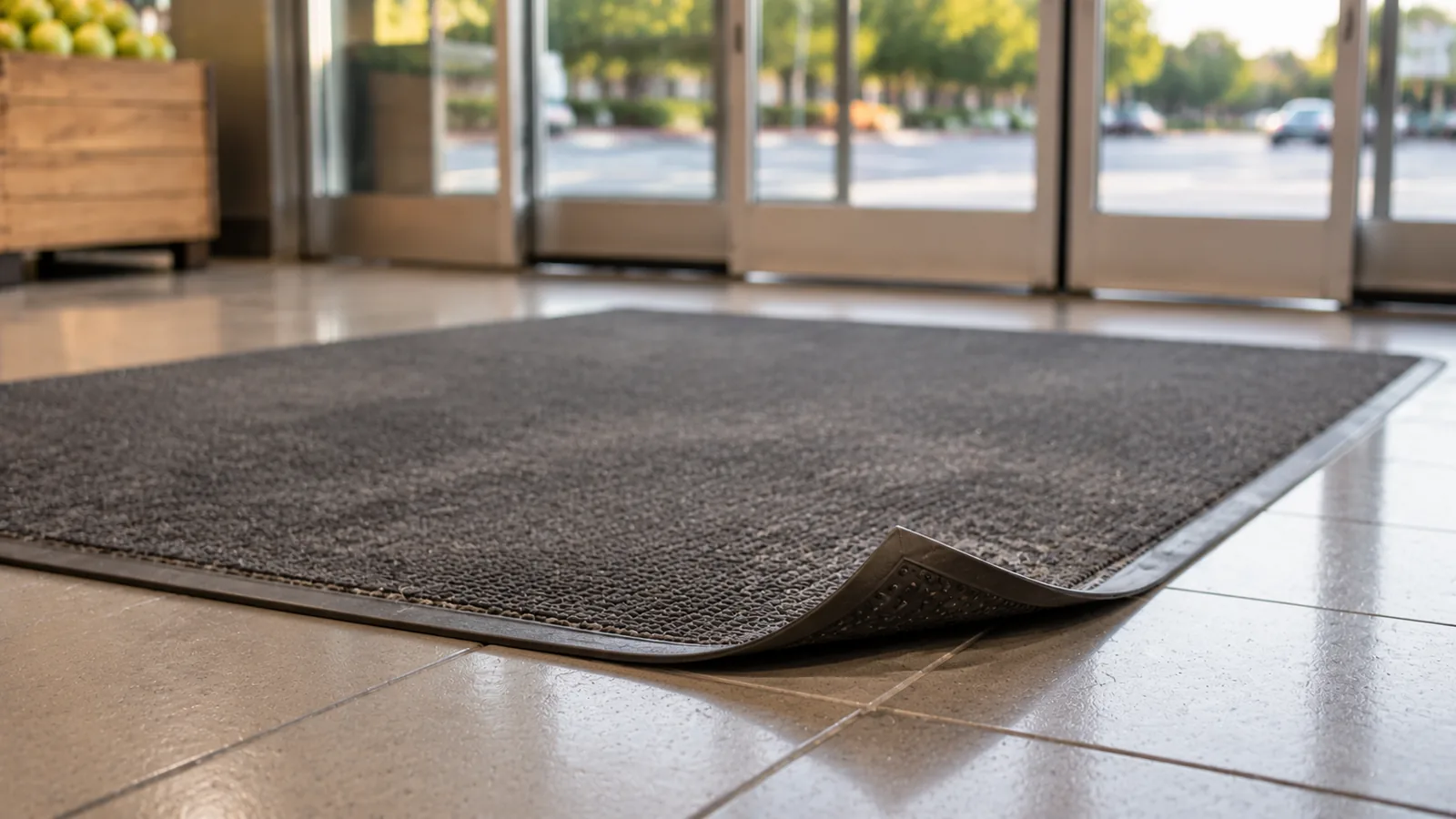
The particular hazard, such as ice in front of a drink dispenser or the ruffled edge of an exit mat
The store's name on the sign.
A business that controlled the spot and knew, or reasonably should have known, about the hazard
How serious the injury is.
Medical proof linking the incident to each loss
The fact that the business carries liability insurance.
Evidence saved early: video, photos, the incident report, and witness names
Anyone's promise that the claim is worth a set amount.
Who this guide is for
Where to start
Injured shoppers and families
Sections 1 to 3 for first steps, then sections 6 and 7 for how store notice is proved.
Texas personal injury attorneys and litigation staff
Sections 4 to 14 for theory, notice, warnings, records, spoliation, and procedure, then sections 15 to 29 for discovery through appeal.
Anyone comparing lawyers
Aaron Herbert is Board Certified in Personal Injury Trial Law by the Texas Board of Legal Specialization. Certification isn't a promise about any result.
About the examples
Hypothetical examples are teaching illustrations, not reported accidents, and the law and any court order must be applied to the particular claim.
About the cases
The public BGC opinions discussed here are other people's cases; none is described as a result for Aaron Herbert or the firm, and this guide doesn't promise representation or a recovery.
Looking for a shorter read
Each stage links a companion article, and the full list of resources is at the end.
Tell us about your Brookshire's injury or call (214) 200-4878. Bring the store address, the date, what happened, photos, witness names, and your medical providers. Contacting the firm doesn't create an attorney-client relationship.
In this guide
Sections
Start the claim
1. Identify the incident, the store, and the business; 2. Medical care and an accurate report come first; 3. Preserve the scene without changing it.
Build the liability theory
4. Choose the claim theory that fits what happened; 5. Define the dangerous condition, not the store operation; 6. What the BGC decisions teach, and what they don't; 7. Build actual notice and constructive notice separately; 8. Tie a recurring source to the particular hazard; 9. Judge warnings from the approach path and the sequence; 10. Mats, pavement, merchandise, and moving equipment.
Protect the evidence and the deadlines
11. Video and electronic records as evidence; 12. Missing evidence and Texas spoliation law; 13. Limitations, service, and protective filing; 14. Venue, jurisdiction, and the pleading.
Discovery, experts, and damages
15. Written discovery; 16. Depositions; 17. Experts; 18. Medical causation; 19. Medical expenses, work loss, and future care; 20. Personal losses; 21. Defenses.
Motions, resolution, trial, and appeal
22. Summary judgment under current procedure; 23. Coverage and public data; 24. Settlement value and net recovery; 25. Mediation; 26. Trial preparation; 27. Jury selection and witnesses; 28. The charge and closing argument; 29. Verdict, judgment, appeal, and collection.
Type at least 2 characters. Use arrow keys to choose a result and Enter to open it.
1. Identify the incident, the store, and the business
Start with the full store address, the date, the exact spot, and the receipt, because the sign on the building doesn't always name the company that's legally responsible.
Detail to keep
Why counsel needs it
Complete store address and any store number
It lets counsel find the actual operator and request the right records.
Incident date and your best estimate of the time
It anchors the deadline, the video request, and the staffing records.
The exact area, such as the aisle end by the soft drink dispenser or the exit mat
It narrows which cameras and employees matter.
The receipt, incident card, letters, emails, and contact details
Keep them; the corporate research is counsel's job, not yours.
Brookshire Grocery Company (BGC) is the Tyler, Texas grocer founded in 1928, and you may remember the banner (Brookshire's, Super 1 Foods, Spring Market, FRESH by Brookshire's, Reasor's, or FRESH by Reasor's) without knowing the legal operator. BGC says it operates more than 200 stores across Texas, Louisiana, Arkansas, and Oklahoma (company careers page, viewed November 2, 2026), but that isn't a Texas-only count or a count on any injury date, and not every banner operates in every state.
Area of the property
Who may have a role (hypothetical)
Records to look for
Store interior
The store operator
Receipts, filings, and employee records.
Shared parking lot or shopping center walkway
A property owner that leases the space and keeps some exterior duties
The lease and maintenance agreements.
Curbside pickup lane
The operator, a landlord, or a driver
Site plans, pickup procedures, and vehicle information.
A freshly scrubbed floor
A cleaning contractor
The contract, schedules, and work records.
A drink dispenser or refrigerated case
An equipment service contractor
Service history and repair tickets.
The public banner is useful information, but it doesn't establish every relationship that matters in a lawsuit, and naming every company tied to a brand is no substitute for a good-faith analysis of duty and conduct. Our guide to finding the correct Brookshire's defendant goes further.
Keep the two Brookshire companies apart
What that means
Brookshire Grocery Company (BGC)
The Tyler company this guide covers.
Brookshire Brothers
A separate company based in Lufkin, Texas; Brookshire Bros., Ltd. v. Aldridge is a well-known Brookshire Brothers evidence-preservation case and shouldn't be described as a BGC result because of the similar name. Brookshire Brothers claims get their own guide: Brookshire Brothers injury hub (proposed).
A case against one retailer
It may establish a Texas legal rule without being a case against the other.
Any public opinion
It isn't an Aaron Herbert success unless independent firm records establish that.
Counsel's dated identification record
Hypothetical entry
Candidate party
The store operator named on the receipt.
Role and source
Ran the store; receipt and assumed-name filing.
Verified fact or lead
A lead until records confirm it.
Unresolved relationship
Whether a landlord kept the parking lot.
Next action
Request the lease and maintenance agreement.
A claims representative's use of a trade name may be convenient shorthand and isn't a concession about every responsible entity.
Why identification protects the calendar
What to do
Limitations, amendment, misidentification, and service problems can have consequences a later name correction won't necessarily cure
Investigate promptly and document diligence.
The first consultation should explain who does this work
Ask what confirmation of representation means.
You sent a website form
Don't treat it as proof that a lawyer has accepted responsibility for a deadline.
2. Medical care and an accurate report come first
Get care that fits your symptoms, and ask for emergency help if you need it, before you worry about photos or the store's paperwork.
Do
Don't
Ask for emergency assistance if it's needed
Delay treatment to take every photo, finish shopping, or get a manager to agree with a legal conclusion.
Let another person gather basic information if it's safe
Choose treatment to raise a settlement demand; the claim should reflect the care you actually needed.
Leave health decisions to qualified medical professionals
Let the claim drive medical choices.
Report the incident to management accurately when you can. Our article on the first 72 hours after a Brookshire's injury covers those first days in detail.
What to tell the manager
Hypothetical wording
The location
By the soft drink dispenser near the front registers.
Your time estimate
Around 5:40 p.m.
Your movement
I was walking toward checkout with a basket.
The condition you personally saw
After I fell, I saw water on the tile.
What to ask for
The manager's name and an incident reference number.
Keep what you saw before the fall separate from what you noticed afterward: if you saw water only after falling, the report should say so and shouldn't quietly become a statement that you watched water collect for half an hour.
Store paperwork
What it is and isn't
The incident report
It documents that someone reported an event; it isn't a binding determination of negligence.
A form you're asked to sign
Depending on its actual words, it may acknowledge an account, authorize release of information, or release rights.
Anything you sign
Get a complete copy.
A form you already signed
Tell counsel promptly and hand it over; the lawyer should analyze its terms and circumstances instead of assuming every form is harmless or that every signature defeats a claim.
What to tell your doctors
Why it matters
How the injury happened, truthfully
Treatment and later causation analysis depend on it.
Prior symptoms, surgeries, and medications
Incomplete history can impair treatment and the causation analysis.
Later events that bear on the condition
A prior problem can coexist with a new injury or aggravation, so hiding it is unnecessary and can do real damage.
The real chronology
The legal team should work with it and with appropriate medical opinions.
For practitioners, intake staff can gather facts without promising liability or value.
Intake record (practitioner)
What to keep separate
Immediate safety needs
Care, transportation, and urgent follow-up.
Preservation tasks
Video, photos, witness names, and physical items.
Potential legal issues
Theory, parties, and deadlines.
Engagement decisions
Whether and when representation is confirmed.
Estimates from a family under stress
Keep the original account, mark what needs confirming, and note the basis for any later correction.
Open questions
Leave them open until evidence resolves them; good intake is a reliable starting point, not a final answer.
3. Preserve the scene without changing it
A good photo set shows the whole area and the hazard as they were, and nobody should rearrange anything to get a better picture.
Photo
What it shows
Watch for
Overall view
The location, the approach route, nearby features, and any warnings
It may not show the substance.
Close-up
The liquid, the ice, or the mat edge
It may leave out a cone or shelf that affects the warning analysis.
Approach route
What you could see walking toward the spot
Changes made after the fall.
The original phone file
Full quality and capture information
A screenshot sent through several apps may lose quality and metadata the original still has.
The photographer
Who took each image
Write the name down for later authentication.
Don't
Why
Rearrange merchandise, move a cone, flatten a mat, or reenact the fall
A later demonstration may have a legitimate use when clearly identified, but it must never be presented as the original scene.
Leave out that conditions changed before the photos
Record it; cleanup after a fall can explain why a later image differs from a witness's account without proving either account false.
Collect hazardous substances or trespass to get evidence
Testing and inspection should follow lawful procedures that protect the item, the chain of custody, and other parties' legitimate interests.
Physical items can matter too, depending on how the injury happened, so ask counsel how to store and handle them safely.
Item
Hypothetical relevance
Shoes
Sole wear or residue from the floor.
Clothing
A stain from the substance.
Packaging or a broken object
What fell or leaked.
A cane, walker, or other mobility aid
Damage, or how it met the hazard.
Witness (hypothetical)
What that person knows
Shopper A
Saw the fall.
Shopper B
Saw the condition earlier.
Shopper C
Heard someone report it to an employee.
All three
Get contact details and a short description in each person's own words, and don't merge them into one witness who seems to know everything.
If you or a witness prefer another language, ask how interpretation and translated documents are handled, because a detailed statement has to be preserved accurately.
Counsel's preservation plan
What it covers
Records
Video, the incident report, inspection logs, and maintenance entries.
Custodians
Who holds each record.
Timing, delivery, and follow-up
When each request went out, how, and when to check again.
What the client should understand
A letter sent is a task completed, not evidence obtained; it improves the chance material is kept but can't guarantee that a recording exists, that it captured the condition, or that the recipient will hand it over voluntarily before suit.
4. Choose the claim theory that fits what happened
Texas law separates a dangerous property condition from conduct happening at the moment of injury, and the substance of what happened, not the label in the petition, decides which one applies.
What happened (hypothetical)
Likely theory
What changes
A shopper slips on liquid left behind
Premises liability
Notice, unreasonable risk, and reasonable care are the issues.
An employee moving equipment strikes a shopper
Negligent activity
The focus is the conduct at the time of injury.
Merchandise bought at the store later causes an injury
Product claim
Manufacturer and nonmanufacturing seller rules may matter.
A pharmacy or professional services allegation
Specialized claim
Particular requirements can apply.
This guide concentrates on customer injuries in stores and on store property, and it doesn't treat every event at a grocery business as an ordinary slip and fall. Classification is an early legal decision that shapes evidence and deadlines, so counsel should ask what caused the injury, when the conduct occurred, and which duty the facts support.
Premises issue
What it needs
What doesn't prove it
The defendant's relationship to the property
Who controlled the area
A clear photo of the defect.
The customer's status
Why the customer was there
The seriousness of the injury.
The dangerous condition
The particular hazard
A general claim that the store was unsafe.
Knowledge
Actual or constructive notice
A compelling medical story.
Reasonable care
The precaution not taken
A helpful admission about inspections, which may not show what caused the fall.
Causation and damages
Proof linking the condition to each loss
The store's name.
Too broad
Testable issue statement (hypothetical)
"The business failed to keep everyone safe."
A reported liquid condition stayed in a customer route without an adequate warning before the incident.
What the testable version does
It aims requests at the report, the person who received it, the timing, the response, the scene, and the injury connection.
A careful theory discussion explains why the lawyer asks detailed questions that may seem repetitive at first; the aim is a legally supportable path, not a dramatic label.
Questions to ask any lawyer
Why the answer helps
What theory fits my facts?
It shows whether the lawyer has looked at the actual occurrence.
What evidence supports it?
A theory without evidence won't survive the motions stage.
What facts could change your evaluation?
A candid answer tells you where the risk is.
What does your credential tell me?
A credential is easier to verify than a ranking, but the strength of each case still has to come from the record.
5. Define the dangerous condition, not the store operation
The condition is the specific thing that caused the fall, such as ice on the floor, and not a nearby fixture that happens to show up in a photo.
Store feature
The condition that may matter
Soft drink dispenser
Ice on the tile in front of it.
Exit mat
A ruffled or curled edge.
Floor scrubber
Excess water left at an aisle end.
Display
Unstable stacking.
Parking lot
Damaged pavement.
A refrigerator, display, or cart in the photo
It isn't automatically the dangerous condition just because it appears in the picture.
What to document (practitioner)
How
Dimensions and location
Mark which numbers were measured and which were estimated.
Appearance and lighting
Describe them as observed.
The walking route
Mark it on a diagram.
A substance the client can't identify
Describe what was seen without assigning an unsupported source.
Other explanations
Clear liquid can have several origins and a shiny patch may be a reflection, so test the alternatives instead of choosing the one that sounds best.
A store knows customers handle drinks and produce, but a particular legal theory still needs its own proof; in the same way, an ordinary fixture doesn't automatically defeat a supported claim about an actual defect or condition.
Slogan
The better question
"Every grocery spill is actionable."
What current controlling authorities require on these facts.
"Every grocery spill is unavoidable."
Whether the evidence supports a claim about this actual condition.
Hypothetical: a fall near a beverage station in a prepared-food area
What to find out
What touched the shoe
The substance, and exactly where it was.
Where the shopper moved
The route, from video or a diagram.
What the recordings show
The sequence before and after the fall.
Whether anyone knew of the actual condition
The notice evidence.
A defective-installation theory
It needs evidence of the defect and its causal link, and relabeling ice as a "dangerous dispenser" without proof doesn't solve a notice problem.
Who gains from precision
How
The client
Learns what information matters and why photos alone have limits.
The practitioner
Gets a workable claim map for experts, discovery, motions, and the charge.
The case
A supported account stays persuasive while admitting some details are unknown; an inflated account that shifts with each defense can undermine useful evidence and distract from the actual injury.
6. What the BGC decisions teach, and what they don't
Three reported BGC decisions are useful guides for an investigation, and none is described here as a result for Aaron Herbert or the firm.
Case
Facts and reasoning
Outcome
Brookshire Grocery Co. v. Taylor, 222 S.W.3d 406 (Tex. 2006)
A shopper slipped on partially melted ice in front of a self-service soft drink dispenser. The dispenser wasn't itself an unreasonably dangerous condition; the ice was, and there was no evidence how long it had been there, so there was no constructive notice.
A shopper tripped on an exit mat at the Bullard store, and the claimed condition was the mat's "ruffled" edge, not the mat. 118 mat-related incident reports from 75 other Brookshire stores over four years didn't show actual knowledge at the Bullard store, and there was no evidence how long the ruffle existed.
No-evidence summary judgment for the store affirmed.
Dimmitt v. Brookshire Grocery Co., No. 11-12-00129-CV (Tex. App.—Eastland June 26, 2014) (mem. op.)
At the Comanche store, a cleaning contractor's scrubber leaked excess water at aisle ends, and the nearest "wet floor" cone was assumed to be at least 20 feet away. The store kept control of the premises and still owed the invitee duty though a contractor created the condition, and a general warning was some evidence, but not conclusive, of an adequate warning of the particular excess-water condition.
Traditional summary judgments reversed and remanded (petition for review denied 2015); not a recovery or a damages award.
The practical lesson is to identify the condition and read the actual evidence and procedural posture.
Don't
Instead
Advertise a take-nothing judgment as a plaintiff victory
Call it a take-nothing judgment.
Report a remand as a paid settlement
Say the case went back to the trial court.
Copy an older opinion's quotation of a former rule subsection as current procedure
Check the rule in force today.
Treat a concurrence or dissent as the holding
Identify the controlling majority, even when a website labels the page loosely; in Taylor, Justice Hecht wrote for the Court, Justice Johnson concurred, and Justice O'Neill dissented, joined by Justice Medina.
Using a case (counsel)
Step
Read it
The complete relevant opinion.
Check it
Subsequent treatment, the court, and the date.
State it
The exact proposition relied on.
Compare it
Facts can differ a lot; an entrance mat case may show why notice matters without deciding an alleged permanent structural defect, and a warning case may rest on a record the client doesn't have yet.
Limit it
Every analogy should explain the similarity and the limit.
Prior-incident material in a litigated record, such as the mat reports in Bowman, shouldn't be turned into a present annual injury count.
Why old incident reports aren't a statistic
What may be different or unknown
Population and locations
Which stores, and how many.
Time period
Years that may not match today.
Reporting practices and selection
How reports were made and how they were chosen.
Proper use
A case-specific evidentiary use, not a reliable current marketing statistic; the same goes for selected verdicts and settlements.
Better questions for the client to ask
Why they beat a same-retailer case search
What is the alleged condition?
It defines the claim.
What evidence establishes knowledge?
Notice decides many grocery cases.
What response or warning is disputed?
It frames the reasonable-care question.
Which losses are supported?
It ties damages to proof.
Does any credential change the record?
No; a lawyer's training helps apply the law, but no credential replaces a supported factual record.
7. Build actual notice and constructive notice separately
Actual notice is proof that the store knew about this condition, constructive notice is proof that it was there long enough to be discovered, and each needs its own evidence.
Actual notice evidence (hypothetical)
What to pin down
A witness saw an employee inspect the spill
The person, role, location, timing, and basis of knowledge.
A shopper reported the spill to management
Who heard the report and when.
An employee created the condition, under facts with legal significance
What the employee did and when.
An employee found the spill after the fall
That doesn't necessarily show knowledge before it; keep the report and response sequence distinct.
Constructive notice factor
What the analysis asks
Duration
How long the condition existed.
Visibility
Whether it could be seen.
Employee proximity
Who was near it, and when.
Surrounding circumstances
What else the applicable law treats as relevant.
A minute count
No universal number of minutes automatically wins every case.
An inspection policy
A policy calling for inspections at a set interval isn't proof that the spill existed for that whole interval.
Our article on proving store notice in a Brookshire's slip and fall covers both routes in more depth, and our Texas slip and fall lawyer page gives the broader picture.
Hypothetical produce-aisle witness
What counsel should ask
"The same substance was there when I came into the aisle earlier."
How she identifies the location and what she saw.
Timing
What anchors it, such as a purchase, a call, or a message.
Same condition
Whether she knows it was the same condition.
"The floor looked dirty at some point."
It may be too vague to support the needed inference, and precision has to come from her actual memory, not suggested answers.
If the evidence shows (hypothetical)
A candid evaluation
Video of a container falling shortly before the injury
It may limit a constructive notice theory even when the injury is serious.
Another record that supports actual notice
Develop that route on its own facts.
Both routes argued together
Don't merge them into "the store must have known"; the written assessment should list the evidence and the uncertainty for each theory.
For the client
What it means
Why the lawyer asks about the time before the fall
The fall may be well documented while the earlier period stays uncertain.
What a sound evaluation can do
Recommend more investigation, narrow the theory, or conclude the evidence is insufficient.
Why early honesty matters
Part of the value of representation is making that call before costs grow or an unsupported demand sets unrealistic expectations.
8. Tie a recurring source to the particular hazard
A known leak or repair history helps only if it connects to the condition the shopper actually encountered.
Record
Possible relevance
Its limit
A reported leak
A source of water
A refrigerator could have a defect that never put water in the customer's path.
Equipment service history
A recurring problem
A repair in another department may have little bearing on the incident.
A recurring cleaning problem
A known pattern
It must connect to the source, location, time, and resulting floor condition.
H-E-B, LP v. Peterson, No. 24-0310 (Tex. Apr. 10, 2026), reinforces the need for time-and-place evidence when constructive notice of a transient condition is contested; it's an authority about proof, not a finding about any BGC store.
What Peterson says
What it means for a Brookshire's claim
Some evidence of how long the condition existed is needed to raise a fact issue on constructive notice at the time and place of injury
Keep the time question in front; general roof history or inspection practices can't stand in for the duration of the puddle that caused the injury.
Rain, a drip from a rafter, and puddle size speak to cause, not duration
A source explains where water came from, not how long it sat.
An internal inspection policy doesn't impose a higher standard of care
The store's own schedule doesn't raise the legal standard it's measured by.
Earlier roof leaks elsewhere in the store didn't fill the gap
The court reinstated summary judgment for the grocer.
Source investigation question
Hypothetical record
When did the equipment run?
The scrubber's run times for that evening.
What maintenance was done?
A service ticket for the ice machine.
Who reported water, and where did a technician see it?
A note naming the aisle end.
Does a camera or witness back up the sequence?
The camera over the dairy case.
What does the work order really record?
Often a complaint rather than a confirmed finding, so get the underlying explanation; a short database label shouldn't become a broader technical conclusion without foundation.
Equipment or installation theory (counsel)
Standard
Define the defect
State exactly what is alleged.
Retain expertise when needed
The expert should test the evidence, acknowledge missing information, and explain the causal bridge.
Failure mode versus failure
A hypothetical way something could fail differs from an opinion that it failed at the relevant time.
Technical terms
Don't use them to conceal a factual gap.
For shoppers
Practical step
Describe what you saw
Don't name a machine as the cause without support.
A photo of water near a case
It can help even when the source is uncertain.
At the consultation
Bring the original file and a truthful account so counsel can judge whether maintenance, witness, or technical evidence can clarify the source and who was responsible for the condition.
9. Judge warnings from the approach path and the sequence
A warning is judged by what the customer could perceive while walking toward the hazard, not by what a ceiling camera or a later photo shows.
Approach factor
What to check (hypothetical)
Route
Whether the shopper came around an endcap display.
Shelf configuration
Whether a shelf blocked the line of sight.
Sign placement
Whether the cone stood on the far side of the spill.
Lighting and crowding
Whether the aisle was dim or busy.
Physical barrier
Whether the area was roped off.
Camera angle
A ceiling camera may show a cone that a person walking around a display couldn't see.
Later photos
One may show a warning employees placed only after the incident, and those differences need evidence, not assumption.
Adequacy depends on how the warning relates to the danger, and a sign's presence or absence doesn't decide the case by itself. Our guide to wet floors and warning signs at Brookshire's goes further.
Warning
What it does
The question it raises
A general cleaning sign
Communicates a general risk
Whether it warned of an unusually wet area at an aisle end.
A cone
Communicates a risk
Whether it was near the actual condition.
A cordon
Prevents access
Whether the shopper crossed it.
Any warning
Shows what the business actually did
What reasonable care required under the circumstances.
Warning chronology entry
Hypothetical source
Condition first observed
A witness statement.
Anyone reported it
Employee testimony.
Warning placed or moved
Video.
Injury
The incident report and video.
Cleanup began
Video and the cleanup record.
Estimates
Label them, and remember a single still image can't establish the whole sequence if the scene changed before it was taken.
Keep the warning chronology separate from the hazard chronology, and give the defense evidence the same careful treatment.
Defense evidence
Fair treatment
Video of the shopper crossing a visible barrier
It may affect duty, responsibility, or causation depending on the law and circumstances, so don't crop it out.
A sign far from the actual condition
Explain its location and the basis for that description instead of calling every remote cone irrelevant.
The full record
The court and jury need the complete supported account.
Questions to ask any lawyer
What a useful answer sounds like
How will you save the approach evidence?
It describes investigation steps, such as video, photos, and a diagram.
How will you handle a warning the store says it posted?
It gives legal analysis, not a blanket assurance that warning signs never matter.
What could limit or defeat my claim?
It explains why the evidence supports the claim while admitting the facts that cut the other way.
10. Mats, pavement, merchandise, and moving equipment
Each mechanism needs its own investigation, because a mat trip, a pavement fall, falling merchandise, and a cart collision turn on different facts.
Mat question
What to check
Curling, bunching, or sliding
Which one is alleged, and whether it caused the trip.
Thickness, placement, or interaction with a doorway or cart
The setup at the time, from video and timely photos.
A mat distorted after the incident
It may have moved during the fall.
A mat lying flat later
It may have been adjusted.
Evidence that helps
Original video, witness observations, service records, and timely photographs.
Exterior area
What to gather
Caution
Pavement, curbs, drains, and walking routes
The precise location, measurements where appropriate, leases, site plans, maintenance agreements, complaints, and actual practices
Ordinary outdoor conditions can raise different duty questions from indoor spills.
Appraisal records
The property interest
They don't resolve the duty owed for a particular defect.
Falling merchandise needs evidence about the item, the shelf, the stacking, any restraint, prior handling, and the events at impact.
Merchandise scenario (hypothetical)
What follows
An employee is actively moving goods
That's a different factual sequence from merchandise left sitting on a shelf.
A case of bottled water falls from a top shelf
Preserve the packaging or product identifiers when relevant and lawful.
The shopper touched the product first
That alone doesn't resolve responsibility, and not every falling item supports the same theory.
Moving equipment
Actor and movement analysis
Carts, pallet equipment, delivery activity, and curbside vehicles
Who operated it, employment or contractor relationships, visibility, travel path, warnings, and contact.
A claim involving a driver
It may need vehicle and insurance investigation beyond a premises case.
Ownership of the parking lot
It doesn't make a business liable for every collision there.
One generic accident form
A focused plan
Collects common facts and stops
Collects common facts, then branches to the mechanism that matters.
Treats every grocery injury alike
Asks for a mat service record in one case and equipment operation evidence in another.
Leaves the client guessing
Explains why each record is requested, which is a sounder basis for choosing counsel than a website that treats every grocery injury as interchangeable.
11. Video and electronic records as evidence
Ask for video by store, area, and time window, including the period before the fall and the response after it, and keep the files as evidence rather than as presentation clips.
A preservation request includes
Hypothetical detail
The store and the event
The store address and the incident report number.
The best-supported time range
5:15 to 6:15 p.m., estimated from the receipt.
The exact area
The aisle end by the dairy case.
Known identifying details
A red jacket and a blue shopping cart.
Any uncertainty
A note that the time is an estimate.
Context
The pre-incident period and the response, not only the instant of the fall.
Proof of the request
Keep the request and the delivery evidence, and plan follow-up.
This guide doesn't assume any universal BGC video retention period. Our article on preserving Brookshire's surveillance video covers requests in detail.
When files arrive
What to record
What was received
Keep it as delivered and work from copies.
Source and date
Who sent it and when.
File names and format
As delivered, with any player instructions.
Later changes
Every transformation.
A phone recording of a monitor
It may lack quality or timing details an original export has, so distinguish it from the source recording and decide what more to request.
Timestamp anchor
What it shows
Its limit
Other cameras
Relative sequence
Their clocks may differ.
A transaction or receipt
A fixed time
It may reflect a purchase before or after the event.
An emergency call or contemporaneous message
An independent anchor
It shows when the call or message happened.
An incident form
A time entry
It may be an estimate entered later.
Adjusted labels
A common timeline
Don't change every label to one time without explaining the method; relative sequence can be reliable even when absolute clock accuracy is uncertain.
Electronic record
What to identify
What it does and doesn't show
An inspection or maintenance system
The system, relevant fields, user identity, creation time, and modification data where material
What an entry actually means.
A scheduled inspection
The schedule
It's different from a completed observation.
A login
Device activity
It doesn't prove anyone inspected the accident aisle, and the production should support a fair understanding of those distinctions.
For the client
Why
Keep original photos and relevant messages, not just a collage or social media version
Originals carry the full detail.
Keep unfavorable material along with helpful evidence
Another party may discover it later.
Don't delete content that seems embarrassing or inconsistent
Discuss preservation and privacy with counsel; the team's job is to address discrepancies, not build a case by removing facts.
12. Missing evidence and Texas spoliation law
A missing recording can matter, but its absence alone doesn't prove destruction, intent, prejudice, or liability.
First questions about missing video
Why they matter
Did the camera operate, and what did it cover?
A camera seen at a site inspection isn't proof that it recorded the earlier incident.
Was it recording, and how did retention work?
The answers show what should have existed.
What existed when a duty to preserve may have arisen?
Timing frames the spoliation question.
Is the production short?
A short production isn't proof that all other footage was unlawfully erased.
Brookshire Bros., Ltd. v. Aldridge, 438 S.W.3d 9 (Tex. 2014), involves Brookshire Brothers, a different company, and should be used accurately for its evidence principles.
What Aldridge holds
What it means here
The trial court decides whether spoliation occurred and the remedy under the governing law
Counsel develops facts about the duty to preserve, breach, culpability where relevant, and prejudice.
An instruction is reserved for intentional spoliation, or negligent loss that irreparably deprived the party of any meaningful ability to present its case
A favorable instruction isn't automatic whenever requested evidence can't be produced.
The facts involved grease from a rotisserie-chicken container near a display, and the store kept about eight minutes of video while the rest was recorded over
It's a Brookshire Brothers case, not a BGC or Brookshire's case, and not a case of this firm.
Focused spoliation inquiry
What to request
Custodian
Who manages the video system.
System configuration
The cameras, storage, and overwrite settings.
Ordinary overwrite process
How long footage lasts before it's recorded over.
Export selection
Who chose what to save, and why.
Litigation hold steps and preservation communications
What was done after the request arrived.
Scope
Technical detail proportional to the dispute.
Alternatives
A witness's phone, another camera, or a contemporaneous record may narrow the gap without answering every original question.
The client's own conduct matters too, and a lawyer should explain early, in language the client understands, that relevant messages, photos, existing posts, documents, and physical items must be kept as advised.
Client preservation
Why
Keep what's relevant
It's inconsistent to demand careful preservation from the business while the client deletes a relevant recording.
Follow an organized process
It protects the evidence and the credibility of the claim.
If a gap can't be closed
Candid options
Enough other evidence
The case may still go forward.
A different theory
Another route may fit the record.
A serious proof problem
Don't replace missing notice evidence with an unsupported allegation of destruction.
The decision to proceed
It should reflect the actual record, the available legal remedy, the costs, and the client's informed understanding of risk.
13. Limitations, service, and protective filing
Texas personal injury claims generally fall under the two-year period in Civil Practice and Remedies Code Section 16.003, subject to accrual rules and exceptions that need individual analysis.
Limitations point
What counsel checks
The incident date
It's an essential intake fact, but it doesn't answer every limitations question.
Claims and parties
The correct ones for this occurrence.
Disabilities and statutory provisions
Whether any of them change the analysis.
Service requirements
Filing alone can leave service and diligence issues that need attention.
A calendar entry
Rely on it only after the analysis above.
Don't assume it extends the deadline
Why
An incident report or insurance claim
Reporting isn't filing.
Negotiation
Talks don't stop the clock.
A request for medical records
Gathering records isn't filing.
A business that keeps discussing the claim
It doesn't necessarily waive a defense.
An investigation still open near the deadline
Counsel should evaluate protective action instead of waiting indefinitely for a voluntary production.
For prospective clients, confirm the engagement in writing and ask who is responsible for the calendar.
Tell counsel about
Why
Every earlier lawyer
It may affect the evaluation.
Any claim, lawsuit, release, or related proceeding
These facts shouldn't come out late.
Questions to ask any lawyer
Ask who reviews procedure and deadlines at the start and who confirms representation in writing; a careful early review of procedure is worth more than informal claims discussions alone.
14. Venue, jurisdiction, and the pleading
Venue and jurisdiction need a factual and legal basis, and the pleading should name only the theories and parties the facts support.
These are different facts
Hypothetical example
The client's residence
A home in Smith County.
The firm's office
Dallas.
The retailer's headquarters
Tyler, Texas, for BGC.
The accident location
A store in another county.
What not to promise
That every Texas BGC case can be tried in the same county.
If removal or another jurisdiction question arises
What to evaluate
Citizenship
From reliable information, not a brand assumption.
Claims and amounts
What's actually pleaded and at stake.
Procedure
The rules that apply.
Plead the supported theories and parties with enough factual grounding, and preserve alternative theories when that's legally appropriate.
Pleading caution
Why
Asserting inconsistent facts just to get past a difficult element
It isn't a legitimate use of alternative pleading.
Review the duty and the actual occurrence
They decide which theory fits.
A negligent activity label on a condition claim
It won't necessarily save a claim whose substance is a premises condition after the activity ended.
What comes next
Discovery and summary judgment test these choices, as our summary judgment guide for Brookshire's claims explains.
15. Written discovery, built around the facts in dispute
Start written discovery with a list of the disputed propositions and the record that could prove or test each one, then write requests that follow that list.
Disputed proposition
Where the proof may sit (hypothetical)
Notice
The employee report, the video interval from the camera over the dairy case, an inspection entry, or an earlier witness observation.
Control
A lease, an operating agreement, or testimony about who ran the cleaning crew.
Causation
Medical records and factual evidence about how the fall happened.
Response
The incident report, cleanup notes, and the time the cone went out.
A request should follow the proposition instead of asking for every record that carries a safety label. Our guide to written discovery in a Brookshire's injury lawsuit walks through each tool in more detail.
Discovery tool
What it is used for
Interrogatories
Identify people, positions, and who held a role on the incident date.
Requests for production
Obtain records and electronic material, such as logs, reports, and video exports.
Requests for admission
Narrow supported facts and settle authenticity questions.
Required disclosures and other procedures
Follow the operative rules and the court's order.
A recycled form set
Can carry outdated assumptions or ask for information in an unsuitable way, so counsel checks the current provisions before service and before calculating deadlines.
Scope should fit the alleged condition and the purpose of the request.
Scope question
Hypothetical example
Mechanism
A recurring leak from a produce mister may justify a longer history period than a single dropped jar of pickles.
Similar incidents
Discovery needs a reasoned relevance and proportionality analysis that defines the location, mechanism, period, and intended use.
Other stores
A report at another store in a regional chain isn't automatic knowledge of the condition at this store.
Review each production for meaning, completeness, and foundation, then follow up with focused questions.
What came back
What to check
A service ticket
Whether it records dispatch shorthand rather than what the technician found.
An inspection export
Whether it leaves out fields that matter, such as the initials of the employee who walked the aisle.
An incident report
Whether it refers to a different entrance or department.
Objections that remain
Confer as required, then seek relief that explains the precise deficiency, the proposed scope, and why the missing information affects an issue the court may have to decide.
Clients should hear about results, not just activity.
Report to the client
Why
What was obtained and what it establishes
A request that was served doesn't prove the requested fact.
What remains disputed and what decision follows
A completed administrative task shouldn't create false confidence about trial proof.
A file that keeps those apart
It keeps the record honest about what has been proved so far.
16. Depositions, taken with a defined purpose
Each deposition needs an outline tied to the witness's role and the disputed issues, because different witnesses know different parts of the story.
Witness
What they may know
What they may not know
Store manager
The response after the fall.
The condition of the floor before it.
Floor employee
The route, a reported spill, and who walked the aisle.
Company-wide policies or retention practice.
Contractor
The equipment and the work being done.
Store staffing or what the shopper saw.
Organizational representative
Information on properly described topics.
Personal memory of the incident.
Don't ask every witness the same generic questions and hope the transcript reveals a complete theory later. The deeper guide on manager, employee, and corporate depositions covers outlines by role.
Hypothetical answer to pin down
Basis of knowledge it shows
"I walked aisle 7 at about 2:15 p.m."
What the witness personally saw.
"The cashier told me someone fell."
What the witness learned from others.
"I looked at the sweep log before today."
What records the witness reviewed.
"I'm not sure whether the cone was already out."
What remains uncertain.
What "the aisle was checked" actually means
A personal inspection, an inference from a log, or a description of usual practice, which counsel separates before using the answer in a motion or demand.
Exhibits make the questions precise.
Exhibit
What to establish
Photograph
That it shows the relevant area, and any changes since the incident.
Policy
The version and whether it applied to this store and date.
Log entry
Who created it and what each code means.
Video
The view, the time basis, and the limits; an overhead angle may not show what a shopper could see, and an unclear reflection shouldn't become an admission that a puddle was visible.
The injured client should be prepared to testify accurately, not to memorize favorable language.
Client preparation step
Why it matters
Review the process, the relevant records, and prior history
Surprises at deposition cost credibility.
Separate memory from estimate
"About ten minutes" is an estimate, and the client should say so.
Arrange competent interpretation where needed
The witness has to understand each question.
Ask for clarification instead of guessing
A truthful limit in memory is better than certainty the record later contradicts.
After the deposition, update the proof map.
Post-deposition task
What it captures
Facts established and contradictions
What the testimony now supports or undercuts.
New custodians, missing documents, and expert questions
The next requests and retentions.
Surrounding testimony
A witness may qualify an answer or distinguish two locations, and the summary should keep those limits.
The goal
A defensible case assessment and a clearer next decision, not the biggest pile of isolated concessions.
17. Experts, retained to answer supported questions
Identify the question before choosing the expert, because different issues call for different qualifications.
Question in the case
Possible expert field
How slippery the surface was
Floor safety or tribology.
Whether a refrigerated case leaked
Refrigeration or equipment.
How the body moved in the fall
Biomechanics.
Whether the fall caused the injury
Medical causation.
What care and work limits lie ahead
Future care, vocational, and economic experts.
Not every disputed issue needs an expert. A witness's report of a spill may be a factual matter, while testing a surface or explaining a medical mechanism can require specialized knowledge. See expert witnesses in a Brookshire's injury case.
An expert's scope should identify
Why
The record, methods, assumptions, inspection needs, limits, and deadlines
So the work fits the actual gap.
Unfavorable material as well as favorable evidence
An expert who gets selected clips or a partial medical history may form an opinion that can't survive review.
New information as it arrives
Counsel addresses any material effect through proper supplementation and procedure.
Site testing needs coordination and a foundation.
Testing variable
What to record
Floor and cleaning condition
Whether they match the day of the fall.
Lighting, contaminant, equipment, and layout
Whether the surrounding configuration has changed.
What the test can claim
A later inspection can answer useful questions without reproducing the original condition, and it shouldn't be called an exact recreation unless that claim can be defended.
Destructive testing
Preservation safeguards and attention to the other parties' rights.
Under Tex. R. Evid. 702, E.I. du Pont de Nemours & Co. v. Robinson, and Gammill v. Jack Williams Chevrolet, Inc., reliability depends on reasoning, data, methodology, and fit, not credentials alone.
Expert claim (hypothetical)
The question to ask
"The slip meter read 0.38."
How the number relates to the claimed mechanism, which variables matter, and what uncertainty remains.
"The case could have leaked."
A technically possible leak doesn't prove water reached the walking route before the fall.
A long report with many opinions
Whether it hides a missing factual bridge.
Clients should ask practical questions about expert work.
Client question
Why it matters
Why is this expert needed?
The work should be proportionate to the case.
What work is proposed, and what will it cost?
Expert expense comes out of the net recovery.
Should the opinion wait for more facts?
Deferring an opinion until essential facts arrive can be sound judgment, and more experts with longer reports don't always mean more reliable proof.
18. Medical causation, proved through the full chronology
The medical inquiry starts before the store incident, with the person's prior symptoms, diagnoses, imaging, surgery, treatment, work capacity, and daily function.
Before the fall
After the fall
Prior symptoms and diagnoses
The event mechanism and when symptoms began.
Earlier imaging, surgery, and treatment
Examination findings and the treatment that followed.
Work capacity and daily function
Progress, setbacks, and later events.
A prior condition isn't automatically disqualifying, but the claim has to explain what the incident caused or aggravated, with the evidence the law requires. The guide to medical proof and damages after a Brookshire's injury goes further.
Chronology rule
What it means in practice
Name the source of each history
Note whether the account came from the patient, a family member, or an earlier chart.
Separate symptom onset from first documentation
Pain that began on day one may first appear in a record on day four.
Correct real errors the proper way
Use the provider's correction process, keep the original, and don't seek a litigation-friendly rewrite.
Read the whole record
An incomplete emergency note isn't the entire medical account, and a complicating entry can't be ignored.
A diagnostic image can show an abnormality without answering when it arose or what caused it.
What a scan can show
What it may not answer
A disc bulge or a tear
Whether it existed before the fall.
A fracture line
The mechanism, without symptoms, exam findings, prior records, and qualified medical opinion.
Many findings at once
Whether each one resulted from the fall just because the scan came afterward.
Treatment gaps and later events should be investigated honestly.
A gap in care may reflect
What to do
Transportation, cost, or improvement
Get the actual explanation and supporting records where available.
Another medical issue or a different reason
Don't presume the gap proves recovery.
Continuing symptoms
Don't presume they make the store incident the sole cause; the evidence has to separate plausible explanations from supported conclusions.
Complete disclosure helps the client.
When counsel learns about a prior surgery
Likely effect
Early in the case
Counsel can get the records and seek appropriate opinions.
For the first time on cross-examination
Avoidable credibility and preparation problems; a strong claim rests on the person's actual history, including recovery and uncertainty.
19. Medical expenses, work loss, and future care, proved separately
Medical necessity, causation, reasonable charge, payment, adjustment, and legal obligation are related questions, but each needs its own proof.
Organize each medical charge by
Hypothetical entry
Service and date
MRI of the lumbar spine on March 4.
Provider
An imaging center.
Amount billed
$2,400.
Payments and adjustments
$910 paid by a health plan, $1,490 adjusted.
Remaining obligation
$0 owed by the patient.
The witness who can explain why treatment was needed may not be the witness who can explain a billing ledger, so the damages presentation identifies the foundation for each point.
Section 41.0105 point
What it means
The rule
Tex. Civ. Prac. & Rem. Code §41.0105 limits recovery of medical expenses to amounts actually paid or incurred by or for the claimant (Haygood v. De Escabedo).
Applying it
It requires the account facts and governing law; the original charge isn't automatically the recoverable amount.
What it doesn't do
A billing procedure doesn't itself prove causation.
Counsel's task
Reconcile the ledger with benefit statements, agreements, and later account changes.
Work loss needs evidence of duties, restrictions, time, earnings, and the causal link to the injury.
Work-loss item
Proof to preserve
Missed time
Payroll, attendance, and leave records.
Restrictions
Accommodation communications and the medical records behind them.
A business owner's loss
Gross revenue isn't necessarily personal earnings, so separate missed income, replacement labor, business expenses, and other changes.
Earning capacity
Its own supported analysis that doesn't duplicate another loss.
Future care should identify the supported service, its probability, timing, frequency, duration, and cost.
Future-care claim (hypothetical)
What it needs
A possible future surgery
A supported opinion that the procedure is reasonably probable, not just possible.
A life care plan
Medical recommendations and reliable assumptions.
Equipment, assistance, therapy, and medication
Support for this person, not inclusion because they're conceivable for someone with a similar diagnosis.
Clients should ask for a damages explanation that separates documented amounts from projections.
Ask your lawyer to show
Why
Documented amounts, projections, and open questions
A large spreadsheet can create false precision if the assumptions are unsupported.
How a narrower model compares
A smaller model built on reliable evidence may persuade more.
How changes affect the assessment
Later treatment, improved function, new restrictions, or new opinions should update the analysis rather than repeat an early demand figure.
20. Personal losses, presented without exaggeration or duplication
Pain, impairment, disfigurement, mental anguish, and other legally available losses have to fit the evidence and the governing submission.
What to describe
Hypothetical example
What changed
She can't stand through a six-hour cashier shift anymore.
How often
Sleep is interrupted three or four nights a week.
How long
Lifting her toddler was painful for about five months.
What supports it
Therapy notes, a work schedule, and a spouse's observations.
A diagnosis doesn't automatically establish every category. Concrete examples help a reader or juror understand the injury without replacing proof with an emotional label.
Accurate statement
Statement that overreaches
"I still can't bathe without help on bad days, but I'm back to cooking."
Saying she can never do anything.
"Lifting my child hurts, so my mother helps in the mornings."
Saying she can't care for her family at all.
Including improvements and what's still possible
Absolute claims that ordinary records of partial recovery undermine; accuracy shows the real extent of a serious injury.
Family members and coworkers should testify from what they personally saw.
Witness or exhibit
Proper use
Spouse or coworker
Describe the help they gave or a change in activity, without unsupported medical opinions.
Photographs, calendars, and messages from the time
Corroborate an account when authentic and relevant.
A staged demonstration
Shouldn't be passed off as spontaneous daily-life evidence; counsel separates a presentation aid from an original record.
Keep the categories distinct.
Category rule
What it prevents
Don't count one limitation under several names without a legal basis
Duplicate recovery.
Give physical impairment its own analysis
Simply restating pain.
Support future losses for probability and duration
Speculation.
Follow the proposed charge and controlling cases
Testimony from a fact or expert witness outside a proper foundation.
A client can ask any lawyer how the firm will tell the personal story while dealing with the complete medical and activity record.
Question for the lawyer
A sound answer
How will you present my losses?
With a credible account of a real loss built from supported detail.
Will a certain phrase or multiplier produce a large verdict?
No one can promise that, and supported detail makes negotiation and trial advice more useful.
21. Defenses, analyzed while evidence can still be developed
Identify the strongest supported defense early, so the evidence needed to answer it can still be preserved and developed.
Common defense
What it disputes
No knowledge
Actual or constructive notice of the condition.
No unreasonable risk
Whether the condition was dangerous at all.
Adequate warning, or an open and obvious condition
Whether the store's duty was met or limited.
Claimant conduct
The shopper's share of responsibility.
Causation and damages
Whether the fall caused the injury and what losses follow.
Another party
A contractor, landlord, other customer, driver, or later medical event.
Don't assume every defense is just a negotiating tactic. Duty and comparative responsibility are separate questions and shouldn't be collapsed.
Fact (hypothetical)
Duty question
Responsibility question
A known or open and obvious danger
It can raise a duty issue under controlling law and recognized exceptions.
It may also bear on the claimant's percentage.
Looking at merchandise on a top shelf
It usually doesn't change the duty.
It may be argued as inattention.
Using a phone, choosing a route, or passing a warning
It depends on the record.
Each may carry different weight on the facts.
Chapter 33 of the Civil Practice and Remedies Code generally bars recovery when the claimant is more than 50 percent responsible, and otherwise reduces damages by the claimant's percentage (§§33.001, 33.012).
Simple Chapter 33 illustration (hypothetical)
Amount
Supported damages
$100,000.
Claimant's responsibility
20 percent.
Reduction
$20,000.
Damages after reduction, before other applicable issues and deductions
$80,000.
What the arithmetic is not
A prediction of any finding or a settlement value; the statute and the judgment rules control.
A defense may point to someone else, and the evidence should be investigated rather than adding or dismissing a party by reflex. The guide to identifying the correct Brookshire's defendant covers control questions.
Who the defense points to
The legal point
A cleaning contractor
The contractor's role doesn't automatically end a premises possessor's duty; in Dimmitt v. Brookshire Grocery Co., the store kept control and still owed the invitee duty though a contractor's scrubber left the water.
The store's public name
A brand name doesn't automatically make the store responsible for a contractor's conduct.
A landlord, another customer, or a driver
The specific legal basis for each role matters.
Clients should get a candid defense assessment before a major expense, demand, or settlement decision.
What the assessment should cover
Why
How a fact affects an element
A serious defense doesn't always mean abandoning the case, but it may change the reasonable choices.
What further work could resolve it
Confidence the record doesn't support doesn't protect the client.
22. Summary judgment, prepared under current procedure
A case can end before trial if the defendant establishes a dispositive ground or the plaintiff lacks enough evidence on a challenged element, so the response is built during discovery.
For each important issue, have ready
Hypothetical example
The legal requirement
Constructive notice of the spill.
The supporting exhibit and precise record cite
Video still at 3:42 p.m., deposition page 48.
The admissibility foundation
A custodian declaration for the video export.
The opposing evidence
The sweep log entry at 3:30 p.m.
A sympathetic account can't substitute for a competent response to the actual motion. Texas Rule of Civil Procedure 166a was rewritten effective March 1, 2026 (Supreme Court Misc. Docket No. 26-9012); the rewrite applies only to motions filed on or after that date, and except for its deadlines it isn't meant to change the law.
Motion under current Rule 166a
Movant's burden
Respondent's task
Traditional (Rule 166a(a)(1), (b)(2)(C), (h)(2))
State specific grounds and produce its evidence
Show the proof falls short or raise a genuine issue of material fact.
No-evidence (Rule 166a(a)(2), (b)(2)(D), (h)(3))
File after adequate time for discovery and state the elements challenged
Produce evidence raising a genuine issue of material fact on each challenged element, or the court must grant the motion.
Either kind
Carry the title the rule requires
Check the title and answer each ground in a combined motion.
Older subsection labels and deadline charts don't describe the current rule, so counsel works from the operative text, the court's order, the setting, service, and the record.
Deadline under current Rule 166a
Timing
Response (Rule 166a(d)(1))
Within 21 days after the motion is filed, unless the court grants leave or the parties agree.
Evidence not yet available (Rule 166a(d)(3))
File an affidavit or declaration explaining why more time is needed.
Reply (Rule 166a(e))
Within 7 days after the response, with no new grounds.
Hearing or submission (Rule 166a(g)(1))
Not within 35 days after filing; generally set within 60 days (up to 90 days in listed situations).
Ruling (Rule 166a(i))
A written ruling signed within 90 days after the hearing or submission.
Evidence and affidavit form (Rule 166a(j))
A defect in the form of an affidavit isn't grounds for reversal unless specifically pointed out by objection with an opportunity, but refusal, to amend (Rule 166a(j)(4)).
Local practice
Check local rules, standing orders, and the scheduling order, since Dallas and other counties issued their own orders.
The response should make the court's task clearer, not bury an essential point in hundreds of unexplained pages. More detail is in responding to summary judgment in a Brookshire's injury case.
If the motion challenges
Respond with
Knowledge
The specific proof and inference, with H-E-B, LP v. Peterson in mind: some evidence of how long the condition existed.
Control
The relevant relationship and the evidence of it.
Causation
Medical and factual proof, not only photographs of the spill.
If needed discovery is still outstanding, evaluate relief promptly and support it with diligence and relevance.
Outstanding-discovery step
What it requires
Identify the material sought
And how it could affect the motion.
Don't assume a pending request postpones the ruling
Preserve existing deadlines while seeking relief and get the required rulings.
Review objections before filing
Affidavits, declarations, authentication, hearsay, expert reliability, and other material objections.
After the ruling, get the actual signed order and analyze its scope and finality.
Ruling
What it means
A denial
It isn't a plaintiff's verdict.
A grant
It may dispose of one category, one party, or the whole case.
Next steps
Explain what remains, protect any post-judgment or appellate procedure, and tell the client the practical consequence, not just that the hearing went well or badly.
23. Coverage and public data, investigated without guessing
Liability coverage is a contract question, separate from negligence and damages, and it's answered through proper procedures rather than assumptions.
Coverage item to identify
Why
The insured and the incident date
Policies are tied to named insureds and policy periods.
Potentially responsive policies and endorsements
More than one policy may apply.
Limits, retentions, and exclusions
They shape what's available and who pays first.
A declarations page or certificate
It may help without answering every question.
A policy from another location or year
It shouldn't be treated as the coverage for every BGC customer injury.
The sources reviewed for this guide don't establish a universal BGC general liability limit, a representative Texas settlement average, or a complete annual customer injury count. Those gaps are stated plainly, and unknown isn't zero: they don't show an absence of coverage, claims, or injuries. See choosing a Brookshire's injury attorney and reading public claim data.
Public figure
How to read it
BGC says it operates more than 200 stores across Texas, Louisiana, Arkansas, and Oklahoma (company careers page, viewed November 2, 2026)
A regional count across four states, not a Texas-only count, not a count on any injury date, and not every banner operates in every state.
Store count times an assumed injury rate
Not a valid estimate; don't do it.
Selected lawsuits and publicized results
Not a substitute for a defined, representative dataset.
A defensible study would define its terms before drawing conclusions.
A real study would define
Why
Businesses, locations, and incident types
So like is compared with like.
Time period, case aliases, and duplicate records
A suit filed this year may concern an earlier injury, and an appeal may concern the same event rather than a new case.
Outcomes and missing data
So gaps aren't read as results.
A client doesn't need a chain-wide average to get advice.
What matters in your evaluation
What doesn't settle it
This defendant, condition, evidence, injury, losses, costs, and collectability
A high policy limit, which is no automatic entitlement.
What is known and which documents are needed
A low reported amount in an unrelated case, which doesn't cap your loss.
Practitioners should keep public research, actual coverage evidence, and value judgments apart in the file.
Source log field
Example entry (hypothetical)
Document and date
Declarations page produced in discovery, dated policy period 2025-2026.
Proposition supported
Named insured and per-occurrence limit for this store.
Limitation
Doesn't address excess coverage; keeps an old insurer reference or an online estimate from becoming the basis for a demand or marketing statement.
24. Settlement value and net recovery, evaluated through evidence and risk
A useful settlement assessment weighs the actual proof and risks; a medical-bill multiplier isn't a reliable substitute.
Settlement factor
What it covers
Liability support and defenses
Notice, condition, warning, and claimant conduct.
Medical causation
What the fall caused or aggravated.
Recoverable expenses and work loss
Paid or incurred amounts and supported earnings.
Personal losses and future needs
Pain, impairment, and supported future care.
Coverage or assets
What can actually be collected.
Remaining costs and the client's objectives
What continuing costs and what the client wants.
An early range should state its assumptions and be revised when the evidence or prognosis changes. The guide to settlement value and mediation in a Brookshire's case goes further.
Net-recovery worksheet line
What to confirm
Gross offer
The amount and the terms attached to it.
Attorney fee
The calculation under the written fee agreement; not every case uses identical terms.
Case expenses
Itemized costs advanced.
Liens and reimbursement claims
Confirmed amounts; a hoped-for reduction isn't final until confirmed.
Other obligations and the remaining estimate
Which figures are confirmed and which are still open.
Here's a purely arithmetic example with assumed numbers.
Hypothetical net-recovery example
Amount
Settlement
$90,000.
Assumed fee under a hypothetical written fee agreement
$30,000.
Expenses
$6,000.
Final obligations
$14,000.
Client payment
$40,000.
What this example is not
Not a BGC settlement prediction, not a quoted fee from this firm, and not a statement that every listed obligation is enforceable; actual contracts and records must be reviewed.
Read the release as carefully as the offer amount.
Release term
Why it matters
Released parties and covered claims
A release may reach parties or claims you didn't expect.
Payment timing, confidentiality, and indemnity
Two offers with the same gross figure can differ a lot in terms and risk.
Lien allocation, dismissal, and special procedures
The client should understand the agreement before signing, not rely on an assurance that the paperwork can be sorted out later.
The client makes the settlement decision after informed advice.
Counsel provides
What it doesn't mean
A recommendation, alternatives, and the material uncertainties
Pressure that replaces client authority.
A frank view of rejecting an offer
Rejecting doesn't guarantee a larger one.
A frank view of accepting
Accepting can be reasonable even when the injury is serious; the decision depends on the record and the person's informed priorities.
25. Mediation, prepared as a decision process
Mediation can help the parties weigh the cost and uncertainty of continued litigation, but the mediator doesn't supply missing proof or guarantee agreement.
Mediation submission part
What it should contain
Chronology
A concise timeline of the incident, treatment, and case.
Principal evidence
The strongest exhibits, accurately described.
Damages
A supported account.
Opposing points
An explanation of the strongest defense arguments.
Format
A focused submission, which often says more than an unindexed file dump.
Opinions, recordings, and procedural rulings should be described accurately.
Before the session, clarify
Why
Who must attend and how settlement authority works
The right decision makers have to be present or reachable.
Interpretation and accommodations
The process should be usable for the whole session, not only at the final signature.
Confidentiality requirements
Protected discussions shouldn't be reported publicly as if they were admitted evidence.
Documents to be signed
A settlement writing can have consequences before a later formal release.
Unresolved coverage or reimbursement issues
They can block or change a deal.
A failed session can still sharpen the plan.
What an impasse may reveal
Next step
A factual dispute
Targeted discovery.
A valuation gap
A revised damages analysis.
A missing opinion
An expert decision.
A decision maker's position
A documented next step, kept consistent with confidentiality obligations.
For an injured shopper, preparation means understanding the case, not memorizing a script.
The client should understand
The client shouldn't be asked to
The strengths, weaknesses, expected net calculation, and alternatives
Memorize a demand.
The legal and economic consequences of each choice
Adopt a prognosis the doctor didn't give.
Their own priorities
Treat the session as a guaranteed final step before payment.
No credential compels a particular offer.
Question for your legal team
Why ask
How did you arrive at the recommendation?
It shows the reasoning connecting preparation, supported proof, and cost.
What information could change it?
It keeps the decision with an informed client.
26. Trial preparation, organized around the legal questions
Trial preparation starts with the likely jury charge and the facts needed to answer each question.
Charge element or damages category (hypothetical)
Witness
Exhibit and foundation
Constructive notice
Floor employee
Sweep log with custodian testimony.
Condition
Shopper
Photo taken on the shopper's phone at 4:10 p.m.
Proximate cause
Treating orthopedist
Records and causation opinion.
Past medical expenses
Billing records custodian
Section 41.0105 paid or incurred figures.
A compelling opening can't cure an absent element, and a polished demonstrative can't make an unsupported opinion reliable. The guide to trial preparation and voir dire in a Brookshire's case has more.
Witness sequence
Role in the story
Occurrence witness
Orients jurors to the scene.
Store employee
Addresses notice or response.
Records witness
Explains a log.
Medical witnesses
Address causation and care.
The client and others
Explain the personal effects; the order should serve comprehension, not the order in which documents arrived.
Review each exhibit before trial.
Exhibit check
Hypothetical example
Authenticity, hearsay, relevance, and completeness
An incident report with its attachments.
Reliability and unfair prejudice
A graphic photo weighed under Rule 403.
Later site images
Disclose the new mat installed after the fall.
Slowed video
Label it as slowed so it doesn't imply a different original speed.
Technology and the record
Test equipment and keep a record of what was offered and used; preserve originals and separate demonstratives from substantive evidence.
Witnesses should understand the process and answer truthfully.
Witness preparation
Limit
Review uncertainty, prior statements, unfavorable evidence, and the limits of expertise
Don't script facts or pressure someone to fill a memory gap.
Arrange interpretation, accessibility, scheduling, and subpoenas where appropriate
Logistics support accurate testimony without overriding procedural or disclosure rules.
Use alternatives the court permits
Only as the court allows.
A client should understand what trial involves before it starts.
What the client should understand
Why
Attendance, testimony, costs, and risks
Trial readiness can improve advice without guaranteeing victory.
Settlement possibilities and post-trial proceedings
The case may continue after a verdict.
The proposed work, resources, and uncertainties in the particular BGC claim
Any lawyer should explain these at the consultation.
27. Jury selection and witness examination, within the court's rules
Voir dire should uncover relevant bias through questions the court and governing law permit.
Possible juror view
What counsel explores
Grocery operations or corporations
Whether the view prevents fair application of the instructions.
Lawsuits and damages
Whether the juror can follow the charge on each category.
Medical treatment or prior conditions
Whether the juror can weigh the evidence of aggravation fairly.
Experience alone
It doesn't establish inability to serve; counsel preserves the record for any challenge.
Avoid asking for a promised verdict or a commitment based on facts that effectively decide the case. The judge controls the process, the same standards govern both sides, and respectful follow-up often learns more than a speech that discourages candid answers.
At trial, each witness proves what they can
Boundary
The shopper
Personal observations and limitations, not an unsupported technical diagnosis.
A manager
Records or the response, without personal knowledge of the condition before the fall.
An expert
Methods and assumptions within the disclosed and admissible scope.
Cross-examination should test the propositions that matter. More on this is in witness testimony, jury questions, and closing argument.
Discrepancy (hypothetical)
Does it matter?
When the employee got the spill report, 3:20 or 3:50 p.m.
Possibly central to notice.
Whether the shopper had five or six items in her cart
Unlikely to affect an element.
A prior statement
Use it accurately and in context; a witness may be mistaken or lack knowledge without being dishonest.
Clients should ask how the team will handle unfavorable facts.
Unfavorable fact
Credible way to present it
Improvement in symptoms
Acknowledge it while explaining the supported claim.
Uncertain timing
Explain what the record does and doesn't show.
A relevant prior condition
Present the baseline and what changed, giving jurors a verdict path through admitted evidence instead of an account that needs them to overlook the record.
28. The jury charge and closing argument, built from the admitted evidence
The charge turns the law into questions and instructions, and it has to fit the pleadings, evidence, duty, theories, and governing authorities.
Charge task
Why
Submit written requests and specific objections through the required procedure (Tex. R. Civ. P. 277 and related rules)
A good jury impression may not support a judgment if a necessary element is missing or the submission is defective.
Match each damages category and period to the evidence
Each must be legally available, supported, and not duplicated.
Treat future care, impairment, earnings, and pain separately
They raise different proof questions even from one incident.
Counsel should explain how the testimony proves each claimed loss rather than assume a serious diagnosis supports every category.
Closing argument should
Closing argument shouldn't
Identify the main dispute and the supporting evidence
Introduce an excluded report.
Draw reasonable inferences
Offer a new expert conclusion or a fact never established.
Address the strongest opposing point
Appeal to wealth, passion, prejudice, or punishment without a legally available theory.
Ask for a specific answer to each question
Ignore the court's rulings and limits.
A clear argument doesn't need theatrics.
Stronger (hypothetical)
Weaker
"Employee Ramirez walked past this endcap at 2:05 and 2:25, and the spill is in the 2:25 frame."
A general demand to hold the company accountable.
A numerical request tied to the evidence and governing law
An arbitrary anchor presented as a legal measure of a person's loss.
The charge conference and closing are also preservation events.
Audience
What to remember
Practitioners
Keep the requests, objections, rulings, and the necessary record.
Clients
The case is decided through specific legal questions and admissible proof, and the result stays subject to contested facts, rulings, and the jury's lawful evaluation.
29. Verdict, judgment, appeal, and collection, as separate stages
A verdict records the jury's answers, a judgment applies the law and rulings, and payment or collection can raise more questions.
Stage
What happens
Verdict
The jury answers the charge questions.
Judgment
The court applies the law, rulings, offsets, and any legal sufficiency challenges.
Post-trial motions
A motion for new trial is due within 30 days after the judgment is signed (Tex. R. Civ. P. 329b(a)), and one not ruled on is overruled by operation of law 75 days after judgment (329b(c)).
Appeal
Notice of appeal is generally due within 30 days after judgment (Tex. R. App. P. 26.1), extended by certain timely post-judgment motions; an appeal can change the result or lead to more proceedings.
Collection
Payment may involve further steps; the number announced after trial isn't necessarily available right away.
Preservation begins before the verdict. The guide to post-trial motions and appeals in a Brookshire's case covers each step.
Preserve during trial
Why
Evidentiary complaints, charge issues, and sufficiency questions
Each can require different steps.
Admitted and excluded exhibits and offers of proof
An appellate court ordinarily reviews the proper record, not new material from the firm's file.
Requests, rulings, and transcripts
A compelling fact not properly preserved may be unavailable for review.
Calculate post-judgment and appellate requirements from the actual signed orders and the operative rules.
Calendar check
What to confirm
Finality, qualifying motions, notice, and exceptions
A generic chart or the date the client heard the result isn't enough.
Who handles each step
Especially if separate appellate counsel is considered.
The representation agreement
Whether appeal and enforcement are included.
A successful appeal doesn't always produce immediate payment.
Possible appellate outcome
What it means
Affirmance
The judgment stands.
Modification
The judgment changes in part.
Reversal and rendition
The appellate court renders the judgment the trial court should have.
Remand where authorized
Further proceedings, possibly a new trial.
What the client should weigh
Standards of review, preserved issues, cost, time, retrial risk, and collection; a post-judgment settlement can be rational if judged on current information rather than pressure.
At the end, keep a clear accounting and file record.
Closing-statement item
What it shows
Gross recovery and fee calculation
The starting figure and the fee under the written agreement.
Expenses, obligations, and any held funds
Each deduction and its basis.
Client payment and unresolved matters
What the client receives and what's still open, with relevant material preserved while proceedings and retention duties continue.
Questions to ask before choosing a lawyer
Aaron Herbert is Board Certified in Personal Injury Trial Law by the Texas Board of Legal Specialization. Certification isn't a promise about any result.
Credential fact
What it does and doesn't mean
Board Certified in Personal Injury Trial Law by the Texas Board of Legal Specialization
A credential you can verify, which is easier to check than a ranking.
Not a retailer-specific certification
It says nothing about any particular store or claim.
Not a promise
It doesn't mean the firm accepts every case or that any result follows.
These questions are worth asking any lawyer you consider.
Ask
Why
Who will investigate the store and the entities, preserve evidence, and analyze notice?
You should know who does the work.
Who will review medical causation, manage discovery, and select experts?
Each step affects the proof.
How will decisions be communicated to me?
You make the major choices.
What's uncertain, and which evidence could change your recommendation?
A clear explanation of the weakest element can be worth more than a quick prediction of a large settlement.
What does the written fee agreement say about fees, expenses, the calculation method, scope, termination, and appeal?
It shapes your net recovery; keep a copy of the agreement and any later written changes.
If you or a witness prefer another language, how are interpretation and translated documents handled?
Ask how the firm actually handles it.
Bring what you have to the first conversation, and tell counsel about anything that could affect the advice.
Bring
Also mention
Store address, date, and what happened
Earlier forms or payments.
Photographs and witness contacts
Earlier lawyers, lawsuits, or releases.
Medical providers and relevant prior history
Bankruptcy or a minor claimant.
Work effects and communications with the store or insurer
Anything else unusual; incomplete information can change the evaluation, and a consultation may lead to representation, more investigation, a referral, or a conclusion that the facts don't support a claim.
Frequently asked questions
Question
Short answer
Can I bring a claim if I didn't see the substance before I fell?
Possibly. Not seeing it doesn't establish or defeat the claim; counsel looks at what caused the fall, evidence of the condition, the responsible party's knowledge, warnings, causation, and losses, and a witness, recording, or record may show what you didn't.
Does a regional grocery company have to pay because I was hurt in its store?
No. The location alone creates no payment obligation; a claim must prove duty, breach, causation, and damages, including knowledge where the theory requires it, and insurance, voluntary help, and legal liability are different questions.
Can I hire a Dallas lawyer for an injury in another Texas city?
A Texas-licensed lawyer may evaluate it, subject to competence, conflicts, and practical arrangements; office location doesn't set venue, so ask how the firm will investigate the store, gather local evidence, attend proceedings, and handle travel or expert costs.
What if I had a prior injury to the same body part?
Disclose it and share the treatment records. A prior problem isn't automatically disqualifying, and complete records let the lawyer and medical witnesses separate the baseline from a new injury or aggravation.
Should I accept an offer for medical bills before treatment ends?
Have the terms reviewed first, since the offer may include a release. Prognosis, liability evidence, deadlines, deductions, and your goals all matter; an early offer isn't automatically unfair, and rejecting it doesn't guarantee a larger one.
Does a public BGC case show what my claim is worth?
No. A public opinion may address liability, procedure, a reduced judgment, or a remand, and won't show a settlement or collection; selected results don't make an average.
How can I tell whether my lawyer is preparing the case for trial?
Ask what evidence supports each element, what the strongest defense is, which witnesses and experts may be needed, and what discovery could change the assessment. Trial preparation is a method, not a promise the case will be tried.
How can I check a lawyer's credentials instead of relying on a ranking?
Look up board certification with the Texas Board of Legal Specialization and the lawyer's State Bar of Texas profile, then ask about investigation, resources, communication, and fees. This guide offers no BGC result, ranking, testimonial, or win rate.
Talk with the firm about your Brookshire's injury
If you were hurt at a Brookshire's, Super 1 Foods, Spring Market, FRESH by Brookshire's, Reasor's, or FRESH by Reasor's store, an early review can focus on preservation needs, medical proof, and litigation risk.
What to bring
Why it helps
Store address, date, and what happened
Identifies the location, the operator, and the records to request.
Photos and witness names
Supports the condition and the timeline.
Medical providers
Lets counsel request records and tie treatment to the fall.
Letters, forms, and insurer messages
Shows what you've signed or been offered.
Tell us about your Brookshire's injury or call (214) 200-4878. The Law Firm of Aaron A. Herbert, P.C. is at 8330 Lyndon B. Johnson Freeway, Suite 700, Dallas, Texas 75243. Confirm engagement, scope, and fee terms directly with the firm. Contacting the firm doesn't create an attorney-client relationship, and no result is guaranteed.
Ice in front of a self-service soft drink dispenser: the dispenser wasn't itself an unreasonably dangerous condition, the ice was; no evidence how long the ice was there; reversed and rendered that the shopper take nothing (Hecht, J., for the Court; Johnson, J., concurring; O'Neill, J., dissenting, joined by Medina, J.).
Bullard store exit mat: the condition was the ruffled edge; 118 mat incident reports from 75 other stores didn't show actual knowledge at this store; no-evidence summary judgment affirmed.
A store that keeps control owes the invitee duty though a contractor's scrubber left the water; a general warning was some evidence but not conclusive; summary judgments reversed and remanded (pet. denied 2015).
A Brookshire Brothers case, not a BGC case: the trial court decides spoliation and the remedy; an instruction requires intentional spoliation or negligent loss that irreparably deprived a party of any meaningful ability to present its case.
Constructive notice needs some evidence of how long the condition existed; rain, a drip, and puddle size speak to cause, not duration; an internal inspection policy doesn't raise the standard of care.
Board Certified in Personal Injury Trial Law by the Texas Board of Legal Specialization.
Legal sources checked November 2, 2026. The Law Firm of Aaron A. Herbert, P.C. isn't affiliated with, sponsored by, or endorsed by Brookshire Grocery Company or Brookshire Brothers, Ltd.
ABOUT THE ATTORNEY
Aaron A. Herbert
Founding Attorney
Board Certified in Personal Injury Trial Law
Texas Board of Legal Specialization · Since 2008
Licensed in Texas since 2002
Aaron founded The Law Firm of Aaron A. Herbert in 2010 to focus on developing each client's case and seeking its maximum value. For over a decade, he has represented people seriously injured in major accidents and industrial catastrophes, pursuing trial verdicts and settlements while working to reduce the stress of litigation.
Education
Texas A&M University · B.S., Criminal Justice, 1999
University of Oklahoma College of Law · J.D., 2002; graduated in the top of his class
Aaron earned numerous jury verdicts at boutique personal injury litigation firms. According to his biography, he spent a year as the top-earning litigation attorney at a firm that frequently appeared in verdict searches as having one of the highest numbers of trial wins in Texas. At another Dallas personal injury firm, he moved from managing pre-litigation attorney to managing litigation attorney over seven years as the firm grew into one of Dallas's largest personal injury firms.
His biography describes a reputation as one of America's most aggressive trial lawyers, with noteworthy recoveries from judges and juries and substantial pretrial settlements. Most of those settlements included confidentiality agreements requested by the defense. Aaron has said the recoveries were justified by the injuries and losses involved, which no amount of money could make someone choose to experience.
His approach combines passion, preparation, persistence and courtroom imagination. He believes a well-supported, engaged and motivated team working cooperatively helps deliver strong representation, with the goal of achieving the best possible result for every client.
Dallas roots, military service & publication
Born and raised in Dallas, Aaron enlisted in the United States Marine Corps after high school and later received an Honorable Discharge. He completed his university and law degrees after his military service and became a lifelong Sooners football fan in law school.
Publication: “Litigating Dog Bite Cases,” Texas Dog Law Seminar, Dallas, 2009.
Professional affiliations & recognition
Professional affiliations and recognition listed in Aaron’s biography:
State Bar of Texas
American Bar Association
Association of Trial Lawyers of America (now American Association for Justice)
Texas Trial Lawyers Association
Dallas Trial Lawyers Association
Dallas Bar Association
Tarrant County Bar Association
Million Dollar Advocates Forum
The National Trial Lawyers – Top 100 Trial Lawyers
Trial experience & approach
Aaron earned numerous jury verdicts at boutique personal injury litigation firms. According to his biography, he spent a year as the top-earning litigation attorney at a firm that frequently appeared in verdict searches as having one of the highest numbers of trial wins in Texas. At another Dallas personal injury firm, he moved from managing pre-litigation attorney to managing litigation attorney over seven years as the firm grew into one of Dallas's largest personal injury firms.
His biography describes a reputation as one of America's most aggressive trial lawyers, with noteworthy recoveries from judges and juries and substantial pretrial settlements. Most of those settlements included confidentiality agreements requested by the defense. Aaron has said the recoveries were justified by the injuries and losses involved, which no amount of money could make someone choose to experience.
His approach combines passion, preparation, persistence and courtroom imagination. He believes a well-supported, engaged and motivated team working cooperatively helps deliver strong representation, with the goal of achieving the best possible result for every client.
Dallas roots, military service & publication
Born and raised in Dallas, Aaron enlisted in the United States Marine Corps after high school and later received an Honorable Discharge. He completed his university and law degrees after his military service and became a lifelong Sooners football fan in law school.
Publication: “Litigating Dog Bite Cases,” Texas Dog Law Seminar, Dallas, 2009.
Professional affiliations & recognition
Professional affiliations and recognition listed in Aaron’s biography:
State Bar of Texas
American Bar Association
Association of Trial Lawyers of America (now American Association for Justice)
Texas Trial Lawyers Association
Dallas Trial Lawyers Association
Dallas Bar Association
Tarrant County Bar Association
Million Dollar Advocates Forum
The National Trial Lawyers – Top 100 Trial Lawyers