Texas apartment injury resources
Injured at a Texas Apartment Complex?
Apartment injury representation for tenants and guests in Dallas–Fort Worth
A fall on apartment stairs, a collapsing ceiling, a broken gate, or an assault can leave you facing medical bills and questions about who is responsible. Aaron A. Herbert represents injured people in Dallas–Fort Worth and evaluates apartment injury claims involving owners, management companies, and contractors.
Aaron is Board Certified in Personal Injury Trial Law by the Texas Board of Legal Specialization. His firm can review what happened, identify the evidence that matters, and explain the next steps.
Bring the property address, incident date, photographs, and any repair messages to a free case review.
Dallas (214) 200-4878 · Fort Worth (817) 500-4878
No fee unless we win. You pay no fees or expenses unless you recover.
The certification is in personal injury trial law and also appears on Aaron's State Bar of Texas profile [S1]. It is a credential in trial law for injury cases, not a ranking or a promise about any result. What board certification means.

The Law Firm of Aaron A. Herbert, P.C., Dallas, Texas.
Texas Bar license #24036761. Board Certified in Personal Injury Trial Law by the Texas Board of Legal Specialization since 2008.
Type at least 2 characters. Use arrow keys to choose a result and Enter to open it.
Start with what happened
- "I fell on the stairs or breezeway."Apartment stairs, lighting and fall injuries
- "The ceiling or balcony gave way."Ceiling, balcony and walkway collapses
- "I was assaulted."Apartment assaults and security failures
- "My child was injured near the pool."Apartment pool and child injuries
- "Management said the repair was finished."Injuries after an unresolved or faulty repair
- "Management or an insurer contacted me."What to bring to an apartment injury consultation
What decides an apartment injury claim
You may have a claim if a party with a legal duty at a Texas apartment complex failed to use the care the law requires and that failure caused your injury. The evidence has to tie a specific duty and failure to how you were hurt, and four questions usually decide it.
- Duty: who owed you care at that spot, whether the owner, the manager, a contractor, a vendor, or a driver.
- Control: a landlord generally owes no duty for conditions inside a unit the tenant controls, except for areas it keeps control of, concealed defects it knew about at leasing, and negligent repairs [S26]. In Parker, the duty reached a tenant's guest who fell on a dark common stairway whose lights the landlord controlled [S5-S6].
- Notice: what the responsible party knew or should have known. A repair request helps show it. Section 92.061 keeps injury suits separate from the repair rules [S4], and Timberwalk held those rules govern repair disputes, not injury liability [S28].
- Causation: whether that failure is what injured you.
Texas generally allows two years to sue, with exceptions [S11], so have the date checked early.
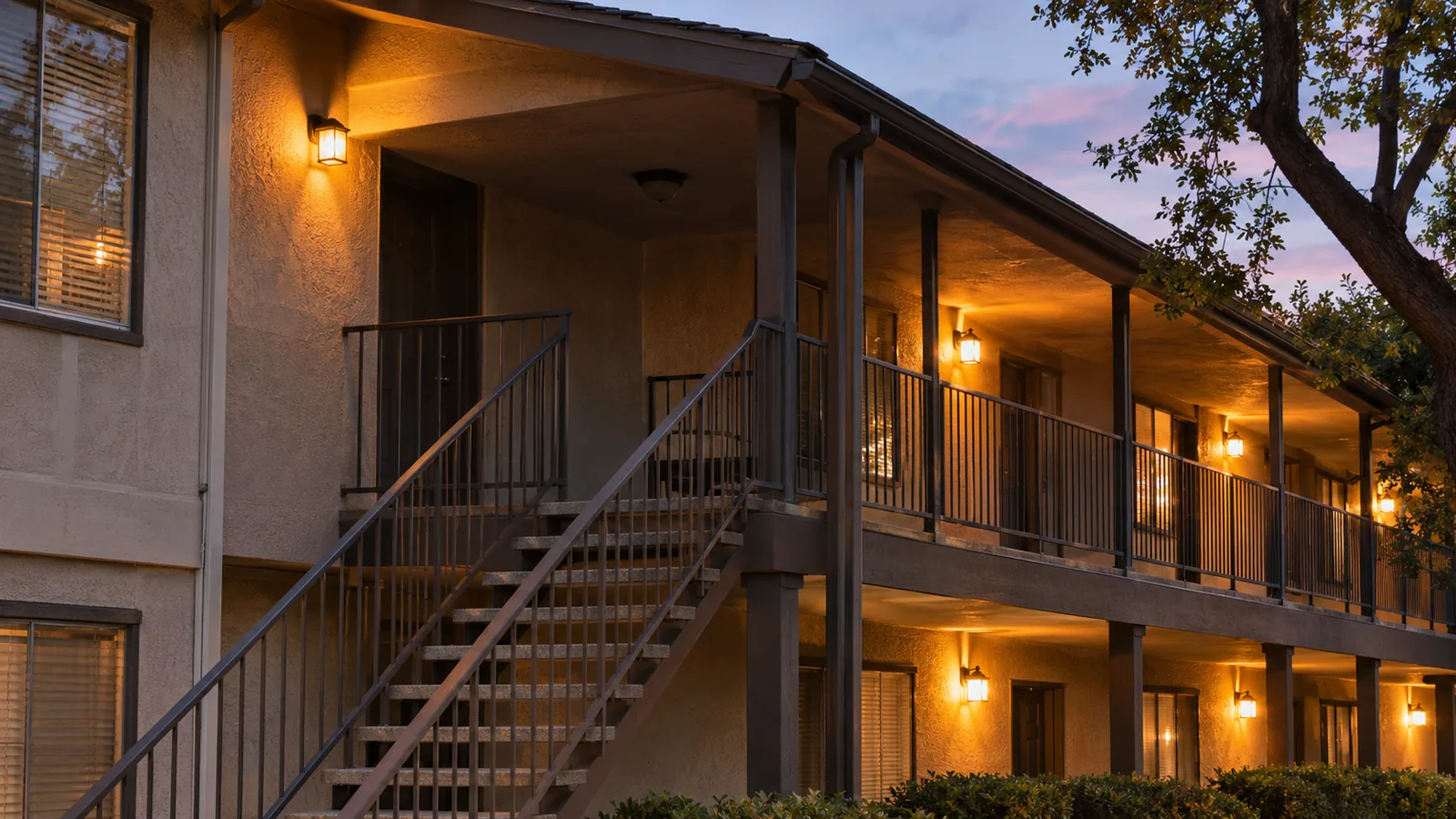
What to do right after an apartment injury
Get clear of the danger and get medical care first; photos and forms can wait.
- Get safe. Move away from a sagging balcony, fire, exposed wiring, traffic, or an attacker, and call 911 if needed. Never climb a broken stair or stand under a damaged balcony to take pictures.
- Get care. Tell the clinician exactly how it happened and every symptom.
- Report it. Tell management when, where, what you saw, and that you were hurt, and keep a copy.
- Find witnesses. Include neighbors who reported the same problem earlier.
- Photograph it if that is safe. Take wide shots of your route, the condition up close, and location markers such as the building number, stair flight, or parking space. Keep the uncropped originals, since cleanup can erase what was there.
- Keep the records. Save work orders, portal messages, texts, inspection notices, and your incident report or the message you sent.
Leave physical evidence as it is, and stay out of management systems and restricted areas. Describe what happened without guessing at technical causes, and have a lawyer read the lease before you accept a manager's word that signing it ended your claim. Ask a lawyer early about preserving video, maintenance databases, debris, and contractor records, because video may be overwritten while you recover.
Start with these guides
Apartment hazards worth investigating
The question is which condition caused your injury, not how many defects the property has. Describe where you lost your balance and what you touched, and say plainly what you don't remember.
| Incident | What to look into | Evidence to preserve |
|---|---|---|
| Fall on stairs, a landing, or a breezeway | Uneven treads, a loose handrail, rotted landings, slick surfaces, drainage, or lighting. | Photos of your route and the exact spot, the building and stair flight, your shoes, and earlier tickets about the stair or light. |
| Balcony or walkway collapse | Rot, corrosion, weak connections, improper repairs, overloading, or design. | The debris and failed parts left as they are, photos taken before cleanup, and repair and inspection records. |
| Ceiling, wiring, or a leak inside the unit | A falling ceiling, bad wiring, leaks, or a defective appliance, read against the lease and repair history. | Each repair request and completion message, photos of the damage over time, and the appliance or fixture involved. |
| Pool or gate injury | The enclosure, the gate latch, the drain covers, and the inspection record. | Photos of the gate and latch, who was present, and the time. |
| Assault or break-in | Earlier incidents at the property and the lock, gate, or light that was out. | The police details, your messages about the broken device, and neighbors who reported earlier incidents. |
| Parking area collision | Backing drivers, speed, a narrow drive aisle, or faded striping. | The driver's details, the crash report, and where cameras point. |
Ceilings, balconies and walkways
After a collapse, stay away from the damaged area and leave the debris alone. An engineer can check whether rot under fresh paint was detectable and contributed. A ceiling that came down after a reported leak raises the same questions: what was requested, what work was done, and whether the stain came back.
Read Apartment balcony and walkway collapse claims in Texas and Negligent apartment construction and repair claims in Texas, or tell us about a collapse at your apartment.
Pools, gates and elevators
A gate latch that didn't catch differs from a slick deck, and an elevator car stopping short differs from a bad door sensor, so start with exactly what failed.
Health and Safety Code ch. 757 sets enclosure, gate, latch, and inspection rules for pools at multiunit rental complexes [S9], the Virginia Graeme Baker Act requires anti-entrapment drain covers [S10], and the Texas Department of Licensing and Regulation oversees elevators [S21]. A code violation must still be tied to the injury and the right defendant. For a child's injury, see Swimming pool liability and the attractive nuisance doctrine, or ask us to review a pool or gate injury.
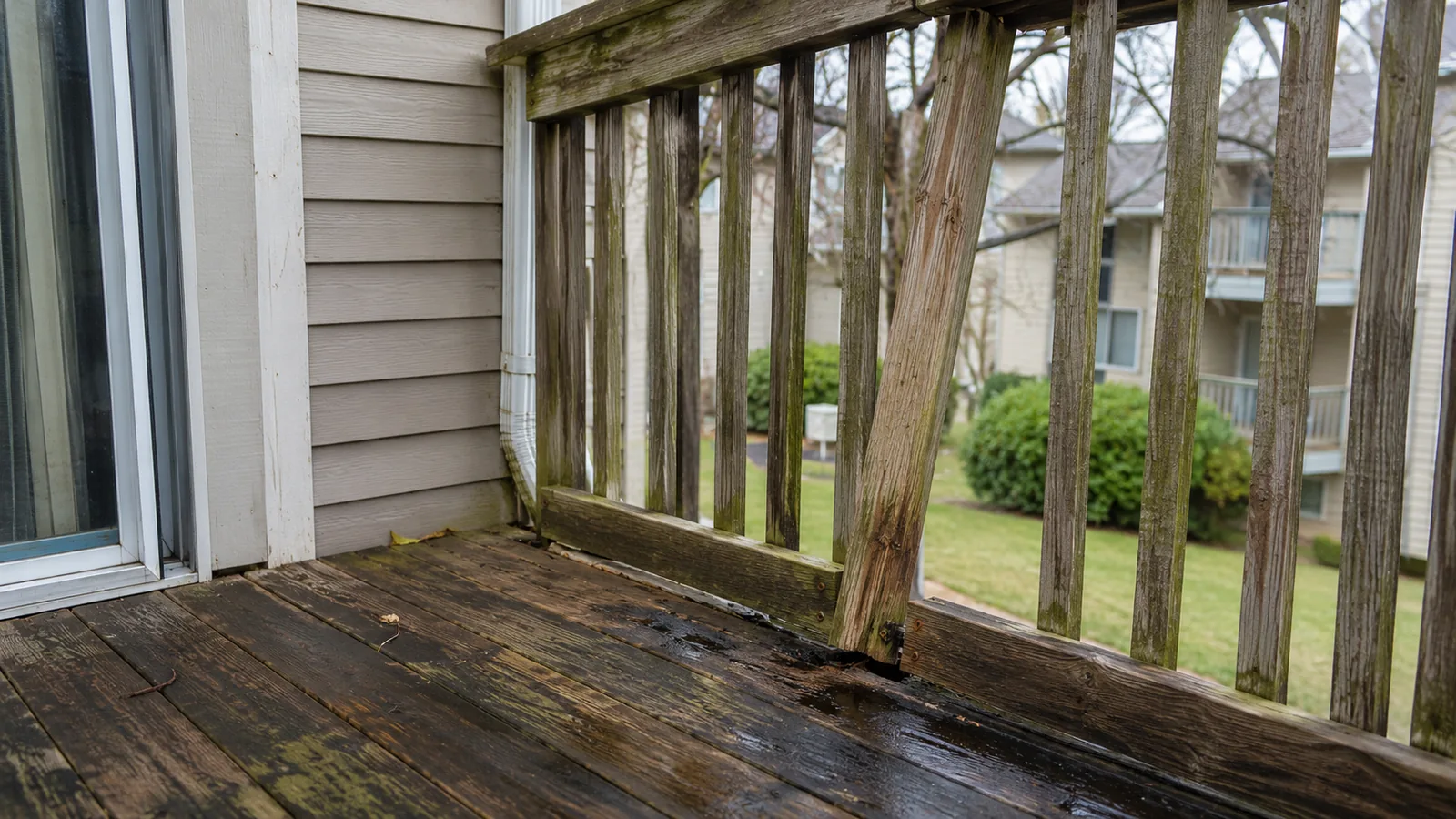
Who may be responsible for an apartment injury
Responsibility follows control, knowledge, and conduct, so several companies may share it. Counsel identifies each company's role before naming it, starting with the legal owner, since the name on the entrance sign may be a brand.
| Possible party | What could connect it | What counsel investigates |
|---|---|---|
| Owner | Retained common areas. | Ownership records, the lease, and who kept control of the area where you were hurt. |
| Management company | Its own control, notice, or negligent conduct. | Who answered complaints and assigned work, plus portal messages, work orders, and inspection records. |
| Contractor or vendor | A faulty repair, unsafe work, or a condition it created, from a roofer to an elevator service company. | The repair scope, invoices, technician notes, and the service contract. |
| Design professional | A balcony or drainage design flaw. | Plans and inspection records, with an engineer's review when the facts call for it. |
| Driver | Backing, speeding, or distraction. | The crash report, any video, and the auto coverage that applies. |
Under Chapter 33, a claimant more than 50 percent responsible recovers nothing, and a lower share reduces damages [S15]. Who is liable for an apartment injury in Texas? goes through each party in turn. For representation, see the Texas apartment injury lawyer page.
Repair complaints and landlord notice
A dated message about the exact hazard is strong evidence of what management knew, and counsel can build on it. A repair complaint and an injury claim remain separate matters: Section 92.061 preserves "any right ... to bring an action for personal injury or property damage" [S4], and Timberwalk Apartments v. Cain held the repair-notice subchapter governs repair disputes, not injury liability for premises defects [S28].
Management marked the repair complete, but you were still injured
Save the original request, photographs, and completion message. Counsel can compare those records with the repair scope, contractor records, and witness accounts to investigate what work occurred and whether the condition remained.
The gate or lock stayed broken
Keep your messages about the gate, keypad, or lock, and note the dates it was out. Counsel can ask for the access-control and work-order records, check how long the device was logged as broken, and look for earlier incidents that used the same entry route.
A railing was loose
Photograph the railing and its fasteners without leaning on it, and keep any dated complaint, such as an email with a photo. Counsel can identify who installed or last repaired it, obtain the repair invoices, and have the connection examined before it is replaced.
The leak kept coming back
Keep each ticket and the photos that show the stain returning. Counsel can line up the repair requests against technician notes and invoices to see whether anyone fixed the source or only the surface.
A stair tread was damaged
Photograph the tread and the stair flight, and ask neighbors to keep their own tickets about it. Counsel can compare those reports with inspection records to investigate how long the damage was there and who was told.
For a wet floor or another temporary hazard, counsel asks who saw it, whether staff caused it, and how long it sat. H-E-B v. Peterson (Tex. Apr. 10, 2026) held that constructive notice of a transient condition needs some evidence of how long it existed; prior roof leaks elsewhere and inspection evidence didn't fill the gap [S7].
Withholding rent, breaking a lease, or deducting repair costs are separate decisions with their own rules [S4]. The Chapter 92 repair-notice and repair-and-deduct steps are set out in How to file a Texas apartment injury claim and What to do first after an apartment injury, and faulty repairs are covered in Negligent apartment construction and repair claims in Texas.
Tell us about an injury that followed a repair request.
Assaults and negligent security at apartments
After an assault, keep the police details and get care, and don't confront a suspect. A negligent security claim rests on a foreseeable, unreasonable risk, a reasonable measure the property did not take, and a link between that failure and what happened.
For foreseeability, courts weigh how close, how recent, how frequent, how similar, and how widely known earlier crimes were [S28]. UDR Texas Properties v. Petrie treated unreasonableness (risk versus the burden of prevention) as separate and ruled for the owner because there was no evidence of the burden [S8]. Counsel therefore looks for incidents at or near the property and for the specific device or measure involved, and any proposed measure needs a supported link to what happened [S8]. Hypothetical examples of that evidence:
- Prior incidents: two garage break-ins in three months.
- Access controls: a gate keypad logged as broken for 19 days.
- Entry route: a pedestrian gate propped open with a brick.
Chapter 92 also requires specific locks and other security devices (§92.153) and their repair on request (§92.161) [S4]. See the Dallas negligent security lawyer page, or ask us to review an apartment assault.
How much is an apartment injury claim worth
There's no price list; value turns on liability proof, the injury, and who can pay.
- Liability: duty, notice, and causation evidence.
- Losses: medical care, future needs, lost income, earning capacity, pain, and disfigurement.
- Reductions: your share of fault under Chapter 33 [S15].
- Collection: insurance and other assets.
Ads and verdicts describe selected cases, and we found no public apartment settlement count or defensible statewide average or median. Before you sign a release, ask how fees, expenses, liens, and medical balances come out of it and whether future care and coverage are resolved. The Texas injury claim value hub explains each factor.
Liability insurance and apartment policy limits
No published limit tells you the coverage for your injury; the policies themselves have to be obtained. General liability, umbrella, and contractor coverage each depend on the named insured, location, date, exclusions, and endorsements [S17], and a certificate isn't the policy. For a collision in the parking area, the Texas minimum auto liability limits are 30/60/25 [S18]. Lender and financing-program insurance requirements are discussed in How to file a Texas apartment injury claim.
Deadlines and the path to a lawsuit
Texas generally allows two years to sue for personal injury (§16.003), subject to accrual and exceptions, and the period is paused while the injured person is under 18 (§16.001) [S11]. A claim against a public housing authority can require Tort Claims Act notice within six months (§101.101) unless a charter or ordinance differs or actual notice applies [S14]. A housing authority is a unit of government (Local Gov't Code §392.006) [S29], while public funding alone doesn't make an owner governmental.
An insurance claim doesn't replace timely filing and service, and evidence can vanish long before any deadline. Construction and design repose periods, certificate-of-merit filings, and summary-judgment timing are covered in Negligent apartment construction and repair claims in Texas and How to file a Texas apartment injury claim.
Talk to a lawyer about your apartment injury
A free case review covers what happened, who may be responsible, what to preserve, and what comes next. Missing records shouldn't stop you; they show what still needs preserving.
| What to bring | Hypothetical example | If you don't have it |
|---|---|---|
| Property address and the exact spot | The Building 4 breezeway outside unit 412. | Describe the route you took and the nearest building number. |
| Incident date | June 14, after dark. | A text, photo timestamp, or ER record that fixes the date. |
| Photographs | Twelve phone photos, uncropped. | Tell us who else took pictures and where cameras point. |
| Repair messages | Two portal tickets about the stair light and the completion message. | Who you told and roughly when, if the report was spoken. |
| Incident report | The form from the leasing office, or the message you sent. | The date you reported it and who took the report. |
| Lease, witnesses, and medical papers | The lease, the neighbor in 410, and the ER discharge sheet. | The landlord's name and any names or unit numbers you remember. |
| Anything urgent, or anything from management or an insurer | Ongoing danger, an adjuster's call, a release, a rent credit offer, or a near deadline. | Write down who called and what they asked for. |
Saving tenant-portal messages
- Screenshot each request with its date, status, and attached photos.
- Save the completion message and any text or email the portal sent you.
- Copy the full thread while you still have access to the portal.
- Leave the originals as they are, and don't edit or delete a ticket.
Bring what you have, and tell us what is missing.
No fee unless we win. The written agreement explains the fee and case expenses before you sign.
(214) 200-4878
Dallas apartment injury representation
(817) 500-4878
Fort Worth premises liability representation
The Law Firm of Aaron A. Herbert, P.C. Representation and any recovery depend on the facts, the law, and an agreed engagement.
Questions before you call
Can I request a case review while I still live at the property?
You can ask for a review while you live there, and staying doesn't by itself decide the injury claim. Keep your lease and messages, meet your lease obligations, and raise retaliation or safety worries early [S4].
What if I reported the problem verbally?
A spoken report can still help show what management knew. Write down who you told, when, and where, then send a short dated message repeating it. Counsel can also look for the work order or maintenance visit your report produced.
What if I never made a repair complaint?
Your own complaint is one way to show notice, and there are others. Counsel looks at other residents' tickets, work orders, inspection records, whether staff created the condition, and how long it was there.
Can a guest request a review?
A guest, visitor, or delivery worker can ask for one. The duty owed depends on the facts: an invitee is owed ordinary care against an unreasonable risk the owner knew or should have known of, and a licensee is owed a warning or fix for a danger the owner actually knew of and the licensee didn't, plus no gross negligence [S27]. Parker extended a landlord's duty to a tenant's guest on a retained stairway [S5].
What if management offers a rent credit or asks me to sign something?
Have counsel read it before you sign, since a release or rent credit can end other claims. Read any incident report form for release language or payment terms, and ask for a copy.
What does the consultation cost?
The case review is free. Start with the case review form or call the Dallas or Fort Worth office.
How are attorney fees and case expenses handled?
The written agreement explains the fee and how case expenses, liens, and medical balances are handled. Ask for those terms in writing before you sign, and ask for a written estimate of the distribution when one is feasible.
What can I provide if I cannot obtain the incident report?
Bring the date you reported the injury, the name of the person who took the report, and any message or photo you sent. Counsel can ask management to preserve the report along with the related work orders and video.
Frequently asked questions
These are other questions tenants and guests ask.
Can the owner and manager both be liable?
They may be, depending on each one's duty, control, notice, and conduct; naming both without evidence proves nothing.
What if I knew the stair was dangerous?
Austin v. Kroger says there's generally no duty for known or obvious hazards, except for third-party crime and necessary use [S6]. Don't hide earlier complaints.
How many parties can be responsible?
As many as the evidence supports; fault, releases, and insurance must be coordinated [S15].
How do I choose an attorney?
Ask how counsel will preserve evidence, use experts, explain fees, and communicate. Aaron Herbert's board certification and the link to verify it are at the top of this page [S1].
Which page does what
- This hub helps you understand your situation and find the right guide.
- Texas apartment injury lawyer is the representation page for apartment claims across Texas.
- Dallas apartment injury attorney covers Dallas claims, with the Dallas office details.
- The guides in this hub each answer one question in depth.
- Nearby topics: Dallas premises liability lawyer, Fort Worth premises liability lawyer, How Texas courts decide whether a property owner was negligent, and the TBLS knowledge hub on board certification.
Guides in this hub
Each guide goes deeper on one part of an apartment claim.
- How to file a Texas apartment injury claim: the full process.
- What to do after an apartment injury: first steps.
- Who can be liable for an apartment injury: possible defendants.
- Apartment stair and slip and fall injury claims in Texas: falls.
- Apartment balcony and walkway collapse claims in Texas: structural failures.
- Negligent apartment construction and repair claims in Texas: contractor duties.
Texas apartment statistics and their limits
Texas has millions of apartment homes, but no source counts apartment injuries statewide. Texas A&M's Real Estate Research Center reported on Feb. 11, 2025 that the 2024 market held over 2.5 million units, with over 116,000 delivered that year [S2]. A unit is a home, not a complex, and neither figure counts complexes or injuries. Fire, police, ER, insurance, and court records count different events, so adding them double counts.
Sources
- [S1] State Bar of Texas, Aaron Alan Herbert profile, Bar number 24036761. License and certification.
- [S2] Texas A&M Real Estate Research Center, 2025 Texas Real Estate Forecast. Unit figures.
- [S4] Texas Property Code ch. 92. Repairs, §92.061, security devices.
- [S5] Parker v. Highland Park, Inc., 565 S.W.2d 512 (Tex. 1978). Guest on a retained stairway.
- [S6] Austin v. Kroger Texas, L.P., 465 S.W.3d 193 (Tex. 2015). Known dangers and exceptions.
- [S7] H-E-B, L.P. v. Peterson, No. 24-0310 (Tex. 2026). Notice of transient conditions.
- [S8] UDR Texas Properties, L.P. v. Petrie, 517 S.W.3d 98 (Tex. 2017). Crime risk.
- [S9] Texas Health and Safety Code ch. 757. Pool enclosures.
- [S10] 15 U.S.C. §8003. Drain covers.
- [S11] Texas Civ. Prac. & Rem. Code ch. 16. Limitations.
- [S14] Texas Civ. Prac. & Rem. Code ch. 101. Tort Claims Act notice.
- [S15] Texas Civ. Prac. & Rem. Code ch. 33. Proportionate responsibility.
- [S17] Texas Department of Insurance, general liability. Commercial coverage.
- [S18] Texas Department of Insurance, auto guide. Auto minimums.
- [S21] Texas Department of Licensing and Regulation, elevators. Elevator oversight.
- [S26] Johnson County Sheriff's Posse, Inc. v. Endsley, 926 S.W.2d 284 (Tex. 1996). Lessor duty and exceptions.
- [S27] State Dep't of Highways & Pub. Transp. v. Payne, 838 S.W.2d 235 (Tex. 1992). Invitee and licensee duties.
- [S28] Timberwalk Apartments, Partners, Inc. v. Cain, 972 S.W.2d 749 (Tex. 1998). Repair rules and crime foreseeability.
- [S29] Texas Local Government Code §392.006. Housing authorities.
More guides in the Texas Apartment Injury Knowledge Hub
Apartment stair and slip and fall injury claims in Texas
Fell on apartment stairs or a wet breezeway in Texas? How control, notice and known-danger rules decide the claim, and what evidence to keep.
Apartment balcony and walkway collapse claims in Texas
A Texas apartment balcony or walkway gave way? Who may be responsible, what structural evidence to keep, and the repose deadlines to check early.
Negligent apartment construction and repair claims in Texas
Hurt by faulty apartment construction or a bad repair in Texas? How contractor liability, repair scope, Chapter 150 and repose deadlines work.
Apartment repair notice and injury claims in Texas
Apartment assault and negligent security claims in Texas
Apartment pool and child injury claims in Texas
ABOUT THE ATTORNEY
Aaron A. Herbert
Founding Attorney
Board Certified in Personal Injury Trial Law
Aaron founded The Law Firm of Aaron A. Herbert in 2010 to focus on developing each client's case and seeking its maximum value. For over a decade, he has represented people seriously injured in major accidents and industrial catastrophes, pursuing trial verdicts and settlements while working to reduce the stress of litigation.
Education
- Texas A&M University · B.S., Criminal Justice, 1999
- University of Oklahoma College of Law · J.D., 2002; graduated in the top of his class
Trial experience & approach
Aaron earned numerous jury verdicts at boutique personal injury litigation firms. According to his biography, he spent a year as the top-earning litigation attorney at a firm that frequently appeared in verdict searches as having one of the highest numbers of trial wins in Texas. At another Dallas personal injury firm, he moved from managing pre-litigation attorney to managing litigation attorney over seven years as the firm grew into one of Dallas's largest personal injury firms.
His biography describes a reputation as one of America's most aggressive trial lawyers, with noteworthy recoveries from judges and juries and substantial pretrial settlements. Most of those settlements included confidentiality agreements requested by the defense. Aaron has said the recoveries were justified by the injuries and losses involved, which no amount of money could make someone choose to experience.
His approach combines passion, preparation, persistence and courtroom imagination. He believes a well-supported, engaged and motivated team working cooperatively helps deliver strong representation, with the goal of achieving the best possible result for every client.
Dallas roots, military service & publication
Born and raised in Dallas, Aaron enlisted in the United States Marine Corps after high school and later received an Honorable Discharge. He completed his university and law degrees after his military service and became a lifelong Sooners football fan in law school.
Publication: “Litigating Dog Bite Cases,” Texas Dog Law Seminar, Dallas, 2009.
Professional affiliations & recognition
Professional affiliations and recognition listed in Aaron’s biography:
- State Bar of Texas
- American Bar Association
- Association of Trial Lawyers of America (now American Association for Justice)
- Texas Trial Lawyers Association
- Dallas Trial Lawyers Association
- Dallas Bar Association
- Tarrant County Bar Association
- Million Dollar Advocates Forum
- The National Trial Lawyers – Top 100 Trial Lawyers