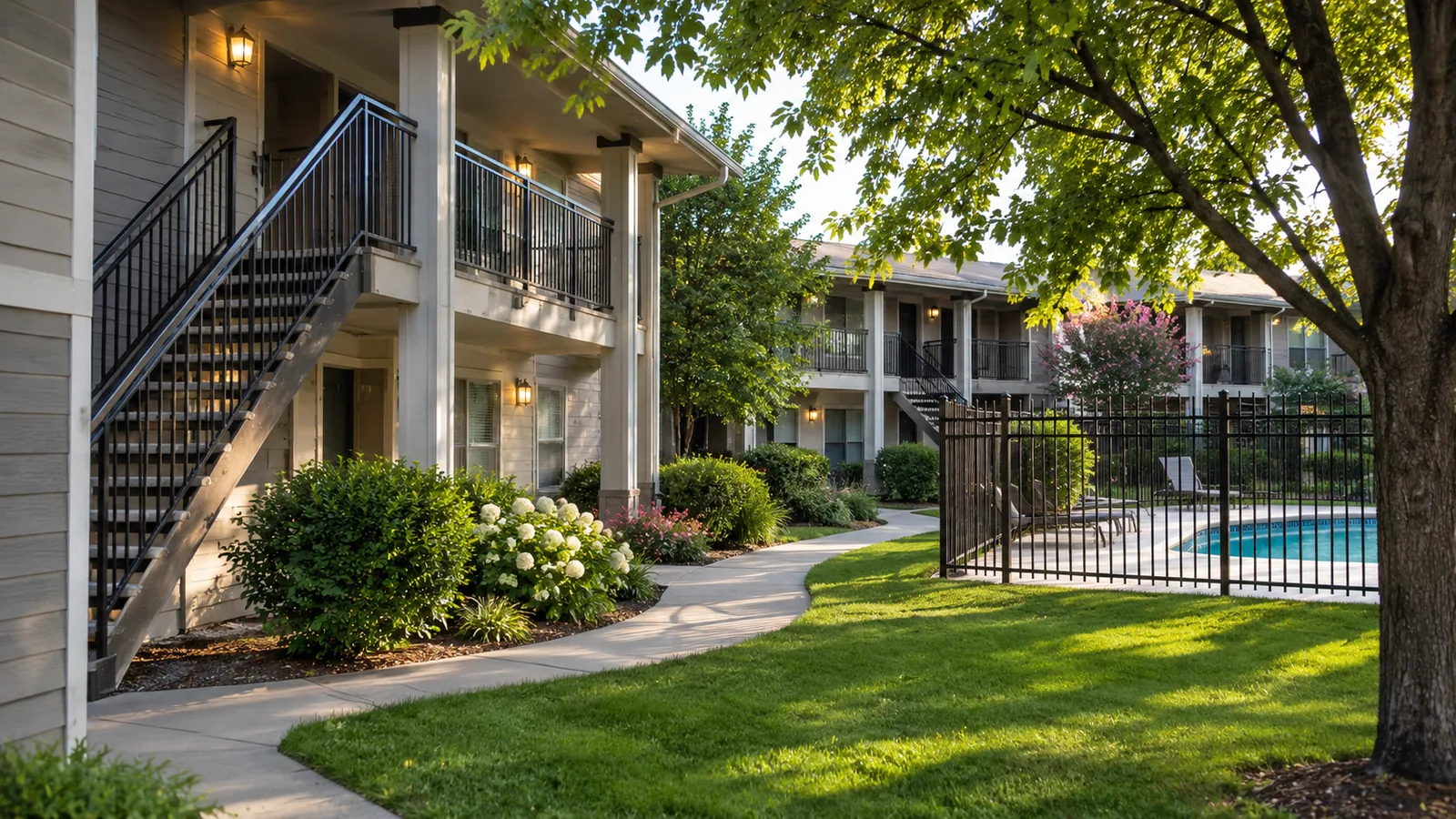
Stairs, breezeways and pool areas are common areas the property owner is expected to maintain.
A Texas apartment injury claim needs a specific failure you can point to, a party with a legal duty and control over that spot, notice where the law requires it, and proof that the failure caused the injury. Saying the complex was negligent is a conclusion, while a reported stair tread that came loose under a resident's foot starts to explain a case, and that difference matters when an insurer weighs responsibility and when a court tests the proof.
What this guide covers | What that includes |
|---|---|
Who it's for | Tenants, lawful visitors, and other people whose rights depend on their circumstances. |
Where injuries happen | Shared areas, leased interiors, construction failures, pools, equipment, security, and apartment parking. |
The legal work | Identifying defendants, presenting a demand, filing suit, discovery, negotiation, and trying a supported case. |
The examples | Hypothetical investigative illustrations, not results obtained by Aaron Herbert or predictions of recovery. |
Aaron Herbert's credential | What it means |
|---|---|
Certification | Board Certified in Personal Injury Trial Law by the Texas Board of Legal Specialization. [S1] |
State Bar listing | Bar number 24036761, licensed November 6, 2002. |
Why it's relevant | It's a verified qualification to weigh when you choose injury counsel. |
What it doesn't mean | It isn't an apartment certification and doesn't predict any result, and apartment-specific settlements, verdicts, or success rates would need separate proof. |
Tell us about your apartment injury or call (214) 200-4878.
1. Start the claim with what specifically failed
Build the case around a provable event, not a general complaint about the property.
Pin down | Hypothetical example |
|---|---|
The location | The second-floor landing outside Building 4. |
The dangerous condition or activity | A stair tread residents had already reported as loose. |
The person or company with a legally relevant duty | The owner or manager that controlled the stairway. |
The physical sequence | The tread detached when the resident stepped on it, and she fell to the landing below. |
Early on, the goal is to keep your options open while the facts can still be established.
You don't need to know yet | You do need to |
|---|---|
The owner's corporate structure | Report the incident accurately. |
The engineering explanation | Keep what you already have and avoid changing evidence. |
Which legal theory fits | Tell your lawyer about deadlines, ongoing repairs, and every communication that might affect the claim. |
2. Get safe and get appropriate medical care
Move away from the danger and call emergency services if you need them, because the investigation can wait until the threat is handled.
If you're facing | Don't |
|---|---|
An unstable balcony or damaged landing | Walk back onto it to prove that it moves. |
A smoke-filled corridor or a continuing assault | Stay in place to document the scene. |
An exposed electrical component | Touch the wiring. |
A closed pool equipment room | Go inside. |
A fall a neighbor watched | Ask the neighbor to recreate it. |
An attorney can arrange an appropriate investigation once the immediate threat is addressed.
Tell your provider | Why it matters |
|---|---|
What happened, in accurate words | Picking language you think will help a case can undercut it later. |
Symptoms, prior conditions, and medication | A contemporaneous record separates what was observed at the time from assumptions developed afterward. |
Changes since the incident | The chart shows how the injury actually developed. |
When a late symptom began | A delayed symptom with a date on it is easier to explain than one with no record. |
Follow clinical instructions, and know that a lawyer shouldn't direct medical decisions or encourage unnecessary treatment to raise a claim's apparent value.
Keep in one place | Hypothetical example |
|---|---|
Discharge instructions and appointment information | The urgent care sheet and the orthopedic follow-up card. |
Prescriptions and receipts | The pharmacy receipt for the pain medication. |
A short dated note on practical limits | "Oct. 3: couldn't climb the stairs to my third-floor unit or lift my son." |
Improvement as well as difficulty | "Oct. 10: drove to work for the first time and slept through the night." |
Plain, accurate notes hold up better under questions about consistency and credibility than dramatic ones. If you're still sorting out first steps, read what to do after an apartment injury.
If you need temporary housing because the unit is unsafe | What to know |
|---|---|
What to keep | Communications with management and reasonable expense records. |
Whether it's recoverable | Housing costs don't automatically become personal injury damages, and they may involve lease remedies, property claims, or other theories. |
How your lawyer sorts it | By separating expenses tied to the injury, expenses tied to loss of use of the apartment, and expenses that need a different legal approach. |
3. Pin down the exact scene before conditions change
Identify the exact spot by address, building, floor, direction of travel, and nearby fixed features, since large communities repeat building numbers, stair towers, and entrances.
Document | Hypothetical example |
|---|---|
Address and building | Building 4 of a 12-building community, at the address on the lease. |
Floor and direction of travel | Second floor, walking from unit 214 toward the north stair tower. |
Nearby fixed features | Beside the breezeway mailbox bank and the fire extinguisher cabinet. |
A simple sketch | Shows which landing, parking aisle, or pool gate was involved, labeled as an illustration and not a measured survey. |
Photos and videos | Originals kept separately from any annotated copies. |
When it's safe, take wide shots as well as close-ups.
A close view shows | A wide view adds |
|---|---|
A broken bolt and its deterioration | Where the part belonged, including the railing, attachment, height, walking route, and nearby obstructions. |
A wet spot on the breezeway | The apparent source, drainage path, lighting, mats, cones, and any visible footprints. |
A dark area in a photograph | Nothing reliable about lighting on its own, because exposure settings can change the appearance substantially. |
Write down only what you personally perceived, because an honest "I don't remember that part" beats a reconstruction presented as memory.
Question to answer for yourself | Why it matters |
|---|---|
Did the step move before you fell | Points toward a structural failure. |
Did your shoe catch a raised edge | Points toward a different mechanism. |
Did the railing pull away when you grabbed it | Points toward the attachment. |
Did you see liquid only after you were on the ground | Affects both mechanism and notice. |
Management may close a walkway, remove debris, or make emergency repairs for legitimate safety reasons, and preservation isn't meant to block necessary repairs.
If repairs are coming | What preservation looks like |
|---|---|
Debris is being cleared or a walkway closed | Photographs and measurements taken first, where feasible. |
A failed part is being replaced | The removed component and the work records kept. |
Access or preservation is disputed | Your lawyer can propose a coordinated inspection or ask a court for help if it can't be resolved reasonably. |
4. Who was hurt, and what was their relationship to the property
The duty owed depends on why the injured person was there, whether the location was authorized, what the lease permitted, and what activity was going on.
Injured person | What shapes the duty question |
|---|---|
Resident | Whether the spot was inside the leased unit or in an area the landlord kept control of. |
Resident's guest | Whether the guest was using the route to the apartment, since paying rent alone doesn't decide it. |
Delivery worker | Whether the worker stayed on an authorized route. |
Contractor's employee | Employment, workers' compensation, and contract issues. |
Unauthorized entrant | Where the person went, since permission to enter one area doesn't necessarily cover a restricted maintenance or construction space. |
If the person is | The owner generally must |
|---|---|
An invitee | Use ordinary care to reduce or eliminate an unreasonable risk from a condition the owner knew or reasonably should have known about. [S27] |
A licensee | Warn of or make safe a dangerous condition the owner actually knew about and the licensee didn't, and avoid gross negligence. [S27] |
A guest's status isn't settled by a label; it depends on the facts. For landlords, control matters most, and Texas law doesn't impose one identical duty for every condition throughout leased property.
Where it happened | General Texas rule |
|---|---|
Inside a unit leased to and controlled by the tenant | The landlord generally owes no duty for dangerous conditions there. [S26] |
An area the landlord retains control of | Common stairs, breezeways, and pools are an exception and can support a duty. [S26] |
A concealed defect the landlord knew about at leasing | Another exception to the general no-duty rule. [S26] |
A spot the landlord repaired negligently | Another exception to the general no-duty rule. [S26] |
Any location | Lease provisions, actual control, repair undertakings, and statutory duties may change the analysis. [S4] |
In Parker v. Highland Park, a tenant's guest fell on a dark common stairway whose lights the landlord controlled, and the landlord's duty extended to the guest. Austin v. Kroger later described Parker as the "necessary-use" exception, and it isn't a rule making every landlord responsible for every interior mishap. [S5-S6]
Records to get | What they can show |
|---|---|
The lease in effect on the incident date, with all addenda and later amendments | Permitted use and who was responsible for what. |
Community policies and move-in records | The rules and the unit's condition at move-in. |
Separate contracts for garages, storage, amenities, or reserved parking | How responsibility was allocated, though a contract label doesn't resolve every tort duty. |
Proof of the injured person's role | Whether the person was a named tenant, authorized occupant, guest, or worker. |
Workers need extra attention, so don't copy a tenant analysis onto an employee's construction accident.
Worker issue | Why it matters |
|---|---|
The employment relationship | It can affect the claims and the available defendants. |
Workers' compensation | It can change which claims are available. |
Contractor agreements | They can shift responsibility among companies. |
Statutes addressing contractor injuries | Your lawyer should flag them at intake and get the records needed before assuming the same theories apply. |
5. Keep repair rights separate from the injury claim
A Chapter 92 repair complaint and a personal injury claim are separate, with different requirements and different proof.
Chapter 92 of the Texas Property Code covers | Examples |
|---|---|
Residential landlord-tenant matters | Certain repair duties, security devices, smoke alarms, ownership disclosure, and retaliation. [S4] |
The Section 92.052 repair duty arises when | Hypothetical example |
|---|---|
The tenant gives notice to the person or place where rent is normally paid | A resident portal ticket or a letter dropped at the leasing office. |
The tenant isn't delinquent in rent when notice is given | October rent paid on the 1st and the ticket filed on the 5th. |
The condition materially affects the physical health or safety of an ordinary tenant | A rotted balcony joist, not a scuffed baseboard. [S4] |
Exclusion | No duty for conditions caused by the tenant or the tenant's guests, except normal wear and tear. [S4] |
A tenant seeking a statutory repair remedy needs an analysis of those procedure and remedy rules, not just proof that a condition was unpleasant or inconvenient.
Remedy rule | What it requires |
|---|---|
Section 92.056 | Generally a subsequent written notice, unless the first was sent by certified, registered, or tracked mail, plus a reasonable time to repair, presumed to be 7 days. [S4] |
Section 92.0561 repair-and-deduct | More prerequisites, with a cap of one month's rent or $500, whichever is greater. [S4] |
An injury claim asks its own questions, and Section 92.061 expressly preserves "any right ... to bring an action for personal injury or property damage." [S4]
Question | Repair complaint | Injury claim |
|---|---|---|
What governs it | The Chapter 92 repair-notice subchapter | Premises liability law on duty, breach, causation, damages, and defenses, not the repair subchapter (Timberwalk Apartments v. Cain). [S28] |
Does a statutory violation decide it | It may support a repair remedy | A repair violation doesn't automatically establish tort recovery. |
Must the repair sequence come first | It's part of the repair remedy | Not every injury claimant must complete the same repair-remedy steps before a claim exists, and the specific theory and facts decide what must be shown. |
Collect every notice even if its legal effect is unclear, since it can help show knowledge, responsibility, or an undertaking to repair.
For each notice, record | Hypothetical example |
|---|---|
The form it took | A portal ticket marked "complete", a letter, email, text, phone record, or maintenance visit. |
Who received it and whether they were authorized | The assistant manager at the leasing office. |
What condition it described | "Bedroom smells like mold." |
Whether the landlord responded | A technician sprayed the closet and closed the ticket. |
What it doesn't prove | A mold-odor complaint about a bedroom doesn't automatically give notice of a rotted exterior stair, even though both involve water intrusion. |
Get individual advice before withholding rent, arranging repairs, ending a lease, or moving out, because each step is governed by particular requirements.
Housing step | Why scope matters |
|---|---|
Withholding rent or arranging your own repairs | Missing a requirement can carry consequences of its own. |
Ending the lease or moving out | It can create obligations separate from the injury claim. |
Eviction defense or a statutory repair proceeding | An injury representation agreement may not cover it, so clarify early who's handling each part of the housing dispute. |
6. Identify the owner and the company that actually ran the property
The name on the community sign often isn't the legal defendant, so trace who owned and operated the property on the incident date.
Role | Hypothetical example |
|---|---|
Owner | A special-purpose limited liability company formed to hold this one community. |
Manager | A separate management company that runs the leasing office. |
Vendors | Affiliated maintenance and landscaping companies. |
Brand | A regional marketing name on the sign and website. |
Use the incident date, because a later sale or management change can otherwise misdirect the investigation.
Start with | What it gives you |
|---|---|
Deed history and appraisal information | A lead on ownership, not a final conclusion about every entity's role. |
Lease disclosures and management correspondence | The names the landlord and manager used with the tenant. |
Secretary of State information, where available | Legal names, assumed names, and registered agents. |
Contracts | How responsibility was divided among the companies. |
Related companies aren't liable just because they're related.
Don't assume | Instead |
|---|---|
A parent company is automatically liable for a subsidiary's conduct | Look for an independent basis for liability. |
An affiliated maintenance company is the owner because employees share an email domain | Establish who had operational responsibility. |
Every related business belongs in the suit | Trace the relevant relationships rather than grouping them all together. |
For a manager, actual conduct matters alongside the management agreement.
Manager authority to check | What to find out |
|---|---|
Inspecting and receiving complaints | Whether the leasing office logged the breezeway report. |
Approving repairs, selecting vendors, and spending funds | If the manager could only request owner approval for major structural work, who received the request and what happened next. |
Closing unsafe areas | Whether anyone had authority to tape off the stairway. |
Routine repairs by employees | Who employed and supervised the technicians. |
The records should explain the chain of decisions instead of leaving a jury with a collection of company names. Serving the right defendant takes the same care.
Service of process point | What it means |
|---|---|
Section 92.003 agent for service | A management company named in a written notice can be the owner's agent for service of process in described tenant suits. [S4] |
Counsel's job | Evaluate the applicable rule and statute, confirm a reliable service method, and document diligence. [S4, S20] |
A demand letter | Sending a demand to the leasing office isn't the same as properly serving the correct legal defendant in a lawsuit. |
7. Build a defendant and causation map
Give each potential defendant its own row in a working chart and record why it belongs there.
Column in the map | What goes in it |
|---|---|
Proposed duty | The legal duty this party owed. |
Control or conduct | What the party controlled or did that supports the duty. |
Notice evidence | Proof of knowledge, where the theory requires it. |
Causal contribution | How the party's failure contributed to the injury. |
Insurance lead | A possible policy, noted but never the only reason to keep a party in. |
Unresolved question | What still needs proof. |
The map keeps the investigation focused and stops the understandable urge to find every possible payer from turning into unsupported allegations. For more, see who can be liable for an apartment injury.
Hypothetical exterior walkway collapse | Separate proposition to prove |
|---|---|
Owner | It controlled structural maintenance. |
Manager | It received photographs of the decay. |
Repair vendor | It replaced a cosmetic board without addressing a failed connection. |
Designer | It specified an inadequate detail. |
Contractor who worked on an unrelated roof | It may have no causal role at all. |
Each proposition needs proof about dates, scope, authority, standards, and causation, and the collapse itself doesn't establish all of them.
Likely finger-pointing | Test it against |
|---|---|
One defendant blames another for ignored recommendations | The written recommendations and the dates they went out. |
A contractor points to the owner's refusal to authorize work | Proposals, approvals, and invoices. |
An owner says the contractor concealed defective work | Inspection notes, photographs, and the actual condition. |
An after-the-fact explanation in a sworn response | Contemporaneous records, rather than accepting it because it was sworn. |
No fixed maximum number of responsible parties applies to every apartment claim, and a carefully supported case against two defendants can be stronger than a diffuse case against ten.
What governs the defendant list | Where it comes from |
|---|---|
Procedural joinder and jurisdiction | The Texas Rules of Civil Procedure and jurisdiction rules. [S20] |
Limitations | The deadline that applies to each party and claim. |
Professional-claim requirements | Chapter 150 certificate-of-merit rules for claims against licensed architects, engineers, land surveyors, and landscape architects. [S12] |
Proportionate responsibility | Chapter 33 of the Civil Practice and Remedies Code. [S15] |
New evidence from discovery | Revisit the map as discovery develops and explain material changes to the client. |
8. Prove an unreasonable danger, not ordinary wear
An apartment complex doesn't have to be free of every flaw, so the claim turns on whether this specific condition created an unreasonable risk under the legal standard that applies.
What can matter | Hypothetical example |
|---|---|
Measurements | A 1 1/4-inch lip where two breezeway slabs meet outside Building 4. |
Appearance and lighting | A gray step edge with no contrast strip under a burned-out wall pack. |
Location and use | The only stair from the parking lot to the second-floor units. |
Foreseeable traffic | Residents carrying laundry baskets down at night. |
Surrounding conditions | Sprinkler overspray that leaves the landing wet every morning. |
A slightly uneven surface on an unused edge raises different questions from an unstable stair tread on the only route to occupied units. Don't let a photo of general disrepair stand in for proof of how the injury actually happened.
Measurement record | What to write down |
|---|---|
Who measured | The name and role of the person holding the tape or level. |
What instrument | A tape, a digital level, a slope meter, or a camera with a scale. |
Exactly where | The same spot on the defect where the foot caught. |
Whether conditions changed | Any patch, grinding, or repainting since the fall. |
Photo with a ruler | Useful, but misleading if the ruler sits at an angle or on a different part of the defect. |
Qualified inspection | Slope, rise variation, connections, surface condition, or equipment function, using methods suited to the issue. |
Building codes can help, but only if they applied to that property, component, time, and work.
Code question to answer | Why it matters |
|---|---|
Which edition did the city adopt? | A newer model code online may never have been adopted locally. |
Were there local amendments? | The adopted text may differ from the model code. |
Is the building grandfathered? | An older building may not have to meet a newer code without relevant alterations. |
Were permits pulled? | Permits show when and what work happened. |
What did the renovation cover? | The scope decides whether newer rules reached that stair or rail. |
How does the rule's safety purpose fit the fall? | A code concern isn't automatically conclusive civil liability. |
The owner may argue that reasonable people could use the area safely or that the condition was easy to see.
If the defense says | Answer it with |
|---|---|
People use that walkway every day without falling | Evidence about the route, expected use, and who travels it. |
Anyone could see the problem | Accurate proof of visibility at that time of day. |
The resident had another way to go | Facts about the alternatives that actually existed. |
The claim is just a list of defects | Proof of the hazard in context, not the strongest adjective available. |
9. Establish actual notice and save the complaint history
Actual notice can come from a prior report, inspection, observation, repair attempt, or other evidence that someone knew about the condition.
Record | What to ask for |
|---|---|
Work order screenshot | The original, since a screenshot can omit attachments, status changes, internal comments, or reassignment history. |
Maintenance software | Native data and the audit information the system keeps. |
A ticket marked "closed" | Whether it means completed, canceled, duplicate, or moved to another queue. |
Resident portal messages | The full thread with dates and photos. |
Talk to people with direct knowledge, and ask for dates and details instead of the bare conclusion that management knew.
Witness | What they may know |
|---|---|
Neighbor | Saw the railing move, texted a photo to the office, or watched maintenance try a repair. |
Former employee | How reporting worked, limited to what that person actually saw or did. |
Former employee with a grievance | A dispute with the employer doesn't automatically make testimony reliable or unreliable, so records made at the time still matter. |
Notice has to connect to the defendant you're suing.
Notice issue | Hypothetical example |
|---|---|
Complaint sent to one vendor | A report to the landscaping company may not show that every owner or affiliate got it. |
Manager's knowledge | It may count against the owner under the agency and control analysis. |
Who received what | Identify the person's role, reporting duties, recipients, and follow-up. |
"No one knew" from a corporate defendant | Check inspection assignments, budget requests, recurring work orders, and past messages about that exact component. |
Don't hide unfavorable complaint history.
An earlier resident message may show | Why your lawyer needs it |
|---|---|
The owner had notice | It supports the notice element. |
You knew about the danger too | It bears on duty, necessary use, comparative responsibility, and credibility. |
The full portal history | A case built on partial facts falls apart when the whole history surfaces in discovery. [S4, S6-S7] |
10. Investigate constructive notice with evidence of time
When actual knowledge can't be shown, some claims depend on whether the owner should have found the condition through reasonable care, and for a transient hazard that usually means proving how long it was there.
Timing evidence | What it can show |
|---|---|
Video | When water first appeared on the landing. |
Witness observations | Someone walking past the pool gate saw the puddle earlier. |
Time-stamped reports | A resident portal ticket logged before the fall. |
Recurring events at the exact spot | The same downspout overflow every time it rains. |
Condition after the fall | Very little, since a wet floor could have formed seconds or hours before. |
In H-E-B v Peterson, the Texas Supreme Court rejected an attempt to prove constructive notice of a particular puddle through earlier leaks elsewhere and general inspection evidence, without evidence of how long that puddle had existed. It's a ruling about the proof on that record, and you can read more on how Texas courts decide whether a property owner was negligent. [S7]
Peterson point | Practical lesson |
|---|---|
Prior roof leaks elsewhere | Didn't show how long this puddle sat there. |
General inspection evidence | Didn't fill the gap in duration. |
What it doesn't hold | It isn't a rule that apartment water claims can never succeed. |
What to gather instead | Proof tied to this specific condition at the relevant time and place. [S7] |
Long-term structural decay raises different questions from a fresh spill.
Slow deterioration issue | What to keep in mind |
|---|---|
Expert explanation | An engineer may explain corrosion, decay, or repeated moisture exposure that built up over time. |
Age of damage versus discoverability | How old the damage is differs from whether a reasonable inspection would have revealed the danger before failure. |
Hidden deterioration | It isn't automatically discoverable. |
A long-lived condition | It doesn't automatically prove every defendant's constructive knowledge. |
Build a timeline that separates what's confirmed, what's a reasonable inference, and what's unknown.
Timeline entry | Hypothetical example |
|---|---|
Confirmed | Portal ticket created at 6:42 p.m. |
Reasonable inference | A neighbor saw standing water about twenty minutes before the fall, so save the basis for that estimate. |
Unknown | A photo with no original timestamp, so trace where it came from instead of assigning a time. |
Discovery needed | Careful handling of uncertainty makes the notice argument more credible and shows what discovery would strengthen it. |
11. Deal honestly with known dangers and necessary use
If you knew the stair was dark, the handrail was loose, or the walkway flooded, that knowledge can affect the owner's duty under Texas premises law.
Rule or exception | What it says |
|---|---|
General rule | Austin v. Kroger, an employee case, explains that an owner generally has no duty to warn of or make safe a hazard that is open and obvious or known. [S6] |
Criminal activity exception | Austin recognizes an exception for the criminal activity of a third party. [S6] |
Necessary-use exception | Austin describes Parker v. Highland Park, where a tenant's guest fell on a dark common stairway whose lights the landlord controlled, as the necessary-use exception. [S5-S6] |
How it applies | The answer is fact-sensitive. [S6] |
Knowing about a hazard never justifies hiding prior complaints or claiming the danger was a total surprise.
Question about alternatives | Evidence that answers it |
|---|---|
Was another stairway open and reasonably reachable? | Property maps and photos of the second stair at Building 2. |
Did management close the usual route? | Notices, emails, and barricade photos. |
Could you reach your unit without the dangerous area? | Access records and a walk of the route. |
Was the other route unsafe, prohibited, blocked, or too far? | Photos, mobility evidence, and testimony. |
"There was no other way" | A bare statement is weak if a safe route was plainly available. |
Keep the owner's duty separate from your share of responsibility.
Issue | Why it's separate |
|---|---|
Duty | If no duty existed for the known condition, the defendant may seek dismissal before trial. |
Comparative responsibility | A percentage reduction doesn't cure a missing duty. |
Timing | Evidence for an exception has to be ready in time to answer dispositive motions. |
Explain why you used the route without overstating it.
Reason or precaution | How it fits the standard |
|---|---|
Carrying groceries home | Explains the activity but doesn't automatically meet an exception. |
Helping a child down the stairs | Same, and it has to tie to the actual legal standard. |
Going to work | Explains why you were on the stair at 6 a.m., but it still has to meet the standard. |
Holding an available rail | A reasonable precaution, not a guarantee of recovery. |
Using your phone light | A reasonable precaution, not a guarantee of recovery. |
Following management's posted detour | A reasonable precaution, not a guarantee of recovery. |
12. Analyze stairs, handrails, and elevated walkways
A stair fall can come from a broken tread, uneven rise, loose nosing, slick finish, missing handrail, poor lighting, or several of these together, so start by pinning down which part caused the loss of balance.
Question | Hypothetical example |
|---|---|
What started the fall | A loose nosing on the third step from the second-floor landing. |
What failed to stop it | No handrail on the open side. |
Does the missing rail matter here | More if you stumbled on a tread than if a medical event caused a collapse. |
What explains it best | Medical and scene evidence read together, without forcing one answer too early. |
Get the repair and inspection history for that specific flight, landing, and support system.
Record | What to check |
|---|---|
Repeated patches | They can show a recurring problem, but the records must show what was done and where. |
Vendor invoice marked "stair repair" | It may refer to a different building. |
Photos, work descriptions, testimony, purchase records | Compare them against each other. |
Replaced parts | Ask what happened to the removed material and whether anyone photographed it before disposal. |
An engineer or another qualified expert may evaluate geometry, support, connections, deterioration, and the relevant standards.
Expert task | The limit to respect |
|---|---|
Separate observation from assumption | Pre-incident condition has to be shown, not guessed. |
Measure after a collapse | Post-failure measurements may not show the original geometry. |
Draw a reconstruction | Disclose its sources and limits. |
Test a component | Give notice and agree on a reasonable protocol so other parties can watch. |
For tenants, the everyday-use story matters.
Daily-use question | What it can support or undercut |
|---|---|
How often did you use the stair? | Familiarity and expected use. |
Had it shifted before? | Prior notice and a recurring defect. |
Did residents report a bounce or noise? | Notice and a developing failure. |
Were heavy loads or unauthorized changes involved? | A competing explanation, since not every stair failure comes from the same maintenance problem. |
13. Investigate balconies and structural collapse
A balcony collapse can cause catastrophic injury and evidence that disappears fast, so the first step is identifying which system failed.
Failed system | Hypothetical example |
|---|---|
Deck surface | A resident steps through a rotted board. |
Joists or ledger connection | The balcony pulls away from the building wall. |
Posts or fasteners | A corner drops after a post base rusts through. |
Guardrail | The rail detaches when someone leans on it. |
Concrete | A slab edge cracks and spalls. |
Witness accounts and original scene photos help tell these apart before debris is moved.
What a structural evaluation may look at | Records to save |
|---|---|
Water intrusion, flashing, wood decay, corrosion | Inspection reports and resident complaints. |
Connection capacity and load paths | Design documents and permits. |
Installation and alterations | Renovation scopes and photos. |
Maintenance history | Messages about closing or repairing the balcony. |
Cause | A failure alone doesn't show whether design, construction, later repairs, unusual loading, deterioration, or a mix caused it. |
Debris should be documented and kept through a safe, reasonable process.
Debris step | How to handle it |
|---|---|
Agreement among parties | Identification, storage, access, sampling, and destructive testing. |
Loose parts at the scene | Don't take them from a dangerous scene without authority. |
Emergency demolition | Sometimes necessary, but it shouldn't mean every useful observation and component is lost. |
Advance coordination | Ask for it where feasible, and save records of what was removed and why. |
Find out who controlled access before the failure and who could order a closure.
Control question | What to examine |
|---|---|
A recommendation to stop using the balcony | Whether it reached the right decision maker, and its actual substance and timing. |
An inspection that found no visible danger | Its real scope and limits, since it isn't conclusive proof of reasonable care or negligence. |
Claims against builders and design professionals | Early deadline analysis, including the repose statutes and the certificate-of-merit requirement. [S11-S12] |
14. Evaluate construction and repair contractors
A contractor's responsibility depends on its own work, undertaking, duties, and contribution to the injury.
Contractor document | What it can show |
|---|---|
Contract and scope | What the contractor agreed to do. |
Change orders and invoices | What was added, dropped, or billed. |
Daily reports and photos | Who was on site and what they did. |
Warranty requests and messages | Problems raised after the work. |
A document labeled "repair" | It may describe a temporary patch, not a structural replacement. |
Other companies involved | Whether someone else supplied design or inspection services. |
Texas law doesn't give a contractor blanket immunity just because the owner accepted the finished work.
Strakos point | What it means for your claim |
|---|---|
The rule | Strakos v. Gehring rejected the accepted-work doctrine. [S23] |
Still required | You must prove an applicable duty, negligent conduct, causation, and damages. [S23] |
Hypothetical limit | A contractor that replaced a handrail isn't automatically liable for a hidden foundation problem outside its scope. |
Hypothetical reach | A limited scope doesn't necessarily excuse creating a new unreasonable danger while doing the agreed work. [S23] |
Tell an existing premises condition apart from an ongoing negligent activity.
Hypothetical event | How it's classified |
|---|---|
A worker drops material onto a resident | An activity, a different mechanism. |
A resident later trips on material left in the walkway | A condition the work created. |
United Scaffolding v. Levine | A claim based on a condition the contractor's work created sounds in premises liability, not general negligence. [S22] |
Calling everything "negligent maintenance" | It won't avoid the elements of a premises claim, so plead the theory that fits and get the findings it needs. [S22] |
Indemnity and additional-insured clauses can shift defense and payment between defendants.
Contract term | What it doesn't do |
|---|---|
Contractual indemnity | Doesn't automatically give the injured tenant a direct tort claim. |
Additional-insured provisions | Don't guarantee insurance is available. |
Certificate of insurance | Doesn't settle the parties' insurance obligations. |
Tender letters and coverage information | Save them through proper discovery, and analyze the contract separately from the negligence theory. |
15. Screen professional claims and statutes of repose early
If an architect, engineer, land surveyor or landscape architect may share the blame, two deadlines need attention before the petition is drafted: the Chapter 150 certificate of merit and the Chapter 16 repose periods.
Chapter 150 question | What the statute says |
|---|---|
Who it covers | A licensed architect, licensed professional engineer, registered professional land surveyor or registered landscape architect, or their firm. [S12] |
What has to be filed | A qualifying certificate of merit, filed with the first pleading that asserts the claim against that professional (CPRC §150.002(a)). [S12] |
When the first pleading is an amended petition | The certificate goes with the pleading that first raises the claim against the professional, even if the case started earlier. [S12] |
The narrow exception | When limitations is about to expire, the statute allows a short window to supplement with the certificate. [S12] |
What happens without one | The claim against the professional is subject to dismissal, which may be with prejudice. [S12] |
Treat this as an early filing issue. It isn't an expert report you can always supply later in ordinary discovery.
Hypothetical balcony collapse | How the certificate analysis might run |
|---|---|
The engineer who designed the balcony framing | Likely a covered professional service, so identify the service and the defendant before filing. |
The contractor who built from those plans | Working from plans doesn't make a contractor a covered design professional. |
The engineer's late site-visit scheduling | Administrative or operational conduct may need different analysis from the adequacy of the engineering itself. |
A pleading that calls the engineer a "consultant" | Look at the substance of the allegations, the licensing role and current authority, not a label picked to avoid the statute. |
Repose periods can run from substantial completion, not from the day someone got hurt. Chapter 16 has more than one rule, so don't reduce it to a single number. [S11]
Repose rule | What it provides |
|---|---|
§16.008 architects, engineers, interior designers, landscape architects | Suit must be brought within 10 years after substantial completion of the improvement. [S11] |
§16.009 people who construct or repair improvements | Suit must be brought within 10 years after substantial completion. [S11] |
§16.009(d) injury in the last year | If the injury happens during the last year of the period, suit may be brought within two years after the claim accrues. [S11] |
§16.009 and the owner or manager | Section 16.009 doesn't protect a person in actual possession or control of the property. [S11] |
The six-year warranty variant | Applies only to a "residence" as defined (a detached one- or two-family dwelling or a short townhouse), which rarely fits an apartment complex. [S11] |
Written claims and effective dates | Both sections have extension provisions for presented written claims, and project dates and effective dates have to be checked against the current text. [S11] |
Don't assume every apartment runs on the same six-year or ten-year period. A recent repair doesn't necessarily restart repose for every participant.
Record to request | What it can answer |
|---|---|
Certificate of occupancy or final inspection | The likely substantial-completion date for the building with the failed balcony. |
Later repair invoices and permits | Who touched the component and when. |
Warranties | Whether any statutory variant or exception is in play. |
Engineering reports | Which professional service, if any, is at issue. |
Log limitations and repose as separate entries in the case plan, because the ordinary two-year injury period doesn't displace every construction deadline.
If the facts are incomplete | What to do |
|---|---|
The completion date is unknown | Work from the earliest plausible deadline. |
The responsible professional is unclear | Prioritize the investigation that identifies the service and the license. |
An early professional assessment costs money | It may be worth it if it shows whether a viable claim can be filed, with the required support, before a time bar. |
16. Examine ceilings, plumbing, electrical systems and fire injuries
Interior injuries turn on two things at once: what physically failed and how the landlord-tenant relationship assigns responsibility for it.
What fell or failed | Possible causes to rule in or out |
|---|---|
Bedroom ceiling drywall | A long-running plumbing leak from the unit above. |
Top-floor ceiling | Roof water intrusion. |
Bathroom exhaust fan housing | Defective installation. |
Kitchen ceiling after a storm | A sudden event with no warning signs. |
Photograph the spot, keep every earlier repair complaint, and let a qualified investigation decide what actually failed and why.
Earlier warning sign | What it may help show |
|---|---|
A brown water stain reported on the portal | That management had notice of a leak. |
Bubbling paint near the light fixture | That the problem was visible before the collapse. |
A sagging section the maintenance tech looked at | Whether anyone inspected it and what they did. |
A partial failure patched last spring | That the condition had already shown itself. |
For electrical injuries or fires, don't disturb the equipment or try your own inspection. Fire officials, qualified investigators and the utility may have records.
Electrical or fire evidence | Why keep it |
|---|---|
Appliance make, model and serial number | Identifies the product and possible manufacturer. |
Breaker panel labels and circuit IDs | Shows which circuit fed the outlet. |
Repair invoices and photographs | Shows what was fixed and how. |
Messages about tripping breakers, overheating or prior faults | May show notice of the problem. |
Where a fire started and why it started are two different questions. A fire that began near the dryer doesn't by itself prove the dryer or the landlord caused it.
Chapter 92 and safety-device question | What to determine |
|---|---|
Smoke alarms | Installation, location, condition, inspection and repair requests, and whether a device was removed or disabled. [S4] |
A missing alarm claim | Whether a working warning would have changed the injury outcome. [S4] |
A locked exit or blocked route | Proof about the actual escape path and the timing. [S4] |
A severe injury | The severity of the harm doesn't eliminate the causation requirement. [S4] |
Keep each category of loss separate in the damages analysis, because different policies and remedies apply to each.
Loss | Where it may be addressed |
|---|---|
Bodily injury | A liability claim against whoever is responsible. |
Damaged belongings | Renters insurance, under its terms. |
Displacement after a fire | Additional living expense coverage, under its terms. |
Lease issues | Lease remedies, kept separate from the injury claim. |
Insurer notices and claim documents | Give accurate notice and keep every document. |
Reimbursement and releases | Coordinate them so settling one part of the loss doesn't compromise another claim. |
17. Analyze pools, gates and child injuries with specialized evidence
Pin down how the pool injury happened before choosing a legal theory, because a gate failure, a deck slip and a drain entrapment call for different proof.
Hypothetical pool event | Evidence that matters most |
|---|---|
A child gets in through a gate that didn't latch | Gate condition, latch operation, access records, video. |
An invited swimmer slips on the deck | Surface, cleaning and maintenance logs, witnesses. |
A swimmer is held by drain suction | Drain cover and equipment records, emergency response information. |
A delayed rescue | Supervision, response timeline, emergency call records. |
Preserve all of it without anyone doing dangerous testing on the gate or drain.
Chapter 757 rule for apartment pools | What it requires |
|---|---|
Coverage | Pools owned, controlled or maintained by the owner of a multiunit rental complex, including hot tubs and spas over 18 inches deep. [S9] |
Enclosure | A complete pool yard enclosure at least 48 inches high, with spacing limits. [S9] |
Gates | Self-closing and self-latching, lockable, and opening outward away from the pool yard, with latch height rules. [S9] |
Inspection | Ordinary care to inspect, maintain and repair, with inspection at least once every 31 days (§757.009), a duty that can't be waived. [S9] |
Private action | A tenant or other person may sue under §757.012. [S9] |
Older enclosures | The chapter has separate provisions for existing enclosures built before the current rules. [S9] |
The federal Virginia Graeme Baker Pool and Spa Safety Act, 15 U.S.C. §8003, treats a pool open only to apartment residents as a public pool and requires anti-entrapment drain covers. [S10]
Before relying on a pool statute | Check |
|---|---|
Applicability | That the pool and the defendant fall within the statute. [S9-S10] |
Dates | When the enclosure or equipment was installed. [S9-S10] |
The exact requirement | Which latch, enclosure or drain rule was broken. [S9-S10] |
Causation and the right defendant | A broad reference to pool safety law doesn't prove this defendant violated a duty that caused this injury. [S9-S10] |
When the injured person is a child, gather the facts carefully and gently.
Evidence step | How to handle it |
|---|---|
Caregiver accounts | Preserve them carefully and sensitively. |
The child's explanation | Don't coach a child to repeat a story. |
Independent witnesses and contemporaneous records | Identify them early. |
Medical experts | They may address injury mechanism, prognosis and future needs. |
Safety experts | They may address access or equipment, staying within their field and explaining their assumptions. |
Settling a minor's claim can involve court procedures that protect the child's interests. [S11, S20]
Minor's claim issue | What the family should know |
|---|---|
Court approval process | Counsel should explain the process, proposed allocation, expenses, liens and any structured payment. [S20] |
A release signed at the leasing office | Don't assume an ordinary release fully and properly resolves a child's claim. [S20] |
The child's own deadline | Limitations is tolled while the injured person is under 18 (CPRC §16.001). [S11] |
Related claims | Tolling for the child doesn't mean every associated claim is extended, so each needs its own limitations analysis. [S11] |
Preservation | Minor status is never a reason to delay saving gate, video or drain evidence. [S11] |
18. Investigate elevators, automatic gates and mechanical equipment
Start an elevator claim by recording exactly what the passenger experienced, then trace who owned, installed and serviced the car.
Elevator event | Record at the scene |
|---|---|
The car stopped six inches below the floor | Car ID, floor and direction of travel. |
The doors closed on a resident | Time and witnesses. |
An abrupt drop or jolt | What the passenger actually felt. |
A stalled car | How long it was stuck and who responded. |
The routine service company may be a different business from the installer or the owner.
Elevator record | What it can show |
|---|---|
Service calls | Prior problems with the same function. |
Controller or fault data, where available | What the equipment logged. |
Inspection records | Compliance history. |
Maintenance agreements | Who was responsible for service. |
Prior complaints | Whether the same issue was reported before. |
TDLR regulates covered elevators and related equipment, and its records can be useful leads. [S21]
TDLR certificate status | What it does and doesn't prove |
|---|---|
A current certificate | Not a guarantee that every function was safe at the time of the incident. [S21] |
An expired certificate | Doesn't by itself establish the mechanism that hurt the passenger. [S21] |
Either way | The claim still needs an applicable duty, a supported failure and causal evidence. [S21] |
A qualified equipment expert | Can help separate a maintenance problem from another cause. [S21] |
Automatic vehicle and pedestrian gates raise the same identification questions. Never stand in a gate's travel path to demonstrate a suspected sensor defect.
Automatic gate evidence | Why it matters |
|---|---|
Gate operator model | Identifies the equipment and maker. |
Safety-device configuration | Shows whether sensors were set up or disabled. |
Service history | Shows who worked on it. |
Video and access logs | Shows the gate's movement and timing. |
Reports of erratic movement | May show prior notice. |
A replaced component | Ask that the removed part and the reason for replacement be documented and kept where appropriate. |
Testing | Use a safe protocol and qualified personnel. |
Each possible theory points to a different defendant and different proof.
Theory | What has to be traced |
|---|---|
Premises responsibility | The owner's control and notice. |
Negligent service | What the service company did or failed to do. |
Active operation | Who was running the equipment at the time. |
Product issue | A component maker isn't automatically liable for bad installation or disabled safety devices. |
Hiring a service company | Doesn't automatically free the owner from responsibility. |
Any proposed precaution | Whether it would actually have prevented the event. |
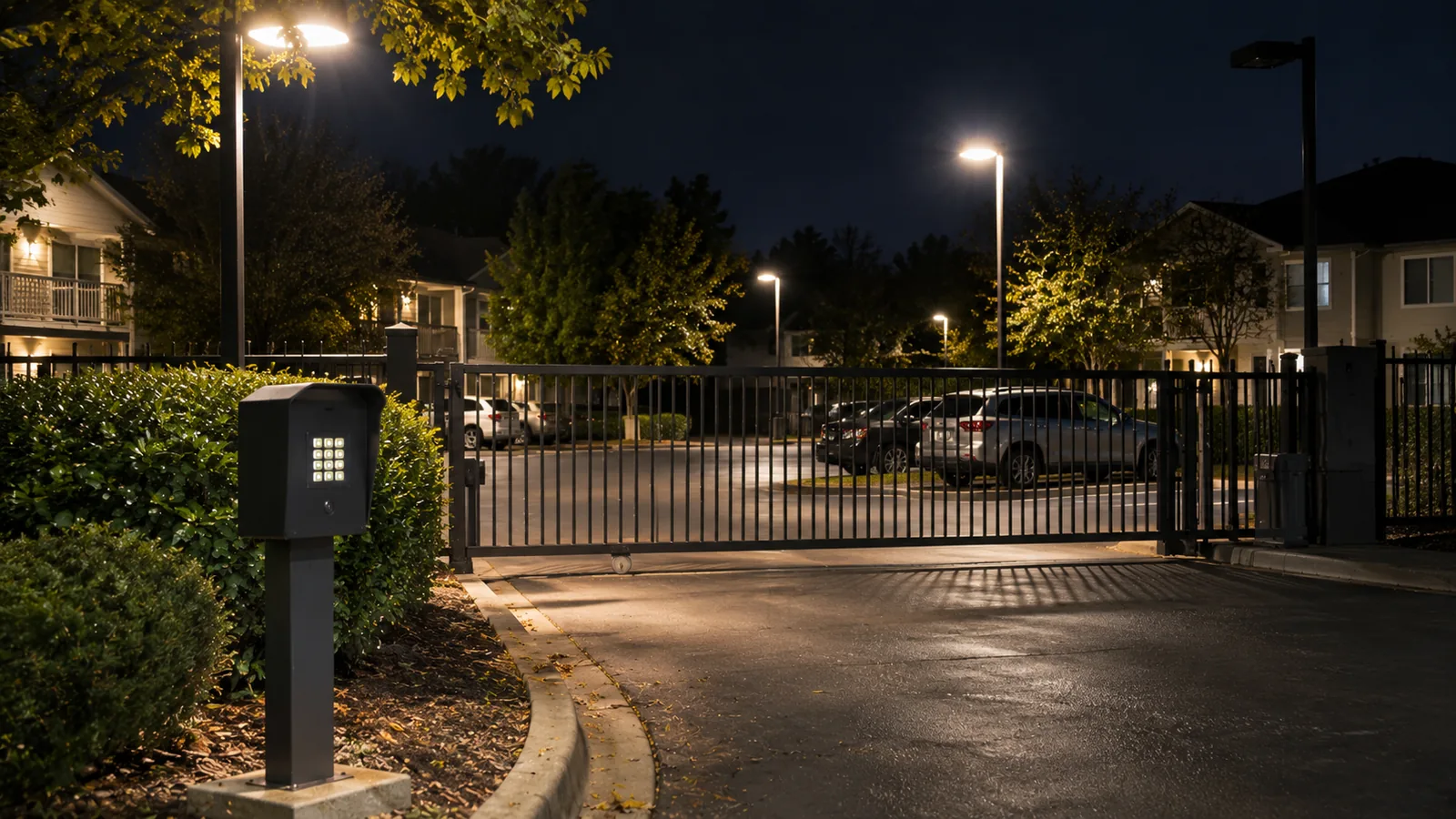
19. Evaluate assaults and negligent security without promising crime prevention
A negligent security claim starts with whether the party controlling the property had a duty about the risk of third-party crime, and Texas doesn't make property owners insurers against crime. [S8]
Legal question | How Texas courts approach it |
|---|---|
Foreseeability | Measured by the Timberwalk factors: proximity, recency, frequency, similarity and publicity of prior crimes, considered together. [S28] |
Unreasonable risk | A separate question in UDR v Petrie, weighing the risk against the burden of preventing it. [S8] |
What happened in Petrie | The court ruled for the apartment owner because there was no evidence of the burden. [S8] |
A list of prior crimes | May bear on foreseeability, but doesn't automatically settle unreasonableness, the right precautions or causation. [S8] |
Prior incidents have to be checked against reliable records, not just counted.
When looking at prior incidents | What to sort out |
|---|---|
Police calls | Whether each entry was only a call or a confirmed incident. [S28] |
Offense type | Whether the prior crime is unrelated or bears on the attack at issue. [S28] |
Location and timing | How close it was and whether it fell within a meaningful period. [S28] |
Management's knowledge | What it actually knew or reasonably should have known under the applicable standard. |
A crime map full of symbols | It can look striking while hiding whether the incidents are comparable. |
Connect any proposed security failure to the actual attack. [S4]
Hypothetical security fact | Why causation needs care |
|---|---|
The pedestrian gate by Building 4 was broken for weeks | It matters most if the attacker actually came through that gate. |
The attacker was let in as a guest | A broken perimeter gate may carry little causal weight. |
The assault happened inside a unit | Chapter 92 security-device duties and notice need separate analysis. [S4] |
Evidence to preserve | What it may show |
|---|---|
Gate records and lock complaints | Access problems and when they were reported. |
Lighting repair tickets | Dark areas and how long they stayed dark. |
Patrol contracts | What security was promised and provided. |
Camera information | What was recorded and kept. |
Communications about threats | What management was told. |
Chapter 92 requires certain security devices, such as window latches, keyed dead bolts or doorknob locks, sliding-door pin locks and handle latches or bars, and keyless bolting devices and door viewers on exterior doors (§92.153). The statute has its own remedies and defenses. [S4]
Chapter 92 security-device rule | What it provides |
|---|---|
Required devices | The devices listed in §92.153. [S4] |
Repair on request | Within a reasonable time, presumed 7 days (§92.161). [S4] |
After certain reported break-ins or violent crimes | A shorter 72-hour period applies. [S4] |
Treat the victim with care while evidence is gathered.
Priority | How counsel handles it |
|---|---|
Medical care and personal safety | These may come first. |
The criminal investigation | Gather information lawfully without interfering with investigators or confronting suspects. |
Public statements | Avoid publishing identifying details, security weak points or speculative accusations. |
Pressure for a quick explanation | A civil claim can proceed on evidence, and unsupported certainty can hurt both the client and the case. |
20. Handle apartment parking collisions and pedestrian injuries
A crash in an apartment parking lot can involve more than the driver, so start with the vehicle's movement and then ask whether the property played a part.
Driver question | Hypothetical detail |
|---|---|
Movement and speed | A car backing out of a carport space. |
Distraction | The driver looking at a phone. |
Pedestrian location | A resident walking behind the row of parked cars. |
Visibility and lighting | A dark stretch near the dumpster enclosure. |
Reaction time | Whether the driver had time to stop. |
Keep original dashcam or surveillance footage and identify every vehicle and driver. Police may not prepare a full crash report on private property, so collect witness and scene information yourself.
Possible property contribution | What it might cause |
|---|---|
A pothole | A pedestrian fall. |
Failed lighting | Poor visibility before a collision. |
An obstructed sightline | A driver who couldn't see a pedestrian. |
Negligent paving work | A hazard that contributed to the crash. |
The owner or contractor isn't responsible just because a crash happened on private property.
Property claim element | What has to be shown |
|---|---|
Control | Who controlled the area. |
Notice, where required | What the owner knew or should have known. |
Unreasonable danger | That the condition posed one. |
Causation | That the proposed correction would likely have changed the outcome. |
Expect the driver and the property defendant to point at each other.
Reconstruction question | Evidence used |
|---|---|
Could the driver have avoided the crash even with the condition present? | Time, distance and sightlines. |
Was the condition dangerous even with ordinary driving care? | Physical evidence and credible witness observations. |
Is expert help worth the cost? | Reconstruction or human-factors analysis may be justified when these questions are central and the injury warrants it. |
Insurance and release step | Why it matters |
|---|---|
Notify potentially applicable auto insurers | Coverage depends on notice and policy terms. [S18] |
Check UM/UIM and PIP coverage | Available benefits depend on the actual policy terms. [S18] |
Remember Texas auto minimums | They don't establish an apartment owner's commercial liability limits. [S17-S18] |
Separate property damage and bodily injury releases | Coordinate every settlement before signing. [S15, S17-S18] |
Read any release of the driver closely | A broad release may affect claims against other parties, depending on its terms and applicable law. [S15] |
21. Plan preservation before records disappear
A good preservation request names the custodians, systems, date ranges, locations and kinds of evidence that fit this incident, instead of demanding every record the company ever made.
Incident | Evidence categories to name |
|---|---|
A fall on the second-floor landing | Camera footage, work orders, photographs, inspections, resident complaints, employee messages, vendor records and the physical component. |
A structural collapse | Everything above, plus plans, permits, engineering reports, demolition records and debris. |
Find out the ordinary retention periods and whether data can be exported without losing context.
Storage issue | What to watch for |
|---|---|
Surveillance kept by a third-party vendor | The vendor may be the custodian, not the property. |
Maintenance software | Audit history may be stored separately from the visible ticket. |
A camera's displayed clock | It may not match actual time. |
A short clip chosen by one side | It may leave out facts needed to understand the event. |
Enough surrounding footage | Request what's needed to judge timing, prior observations, cleanup and the incident itself. |
The client has to preserve evidence too.
What you should keep | Rule to follow |
|---|---|
Phones, photographs and messages | Keep them, even the embarrassing ones. |
Social media posts and accounts | Don't delete or alter them once litigation is foreseeable. |
Clothing, shoes and notes | Keep them as they are. |
A lost device or missing file | Tell counsel right away, because an honest explanation and a search for backups beat an incomplete production that later looks deliberate. |
Under Brookshire Brothers v. Aldridge, the trial judge decides whether spoliation happened and what remedy fits, and the remedy has to be proportionate. Missing video isn't an automatic win. [S19]
Spoliation question | Brookshire Brothers rule or next step |
|---|---|
Who decides | The judge decides spoliation and the remedy. [S19] |
What the analysis looks at | Preservation duty, breach, prejudice and the circumstances of the loss. [S19] |
When a jury instruction is available | It's reserved for intentional spoliation, or negligent loss that left the other side without a meaningful ability to present its case. [S19] |
What to investigate when evidence is missing | What existed, who controlled it, when the duty to preserve arose, how it was lost and what other proof remains. [S19] |
22. Build medical causation and damages separately from the defect
Proving the stair was unsafe doesn't prove the nature and extent of every injury you claim, so medical proof gets its own file.
Gather | Why it matters |
|---|---|
Medical records and imaging | They show what was found and when. |
Treatment history | It shows the course of care after the fall on the second-floor landing. |
Prior-condition information | It lets a provider compare your condition before and after the incident. |
An opinion from a treating provider or qualified expert | Someone may need to explain whether the event caused a new injury, aggravated an old one, or produced symptoms with another explanation. |
Timing helps, but a fall followed by pain doesn't answer every causation question by itself.
If the record shows | Handle it this way |
|---|---|
Earlier back pain or an old accident | Tell your lawyer up front, because concealment can sink an otherwise legitimate claim. |
Degenerative findings on the MRI | Focus on how your function changed after the fall, not on whether your body was perfect before it. |
A gap in treatment | Give the real reason, such as cost, transportation, or work. |
A doctor's opinion | Make sure it names the evidence behind the change and separates reasonable medical opinion from possibility. |
Texas law and the facts of your case decide which damage categories you can claim, and each may need different proof.
Damage category | Proof that usually supports it |
|---|---|
Past and future medical needs | Bills, records, and a supported treatment plan, not every treatment that might conceivably happen. |
Lost earnings and earning capacity | Payroll, tax records, and sometimes economic evidence. |
Pain, impairment, and disfigurement | Medical findings, photographs, and specific accounts from people who see you. |
Economic calculations | Stated assumptions about timing, duration, and cost. |
Every category | A check that the same loss isn't counted twice under two labels. |
The medical bills you ran up aren't automatically the medical damages you can recover.
Rule | What it does |
|---|---|
CPRC §41.0105 paid-or-incurred | Limits recoverable medical expenses to amounts actually paid or incurred by or on behalf of the claimant. [S16] |
Section 18.001 affidavits | Address proof that charges were reasonable and services were necessary. [S24] |
What a §18.001 affidavit doesn't do | It doesn't establish the defendant's liability or automatically prove medical causation. |
Counteraffidavits and objections | They have their own deadlines and requirements, so check current law in each case. |
A spreadsheet of billed charges | A starting point for analysis, not necessarily the final recoverable figure. [S16, S24] |
23. Document work loss, household effects, and future needs
Lost income needs payroll, attendance, tax, or business records, not a round number.
If you are | Records and details to collect |
|---|---|
An employee | Missed dates, wage rate, overtime patterns, leave used, and work restrictions. |
Self-employed | Actual lost earnings rather than gross receipts, with expenses, seasonality, substitute labor, and work you did despite the injury. |
A business owner with lower revenue | Reliable evidence tying the drop to the injury, since revenue can fall for several reasons. |
Reduced earning capacity is different from a short stretch of missed pay.
Earning capacity question | What the evidence should consider |
|---|---|
Can you still do the same work? | Your restrictions and the job's physical demands. |
Are fewer hours available to you? | Medical limits and your employment history. |
Has your career path changed? | Education, transferable skills, and realistic alternatives. |
Is vocational or economic testimony needed? | It may fit a substantial, supported claim, and it shouldn't assume permanent unemployment just because an injury exists. |
Everyday changes count, but they need concrete detail.
Daily life area | Hypothetical example of useful detail |
|---|---|
Stairs | She now takes the elevator instead of the stairs to her third-floor unit. |
Shopping and errands | Her sister drives her to the grocery store twice a week. |
Childcare | A neighbor walks her son to the bus stop near the leasing office. |
Sleep and hobbies | She stopped her Saturday pickup basketball games. |
Help actually provided | Who helped, how often, and whether it was necessary. |
Recovery | What has improved, so the account matches your actual course. |
Statements from people who saw the changes help most when they describe specifics instead of repeating legal phrases.
Future need | What counsel checks |
|---|---|
A mobility limit that affects housing or transportation | Whether the change is medically supported and legally recoverable. |
A recommended surgery or therapy | Reasonable cost and medical support. |
Any future item | Overlap with other claims, since not every desired change is a compensable injury expense. |
The whole request | A clear split between past loss, ongoing limitation, and supported future need, so an insurer or jury can follow it without inflated figures. |
24. Investigate liability insurance and collection sources
Get the actual policies, because a certificate or a policy number on an incident form isn't a coverage determination.
Policy part to obtain | What to check |
|---|---|
Declarations | The insured entity, covered location, policy period, and limits. |
Forms and endorsements | Exclusions, amendments, and whether the policy is occurrence or claims-made. |
Schedules | Whether the complex, such as the property on the incident form, is listed. |
Deductibles and retentions | How much the insured pays before coverage responds. |
Excess layers | Whether umbrella coverage sits above the primary policy. |
Other claims | Whether earlier claims have reduced available limits. |
A certificate of insurance can point to a lead, but it doesn't show every coverage condition. [S17]
Possible coverage source | What to keep in mind |
|---|---|
The owner's commercial general liability (CGL) policy | CGL covers business liability for bodily injury, subject to its terms and exclusions. [S17] |
The management company's coverage | It may respond to different allegations than the owner's policy. |
A contractor's liability insurance | It may cover work on a balcony, stair, or gate. |
Additional-insured coverage | The owner may be added to a contractor's policy. |
Umbrella or excess insurance | It may depend on exhaustion of the underlying policy. |
Auto policies | They matter when a vehicle in the parking lot or carport caused the injury, and Texas requires at least 30/60/25 liability coverage. [S18] |
Don't assume all limits add together. Coverage can overlap, depend on exhaustion, exclude particular risks, or be disputed, and indemnity and defense arrangements are separate from your right to damages.
Published requirement | What it is and isn't |
|---|---|
Fannie Mae Multifamily Guide §506.03 | Requires general liability of at least $1 million per occurrence and $2 million general aggregate during additional dwelling unit construction. [S3] |
What it is | A financing-program requirement in one construction context. |
What it isn't | Proof of any policy at the property where you were hurt, or a statewide legal minimum for apartment claims. [S3] |
A serious claim can exceed the insurance available.
Collection issue | What to discuss with your lawyer |
|---|---|
Collectibility and assets | Whether a judgment could actually be paid. |
Coverage disputes | Whether the insurer may deny or limit coverage. |
Litigation expense | What experts and trial will cost compared with likely recovery. |
An uninsured or underinsured defendant | It doesn't erase liability, but it can change strategy. |
A large verdict | It isn't the same as a collectible recovery, so understand this before approving expensive expert work or turning down a reasonable offer based on an assumed limit. |
25. Evaluate fault allocation before negotiating
Under Chapter 33, if you're more than 50 percent responsible you recover nothing, and a lower percentage reduces your damages. [S15]
Chapter 33 also addresses | Why it matters |
|---|---|
Defendants' responsibility | Fault is divided by percentage among those submitted to the jury. |
Settling persons | Their share and settlement credits affect the remaining case. |
Responsible third parties | A properly designated person can be assigned fault without being a defendant. |
Joint and several liability | It applies only in specific circumstances, so no one should promise that every defendant pays everything. [S15] |
Expect the defense to point at your conduct.
If the defense says | Investigate |
|---|---|
Your sandals caused the fall | Whether footwear actually explains a failed stair connection, which it often doesn't. |
You were on your phone | Whether there's evidence and whether it mattered causally. |
You'd been drinking | Records and witnesses, not assumptions. |
You took the wrong route or ignored a warning | Whether a sign existed and whether another route was reasonably available. |
You misused or overloaded something | What the object was built for and what you actually did. |
Video contradicts your account | Discuss it privately with your lawyer early, because an unsupported denial can wreck credibility. |
A contractor can be designated as a responsible third party even if you can't recover from it.
Designation issue | What to monitor |
|---|---|
Procedure and timing | Motions and deadlines in the pleadings. |
Objections | Whether the designation has evidentiary support. |
Limitations | How a designation affects claims against the designated party. |
Evidence | Discovery about the omitted participant, since fault isn't limited to the companies first named in the petition. |
A settlement with one party can change the rest of the case.
Before signing a partial settlement | Review |
|---|---|
The release | Which claims and parties are being released. |
Credits and allocations | How a later recovery will be calculated. |
Indemnity language | Effects on contribution or other rights. |
The offer itself | Whether it fits the overall strategy, not just whether it beats an early informal offer. |
26. Calendar limitations, service, and public entity issues
Texas generally gives you two years to file a personal injury suit under section 16.003, subject to accrual rules and exceptions. [S11]
Deadline question | How it works |
|---|---|
When the clock starts | Calculate from the actual facts of the injury. |
A minor was injured | Limitations is tolled while the injured person is under 18 under §16.001. [S11] |
Death, disability, or other circumstances | Check whether they change the analysis. |
Ongoing treatment or insurance talks | They don't extend the deadline. |
A demand letter or insurance claim | Neither one stops limitations. |
Construction repose and professional-claim requirements | They need their own calendar entries. [S11-S12] |
Filing the petition doesn't end deadline work.
Service risk | How to avoid it |
|---|---|
Suing the wrong entity | Confirm the legal owner and manager before filing. |
An unserved defendant | Pursue service with the diligence the law requires. |
A wrong registered agent | Verify it rather than assume. |
Missing proof of effort | Keep records of investigation and service attempts. |
A management complaint or insurer acknowledgment | It doesn't substitute for filing and service. |
Public or publicly connected housing needs careful entity identification.
If the property is | What to check |
|---|---|
Privately owned but in a housing program | Public funding alone doesn't make the owner a governmental unit. |
Run by a housing authority | A housing authority is a unit of government for the Tort Claims Act under Local Government Code §392.006. [S29] |
Owned by another public entity | Immunity, waiver, notice, duty, and damages-limit issues may apply. |
Any subsidized complex | Don't label it government property or assume private-premises rules apply unchanged. |
Chapter 101 has notice and premises provisions for covered governmental claims, plus limits on liability and recovery. [S14]
Tort Claims Act point | What it means |
|---|---|
Notice deadline | Notice of the claim is due within six months of the incident under §101.101. [S14] |
Exceptions | A city charter or ordinance can set another period, and actual notice can satisfy the requirement. |
Other rules | Other statutes, local requirements, and the specific entity may matter. |
Timing | The notice period can be much shorter than two years, so a general two-year statement is never a reason to wait. [S14] |
27. Present an evidence-based insurance demand
A useful demand explains the event, names the responsible insured, states the legal theory, and organizes the proof behind it.
Include | Hypothetical example |
|---|---|
Precise location and date | The breezeway outside Building 4, 7:40 p.m. on a Tuesday. |
Control evidence | The lease shows the breezeway is a common area. |
Notice evidence where required | A resident portal ticket about the broken light, marked "complete" with no repair. |
Photographs and records | Photos of the dark stairway and the maintenance log. |
Medical causation | The treating physician's opinion tying the fall to the injury. |
Damages analysis | Documented bills, wage loss, and supported future care. |
Gaps | An honest note on what's missing, because ignoring an obvious issue invites a denial. |
Exhibits should be selective and easy to understand.
Exhibit practice | Why |
|---|---|
Label photos with source and date when known | The adjuster can tell what each image shows. |
Explain a work order's significance | It shouldn't be buried among hundreds of pages. |
Support and disclose an expert's assumptions | An unsupported opinion invites challenge. |
Protect unrelated medical and personal information | Reasonable handling limits needless exposure. |
Make every attachment's point clear | An adjuster, supervisor, or defense lawyer shouldn't have to guess. |
A settlement request should reflect the risk and value of this case.
Factor | What to weigh |
|---|---|
Comparative fault | How Chapter 33 could reduce recovery. |
Proof problems and medical uncertainty | Where the evidence is thin. |
Insurance, collection, and costs | What can actually be paid and what the case will cost. |
The client's needs | Timing and certainty. |
A demand deadline | A reasoned basis that allows time to evaluate the materials. |
A policy-limits demand | Insurer duties need careful legal analysis, and strong language in a letter doesn't automatically create extra-contractual exposure. |
You stay involved in every decision.
Your lawyer should | Why |
|---|---|
Explain the demand and its evidence | You can judge what's being asked. |
Discuss a negotiating range where appropriate | You understand the strategy. |
Explain what accepting or rejecting an offer means | You may value timing and certainty differently from counsel. |
Convey offers and document decisions | That's part of candid advice. |
Be honest about limits | A strong demand can open settlement talks, but it can't guarantee a large payment or rule out litigation. |
28. File a petition that matches the facts and required theories
Before filing, confirm venue, jurisdiction, the proper entities, service information, limitations, and professional-claim prerequisites.
Defendant | How the petition should describe them |
|---|---|
Owner | Its control of the common areas and what it knew. |
Manager | Its maintenance, inspection, and response role. |
Contractor | The work it did, such as the balcony joist repair. |
Design professional | The specific design decision at issue. |
Driver | The vehicle conduct in the parking lot. |
Everyone | Specific acts, not a generic claim that every defendant did everything. |
Clear allegations focus discovery and reduce confusion about what each party has to answer.
If the injury came from | Theory to evaluate |
|---|---|
A dangerous condition left after work, like a loose stair tread after a repair | Premises liability, as United Scaffolding held for a condition the contractor's work created. [S22] |
Ongoing activity that directly caused it, like a worker dropping a board from the third floor | Negligent activity, with different elements and proof. |
Facts supporting both | Alternative pleading may fit, but you still must prove and get findings on the claim actually tried. [S22] |
Read the lease and contracts early.
Contract issue | What counsel does |
|---|---|
Lease language | Reads the entire lease and addenda instead of relying on a leasing employee's summary. |
A waiver clause | Doesn't tell you it waives all injury rights or has no relevance, since scope and enforceability depend on the provision and governing law. |
Statutory limits | Checks whether law limits waiver of particular residential duties. [S4] |
Arbitration and releases | Evaluates them before filing. |
After filing, the case needs a calendar and a preservation plan.
After filing | What happens |
|---|---|
Litigation calendar | Deadlines set by court orders and current rules. [S20] |
Preservation plan | Steps to protect evidence consistent with those orders. |
Discovery | Expect the defense to request relevant records, and you'll have obligations of your own. |
Inspections | The defense may ask to inspect the stairway or your unit. |
An urgent filing | Remaining factual gaps get prompt priority, because filing doesn't replace basic identification and deadline work. |
29. Use written discovery to reconstruct decisions
Written discovery should test your liability map by pulling the records that show who decided what about the condition that hurt you.
Ask for | What it can show |
|---|---|
Ownership and management agreements | Who held control of the breezeway, stairs, or balcony and who could approve repairs. |
Maintenance records and work orders | What the technician saw and did at the second-floor landing. |
Inspection protocols and completed inspections | Whether anyone looked at the railing and what they wrote down. |
Complaints and resident portal messages | Who reported the condition and when. |
Repair budgets and vendor scopes | Whether a fix was proposed, priced, deferred, or limited. |
Insurance agreements | Which policies and indemnity promises may apply. |
Communications about the specific condition | Emails and texts between the manager, owner, and contractor. |
Use reasonable time periods and a clear location definition. A request for every document across a large portfolio invites objections and delay without reaching the records that matter.
Electronic system question | Why ask it |
|---|---|
What fields does the maintenance platform keep? | Resident submissions, technician notes, photos, approval requests, and status history may sit in separate fields. |
Does the printout show everything? | A printed ticket marked "complete" may leave out the full record. |
Who are the custodians? | The person who can export the data is the person to ask. |
What export format and attachments exist? | Photos and audit history may only come through a native export. |
What audit information is available? | Ask for it in proportion to the issues in dispute. |
If a defendant says responsive records don't exist, explore its retention practices and the search it ran before you assume anything was lost on purpose.
Discovery tool | Good use |
|---|---|
Interrogatories | Identify responsible people, contractors, inspections, and the defendant's factual contentions. |
Requests for admission | Narrow genuine disputes, used with attention to the governing rules and their purpose. |
Admission aimed at authenticity | Often more useful than an expansive legal conclusion that predictably draws an objection. |
Overall plan | Build admissible proof, not just a large file. |
Resident complaints can contain unrelated personal information, and personnel or security records may need careful treatment.
Privacy issue | How to handle it |
|---|---|
Other residents' personal details | Ask for a tailored protective arrangement that limits irrelevant disclosure. |
Personnel or security records | Seek what bears on the claim and handle it under agreed protections. |
A dispute that won't resolve | Document reasonable efforts to confer, then present the specific issue to the court. |
The goal | Get the material needed to decide the claim fairly, not open access to every resident's affairs. [S20] |
30. Prepare depositions and inspections around disputed elements
Each deposition should be planned around what that witness can actually establish on control, notice, and causation.
Witness | What they may establish |
|---|---|
Maintenance technician | The condition observed and the work performed. |
Property manager | Complaints received, authority, and the decision to close a ticket. |
Corporate representative | Testimony on designated organizational topics. |
Contractor | Scope of work, methods, and warnings given. |
Don't spend the whole deposition on background while control, notice, and causation stay unresolved.
During questioning | Hypothetical example |
|---|---|
Anchor memory to records | Walk the technician through the work order for the Building 4 stair tread. |
Ask about terminology and dates | Ask what "PM complete" means on this ticket. |
Treat a missing entry carefully | A blank field doesn't prove no work was done, so ask what happened. |
Follow up on "someone else decided" | Get that person's name and the communication. |
Clarify conflicts | If testimony differs from an invoice or photo, ask about the difference calmly. |
Aim for factual admissions | A clear admission that the rail was loose beats an argument over the word negligence. |
Client preparation is about telling the truth, listening, and separating memory from inference.
Preparing the client | Why |
|---|---|
Review records and prior statements, including hard facts | Surprises at deposition hurt more than known problems. |
Don't supply a story | Preparation shouldn't hand the client a version to adopt. |
A short or qualified answer is fine | "I don't know" is accurate when it's true. |
Don't speculate | Guessing about engineering, property management, or medical causation creates needless contradictions. |
Plan inspections with a purpose and give proper notice to the other parties.
Inspection planning | What to decide |
|---|---|
What will be measured, photographed, tested, sampled, or changed | The protocol, written down in advance. |
Access and safety | How the team reaches the balcony or carport safely. |
Component preservation | Who keeps a removed joist, latch, or tread. |
Equipment and participation | What tools come and which parties attend. |
Documentation of methods | So results can be evaluated later. |
Scene changes since the incident | Record the changes and their limits, and never present a post-repair inspection as an unchanged scene. |
31. Select experts for the questions that require them
Retain an expert only for a material question that goes beyond ordinary observation, and match the expert's qualifications to that exact question.
Possible question | Field that may answer it |
|---|---|
Why a balcony joist failed | Structural engineering. |
Whether framing or repairs met accepted practice | Construction practices. |
How a gate, elevator control, or other equipment functioned | Equipment or elevator engineering. |
Whether a walkway was reasonably safe | Premises safety. |
How a parking lot collision happened | Accident reconstruction. |
Whether the fall caused the injury | Medical causation. |
Lost earning ability and future care | Vocational and life-care analysis. |
A general building-management background may not qualify someone to analyze a specific structural connection or a complex elevator control system.
Strong expert analysis | Weak expert analysis |
|---|---|
Explains the observed condition | Says the property was unsafe because someone got hurt, which is circular. |
Applies a relevant standard where one exists | Skips the standard. |
Describes the causal mechanism | Assumes cause from the result. |
Shows how a reasonable precaution would have changed the event | Doesn't connect the precaution to the injury. |
States what can't be determined from the evidence | Overstates certainty. |
Give the expert a balanced record, including unfavorable facts, and ask for methods, assumptions, alternatives considered, and limitations.
Expert logistics | What to watch |
|---|---|
Designation, reports, supplementation, depositions, and challenges | Track each deadline under current rules and court orders. |
Certificate of merit | A separate early issue, when required, and not the same as later expert designation. [S12] |
Supporting materials | Preserve them and evaluate disclosure obligations. |
Counsel's role | Understand the opinion well enough to test it and explain it, and don't treat the report as a substitute for legal analysis. [S12, S20] |
Budget expert work in proportion to the case.
Spending choice | Likely effect |
|---|---|
A prompt structural consultation | May preserve a viable claim. |
Several overlapping experts in a modest case | May consume a large share of the recovery. |
Material expenses | Discuss them with the client under the engagement terms. |
The aim | Reliable, useful proof that supports a fair resolution, not a long witness list for show. |
32. Prepare for summary judgment under current Texas procedure
For summary judgment motions filed on or after March 1, 2026, amended Rule 166a generally makes the response due 21 days after the motion is filed, unless the court grants leave or the parties agree otherwise. [S13]
Motion type | What it challenges |
|---|---|
Traditional motion | Argues the evidence establishes the defendant's position as a matter of law. |
No-evidence motion | Argues there's no evidence on one or more elements you must prove. |
Combined motion | Raises both kinds of challenge in one filing. |
The Texas Supreme Court rewrote Rule 166a effective March 1, 2026, so don't rely on older practice summaries that count the response deadline back from the hearing date. Read the current rule, check the motion's filing date, and check any court order. [S13]
Before the response is due | Why |
|---|---|
Identify each challenged element | Control, notice, unreasonable danger, and causation are common targets. |
Match admissible proof to each element | A narrative of the injury or an unsupported expert conclusion may not raise a fact issue. |
List discovery still needed | So you can seek relief with supporting facts. |
A substantive response ties evidence to the exact proposition the motion disputes.
If the motion attacks | Respond with |
|---|---|
Control or notice | The work order identifying the relevant railing and testimony establishing it was received. |
Unreasonable danger | The inspection showing deterioration. |
Causation | The expert explanation linking the defect to the failure. |
Known danger | The applicable exception, developed on its own terms, not just a comparative fault argument. [S6] |
Constructive notice | Actual evidence of how long the condition existed, not general statements about poor maintenance. [S7] |
Admissibility or alternative grounds | A direct answer to each objection and each ground. [S6-S7] |
When necessary discovery isn't finished, evaluate the procedural means to request relief, supported by facts.
Procedural point | What to do |
|---|---|
More time | Don't assume a general request will be granted. |
Rulings and objections | Preserve them for later review. |
Settlement effect | A case built to survive these motions negotiates better, since both sides can see the proof that would reach a jury. |
33. Negotiate and mediate with a complete recovery analysis
A settlement decision should compare realistic outcomes, timing, expense, and collection risk, not a dramatic worst-case verdict.
Factor | What to weigh |
|---|---|
Liability | How likely you are to prove control, notice, and causation. |
Damages | The range of damages the records support. |
Comparative responsibility | How a jury might divide fault. |
Coverage | Any dispute over which policy applies. |
Remaining costs | What it will cost to keep going. |
Uncertainty | Explain it in a usable way, without pretending to a precise mathematical forecast. |
A mediation presentation should answer the defense's strongest points directly.
Defense point | Hypothetical response |
|---|---|
The tenant complained before, so the danger was known | Explain the duty and the necessary-use issues. |
The contractor says the repair wasn't in its scope | Show the records supporting responsibility. |
Treatment was delayed | Give the factual reason and medical support where available. |
The injury is serious but liability is contested | Address why liability holds up, since repeating severity alone won't move the other side. |
Review the release before treating any agreement as complete.
Release term | What to check |
|---|---|
Released parties and claims | Who and what you're giving up. |
Confidentiality and non-disparagement | What you may say afterward. |
Indemnity and lien obligations | What you'd owe others from the money. |
Payment timing | When funds actually arrive. |
Effect on remaining defendants or coverage | Whether the release reaches further than intended. |
Lease or property disputes | Don't give these up by accident. |
A minor or someone needing special approval | Plan the required court process, since an ordinary signature may not be enough. |
Ask for a written estimate of distribution when it's feasible.
Distribution item | What it means |
|---|---|
Gross recovery | The total settlement amount. |
Fees and known expenses | What comes off under the engagement agreement. |
Medical balances and reimbursement claims | What providers and payors may be owed. |
Unresolved deductions | Items still being negotiated, shown as estimates and not final amounts. |
What the settlement means in practice | No published apartment settlement average can substitute for this individual assessment. |
Credentials and outcomes | Being Board Certified in Personal Injury Trial Law by the Texas Board of Legal Specialization doesn't guarantee any particular offer or outcome, and no lawyer should promise that it does. [S1] |
34. Prepare the case for trial and preserve a supported verdict
Organize the trial around the questions the jury must answer, then prove damages with medical and practical support.
Jury question | What the proof should show |
|---|---|
Who controlled the condition? | The owner, manager, or contractor in charge of that stairway or balcony. |
Why was it unreasonably dangerous? | The specific defect and the risk it created. |
What notice or other duty evidence exists? | Complaints, work orders, inspections, or the defendant's own knowledge. |
What did reasonable care require? | The precaution that was available. |
How did the failure cause the injury? | A coherent timeline, which often does more than a stack of photos without a causal explanation. |
Exhibits and witnesses have to stay accurate under pressure.
Exhibit or witness | Standard |
|---|---|
Exhibits | Accurate scale, dates, labels, and sources. |
Demonstrative drawings | Identified as illustrations. |
Lighting, angles, and dimensions | Never altered in a way that makes the hazard look different. |
Fact witnesses | Explain their own knowledge and admit its limits. |
Engineers | Translate technical conclusions clearly without dropping assumptions or overstating certainty. |
The jury charge must fit the claims and the evidence.
Charge issue | Why it matters |
|---|---|
Premises conditions versus negligent activities | They may require different treatment. [S22] |
Fault allocation, settling persons, and responsible third parties | They change how responsibility is divided. [S15] |
Damages categories | Each needs proper submission and support. |
Objections, offers of proof, and rulings | Preserve them as needed, because an emotional response won't protect a verdict that lacks proper findings or legally sufficient evidence. [S15, S20, S22] |
Explain before trial that a verdict amount isn't immediate cash.
After a verdict | What can happen |
|---|---|
Posttrial motions and appeal | The result can be challenged. |
Collection | Insurance limits, judgment issues, and defendant resources affect what's recovered. |
Further settlement talks | The case may still resolve by agreement. |
The goal | A supported, collectible result, whether by negotiation or adjudication. |
Large recoveries | They need proof and favorable circumstances and can't be assured by the type of property or a lawyer's credentials. |
35. Use public data without inventing apartment injury rates
Texas A&M's Texas Real Estate Research Center reported, in its February 11, 2025 forecast, more than 2.5 million apartment units in the 2024 Texas market and more than 116,000 units delivered in 2024. [S2]
The figure counts | It does not count |
|---|---|
Apartment units, meaning individual homes | Apartment complexes or buildings. |
New units delivered in 2024 | Occupied households. |
The scale of apartment housing for the period reported | Accidents, injuries, or insurance claims. [S2] |
A unit, a property, and an injury event are different measures, so keep them separate in any demand, expert report, or public article.
What the reviewed sources don't provide | Why |
|---|---|
A statewide annual count of all apartment injuries | No public source reviewed for this guide establishes one. |
An annual total or average of apartment settlements | Claims resolved before suit never appear in court filings. |
A representative sample of outcomes | Reported decisions omit many filed cases, and confidential settlements and marketing examples aren't representative. |
A credible settlement mean or median | That would need a defined population, consistent inclusion rules, and information about missing cases. |
Don't build a number by multiplying housing inventory by an unrelated national accident rate.
Shortcut to avoid | Problem |
|---|---|
Inventory times a national accident rate | The rate doesn't describe Texas apartments. |
Adding fires, emergency visits, police calls, and auto claims | These systems overlap, omit events, and use incompatible definitions, so one tenant can be counted several times. |
Publishing a future dataset without context | First identify its geography, year, property definition, collection method, and limitations. |
For one injured person, property-specific evidence matters more than any statewide figure.
Stronger evidence | Weaker evidence |
|---|---|
An earlier structural warning at the same building | A statewide headline. |
A complete inspection history | A general claim that apartments are dangerous. |
A clear causal analysis | Inflated statistics. |
Openly stated data limits | Unsupported numbers that cost the analysis credibility. |
36. Questions to discuss with apartment injury counsel
Bring your questions to the first conversation, and expect answers tied to your facts, not to a formula.
Question | Short answer |
|---|---|
Can I sue the owner and the manager together? | Potentially, if the facts and law show responsibility for each, so ask what evidence will show control, notice, conduct, and causal contribution. |
How many parties can be liable? | There's no preset number, every proposed defendant needs a supported basis, and adding names doesn't automatically add insurance or improve the claim. |
Can I go forward while still living at the property? | Continuing to live there doesn't by itself decide the injury claim, but discuss safety, repair procedures, housing needs, lease obligations, and any retaliation concern separately. [S4] |
Can a guest sue? | Possibly, since permission, location, retained control, and the applicable duty all matter, and a guest's legal status depends on the facts. [S5, S27] |
Can a child recover? | A viable claim needs the same careful liability and causation work, with extra attention to deadlines, representation, and settlement approval. [S11, S20] |
Settlement and insurance questions deserve evidence-based answers.
Question | Short answer |
|---|---|
What's a typical settlement? | The public research here doesn't support a representative statewide figure, so ask for an explanation based on your liability proof, injuries, future needs, work loss, fault issues, insurance, and collection prospects. |
What policy limit applies? | The actual policies and endorsements have to be investigated, because a lender requirement, a certificate, or an online example doesn't establish collectible coverage for your event. [S3, S17] |
Fee questions belong on your list too, and the answers should come in writing from the firm.
Fee question to ask | Why ask it |
|---|---|
How is the fee calculated? | So you understand the engagement terms before you sign. |
Which case expenses might I be responsible for? | Expenses can affect your net recovery. |
How are medical liens and reimbursement claims handled at settlement? | They come out of the recovery. |
Will I get a written distribution estimate before I decide on an offer? | It shows what a settlement means in practice. |
Ask about the lawyer and the plan for your case.
Question about counsel | What to look for |
|---|---|
What is Aaron Herbert's credential? | Aaron Herbert is Board Certified in Personal Injury Trial Law by the Texas Board of Legal Specialization, which you can verify on his State Bar of Texas profile; certification isn't a guarantee or a ranking. [S1] |
How would the firm investigate my event? | A plan for evidence preservation, records, and any needed experts. |
How will we communicate? | A named contact and a realistic update method. |
Can you back up any experience you describe? | Ask for substantiation of any specific experience or result you want to weigh. |
What should I bring? | Your lease, incident information, photos, repair history, witness details, and medical information. [S1] |
37. Keep a practical case file and communication plan
A simple, chronological case file cuts confusion during a long recovery.
Keep in the file | How |
|---|---|
Incident photos | Leave original files unrenamed so they stay tied to the device or source. |
Reports, medical information, and work records | File them by date. |
Receipts | Keep originals and a copy. |
Management communications and portal messages | Screenshot and save them, with dates. |
An index | List each item and where its original is stored. |
A backup | Store a second copy securely and tell counsel before you replace the original phone. |
Bring a short list of open questions to each conversation with the firm.
Hypothetical question for your lawyer | Why it helps |
|---|---|
Who is preserving the gate camera video? | Confirms someone owns the task. |
Has a structural inspection happened? | Tracks the expert work. |
Which companies have responded? | Shows where the investigation stands. |
What records are still missing? | Identifies gaps early. |
What's the next deadline? | Keeps the calendar visible to you. |
What is the investigation or litigation trying to resolve right now? | No new offer doesn't mean no work is happening. |
Agree on a reasonable communication method and the person who handles routine updates.
Tell counsel promptly about | Why |
|---|---|
New treatment recommendations | They change the damages picture. |
Job changes or relocation | They affect lost income and logistics. |
Insurer contacts | Statements can affect the claim. |
Repair activity at the property | The scene may be changing. |
New witnesses or documents from management | They may fill a gap. |
Any proposed release, even for rent or a small medical payment | Share it before signing so its scope can be checked. |
Legal papers | Forward them at once, because a response deadline may already be running. |
The lawyer's office needs the same discipline, with one person responsible for each task.
Internal task | What goes wrong without follow-through |
|---|---|
Preservation follow-up | A letter sent without follow-up may not show what was saved. |
Records requests | Gaps stay open. |
Expert tasks | An expert retained without a defined question may not address the disputed element. |
Discovery responses | Deadlines slip. |
Settlement communication and medical updates | A damages file without current medical information may misstate the prognosis at mediation. |
Calendar verification | Each task should tie to proof, client care, or a procedural requirement, which supports both informed settlement and trial readiness. |
38. Talk with the firm about your apartment injury
You can start the conversation with whatever records you have now, and missing records just tell us what needs to be preserved.
What to bring | Why it helps |
|---|---|
Your lease | Shows who controls which parts of the property and the notice terms. |
The incident date and exact location | Pins down the breezeway, stairwell, unit, or parking space involved. |
Photos | Capture the condition before it's repaired. |
Work orders and resident portal messages | Show what management was told and when. |
Witness names | Let someone confirm what happened before memories fade. |
Medical information | Connects the event to your injuries and treatment. |
Tell us about your apartment injury or call (214) 200-4878.
Related page | What it covers |
|---|---|
The overview of apartment injury law and every guide in this series. | |
First steps for your health, evidence, and reporting. | |
Owners, managers, contractors, and other possible defendants. | |
Apartment injury claims in Dallas. | |
Premises injury claims in Fort Worth. |
More guides in this series are on the way.
Coming guide | What it will cover |
|---|---|
Texas Apartment Stair and Slip and Fall Injury Claims | Falls on stairs, landings, breezeways, and wet walkways. |
Texas Apartment Balcony and Walkway Collapse Claims | Railing, joist, and elevated walkway failures. |
Negligent Apartment Construction and Repair Claims in Texas | Claims against builders, contractors, and repair vendors. |
Apartment Repair Notice and Injury Claims in Texas | How Chapter 92 repair requests relate to an injury claim. |
Texas Apartment Assault and Negligent Security Claims | Crime on the property and the landlord's security duties. |
Texas Apartment Pool and Child Injury Claims | Pool enclosures, gates, drains, and injuries to children. |
Texas Apartment Fire Ceiling Collapse and Electrical Injury Claims | Fires, falling ceilings, and electrical hazards. |
Texas Apartment Elevator and Automatic Gate Injury Claims | Elevator malfunctions and gate injuries. |
Texas Apartment Parking Lot Collision and Pedestrian Injury Claims | Collisions and pedestrian injuries in apartment lots. |
Preserving Evidence After a Texas Apartment Injury | Saving video, records, and physical evidence. |
Texas Apartment Injury Liability Insurance and Policy Limits | Which policies may apply and how limits work. |
Texas Apartment Injury Settlement Value and Lawsuit Preparation | How claims are valued and prepared for suit. |
Choosing a Texas apartment injury lawyer: board certification and other questions to ask | Questions to ask when choosing counsel. |
Sources
Source | What it supports |
|---|---|
[S1] State Bar of Texas, Aaron Alan Herbert member profile, Bar number 24036761, licensed November 6, 2002 (checked October 31, 2026) | Board Certified in Personal Injury Trial Law by the Texas Board of Legal Specialization and license details. |
[S2] Texas A&M University Texas Real Estate Research Center, 2025 Texas Real Estate Forecast (February 11, 2025), multifamily section | More than 2.5 million apartment units in the 2024 market and more than 116,000 units delivered in 2024. |
[S3] Fannie Mae Multifamily Guide, Part II §506.03, commercial general liability insurance | Program requirement of at least $1 million per occurrence and $2 million general aggregate during additional dwelling unit construction, not proof of any property's coverage. |
[S4] Texas Property Code Chapter 92, residential tenancies | Repair duty and notice (§92.052, §92.056, §92.0561), preserved injury actions (§92.061), security devices (§92.153, §92.161), smoke alarms, ownership disclosure, and retaliation. |
[S5] Parker v. Highland Park, Inc., 565 S.W.2d 512 (Tex. 1978) | Landlord's duty for a dark common stairway it controlled, extending to a tenant's guest. |
[S6] Austin v. Kroger Texas, L.P., 465 S.W.3d 193 (Tex. 2015) | Known and obvious dangers in an employee case, with the criminal-activity and necessary-use exceptions. |
[S7] H-E-B, L.P. v. Peterson, No. 24-0310 (Tex. April 10, 2026) | Constructive notice of a transient condition requires some evidence of how long it existed. |
[S8] UDR Texas Properties, L.P. v. Petrie, 517 S.W.3d 98 (Tex. 2017) | Foreseeability and unreasonableness of a crime risk as separate questions. |
[S9] Texas Health and Safety Code Chapter 757, pool yard enclosures | Enclosure, gate, latch, and inspection rules for multiunit rental complex pools and the private action in §757.012. |
[S10] 15 U.S.C. §8003, Virginia Graeme Baker Pool and Spa Safety Act | Anti-entrapment drain cover requirements for pools open only to residents. |
[S11] Texas Civil Practice and Remedies Code Chapter 16 | Two-year limitations (§16.003), tolling for minors (§16.001), and construction and design repose (§16.008, §16.009). |
[S12] Texas Civil Practice and Remedies Code Chapter 150 | Certificate of merit for claims against licensed architects, engineers, land surveyors, and landscape architects. |
[S13] Supreme Court of Texas Miscellaneous Docket No. 26-9012 (February 27, 2026) | Amended Rule 166a for motions filed on or after March 1, 2026, with the response generally due 21 days after filing. |
[S14] Texas Civil Practice and Remedies Code Chapter 101, Texas Tort Claims Act | Six-month notice of claim (§101.101) and governmental liability limits. |
[S15] Texas Civil Practice and Remedies Code Chapter 33 | Proportionate responsibility, the more-than-50-percent bar, responsible third parties, and settlement credits. |
[S16] Texas Civil Practice and Remedies Code Chapter 41 | Medical expenses limited to amounts actually paid or incurred (§41.0105) and exemplary damages. |
[S17] Texas Department of Insurance, commercial general liability insurance | General liability coverage concepts and the absence of a universal policy limit. |
[S18] Texas Department of Insurance, automobile insurance guide | Texas auto liability minimums of 30/60/25. |
[S19] Brookshire Bros., Ltd. v. Aldridge, 438 S.W.3d 9 (Tex. 2014) | Spoliation decided by the trial judge, with a proportionate remedy. |
[S20] Texas Rules of Civil Procedure, official compilation current October 1, 2026 | Discovery, protective orders, depositions, expert designation, and jury charge procedure. |
[S21] Texas Department of Licensing and Regulation, Elevators, Escalators and Related Equipment program | Regulation and inspection of covered elevators. |
[S22] United Scaffolding, Inc. v. Levine, 537 S.W.3d 463 (Tex. 2017) | A claim based on a condition a contractor's work created sounds in premises liability. |
[S23] Strakos v. Gehring, 360 S.W.2d 787 (Tex. 1962) | Rejection of the accepted-work doctrine for contractors. |
[S24] Texas Civil Practice and Remedies Code §18.001 | Affidavits on the reasonableness and necessity of medical expenses. |
[S25] Texas Disciplinary Rules of Professional Conduct, lawyer advertising provisions | Naming the certifying body when a lawyer's certification is mentioned. |
[S26] Johnson County Sheriff's Posse, Inc. v. Endsley, 926 S.W.2d 284 (Tex. 1996) | A lessor's general lack of duty for leased premises the tenant controls, and its exceptions. |
[S27] State Department of Highways & Public Transportation v. Payne, 838 S.W.2d 235 (Tex. 1992) | Duties owed to invitees and licensees. |
[S28] Timberwalk Apartments, Partners, Inc. v. Cain, 972 S.W.2d 749 (Tex. 1998) | Foreseeability factors for crime, and Chapter 92 repair rules governing repair disputes, not injury liability. |
[S29] Texas Local Government Code §392.006 | A housing authority is a unit of government for the Texas Tort Claims Act. |

ABOUT THE ATTORNEY
Aaron A. Herbert
Founding Attorney
Board Certified in Personal Injury Trial Law
Aaron founded The Law Firm of Aaron A. Herbert in 2010 to focus on developing each client's case and seeking its maximum value. For over a decade, he has represented people seriously injured in major accidents and industrial catastrophes, pursuing trial verdicts and settlements while working to reduce the stress of litigation.
Education
- Texas A&M University · B.S., Criminal Justice, 1999
- University of Oklahoma College of Law · J.D., 2002; graduated in the top of his class
Trial experience & approach
Aaron earned numerous jury verdicts at boutique personal injury litigation firms. According to his biography, he spent a year as the top-earning litigation attorney at a firm that frequently appeared in verdict searches as having one of the highest numbers of trial wins in Texas. At another Dallas personal injury firm, he moved from managing pre-litigation attorney to managing litigation attorney over seven years as the firm grew into one of Dallas's largest personal injury firms.
His biography describes a reputation as one of America's most aggressive trial lawyers, with noteworthy recoveries from judges and juries and substantial pretrial settlements. Most of those settlements included confidentiality agreements requested by the defense. Aaron has said the recoveries were justified by the injuries and losses involved, which no amount of money could make someone choose to experience.
His approach combines passion, preparation, persistence and courtroom imagination. He believes a well-supported, engaged and motivated team working cooperatively helps deliver strong representation, with the goal of achieving the best possible result for every client.
Dallas roots, military service & publication
Born and raised in Dallas, Aaron enlisted in the United States Marine Corps after high school and later received an Honorable Discharge. He completed his university and law degrees after his military service and became a lifelong Sooners football fan in law school.
Publication: “Litigating Dog Bite Cases,” Texas Dog Law Seminar, Dallas, 2009.
Professional affiliations & recognition
Professional affiliations and recognition listed in Aaron’s biography:
- State Bar of Texas
- American Bar Association
- Association of Trial Lawyers of America (now American Association for Justice)
- Texas Trial Lawyers Association
- Dallas Trial Lawyers Association
- Dallas Bar Association
- Tarrant County Bar Association
- Million Dollar Advocates Forum
- The National Trial Lawyers – Top 100 Trial Lawyers