CAR ACCIDENT RESOURCES
Texas Car Accident Knowledge Hub
A Texas car accident can leave you dealing with medical appointments, a damaged vehicle and calls from insurers at the same time. This hub helps you sort those questions: what to preserve, how fault is investigated, what records show your losses, and what to consider before resolving a claim. The resources are for injured clients, attorneys and referral partners.

· The Law Firm of Aaron A. Herbert, P.C., Dallas, Texas. Texas Bar license #24036761. Board Certified in Personal Injury Trial Law by the Texas Board of Legal Specialization since 2008.
Featured pillar article
Texas Car Accident Claims and Litigation Explained
Understand Texas car accident claims from preservation and fault through medical proof, insurance, settlement, trial and recovery.
Start with the questions that need attention now
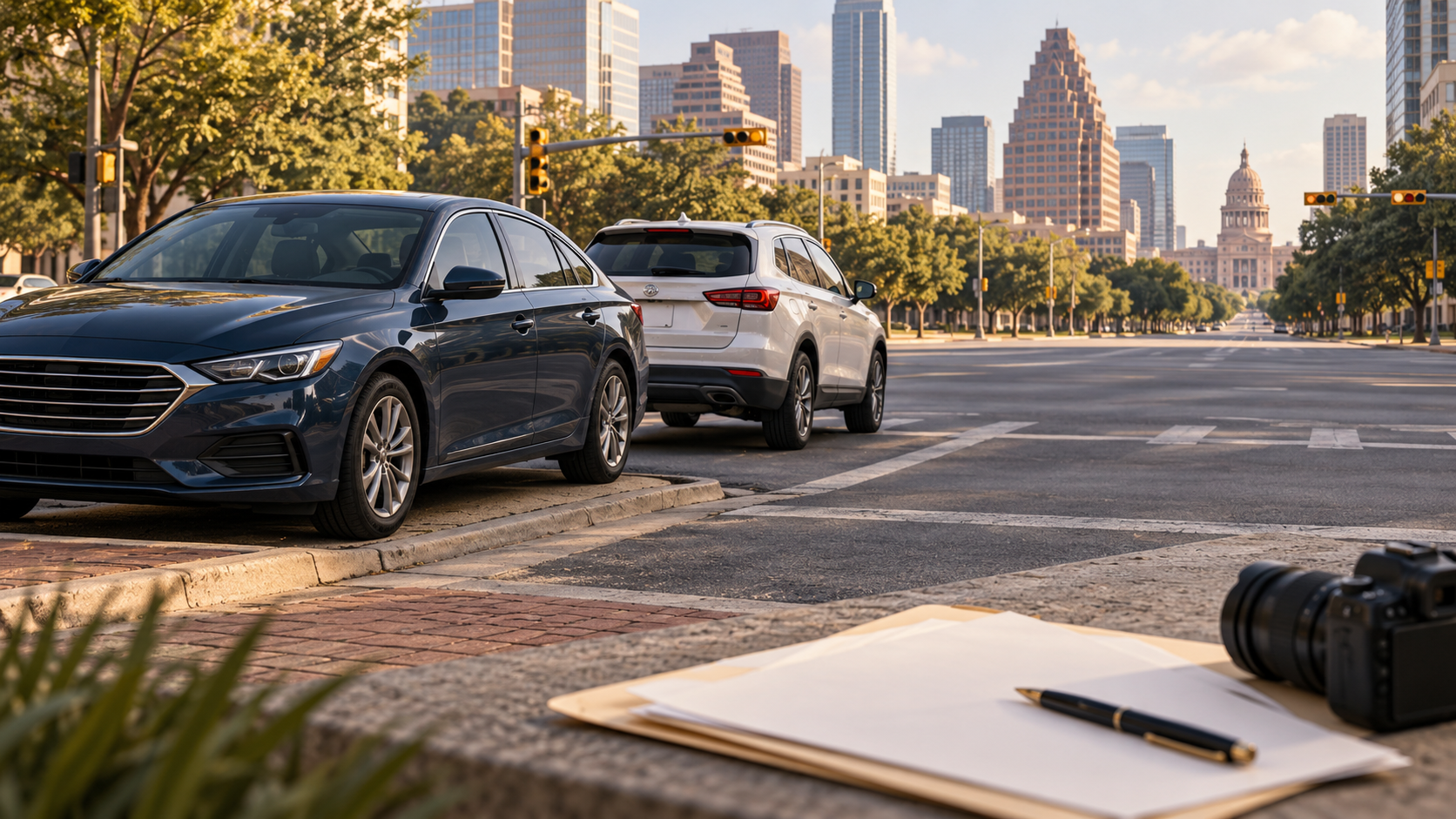
At the scene, safety and care come first. Do not remain in traffic or postpone needed treatment to gather evidence. When it is safe, photographs of the wider scene, vehicle positions and traffic controls can help explain what happened. Keep original files and the investigating agency’s information. A photograph of damage and a photograph showing where the vehicles were positioned can answer different questions.
In the days that follow, keep discharge instructions, appointment records, bills and insurance correspondence together. Tell medical providers about symptoms, when they began and relevant prior conditions. If symptoms improve, record that too. An accurate account of what changed is more useful than a claim that every problem is permanent or that every later symptom must have come from the crash.
Keep the evidence in a form that can be checked
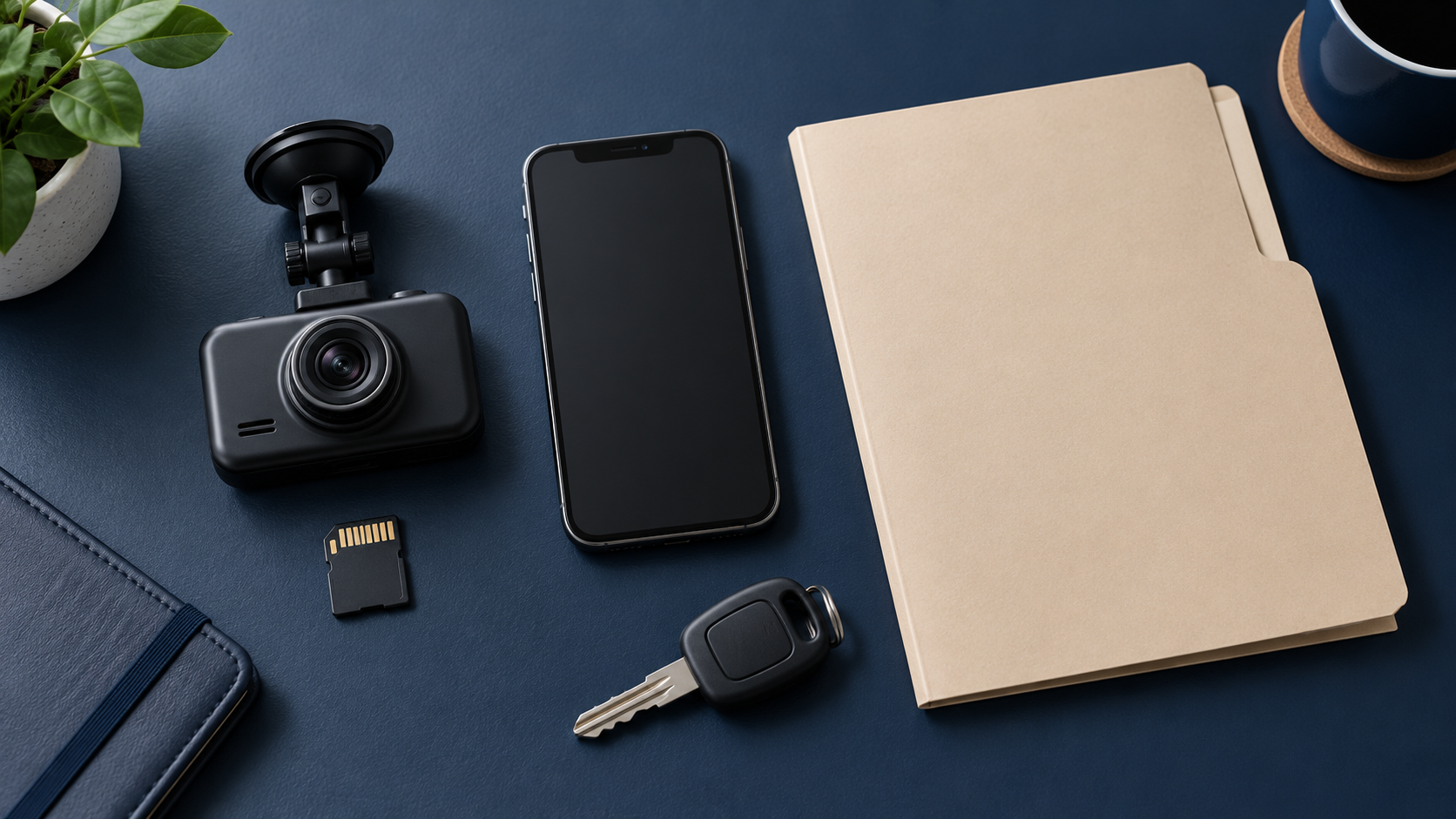
Save the original recording, including the time before the impact. Keep photographs in their original files too; a screenshot may omit information from the file it shows. Make a note of nearby cameras and who operates them. If the damaged car is in storage, give counsel its location so an inspection can be considered before repairs or disposal.
Preservation and access are separate questions. A record may exist without being available to you directly. Do not enter another person’s account or device without authority. Counsel can identify the custodian, the relevant time interval and the lawful process for obtaining information. A focused request is also more likely to identify the useful evidence than a demand for every record a business has.
Work out the collision sequence before deciding fault
Where did each vehicle approach from? Which signal controlled its lane? When did the first contact occur? Work through those questions with the photographs, witnesses and recordings. The resting positions alone may not answer them: a car may have moved after impact or someone may have moved it out of traffic. Leave uncertainty in the account when the evidence does not resolve it.
A police report is an important source to examine, but the report, the officer’s observations and statements from other people are not interchangeable. Likewise, an insurer’s proposed fault allocation should be examined against its supporting evidence. A useful discussion with counsel identifies what is known, what is disputed and which missing record might change the evaluation.
Document injuries and practical losses
Medical records help establish the treatment history, but the claim also needs to explain how the collision is connected to the condition being claimed. Prior injuries, treatment gaps and later accidents deserve direct attention. Giving counsel the complete history allows those issues to be evaluated before they become a surprise.
Keep records of missed work and changes in ordinary activities. For a business owner, reduced revenue and lost personal earnings are not necessarily the same measure. Future treatment and changes in earning capacity also require supporting information. Ask what evidence is needed for each loss rather than treating a total bill or an initial estimate as the complete value of the claim.
Read the policy and the proposed release
The other driver’s liability policy may be only one part of the insurance review. Your own policy, a work assignment or a rideshare trip may raise additional questions. Obtain policy documents and claim correspondence. A business logo or an installed app does not, by itself, establish which company is responsible or which coverage applies.
Read the release before agreeing to the offer. Identify the claims you would give up and ask counsel whether signing could affect a claim that remains open. Compare the offer with the supporting evidence, coverage and risks of litigation. Also ask for an estimate of what you would receive after deductions and whether any repayment questions remain unresolved.
When a claim needs a different plan
Tell counsel at the outset if a child was injured or someone died. Who may bring the claim, who may approve a settlement and which deadline applies need separate attention. Give counsel details about company vehicles and suspected impairment as well. Those facts may change the questions that must be investigated; the procedure for one injured person may not fit another.
For each disputed point, identify the record or witness that could address it. Counsel must then consider how that evidence can be used under the court rules, including any foundation or expert testimony it requires. Keep counsel informed when treatment, work or other relevant circumstances change, and provide the full records rather than selected pages.
About these resources
The articles below explore those questions in more detail. They provide general information and do not determine the outcome of a particular claim. The facts, applicable law, policy terms and court orders need individual review. For help with your circumstances, contact the firm.
Explore the topics
Resources marked “Coming soon” are not yet available.
First steps, evidence and fault
What to Do After a Texas Car Accident
Learn the health, reporting, preservation and insurance steps to consider after a Texas car accident.
Texas Crash Reports and Police Evidence
Learn how Texas crash reports differ from agency investigation records and how to evaluate what they prove.
Preserving Dashcam Video and Vehicle Data After a Texas Crash
Understand preservation of crash video and vehicle data, original files, lawful access and inspection planning. Coming soon.
Fault in Texas Multi Vehicle and Intersection Crashes
Learn how collision sequence, signals, witnesses and physical evidence inform fault in Texas intersection and multi vehicle crashes. Coming soon.
Texas Comparative Fault in Car Accident Claims
Understand Texas comparative fault, responsibility reductions and the evidence needed to evaluate an insurer allocation. Coming soon.
Injuries and losses
Preexisting Injuries and Medical Causation After a Texas Car Accident
Learn how prior injuries, treatment gaps and later accidents affect medical causation in a Texas car accident claim. Coming soon.
Medical Bills and Future Care After a Texas Car Accident
Understand medical expense proof, billing adjustments, affidavits, future care and repayment issues after a Texas crash. Coming soon.
Lost Income and Earning Capacity After a Texas Car Accident
Learn how employees and business owners document missed income and injury related changes in earning capacity. Coming soon.
Serious and Catastrophic Car Accident Injuries in Texas
Understand how serious car accident claims connect prognosis, assistance needs and expert evidence to long term losses. Coming soon.
Insurance and driving circumstances
Texas PIP Uninsured and Underinsured Motorist Claims After a Car Accident
Review PIP, uninsured and underinsured coverage, policy documents and liability settlement coordination in Texas. Coming soon.
Rideshare and Company Vehicle Car Accidents in Texas
Understand work assignments, rideshare trip status, company vehicle responsibility and insurance evidence after a Texas crash. Coming soon.
Distracted Driving and DWI Injury Evidence in Texas
Learn how distraction and impairment evidence connects to civil liability and the separate requirements for exemplary damages. Coming soon.
Settlement and trial
Evaluating a Texas Car Accident Settlement Offer
Evaluate a Texas car accident offer through evidence, coverage, litigation risk, release terms and estimated net recovery. Coming soon.
Texas Car Accident Lawsuit and Trial Preparation
Understand Texas car accident lawsuits, discovery, experts, mediation, trial preparation and posttrial work. Coming soon.
Children and fatal crashes
Children and Fatal Texas Car Accident Claims
Learn why child injury, wrongful death and survival claims require separate authority, deadline and settlement analysis. Coming soon.
Existing firm resources
Dallas Car Accident Lawyer · Aaron A. Herbert’s profile · Contact the firm
Aaron A. Herbert
Founding Attorney
Aaron A. Herbert is a Texas attorney, Board Certified in Personal Injury Trial Law by the Texas Board of Legal Specialization.
For over a decade he has shown an unwavering commitment to clients who were seriously injured by major accidents and industrial catastrophes. During that time he has earned the reputation as one of America’s most aggressive trial lawyers by achieving noteworthy recoveries from judges and juries, as well as substantial settlements prior to trial, the majority of which contained negotiated confidentiality agreements at the request of the defense. When asked about these cases, Mr. Herbert has said that each case not only justified the recovery level, but that no one would trade places with any one of these victims in return for any amount of money, once they know the facts and severity of the injuries and tragedy involved. According to Mr. Herbert, “there can be no substitute for passion, preparation and persistence in the practice of law”. He is known not only for this tenacious preparation, but also for his imagination in the courtroom. He is passionate and persistent in seeking to obtain the maximum case value for each individual client at trial or through settlement, while reducing the stress of litigation on his clients. Born and raised in Dallas, Texas, Mr. Herbert enlisted in the United States Marine Corps after high school and later received an Honorable Discharge. After the Marines, he obtained a Bachelor of Science in Criminal Justice from Texas A&M University, then a Juris Doctorate from the University of Oklahoma College of Law. There he graduated in the top of his class and became an eternal Sooners Football fan. Aaron has worked as a zealous advocate for injured clients at several boutique personal injury litigation firms where he amassed numerous jury verdicts. After spending a year as the top earning litigation attorney at a firm that frequently tops verdict search as one with the highest number of trial wins in Texas, Aaron accepted a position as a the managing pre-litigation attorney at another Dallas personal injury firm. Over the next seven years he transitioned to the managing litigation attorney, and that firm grew to one of the largest personal injury firms in Dallas. In 2010 he formed the Law Firm of Aaron A. Herbert, to get back to a focus on developing each individual case and maximizing case value for each client. Mr. Herbert practices law with the belief that a well taken care of, highly engaged and motivated team of employees working in a cooperative team environment will result in superior representation and great results for the firm clients. He believes in always setting a goal of achieving the best possible results for each and every client.
Education
Texas A&M University (B.S. Criminal Justice, 1999)
University of Oklahoma College of Law (J.D., 2002)
Professional Associations
Licensed to practice in Texas (2002)
Board Certified in Personal Injury Trial Law – Texas Board of Legal Specialization (2008)
Member
State Bar of Texas
American Bar Association
American Trial Lawyer Association
Texas Trial Lawyers Association
Dallas Trial Lawyers Association
Dallas County Bar Association
Tarrant County Bar Association
Million Dollar Advocates Forum
Nation Trial Lawyers – Top 100 Trial Lawyers
Publications
Litigating Dog Bite Cases, Texas Dog Law Seminar, Dallas 2009