Proving the Sequence Before Assigning Responsibility
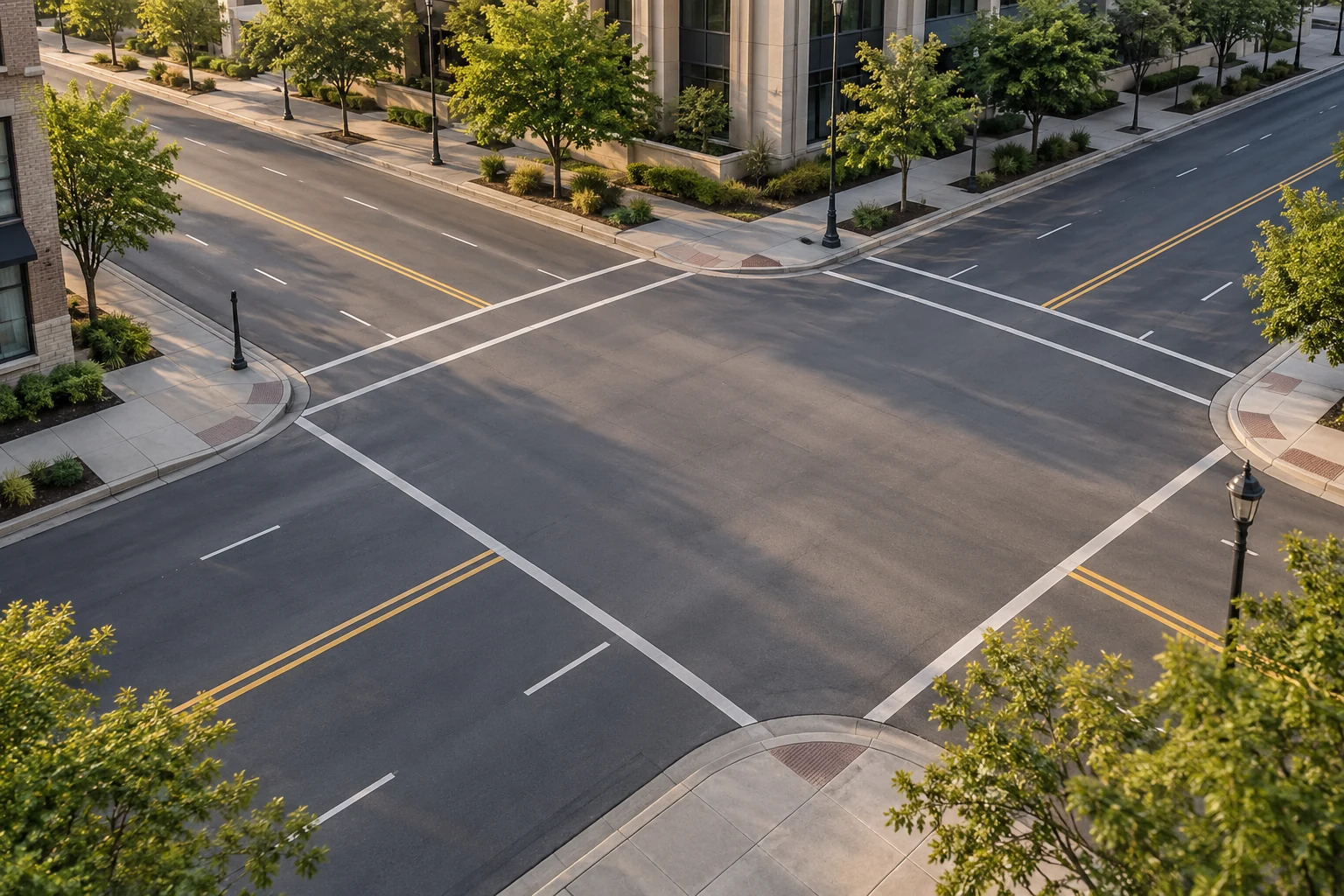
Three damaged cars in a row can tell two very different stories. The middle driver might have hit the car ahead, or might have stopped safely and then been pushed into it. Front-end damage alone won't settle that dispute. At an intersection, a green light also leaves questions to answer about speed, visibility and the chance to avoid a collision. In either situation, finding out what happened first is usually the place to start.

Separate the event into stages
Walk through the crash a few seconds at a time. Where was each driver coming from? When did someone notice danger, brake or steer away? Which vehicles touched first? Ask a witness how much of that sequence they actually saw. Someone who heard two crashes may be quite certain about the sounds without knowing which cars made them.
Lay the accounts alongside the photographs, debris, tire marks and vehicle records. Do they fit? Consider another possible sequence before deciding. A car's final position can be misleading: an impact may have turned it, and another vehicle may have pushed it farther down the road.
You may remember the jolt from behind but nothing about the traffic ahead. Tell the lawyer that. If your account includes something a passenger told you afterward, identify the passenger. There is no need to supply a complete story at the first meeting. Missing details are things to investigate.
Investigate the intersection as it existed then
Keep these notes with photographs from a return visit:
- The date each photograph was taken.
- The approach and direction shown in each view.
- Signs removed, roadwork completed or other changes since the crash.
- Differences in rain, lighting or other conditions between the crash and the visit.
Two cameras need a common timeline. First establish how far the store camera's clock is off; only then compare its footage with the dashcam. Ask a signal witness to identify the particular lane and indication. The turn arrow could have been red while the adjacent through lane had green.
For a left turn, the investigation has several starting questions:
- What allowed or prohibited the turn?
- What supports the approaching car's speed?
- When could the drivers see each other?
- What opportunity did either have to brake or change course?
A rear-end description is similarly incomplete. The middle car's movement may have resulted from close following, sudden braking ahead, or a shove from behind.
Use experts for defined questions
Give a reconstructionist a question the evidence can answer. That might be the order of impacts, a range of speeds or the time available to brake. Provide the photographs and records that complicate your account as well as those that support it. Ask the expert to distinguish an actual measurement from an estimate.
The reconstructionist may find that either account fits. Find out whether a missing piece of evidence could resolve that uncertainty. More calculations will not necessarily help if they use the same doubtful inputs. An unresolved sequence belongs in the advice the client receives about settlement and trial.
A working collision chart can record each maneuver's time, source, alleged causal role and missing proof. Use the gaps to plan discovery.
Apply responsibility rules after the facts
Before discussing a percentage with the adjuster, assemble the proof of who did what. Chapter 33 supplies the allocation rules, but a rule cannot supply a missing fact. Ask counsel about any proposed responsible third party as well. A person outside the lawsuit may still become part of the allocation dispute.
For the hypothetical middle driver’s account, look for:
- What shows the middle car was stopped before it was struck?
- Do recordings support the reported order of impacts?
- Impact analysis consistent with being struck from behind before reaching the lead car.
Front-end damage fits that possibility but does not, by itself, establish the stop.
Now suppose a recording shows the middle car hitting the lead car before the rear car arrives. That changes the inquiry. A photograph taken afterward might look much the same in either case, which is why a confident fault assessment needs more than the final arrangement of the cars.
Questions clients often ask
Does everyone share fault in a pileup?
No. Involvement in a pileup does not require an equal split. The evidence must connect a person's conduct to the harm for which recovery is sought.
Is the last driver always responsible?
No. The last driver may be responsible for one impact while an earlier maneuver caused another. The sequence matters.
Can a passenger have a different claim from the driver?
Yes. A passenger may need to pursue a claim involving their own driver as well as another motorist. Counsel must consider coverage and any conflict between the occupants' interests separately.
Separate each impact from each legal cause
There may be several separate contacts in a pileup. One car changes lanes; traffic brakes; two cars collide; another impact follows seconds later. Write down that order and the proof for it. Where occupant movement can be established, include it. The lawyer still has to connect the conduct complained of to the injury being claimed.
Sections 33.003 and 33.004 of the Texas Civil Practice and Remedies Code address allocation and responsible third parties. Designating someone does not itself impose liability on that person. Their alleged role may still affect the percentages in the case. Counsel therefore needs to investigate that role, rather than assume every person appearing in the allocation will also be available to pay a judgment.
Ask whether the witness saw braking or a complete stop, from what position and with what obstructions. Compare video or vehicle records before drawing conclusions about negligence and causation.
Obtain intersection information for the actual date
Start with the agency that operates the signal. Ask for the plans, maintenance records and available timing or event data covering the crash. Some controllers do not retain a history of which light was showing. Ask whether the settings changed for roadwork, repairs, emergency vehicles or adaptive traffic control. A current timing plan may be perfectly accurate for today and still fail to describe that earlier day.
Walk the approaches as well as reviewing the overhead image. A parked truck may have blocked a driver's view even though the aerial photograph shows an open intersection. Measure sight lines at an appropriate height. Record the slope, vegetation, lighting and sun position where relevant. Those observations help the expert estimate when a driver could first see the danger.
For the Section 545.351 speed issue, record:
- Rain and congestion on the approach.
- The available stopping distance.
- Why the alleged speed error contributed to this crash.
A driver can be below the limit and still be traveling too fast for conditions. Proceeding on green also requires reasonable care.
Test reconstruction assumptions before preparing animation
Before a crash animation is prepared, review its inputs:
- Measured locations and distances, with their sources.
- Estimated speeds or positions and the basis for each estimate.
- Illustrative details that are not asserted as actual observations.
- Calculations showing what changes when an uncertain input varies.
Try a slightly different supported speed. Does the animation now show an unavoidable crash? If so, that uncertainty needs attention before the animation is offered at trial.
The person qualified to reconstruct a collision may not be qualified to explain a particular spinal injury. Signal operation, collision mechanics, biomechanics and clinical causation call for different knowledge. Rule 702 addresses qualified expert testimony that will help the factfinder; admissibility also requires scrutiny of the opinion's reliability and fit. Ask each expert where their opinion stops and where another discipline is needed.
'I looked up when I heard the bang.' That witness may describe what happened afterward very well. They cannot describe a turn they never saw. Record where they were, how long they watched and any obstruction. Keep their uncertainty in the statement instead of pressing for a more definite answer.
Prepare deposition questions around decision points
A driver’s deposition can follow the decisions made on the approach:
- Destination and intended maneuver.
- The first point at which the driver noticed danger.
- Braking, steering or other response, with the timing the driver recalls.
- Exhibits that support or contradict the account.
- Any corrected answer and the driver’s explanation for changing it.
Ask the records custodian what the signal records actually record. Do they establish the indication at impact, or only programmed settings? Then ask the reconstructionist to identify the evidence that ruled out the other proposed sequence.
Hypothetical three-vehicle analysis
Take this hypothetical sequence:
- A stops for a red signal.
- B stops behind A.
- C strikes B, pushing it into A.
For B’s report of contact with A before C arrived:
- Ask witnesses whether they saw that contact.
- Check video for the interval before C arrived.
- Compare the damage with both proposed sequences.
A diagram cannot resolve the disagreement by itself.
For injury causation after separate impacts:
- Identify which contacts are established and which remain disputed.
- Have a qualified causation witness address any medical allocation that requires expert evidence.
- Leave an injury split unresolved when the evidence does not support it.
This work also helps answer the insurer's particular fault argument. For a passenger, several drivers may be involved, with shared limits and possible conflicts over representation. Aaron Herbert's trial preparation can bring those issues into focus through admissible evidence and the questions the jury will need to decide. An initial insurance allocation does not end that work.
Reconstruct the sequence before allocating fault
For photographs of vehicles after the crash, record:
- Photographer and time taken.
- Whether the position shown was the resting position after impact.
- Any movement to clear traffic before the photo.
- Whether towing had begun.
Start with the light governing that particular turn or lane. If it was green, continue through the approach: how fast was the car traveling, what could the driver see, and when did the driver respond?
Test both accounts against the same records:
- Safe stop, followed by a push.
- Earlier unsafe maneuver.
- Time between contacts, if measurable.
- Contrary evidence in the photos, recordings and vehicle data.
The expert's assignment might concern speed, timing or a suspected mechanical failure. Those questions can require different specialists. Before obtaining more work, ask what information could materially change the opinion and whether it is still obtainable. Some uncertainty will remain. Explain its effect on the case to the client.
Tell the client what is holding up the investigation. "We are waiting for the signal maintenance records" is more useful than "we need more evidence." Report established facts as well as disputes. Records from several custodians, inspections and testing of assumptions can take time, but the client should know what the next step is supposed to resolve.
Consider another hypothetical. A turns left across B's approach. A says B was speeding; B says A turned directly in front of the car. Obtain evidence of speed, the permitted turn, the view from each approach and the time each driver had to react. The competing accusations are the beginning of the investigation.
Apply negligence and proportionate responsibility to facts
Ordinary negligence requires a recognized duty, breach of the applicable standard, and proximate causation of compensable harm. Counsel should be able to identify the evidence for each part. Describing the collision proves that an event occurred; the claim also needs the connections between the alleged mistake and the resulting loss.
For a claimed traffic-rule violation, separate these questions:
- Which provision applies to the driver’s conduct?
- How did rain, traffic, limited visibility or an obstruction affect a reasonable driving speed?
- Does a negligence-per-se theory apply?
- Proof of the connection to the injury, along with evidence for the other elements.
Below-limit speed may still be unreasonable. A traffic ticket does not prove the civil claim. Texas Transportation Code chapter 545
For claims governed by Chapter 33:
- Claimant responsibility greater than 50 percent bars recovery.
- A lesser share of claimant responsibility can reduce recovery.
- Under the chapter’s framework, defendants, people who settled and properly designated responsible third parties may all appear in the allocation.
Counsel must determine who belongs in the submission and identify the evidence supporting each inclusion. Texas Civil Practice and Remedies Code chapter 33
For an arithmetic example, take $200,000 in compensatory damages and 20 percent claimant responsibility. Subtracting $40,000 leaves $160,000 before other applicable adjustments. This is only the percentage calculation. It does not predict a settlement or the client's eventual payment after limits, credits, expenses, reimbursement claims and relevant rulings.
A phone record from minutes before the wreck may say little about the critical turn. Tie a distraction allegation to the actual timeline. Do the same for speeding, lookout and sudden-maneuver arguments. Counsel needs to know when the alleged conduct occurred, what the driver could perceive and how the conduct supposedly caused the collision.
An adjuster's proposed split should come with an explanation of the evidence behind it. Until established through an applicable process, the percentage is a negotiating position. Partial responsibility does not necessarily defeat a claim, and a favorable police report does not necessarily end a genuine dispute. Assess the contrary evidence before advising the client about the split.
Identify all potentially responsible parties without overreaching
Find out who owned the vehicle and what the driver was doing. An employee's work assignment may put an employer's responsibility in issue if the driver was acting within the relevant scope of employment. Title alone is different: owning a car does not automatically make someone liable for everything a permissive driver does.
Negligent entrustment is a separate allegation against the person who supplied the vehicle. It has elements that require their own evidence. The driver's involvement in this crash does not establish what the owner knew about the driver's competence beforehand. Investigate that relationship and history before asserting the claim as established.
Find out what the app driver was doing at the time. Keep the assignment, acceptance and passenger records, then read the policies against that trip status. Personal insurance may exclude the work use; platform insurance may impose other conditions. The presence of an app on the phone cannot answer the coverage question.
Evidence of a defective part, neglected repair or unsafe work zone may point beyond the drivers. Each possibility needs a separate legal review. A claim involving a government entity, for example, can face immunity and notice requirements. Discovering a roadway problem does not itself establish that immunity has been waived. Check whether the claim can proceed before committing to the expense of developing it.
For each proposed party, track the theory, supporting and missing proof, insurance and procedural questions. Update after discovery and remove unsupported theories.
Ask your lawyer what connects an additional defendant to the wreck. Was an employer directing the trip? What record establishes that? Sometimes further investigation confirms there is only one responsible driver. You should be told which facts are verified before an additional party is discussed as a potential source of payment.
Prepare experts and challenge opinions on their merits
An impressive résumé does not answer whether an expert's method fits this collision. Read the reasoning and the facts used to reach the opinion. Supply unfavorable material early enough for it to be evaluated. Counsel should be able to explain the assumptions and limits before asking the expert to defend them in cross-examination.
Put the expert deadlines from the scheduling order and governing rules on the case calendar. Keep a record of the disclosures sent and review incoming evidence for needed supplementation. Waiting until mediation to organize that work can leave counsel trying to resolve problems that should have been identified earlier.
Check the factual foundation across disciplines:
- Medical: the condition, pre-crash baseline, other possible causes, necessary treatment, prognosis and restrictions. Each issue must fall within the witness's expertise.
- The reconstruction should identify measurements, estimated inputs and competing sequences.
- The economic analysis should identify its medical and vocational assumptions.
If two experts use different dates or measurements, trace each entry to its source. Correct a factual mistake where the records support a correction. If the evidence remains uncertain, explain that uncertainty. Do not change an opinion merely to make it agree with another witness.
When reviewing the opposing expert’s report, note:
- Relevant records the expert did not consider.
- Methods that do not fit the question asked.
- Conclusions without an explained basis.
Counsel must decide which defects raise reliability issues and which belong in cross-examination. Another expert’s disagreement does not, by itself, make an opinion inadmissible.
New treatment, an employment change or another accident may affect an opinion already underway. Keep counsel informed, using the office's agreed method for updates. That gives the lawyer time to assess the development and arrange supplementation where needed. Otherwise an expert may continue using a chronology the client knows is out of date.
Ask what each proposed expert will contribute and how the expense affects your case. Several disciplines may be justified in a serious, disputed collision. A smaller claim may call for a narrower approach. The issues, costs and practical sources of recovery should drive that choice, rather than the size of the expert team.
How specialized trial preparation can help your claim
The choice between settlement and trial can turn on a disputed sequence. Investigation may uncover a recording worth preserving or show that an insurer's position lacks support. It can also reveal a weakness in the client's account. Counsel needs to work through those possibilities before recommending a decision, and prepare admissible proof if the case continues to court.
Aaron A. Herbert is Board Certified in Personal Injury Trial Law by the Texas Board of Legal Specialization. The firm reports substantial jury trial experience in its published background and significant recoveries on its case results pages. Read those materials, then ask how that experience applies to the investigation needed in your case. Previous outcomes do not guarantee a similar result; the facts, proof, law, and available recovery sources differ.
If you are considering hiring counsel after a Texas crash, request a free consultation with The Law Firm of Aaron A. Herbert PC or call 214 200 4878. Tell the office about the issue addressed in this article and any approaching deadline. Ask who would handle the case, what work is needed, and how fees and expenses are addressed before signing an agreement.
For referrals, provide procedural dates through the contact page and confirm the firm's acceptance before transferring responsibility. Representation requires acceptance.
Read the Texas car accident claims and litigation guide or return to the Texas Car Accident Knowledge Hub for related resources.
Related car accident resources
- Preserving Dashcam Video and Vehicle Data After a Texas Crash
- Texas Comparative Fault in Car Accident Claims
- Distracted Driving and DWI Injury Evidence in Texas (Coming soon)
Legal sources
Texas Transportation Code chapter 545.
Texas Civil Practice and Remedies Code chapter 33.
Texas Rules of Civil Procedure effective October 1 2026.
This is general information about Texas law. The facts, policy terms, governing law and court orders affect how it applies to a particular claim. The hypothetical crashes above illustrate the discussion; they are not reported firm cases.

ABOUT THE ATTORNEY
Aaron A. Herbert
Founding Attorney
Board Certified in Personal Injury Trial Law
Aaron founded The Law Firm of Aaron A. Herbert in 2010 to focus on developing each client's case and seeking its maximum value. For over a decade, he has represented people seriously injured in major accidents and industrial catastrophes, pursuing trial verdicts and settlements while working to reduce the stress of litigation.
Education
- Texas A&M University · B.S., Criminal Justice, 1999
- University of Oklahoma College of Law · J.D., 2002; graduated in the top of his class
Trial experience & approach
Aaron earned numerous jury verdicts at boutique personal injury litigation firms. According to his biography, he spent a year as the top-earning litigation attorney at a firm that frequently appeared in verdict searches as having one of the highest numbers of trial wins in Texas. At another Dallas personal injury firm, he moved from managing pre-litigation attorney to managing litigation attorney over seven years as the firm grew into one of Dallas's largest personal injury firms.
His biography describes a reputation as one of America's most aggressive trial lawyers, with noteworthy recoveries from judges and juries and substantial pretrial settlements. Most of those settlements included confidentiality agreements requested by the defense. Aaron has said the recoveries were justified by the injuries and losses involved, which no amount of money could make someone choose to experience.
His approach combines passion, preparation, persistence and courtroom imagination. He believes a well-supported, engaged and motivated team working cooperatively helps deliver strong representation, with the goal of achieving the best possible result for every client.
Dallas roots, military service & publication
Born and raised in Dallas, Aaron enlisted in the United States Marine Corps after high school and later received an Honorable Discharge. He completed his university and law degrees after his military service and became a lifelong Sooners football fan in law school.
Publication: “Litigating Dog Bite Cases,” Texas Dog Law Seminar, Dallas, 2009.
Professional affiliations & recognition
Professional affiliations and recognition listed in Aaron’s biography:
- State Bar of Texas
- American Bar Association
- Association of Trial Lawyers of America (now American Association for Justice)
- Texas Trial Lawyers Association
- Dallas Trial Lawyers Association
- Dallas Bar Association
- Tarrant County Bar Association
- Million Dollar Advocates Forum
- The National Trial Lawyers – Top 100 Trial Lawyers