Texas grocery store injury resources
Texas Brookshire's injury attorney: a knowledge hub for BGC store injuries
Brookshire's store injury representation for injured people in Dallas–Fort Worth
An injury at a Texas store run by Brookshire Grocery Company (BGC) may support a claim when the evidence shows that a legally responsible party failed to use reasonable care about an actionable hazard and that the failure caused the injury.
Aaron A. Herbert is Board Certified in Personal Injury Trial Law by the Texas Board of Legal Specialization. The case review is free, and you can ask for one before you have a complete file.
Dallas (214) 200-4878 · Fort Worth (817) 500-4878
No fee unless we win. You pay no fees or expenses unless you recover.

The Law Firm of Aaron A. Herbert, P.C., Dallas, Texas.
Texas Bar license #24036761. Board Certified in Personal Injury Trial Law by the Texas Board of Legal Specialization since 2008.
Type at least 2 characters. Use arrow keys to choose a result and Enter to open it.
Start with what happened
- “I was just hurt at a Brookshire’s store. What do I do first?”The first 72 hours after an injury at a Brookshire’s store
- “The store says it didn’t know about the spill.”Proving store notice in a Brookshire’s slip-and-fall claim
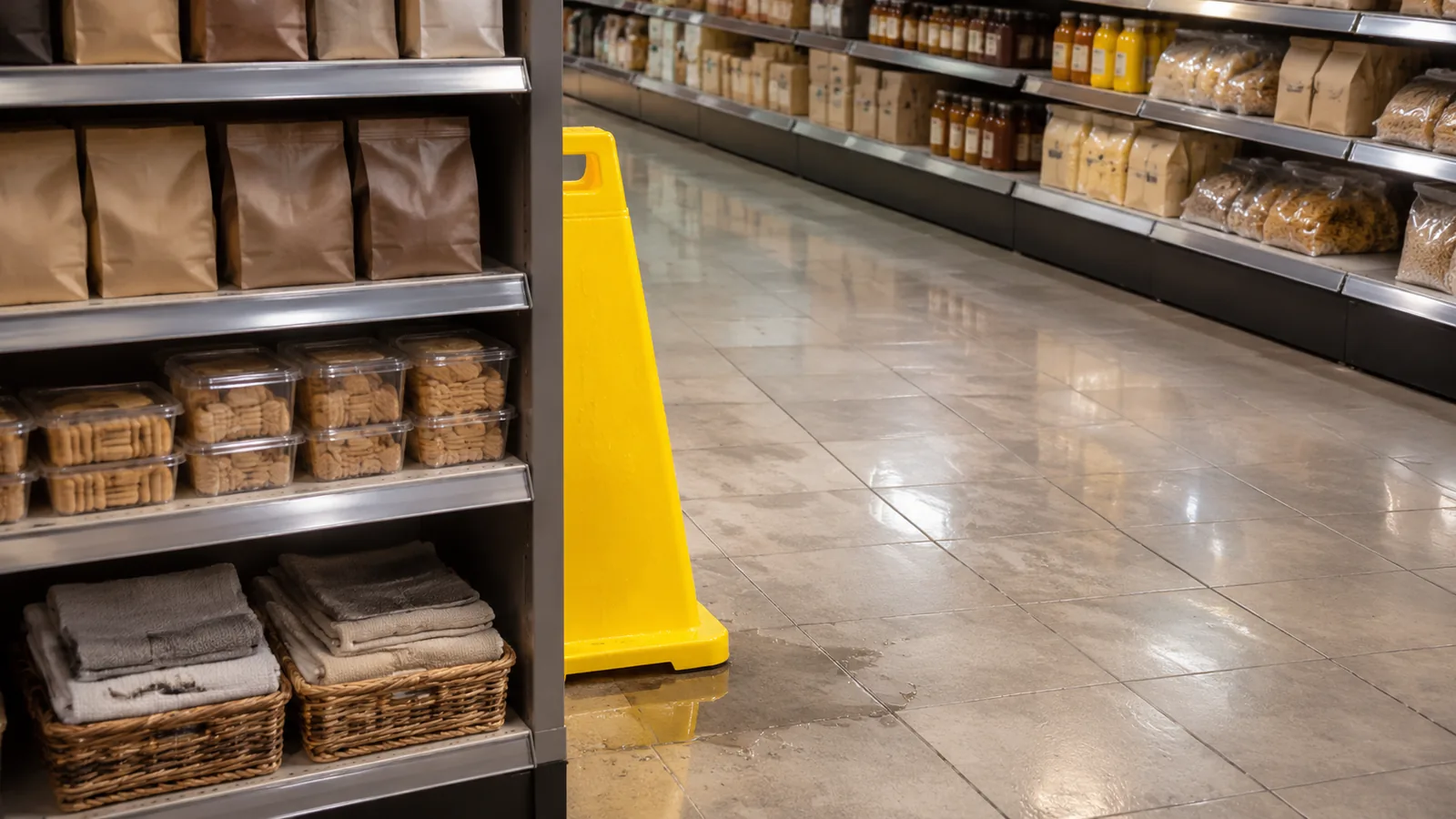
- “There was a wet floor cone, but I never saw it.”Wet floors, store hazards, and warning signs at Brookshire’s
- “Which company do I make the claim against?”Identifying the correct Brookshire’s business and property defendants
- “How do I ask the store to keep its video?”Preserving surveillance video and digital evidence after a store injury
- “What happens if my claim becomes a lawsuit?”Brookshire’s injury claims and lawsuits in Texas: a BGC litigation guide
What we can discuss on your first call
- What happened, where and when
- Your injuries and treatment so far
- Evidence that may need to be preserved, such as video or an incident report
- Anything the business or an insurer has sent or asked you to sign
- Whether the firm can take the review further and what happens next
Bring what you have. Tell us what is still missing.
No fee unless we win. The written agreement explains the fee and case expenses before you sign.
(214) 200-4878
Dallas grocery store injury lawyer
(817) 500-4878
Fort Worth grocery store injury lawyer
| What the evidence has to show | What doesn't prove it alone |
|---|---|
| An actionable hazard, such as melted ice in front of a drink station. | Being hurt inside the store. |
| The party that legally controlled that spot. | The banner on the storefront. |
| Knowledge of the condition, where the law requires it. | The fact that any grocery floor can get wet. |
| Proof that a lack of reasonable care caused the injury. | How badly you were hurt. |
| Where to start | Prompt medical care, an accurate report, preserved evidence, and an investigation of the particular condition. |
This hub is for injured shoppers and their families. It also gives Texas practitioners a route into the deeper litigation guides. The examples are situations to investigate, not findings that any Brookshire's store acted negligently.
- Hurt in the last few days? Start with the first 72 hours after a Brookshire's injury.
- Helping a family member who fell? Read "Getting help after a store injury" below.
- Handling a BGC premises case? Go to the complete Brookshire's injury claims and lawsuits guide.
Getting help after a store injury
First things first:
- Let a relative deal with the store report while you get to the ER.
- Tell management the time, the place, and what you saw, such as "I fell by the floral cooler near the front doors at about 5:20 p.m."
- Ask for the manager's name and an incident reference, and write both on the back of the receipt.
- Put the receipt and any letters from the store or its claims representative in one folder.
Photograph the condition, any warnings, the scene, and the route you took, and save the original files. Employees may move a warning while responding, so a later photo may not show where it stood.
| Do | Don't |
|---|---|
| Get each witness's contact information, since one may have seen the fall and another the condition earlier. | Write an account for a witness to repeat. |
| Write down what each person actually saw. | Alter the scene or handle a hazardous substance. |
| Keep what you saw separate from what you think happened. | Speculate about how long a spill was there. |
Want a lawyer to look at it? Tell us about your Brookshire's injury or call (214) 200-4878. Bring the store address, the date, what happened, your photos, witness names, and your medical providers. Contacting the firm doesn't create an attorney-client relationship.
Our guide to the first three days shows how to preserve useful information while putting health first.
Start with these guides
A Brookshire's claim needs a company-specific investigation
BGC is the Tyler, Texas grocer founded in 1928, and its banners are Brookshire's, Super 1 Foods, Spring Market, FRESH by Brookshire's, Reasor's, and FRESH by Reasor's.
BGC says it operates more than 200 stores across Texas, Louisiana, Arkansas, and Oklahoma (company careers page, viewed November 2, 2026). That isn't a Texas-only count, and not every banner operates in every state. This hub covers Texas injury claims only.
You don't need to sort out the corporate structure before asking for help.
Why the exact store and responsible entity matter
The name on a storefront may differ from the legal entity that operates the business. The store operator runs the aisles, staff, and cleaning day to day, while a landlord may own the building, the lot, or a shared walkway. A cleaning or maintenance contractor may have created the condition, and an insurer or claims administrator usually sends the letters afterward.
Write down the street address, the date, and the spot where you were hurt. Then hold on to these.
| Record | What it shows |
|---|---|
| Register receipt | The store number, the address, and the minute you paid. |
| Pickup confirmation | Which location filled the order. |
| Incident reference | That you reported the fall, and to whom. |
| First claims letter | The company or administrator handling the claim. |
Where you fell matters too. An indoor aisle usually belongs to the operator, but a landlord, tenant, or paving contractor may answer for a shared lot, and a bank branch inside the store may be its tenant's. Counsel identifies the legal parties early enough for filing, amendment, and service, as our guide to identifying the correct Brookshire's defendant explains.
BGC cases explain why the details matter
Reported BGC cases, including Taylor, Bowman and Dimmitt, show how much turns on the exact condition, who knew about it, and when.
| Case | What happened | Result |
|---|---|---|
| Brookshire Grocery Co. v. Taylor, 222 S.W.3d 406 (Tex. 2006) | A shopper slipped on partially melted ice in front of a self-service soft drink dispenser. | The Supreme Court of Texas held the dispenser wasn't itself the dangerous condition, the ice was, and there was no evidence of how long the ice had been there; it reversed and rendered judgment that the shopper take nothing. |
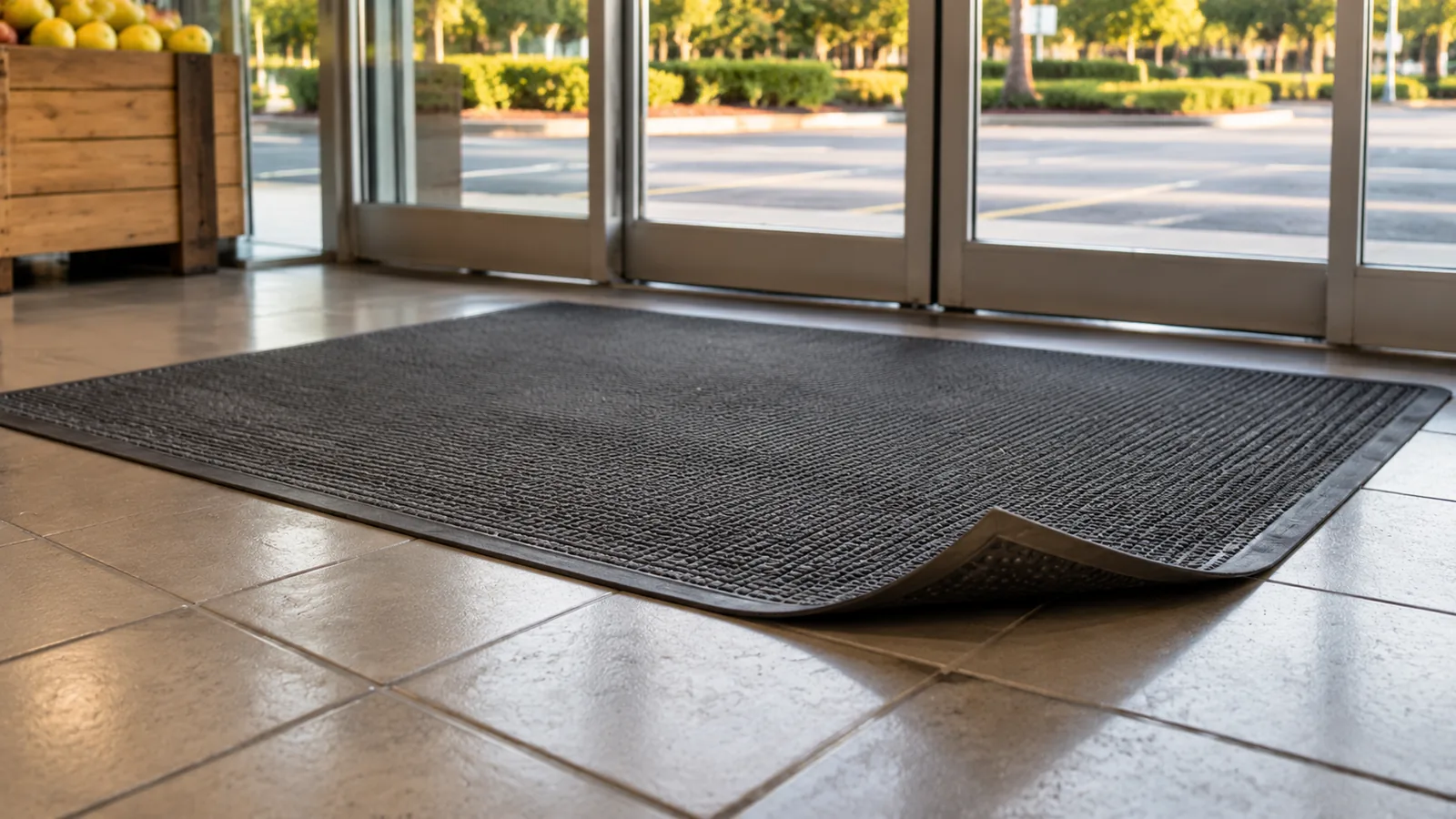
| Bowman v. Brookshire Grocery Co., 317 S.W.3d 500 (Tex. App.—Tyler 2010) | A shopper tripped on the ruffled edge of an exit mat at the Bullard store. | The court held the condition was the ruffled edge, not the mat; reports from other stores didn't show knowledge at Bullard; it affirmed summary judgment for the store. |
| Dimmitt v. Brookshire Grocery Co., No. 11-12-00129-CV (Tex. App.—Eastland June 26, 2014) (mem. op.) | A contractor's floor scrubber left excess water at the Comanche store, and the nearest cone was assumed to be at least 20 feet away. | The court reversed the summary judgments and sent the case back; that is not a recovery or a damages award. |
These are other people's cases. None is a firm result, a payment to anyone, or a prediction for your claim. The complete claims and lawsuits guide explains how to use them without mistaking a procedural ruling for a paid recovery.
A shopper (hypothetical) fell near the deli. What she remembers tells her lawyer where to dig:
| What she said | What it points to |
|---|---|
| "My heel slid on clear liquid the size of a dinner plate." | The condition to prove. |
| "A man in a red cap stepped around it a minute before." | A witness to track down. |
| "The yellow cone was behind the display at the end of the aisle." | Approach photos and video. |
| "My daughter took a photo at 6:02 p.m." | A fixed time for one image. |
What a Texas premises claim must establish
Below, each element sits next to a fact from a hypothetical salsa spill. The exact elements depend on the duty that applies.
| Element | Hypothetical example |
|---|---|
| The responsible party knew, or should have known, about the condition. | A cashier was told about a broken jar of salsa 20 minutes before the fall. |
| The condition posed an unreasonable risk of harm. | Broken glass and salsa covered a three-foot stretch of the walking path. |
| The party failed to use reasonable care to reduce or eliminate the risk. | No one cleaned or blocked off the area. |
| That failure caused the injury. | The shopper slipped on that salsa and broke a wrist. |
A store isn't an insurer of every visitor's safety. The injury itself doesn't establish knowledge or breach. Knowledge comes in two forms:
- Actual knowledge, such as an employee report or a customer complaint before the fall.
- Constructive knowledge, a showing that the condition lasted long enough that the store should have found it.
The general chance that grocery floors get wet doesn't show notice of the particular condition. Proving store notice in a Brookshire's slip and fall claim covers the time, place, and employee evidence.
An employee's activity can be judged differently from a condition left on the floor.
| What happened (hypothetical) | Theory to examine |
|---|---|
| A stocker pushes a loaded cart into a shopper. | Negligent activity, if the injury was a contemporaneous result of the activity itself. |
| A shopper slips on water a mop left after the employee moved on. | A premises condition, with the usual knowledge questions. |
Floors, warnings, and store operations
You reach for yogurt and your heel slides out. The tile by the dairy case is wet, and the only cone sits at the far end of the aisle (a hypothetical). Before anyone mops, photograph the puddle, the cone, and the way you walked in. A later repair doesn't automatically prove earlier negligence.
Does a warning cone end a slip and fall claim?
Not automatically, and neither does its absence. A cone at the far end of aisle 4 may not warn anyone about a spill in the middle, and one set out after your fall doesn't show a warning before it.
Wet floors, mats, and warning signs explains why location and sequence matter.
Who answers for a fall in the parking lot?
That depends on who owns and maintains that part of the lot, which may be a landlord, a tenant, or a contractor. Owning a lot doesn't make a business responsible for every collision in it, and a store sign in a photo doesn't prove control of the exact spot.
Evidence that can change the case
Video may show when a condition appeared, who walked past it and what warnings were up, but only if the right footage is requested. Ask for:
- Store video that starts before the condition formed and runs through the response.
- Other camera angles at the aisle ends, the entrance, and nearby checkout lanes.
- Inspection and sweep records showing who checked the area and when.
- Work orders for the cooler, drink machine, or roof leak involved.
- Radio calls, texts, and reports about that area.
- Each witness's account in that person's own words.
Our guide to preserving store video and digital evidence covers exports, metadata, clock differences, and missing footage. Treat your own files the way you want the store to treat its video:
- Leave the original photos and videos on the phone that took them.
- Keep relevant texts, emails and existing social media posts, including unfavorable ones.
- Keep medical documents and work records as they are, not rewritten into a polished account.
- Never change a timestamp.
From investigation to a filed lawsuit
- Accrual, exceptions and service questions need legal analysis.
- A claim may settle without suit, but ongoing talks don't extend the deadline.
- The right defendants have to be named and served in time.
Once a suit is filed, written discovery might get the sweep log for aisle 7, and a deposition might pin down when the stocker last checked it. An expert might test how slick the tile was. (These are hypothetical examples.)
A defendant may move for summary judgment before trial. A response needs competent evidence on the challenged grounds, and a serious injury doesn't remove the need to prove each element.
- Tex. R. Civ. P. 166a was rewritten effective March 1, 2026, for motions filed on or after that date.
- Use its current text, not old subsection labels or remembered deadlines.
- Check local rules, standing orders, and the scheduling order.
Responding to summary judgment in a Brookshire's case walks through the response.
Medical proof and the losses that can be recovered
A claim has to connect the incident to the injury through medical and factual evidence. Four facts get weighed honestly:
- A prior condition, which doesn't by itself defeat the claim.
- A gap in treatment, such as a delayed appointment or cost.
- A later fall or vehicle collision that may affect causation.
- Improvement, documented along with continuing limitations.
Each category of loss needs its own proof:
| Loss | Proof |
|---|---|
| Medical expenses | Records and bills, though the billed amount isn't automatically recoverable. |
| Lost income | Payroll records and a statement from your employer. |
| Future care | Medical support specific to you, since a diagnosis alone isn't enough. |
| Pain and limits | The tasks you couldn't do, the help you needed, and how long it lasted. |
Explain noneconomic losses with specific facts, including any recovery, and count each loss once. "My life is ruined" says little. "I missed my Thursday bowling league from March through May" says a lot (a hypothetical).
Settlement, mediation, and the client decision
In a hypothetical case, the number might move three times.
| When (hypothetical) | What the estimate rests on |
|---|---|
| Week two | The ER bill and your own account. |
| Month four | The sweep log and two witness statements. |
| Month nine | The surgeon's opinion on future care. |
Settlement value, mediation, and net recovery includes an arithmetic example.
What public data can and can't tell you
We found no reliable figures for BGC injuries, settlements or liability limits, so this hub doesn't guess. Specifically:
- No public source reporting a Texas-wide annual Brookshire's injury total was found.
- Selected lawsuits and publicized results aren't representative settlement data.
- Coverage comes from the policies that apply to the individual case.
The lack of a known total doesn't mean there were no claims. Choosing a Brookshire's injury attorney and understanding public claim data explains what a defensible study would need.
Trial preparation and protecting the result
Long before trial, tie the admissible evidence to the questions the jury may answer. Separate guides cover trial preparation, trial proof, and post-trial appeals.
Start deadline work before you know the outcome; preparation never forces a settlement or assures a verdict.
Questions to ask before you hire a lawyer
Bring these questions to any lawyer you're considering:
- What relevant experience can the firm accurately describe?
- Who will preserve video, identify the parties and get the medical records?
- Which legal issue is most uncertain right now?
- How will major decisions be explained to you?
- How are interpretation and translated documents handled if you or a witness need them?
- What are the weak spots in my evidence?
Before you sign, read the fee agreement.
- What's the percentage, and how is it calculated?
- Which expenses are charged, and who advances them?
- What do you owe if there's no recovery?
- Does the scope include appeal or enforcement?
- Will you get a net recovery explanation before deciding on a settlement?
Aaron Herbert is Board Certified in Personal Injury Trial Law by the Texas Board of Legal Specialization. Certification isn't a promise about any result.
What to bring to a claim evaluation
Use the consultation to go over the date, location, condition, and witnesses, then preservation. Bring:
- The store address and the incident date.
- Original photos and videos.
- Witness names and contact information.
- Your medical providers' names.
- Letters, emails, and claim numbers.
- Anything you signed and any money offered.
- The names of earlier lawyers or proceedings.
Bring the actual documents, not a cleaned-up summary. The first talk may end with more investigation, an accepted case with its scope in writing, a referral, or a conclusion that the evidence doesn't support a claim.
Send medical records through the firm's private channel, never a public comment. Don't assume a deadline is protected until the firm confirms it has taken responsibility.
Guides in this hub
Each guide below takes one stage of a Brookshire's injury case further.
- Brookshire's injury claims and lawsuits in Texas: how a BGC store injury case moves from investigation through appeal.
- The first 72 hours after a Brookshire's injury: what to do about care, reporting, photos, and witnesses right away.
- Proving store notice in a Brookshire's slip and fall claim: how to show the store knew or should have known about the condition.
- Wet floors, mats, and warning signs at Brookshire's: when a wet floor, a mat, or a cone's placement helps or hurts a claim.
- Identifying the correct Brookshire's business and property defendants: which company, owner, or contractor controlled the spot where you fell.
- Preserving surveillance video and digital evidence after a store injury: how to ask for footage and records before they're lost.
- Written discovery in a Brookshire's injury lawsuit: which records, prior incidents, and witness identities to request after suit is filed.
- Store manager, employee, and corporate depositions in injury cases: how to question managers, staff, contractors, and a company representative under oath.
- Experts and reliable testing in Brookshire's injury litigation: when an expert is needed and what makes the opinion reliable.
- Medical records, causation, and damages after a store fall: how to tie the fall to the injury and prove each loss.
- Settlement value, mediation, and net recovery in Brookshire's claims: how offers are weighed and what you'd actually take home.
- Responding to summary judgment in a Brookshire's injury case: how to answer a motion under the current Rule 166a.
- Trial preparation and jury selection in Brookshire's injury litigation: how to get witnesses, exhibits, and voir dire ready.
- Witness testimony, jury questions, and closing argument: how the evidence presented at trial relates to the jury's questions.
- Post-trial motions, appeals, and protecting a judgment: the procedures after a verdict, including the deadlines needed to protect the result.
- Choosing a Brookshire's injury attorney and understanding public claim data: what to ask a lawyer and what public data can and can't tell you.
Hurt at another grocery chain? See the guides for Kroger slip and fall claims in Texas and Tom Thumb and Albertsons slip and fall claims.
- Texas grocery store injury lawyer: retail and grocery injuries across Texas.
- Dallas grocery store injury lawyer: store injuries in Dallas and Dallas County.
- Fort Worth grocery store injury lawyer: store injuries in Fort Worth and Tarrant County.
- Texas slip and fall lawyer: slip, trip, and fall claims at any business.
Frequently asked questions
If a cashier knew about the spill before I fell, can I sue?
Possibly, because a spill reported to a cashier 20 minutes before your fall is evidence the store knew about it.
What should I do first?
Get treatment. The report, the photos, and the call to a lawyer can come after the ER.
How much is my claim worth?
Nobody can say from a website. This hub supplies no verified Brookshire's settlement average, and multiplying your medical bills by three isn't a reliable evaluation.
What if the store says it didn't know about the spill?
Then the proof has to come from somewhere else: a sweep log, a witness who saw the spill earlier, or video from that aisle. Assuming the employees knew doesn't prove it.
Does a warning cone prevent a claim?
No. A cone set out after the fall, or one hidden behind a display, may not have warned you at all.
Will my claim have to go to trial?
Maybe not. Some claims settle and others need trial, and no outcome is guaranteed.
Is Brookshire Brothers the same company as Brookshire's?
No. Brookshire Brothers is a separate company based in Lufkin; Brookshire's stores belong to Brookshire Grocery Company in Tyler.
Request a case evaluation
Hurt at a Brookshire's, Super 1 Foods, Spring Market, or FRESH by Brookshire's store in Texas? The firm can look at what happened, what needs saving now, your medical records, and the risks.
- Have the store address, the date, photos, witness names, and your medical providers ready.
- Tell us about your Brookshire's injury or call (214) 200-4878.
- Our office is at 8330 Lyndon B. Johnson Freeway, Suite 700, Dallas, Texas 75243.
- Confirm engagement, scope, and fee terms directly with the firm.
- No result is guaranteed, and contacting the firm doesn't create an attorney-client relationship.
Sources and legal authorities
Each source is linked.
- Brookshire Grocery Company, About Us: 1928 founding in Tyler; six banners.
- Brookshire Grocery Company, Careers: more than 200 stores, four states.
- Brookshire Brothers, About Us: Lufkin founding; 1928 split in Tyler.
- Brookshire Grocery Co. v. Taylor, 222 S.W.3d 406 (Tex. 2006): melted ice; take-nothing judgment.
- Bowman v. Brookshire Grocery Co., 317 S.W.3d 500 (Tex. App.—Tyler 2010): ruffled mat edge; judgment affirmed.
- Dimmitt v. Brookshire Grocery Co., No. 11-12-00129-CV (Tex. App.—Eastland June 26, 2014) (mem. op.): scrubber water; reversed and remanded.
- Brookshire Bros., Ltd. v. Aldridge, 438 S.W.3d 9 (Tex. 2014): a Brookshire Brothers spoliation case.
- H-E-B, LP v. Peterson, No. 24-0310 (Tex. Apr. 10, 2026): duration evidence for constructive notice.
- Texas Civil Practice and Remedies Code, Chapter 16: two-year period, Section 16.003.
- Supreme Court of Texas order amending Rule 166a: motions filed from March 1, 2026.
- Texas Judicial Branch, current statewide rules: viewed November 2, 2026.
- State Bar of Texas profile, Aaron Alan Herbert, Bar No. 24036761: license and bar number.
- Texas Board of Legal Specialization profile: board certification.
Legal sources checked November 2, 2026. The Law Firm of Aaron A. Herbert, P.C. isn't affiliated with, sponsored by, or endorsed by Brookshire Grocery Company or Brookshire Brothers, Ltd. Apply the governing law and court orders to the individual facts; this educational information doesn't create an attorney-client relationship.
More guides in the Texas Brookshire's Injury Knowledge Hub
The first 72 hours after an injury at a Brookshire’s store
What to do in the first 72 hours after a Brookshire's or BGC store injury in Texas: medical care, reporting, photos, witnesses, and records to keep.
Proving store notice in a Brookshire’s slip-and-fall claim
How actual and constructive notice work in a Texas Brookshire's slip and fall, what Peterson requires, and what the BGC Taylor and Bowman cases held.
Wet floors, store hazards, and warning signs at Brookshire’s
A wet floor sign doesn't end a Texas Brookshire's injury claim. How warnings, mats, and floor hazards are judged, with the BGC Dimmitt and Bowman cases.
Identifying the correct Brookshire’s business and property defendants
How to identify the BGC store operator, property owner, and contractors after a Texas Brookshire's injury, and why Brookshire Brothers is a different firm.
Preserving surveillance video and digital evidence after a store injury
After a Brookshire's store injury: how to preserve surveillance video, native files, and timestamps, and what Texas law says if footage is gone.
Written discovery in a Brookshire’s injury lawsuit
Store manager, employee, and corporate depositions in injury cases
Experts and reliable testing in Texas grocery injury cases involving Brookshire’s