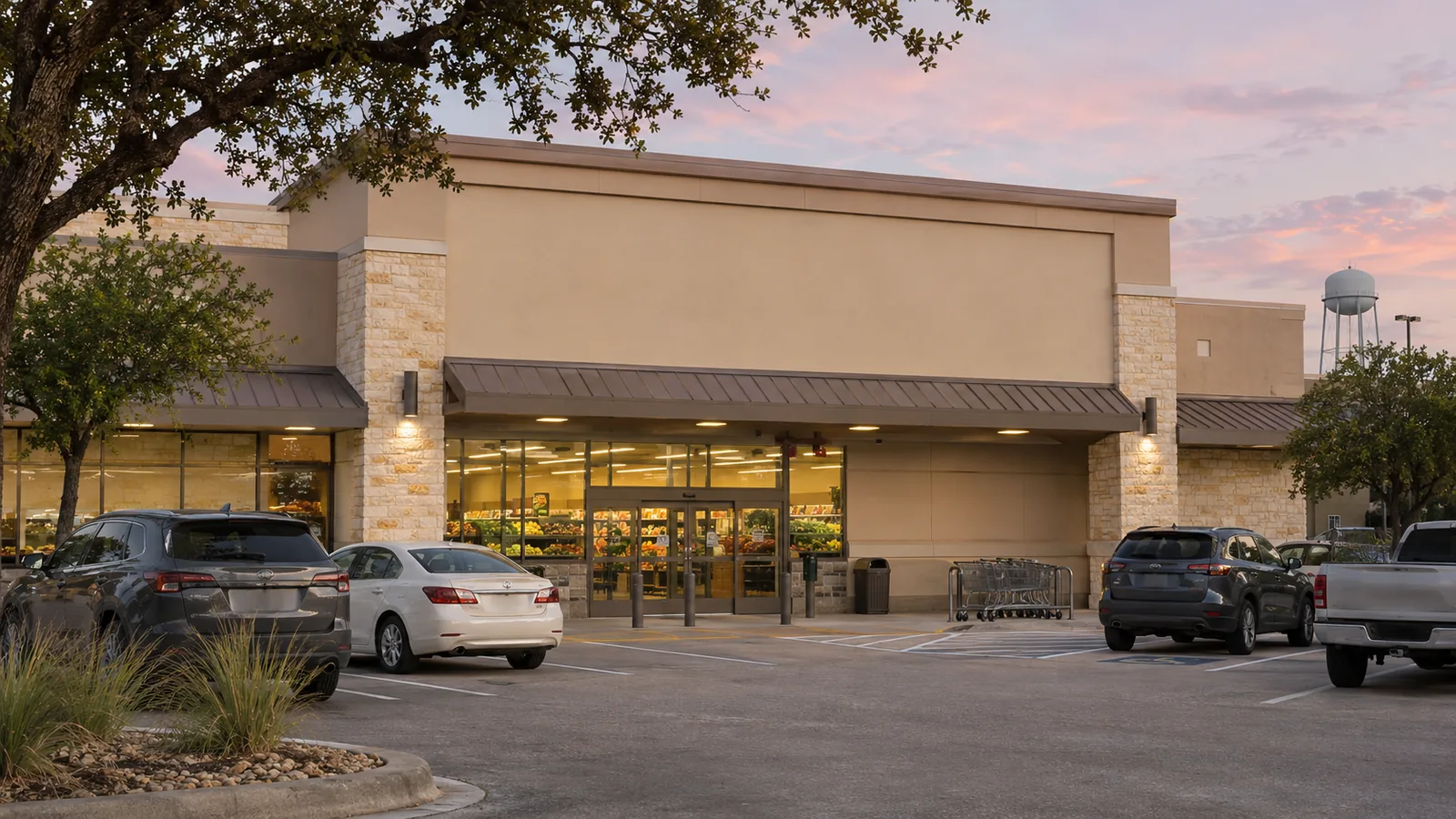
The correct defendant in a Brookshire Grocery Company (BGC) injury claim is the person or entity whose duty and conduct support liability on the facts. Running the store, owning the land, doing the maintenance, employing the worker, and handling the claim can each belong to a different business.
At a Brookshire's in Comanche, a cleaning contractor's floor scrubber left water at the ends of the aisles. In 2014 a Texas appeals court said the store had kept control of its premises, so it still owed shoppers the invitee duty even though the contractor's machine made the mess.
That's why the name on the sign is only a starting point. Save these the same day:
- Your receipt, with the merchant name, store address, and time.
- A photo of the storefront and of the exact spot where you got hurt.
- The manager's name and the incident report number.
- Every letter or email from a claims representative, kept as it came.
| Role | Who it often is |
|---|---|
| Runs the shopping floor | The store operator. |
| Owns the building | Sometimes a landlord. |
| Services floors, coolers, or the lot | Possibly a contractor. |
| Employs the worker involved | Possibly a separate employer. |
| Handles the claim | An insurer or administrator, not the store. |
These are general legal points about Texas injury claims. They don't describe how any BGC location is set up, and the cases below are other people's cases, stated as the courts decided them. The real relationships have to come from reliable records.
Hurt at a BGC store? Tell us about your Brookshire's injury or call (214) 200-4878. Bring the store address, the date, what happened, photos, witness names, and your medical providers. Contacting the firm doesn't create an attorney-client relationship.
Six banners, and one question they don't answer
Brookshire's, Super 1 Foods, Spring Market, FRESH by Brookshire's, Reasor's, and FRESH by Reasor's all show up on BGC's public pages. None of that tells you who controlled the aisle where you fell.
The careers page says BGC runs more than 200 stores across Texas, Louisiana, Arkansas, and Oklahoma (viewed November 2, 2026). That's not a Texas-only count. It's not a count on your injury date, and it doesn't mean every banner operates in every state. The about-us page calls BGC a Tyler, Texas company founded in 1928. And a fall in Oklahoma isn't necessarily governed by Texas law.
Each of those facts has its own record. The store and address come from the receipt, your photos, and the incident report; the date from the receipt time stamp and your medical records; who operated the store that day from business records, then discovery.
Brookshire's isn't Brookshire Brothers
Brookshire Brothers is a different company. It shouldn't be swapped in for Brookshire Grocery Company in a claim letter or a case description.
| Brookshire Grocery Company (BGC) | Brookshire Brothers |
|---|---|
| Based in Tyler, Texas. | Based in Lufkin, Texas. |
| Founded in 1928 when Wood and W.A. Brookshire left the earlier family company. | Founded in 1921. |
| Separate company since 1928. | Separate company since 1928. |
| This hub covers BGC stores. | Covered by a separate guide (proposed). |
| Bound by Aldridge's lost-evidence rules, like any Texas business. | Defendant in Brookshire Bros., Ltd. v. Aldridge, 438 S.W.3d 9 (Tex. 2014). |
| Aldridge doesn't say who ran a BGC store. | Sharing the Brookshire name doesn't make it related to BGC. |
When a contractor made the mess: Dimmitt
That Comanche case is Dimmitt v. Brookshire Grocery Co., No. 11-12-00129-CV (Tex. App.—Eastland June 26, 2014) (mem. op.). The contractor's scrubber leaked extra water when it turned at the aisle ends. The court described the store as keeping control of the premises, so it still owed the invitee duty. The court of appeals reversed the traditional summary judgments and sent the case back, review was denied in 2015, and it wasn't a damages award or a recovery.
Who runs the store and whether a contractor also owed a duty are separate questions.
An invoice can name a contractor without proving it did anything wrong. A lease can split up the upkeep without deciding every duty to someone who got hurt.
What each record proves, and what it doesn't
| Record | What it may show | What it may not show |
|---|---|---|
| The receipt, with your note on the back (address, store number, department, exact spot) | The merchant on one transaction, and where you were. | Who controlled the premises or employed the worker. |
| A card or payment record | The date, time, and merchant descriptor. | The entity that controlled the aisle. |
| A storefront photo | The banner on the building. | The legal operator. |
| The incident report | The store's own description and number. | Every responsible party. |
| A certified filing | The legal name. A formation filing proves the entity exists. | Who ran the store. |
| A registered agent and office | Who receives service, and where. | Responsibility for the accident, or where the records are. |
No single record names everyone. Each one gets checked against another, with a type and a date written next to it, because names and owners change.
Where a lawyer looks next
Each question has its own record.
- Texas Secretary of State records (formation, legal names, registered agents), for who formed the company and who gets served.
- Assumed-name filings, for whose trade name is on the sign.
- Appraisal records, and the deed for a given date, for who owns the land.
- Payroll information, for who employed the clerk, once suit is filed and discovery opens.
- The lease, the site plan and the parcel records, for who possessed or controlled the area where you were hurt.
- Sweep sheets and inspection logs, for who could inspect it.
- The maintenance agreement, for who was supposed to fix the hazard.
- Work orders and service contracts, for who controlled the equipment or activity that caused it.
- Leases, management agreements, maintenance and service contracts, and invoices, for who agreed to fix or clean what.
Write a source next to every identification. In a hypothetical file:
- Verified: the deed listing the landowner as of the incident date.
- Unverified: a clerk saying "corporate owns the building."
- Assumption: the company on the sign runs the parking lot.
Only the verified item goes in a petition without more work.
Whose floor, whose lot
| Where you were hurt | What decides whose question it is |
|---|---|
| Under a roof leak, when the landlord kept the roof | The landlord's role matters because the hazard came from the roof. |
| In a spill the tenant made or mopped | The tenant's conduct, whoever is on the tax roll. |
| On an entrance mat | Who controlled the entrance, and whether a mat vendor serviced the mats. |
| In the lot, on the store's own parcel | Legal descriptions and site plans. |
| In a shared shopping-center area | The center's declarations and the lease, then notice and what was done. |
| On somebody else's land | That owner's records, the maintenance agreements, and the work orders. |
| Where a manager says "that's our lot" | The parcel map and the lease. |
A lease can split the upkeep between landlord and tenant without settling every duty owed to a shopper. How much each answer weighs depends on the claim, the evidence, the duty, and Texas law.
Did the repair company cause it?
A hypothetical week at the dairy case:
- Tuesday: a refrigeration company services the cooler.
- Wednesday: a shopper slips on water in front of it.
- The invoice: proof the company was in the store, not proof it caused the fall.
Hiring that company didn't end the store's own duties. In Dimmitt, the store kept control and still owed the invitee a duty.
Four theories, each pointing at a different party, kept apart by the contractor records in the list under "Where a lawyer looks next":
- Defective repair, such as the cooler leaking again the day after service.
- Incomplete maintenance, such as a work order showing the drain line wasn’t cleared.
- A new spill, such as video of a shopper dropping a bottle.
- An unrelated condition, such as a fall two aisles from the repaired unit.
A shared logo isn't shared control
A parent company, a trade-name owner, a management company, and the local operating company can all stand in different legal positions. A common logo, website, or mailing address doesn't make every affiliate responsible. Before claiming direct or derivative liability, a lawyer looks at actual control, agency, the management and service contracts, and the ownership records.
For each defendant, one sentence states the duty and the evidence:
- Works, if records back it up: "The operator controlled aisle 7, and its employees were assigned to inspect it."
- Doesn't work: "The company is part of the Brookshire's family of stores."
A company goes in the petition if it:
- controlled the floor or lot where you fell
- did the cleaning, repair, or installation work
- employed the clerk or worker involved
- owed you some other duty under Texas law
Every name in it needs a good-faith basis in fact and law. A shared name or logo isn't one.
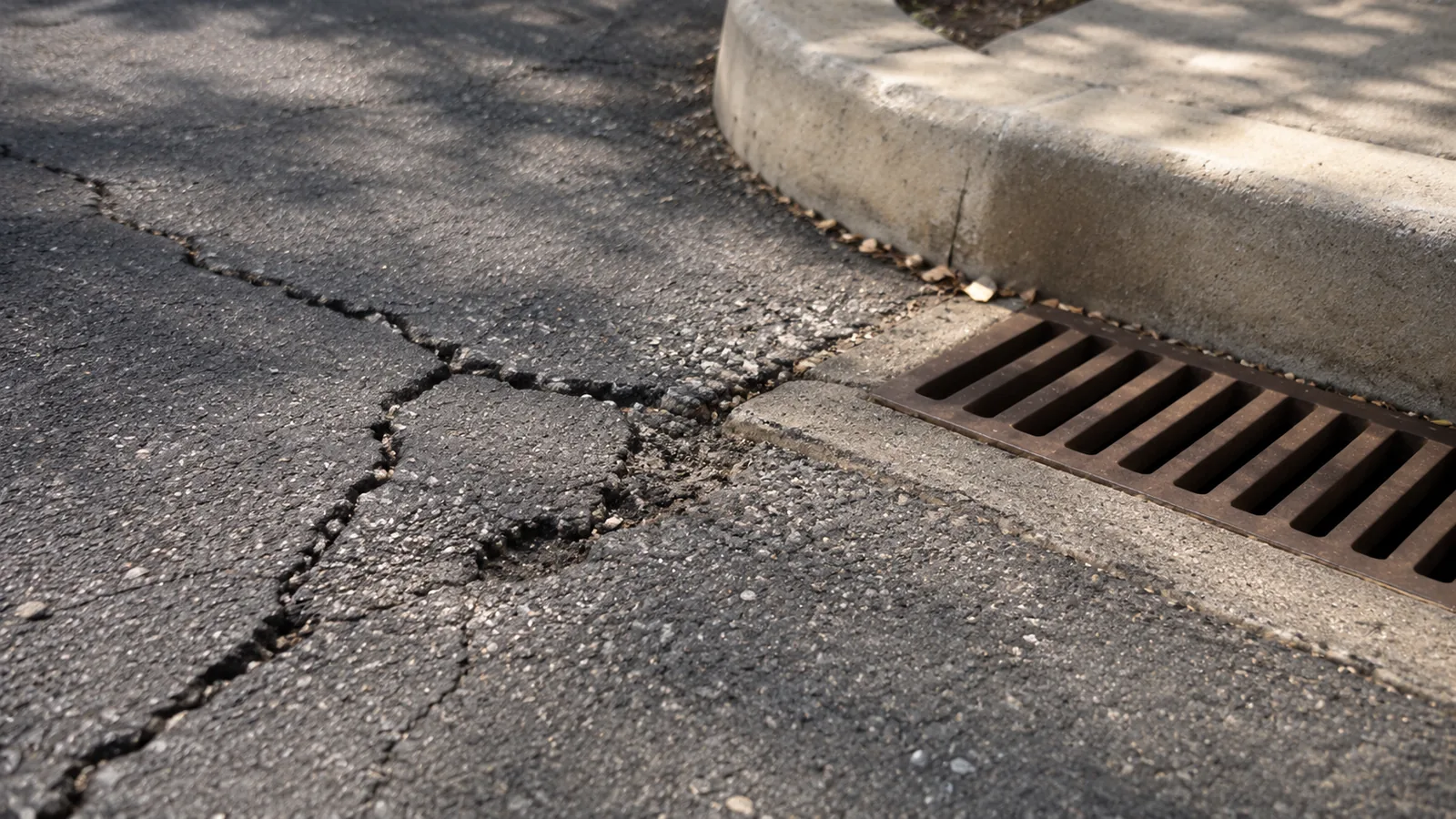
Broken asphalt between the grocery and the dry cleaner
Take a customer, in a hypothetical, who trips on broken asphalt between the grocery and the dry cleaner next door. The grocer leases its space, and a different company owns the shopping center. Last month a contractor fixed a drain nearby.
| Step | Why it comes in this order |
|---|---|
| Mark the exact spot | A storefront photo doesn't show who controls that patch. |
| Lay the spot over the lease | The asphalt may sit outside the grocer's space. |
| Date the break against the drain work | A later break points at the contractor. |
| Look for earlier complaints about that area | They go to who knew. |
| Ask who inspected it or put up a barricade | Who acted, and when. |
Every candidate has its own likely defense. The grocer will say the lot isn't part of its leased premises. The center owner will point to a lease that made the tenant responsible. The drainage contractor will say the defect was there before its work.
The evidence may point to one of them, several, or none of the ones you first suspected.
Two years, and the right company's name inside them
Two years, generally. That's the limitations period Section 16.003 of the Civil Practice and Remedies Code sets for a personal injury claim, subject to accrual rules and exceptions. A late swap to a different company eats into it.
| Name problem | Why it's risky |
|---|---|
| A petition filed under a trade name | It may not reach every affiliate |
| Misnomer or misidentification | It needs real legal analysis now, not a later fix |
| A late amendment or late service | Limitations and diligence questions follow |
| Weeks of calls with an adjuster | They don't stop the limitations clock |
| Suing the wrong entity | Delays, motions that go nowhere, and limitations trouble |
| Missing the company that controlled the hazard | Part of the case never gets heard |
An adjuster may use the store brand just because it's easy. Ask who the adjuster works for, and write down the answer. A claim number doesn't identify every responsible party. Insurer letterhead doesn't tell you which entity is insured, and settlement talks don't decide who the right defendant is. A lawyer matches the names in claim letters against public filings and against the operator that discovery identifies.
The folder on your kitchen table
Corporate charts are the lawyer's job. Yours is a folder with:
- the receipt and photos of the storefront and the spot
- the manager's name as the badge spelled it
- the incident card with its report number
- every letter and email, especially ones naming a company you don't recognize
Don't use a map listing or an online review to pick a defendant. If you're unsure about something, bring it anyway and say you're unsure.
Questions to ask any lawyer:
- Who's going to figure out the right company?
- What's still open, and how urgent is it?
- Will I see a chart showing why each party was named?
- When will the parties be confirmed? Before the deadlines get tight.
A lawyer who says "it's all one company" hasn't done the work yet. One who says "the receipt names one entity, the deed names another, and here's what we're asking for next" has.
A receipt, a deed, and a claims letter that disagree
Say you fell on a Saturday in March. In this hypothetical, the receipt names a local limited partnership, the county deed names a different owner, and the claims letter that comes in April just says "Brookshire's." Each gets its own row, and no row replaces another:
| Who, and the paper | What it proves | Disputed; next step |
|---|---|---|
| The operating company, on the receipt | A merchant on one transaction. | Whether it ran the store and employed the clerk; payroll discovery. |
| The landowner, on the deed | Ownership on a date. | Whether it kept control of the lot; the lease. |
| The claims letter ("Brookshire's") | A representative and its named principal. | Whom the writer works for; ask. |
| A cleaning contractor, on an invoice | That it billed for work. | What it did that night; work orders. |
The chart should end with one plain sentence per company: "the operator ran the store, and the contractor ran the scrubber that night." It should never end with six affiliates sued over one logo.
The company that ran the store on the day you fell
This year's state registration may not show who ran the store on your injury date. Note the dates:
- any acquisition, since a new owner may not answer for an earlier fall
- When the lease started.
- Any assumed names or conversions.
- Which company holds the incident records now. A later owner can have the records without being liable.
Insurance works the same way. A policy that's in force this year may not cover last year's fall. The named insured may not match the online listing. And the insurer's letters shouldn't be the only basis for saying who's liable. The defendant is the entity whose duty and conduct support liability. The insurer is the company that may pay a covered claim.
A trade name isn't a legal theory
An assumed name is how a business presents itself to the public. It doesn't create a separate person, and it doesn't make a parent company liable. Texas procedure may allow a suit in an assumed name in the right circumstances, but a lawyer has to check the actual rule against the facts. A corporate relationship may justify discovery into control or agency without proving either one.
Branding is central. Floor inspections may not be. And separate filings don't erase every direct duty, so the records and the law get the last word.
Serving the papers on the right company
What to log:
- The legal name used, exactly as it appears on the petition.
- The registered agent and address, from the state’s filing records.
- Each service attempt and its return, with the date, the place and who signed.
- Any identity dispute, such as a defendant saying a different affiliate ran the store.
- An amendment, with limitations and diligence checked that day.
- Required disclosures, with each listed theory, responsible person and policy checked against the chart.
Disclosures follow Rule 194.2 of the Texas Rules of Civil Procedure, as amended October 1, 2026, and the discovery-control order; read the current text. On amendments, fixing a typo in a name and substituting a different legal person raise different questions.
Possible responsible parties, as categories only, not assumptions about any BGC store:
- The landlord.
- The operating company on the receipt.
- A management company.
- A separate staffing or payroll employer.
- A maintenance, refrigeration, flooring, or cleaning contractor.
- A vendor that built a display.
- A security or inspection contractor.
A disclosure that names a manager, a maintenance worker, or a corporate representative may not show full knowledge or the right entity, so follow-up discovery may be needed.
If you're the client and a new letter or call comes in:
- Send it to your lawyer and keep the original.
- Ask the caller which company they speak for.
- Don't agree to swap a party, sign a release, or promise anyone a company won't be sued.
More reading: written discovery in a Brookshire's injury lawsuit, wet floors, store hazards, and warning signs, choosing a Brookshire's injury attorney and understanding public data, and the Brookshire's injury claims and lawsuits guide.
What a good update to the client sounds like
- "The records show this company ran the store."
- "We're still checking who maintained the lot."
- "Naming the wrong company can cause delays and deadline problems."
- "A work order came back with a contractor's name on it. We may add that company."
At settlement, compare the release's language about affiliates and unnamed parties with what the investigation found, and explain whether the deal resolves only the claim against the identified parties. A release is the wrong place to find out that different companies had different roles.
Quick answers
Can I sue the insurance company instead of the store?
Generally the insurer isn't the one you sue. Coverage and responsibility for the accident are different questions, and an insurer doesn't become the negligence defendant because its adjuster answers the phone.
What if I used the wrong company name in the incident report?
Give the report as it is and explain what you knew. An incident report isn't a lawsuit, and a lawyer should start sorting out the right names promptly.
What if the paperwork names several companies?
Keep every document as it came, note when and how you got it, and bring it in. Don't pick one name just because it shows up most often.
Is Brookshire Brothers the same company as Brookshire's?
Brookshire Brothers and BGC split in 1928 and have been separate companies ever since.
Does hiring a cleaning contractor end the store's duty?
In Dimmitt, the store kept control of the premises and still owed the invitee duty even though the contractor's scrubber made the mess.
Tell us about your Brookshire's injury
Aaron Herbert is Board Certified in Personal Injury Trial Law by the Texas Board of Legal Specialization. That's not a promise about any result.
Got the receipt, the photos, and the names? Tell us about your Brookshire's injury or call (214) 200-4878. The office is on the LBJ Freeway in Dallas, at 8330 Lyndon B. Johnson Freeway, Suite 700, 75243. Calling doesn't make us your lawyers; representation, scope, and fees get confirmed in writing first, and no result is guaranteed.
Related pages on Brookshire's injuries
- Texas Brookshire's grocery injury knowledge hub: every guide in one place.
- Brookshire's injury claims and lawsuits in Texas: the claim and lawsuit through appeal.
- Written discovery in a Brookshire's injury lawsuit: requests aimed at the right entity.
- Wet floors, store hazards, and warning signs at Brookshire's: floor conditions and the Dimmitt warning point.
- Attorney fees, insurance, and public claim data: questions to ask a lawyer.
- Dallas retail and grocery store injury lawyer: the firm's Dallas store injury page.
Sources
- Dimmitt v. Brookshire Grocery Co., No. 11-12-00129-CV (Tex. App.—Eastland June 26, 2014) (mem. op.).
- Brookshire Bros., Ltd. v. Aldridge, 438 S.W.3d 9 (Tex. 2014).
- Brookshire Grocery Company, About us.
- Brookshire Grocery Company, Careers.
- Brookshire Brothers, About us.
- Texas Civil Practice and Remedies Code, Chapter 16, § 16.003.
- Texas Rules of Civil Procedure, as amended October 1, 2026, Rule 194.2.
- Texas Judicial Branch, rules and standards.
We checked these sources on November 2, 2026. The Law Firm of Aaron A. Herbert, P.C. has no tie to Brookshire Grocery Company. It has no tie to Brookshire Brothers, Ltd., either. Neither company sponsors or endorses this page. This page is general information. Your own facts, the law, and any court orders decide your case.

ABOUT THE ATTORNEY
Aaron A. Herbert
Founding Attorney
Board Certified in Personal Injury Trial Law
Aaron founded The Law Firm of Aaron A. Herbert in 2010 to focus on developing each client's case and seeking its maximum value. For over a decade, he has represented people seriously injured in major accidents and industrial catastrophes, pursuing trial verdicts and settlements while working to reduce the stress of litigation.
Education
- Texas A&M University · B.S., Criminal Justice, 1999
- University of Oklahoma College of Law · J.D., 2002; graduated in the top of his class
Trial experience & approach
Aaron earned numerous jury verdicts at boutique personal injury litigation firms. According to his biography, he spent a year as the top-earning litigation attorney at a firm that frequently appeared in verdict searches as having one of the highest numbers of trial wins in Texas. At another Dallas personal injury firm, he moved from managing pre-litigation attorney to managing litigation attorney over seven years as the firm grew into one of Dallas's largest personal injury firms.
His biography describes a reputation as one of America's most aggressive trial lawyers, with noteworthy recoveries from judges and juries and substantial pretrial settlements. Most of those settlements included confidentiality agreements requested by the defense. Aaron has said the recoveries were justified by the injuries and losses involved, which no amount of money could make someone choose to experience.
His approach combines passion, preparation, persistence and courtroom imagination. He believes a well-supported, engaged and motivated team working cooperatively helps deliver strong representation, with the goal of achieving the best possible result for every client.
Dallas roots, military service & publication
Born and raised in Dallas, Aaron enlisted in the United States Marine Corps after high school and later received an Honorable Discharge. He completed his university and law degrees after his military service and became a lifelong Sooners football fan in law school.
Publication: “Litigating Dog Bite Cases,” Texas Dog Law Seminar, Dallas, 2009.
Professional affiliations & recognition
Professional affiliations and recognition listed in Aaron’s biography:
- State Bar of Texas
- American Bar Association
- Association of Trial Lawyers of America (now American Association for Justice)
- Texas Trial Lawyers Association
- Dallas Trial Lawyers Association
- Dallas Bar Association
- Tarrant County Bar Association
- Million Dollar Advocates Forum
- The National Trial Lawyers – Top 100 Trial Lawyers