Surveillance video can show what happened before you got hurt at a Brookshire Grocery Company (BGC) store, not just the fall itself. But only if someone identifies the right recording and asks for it quickly. Asking doesn't guarantee the video exists, that a camera caught the hazard, or that the store will hand it over before a lawsuit is filed.
In the Texas Supreme Court's leading case on lost evidence, a grocery store kept about eight minutes of video around a customer's fall. Everything else was recorded over. That store was a Brookshire Brothers, which is a different company from Brookshire's.
Video can vanish that fast. Save these the same day:
- The store address, the date, and your best guess at the time.
- The department, and the route you walked through the store.
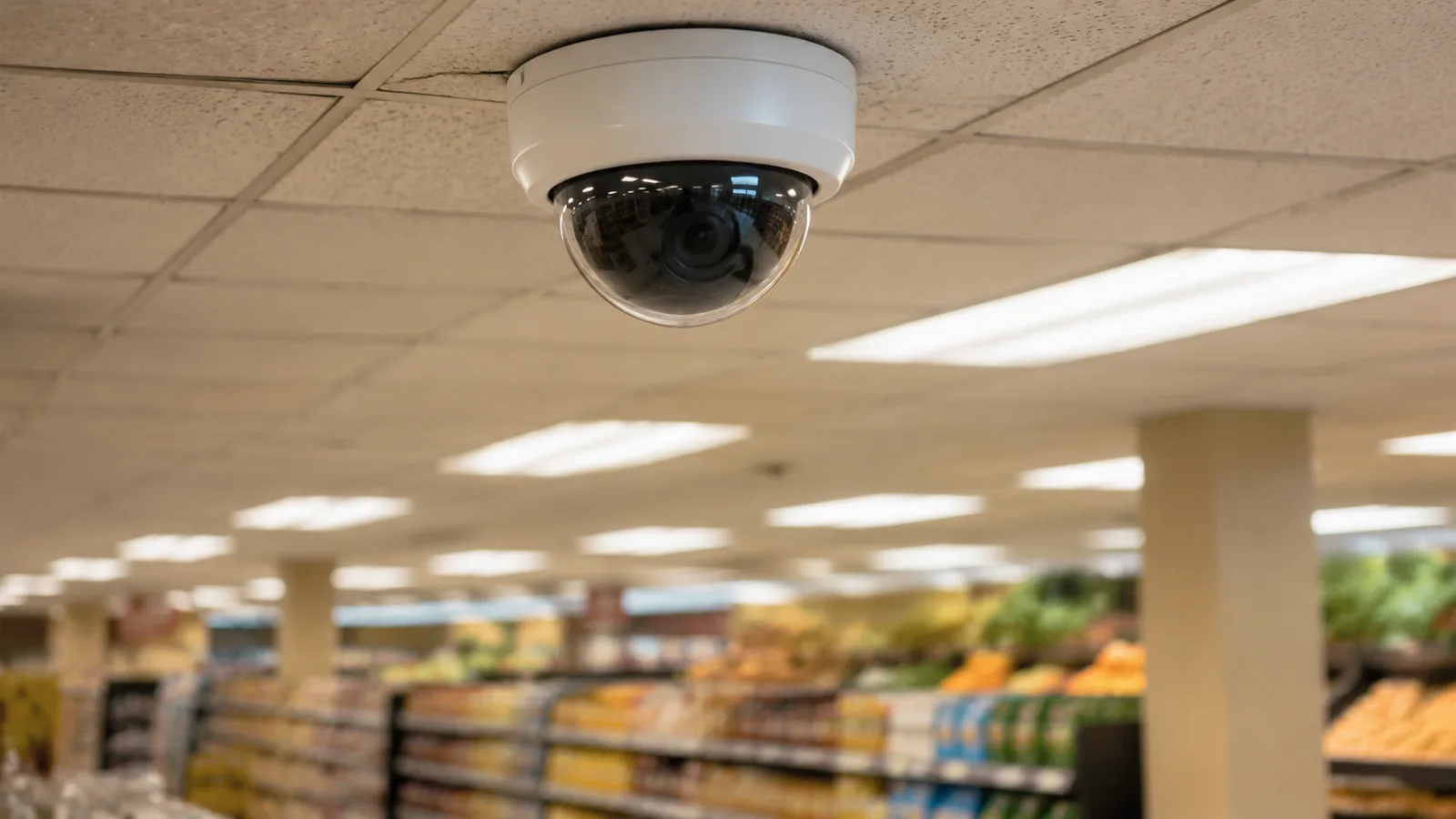
- A photo of any ceiling camera near where you fell.
- Every text or file anyone sends you, kept as it came.
Hurt at a Brookshire's store? Tell us about your Brookshire's injury or call (214) 200-4878. Bring the store address, the date, what happened, any photos, witness names, and your medical providers. Contacting the firm doesn't create an attorney-client relationship.
Tell the store exactly where to look
A useful request names the store, the date, the rough time, the department, and what happened. It doesn't make up a retention period. Hypothetically:
- The store, by street address, such as the Brookshire's on the town square.
- The time, such as Saturday, about 2:20 to 2:40 p.m.
- The department, such as the floor in front of the prepared food case.
- The event, such as a shopper who slipped on clear liquid and fell.
- The movement, such as her walk from prepared food through checkout lane 4 and back.
If you moved between areas, say so, because more than one camera may matter. And don't assume a camera covered the floor just because you photographed one on the ceiling.
Falls in the pickup lane
For example, a shopper who pulls into the pickup lane for a curbside order and trips on a broken curb would find the evidence in different places:
- The order confirmation. It shows the order and the store, not when you fell.
- App messages. The arrival time you tapped in may not be when you actually pulled up.
- The order-ready time.
- Outside cameras, which may cover the lot or the lane but not your spot.
- Witnesses who never went inside.
Write down every time you find. Don't blend them into one.
- Order marked ready, 4:05 p.m.
- Arrival entered in the app, 4:12 p.m.
- Fall described by the shopper, about 4:20 p.m.
Three hypothetical sources, three times. All of them go in the file.
Why the minutes before the fall matter most
A ten-second clip may show how you fell and nothing about whether the store knew. Earlier footage might show:
- When the spill appeared.
- Whether an employee came by.
- Where a cone went.
- Whether anyone inspected the aisle.
Other cameras might catch your route in, activity around a leaking cooler, employees nearby, or another customer pointing at the floor.
Later footage counts too, within limits, and a 2026 Texas Supreme Court case shows why the earlier minutes count most:
| What you have | What it can and can't show |
|---|---|
| Footage from before the fall | It may be the best evidence of how long a spill sat. |
| H-E-B, LP v. Peterson, No. 24-0310 (Tex. Apr. 10, 2026): a shopper slipped on a clear puddle in an H-E-B toy aisle | She needed some evidence of how long it had been there to get past a no-evidence motion on constructive notice. |
| Rain, a drip, and the puddle's size in Peterson | They pointed to where the water came from. None of them said how long it sat. |
| Earlier roof leaks elsewhere in that store | General history didn't fill the gap. Proof has to be about this spot at this time. |
| An internal inspection policy | It doesn't raise the standard of care. Missed walks matter as facts, not as a higher legal duty. |
| Cleanup on later footage | Not how long the spill sat. |
| A cone set out after the fall | Not that a cone stood there before. |
| Equipment moved afterward | Not where it was at the moment of the fall, so keep the before and after apart. |
The minutes before you fell may matter more than the fall. More in proving store notice in a Brookshire's slip and fall.
Get a name for everyone who came running. They may be witnesses.
What goes in a preservation letter
The store can only keep what it can find. A letter should list:
- Your name.
- The date and rough time, with a note if you're unsure and why you think it's that range.
- The store address and the department or aisle.
- The hazard: liquid, ice, grease, a mat, or merchandise.
- A short description of the injury.
- The surveillance footage, with the window before and after.
- Incident reports and photos.
- Sweep logs and electronic inspection entries.
- Maintenance records for coolers, ice machines, mats, and floor machines.
- Texts, emails, and app entries about what happened.
Keep a copy and proof it was delivered, then follow up. Don't claim the store has a particular retention policy, demand unrelated records for no reason, or exaggerate what the store has.
A preservation letter doesn't automatically mean the store has to keep everything you asked for forever. What it has to keep, and what happens if evidence goes missing, depends on the circumstances, the law, and whether the evidence should have been kept.
It runs both ways. You keep your photos, messages, receipt, any relevant fitness-tracker data, and your communications, following your lawyer's instructions. Early steps are in the first 72 hours after a Brookshire's injury.
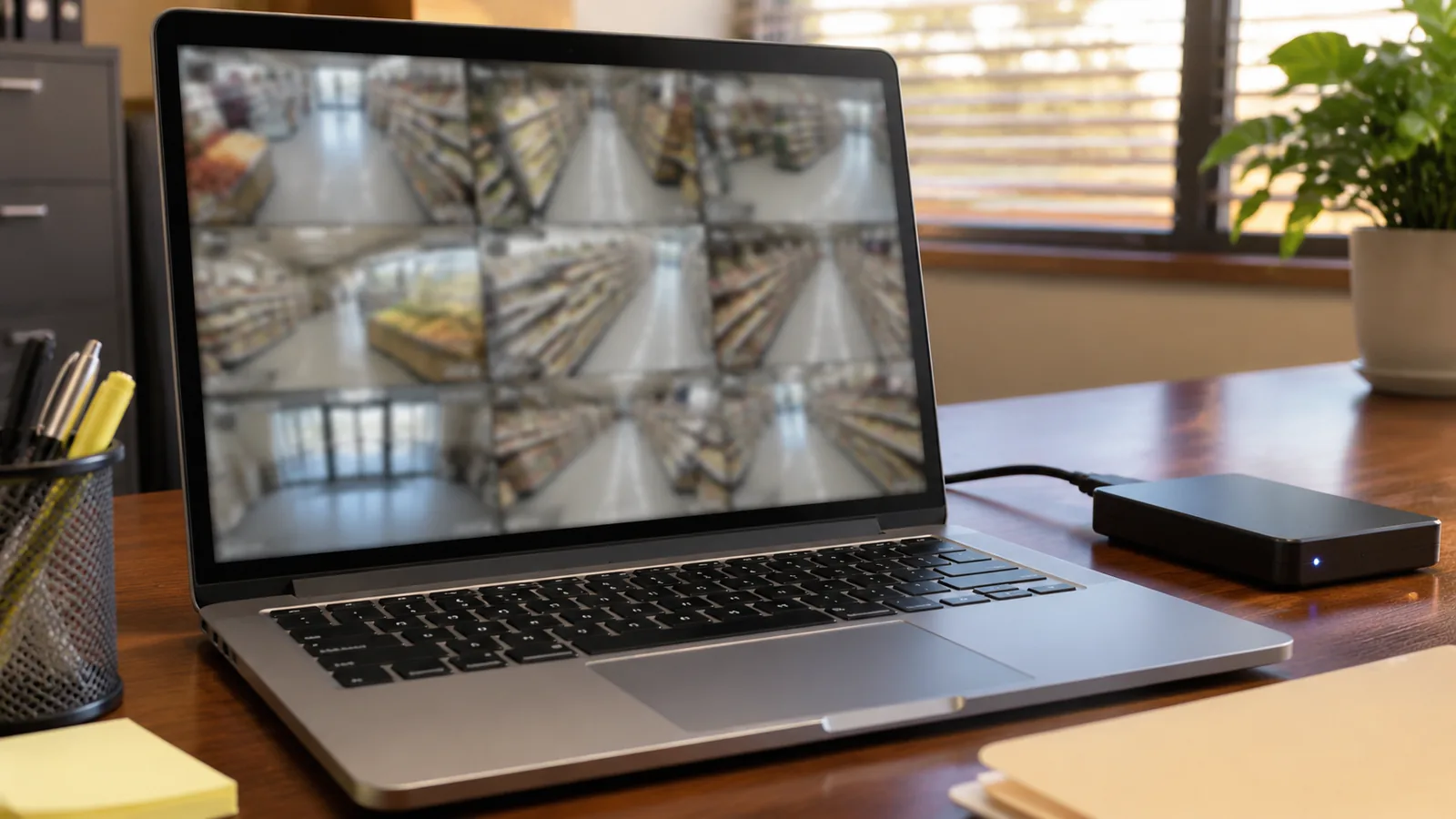
The video file shows up. Check these things.
- The camera clock, for how it was set and whether anyone ever checked it, since an on-screen time stamp isn't automatically right.
- The export or conversion, for any changed time stamps; every difference gets noted, not quietly fixed.
- The frames, for drops or skips in the recording; a gap in the file isn't a gap in time unless someone shows it.
- The camera's view, for whether it could actually see the floor; covering the aisle isn't covering the tile.
- Other cameras, for whether they show the area and whether all the angles were produced; ask for each view by name.
The copy that came by text isn't the original
Texting a video squeezes it, trims it, or strips its data. So the original file stays put, along with the message it came in, any player software or export notes, and a separate working copy for watching.
| Log field | Hypothetical entry |
|---|---|
| Source | Store counsel, by download link. |
| Date received | March 14. |
| File name | Camera 6, drink dispenser, 1:58 to 2:38 p.m. |
| Format | Native export with proprietary player. |
| Later conversion | MP4 working copy made March 15; original kept unchanged. |
Anyone checking the file later can trace it back to where it came from. If it needs a proprietary player, keep the player or its instructions where that's lawful, and test a working copy early.
Sweep sheets, apps, and the photos on your phone
Give each item its own line in the log: every camera view, phone video, photo set, inspection export, and message thread. Write down who supplied it and whether it's complete. Note what was picked or left out, and whether someone could pull the same thing again from the source.
Then pin down which inspection system that store used on that date, and what each record answers:
- The written policy, department protocols, checklists and cleaning schedules, for what was expected.
- Paper sweep sheets on a clipboard, electronic entries or time-stamped apps that record the device and the user, for what got recorded for that aisle that day.
- Spill reports and work orders, for what was reported and what was done about it.
- Records of who did the inspection, for who walked the aisle.
- The video, for what employees actually did.
Photos to take as soon as you can:
- the melted ice or the grape
- the tile seam
- the end of the aisle and its displays
- where the cone stood and which way it faced
- any glare or dead light
- a display that narrowed the path
- the cooler or drain
- the mat edge
- your shoes
For every photo, yours or a family member's, the original file is the one to keep. Write down who took it, when, and whether anyone edited it. If it went through an app that strips data, tell your lawyer.
What a camera can and can't prove
| A camera, or its footage, may show | What it doesn't establish |
|---|---|
| A camera housing above the aisle. | That the housing held a working camera. |
| The direction the dome seems to face. | That the recorded view included the floor surface. |
| A camera near the fall area. | That anything from that day was kept. |
| Movement through the aisle. | A transparent liquid on the floor. |
| An employee turning toward an area. | Whether the employee saw the liquid. |
| A shiny patch on the floor. | That the patch is water. |
| Distance and the floor surface as they look on screen. | Their real size. Cameras squash distance and can hide what's on the floor. |
Not seeing a puddle doesn't prove the floor was dry. A strange reflection doesn't prove a spill.
A clock mismatch, worked through
Suppose the incident report says 2:30 p.m., the camera says 2:19, and the receipt says 2:25.
| Possible explanation | What to check |
|---|---|
| A clock difference | Whether the camera clock was ever checked. |
| An estimated report time | How the incident time was entered and by whom. |
| Different events | Which transaction belongs to the shopper. Make sure the receipt is yours. |
| A 911 record | When the call was made, not when you fell. |
| A second camera's clock | Its own error, which may differ from the first. |
| The same employee on Camera 6 at 2:19 and Camera 4 at 2:21 | Pick an event both cameras can see, like a door opening. Write down which event you used, why, and how many seconds off the match could be, and ask whether the timing needs an expert. Matching by eye gives an estimate, not a precise correction. |
All three times stay in the file, with a note explaining the gap. Relabeling everything to match the report just buries the problem.
Even with the clock in doubt, a good timeline can say the witness walked into the aisle, for example, 40 seconds before the fall. Seconds before the fall and time on the clock are different measurements. An expert should say which one an opinion rests on.
If only a short clip shows up
Ask how the system recorded, kept, picked, and exported the footage before accusing anyone:
- Did other views exist, and did they cover the area?
- Were they kept, or recorded over?
- Was that dome a working camera, and did it see the floor?
Ask about installation, maintenance, operation, retention, and export one at a time. A new camera doesn't prove the old event was recorded. A removed camera doesn't prove a recording was destroyed. Today's lighting and camera positions don't prove how things looked on the incident date.
The grease spill in Aldridge
In Brookshire Bros., Ltd. v. Aldridge, 438 S.W.3d 9 (Tex. 2014), a customer slipped on grease from a rotisserie-chicken container near a display. The store was a Brookshire Brothers, not a BGC or Brookshire's location; Brookshire Brothers' own about-us page describes the two as separate companies. It kept about eight minutes of video, from just before he walked in until about a minute after the fall. The rest was recorded over.
The Court said the trial judge, not the jury, decides whether evidence was spoliated and what remedy fits. A spoliation instruction is reserved for intentional spoliation, or negligent loss that irreparably deprived the party of any meaningful ability to present its case. So lost footage doesn't automatically earn a helpful instruction or a presumption. The instruction given in Aldridge wasn't justified, and the case was reversed and remanded for a new trial.
Peterson later described the Aldridge video as showing employees repeatedly walking past a large grease spill in the five minutes before the fall, which was some evidence of constructive knowledge.
The point isn't to threaten spoliation every time video is missing. It's to build the facts a court needs:
- When the store knew a claim was likely. That's the duty to preserve.
- What was lost, when, and how. That's the breach.
- How the loss hurt the other side. That's the remedy.
- Who controlled the system and the files.
One line per file
Index every file. One entry in a hypothetical index:
- Camera 6, ceiling, facing the drink dispenser
- 1:58 to 2:38 p.m. on the display clock
- the defendant's second production
- relative time 4:10: an employee pushes a cart past
Keep the originals apart from any demonstration clips. For each clip, keep:
- The source file it came from.
- Start and end points. Starting a clip just before an employee walks in is an editing choice.
- The playback speed.
- Any crop, zoom, stabilizing, or labels.
Label enlarged stills and estimated times. Getting video through formal requests is in written discovery in a Brookshire's injury lawsuit.
Reviewers should write down the file, the software, what they saw, and what they're unsure of.
| Imprecise note | More precise note |
|---|---|
| "Employee sees spill." | Employee turns toward the area at relative time 3:42; whether she saw the liquid is disputed. |
| "Floor is wet." | A bright patch appears near the case; the view can't show whether it's liquid. |
| "Nobody checked the aisle." | No employee appears in camera 6 between 2:05 and 2:31 on the display clock. |
| "The bakery camera shows the fall." | Its sidewalk camera shows her walking in at 2:14 and out at 2:41, not the fall. |
| "The delivery truck caused the spill." | A delivery log puts a produce truck at the dock at 1:50. Nothing shows it dripped. |
| "The friend's clip is the video." | It's an edited social media copy; the original may be on her phone. |
| "Paramedics saw the floor." | The run sheet starts at 2:33, when they arrived. |
| "This photo shows the moment of the fall." | Her husband took it four minutes later, before cleanup; the cone had moved. |
If a second reviewer disagrees, keep the reason and go back to the source. Don't just pick the reading that helps the claim. A blurry recording may not answer the question at all, and testimony or another camera may settle it instead. Sources outside the store get asked for quickly and lawfully, with no trespassing, no pretending to have authority, and no getting into private systems. A photo ties to the video only once the link is shown, and not every picture shows the same moment.
Four stages of video evidence, and your part in each
Updates about video should say which of four stages you're in.
- Preservation requested, once a notice went out. Your part is keeping your original photos, videos and messages.
- Existence confirmed, once the store or the system shows the recording exists. Change nothing, even the bad pictures.
- Production received, once your lawyer has the files. Ask what's still missing.
- Analysis completed, once someone has reviewed what the video shows and doesn't show. Ask what happens if a gap shows up.
- No video, or it's gone, and the search moves to witnesses, photos, inspection and maintenance records and messages. Expect no guarantee.
Nobody should call a video decisive until its completeness, timing, and connection to the disputed issue have been checked. Even good footage may leave causation or damages open.
Two things only you can do:
- Tell your lawyer who had the phone and which apps the files went through.
- Leave everything as it is: no deleting bad pictures, changing time stamps, cropping out a cone, or deleting a text where you said you weren't sure.
You may remember the fall clearly and still have no proof of how long the spill sat. Early records fill that gap and show your lawyer the real strengths and defenses. In an update, "we sent a request" and "we have the video" are different news.
Four questions for any lawyer before you hire one:
- After the preservation letter goes out, what's next? (A letter alone doesn't secure footage.)
- How will the original files be kept?
- How would you look into a missing stretch of video?
- Who confirms representation, scope, and fees?
A firm shouldn't need to promise a particular video result to explain its plan.
Frequently asked questions
How long does Brookshire's keep video?
No single retention period is established for every store and system. It can depend on how the system is set up, storage, export practices, and the business. Ask for preservation quickly instead of relying on a number of days nobody can support.
Will the store give me all the footage right away?
Asking informally and formal discovery are two different routes. Privacy, relevance, system limits, and procedure can all affect what gets produced. A store saying no informally doesn't prove the footage was destroyed.
Does a missing recording mean I win?
Lost footage doesn't decide the case. The duty to preserve, what happened to the footage, the harm to your case, and the law all matter, and liability and damages still have to be proved.
Can my lawyer slow down the footage, or use an exported copy?
Slow motion and stills can be used in a presentation if they're identified and allowed. A slowed or annotated clip is a presentation version, so nobody should call it unaltered. The original stays kept, along with the export, and the working copy gets a label with its source, date, format, and any changes, because an export can lose quality, timing, or context.
Tell us about your Brookshire's injury
Aaron Herbert is Board Certified in Personal Injury Trial Law by the Texas Board of Legal Specialization. That's not a promise about any result.
Got the receipt, the photos, and the names? Tell us about your Brookshire's injury or call (214) 200-4878. The office is on the LBJ Freeway in Dallas, at 8330 Lyndon B. Johnson Freeway, Suite 700, 75243. Calling doesn't make us your lawyers; representation, scope, and fees get confirmed in writing first, and no result is guaranteed.
Related pages on Brookshire's injuries
- Texas Brookshire's grocery injury knowledge hub: every guide in one place.
- Brookshire's injury claims and lawsuits in Texas: the lawsuit through appeal.
- The first 72 hours after a Brookshire's injury: early evidence steps.
- Proving store notice in a Brookshire's slip and fall: duration evidence under Peterson.
- Written discovery in a Brookshire's injury lawsuit: requests for video and records.
- Texas grocery store injury lawyer: the firm's practice page.
Sources
- Brookshire Bros., Ltd. v. Aldridge, 438 S.W.3d 9 (Tex. 2014).
- H-E-B, LP v. Peterson, No. 24-0310 (Tex. Apr. 10, 2026).
- Brookshire Brothers, about us.
- Texas Judicial Branch, rules and standards.
We checked these sources on November 2, 2026. The Law Firm of Aaron A. Herbert, P.C. has no tie to Brookshire Grocery Company. It has no tie to Brookshire Brothers, Ltd., either. Neither company sponsors or endorses this page. This page is general information. Your own facts, the law, and any court orders decide your case.

ABOUT THE ATTORNEY
Aaron A. Herbert
Founding Attorney
Board Certified in Personal Injury Trial Law
Aaron founded The Law Firm of Aaron A. Herbert in 2010 to focus on developing each client's case and seeking its maximum value. For over a decade, he has represented people seriously injured in major accidents and industrial catastrophes, pursuing trial verdicts and settlements while working to reduce the stress of litigation.
Education
- Texas A&M University · B.S., Criminal Justice, 1999
- University of Oklahoma College of Law · J.D., 2002; graduated in the top of his class
Trial experience & approach
Aaron earned numerous jury verdicts at boutique personal injury litigation firms. According to his biography, he spent a year as the top-earning litigation attorney at a firm that frequently appeared in verdict searches as having one of the highest numbers of trial wins in Texas. At another Dallas personal injury firm, he moved from managing pre-litigation attorney to managing litigation attorney over seven years as the firm grew into one of Dallas's largest personal injury firms.
His biography describes a reputation as one of America's most aggressive trial lawyers, with noteworthy recoveries from judges and juries and substantial pretrial settlements. Most of those settlements included confidentiality agreements requested by the defense. Aaron has said the recoveries were justified by the injuries and losses involved, which no amount of money could make someone choose to experience.
His approach combines passion, preparation, persistence and courtroom imagination. He believes a well-supported, engaged and motivated team working cooperatively helps deliver strong representation, with the goal of achieving the best possible result for every client.
Dallas roots, military service & publication
Born and raised in Dallas, Aaron enlisted in the United States Marine Corps after high school and later received an Honorable Discharge. He completed his university and law degrees after his military service and became a lifelong Sooners football fan in law school.
Publication: “Litigating Dog Bite Cases,” Texas Dog Law Seminar, Dallas, 2009.
Professional affiliations & recognition
Professional affiliations and recognition listed in Aaron’s biography:
- State Bar of Texas
- American Bar Association
- Association of Trial Lawyers of America (now American Association for Justice)
- Texas Trial Lawyers Association
- Dallas Trial Lawyers Association
- Dallas Bar Association
- Tarrant County Bar Association
- Million Dollar Advocates Forum
- The National Trial Lawyers – Top 100 Trial Lawyers