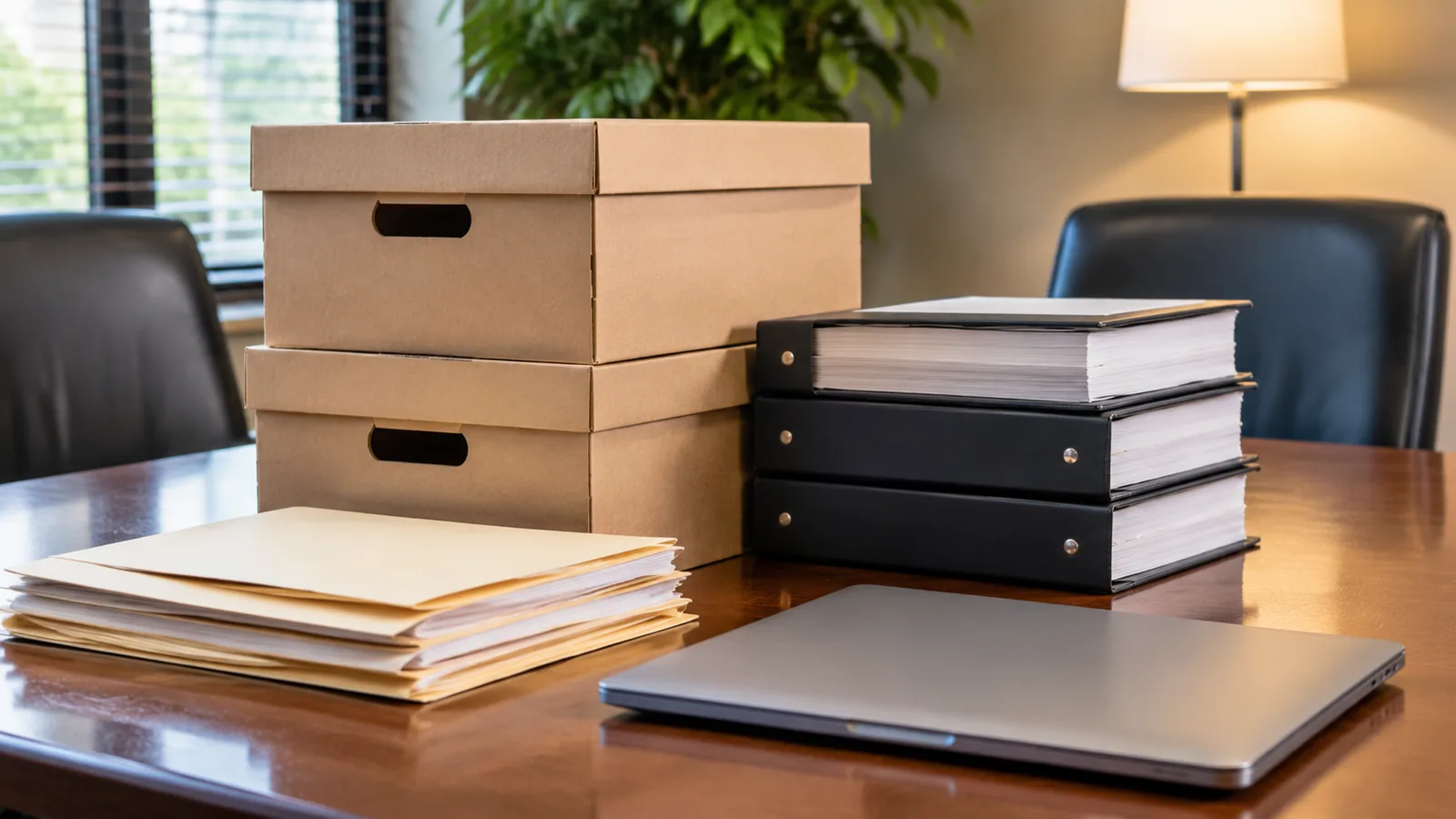
The mat by the exit door of the Brookshire's in Bullard had a ruffled edge. A shopper caught it and fell. The shopper's lawyers later turned up 118 mat-related incident reports from 75 other Brookshire stores, and in 2010 a Texas appeals court said none of them showed the Bullard store knew about that ruffle.
Discovery can get you the records for one store, one door and one hour. It can't make other stores' reports into notice. Write four things down before the first request goes out:
- Bullard, the exit door, the time of the fall
- the ruffled edge (not "the mat")
- the employees, contractors and cameras tied to that spot
- the one or two facts the case turns on
Written discovery in a lawsuit against Brookshire Grocery Company (BGC) should get the evidence needed to prove or test those disputed facts. Good requests name the incident, the condition, the place, and the time. They identify the people who'll become witnesses, and they reach the records that answer a real question.
These are general legal points, and the case lessons come from other people's lawsuits. They don't show that any BGC store violated a duty. The Texas Rules of Civil Procedure, local rules, and the court's scheduling order control the details.
Hurt at a Brookshire's store? Tell us about your Brookshire's injury or call (214) 200-4878. Bring the store address, the date, what happened, any photos, witness names, and your medical providers. Contacting the firm doesn't create an attorney-client relationship.
The tools, rule by rule
- Discovery levels and discovery control plans (Rule 190).
- Required disclosures (Rule 194).
- Discovery about testifying expert witnesses (Rule 195).
- Requests for production and inspection (Rule 196).
- Interrogatories (Rule 197).
- Requests for admissions (Rule 198).
- Depositions on oral examination (Rule 199).
Work from the current rules (as amended October 1, 2026, viewed November 2, 2026) and the court's order, not an old form.
Each tool does one job well:
| Tool | What it does best |
|---|---|
| Interrogatories | People, positions, and contentions. |
| Production requests | Records, video, and data. |
| Requests for admission | Simple facts that can be nailed down. |
| Depositions | How records were made and what witnesses know. |
The whole lawsuit is in the Brookshire's injury claims and lawsuits guide.
Three BGC cases, read for discovery
The Bullard case is Bowman v. Brookshire Grocery Co., 317 S.W.3d 500 (Tex. App.—Tyler 2010). Two more BGC cases sit beside it in the chart.
| What the case shows | What it means for discovery |
|---|---|
| The condition was the ruffled edge, not the mat. | Define the condition precisely before asking for history. |
| Reports from 75 other stores didn't show knowledge at Bullard. | More reports don't automatically mean a stronger case. |
| There was no evidence how long the ruffle existed. | Duration evidence still has to come from this store and this event. |
| The no-evidence summary judgment for the store was affirmed. | The shopper took nothing on that claim. |
| Brookshire Grocery Co. v. Taylor, 222 S.W.3d 406 (Tex. 2006): the condition was partially melted ice, not the soft-drink dispenser. | Define the condition first. |
| Taylor: with no evidence of how long the ice had been there, the Texas Supreme Court rendered judgment that the shopper take nothing. | Duration evidence is the target. |
| Dimmitt v. Brookshire Grocery Co., No. 11-12-00129-CV (Tex. App.—Eastland June 26, 2014) (mem. op.): a contractor's scrubber leaked water, yet the store kept control and still owed the invitee duty. | The contractor gets its own requests. |
| Dimmitt: the summary judgments were reversed and remanded. | That isn't a recovery. |
Ask for every accident at every store and you get boxes. In Bowman the shopper had 118 reports and still lost on notice. A court weighs each earlier incident for relevance and for how similar it is to this one.
So start narrow. Which Brookshire's, and which door or aisle? What facts identify this spill at this drink station? Which records describe this mat at this entrance? Who ran the contractor's machine that night, and under what contract?
Contractors get their own requests
The store and its cleaning contractor can owe different duties and raise different defenses, so their records get asked for separately. From the contractor:
- The contract, which shows the scope of the job.
- The work date and what was actually done.
- The names of the crew, who may be deposed.
- Service records for the machine.
- Messages that might show what the store knew.
One question, three requests
The question: did an employee hear about water beside a display before the fall? The answer could sit in:
- employee names
- incident messages
- camera footage for that window
- inspection entries
- witness information
Only then pick the tool:
| Tool | Hypothetical request |
|---|---|
| Interrogatory | Identify each employee who received a report about the display area that afternoon. |
| Production request | Produce the inspection entries and video for that area from 1:30 to 2:45 p.m. |
| Request for admission | Admit that the employee assigned to the area on the schedule worked that shift. |
The person searching for records has to be able to understand the request, and it has to hold up if challenged. Proportionality is part of that. A cooler that leaked for months justifies a longer look back. A dropped drink has no service history at all.
Interrogatories that get real answers
Good topics, grouped:
- What happened, such as how the store says the fall happened, who was there or responded, when the condition was first seen or reported, who inspected before and how long the store says it was there.
- Inspection and maintenance, such as the procedures that day, how often and how inspections were done, who was assigned to the area, how spills and leaks get written up and the maintenance history.
- Notice, such as earlier complaints about the same condition, earlier incidents with the same spot or equipment, recurring leaks or drainage problems, who looked into them and what was fixed.
- Defenses, such as the facts behind any claim of no knowledge, that the shopper caused or added to the condition, comparative responsibility or that the hazard was open and obvious or not unreasonably dangerous.
Asking for every fact behind every defense, with no limits, just invites objections.
| Weak interrogatory | Targeted interrogatory |
|---|---|
| "State every fact supporting every defense." | A hypothetical request to state each fact supporting the contention that the liquid near the drink dispenser appeared moments before the fall. |
| "Identify all employees." | A hypothetical request to identify each employee assigned to the front-end floor walk between 1:00 and 3:00 p.m. |
Production requests: often the heart of the case
The store operator holds some of the key records. The property owner or a contractor may hold the rest. Tailor each set to the case:
- Video, such as the incident camera and the ones beside it, native files, camera diagrams, maintenance, retention and overwrite settings, preservation records and messages about collecting, copying or deleting footage.
- Incident and inspection records, such as reports and attachments, inspection logs, checklists, cleaning logs, employee messages, work orders, complaints and employee photos.
- Policies and training on inspections, spills, leaks, cleanup, hazard and customer reports, incident write-ups and preservation, in the versions in effect that day.
- Contracts, such as leases; management, cleaning and equipment service agreements; vendor work orders.
- Control, such as who operated the store, who owned it and who handled safety, maintenance and incident response there.
"Every safety document at every affiliated store" is easy to attack. Records about this store, this condition, this equipment, and this period are easy to defend. Video requests are covered in preserving surveillance video after a Brookshire's injury.
When the store sends a spreadsheet
The store sends a spreadsheet with "floor checked" next to aisle 9 at 2:00. Test each kind of entry before trusting it:
| Record entry | What it may not show | What to ask |
|---|---|---|
| An employee logged into a device. | That the employee inspected the accident area. | Who typed in the entries? |
| A task marked complete. | Who did the work or where. | What system generated it? |
| A timestamp on an entry. | When the employee was actually in the aisle. | What do the underlying time stamps say? |
| An entry changed later. | What it said before the fall. | Was anything edited after the fall? |
Skip most of the technical fields. Two splits matter: a scheduled task against a finished inspection, and a machine time stamp against a person who looked. Ask the author about both at deposition.
What should the store be asked to admit?
Each request carries one fact the store can check in a minute. Sample wording for a fall at a drink station:
- Admit that you operated the store on the date of the occurrence.
- Admit that you controlled the area in front of the drink dispenser.
- Admit that you were responsible for inspecting the front-end floor.
- Admit that the named employee was working at the location.
- Admit that Camera 6 was operating at 2:20 p.m. and covered aisle 9.
- Admit that the attached incident report is authentic.
- Admit that the photo fairly and accurately depicts the identified area.
- Admit that the attached floor-walk policy was in effect on the incident date.
Asking the store to admit negligence gets a denial and proves nothing.
What if the video is gone?
Brookshire Bros., Ltd. v. Aldridge, 438 S.W.3d 9 (Tex. 2014), came out of a Brookshire Brothers store, a different company. It still sets the Texas rule. The judge decides spoliation. Lost video doesn't prove anything on its own.
So the preservation letter goes out early, with the date, the rough time, the aisle, native video and metadata named. The shopper keeps her own photos, shoes, receipt and texts. Then each camera question gets a paper answer:
- The camera diagram and maintenance records, for whether there was a camera and whether it worked that day.
- The camera diagram and a still frame, for whether the aisle was in its view.
- Retention and overwrite settings, for how long footage was kept.
- The native file, for whether the picture is usable.
- The incident report and the dated letter, for when the fall was reported and when the letter arrived.
- Preservation records and messages about the footage, for whether anyone watched or copied it before it was lost.
Which company goes in the petition?
The sign says Brookshire's. Four names can still differ, so match each one to the receipt, the pleadings, property records and later testimony:
- the operator
- the employer
- the property interests
- the contractors
A mismatch doesn't get a pass just because everyone uses the brand name.
Insurance information depends on the rules and procedure. A declarations page may not be the whole picture. No one should assume a policy limit for every store, and guesses based on unrelated businesses are no substitute for real documents. See the Brookshire's attorney fees, insurance, and data article.
Before a produced page is proof
Take the floor-walk log. It may still need authentication, a hearsay exception or another foundation. So it gets an index line with:
- the producing party
- the request number
- the production number
- what it's meant to prove
- who can explain its abbreviations and fields
If only the contractor's crew saw the floor, serve third-party discovery early. A service ticket that says "unit leaked" could be three different things:
- The technician's own observation.
- A customer's report, which may be hearsay inside the record.
- Text copied from dispatch.
Find out which before relying on it.
When the answers come back thin
Name the exact gap and ask for something narrower. Hypothetical deficiency letter: request for production 14 got no inspection entries for the front-end floor. Those entries bear on how long the ice was there. Please produce the entries from 1:00 to 3:00 p.m. on the incident date.
A noon entry, a 1 p.m. entry, a 12:40 fall
That's the log in the box, in this hypothetical. What each line can carry:
| Log entry (hypothetical) | May and may not show |
|---|---|
| Noon | An inspection, if its location and meaning are proved. |
| 1 p.m. | Possibly a response after the fall. |
| Both | Neither dates the spill. |
A blank line doesn't prove negligence, and a filled-in line doesn't prove anyone walked the aisle. Ask who made each entry, which aisle they checked, and whether the system saves creation and edit times. Then compare the log with schedules, testimony, and video.
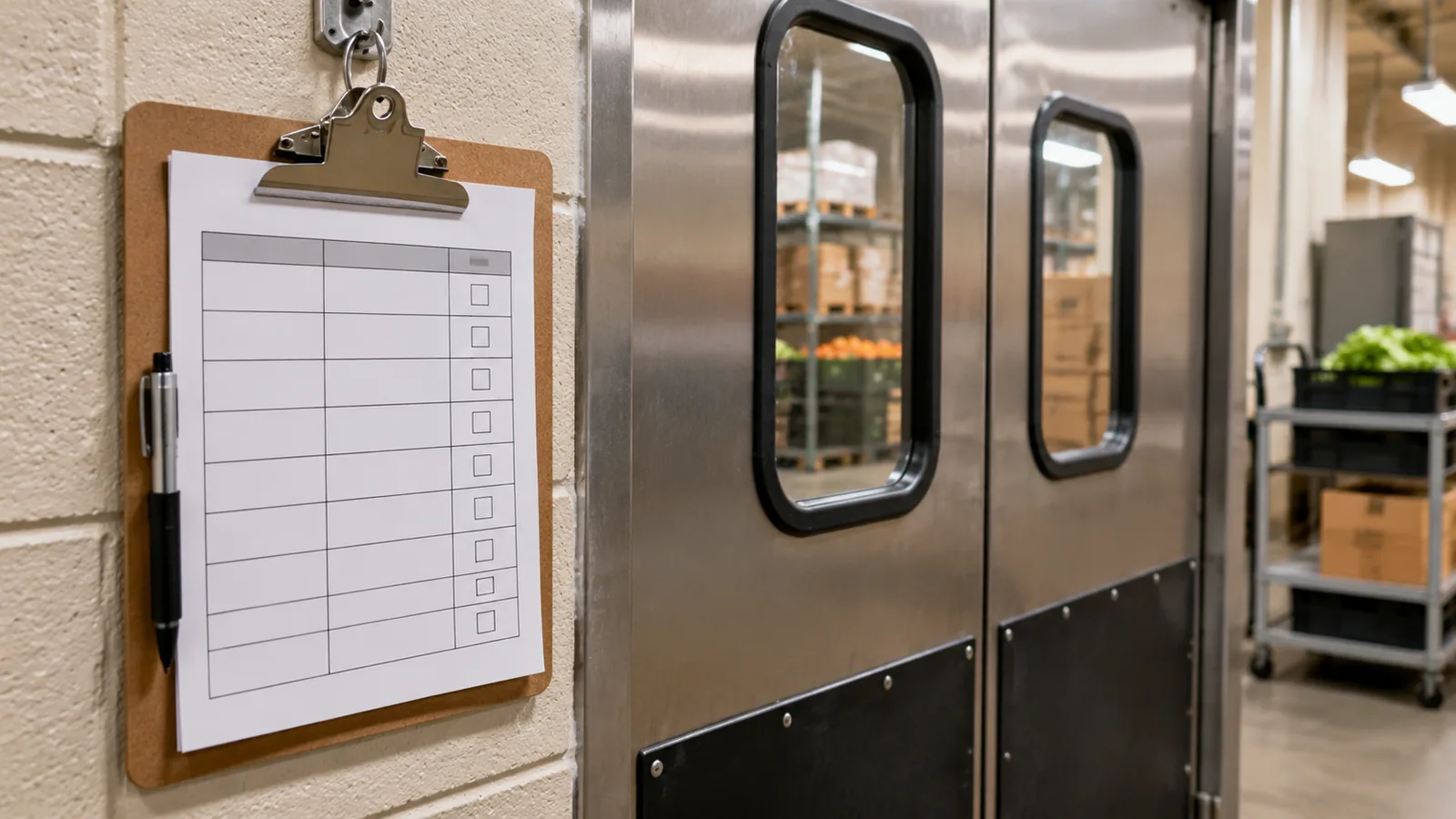
Before the manager's deposition
Answers against production, line by line, into the working file (timeline, witness list, evidence index, response chart, open issues). What turns up:
| Gap | Next move |
|---|---|
| Contractor named, no contract | Check the request and open objections. |
| User code doesn't match the schedule | Ask; don't assume fakery. |
| Ticket's unit isn't in the photos | Find out which. |
| Still thin after the letter | Meet and confer first; keep notes. |
| Incident report withheld as privileged | Not automatic. Timing, purpose, author and governing law decide; ask for a log or ruling. |
A deposition can clear up a gap. It shouldn't be the first time anyone notices a key document is missing. Sometimes there's an ordinary explanation. Sometimes it's a real error, or the wrong material was produced. More in store manager, employee, and corporate depositions.
A task isn't evidence
"Video requested" is a task. A produced recording that shows a spill is evidence. "Doctor supportive" isn't the doctor's admissible opinion.
When you summarize an answer, keep its qualifiers.
| Response | Not the same as |
|---|---|
| None found after a stated search | Sworn testimony none existed |
| Objection, partial production | Total refusal |
| Symptoms improving | Full recovery |
| A work restriction | Permanent disability, without support |
Is discovery done?
Not until each invitee element has a source behind it:
| Element | Proof |
|---|---|
| Knowledge | Reports, video, inspection entries, duration |
| Unreasonable risk | Photos, the condition, incident history |
| No reasonable care | Warnings, cleanup, inspection practice |
| Proximate cause | Video, witnesses, medical records |
Timing is where most of these fights land. Wal-Mart Stores, Inc. v. Reece, 81 S.W.3d 812 (Tex. 2002): constructive notice needs proof of how long the condition was there. Wal-Mart Stores, Inc. v. Gonzalez, 968 S.W.2d 934 (Tex. 1998): long enough that the store should have found it. Taylor and Aldridge shape the same fights over conditions, notice and proof.
Some questions will stay disputed. Write that down, and decide whether one more proportionate step could change the picture. See responding to summary judgment in a Brookshire's case.
What clients should expect
You may be asked for medical history, wage information, photos, messages, and other material.
Keep:
- original records
- accurate answers, even when the facts hurt
- new bills, work records, photos, and messages, sent promptly
Don't delete or hide anything, send private information through insecure channels, or guess what's relevant. Ask.
Discovery can strengthen a claim, narrow it, turn up another responsible party, or expose a serious defense. It doesn't predict settlement value or a trial date, and it doesn't mean an element has been proved.
A useful update has four parts: the fact, its source, what's still disputed, and the decision it affects. The store's position stays apart from established fact.
"Discovery is underway" tells you nothing. "We've identified the video system, and the footage from before the fall is still outstanding" does.
Frequently asked questions
Can the lawyer ask for all prior accidents?
Earlier incidents can be relevant when they're close enough to the disputed condition, but unlimited requests run into scope and proportionality problems. In Bowman, 118 mat reports from 75 other stores didn't show knowledge at the store where the fall happened.
Does getting a document mean the jury will see it?
A floor-walk log that came in a production can still be kept out for authentication, hearsay, or relevance. Line up the witnesses and foundations while discovery is still open.
Does missing video mean the store destroyed evidence?
A gap in the footage has to be explained before anyone calls it destruction. Spoliation is decided under Texas standards.
Tell us about your Brookshire's injury
Get engagement, scope and fee terms in writing. Aaron Herbert is Board Certified in Personal Injury Trial Law by the Texas Board of Legal Specialization; certification isn't a promise about any result, and you can check it on the Texas Board of Legal Specialization profile.
Got the receipt, the photos, and the names? Tell us about your Brookshire's injury or call (214) 200-4878. The office is on the LBJ Freeway in Dallas, at 8330 Lyndon B. Johnson Freeway, Suite 700, 75243. Calling doesn't make us your lawyers; representation, scope, and fees get confirmed in writing first, and no result is guaranteed.
Related pages on Brookshire's injuries
- Texas Brookshire's grocery injury knowledge hub: every guide in one place.
- Brookshire's injury claims and lawsuits in Texas: the lawsuit through appeal.
- Store manager, employee, and corporate depositions: turning responses into testimony.
- Preserving surveillance video after a Brookshire's injury: native files and timestamps.
- Responding to summary judgment in a Brookshire's case: the record against a no-evidence motion.
- Texas grocery store injury lawyer: the firm's practice page.
Sources
- Bowman v. Brookshire Grocery Co., 317 S.W.3d 500 (Tex. App.—Tyler 2010).
- Brookshire Grocery Co. v. Taylor, 222 S.W.3d 406 (Tex. 2006).
- Dimmitt v. Brookshire Grocery Co., No. 11-12-00129-CV (Tex. App.—Eastland June 26, 2014) (mem. op.).
- Brookshire Bros., Ltd. v. Aldridge, 438 S.W.3d 9 (Tex. 2014).
- Wal-Mart Stores, Inc. v. Reece, 81 S.W.3d 812 (Tex. 2002).
- Wal-Mart Stores, Inc. v. Gonzalez, 968 S.W.2d 934 (Tex. 1998).
- Texas Rules of Civil Procedure, as amended October 1, 2026, Rules 190.
- Texas Judicial Branch, rules and standards.
We checked these sources on November 2, 2026. The Law Firm of Aaron A. Herbert, P.C. has no tie to Brookshire Grocery Company. It has no tie to Brookshire Brothers, Ltd., either. Neither company sponsors or endorses this page. This page is general information. Your own facts, the law, and any court orders decide your case.

ABOUT THE ATTORNEY
Aaron A. Herbert
Founding Attorney
Board Certified in Personal Injury Trial Law
Aaron founded The Law Firm of Aaron A. Herbert in 2010 to focus on developing each client's case and seeking its maximum value. For over a decade, he has represented people seriously injured in major accidents and industrial catastrophes, pursuing trial verdicts and settlements while working to reduce the stress of litigation.
Education
- Texas A&M University · B.S., Criminal Justice, 1999
- University of Oklahoma College of Law · J.D., 2002; graduated in the top of his class
Trial experience & approach
Aaron earned numerous jury verdicts at boutique personal injury litigation firms. According to his biography, he spent a year as the top-earning litigation attorney at a firm that frequently appeared in verdict searches as having one of the highest numbers of trial wins in Texas. At another Dallas personal injury firm, he moved from managing pre-litigation attorney to managing litigation attorney over seven years as the firm grew into one of Dallas's largest personal injury firms.
His biography describes a reputation as one of America's most aggressive trial lawyers, with noteworthy recoveries from judges and juries and substantial pretrial settlements. Most of those settlements included confidentiality agreements requested by the defense. Aaron has said the recoveries were justified by the injuries and losses involved, which no amount of money could make someone choose to experience.
His approach combines passion, preparation, persistence and courtroom imagination. He believes a well-supported, engaged and motivated team working cooperatively helps deliver strong representation, with the goal of achieving the best possible result for every client.
Dallas roots, military service & publication
Born and raised in Dallas, Aaron enlisted in the United States Marine Corps after high school and later received an Honorable Discharge. He completed his university and law degrees after his military service and became a lifelong Sooners football fan in law school.
Publication: “Litigating Dog Bite Cases,” Texas Dog Law Seminar, Dallas, 2009.
Professional affiliations & recognition
Professional affiliations and recognition listed in Aaron’s biography:
- State Bar of Texas
- American Bar Association
- Association of Trial Lawyers of America (now American Association for Justice)
- Texas Trial Lawyers Association
- Dallas Trial Lawyers Association
- Dallas Bar Association
- Tarrant County Bar Association
- Million Dollar Advocates Forum
- The National Trial Lawyers – Top 100 Trial Lawyers