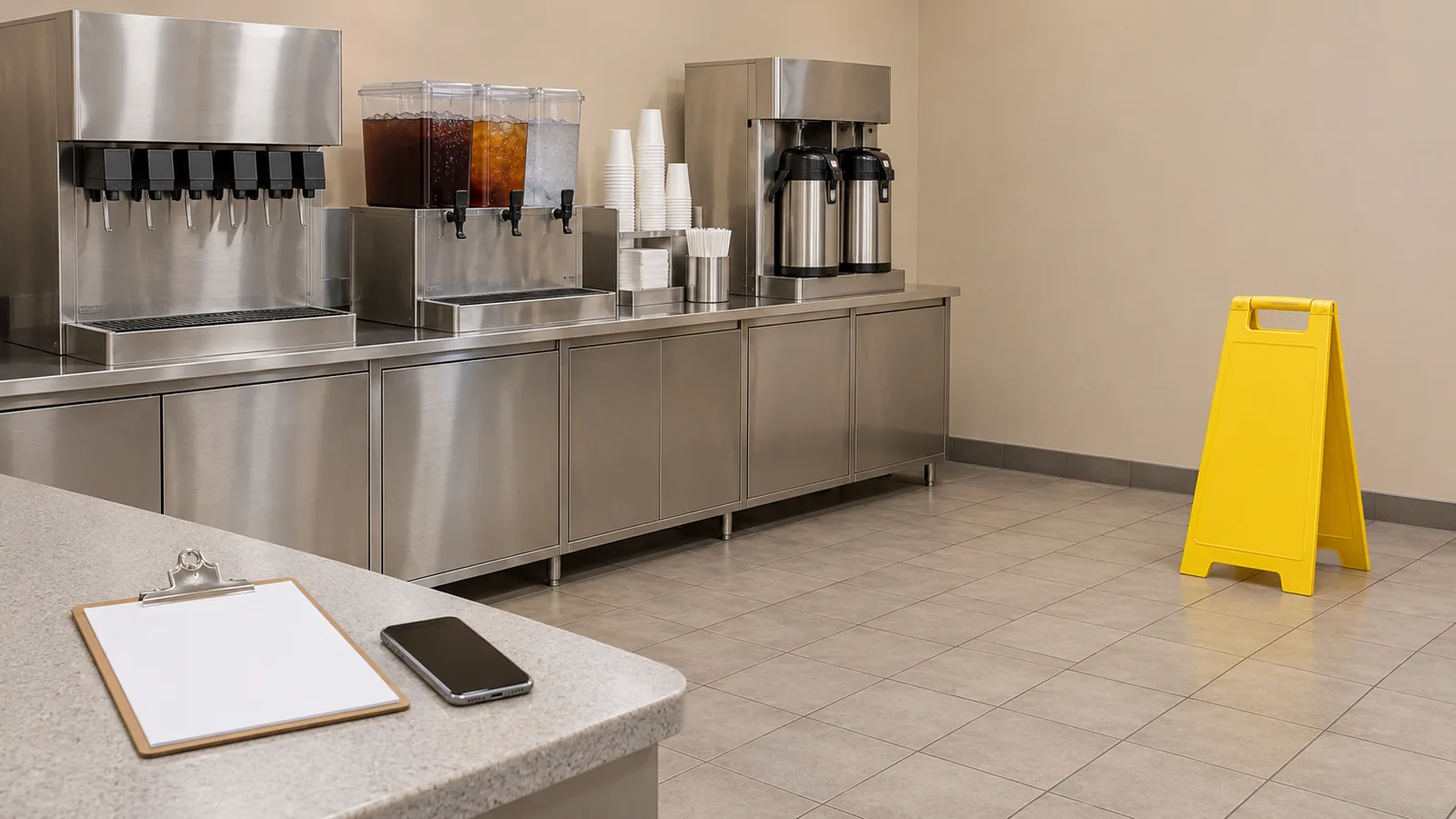
A claim for an injury at a Texas 7-Eleven (also written 7-11 or Seven Eleven) needs the right defendants, evidence saved early, proof of duty and breach, medical causation, documented losses, and a lawsuit filed on time. Settlement talks and trial preparation should grow out of those facts about the specific condition and what the store knew, not out of an assumed settlement average.
What the claim needs | What it means at a 7-Eleven |
|---|---|
The responsible parties | The operator, franchise entity, landlord, or vendor who actually controlled the Slurpee machine, coffee island, or front mat. |
Evidence saved early | Video, the incident report, receipts, photos, and the shoes you wore. |
Duty and breach | Proof about the specific condition and what the defendant knew about it. |
Medical causation and losses | Records and qualified opinions that connect the fall to the injury. |
A protected deadline | Suit filed in time, whatever stage negotiations have reached. |
Who this guide serves | How to use it |
|---|---|
Injured customers | Follow the case from the first report through investigation, discovery, expert analysis, mediation, jury preparation, and collection, and see the decisions ahead. |
Practitioners | Use the numbered sections as an organized litigation framework. |
Everyone reading the examples | Every example is a hypothetical teaching tool, not an Aaron Herbert case history or a prediction of recovery. |
Anyone evaluating counsel | Aaron Herbert is Board Certified in Personal Injury Trial Law by the Texas Board of Legal Specialization, a credential you can verify. [S1] |
About this guide | 7-Eleven stores are operated or franchised by 7-Eleven, Inc. The Law Firm of Aaron A. Herbert, P.C. is not affiliated with or endorsed by 7-Eleven, Inc. |
Request a review of your Texas 7-Eleven injury through the secure form at InjuryAttorneyOfDallas.com or call (214) 200-4878.
Stage of the case | Sections in this guide | What it answers |
|---|---|---|
Intake and the injured person | 1. Define the event; 2. Protect health and the medical history; 3. The incident report; 4. The store and the parties with control | What happened, who was there, and who ran that part of the store? |
Evidence that can disappear | 5. Surveillance as a timeline; 6. Missing evidence; 7. The condition and its risk | Which records need a preservation request now, and what do they prove? |
Notice and duty | 8. Actual knowledge; 9. Constructive notice; 10. Inspections and policies; 11. Warnings and necessary use | Did the store know, or should it have known, and did it have to warn? |
Kinds of 7-Eleven injuries | 12. Beverage stations; 13. Parking lots and fuel islands; 14. Falling merchandise and deliveries; 15. Burns; 16. Assaults and security | How does the investigation change with the type of event? |
Deadline and money questions | 17. Filing deadline; 18. Insurance and indemnity; 19. Past medical expenses; 20. Future losses; 21. Pain and impairment; 22. Comparative responsibility; 23. The demand package | When must suit be filed, what can be recovered, and who pays? |
The lawsuit | 24. The petition; 25. Discovery; 26. Depositions; 27. Experts; 28. Summary judgment; 29. Exemplary damages | How is the case filed, proved, and defended against early dismissal? |
Resolution and trial | 30. Mediation and net recovery; 31. Jury charge; 32. Voir dire; 33. Verdict, judgment, and collection | Should the case settle, and what happens if it is tried? |
Tools and next steps | 34. Public numbers; 35. A worked example; 36. An evidence audit; 37. Common questions; 38. Request a review | How do the pieces fit together for one injured customer? |
1. Define the event before choosing a legal theory
"I fell at 7-Eleven" is where the story starts, but a lawyer needs the whole sequence.
What counsel needs to know | Hypothetical example |
|---|---|
Where the customer was walking | From the coffee island toward register 2. |
What surface or object was involved | The tile in front of the fountain drink counter. |
What the customer saw before and after | Nothing before, clear liquid beside the left shoe after. |
Who was present | One cashier and a customer at the ice chest. |
Keep observations apart from assumptions. Someone who sees liquid after falling can describe it reliably without knowing where it came from or how long it sat there.
Chronology source | What it can show | Its limit |
|---|---|---|
Receipt | The purchase time | Not necessarily the time of the fall. |
Phone photograph | When the picture was taken | The device may use a different time zone or setting. |
Phone records | When a call or text went out | Only the call, not the fall. |
Witness account | What someone saw | Times are estimates until a reliable reference confirms them. |
Medical intake | When care began | What the patient reported, not what happened in the store. |
Recording estimates as estimates keeps a small inconsistency from turning into the centerpiece of the defense.
If the injury involved | It raises |
|---|---|
An existing condition, like a puddle left after mopping | Premises questions about the condition and notice. |
An activity at that moment, like an employee hitting a customer with a stocking cart | Different issues from a condition already on the floor. |
A failed coffee lid | Product and handling analysis. |
An assault | A separate duty investigation. |
Picking a dramatic label too early can send discovery after the wrong witnesses and documents.
What the customer can do | What counsel does |
|---|---|
Describe what you remember | Keeps alternative explanations open until the evidence narrows them. |
Preserve what you have | Builds a theory that explains how the injury happened. |
Say "I don't know" when you don't | Checks that the theory fits the physical evidence. |
If you're still in the first few days, read what to do in the first 72 hours after a 7-Eleven injury.
First-week task | Who usually handles it |
|---|---|
Get medical care | The injured person, with help from family if needed. |
Save receipts, photos, and clothing | The injured person. |
Send a preservation request | Counsel. |
2. Protect your health and the accuracy of the medical history
Get care because of symptoms and clinical advice, never because of settlement strategy.
Tell the provider | Why |
|---|---|
How the fall happened | The mechanism guides diagnosis and later causation analysis. |
Every body area affected | A complaint missing from the first visit is hard to explain later. |
Symptoms that showed up afterward | Delayed symptoms are common and should be recorded when they appear. |
Any prior condition, accurately | Hiding an old injury can hurt treatment and sink an otherwise legitimate aggravation claim. |
If symptoms suggest an urgent medical problem, get care right away. Someone else can handle the evidence checklist, and documentation is never a reason to stay in a dangerous area or put off treatment.
Treatment chronology entry | What to record |
|---|---|
Emergency care | Date, facility, and what was treated. |
Follow-up evaluation | Who saw you and what they recommended. |
Diagnostic testing | The test, the date, and why it was ordered. |
Therapy | Visits scheduled versus completed. |
Specialist recommendation | The reason for the referral and whether you went. |
A gap in care | The real reason, such as cost, transportation, scheduling, or another medical issue. |
Don't invent a reason for a gap after a defense lawyer asks about it.
Medical question | How counsel approaches it |
|---|---|
A diagnosis appears weeks later | It may be related, unrelated, or incompletely documented, so compare it with the reported mechanism. |
A billing code seems to confirm the injury | A billing code isn't a complete causation opinion. |
The issue needs medical expertise | Get an appropriate opinion and identify the facts it assumes. |
The record and the theory diverge | Follow qualified medical evidence, not the lawyer's preference. |
A good client file is a record, not a script for symptoms.
Keep in the file | Avoid |
|---|---|
Appointment dates, work restrictions, and prescriptions | Writing down symptoms you think you should have. |
Receipts and questions for the next visit | Absolute statements like "I can't do anything anymore." |
Notes on better days and worse days | Statements that a photo of you carrying groceries could contradict. |
3. Make an incident report without turning uncertainty into an admission
A report shows the store was told and may name witnesses, employees, or records, but it doesn't replace medical care, a preservation request, or a lawsuit.
Ask for | If the store refuses |
|---|---|
The manager's name | Write down who you spoke with. |
The report reference number | Note the request and the answer. |
A copy of the report | Record that you asked and what staff said, without arguing. |
Separate what you saw from what other people told you.
Hypothetical statement | How it holds up |
|---|---|
"My left foot slid near the beverage counter, and I saw clear liquid beside my shoe." | It's firsthand observation. |
"The machine had been broken all day." | It needs a basis you may not have. |
"I wasn't hurt." | Don't sign it just because you don't yet know how badly you're hurt. |
Read every form before signing. A routine report and an agreement giving up your claims are different documents.
Watch for | What to do |
|---|---|
Release language | Don't sign until it's reviewed. |
A broad medical authorization | Ask what it covers before agreeing. |
Wording about a final settlement | Treat it as more than a report. |
A form you can't read or understand | Ask for help or legal review. |
Anything you do sign | Photograph it or keep a copy when you can. |
Counsel should find every version of the report and everyone who helped create it. Differences between versions don't necessarily mean wrongdoing.
Report version | Questions to answer |
|---|---|
Handwritten account | Who supplied each fact? |
Electronic submission | When was each entry made? |
Later supervisor narrative | Did it add facts nobody saw firsthand? |
Insurance summary | Was any field filled in automatically? |
The report matters because it connects people and events, not because a checkbox proves or disproves liability.
Lead the chronology may reveal | Why it matters |
|---|---|
A call to a maintenance vendor before the fall | It may show the store knew about the problem. |
An employee message about a spill | It may fix when the condition appeared. |
A witness named only in the earliest report | That person may never appear in later versions. |
4. Identify the store and the parties with control
The exact address matters, because customers often remember an intersection or the brand but not which side of the road they were on.
Location proof the client may already have | What it confirms |
|---|---|
Receipt | Store number and address. |
Card transaction | Merchant name and time. |
Photographs | Storefront, fuel island numbers, or nearby signs. |
Phone location information | Where the phone was at the time. |
Use lawful records to confirm the location before sending demands or naming defendants.
Party matrix column | Hypothetical entry |
|---|---|
Legal name | The entity named on the store's license. |
Role | Store operator. |
Relevant area or equipment | The walk-in cooler door. |
Evidence of control | A maintenance agreement for the cooler. |
Service information | The registered agent on file. |
Insurance lead | A carrier named in the first claim letter. |
Possible participant | Question to answer |
|---|---|
Store operator | Did it run daily cleaning and inspections? |
Franchise entity | Did it exercise actual control over this hazard? |
Property owner | Did it control this area, or only own the parcel? |
Equipment maintenance company | Was it servicing the machine that leaked? |
Cleaning contractor | Was it on site before the fall? |
Delivery business | Did its driver or dolly create the condition? |
A spot in the matrix is an investigation lead, not a decision that every entity should be sued. The question is who could inspect, close, repair, or warn about this particular hazard.
Common assumption | Why it's incomplete |
|---|---|
The landlord owns the parcel, so it's responsible | Ownership alone doesn't answer who's responsible for a drink spilled inside a tenant's store. |
It's a franchise, so corporate is off the hook | A franchise arrangement doesn't remove the need to examine actual operational control. |
The contract settles it | The contracts in force at the time and the parties' conduct should be reviewed together. |
For the deeper analysis, see who is responsible at a franchised 7-Eleven.
What the customer can do | What counsel does |
|---|---|
Bring the address, transaction details, and every letter received | Reconciles business names across receipts, licenses, claim letters, leases, and corporate records. |
Keep correspondence from any insurer | Watches for similar names, trade names, and related entities that cause service errors and limitations problems. |
Report anything new | Updates the matrix and documents the basis for each allegation. |
A maintenance agreement found later may bring in another party, or show that a suspected party had no responsibility at all. The pleadings and settlement analysis should follow that evidence.
Mistake | Better practice |
|---|---|
Assuming the nationally recognized name is the only correct defendant | Confirm the entity with control from records. |
Freezing the party list after the first month | Revise it as contracts and testimony arrive. |
5. Preserve surveillance as a timeline, not a highlight reel
Footage of the fall shows movement and impact, but the earlier footage may answer the most disputed question: what happened before the customer arrived.
A preservation request should | Hypothetical example |
|---|---|
Explain the incident | A slip near the Slurpee machine at about 7:40 a.m. |
Identify likely camera views | The dome over the fountain counter and the camera facing the front door. |
Give a reasoned time window | Enough time before the fall to cover how the liquid appeared and who noticed it. |
Ask about these cameras | Why |
|---|---|
Interior views of the location | The condition and the fall. |
Approach routes | How the customer and others reached the spot. |
Employee stations | Who could have seen the condition. |
Entrances | Who came and went. |
Relevant exterior areas | Fuel island or parking-lot events tied to the claim. |
Ask for the system information needed to read the time stamps, exports, and missing intervals, and keep the native export and any player it needs.
Copy of the video | Problem |
|---|---|
Native export with its player | Usually the most complete version. |
Phone recording of the monitor | May lose resolution, frame timing, or parts of the image that matter later. |
No single number of hours fits every case. The right window depends on how the condition is said to have formed.
Alleged mechanism | Window it may need |
|---|---|
A sudden customer spill | A shorter stretch before the fall. |
A slow leak from the walk-in cooler door | A longer stretch showing the puddle grow. |
Overnight cleaning residue | Footage back to the cleaning shift. |
Delivery step | Why |
|---|---|
Send it to everyone reasonably believed to control the recording | A letter to a general corporate address may never reach the local operator or an outside video custodian. |
Ask who can stop routine overwriting | Someone has to act before the system records over it. |
Ask who can authorize an export | Saving and exporting may be different people. |
Keep your letters and delivery confirmation | You may need to prove what was sent and when. |
Our guide to preserving 7-Eleven surveillance video covers requests, formats, and review in more detail.
What the customer can do | What counsel does |
|---|---|
Send a prompt request even before every injury is understood | Works out how to get admissible footage and prove it's complete. |
Understand that a request doesn't guarantee production | Compares the files received with the camera map, export logs, and witness accounts. |
Share any video you already have | Checks what a single clip leaves out before treating it as the whole record. |
6. Handle missing evidence through the correct legal framework
Lost video can be serious, but its absence doesn't automatically prove negligence.
Brookshire Brothers v. Aldridge | What it means [S11] |
|---|---|
Who decides | The trial judge, not the jury, decides whether spoliation occurred and what remedy fits. [S11] |
The remedy | It has to be proportionate to the duty, the breach, and the prejudice. [S11] |
A spoliation jury instruction | Reserved for intentional spoliation, or negligent spoliation that irreparably deprived the other side of any meaningful ability to present a claim or defense. [S11] |
Evidence of the spoliation itself | Generally isn't put in front of the jury. [S11] |
An overwritten recording | Doesn't routinely produce a spoliation jury instruction. [S11] |
Build the factual record before asking the court for anything.
Question | What to get |
|---|---|
When did litigation become reasonably foreseeable? | The date of the report, the first letter, or the first claim call. |
What evidence was relevant? | The cameras and time periods tied to the disputed issues. |
Who controlled it? | The operator, a vendor, or an outside custodian. |
What preservation steps were available? | Whether someone could have stopped overwriting or exported the file. |
Why was it lost? | The actual retention settings and actions in this case, not a general statement about system capacity. |
Prejudice needs precision. Don't argue the missing video necessarily favored the claimant when nobody knows what it showed.
Prejudice point | Hypothetical example |
|---|---|
What the missing segment might have addressed | When the puddle by the coffee island formed. |
What survives | A 40-second clip of the fall. |
Whether other evidence fills the gap | A cashier's testimony, a cleaning log, or a customer's photo. |
Why the surviving clip falls short | It starts after the liquid was already on the floor. |
Problem | Likely response |
|---|---|
A delayed export | Follow up and set a deadline. |
An inaccessible file | Ask for the player or a usable format. |
An objection to production | Ordinary discovery practice and, if needed, a motion to compel. |
Permanent loss | A supported spoliation motion asking for a proportionate remedy, with the court's ruling preserved. |
Preservation runs both ways, and a claimant who asks the court to remedy a loss can't ignore how they handled their own evidence. If preserving 7-Eleven surveillance video came too late in your case, these rules govern what happens next.
What the customer keeps | What the customer doesn't do |
|---|---|
Original photographs | Edit files to make the record look better. |
Relevant messages | Delete posts or messages. |
The clothing and footwear from the fall | Wash, repair, or throw them away. |
Privacy concerns, raised with counsel | Solve them alone instead of through lawful procedures. |
7. Establish the condition and why it posed an unreasonable risk
"Unsafe store" doesn't describe anything a jury can evaluate.
Too vague | Specific enough |
|---|---|
"The floor was dangerous" | Liquid in the walking path between the coffee island and register 1. |
"The entrance was unsafe" | A raised edge on the front mat. |
"Stuff was falling" | An unstable chip display at the end of aisle 2. |
"The parking lot was bad" | A damaged surface near fuel island 4. |
Record at the scene | Why |
|---|---|
Location | Ties the condition to the customer's route. |
Dimensions, where safely measurable | Shows size without guesswork. |
Visibility and lighting | Bears on whether it could be seen. |
Surrounding traffic | Shows whether customers were invited to use the route. |
The customer's route | Connects the condition to the fall. |
Photo | What it shows |
|---|---|
Close view | Texture or residue. |
Wider view | Whether the condition sat in a route customers were invited to use. |
With a reference scale, when appropriate | Size someone else can verify. |
The original file | Date and device data a copy may lose. |
Don't stage the scene or recreate the hazard unless the reconstruction is clearly labeled as one.
Legal point | What it means |
|---|---|
Serious injury alone | Doesn't prove a condition was unreasonably dangerous. |
United Supermarkets v. McIntire | The Texas Supreme Court held a particular small parking-lot divot wasn't enough on that record. [S10] |
What McIntire didn't do | It didn't create a universal measurement under which every walking-surface condition is safe. [S10] |
An expert's opinion is only as useful as the facts and method behind it.
If an expert says | Counsel asks |
|---|---|
"Dangerous" | What measured facts and methodology support that, and how do they connect to the fall? |
"It violated the code" | Did that code or standard apply to this location, its installation date, and its use? |
"It breaks a safety principle" | Does the principle inform the analysis without becoming an automatic legal violation? |
The most persuasive presentation usually pairs evidence from the time of the fall with a restrained account of what it proves.
What the customer can do | Why |
|---|---|
Photograph the scene as it actually looked | A defect may be repaired, an aisle rearranged, or a sign moved. |
Date any later photographs | Later photos still help when they're accurately dated. |
Explain what changed | The differences need an honest explanation. |
8. Prove actual knowledge with evidence tied to this hazard
Actual knowledge means someone was aware of the relevant condition before the injury.
Possible source of knowledge | Hypothetical example |
|---|---|
Customer complaint | A shopper told the cashier about a wet floor by the ice chest. |
Employee observation | A clerk saw drips under the walk-in cooler door. |
Repair request | A ticket for the Slurpee machine drain. |
Earlier cleanup attempt | A mop and bucket left near the fountain counter. |
Manager instruction | A text telling the night shift to watch the cooler. |
Question | Why it matters |
|---|---|
Who knew? | Knowledge has to be tied to the right person or party. |
What did they know? | It has to concern this hazard. |
When did they know it? | It has to come before the injury. |
Was it the same location? | Knowledge of a leak elsewhere may not be enough. |
A remark that a refrigerator "always leaks" may be a lead, but it needs specifics before it's evidence.
Follow-up question | What supports the answer |
|---|---|
Which unit? | Service records. |
What dates? | Messages or work orders. |
Was liquid reaching this walking path? | Photos, video, or an eyewitness. |
Who received the report? | An identifiable witness with personal knowledge. |
Was it repaired? | Invoices or vendor records. |
Keep a knowledge chronology separate from the injury chronology. A worker who learns about a spill after the fall doesn't establish prior awareness.
Knowledge chronology entry | Hypothetical entry |
|---|---|
Pre-incident observation | Clerk saw drips at 6:15 a.m. (source: clerk's interview, firsthand). |
Pre-incident communication | Manager's 6:30 a.m. text about the cooler (source: phone record). |
Post-incident statement | "It always does that," said after the fall (marked post-incident, not advance notice). |
Interviewing a witness | Avoid |
|---|---|
Ask what they saw, heard, and did | Supplying the answer you want. |
Then ask how they remember the time | Accepting a guessed minute as fact. |
Preserve the wording of key statements | Paraphrasing away a qualification. |
Let the record show uncertainty | An overstated affidavit that falls apart on cross-examination. |
If actual knowledge can't be shown, the claim may turn on constructive notice, covered in proving the store knew about the hazard.
What the customer can do | What counsel does |
|---|---|
Don't assume every employee knew because one mentioned it afterward | Tests whether a statement can be attributed to a relevant party. |
Share the names of anyone who spoke to you | Checks whether the statement is admissible for the intended purpose. |
Report what was said, word for word if you can | Builds a supported link between awareness and the chance to respond, not a pile of colorful quotes. |
9. Constructive notice needs time evidence, not guesswork
Constructive notice asks whether the spill sat on the floor long enough that reasonable care would have found it.
Authority | What the court held |
|---|---|
Wal-Mart v. Reece [S7] | An employee standing near the hazard doesn't by itself prove how long it was there. |
Wal-Mart v. Spates [S8] | Proximity alone doesn't supply the missing time element; there must be evidence of how long the condition existed. |
H-E-B, L.P. v. Peterson (Tex. Apr. 10, 2026) [S6] | Prior roof leaks elsewhere and inspection evidence didn't show how long the specific puddle had existed. |
The investigation should look for anything that fixes the puddle in time. Judge each source by what it actually proves, not by what counsel wishes it implied.
Time anchor | Hypothetical example | What it may show |
|---|---|---|
Witness | A customer saw water by the Slurpee machine at 7:40 a.m., twenty minutes before the fall | The condition existed before the injury. |
Video | The camera over the coffee island shows the cup tipping at 7:52 | When the spill first appeared. |
Contemporaneous complaint | "There's a puddle by the ice chest" told to the cashier at 7:45 | Someone flagged the same puddle. |
Repair record | A work order for a leak at the walk-in cooler door the week before | An ongoing condition in the same place. |
Be careful with clues about a spill's age. They can matter, but the inference needs a factual basis.
Clue | Why it can mislead |
|---|---|
Stain appearance | Dried edges don't come with a clock attached. |
Footprints or track marks | They may be recent. |
Debris in the liquid | Its source and timing need their own proof. |
Puddle size | A large puddle may form quickly. |
An expert's duration estimate | No precise duration without reliable inputs and a defensible method. |
A useful case worksheet lists every proposed inference next to the alternative explanations. That exercise can keep an expensive case from moving forward on a premise that won't survive a no-evidence challenge.
Worksheet column | Hypothetical entry |
|---|---|
Proposed inference | The puddle was there for at least fifteen minutes. |
Alternative explanation | A customer spilled a fountain drink seconds before the fall. |
If both fit equally well | Name the proof that would tell them apart, such as earlier video or a witness who walked that aisle. |
This is why the earlier events matter so much, and you can read more about proving notice in a 7-Eleven slip and fall. Proof that you fell and got hurt can still leave the deciding legal question open.
What the injured customer should know | What a careful lawyer does |
|---|---|
A fall inside the store doesn't mean the store must pay | Explains the notice problem directly. |
The minutes before the fall can decide the case | Investigates promptly instead of promising a result. |
10. What inspection records and store policies can show
Inspection logs can show who was working, where they were assigned, what they saw and whether they had a chance to find the hazard.
Inspection records can | They don't automatically |
|---|---|
Show staffing and assignments | Set a higher legal duty because a checklist exists. |
Show observations and the chance to discover a condition | Prove how long a passing spill existed because a signed form is missing. |
Identify witnesses and inconsistencies | Prove that a discrepancy is falsification. |
Ask for the version of the policy in force on the day of the fall and the records the store actually used. Don't quote a current policy as if it necessarily governed an earlier incident.
Source to tell apart | Question to answer |
|---|---|
Corporate training presentation | Did this store's staff actually receive it? |
Franchise guidance | Was it adopted at this location? |
Local practice | What did employees really do on that shift? |
A vendor's separate procedure | Who followed it, and for which equipment? |
Any of the above | Did staff understand the material and use the relevant system? |
How an entry was made can affect its reliability. That doesn't justify calling every discrepancy falsification.
Question about the entry | Hypothetical example |
|---|---|
When was it made? | Written at 8:00 a.m. as it happened, or filled in at shift change at 2:00 p.m. |
How was it made? | Typed into a handheld device or checked off on a paper sheet. |
What does it cover? | One line for "sales floor" that could stand for the coffee island, the front mat and the ice chest. |
What does it record? | A real walk-through or only a scheduled task marked done. |
Marsh's public risk-management materials list practical safety topics and incident-documentation practices for franchisees. [S21, S22]
Use of the Marsh materials | Limit |
|---|---|
Leads for questions about maintenance and recordkeeping | Not proof that an individual store adopted every recommendation. |
A checklist is often most useful for tying a named employee to a time and place.
If the adjuster says | What counsel does with it |
|---|---|
"We inspected the store" | Asks which area was checked, when, and what the available evidence shows. |
"Our employee walked the floor at 7:30" | Compares that account with video and other records. |
"We take safety seriously" | Looks for specific facts instead of debating general slogans. |
11. Warnings, visibility and necessary use
A wet-floor sign can change the duty analysis, so preserve what a customer walking toward the hazard could actually see.
Preserve | Hypothetical example |
|---|---|
Sign position | The yellow cone stood behind the coffee island, not beside the spill at the front mat. |
Sightlines | The view from the door to the spill was blocked by a chip display. |
Lighting | The bulb over the ice chest was out. |
Obstructions | A stack of cases sat between the sign and the walkway. |
Sign versus hazard | The cone marked the mopped area near the restroom, but the water was by the walk-in cooler door. |
A close photo of a cone taken after the fall doesn't show whether it was visible before. Austin v. Kroger, an employee case, says an owner generally has no duty to warn of or make safe a hazard that is open and obvious or known to the invitee, with limited exceptions. [S9]
Austin exception | What it covers |
|---|---|
Criminal activity of a third party | Risks created by a third party's criminal conduct. [S9] |
Necessary use | The invitee necessarily had to use the unreasonably dangerous premises, and the owner should have anticipated the invitee couldn't avoid the risk despite knowing about it. [S9] |
Not enough | Inconvenience or preference doesn't make a route unavoidable. |
Interview the customer carefully about the route, and keep the answers even when some of them favor the store. The client needs an honest evaluation, not a rehearsed denial that the hazard was visible.
Question about the route | Why it matters |
|---|---|
Was another exit available? | Bears on whether use of the route was truly necessary. |
Did staff send the customer through the area? | May support the necessary-use facts. |
Could the condition be seen before stepping into it? | Goes to whether it was open and obvious. |
Did merchandise, a doorway or the customer's task block the view? | Affects sightlines and visibility. |
Duty and comparative responsibility are separate questions. Folding both into "the jury will decide percentages" can miss a legal issue that might end the case before trial.
Issue | What it asks | Hypothetical example |
|---|---|---|
Comparative responsibility | Whether the customer's own inattention adds to their share of fault | The customer was reading a text while walking past the Slurpee machine. |
Duty | Whether an open-and-obvious condition removes the store's duty | A large, plainly visible puddle in good light by the front mat. |
What the customer should know | What counsel does |
|---|---|
A wet-floor sign doesn't end every claim, and not every sign is legally inadequate | Develops necessary-use facts with site evidence and testimony, not just the customer's view that there was no choice. |
The sign's weight depends on the actual warning and the surroundings | Uses a focused review to decide whether more investigation is justified. |
Where to read more | wet-floor signs and open-and-obvious hazards. |
12. Beverage stations and repeat equipment problems
Name the exact machine or service point that caused the wet floor, because the whole beverage area isn't one undifferentiated hazard.
Part of the beverage area | Hypothetical problem to pin down |
|---|---|
Ice dispenser | Ice spilling from the chute onto the floor. |
Frozen-drink equipment | Slurpee drip tray overflowing at the second nozzle. |
Coffee service | Water leaking from under the brewer at the coffee island. |
Drains | A clogged floor drain backing up under the fountain counter. |
Mats | A mat curled at the edge and holding water. |
Customer traffic | People carrying drinks between the fountain and the register. |
Draw a diagram of the area and line up service calls against the date and spot of the fall. A repair record for a different unit may not matter, while a message about water reaching the same patch of floor might. For more on these spills, see Slurpee, coffee and ice spills.
Put on the diagram | Verify |
|---|---|
Equipment, walking paths, drains, trash cans and camera views | Model numbers. |
Service calls near the date of the fall | Maintenance dates. |
Each maintenance task | Who was responsible for it. |
If the theory is a recurring leak, look for the same mechanism happening again and for the operator's knowledge of it. General evidence that customers sometimes spill drinks doesn't necessarily prove notice of this spill.
Possible source of the water | Don't pick it without proof |
|---|---|
Equipment discharge | Needs evidence the machine actually leaked. |
Customer spill | Needs evidence a customer dropped or spilled something. |
Tracked-in water | Needs evidence of rain, ice or a wet entry. |
Cleaning residue | Needs evidence of recent mopping. |
A qualified expert may help on equipment failure, drainage, floor friction or visibility. Define the question first, and make sure the report states its limits.
Expert work | Possible limit |
|---|---|
Mechanical explanation of a leak | May not show when the puddle appeared. |
Floor friction test | A test run under different conditions may not reproduce the incident. |
What the customer can do | What counsel does |
|---|---|
Photograph the exact machine and nearby floor, if it's safe | Builds an equipment chronology to target discovery. |
Keep the receipt for the purchase | Tests notice, causation and alternative explanations together. |
Keep the cup, bottle or product involved | Presents a specific mechanism instead of a generic account of convenience-store risks. |
13. Parking lots, fuel islands and walking routes
For an outdoor fall, start with where the customer was invited or reasonably expected to walk.
Mark on the map | Hypothetical example |
|---|---|
Route from the car | Parked at the space by the air pump, walked past fuel island 4 to the front door. |
Exact point of injury | Two steps past the curb ramp near the ice machine. |
Condition involved | A loose hose lying across the walkway. |
Each kind of parking-lot case needs different evidence. For more, see parking-lot and gas-pump injuries.
Type of condition | Hypothetical example |
|---|---|
Contamination | A gasoline slick next to a pump. |
Obstruction | A delivery pallet left on the sidewalk. |
Surface defect | A broken edge where the asphalt meets the concrete apron. |
Moving vehicle | A car backing out of a space by the door. |
Photograph the wider layout and note the weather and time of day. Never put the client or an investigator into active traffic to get a photo or measurement; any measurement has to be taken safely and lawfully.
Photograph or record | Why |
|---|---|
Layout, lighting, pavement transitions and curbs | Shows the route as a whole. |
Hoses, bollards and sightlines | Shows what a walker could see and trip on. |
Weather and time of day | A daytime inspection may not reproduce nighttime visibility. |
Find out who controlled the spot. Get the relevant contracts and compare them with what actually happens on the property.
Possible arrangement | Caution |
|---|---|
Shared access | More than one business may use the area. |
Leased fuel facilities | A different company may run the pumps. |
Common parking | A landlord may control the lot. |
Separate maintenance contracts | A contractor's presence doesn't automatically make it responsible for an unrelated defect. |
A crash into a storefront doesn't become a premises claim just because it happened on store property. Duty, foreseeability, preventability and causal connection each have to be developed on their own.
If a vehicle was involved | Get |
|---|---|
Driver and vehicle | Names, plates and insurance information. |
Police | The crash report. |
Witnesses | Names and phone numbers. |
Neighboring businesses | Recordings from their cameras, if relevant. |
Outdoor scenes change fast because of traffic, weather and cleanup. Early photos and a reliable description of the location make the later investigation far more focused.
What the customer does first | What counsel does |
|---|---|
Get medical care | Separates changes made after the fall from proof of the earlier condition. |
Report the incident accurately | Considers the evidence rules on subsequent measures, such as Rule 407. [S17] |
Take early photos and note the exact location | Uses them to focus the investigation. |
14. Falling merchandise, deliveries and active work
Start with the physical sequence and figure out what was moving when the customer got hurt.
Hypothetical event | Possible cause or actor |
|---|---|
A case of water falls from the top shelf | Unstable stacking. |
A shelf bracket gives way | A damaged fixture. |
Cans tumble after another shopper pulls one out | Customer interference. |
Boxes fall while an employee restocks | Ongoing stocking. |
A delivery cart hits a customer at the door | A different actor and a different legal theory. |
The store's first incident report may leave someone out. A delivery schedule can identify a company the report never mentions. For more, see falling merchandise and delivery injuries.
Preserve | Ask |
|---|---|
Product packaging | Who placed the item there? |
Shelf identifiers and photographs | When was the display last changed? |
Where nearby employees or contractors were | Had the fixture been inspected or repaired? |
Each theory needs its own evidence and a plan for the jury submission. Alternative pleading may fit while the facts are still unclear.
Pleading trap | What to do instead |
|---|---|
Pleading only a premises condition when the evidence is about conduct at the time | Plead the conduct theory the evidence supports. |
Calling a finished activity "ongoing" to get around notice | Describe the activity accurately. |
An engineering or human-factors expert may help with shelving, load stability or customer access.
Expert task | Requirement |
|---|---|
Analyze the shelving | Inspect or analyze the actual configuration, not an unrelated exemplar without explanation. |
Reconstruct a changed display | Identify the surviving photos and records that support the reconstruction. |
What the customer can do | Why it helps |
|---|---|
Save the item's identifying information if possible | Ties the injury to a specific product and shelf. |
Report whether anyone was stocking or moving equipment | Separates a conduct claim from a condition claim. |
Describe the worker's clothing, name badge, vehicle and actions instead of guessing whether it was a store employee or a delivery contractor | Lets counsel identify the right business later and keep actor, condition and sequence separate until the evidence connects them. |
15. Burns and product injuries need their own investigation
A hot-coffee burn can come from a split cup, a loose lid, the way it was handed over, missing warnings, the equipment or the customer's own movement.
Preserve | Hypothetical example |
|---|---|
Cup, lid and sleeve | The 20-ounce cup and the lid that popped off at the coffee island. |
Receipt | Shows the time and the item bought. |
Photographs | Taken as soon as they safely can be. |
No home experiments | Don't test the lid before counsel decides whether an expert inspection is needed. |
The medical records should cover the burn from start to finish. Follow the clinical instructions you're given.
Medical record should show | Hypothetical example |
|---|---|
Location | Left forearm and back of the hand. |
Severity, treatment and healing | Second-degree burn, wound care, healing over six weeks. |
Lasting effects | A scar or skin sensitivity. |
Progress photos | Dated, taken respectfully, with a note of who took them if a caregiver helps, and the original files kept. |
What the customer noticed before the spill points to different records and possibly different parties. For more, see hot-coffee and burn injuries.
Question | Points toward |
|---|---|
Was the lid loose? | A product or assembly problem. |
Did an employee hand over the cup? | Store handling. |
Did the cup fail, tip or hit something? | The container, or the surrounding premises. |
Was the problem the product, how it was put together, or the store itself? | Which records to request and which parties may be involved. |
Ordinary premises rules don't settle every burn claim. Product-liability rules, seller issues and expert requirements may change the plan.
What counsel does | Why |
|---|---|
Gets manufacturing and lot information where relevant | Identifies the product source. |
Preserves the item | Keeps it available for inspection. |
Evaluates a controlled testing protocol before any destructive exam | Protects the evidence. |
A serious burn doesn't by itself show why the business is legally responsible. And an early label of "accident" doesn't rule out a claim.
What the customer should know | What a detailed review looks for |
|---|---|
A drink being hot isn't enough to promise a result | Evidence that separates a lid problem or unsafe handling from other explanations. |
Calling it an accident at first doesn't end the claim | The facts of how the spill happened. |
16. Assaults and security claims don't come with an automatic duty
An assault in a 7-Eleven can leave the victim with physical injuries and real fear, but the attacker's crime isn't automatically the store operator's negligence.
What counsel must investigate | Why |
|---|---|
The duty asserted | A third party's crime doesn't create store liability on its own. |
A risk that was reasonably foreseeable and unreasonable | UDR Texas Properties v. Petrie treats foreseeability and unreasonableness as separate questions in the duty analysis. [S24] |
Whether an identified failure contributed to the harm | Causation has to be proven. |
Gather the record of what happened and when the staff knew about it. Get emergency calls, security communications and relevant contracts if they exist and can be obtained. For more, see assaults and negligent security.
Collect | Hypothetical example |
|---|---|
Police report | The incident report from the night of the assault. |
Recordings | The camera over the register and the one facing fuel island 4. |
Witness information | The clerk and a customer at the pump. |
Sequence of events | The man argued with the clerk for ten minutes before the attack. |
When staff knew | When the clerk first saw the problem and what chances there were to respond. |
Prior crimes have to be compared carefully. Under Petrie, they are weighed by how close, how recent, how frequent, how similar and how publicized they were. [S24]
Prior-crime factor | Hypothetical question |
|---|---|
Proximity | Was it at this store or two miles away? |
Recency | Last month or six years ago? |
Frequency | One incident or a pattern? |
Similarity | A robbery at the counter, or a car break-in? |
Publicity | Did the store or the public know about it? |
Source | Is it a verified incident record, or a rumor or online accusation? |
A list of crimes across a large area can mislead if it doesn't explain how they relate to the store and the risk alleged. A security expert should answer a defined question with the relevant facts.
Expert must address | Not acceptable |
|---|---|
The specific precaution proposed | Saying more security would have prevented any crime. |
Whether there was a chance to put it in place | Ignoring timing and staffing. |
How it would have prevented this attack | Skipping over a sudden attack instead of addressing it honestly. |
A civil claim and a criminal investigation have different purposes and timelines. The civil evaluation should be candid about uncertainty and shouldn't use how serious the crime was as a substitute for proving the store's own legal responsibility.
What the victim can do | What counsel does |
|---|---|
Keep texts, emails and other communications | Preserves them as evidence. |
Cooperate with appropriate medical and law-enforcement processes | Explains how the civil claim and the criminal case differ in purpose and timing. |
Raise privacy and safety needs | Discusses them with the client before taking steps. |
17. Preserve the filing deadline while the investigation continues
A claim with strong liability facts can still be lost if nobody protects the right to sue.
Rule or issue | What it means for a 7-Eleven injury claim |
|---|---|
Two-year limitations period | Texas generally gives a personal injury claimant two years to file suit under §16.003 of Chapter 16. [S12] |
Tolling under §16.001 | The period can be tolled for a person under 18 or of unsound mind, and any exception needs individual analysis. [S12] |
Minority, disability, accrual, party identity, and other circumstances | Each one should be assessed in the file rather than assumed. |
Demand letter or insurance claim | Neither one ordinarily extends the deadline to file the lawsuit. [S12] |
Counsel should open a limitations memo at intake, before the first adjuster call is returned.
Limitations memo line | Hypothetical entry |
|---|---|
Incident date | March 14, 2026, about 7:40 a.m., at the coffee island. |
Potential causes of action | Premises liability against the store operator. |
Possible exceptions | None noted so far, because the client is an adult. |
Responsible entities | Franchisee entity, landlord, and floor-care contractor, pending records. |
Filing plan | Petition drafted well ahead of the two-year date. |
Service plan | Registered agent confirmed from state filings. |
Calendar controls | Two separate systems, with internal deadlines early enough to fix ownership or service problems. |
A pending settlement conversation should never be the reason no petition gets prepared.
Service step | What the file should show |
|---|---|
Correct entity and registered agent | Confirmed from records, not guessed. |
Issuance and return | Tracked by date. |
Failed attempt | Addressed promptly, with diligence documented and the legal consequences evaluated right away. |
What it shouldn't show | Only that someone expected service to happen. |
A client who is still treating may not be ready to settle, but the case may still need a petition on file.
What the customer can do | What counsel does |
|---|---|
Mention earlier claims, prior representation, or a child's involvement | Checks whether any of it changes the deadline analysis. |
Bring any document that contains a deadline | Adds it to the limitations memo. |
Save the exact message if an adjuster says more time is available | Advises on its effect, since a casual assurance doesn't replace an enforceable agreement or a timely suit. |
Ask what filing protects | Explains the difference between protecting the claim and making a final valuation. |
Review the 7-Eleven injury lawsuit deadline in Texas checklist before a consultation | Confirms the actual filing date, because not every case shares the same one. |
18. Insurance, indemnity, and what public information can't tell you
A famous brand name doesn't tell you which insurance contract applies to a fall at one particular store.
Coverage item to obtain | Why it matters |
|---|---|
Legal names of insureds | The store operator, landlord, and contractor may each have separate coverage. |
Policy periods | The policy has to cover the occurrence date. |
Coverage forms, endorsements, and exclusions | One endorsement or exclusion can change the analysis. |
Deductibles or retentions | They affect who pays the first dollars of a claim. |
Excess layers | Any excess coverage has to be confirmed, not presumed. |
Additional-insured provisions | Counsel examines whether they're relevant to the operator, landlord, or contractor. |
Public program descriptions are leads, not proof of coverage.
Public source | What it can suggest | What it can't establish |
|---|---|---|
Marsh's description of a 7-Eleven franchisee insurance program involving NCIS and claims administration | That a program existed and who may administer claims | Enrollment, coverage, or available limits for a specific occurrence. [S18, S19] |
The same public roadmap's reference to optional excess coverage | That an excess layer may be offered | That one exists for this store, which should be investigated rather than presumed. [S18, S19] |
The 2005 SEC-filed franchise form, Exhibit C | A historical promise by 7-Eleven, Inc. to indemnify the franchisee up to $500,000 per occurrence for third-party injury claims, which the form expressly distinguishes from an insurance policy | A current universal policy limit or any cap on an injured customer's damages. [S20] |
Coverage discovery has to be reconciled with the actual parties and the occurrence date.
Document | What it may leave out |
|---|---|
Declarations page alone | An exclusion or endorsement that changes the analysis. |
Certificate of insurance | Terms beyond its summary of coverage. |
Other claims against the same policy | Whether they affect the limits still available. |
Reservation of rights letter or coverage dispute | How either one changes collection risk. |
These four numbers can differ, and the customer should ask counsel to explain each one.
Number to ask about | What counsel explains |
|---|---|
Value of the harm | What the injury has actually cost the person. |
Legally recoverable damages | What Texas law allows the claimant to recover. |
Available coverage | Which policies actually respond to this occurrence. |
Likely collectible recovery | What can realistically be collected. |
A policy amount seen online | It shouldn't drive a settlement decision until the underlying documents are examined, and 7-Eleven insurance and indemnity covers the records that answer the question more reliably. |
19. Turn medical bills into a usable evidentiary file
A stack of invoices isn't the same as an admissible damages presentation, so the client should know which expenses are claimed and why.
Billing ledger column | Hypothetical entry |
|---|---|
Provider | Urgent care clinic visited the evening of the fall. |
Date and service | March 14, X-rays of the right wrist. |
Charged amount | The figure on the original bill. |
Payment or adjustment | Health insurer payment and contractual write-off, taken from the EOB. |
Remaining responsibility | The balance the client still owes. |
Related to the injury | Unrelated care and duplicate entries flagged for reconciliation. |
Texas law limits what the bills alone can do.
Statute | What it does | What it doesn't do |
|---|---|---|
§41.0105 | Limits recovery of medical or health care expenses to amounts actually paid or incurred | It doesn't make every original charge recoverable, so counsel applies the rule to the billing evidence. [S14] |
§18.001 | Provides an affidavit procedure on the reasonableness and necessity of charges | It doesn't establish medical causation. [S15] |
Deadlines for affidavits and any counteraffidavit come from the statute, the rules, and the court's order, so they're calendared from those sources.
Provider-specific plan | What counsel does |
|---|---|
Records and affidavits | Requests them from each provider and calendars the governing deadlines. |
Testimony | Decides which provider witnesses are needed for disputed services. |
Counteraffidavit or other challenge | Evaluates the actual objections and needed proof instead of treating the bill as resolving the dispute. |
Contested category | Discloses the issue to the client and builds it into valuation. |
Damages exhibit | Shows its inputs, keeps billed charges apart from recoverable amounts, and is something a witness can explain and the court can evaluate. |
A reliable medical-expense presentation is a trial asset and a basis for an informed settlement decision.
What the client keeps | Why it matters |
|---|---|
Explanation-of-benefits statements | They show what was paid and adjusted. |
Payment receipts | They prove out-of-pocket amounts. |
Collection notices and messages about balances | Unexpected balances can complicate settlement accounting if they surface after an agreement is signed. |
Word that a provider changed billing companies or mailed a bill to a different address | Counsel needs it to keep the ledger complete. |
20. Prove future care, lost earning capacity, and lasting functional loss
A client's fear of surgery or permanent disability is understandable, but future losses need a factual and professional foundation.
Source | What it supplies | Its limit |
|---|---|---|
Treating specialist | Recommendations, prognosis, restrictions, and how the incident relates to future needs | Separates a possibility from a supported medical expectation. |
Life-care planner | Organizes services in a serious case | Helps only when supported by medical opinions. |
Economist | Appropriate calculations | Complements the medical basis rather than replacing it. |
A future-care total falls apart when it rests on unsupported procedures, overlapping services, or assumptions that don't fit the person's actual situation.
Earnings question | Records to gather |
|---|---|
Wages already lost | Payroll, attendance records, and employer testimony. |
Reduced ability to earn in the future | Job duties, restrictions, tax records where relevant, and employer testimony. |
Self-employed claimant | Records that keep revenue separate from personal earnings and account for business expenses and other causes of fluctuation. |
Functional loss needs concrete examples, and the client shouldn't overstate them.
Functional loss question | Hypothetical example |
|---|---|
What the person did before | Stocked the walk-in cooler at work and carried groceries up two flights of stairs. |
What changed | Can lift a gallon of milk once, but not repeatedly or without pain. |
How often help is needed | A spouse carries the laundry basket every day. |
Adaptations made | The coffee maker moved to a lower shelf. |
Who noticed | A family member, coworker, or activity partner who describes what they know, not legal categories supplied by counsel. |
Counsel tests that evidence against the defense's likely alternative explanations.
Defense explanation | What counsel checks |
|---|---|
Prior condition | Earlier records showing the baseline. |
Unrelated event | Timing and medical support for what caused the change. |
A number in a spreadsheet | Whether the presentation makes the actual loss understandable without asking jurors to accept a figure simply because it appears there. |
21. Present pain, impairment, and disfigurement without formulaic multipliers
Noneconomic damages rest on what the person went through and the evidence of its consequences.
Noneconomic category | What counsel decides |
|---|---|
Pain | Whether the evidence supports it. |
Impairment | Whether the record shows it as a distinct loss. |
Mental anguish | Whether it's supported on its own terms. |
Disfigurement | Whether scars or visible changes are documented. |
Overlap between them | How to avoid treating every difficult day as several separate losses without explanation. |
A before-and-after chronology explains the actual effects of the injury without staging a life in crisis.
Before-and-after entry | Hypothetical example |
|---|---|
Sleep | Woke two or three times a night for six weeks after the fall near the Slurpee machine. |
Movement | Started taking the elevator instead of the stairs at the bus transfer station. |
Work or family tasks | Couldn't lift a toddler into a car seat until May. |
Treatment burden | Physical therapy three mornings a week. |
Activities that mattered | Sat out the spring softball season. |
Proof | Dated photographs and the names of the people who observed the changes. |
A diary can help recall events if it's accurate and written naturally.
Diary do | Diary don't |
|---|---|
Record improvements as well as setbacks | Use legal phrases supplied by counsel, because counsel shouldn't script the entries. |
Note going to a family event, along with the help, shorter stay, or recovery time involved | Report maximum pain every day. |
No reliable rule says a 7-Eleven injury is worth three times medical bills or another fixed multiplier.
Shortcut or argument | Problem with it |
|---|---|
Three times medical bills | Can overstate a weak-liability case or understate a serious injury with modest past expenses. |
An unrelated wealthy corporation's finances | Isn't the measure of this person's harm. |
A sensational verdict | Isn't the measure either, because the request has to stay tied to the record and current damages law. |
Blending proof of a loss with argument about the amount | Counsel keeps evidence that a loss exists separate from the argument over how much. |
For the factors behind a settlement figure, see what affects a 7-Eleven injury settlement.
What the client asks | What counsel explains |
|---|---|
What evidence supports each category? | The records and witnesses behind each claimed loss. |
What's uncertain? | The uncertainties that affect the decision to settle or proceed to trial. |
22. Evaluate comparative responsibility with clear arithmetic and separate duty analysis
Texas proportionate-responsibility law can reduce a recovery or bar it entirely. [S13]
Chapter 33 rule | Effect |
|---|---|
§33.012 | Recovery is reduced by the claimant's percentage of responsibility. [S13] |
§33.001 | A claimant found more than 50 percent responsible recovers nothing in covered actions. [S13] |
Separate duty defenses | Evaluated alongside the allocation, because a percentage can't repair the absence of a legally viable claim. |
The figures below are hypothetical teaching numbers that show the arithmetic only, not settlement estimates or a result from this firm.
Hypothetical example | Amount |
|---|---|
Damages found by the factfinder | $200,000. |
Claimant's share of responsibility | 20 percent. |
Simple reduction, before other applicable adjustments | $160,000. |
Claimant assigned 51 percent instead | The statutory bar applies and the claimant recovers nothing. |
Look into the facts behind a fault allegation, and preserve unfavorable evidence instead of denying every possibility.
Fault allegation | What to analyze |
|---|---|
Customer was looking at a phone | What the video and witnesses actually show about the approach. |
A warning was visible | Where the cone stood and when it went out. |
The route was obstructed | Whether a display or the ice chest blocked the path. |
Footwear, carried items, lighting, or an unrelated medical event | What each one actually contributed. |
A contractor or another customer may be alleged to have created the condition.
Other-actor issue | How it plays out |
|---|---|
Evidence of who created the condition | Evaluated on its own record. |
Designation procedures, pleadings, and jury submission | They govern how responsibility is allocated. |
Another actor's involvement | Doesn't by itself establish that the store is free of responsibility. |
The store's involvement | Doesn't automatically eliminate the other actor's role. |
Telling counsel a bad fact early doesn't make a lawyer lose interest, and it allows a realistic plan.
What the customer can do | What counsel does |
|---|---|
Ask how a defense fact changes the case | Explains its actual effect on liability and allocation. |
Ask which issue is driving a discount | Separates liability, allocation, damages, and collection in the settlement recommendation. |
Ask what evidence could change the assessment | Identifies that evidence. |
23. Build a demand package that answers the defense's strongest questions
A demand should be an organized explanation, not a collection of adjectives.
Demand element | Hypothetical example |
|---|---|
Occurrence | Fall on spilled creamer at the coffee island, March 14, about 7:40 a.m. |
Responsible parties | The franchisee entity that operated the store. |
Legal theory | Premises liability. |
Condition and notice evidence | Store video and an employee statement about the creamer. |
Injury mechanism and treatment | Fall onto an outstretched hand, wrist fracture, splint, and therapy. |
Losses and requested resolution | The amount requested and what it would resolve. |
Exhibit index | Lets the reviewer find the support for each key assertion. |
Ignoring an obvious weakness doesn't make it disappear during evaluation.
Weakness | How the demand handles it |
|---|---|
Treatment began later | Explains the supported chronology. |
Incomplete video | Identifies what remains and what's disputed. |
Prior injury | Separates baseline symptoms from the claimed change, with medical support. |
The adjuster should see why the claimant believes the defendant is responsible without being asked to accept speculation as evidence.
Label in the demand | Hypothetical example |
|---|---|
Documented fact | The store's incident report lists the time as 7:42 a.m. |
Reasonable inference | The creamer was on the floor before the 7:30 shift change. |
Still under investigation | Whether the creamer dispenser had leaked before. |
Records that would materially affect negotiations | Maintenance tickets for the dispenser. |
The damages summary should reconcile every supported category.
Damages summary line | What it shows |
|---|---|
Medical expenses | Reconciled amounts, not just billed charges. |
Wage loss | Documented lost pay. |
Future needs | Supported projections. |
Other supported categories | Each one tied to the record. |
Outstanding documentation | Listed as outstanding rather than implied to be complete. |
A time-limited demand needs separate attention, and counsel shouldn't assume every deadline creates extra-contractual exposure.
Time-limited demand issue | What counsel reviews |
|---|---|
Applicable law | Which rules govern the demand and the response. |
Recipients | Who the demand went to. |
Terms | What exactly is offered and released. |
Available information | What the recipient had in hand when the demand was made. |
Opportunity to respond | Whether the time given allowed a real response. |
A demand made before the prognosis is well understood calls for a careful talk with the client about the consequences of a final release.
What the client asks | What counsel addresses |
|---|---|
What does the demand include? | Each category and the exhibits behind it. |
What's still uncertain? | Open medical, liability, and documentation questions. |
Would this settle all injury claims permanently? | The effect of a final release, since the demand is a decision tool as well as a request for an amount. |
24. File a petition that matches the facts and the forum
When suit is necessary, the petition sets out who is being sued, where, and on what facts.
Petition element | What it should contain |
|---|---|
Parties | The proper defendants, without unsupported allegations about every related company. |
Jurisdiction and venue basis | The facts and rules that place the case in that court. |
Factual occurrence | What happened at the store, stated accurately. |
Causes of action | Only the ones the facts support. |
Relief sought | What the claimant is asking the court to award. |
Pleading rules | The applicable Texas rules and current requirements, written so the petition can be refined as discovery develops. |
Forum choice comes from legal analysis, not a broad marketing promise that every Texas case belongs in Dallas.
Forum factor | What counsel reviews |
|---|---|
Incident location | Which county the fall happened in. |
Parties and jurisdictional facts | Who the defendants are and where they're based. |
Amount in controversy | How it bears on the court and any removal question. |
Governing venue rules | Where the case can properly be filed. |
Removal | A state-court case may present removal questions depending on the actual circumstances. |
Federal court after removal | Federal procedure and the court's orders need a separate calendar and plan. |
Each defendant has to be served by a legally proper method, and the result tracked.
Service and identity task | What counsel does |
|---|---|
Petition, citation, attempts, and returns | Keeps them organized with related communications. |
Entity disputes identity or control | Addresses it with records and focused discovery instead of letting a general denial sit until the eve of trial. |
Early case management should be proportionate to the dispute.
Case management item | Hypothetical example |
|---|---|
Discovery level | Set in the petition based on the case's scope. |
Scheduling order | Dates entered by the court and calendared the same day. |
Expert deadlines | Significant expert work for a serious injury, a narrower plan for a smaller case. |
Mediation and trial setting | Expectations discussed with the client early. |
Cost control | A strategy that avoids expenses that consume a potential recovery. |
Filing a lawsuit doesn't mean a jury trial is inevitable or that settlement is off the table.
What the client asks | What counsel explains |
|---|---|
What does filing change? | It can preserve rights and allow formal evidence gathering. |
What will I have to do? | The participation required, such as written answers or a deposition. |
What will it cost and how long will it take? | The costs and timing uncertainties to expect, which helps reduce the anxiety of unfamiliar court documents. |
25. Sequence discovery around the proof needed to keep and win the case
Start with a chart that pairs each disputed issue with the witness, record, recording, object, or expert analysis that could prove it.
Disputed issue (hypothetical) | Proof that could answer it | Who has it |
|---|---|---|
Who controlled the store and the fuel island | Operating agreement, store records, and the store manager | A party, and maybe more than one. |
How long the Slurpee spill sat on the floor | Export from the camera over the beverage counter | The store or its video vendor. |
Whether the ice chest had leaked before | Repair tickets for that unit | A party, or a nonparty repair contractor. |
What the customer saw and felt | Phone photos, the receipt, and medical records | The client. |
Ask for the most consequential material first. Tailor the dates and subject matter, because a request for every incident across the national brand over many years can start an avoidable scope fight without solving the case's central problem.
Focused opening request | Tailored to |
|---|---|
Store identity and control | The store number and operator on the incident date. |
Incident reports | The report on this fall and any follow-up tied to it. |
Surveillance | The cameras covering the coffee island and the path to it. |
Employee assignments | Who was on shift and where they were posted. |
Inspection records | The walk-through log for that shift. |
Maintenance history | Tickets for the specific equipment, such as the Slurpee machine. |
Insurance agreements | Policies and indemnity agreements that may apply. |
Use production to pick depositions, and use depositions to test and fill in production.
What turns up | Next action |
|---|---|
A report mentions a maintenance ticket nobody produced | Follow that lead with a specific request. |
A corporate witness names a separate system | Request the relevant data in a usable form. |
An item stays unresolved | Log why it matters and the next step, instead of piling up unanswered letters. |
Current Texas discovery rules govern disclosure, scope, privilege, production, depositions, and nonparty procedures, and Rules 192.3(f) and 194.2 give insurance and indemnity agreements specific treatment. Getting a relevant document in discovery doesn't make it automatically admissible at trial. [S16]
What the customer can do | What counsel does |
|---|---|
Expect some waiting, since several steps depend on responses, objections, and court rulings | Explain the tradeoff between completeness and proportionality. |
Ask which evidence is still missing and why it matters | Build admissible proof and a defensible valuation, not the largest possible stack of paper. |
26. Prepare employee and corporate-representative depositions differently
A clerk who worked the shift and a representative speaking for the company answer different kinds of questions, so counsel decides which witness can answer each one.
Question | Frontline employee | Organizational representative |
|---|---|---|
What they speak to | Their own observations and conduct | Designated topics, through the entity's knowledge and preparation. |
Where to start | Role, shift, location, duties, and what they saw | Topics defined with reasonable specificity and tied to the disputed issues. |
Ground to cover | Reports received, actions taken, and records created | Control of the area, video system operation, record retention, maintenance responsibility, and reporting processes. |
Timing | How they remember the time, checked against the video and documents | The sources the entity used to prepare. |
Watch for | Asking the witness to accept a legal conclusion when a factual account would help more | Treating a prepared answer as the person's own memory. |
No single deponent stands in for the whole business. Good questions tie back to documents, custodians, or actions.
Useful factual question | What the answer connects to |
|---|---|
Who could authorize a repair to the walk-in cooler door? | The person and the approval record. |
What system recorded a report about this equipment? | A ticketing system and its custodian. |
Who exported the video? | The export and how the file was handled. |
What does an inspection entry mean? | The inspection log itself. |
Was a separate contractor notified? | A nonparty with its own records. |
Hypothetical weak question: "Does the company value safety?" | Rarely resolves the missing element. |
The client's own deposition takes preparation too.
Before your deposition | During it |
|---|---|
Review the sequence, records, prior conditions, and anything you're unsure about with counsel | Tell the truth, listen to the whole question, and don't guess. |
Prepare to be accurate and comfortable with the process, not to memorize testimony | A plain account still carries weight even if you can't recall every minute. |
27. Retain experts for specific questions and test their assumptions
Write down the disputed question first, then pick an expert whose specialized knowledge can answer it on the facts available.
Hypothetical question | Discipline that may fit |
|---|---|
Could the Slurpee dispenser leak the way the client describes? | Engineering. |
Was the front mat unusually slippery under the conditions that morning? | Engineering or human factors. |
Is the injury medically consistent with the fall? | Medicine. |
Can the client return to the same work? | Vocational analysis. |
What will lost earnings and future care cost? | Economics and life-care planning. |
The right choice depends on the mechanism and the damages. Hiring more experts doesn't automatically make a case stronger.
Handling task | Why it matters |
|---|---|
List the materials the expert needs | The opinion is only as good as its inputs. |
Note what an inspection months later can't show | The scene may have changed since the fall. |
Keep a reliable chain of handling for physical items and samples | Gaps invite challenges to the testing. |
Agree on access and testing protocols where needed | Both sides know the ground rules. |
Give notice and document before any test that alters or destroys evidence | A preventable testing dispute can undermine an otherwise useful opinion. |
A persuasive report explains its method, inputs, reasoning, and limits. It shouldn't just repeat the client's account and then conclude negligence.
When reviewing the report, look for | What to ask for |
|---|---|
Unsupported assumptions | The record or test behind each one. |
Inconsistent dates | A timeline tied to the records. |
Statements outside the expert's field | Whether another expert should cover that point. |
Alternative explanations | How each was considered. |
Rules 702 and 703 govern important parts of expert testimony, and current procedural rules control disclosures and deadlines. A credential doesn't guarantee admission, so plan for challenges. [S17]
What the customer can ask | What counsel ties the cost to |
|---|---|
Why is an expert needed? | Surviving a motion. |
What question will the expert answer? | Proving causation. |
How does the cost affect the case? | Evaluating future care, or explaining an issue that needs specialized testimony. |
Is it worth it? | A proportionate litigation budget built around those decision points. |
28. Anticipate summary judgment before the motion is filed
Build a premises case with the likely dispositive challenges in mind, and find the weakest supported element early.
Element often challenged | Hypothetical proof to line up |
|---|---|
Control | The operating agreement and who staffed the store. |
Unreasonable risk | Photos and measurements of the condition. |
Notice | Video and logs showing how long the spill was there. |
Duty | Facts about the condition and what the customer knew. |
Causation | Medical records connecting the fall to the injury. |
Damages | Bills, records, and proof of lost wages. |
A compelling injury story can't substitute for evidence on the element the motion actually challenges.
Build the response file as discovery goes | Why |
|---|---|
Authenticated exhibits | They can be used without a fight over foundation. |
Deposition references | Testimony can be cited by page and line. |
Affidavits or declarations based on personal knowledge | They need to set out facts that would be admissible in evidence. [S16] |
A short explanation of each factual inference | The judge can follow the reasoning. |
A chart linking admissible evidence to each contested point | It's more useful than a folder holding thousands of pages. |
Texas rewrote Rule 166a in 2026, changing its structure and deadlines.
Rule 166a point | What it means |
|---|---|
Which motions | The amendments apply to summary-judgment motions filed on or after March 1, 2026 [S16, S27]. |
Response deadline | Generally 21 days after the motion is filed, unless the court grants leave or the parties agree [S16, S27]. |
Which version applies | Counsel checks whether the old or new rule governs the motion. |
Court orders | Counsel checks the actual orders in the case before relying on any deadline. |
Old shorthand | Don't reuse the old hearing-based response shorthand. |
If essential evidence is unavailable, ask for appropriate relief with a specific explanation. A general statement that discovery is incomplete may not be enough.
When the motion arrives | What to do |
|---|---|
The day it's received | Calendar it immediately. |
Each asserted ground | Review it separately. |
Missing evidence | Explain what's needed, why it matters, and what steps were already taken to get it. |
A summary-judgment motion asks the judge to decide an issue without a full trial.
What the customer can do | What counsel does |
|---|---|
Remember the motion isn't necessarily a finding that your account is untrue | Show whether the evidence meets the legal requirement the motion targets. |
Ask what the motion challenges and what proof responds to it | Preserve objections, requests, and rulings with the same care as the substantive response. |
29. Evaluate exemplary damages separately from ordinary compensation
Punitive, or exemplary, damages aren't an automatic add-on to a serious injury claim, and Texas Chapter 41 sets its own substantive and procedural requirements. [S14]
Chapter 41 requirement | What it means here |
|---|---|
Section 41.003 standard | Clear and convincing evidence of fraud, malice, or gross negligence [S14]. |
The jury | Must be unanimous on liability for exemplary damages and on the amount [S14]. |
Severity alone | An ordinary failure to find a spill isn't gross negligence just because the injury was severe. |
Investigate the actual decision-making and knowledge behind the theory being asserted.
Hypothetical evidence | What it does and doesn't show |
|---|---|
Repeated reports about the same leaking ice chest drain | May justify questions about awareness of a specific serious hazard. |
A count of maintenance tickets | Isn't a complete gross-negligence case by itself. |
What a complete theory identifies | The risk, the responsible actor's awareness, the conduct, and the link to the injury. |
An employee's conduct charged to the company | Additional requirements apply, and employment alone doesn't resolve them. |
Section 41.008 generally caps exemplary damages at the greater of two amounts, subject to statutory exceptions. [S14]
Section 41.008 cap | Amount |
|---|---|
Option A | Two times economic damages, plus noneconomic damages found by the jury, counting the noneconomic part only up to $750,000. |
Option B | $200,000. |
The cap is | The greater of Option A or Option B, unless a statutory exception applies. |
The formula isn't a promise that any exemplary amount will be awarded. Compensatory damages, exemplary damages, policy terms, and collection are separate questions.
What the customer can do | What counsel does |
|---|---|
Ask what evidence supports any punitive allegation | Evaluate pleading, discovery, bifurcation, charge, evidentiary, and preservation issues under the governing law. |
Ask how it affects cost and strategy | Develop the underlying premises claim instead of leaning on the chance of punitive damages. |
Expect a restrained allegation | Plead what the record supports, since a dramatic demand the record can't sustain helps no one. |
30. Use mediation to compare actual choices, including net recovery
Mediation works best when both sides understand the important evidence and the client understands the real choices on the table.
Bring to mediation | Purpose |
|---|---|
A short liability analysis | Shows where fault is strong and where it's contested. |
The damages record | Backs up the numbers. |
A coverage assessment | Shows what money is realistically available. |
A list of unresolved risks | Keeps the client's expectations honest. |
A targeted exchange before the session | May close a valuation gap better than argument during mediation. |
Net recovery can turn on attorney fees, case expenses, medical balances, liens, reimbursement obligations, and negotiated reductions, so estimates get labeled as estimates and no net amount is promised until the figures are confirmed.
Hypothetical accounting | Amount |
|---|---|
Gross settlement | $150,000. |
Case expenses | $8,000. |
Resolved payment obligations | $22,000. |
Remainder before the attorney fee | $120,000. |
Attorney fee | Whatever the client's written fee agreement provides. |
This is arithmetic only, not a predicted case value. The fee agreement, the order in which expenses are calculated, a lien outcome, or an unresolved bill changes what the client actually receives.
What counsel reviews with the client | Ground rule |
|---|---|
The strongest defense, remaining cost, delay, and collection risk | Discuss trial risk without using fear to force agreement. |
The client's priorities | Settlement authority belongs to the client, within the governing professional rules. |
A recommended number | Explain why it's acceptable or inadequate in light of the evidence. |
Ask for the proposed terms in plain language, because a release may reach more than the immediate bill or symptom.
Settlement term | What to check |
|---|---|
Release scope | Which claims and injuries it covers. |
Confidentiality | What you can and can't say afterward. |
Payment timing | When the money actually arrives. |
Dismissal | When and how the lawsuit ends. |
Indemnity | Whether you're promising to cover someone else's costs. |
The whole deal | A real resolution includes the written agreement and payment mechanics, not just a number said across the mediation table. |
31. Prepare the jury charge and trial proof together
Trial preparation starts with the questions the jury may actually answer, so draft proposed questions, definitions, and instructions early enough to spot missing evidence.
Charge issue | Why it matters |
|---|---|
A general negligence question | It may not cover the elements a premises-condition theory requires. |
Alternative theories | Test their factual and legal support now, not in an improvised final argument. |
Build a witness-and-exhibit plan for each issue, and fix avoidable foundation problems before the witness takes the stand. The article on discovery and trial in a 7-Eleven injury lawsuit covers the earlier steps.
Issue | Hypothetical witness or exhibit |
|---|---|
Control | The store operator's records custodian. |
The condition | The clerk who saw the puddle by fuel island 4. |
Notice | Video and the inspection log for that shift. |
Medical and functional loss | The treating doctor and people who see the client day to day. |
Foundation | How video, photographs, records, and expert opinions will be authenticated and offered. |
Current Texas jury-charge and preservation rules require careful attention to requests, objections, and rulings. A persuasive factual theory can be lost if the legal issue isn't properly submitted or error isn't preserved. [S16]
What the customer can do | What counsel does |
|---|---|
Give an account accurate enough to hold up on cross-examination | Explain the trial sequence and the difference between preparation and coaching. |
Acknowledge a prior condition or a moment of uncertainty, which can be more credible than an account built to erase every defense | Treat the charge conference as a substantive part of the case, not an administrative step after the evidence closes. |
Ask what the opening statement will promise | Forecast admissible proof in opening, not material excluded by a motion in limine or a disputed inference stated as certainty. |
Ask how the closing ties to the evidence | Link the closing request to the evidence and charge, so jurors can follow the facts without relying on anger at a national brand. |
32. Use voir dire to find bias without asking jurors for promises
Jury selection tests whether each person on the panel can follow the court's instructions and weigh the evidence fairly.
Subject to explore | Hypothetical juror answer | What counsel listens for |
|---|---|---|
Belief that every fall is the customer's fault | "If you slip by the Slurpee machine, you weren't watching your feet." | Whether that's a preference or a fixed rule the juror can't set aside. |
Belief that every business must pay for any injury | "The store has insurance, so it should just pay." | Whether the juror can hold the plaintiff to the burden of proof. |
Attitudes toward injury lawsuits | "Most of these cases are about money." | Whether the view comes from an experience or from an inability to follow the law. |
Willingness to consider noneconomic losses | "I'd only count the medical bills." | Whether the juror could consider supported pain and impairment if the charge allows it. |
Store management experience | "I ran a convenience store for six years." | Useful experience that doesn't disqualify anyone by itself. |
Open questions bring out experience and bias. The goal is to learn the difference, not to argue the whole case before any evidence comes in.
Do | Don't |
|---|---|
Ask open questions about what a juror has seen and done | Ask hypotheticals built to lock in a promised result on disputed facts. |
Work within the trial court's limits and the law on commitment questions | Treat the time limit as a reason to skip the follow-up that matters. |
Prepare follow-ups that sort a preference from an experience from an inability to follow the law | Rush through a scripted sequence without listening to the answer. |
Note inconsistencies respectfully | Confront the juror instead of using the proper challenge process. |
Preserve the issue if a meaningful line of inquiry is restricted | Leave a record that doesn't show the question, its purpose, and the court's ruling. |
What the client should know about jury selection | Why it matters |
|---|---|
It isn't a promise that every juror will sympathize with you | The aim is a panel that can decide the case under the law. |
Your conduct in the courtroom is noticed | It should match how serious the jurors' job is. |
The case will include difficult facts | Jurors should get evidence they can assess, not a request to pick a side before they hear it. |
33. A verdict, a judgment, and money in hand are different things
A jury's answers are a big event, but they may not be the amount anyone actually collects.
Stage | What it is | What can still change it |
|---|---|---|
Verdict | The jury's answers to the questions in the charge | Post-verdict issues the court considers. |
Final judgment | The court applies the governing law and renders judgment | Post-trial motions, appeals, and settlement talks. |
Money recovered | What is actually paid | The parties, coverage, assets, and the legal procedures for collection. |
A large verdict in an unrelated case says nothing about what can be collected in this one.
Counsel's task after the verdict | Purpose |
|---|---|
Review the verdict promptly against the charge and the record | Spot inconsistencies and preservation needs early. |
Calendar every post-trial deadline | Keep available motions and appeals open. |
Treat a favorable liability finding as one step | Disputes about damages or the form of judgment can remain. |
Assess a disappointing result from the evidence | Explain the available remedies without promising a reversal. |
Keep the client informed | Cover payment timing, appeal risk, and any settlement offer made after trial. |
Advertised results deserve the same care.
What a consumer comparing lawyers can ask | Why it matters |
|---|---|
Is this figure a verdict, a settlement, a judgment, or money actually recovered? | Those terms aren't interchangeable. |
Did the lawyer I'm evaluating obtain it? | A result another firm obtained says nothing about this lawyer's work. |
What's the context behind the number? | A headline without context can turn into an inaccurate expectation. |
34. Use public numbers carefully when you evaluate the claim
No public data set supports a precise yearly count of Texas 7-Eleven customer injuries or a representative average settlement.
Directory | Texas 7-Eleven locations listed | As of |
|---|---|---|
ScrapeHero | 1,450 | September 28, 2026 [S3]. |
StoreLocators | 1,201 | Its Texas page as viewed October 31, 2026 [S4]. |
These are attributed directory snapshots with different inventories, not an audited injury denominator, and the gap between them isn't proof that stores closed. [S3, S4]
Tempting shortcut | Why it doesn't hold up |
|---|---|
Multiply either store count by an invented incident rate | It produces a number, not evidence. |
Call employee injury statistics Texas 7-Eleven customer claims | Workers and shoppers are different populations. |
Use national fall-related emergency visits | They aren't limited to Texas or to 7-Eleven customers. |
Use liability payments across all retailers | They can't be relabeled as 7-Eleven customer claims. |
Treat a missing public data series as zero | Failing to find a series doesn't show that no injuries or settlements happened. |
What a reliable estimate would need | A defined population, consistent incident criteria, a reporting period, and a defensible data source. |
Large reported results need context before anyone repeats them.
Reported figure | What it is | What it isn't |
|---|---|---|
$91 million settlement, reported in February 2023 | A settlement Power Rogers reported in an Illinois storefront-crash case, with other counsel [S23] | Not a Texas result, not a slip-and-fall benchmark, and not an Aaron Herbert recovery. |
The most useful numbers are usually in your own file, and they feed into the value of a Texas injury claim.
Number from your own file | Why it helps |
|---|---|
Verified treatment expenses | They can be checked against bills and records. |
Documented work loss | Pay stubs and employer letters back it up. |
Dates showing the condition's history | They speak to how long the hazard existed. |
Supported future needs | A treating provider's opinion can be examined. |
Proposed net recovery | It can be updated as liens and costs change. |
Counsel's research notes | State the scope and limits of the search, then return to case-specific proof so every claim stays traceable to its source. |
35. A worked example: from an uncertain fall near the drinks to a focused plan
Take a hypothetical customer who falls near a beverage counter at 6:20 p.m. and photographs clear liquid on the floor.
Hypothetical time | Fact | What it doesn't prove by itself |
|---|---|---|
6:16 p.m. | Receipt time stamp | When the liquid appeared. |
6:20 p.m. | Fall, photo of clear liquid, ankle pain | Who knew about the liquid. |
6:35 p.m. | Manager records the event | How long the condition existed. |
The first move is preservation, before anyone decides what the evidence means.
First investigation step | Detail |
|---|---|
Camera views | Every view covering the beverage counter and the customer's route. |
Incident report | The manager's 6:35 p.m. entry and any attachments. |
Employee assignments | Who was working the floor and the counter that evening. |
Equipment records | Service and repair records for that specific beverage machine. |
Medical records | Treatment for the ankle from the first visit forward. |
Customer's account | The route taken and an honest "I don't know" about whether the liquid came from the machine or another customer, kept as stated. |
Now change the facts three ways.
Hypothetical version | What it could show | What still has to be proved |
|---|---|---|
A recording shows liquid visible at 5:50 p.m., and a staff member gets a report about that area at 6:00 p.m. | Facts that could materially strengthen the notice investigation | What the recording shows, what the employee understood, the risk, the response, and the medical link to the fall. |
The only surviving video shows a customer dropping a drink seconds before the fall, with no sign staff saw it | A substantially different liability picture, even with the same injury | Damages and premises responsibility need separate proof. |
No recording survives, but a maintenance message says the same unit leaked into the walkway earlier that afternoon | An alternative lead | The message's authenticity, location, timing, and connection to the actual puddle must be tested. |
The case plan follows the evidence. It doesn't assume that a missing recording or a maintenance problem answers the legal questions.
Lesson from the example | What it means for the plan |
|---|---|
Timing facts alone settle little | Collect what shows when the condition began and who knew. |
The same injury can sit on very different liability facts | Prove damages and responsibility separately. |
Alternative records are leads | Test them before relying on them. |
36. A practical evidence audit for the client and the litigation team
This chart tracks what each issue needs and what question the evidence has to answer.
Issue | Evidence to seek | Question the evidence must answer |
|---|---|---|
Correct location and parties | Receipt, address, business records, contracts | Who operated or controlled the relevant place and function. |
Hazard | Original photographs, video, scene measurements | What condition or activity caused the injury. |
Advance knowledge | Complaints, messages, witness accounts, earlier footage | What the responsible actor knew before the event. |
Duration | Time-linked observations and recordings | How long the particular condition existed. |
Warning and route | Approach photographs, sign placement, layout | What the customer could see and reasonably use. |
Medical connection | Treatment chronology and qualified opinions | Which injuries and limitations resulted from the incident. |
Economic loss | Reconciled billing and employment records | Which supported losses can be proved without duplication. |
Future needs | Prognosis, restrictions, supported cost analysis | What is reasonably supported rather than merely possible. |
Coverage and collection | Policies, endorsements, indemnity agreements | What sources may satisfy a supported judgment or settlement. |
Procedure | Deadline memorandum, service record, scheduling order | What must happen next to preserve the case. |
Treat the audit as a living document, and give every unresolved item an owner and a next action.
Record status | What it means |
|---|---|
Requested | A request nobody follows up on isn't evidence. |
Received | A document that hasn't been reviewed can hide a deadline or a contradiction. |
Reviewed | Someone has read it and noted what it proves and what it doesn't. |
Still disputed | The other side contests it, so the issue stays open. |
What the client can do with the chart | What counsel does with it |
|---|---|
Ask which issue is limiting the evaluation right now | Revisit the chart before the demand and before mediation. |
Ask what information would resolve that issue | Revisit it again before expert designation, any dispositive-motion response, and trial, so it gets more precise instead of becoming a stale intake checklist. |
37. Questions injured customers ask before choosing a lawyer
These are short answers to questions that come up early, and each one depends on the full record.
Question | Short answer |
|---|---|
Do I need a receipt to sue 7-11 after a slip and fall in Texas? | No. A receipt helps show the store and the time, but card transactions, photographs, witnesses, phone records you already have, and incident reports can help too, and the evaluation turns on the whole record, including why you were there and how you were hurt. |
Can I still ask for help if I didn't report the injury right away? | Yes. A late report raises questions to evaluate, not hide, so explain when symptoms started, when the store was told, and what evidence remains; never backdate a statement or invent an earlier report, and acting promptly now may still save useful information. |
Does a store's offer to pay a medical bill mean it admitted fault? | Not necessarily. Help, a claim discussion, and a legal admission are different things, and Rule 409 limits using an offer to pay medical expenses to prove liability [S17]; keep the communication and have counsel review its terms before you sign anything in exchange for payment. |
The last two questions come up when people start choosing a board-certified lawyer for a 7-Eleven injury.
Question | Short answer |
|---|---|
Will a lawyer guarantee a larger settlement? | No responsible evaluation can. Representation may involve finding evidence, applying the law, negotiating, and litigating where it's justified, and the result depends on the facts, proof, defenses, damages, and available recovery, so ask for an explanation of the plan and the fee terms instead of a promised number. |
What does Aaron Herbert's certification mean? | He is Board Certified in Personal Injury Trial Law by the Texas Board of Legal Specialization, a specific credential you can verify [S1]. Use the consultation to ask how the firm would investigate your incident, handle communication, evaluate litigation expenses, and explain settlement choices, and base the decision on qualifications and a concrete look at your case rather than anyone's claim to be the right lawyer for every 7-Eleven injury. |
38. Request a review of your Texas 7-Eleven injury
If you were hurt at a Texas 7-Eleven, a review goes faster when you have the basics ready.
What to have ready | Hypothetical example |
|---|---|
Exact store address | The full street address and city, not a landmark description. |
Incident date | The calendar date, plus an approximate time if you know it. |
Hazard | Spilled soda by the coffee island, or a torn front mat. |
Injury | A sprained ankle and a bruised hip. |
Treatment | An urgent care visit the same night and a follow-up with an orthopedist. |
Witnesses | The name or description of a customer who saw the fall. |
Photographs | Phone photos of the floor, the area, and your injury. |
Communications with the store or adjuster | Whether a report was made, whether video was requested, and whether an adjuster or another lawyer has contacted you. |
Any deadline concern | The approximate date you were hurt, so counsel can flag the timing right away. |
Request a review through the secure form at InjuryAttorneyOfDallas.com or call The Law Firm of Aaron A. Herbert, P.C. at (214) 200-4878. Share only basic facts at first, and don't send medical records through the form.
What the review should cover | Details |
|---|---|
Strongest evidence | What best supports the claim as it stands. |
Unresolved issues | What's missing or disputed, and what information is needed to decide whether the firm can represent you. |
Next practical step | What must be preserved immediately and who should do it. |
For referring lawyers | Organize the materials around control, condition, notice, causation, damages, and procedure, and flag any approaching deadline or evidence-loss concern so the discussion about the work required and any referral or other arrangement is focused. |
What preparation can do | Get the right witness interviewed, the relevant recording sought, a medical issue clarified, and a filing deadline protected. |
What preparation can't do | It doesn't guarantee a recovery, but it builds the factual and procedural foundation for a responsible claim decision. |
Sources and related reading
Each source applies only within its own facts, date and jurisdiction. None of the cases or reported results below is a result of this firm, and the hypotheticals above aren't client matters.
Ref | Source | What it supports |
|---|---|---|
S1 | State Bar of Texas, member profile for Aaron Alan Herbert, Bar No. 24036761 | Texas license (November 6, 2002) and board certification in Personal Injury Trial Law. |
S2 | The Law Firm of Aaron A. Herbert, P.C., board-certified personal injury trial lawyer page | The firm's own explanation of the credential, held since 2008. |
S3 | ScrapeHero, number of 7-Eleven stores in the United States (updated September 28, 2026) | A commercial directory count of 1,450 Texas locations. |
S4 | StoreLocators, Texas 7-Eleven store directory (viewed October 31, 2026) | A commercial directory count of 1,201 Texas locations, from a different inventory. |
S5 | Checking an individual store address, not a statewide census. | |
S6 | H-E-B, L.P. v. Peterson, No. 24-0310 (Tex. Apr. 10, 2026), opinion PDF | Proof of how long a specific puddle existed. |
S7 | Constructive notice and the time-notice rule. | |
S8 | Applying Reece to a hazard near an employee. | |
S9 | Known or open-and-obvious hazards and the necessary-use exception. | |
S10 | United Supermarkets, LLC v. McIntire, No. 21-0208 (Tex. June 17, 2022) (per curiam) | A small parking-lot divot held not unreasonably dangerous on that record. |
S11 | Brookshire Brothers, Ltd. v. Aldridge, 438 S.W.3d 9 (Tex. 2014), majority opinion PDF | The Texas spoliation framework and proportionate remedies. |
S12 | The two-year limitations period and tolling. | |
S13 | Proportionate responsibility and the more-than-50-percent bar. | |
S14 | Paid-or-incurred medical expenses and exemplary damages. | |
S15 | Affidavits on the reasonableness and necessity of medical charges. | |
S16 | Texas Rules of Civil Procedure, as amended through October 1, 2026 | Discovery, summary judgment, the jury charge, and post-trial procedure. |
S17 | Offers to pay medical expenses, insurance, expert testimony, and authentication. | |
S18 | The NCIS franchisee insurance program, which is voluntary. | |
S19 | Marsh, 7-Eleven insurance program carrier and claim information roadmap | Program claim routing and optional excess liability coverage. |
S20 | 7-Eleven Individual Store Franchise Agreement, 2005 SEC filing, Exhibit C | 7-Eleven, Inc.'s historical indemnification of the franchisee, up to $500,000 per occurrence. |
S21 | Safety topics that can suggest investigation questions. | |
S22 | Incident documentation, witnesses, and video preservation. | |
S23 | Power Rogers, press release on a $91 million recovery (February 2023) | An Illinois storefront-crash settlement reported by that firm. |
S24 | UDR Texas Properties, L.P. v. Petrie, 517 S.W.3d 98 (Tex. 2017) | Foreseeability and unreasonableness in negligent-security duty analysis. |
S26 | Texas Department of Insurance, occupational injury data program descriptions | Why workplace injury data isn't a count of customer injuries. |
S27 | The Rule 166a amendments for motions filed on or after March 1, 2026. |
Related reading in this hub: the Texas 7-Eleven injury knowledge hub lists all 15 companion articles.
Companion article | When to read it |
|---|---|
First 72 hours after a 7-Eleven injury | Right after the event, before evidence is lost. |
Preserving 7-Eleven surveillance video | When the recording may be overwritten. |
Who is responsible at a franchised 7-Eleven | When the store's operator is unclear. |
The Texas deadline for a 7-Eleven injury lawsuit | When more than a few months have passed. |

ABOUT THE ATTORNEY
Aaron A. Herbert
Founding Attorney
Board Certified in Personal Injury Trial Law
Aaron founded The Law Firm of Aaron A. Herbert in 2010 to focus on developing each client's case and seeking its maximum value. For over a decade, he has represented people seriously injured in major accidents and industrial catastrophes, pursuing trial verdicts and settlements while working to reduce the stress of litigation.
Education
- Texas A&M University · B.S., Criminal Justice, 1999
- University of Oklahoma College of Law · J.D., 2002; graduated in the top of his class
Trial experience & approach
Aaron earned numerous jury verdicts at boutique personal injury litigation firms. According to his biography, he spent a year as the top-earning litigation attorney at a firm that frequently appeared in verdict searches as having one of the highest numbers of trial wins in Texas. At another Dallas personal injury firm, he moved from managing pre-litigation attorney to managing litigation attorney over seven years as the firm grew into one of Dallas's largest personal injury firms.
His biography describes a reputation as one of America's most aggressive trial lawyers, with noteworthy recoveries from judges and juries and substantial pretrial settlements. Most of those settlements included confidentiality agreements requested by the defense. Aaron has said the recoveries were justified by the injuries and losses involved, which no amount of money could make someone choose to experience.
His approach combines passion, preparation, persistence and courtroom imagination. He believes a well-supported, engaged and motivated team working cooperatively helps deliver strong representation, with the goal of achieving the best possible result for every client.
Dallas roots, military service & publication
Born and raised in Dallas, Aaron enlisted in the United States Marine Corps after high school and later received an Honorable Discharge. He completed his university and law degrees after his military service and became a lifelong Sooners football fan in law school.
Publication: “Litigating Dog Bite Cases,” Texas Dog Law Seminar, Dallas, 2009.
Professional affiliations & recognition
Professional affiliations and recognition listed in Aaron’s biography:
- State Bar of Texas
- American Bar Association
- Association of Trial Lawyers of America (now American Association for Justice)
- Texas Trial Lawyers Association
- Dallas Trial Lawyers Association
- Dallas Bar Association
- Tarrant County Bar Association
- Million Dollar Advocates Forum
- The National Trial Lawyers – Top 100 Trial Lawyers