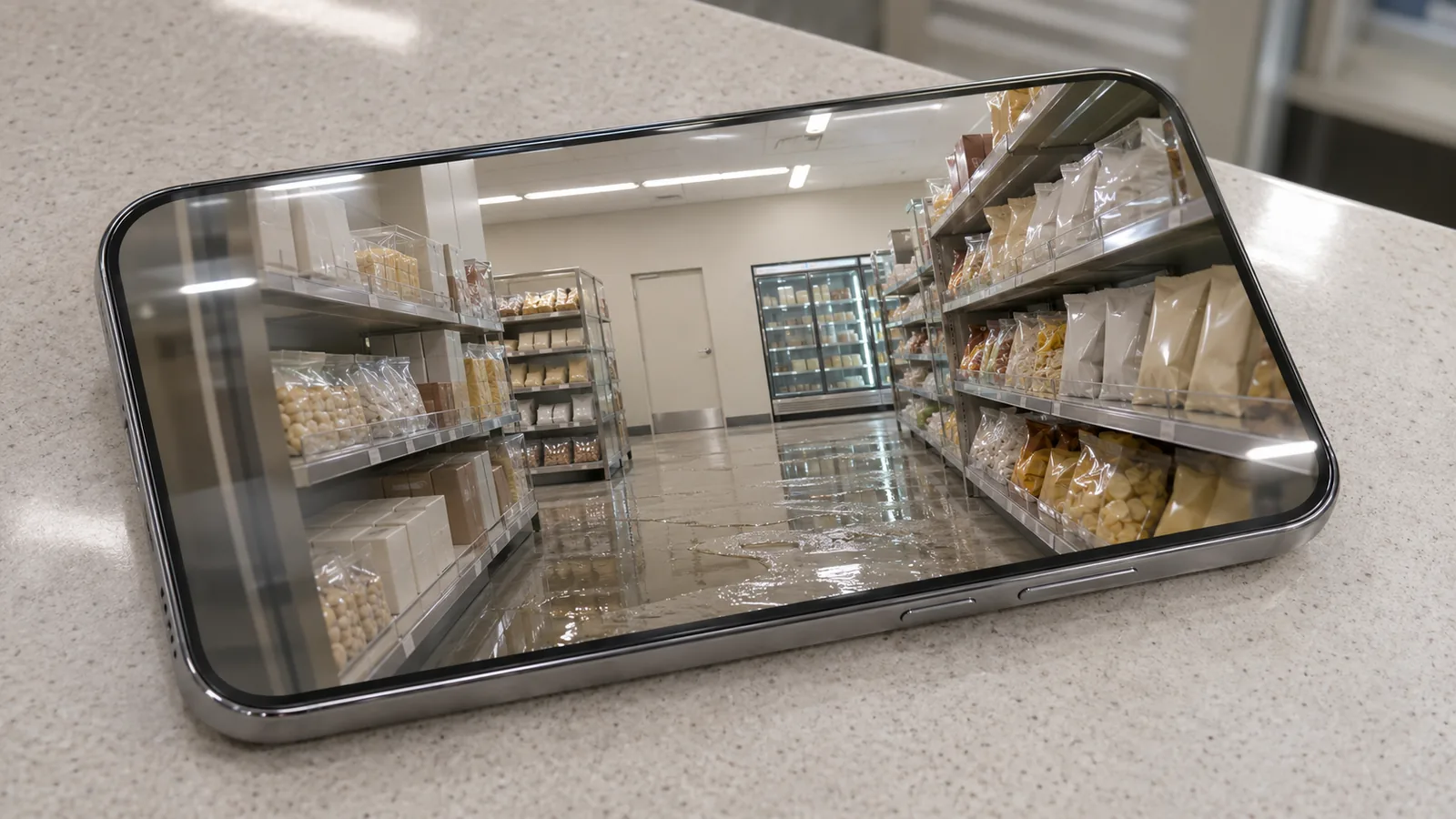
After an injury at a Texas 7-Eleven (7-11), get medical care, report what happened, keep the evidence you can, and get legal advice soon about who's responsible and what deadlines apply.
Priority | In practice |
|---|---|
Your health | Get care that fits your symptoms before any evidence work. |
An accurate report | Tell the manager where and when it happened, and only what you saw. |
Photos and witnesses | Take pictures only if it's safe, and get names before people leave. |
Video | Ask promptly that recordings be preserved. |
The 72-hour label | A practical window for the first few days. It isn't a legal deadline, and it doesn't create or end a claim. |
This guide is part of the Texas 7-Eleven injury knowledge hub. If you'd like a lawyer to look at your situation now, request a review of your Texas 7-Eleven injury through InjuryAttorneyOfDallas.com or call (214) 200-4878.
Priority 1: get care and explain what happened accurately
Tell the clinician exactly how you were hurt.
Tell them | Example (hypothetical) |
|---|---|
Where you fell or were struck | "By the fountain drinks, on wet tile." |
Which body parts were affected | "Left knee and wrist. My head hit the cooler door." |
What symptoms developed | "A headache started about two hours later." |
Prior conditions and medications | "I had knee surgery in 2021 and I take a blood thinner." |
Follow the advice you get, including what to do if symptoms worsen and when to come back.
Situation | What to do |
|---|---|
The incident report isn't finished | Go get treatment anyway. The report can wait. |
You can't document the scene | A companion may be able to take photos and names for you. |
You're not sure the injury is serious | Get checked. A lawyer can look at the remaining evidence later. |
Priority 2: pin down the store and report it
Save anything that shows exactly which store and when.
Keep | Why |
|---|---|
The receipt or transaction record | It shows the store number and a time. |
The street address | Operators can differ from one location to the next. |
The manager's name | You'll need to know who took the report. |
The incident number and a copy of your statement, if offered | They show what was recorded that day. |
When you reported it and to whom | Write it down, for example "7:40 p.m., told the shift lead, Maria." |
Describe what you observed, not what you guess. "I saw liquid beside me after I fell" can be accurate even when you don't know where it came from.
Instead of saying | Say |
|---|---|
"The clerk spilled it." | Only say this if you saw it or have a reason to believe it. |
"It had been there for hours." | "I didn't see it before I fell." |
"The machine was leaking." | "There was ice and water on the floor under the machine." |
Signing whatever you're handed | Read it first, especially any wording that releases claims or authorizes broad access to your medical records. |
Priority 3: protect the scene and find witnesses
Photograph the scene only when it's safe, and don't move anything to get a better picture.
Photo | What it captures |
|---|---|
The hazard itself | The liquid, ice, broken tile, or object. |
Your approach | What you could see as you walked up. |
Signs and cones | Where they were, and whether they'd been moved. |
Nearby equipment | The ice machine, coffee station, or cooler. |
The wider layout | The aisle or entrance as a whole. |
Keep the original files, and note whether each photo was taken before or after cleanup or after a cone was moved.
Witness step | What to do |
|---|---|
Get contact details | A name and phone number before they leave. |
Ask what they saw | Let them tell it. Don't suggest what they should remember. |
Look beyond the fall | Someone who saw the spill ten minutes earlier may matter more than someone who saw you fall. |
Physical items | Keep your shoes, damaged clothing, and any cup, lid, or product involved. Talk to a lawyer before cleaning, storing, or testing them. |
Priority 4: ask that records be preserved
A preservation request works best when it's specific.
Include | Example (hypothetical) |
|---|---|
The store | The 7-Eleven at the address on your receipt. |
The date and approximate time | Saturday, about 2:15 p.m. |
Where it happened | Inside by the coffee bar, or outside at pump 6. |
What happened | A slip on spilled ice. |
The time before the fall | Footage from earlier may show when the condition first appeared. |
Don't assume every store keeps recordings for the same length of time.
Keep in mind | Why |
|---|---|
Preserving isn't the same as getting a copy | A store may not hand video over voluntarily. |
Other people may hold records | A lawyer can look at the available legal procedures and find other custodians. |
Marsh's franchisee guidance | Marsh's public guidance for 7-Eleven franchisees discusses documenting incidents and keeping relevant recordings [S22]. Whether a given store did that takes evidence. |
Read next |
Priority 5: start a recovery and communication file
Keep one place for records that show what the injury changed.
Keep | Example (hypothetical) |
|---|---|
Medical records and bills | Urgent-care discharge papers and a physical therapy referral. |
Work restrictions | A note limiting you to light duty for two weeks. |
Missed work | Dates missed and your employer's emails about them. |
A dated record of limits | "Couldn't drive Monday or Tuesday. My son took me to the follow-up." |
Missed care and the reason | "Skipped therapy Thursday: no ride." Then ask the provider about options. |
Keep your social-media posts and messages, too. Don't delete anything to make a claim look better; talk to your lawyer about privacy instead.
If you're tempted to | Do this |
|---|---|
Delete a post about the weekend | Leave it and tell your lawyer. |
Change your privacy settings | Ask your lawyer first. |
Answer an adjuster's message about the post | Save it and get advice before you reply. |
For practitioners: an intake checklist with a purpose
A good intake finds the threats to evidence and to the client's rights in the first few days.
Task | Done means |
|---|---|
Confirm the location and possible operator | Address, store number, and posted business information checked. |
Assess medical needs | The client has a care plan and a provider. |
Calendar the limitations analysis | A date is set for the deadline review. |
Identify witnesses | Names and contact details recorded. |
Send targeted preservation notices | Delivery verified and a follow-up date assigned. |
A checklist should separate "requested" from "received" and "reviewed".
Status | What it tells you |
|---|---|
Requested | A letter went out. |
Received | Something came back. |
Reviewed | Someone checked whether it answers the question. |
Still unknown | Write down what's missing and why it matters, because an unfollowed letter can leave the central question open. |
What if more than 72 hours have passed?
Get advice now.
Question | Answer |
|---|---|
Is it too late? | Not because of the 72 hours. Delay can make evidence harder to get, but that window isn't the Texas lawsuit deadline. |
What's the real deadline? | Texas generally allows two years for a personal-injury lawsuit, with exceptions [S12]. A lawyer should work out your date. |
What should I tell the lawyer? | The honest timeline, and what still exists. |
Should I talk to the adjuster right away?
Save the adjuster's contact details and every message.
Request | What you can do |
|---|---|
A recorded statement | Get legal advice first. |
A broad medical authorization | Get legal advice before you sign. |
A release or a quick settlement | Get legal advice before you accept. |
Court papers | Don't ignore them or wait for a callback. They come with their own deadlines. |
Request a review of your Texas 7-Eleven injury
A lawyer can tell you what needs preserving right away and what else the firm needs to evaluate your case.
Bring | Example (hypothetical) |
|---|---|
The store address and date | The receipt from that afternoon. |
Your medical treatment so far | An urgent-care visit and a follow-up next week. |
The evidence you have | Phone photos, two witness numbers, and the incident number. |
Aaron Herbert is Board Certified in Personal Injury Trial Law by the Texas Board of Legal Specialization, a credential you can check on his State Bar of Texas profile [S1]. Request a review of your Texas 7-Eleven injury from The Law Firm of Aaron A. Herbert, P.C. through InjuryAttorneyOfDallas.com or call (214) 200-4878.
Related reading | What it covers |
|---|---|
Texas 7-Eleven injury knowledge hub | All 15 guides in one place. |
The full claim and lawsuit process. | |
How to preserve 7-Eleven surveillance video | What to request and why the earlier footage matters. |
The deadlines guide | Protecting the right to sue while the claim is investigated. |
Dallas premises liability lawyer and Fort Worth premises liability lawyer | The firm's property-injury pages. |
Sources
Ref | Source | What it supports |
|---|---|---|
S1 | State Bar of Texas, Aaron Alan Herbert, Bar No. 24036761 | License and board certification. |
S12 | Tex. Civ. Prac. & Rem. Code ch. 16, including 16.001 and 16.003 | The general two-year limitations period and its exceptions. |
S22 | Marsh, Helping 7-Eleven Franchisees Stay Ahead of Claims | Incident documentation and keeping recordings. |

ABOUT THE ATTORNEY
Aaron A. Herbert
Founding Attorney
Board Certified in Personal Injury Trial Law
Aaron founded The Law Firm of Aaron A. Herbert in 2010 to focus on developing each client's case and seeking its maximum value. For over a decade, he has represented people seriously injured in major accidents and industrial catastrophes, pursuing trial verdicts and settlements while working to reduce the stress of litigation.
Education
- Texas A&M University · B.S., Criminal Justice, 1999
- University of Oklahoma College of Law · J.D., 2002; graduated in the top of his class
Trial experience & approach
Aaron earned numerous jury verdicts at boutique personal injury litigation firms. According to his biography, he spent a year as the top-earning litigation attorney at a firm that frequently appeared in verdict searches as having one of the highest numbers of trial wins in Texas. At another Dallas personal injury firm, he moved from managing pre-litigation attorney to managing litigation attorney over seven years as the firm grew into one of Dallas's largest personal injury firms.
His biography describes a reputation as one of America's most aggressive trial lawyers, with noteworthy recoveries from judges and juries and substantial pretrial settlements. Most of those settlements included confidentiality agreements requested by the defense. Aaron has said the recoveries were justified by the injuries and losses involved, which no amount of money could make someone choose to experience.
His approach combines passion, preparation, persistence and courtroom imagination. He believes a well-supported, engaged and motivated team working cooperatively helps deliver strong representation, with the goal of achieving the best possible result for every client.
Dallas roots, military service & publication
Born and raised in Dallas, Aaron enlisted in the United States Marine Corps after high school and later received an Honorable Discharge. He completed his university and law degrees after his military service and became a lifelong Sooners football fan in law school.
Publication: “Litigating Dog Bite Cases,” Texas Dog Law Seminar, Dallas, 2009.
Professional affiliations & recognition
Professional affiliations and recognition listed in Aaron’s biography:
- State Bar of Texas
- American Bar Association
- Association of Trial Lawyers of America (now American Association for Justice)
- Texas Trial Lawyers Association
- Dallas Trial Lawyers Association
- Dallas Bar Association
- Tarrant County Bar Association
- Million Dollar Advocates Forum
- The National Trial Lawyers – Top 100 Trial Lawyers