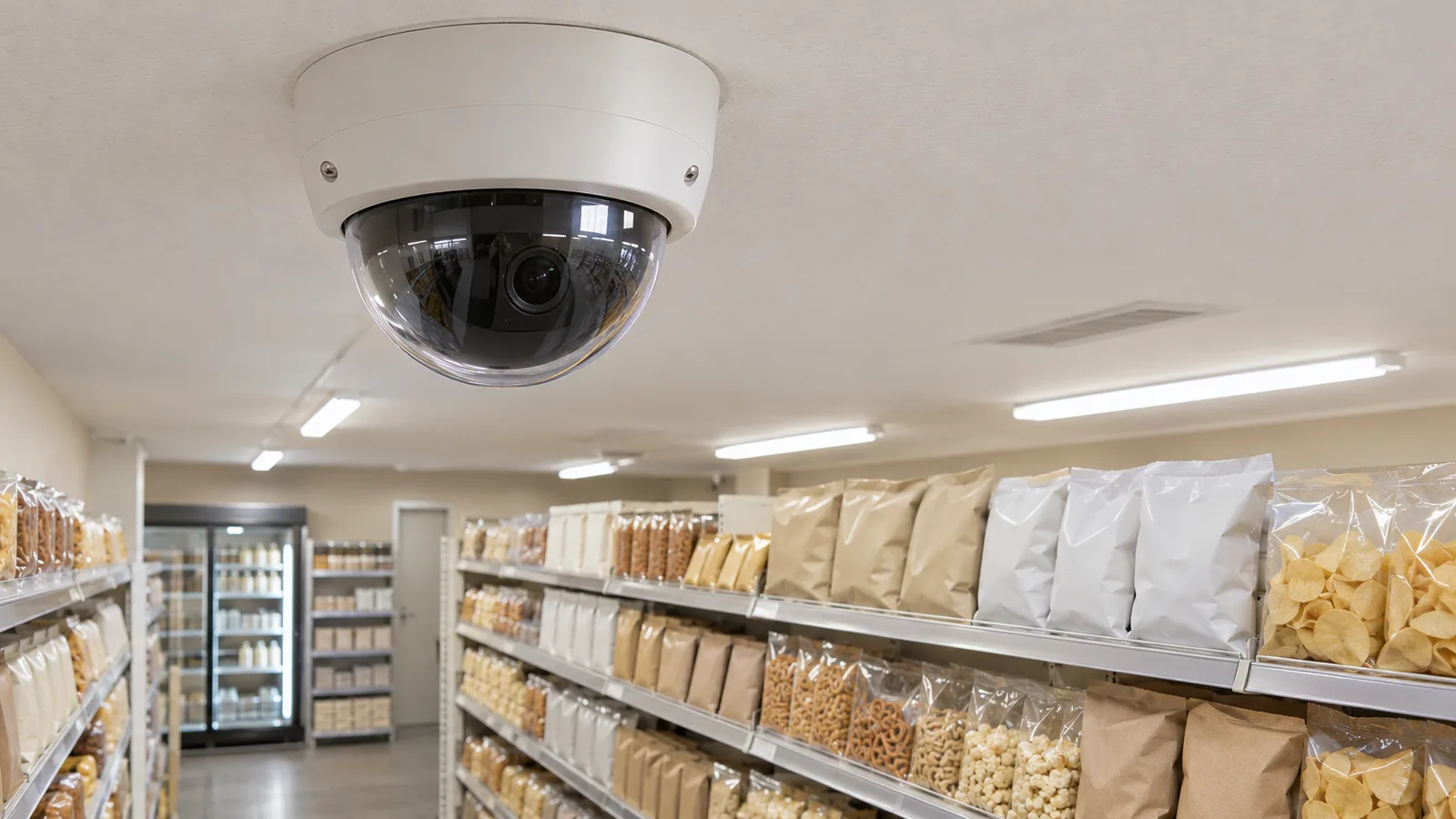
The footage that matters can include your injury, your approach, and the earlier events that show how a hazard developed or was reported. Ask for preservation promptly, and name the 7-11 store, the date, the location, and a time window you can explain.
Question | Short answer |
|---|---|
Will asking get me a copy? | Not necessarily. A request doesn't guarantee access. |
How long do 7-Eleven stores keep video? | There's no universal retention period you should assume for every Texas location. |
Who controls the cameras? | It may be the local operator, a franchisee, a property manager, or a third party. |
What if the video is gone? | That doesn't prove the store was negligent, and the case doesn't end there either. |
This guide is part of the Texas 7-Eleven injury knowledge hub. If footage may be overwritten soon, request a review of your Texas 7-Eleven injury through InjuryAttorneyOfDallas.com or call (214) 200-4878.
Why a short clip of the fall can leave the main question open
A recording may show a foot sliding and a person hitting the floor without showing when the liquid appeared.
Camera view | What it might show (hypothetical) |
|---|---|
The fall area | The slip itself at 4:10 p.m. |
The register | A customer pointing toward the drink station at 3:55 p.m. |
The back hallway | An employee carrying a mop toward the front at 4:02 p.m. |
The entrance | Rain being tracked in from the lot all afternoon. |
The evidence that explains responsibility may sit outside the most dramatic view, so let the questions set the scope.
Question | Footage that may answer it |
|---|---|
What created the condition? | The drink station or cooler before the spill. |
When did it appear? | The same area in the half hour before the fall. |
Who walked past? | Wider views of the aisle. |
Was there a warning? | Views showing where a cone stood, and when. |
What did staff do? | The register and back-of-store views. |
What a useful preservation request identifies
Give the exact address and the best timing references you have.
Include | Example (hypothetical) |
|---|---|
The store | The street address on your receipt. |
Timing references | A receipt printed at 3:48 p.m. and a phone photo taken at 4:14 p.m. |
The injury location | "Second aisle from the door, in front of the ice chest." |
Why earlier footage matters | "The liquid may have been there before I walked in." |
Explain why you're asking for the earlier period instead of demanding an archive with no reason given.
Ask that they keep | Why |
|---|---|
The responsive recordings | The core evidence. |
Camera identifiers | Shows which camera recorded which view. |
Time settings | Clocks on recorders can drift. |
Exported segments | Shows what was copied out of the system. |
Records of how a clip was selected | Shows why one stretch was saved and another wasn't. |
Communications about your request | Proof that the request was received. |
Don't assume a customer-service message reaches the local operator, a franchisee, a property manager, or an outside custodian. Counsel should find out who controls the system and can stop ordinary overwriting.
Possible custodian | Example (hypothetical) |
|---|---|
Local store operator | The franchisee running that location. |
Property manager | The owner of the strip center's parking lot cameras. |
Outside security vendor | A company that stores the recordings offsite. |
Neighboring business | A camera across the lot that views the fuel island. |
Getting footage is only the start
Once you have the video, handle it with care.
Step | Why |
|---|---|
Keep the native export and the player needed to run it | The original format holds detail a copy can lose. |
Work from copies | The original stays untouched. |
Compare the on-screen time with independent records | A receipt or a phone call log can show whether the clock was off. |
List missing intervals and camera views | A gap isn't automatically deliberate. |
Record who supplied the file and how it was handled | That helps establish authenticity later. |
A phone video of a monitor can be a useful lead, but it may leave out detail or distort timing. Ask for the source file where you can.
Hypothetical: two camera views, two different questions
This is an educational example, not a real case.
Camera | What it shows |
|---|---|
Beverage area | A customer falls at about 4:10 p.m. |
Entrance | It doesn't show the floor, but it shows the manager walking back from a conversation near the drink station earlier. |
Neither view proves advance notice on its own. The investigation has to connect the footage with testimony and records.
Question | Where the answer may be |
|---|---|
Who was the manager talking to? | Witness interviews and the register camera. |
What was said? | Testimony from the people involved. |
Does another view show the condition? | The remaining cameras on the camera map. |
The point | Interpretation should follow the evidence, not the story anyone hopes for. |
What if the store says the video was overwritten?
Ask your lawyer to look into the actual system, its retention settings, what was done to preserve footage and when.
Point | What Texas law says |
|---|---|
Missing footage | Doesn't automatically prove the store was negligent. |
Who decides | In Brookshire Brothers, Ltd. v. Aldridge, the Supreme Court of Texas held that the trial judge, not the jury, decides whether evidence was improperly lost and what remedy fits [S11]. |
A spoliation instruction | It's reserved for intentional concealment of evidence, or for a negligent loss that leaves the other side with no meaningful way to present its claim or defense [S11]. |
Other evidence may still exist, so don't abandon a case or declare it won because one recording is gone.
Other source | Example (hypothetical) |
|---|---|
Witnesses | The customer who warned the clerk. |
Photographs | Your phone pictures from 4:14 p.m. |
Maintenance messages | A text about the ice machine leaking. |
Neighboring cameras | A business across the lot. |
Incident records | The store's report of the fall. |
For practitioners: preservation and admissibility are separate tasks
Find the custodians and the export procedures early.
Task | Goal |
|---|---|
Get a camera map | Know every view that could exist. |
Get the source files | Native exports, not screen recordings. |
Ask for an explanation of selection or loss | A factual account of why footage is missing. |
Prepare authentication evidence | The witness or records needed to admit the video. |
Build a short event chronology | Each clip placed on one timeline. |
Marsh's public claims guidance for 7-Eleven franchisees discusses keeping relevant surveillance after incidents [S22]. That supports a focused line of inquiry, not an assumption that every store has the same equipment or followed the same practice.
Can I make the manager show me the recording?
Question | Answer |
|---|---|
Can I demand to see it at the counter? | Don't assume you have a right to immediate access. |
What should I do instead? | Ask for preservation and get advice about lawful ways to obtain it. |
Can I look at the system myself? | No. Don't go into restricted areas or try to get into a store system. |
Should I delete my own unfavorable video?
Question | Answer |
|---|---|
Should I delete it? | No. Keep relevant originals and talk to your lawyer about them. |
Why does it matter? | Deleting selectively can hurt your credibility and create evidence problems. |
What does my lawyer need? | The actual record, so the case can be evaluated honestly. |
Talk to a lawyer while the evidence may still exist
The sooner a preservation request goes to the right custodian, the more there may be to work with.
Bring | Example (hypothetical) |
|---|---|
The store and time | The receipt and your phone's photo times. |
Any request already made | The email you sent the store, and any reply. |
Your own recordings | Photos or video you or a companion took. |
The Texas Board of Legal Specialization has certified Aaron Herbert in Personal Injury Trial Law, and his State Bar of Texas profile lists it [S1]. Request a review of your Texas 7-Eleven injury from The Law Firm of Aaron A. Herbert, P.C. through InjuryAttorneyOfDallas.com or call (214) 200-4878, and ask how the firm would handle your recording and preservation issues.
Related reading | What it covers |
|---|---|
Texas 7-Eleven injury knowledge hub | All 15 guides in one place. |
The full claim and lawsuit process. | |
Care, reporting, witnesses, and evidence. | |
The notice guide | Proving what the store knew before the injury. |
Dallas premises liability lawyer and Fort Worth premises liability lawyer | The firm's property-injury pages. |
Sources
Ref | Source | What it supports |
|---|---|---|
S1 | State Bar of Texas, Aaron Alan Herbert, Bar No. 24036761 | License and board certification. |
S11 | Brookshire Brothers, Ltd. v. Aldridge, 438 S.W.3d 9 (Tex. 2014), majority opinion (Lehrmann, J.) | The judge's spoliation role and the limits on an instruction. |
S22 | Marsh, Helping 7-Eleven Franchisees Stay Ahead of Claims | Incident documentation and keeping video. |

ABOUT THE ATTORNEY
Aaron A. Herbert
Founding Attorney
Board Certified in Personal Injury Trial Law
Aaron founded The Law Firm of Aaron A. Herbert in 2010 to focus on developing each client's case and seeking its maximum value. For over a decade, he has represented people seriously injured in major accidents and industrial catastrophes, pursuing trial verdicts and settlements while working to reduce the stress of litigation.
Education
- Texas A&M University · B.S., Criminal Justice, 1999
- University of Oklahoma College of Law · J.D., 2002; graduated in the top of his class
Trial experience & approach
Aaron earned numerous jury verdicts at boutique personal injury litigation firms. According to his biography, he spent a year as the top-earning litigation attorney at a firm that frequently appeared in verdict searches as having one of the highest numbers of trial wins in Texas. At another Dallas personal injury firm, he moved from managing pre-litigation attorney to managing litigation attorney over seven years as the firm grew into one of Dallas's largest personal injury firms.
His biography describes a reputation as one of America's most aggressive trial lawyers, with noteworthy recoveries from judges and juries and substantial pretrial settlements. Most of those settlements included confidentiality agreements requested by the defense. Aaron has said the recoveries were justified by the injuries and losses involved, which no amount of money could make someone choose to experience.
His approach combines passion, preparation, persistence and courtroom imagination. He believes a well-supported, engaged and motivated team working cooperatively helps deliver strong representation, with the goal of achieving the best possible result for every client.
Dallas roots, military service & publication
Born and raised in Dallas, Aaron enlisted in the United States Marine Corps after high school and later received an Honorable Discharge. He completed his university and law degrees after his military service and became a lifelong Sooners football fan in law school.
Publication: “Litigating Dog Bite Cases,” Texas Dog Law Seminar, Dallas, 2009.
Professional affiliations & recognition
Professional affiliations and recognition listed in Aaron’s biography:
- State Bar of Texas
- American Bar Association
- Association of Trial Lawyers of America (now American Association for Justice)
- Texas Trial Lawyers Association
- Dallas Trial Lawyers Association
- Dallas Bar Association
- Tarrant County Bar Association
- Million Dollar Advocates Forum
- The National Trial Lawyers – Top 100 Trial Lawyers