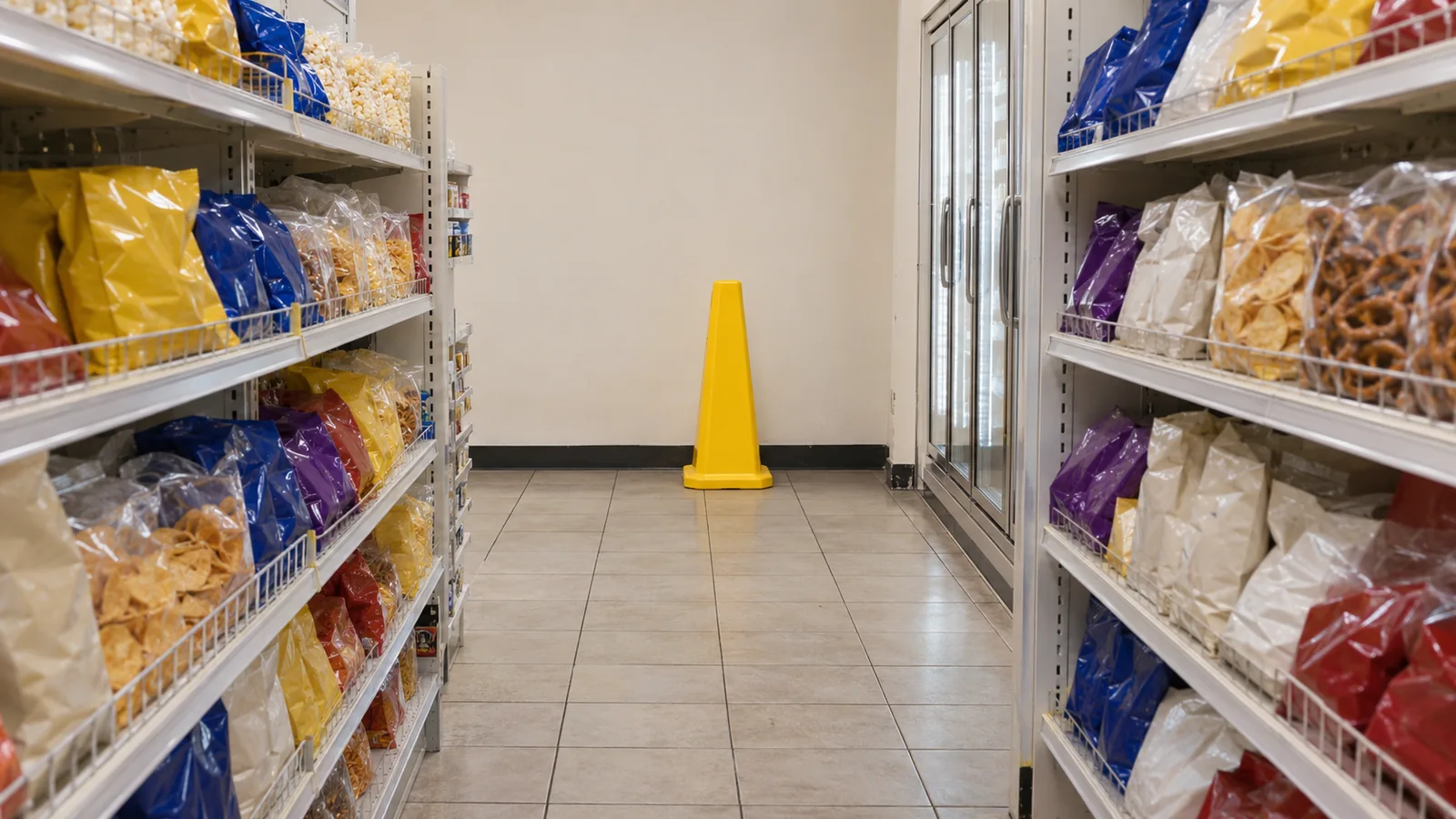
Not automatically. A wet-floor sign at a 7-11 can matter a great deal in a Texas premises case, but where it stood, whether you could see it, what it warned about, and when it went up all need to be checked.
Question | Short answer |
|---|---|
Does a cone end the case? | No, not by itself. It also isn't automatically inadequate. |
What decides it? | Placement, sightline, timing, and whether the sign matched the actual hazard. |
Does it matter that I saw the spill? | Yes. A hazard you knew about raises a separate duty question [S9]. |
What should I keep? | Photos, the receipt, your route, and witness names. |
What should I tell a lawyer? | Everything, including what you saw and whether you were looking at your phone. |
This guide is part of the Texas 7-Eleven injury knowledge hub. Want a lawyer to look at the sign question in your case? Request a review of your Texas 7-Eleven injury through InjuryAttorneyOfDallas.com or call (214) 200-4878.
How do you rebuild the walk to the spot where you fell?
Start with the route you took, not the scene after cleanup.
Questions
- Where were you walking from?
- What could you see at eye level?
- What could you see near the floor?
- Where was the sign?
- What did the sign say?
An example answer to each, in the same order (hypothetical).
- "From the restroom hallway toward the coffee bar."
- "A chip display and the hot-food case."
- "Nothing past the display until I turned the corner."
- "Behind the display, about six feet past the puddle."
- "A yellow cone that said 'Caution, wet floor.'"
A photo taken after the mop came out may not show the earlier layout. Write down when each photo was taken and anything that changed before it was taken.
Evidence, and what it can show
- Store video, for when the cone was set down or moved.
- Witnesses, for whether the sign was there before you fell.
- Your own photos, for where the cone stood once you could take a picture.
- The receipt, for which store and the minute you checked out.
Is a sign you could see the same as an adequate warning?
Visibility is a fact question, and the answer changes the legal analysis.
Factor | Why it matters |
|---|---|
Lighting | A dim back corner reads differently from the front counter. |
Doors and displays | A cooler door or a stacked case of water can hide a cone. |
Customer traffic | A crowd at the register can block the floor. |
Your direction | A cone can face the front door and be invisible from the restroom. |
Be accurate about what you saw. If you noticed the sign, your lawyer needs to know; if you never looked that way, that also needs to be evaluated.
If this happened
- You saw the cone.
- You didn't see the cone.
- The video may contradict you.
What to tell your lawyer in each, in the same order.
- Where it was and what you thought it meant.
- Where you were looking at the time.
- Say so early. A claim can't rest on a denial the recording disproves.
Why is "open and obvious" different from a fault percentage?
Because a duty question can decide whether a claim goes forward at all.
The Texas Supreme Court's decision in Austin v. Kroger Texas, L.P. [S9] explains that a property owner generally has no duty to warn of or protect against hazards that are open and obvious or already known, with limited exceptions. Austin arose from an employee's claim against his employer, but courts apply its premises-duty framework more broadly.
Issue | What it decides |
|---|---|
Duty | Whether the store owed you a warning or protection at all. |
Breach | Whether the responsible business acted reasonably. |
Comparative responsibility | How a jury splits fault if the claim gets that far. |
Damages | What the injury cost you. A severe injury doesn't replace proof of duty and breach. |
When does the necessary-use exception apply?
Only when the facts show you had to cross the hazard, not just that it was easier.
Ask, with hypothetical examples
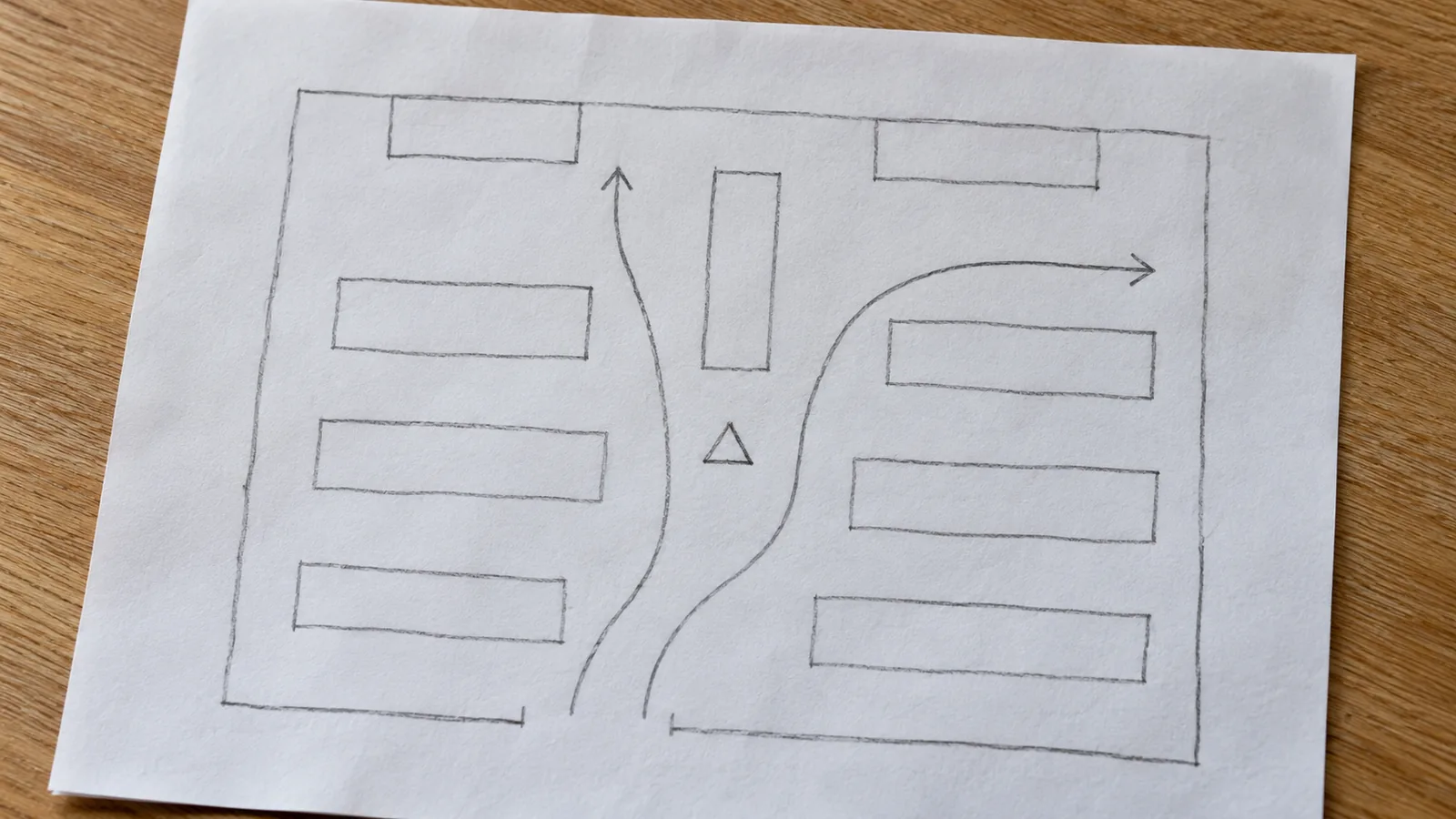
- Whether there was another route, such as a second aisle to the register, ten feet away.
- Whether exits or doors were blocked, such as by a delivery cart parked across the side door.
- Whether staff told you where to walk, such as "The clerk waved me straight through."
- Whether the alternative was reasonable, such as when going around meant walking through the fuel lane.
"There was nowhere else to go" is an understandable thing to say. It should start the investigation, because a shortcut you preferred isn't the same as a route you had to take.
Document
- The layout, with a sketch or photos of every path to where you were headed.
- Barriers, with photos of anything blocking the other routes.
- Instructions, with the names of staff who told you where to go.
The same cone, two different approaches (hypothetical)
One cone can be easy to see from the front door and hidden from someone leaving the restroom behind a merchandise display.
Customer | What they could see | What it means |
|---|---|---|
Entering from the front | The cone in plain view, ten feet ahead. | The warning may have done its job. |
Leaving the restroom | A display blocking the cone until the last step. | The camera views and layout need review. |
Either customer, cone placed later | A cone that shows up on video two minutes after the fall. | A later cone isn't an advance warning. |
None of this decides a result. It shows which evidence matters: camera views, the floor layout, the sign's position, and the route you took.
Read next
- How to preserve 7-Eleven surveillance video, on how to ask for the footage that shows when the sign appeared.
- Proving what a Texas 7-Eleven knew, on how notice and timing are proved.
For practitioners: keep duty and allocation in separate charts
The facts overlap, but the legal consequences don't.
Charts, and what goes in each
- Warning and duty, with placement, distance, sightline, timing and the sign's message.
- Comparative responsibility, with phone use, footwear, speed and prior visits.
- Submission plan, with the jury question you'll request and the likely dispositive arguments.
- Witness questions, with observable facts, not "Was the warning adequate?"
Common questions
What if I saw the puddle but had to walk through it?
Tell your lawyer exactly why and what other routes existed. Don't leave out that you knew about it.
What if I was looking at my phone?
Keep that evidence and disclose it. Hiding it prevents a realistic assessment and hurts credibility.
What if the cone was knocked over?
Note when and by whom, if you know. Video may answer it.
Does a severe injury change the rules?
No. Duty and breach still have to be proved.
Ask for a candid evaluation
Send your photos and a description of your route, and ask how the sign changes the picture in your case.
Send, with hypothetical examples
- Photos, such as the cone, the puddle and the display that blocked your view.
- Your route, such as "Restroom hallway, left turn, fell at the coffee bar."
- Witnesses, such as the customer behind you in line.
The Law Firm of Aaron A. Herbert, P.C. is led by Aaron Herbert, who holds board certification in Personal Injury Trial Law from the Texas Board of Legal Specialization; his State Bar of Texas profile shows it [S1]. Request a review of your Texas 7-Eleven injury through InjuryAttorneyOfDallas.com or call (214) 200-4878.
Related reading
- Texas 7-Eleven injury knowledge hub, with all 15 guides in one place.
- Texas 7-Eleven claims and litigation guide, for notice, warnings and comparative fault in full.
- What property owners are liable for in a slip and fall, on general Texas premises duties.
- Dallas premises liability lawyer, the firm's property-injury page.
Sources
- S1. State Bar of Texas, Aaron Alan Herbert, Bar No. 24036761
- S9. Austin v. Kroger Texas, L.P., 465 S.W.3d 193 (Tex. 2015)

ABOUT THE ATTORNEY
Aaron A. Herbert
Founding Attorney
Board Certified in Personal Injury Trial Law
Aaron founded The Law Firm of Aaron A. Herbert in 2010 to focus on developing each client's case and seeking its maximum value. For over a decade, he has represented people seriously injured in major accidents and industrial catastrophes, pursuing trial verdicts and settlements while working to reduce the stress of litigation.
Education
- Texas A&M University · B.S., Criminal Justice, 1999
- University of Oklahoma College of Law · J.D., 2002; graduated in the top of his class
Trial experience & approach
Aaron earned numerous jury verdicts at boutique personal injury litigation firms. According to his biography, he spent a year as the top-earning litigation attorney at a firm that frequently appeared in verdict searches as having one of the highest numbers of trial wins in Texas. At another Dallas personal injury firm, he moved from managing pre-litigation attorney to managing litigation attorney over seven years as the firm grew into one of Dallas's largest personal injury firms.
His biography describes a reputation as one of America's most aggressive trial lawyers, with noteworthy recoveries from judges and juries and substantial pretrial settlements. Most of those settlements included confidentiality agreements requested by the defense. Aaron has said the recoveries were justified by the injuries and losses involved, which no amount of money could make someone choose to experience.
His approach combines passion, preparation, persistence and courtroom imagination. He believes a well-supported, engaged and motivated team working cooperatively helps deliver strong representation, with the goal of achieving the best possible result for every client.
Dallas roots, military service & publication
Born and raised in Dallas, Aaron enlisted in the United States Marine Corps after high school and later received an Honorable Discharge. He completed his university and law degrees after his military service and became a lifelong Sooners football fan in law school.
Publication: “Litigating Dog Bite Cases,” Texas Dog Law Seminar, Dallas, 2009.
Professional affiliations & recognition
Professional affiliations and recognition listed in Aaron’s biography:
- State Bar of Texas
- American Bar Association
- Association of Trial Lawyers of America (now American Association for Justice)
- Texas Trial Lawyers Association
- Dallas Trial Lawyers Association
- Dallas Bar Association
- Tarrant County Bar Association
- Million Dollar Advocates Forum
- The National Trial Lawyers – Top 100 Trial Lawyers