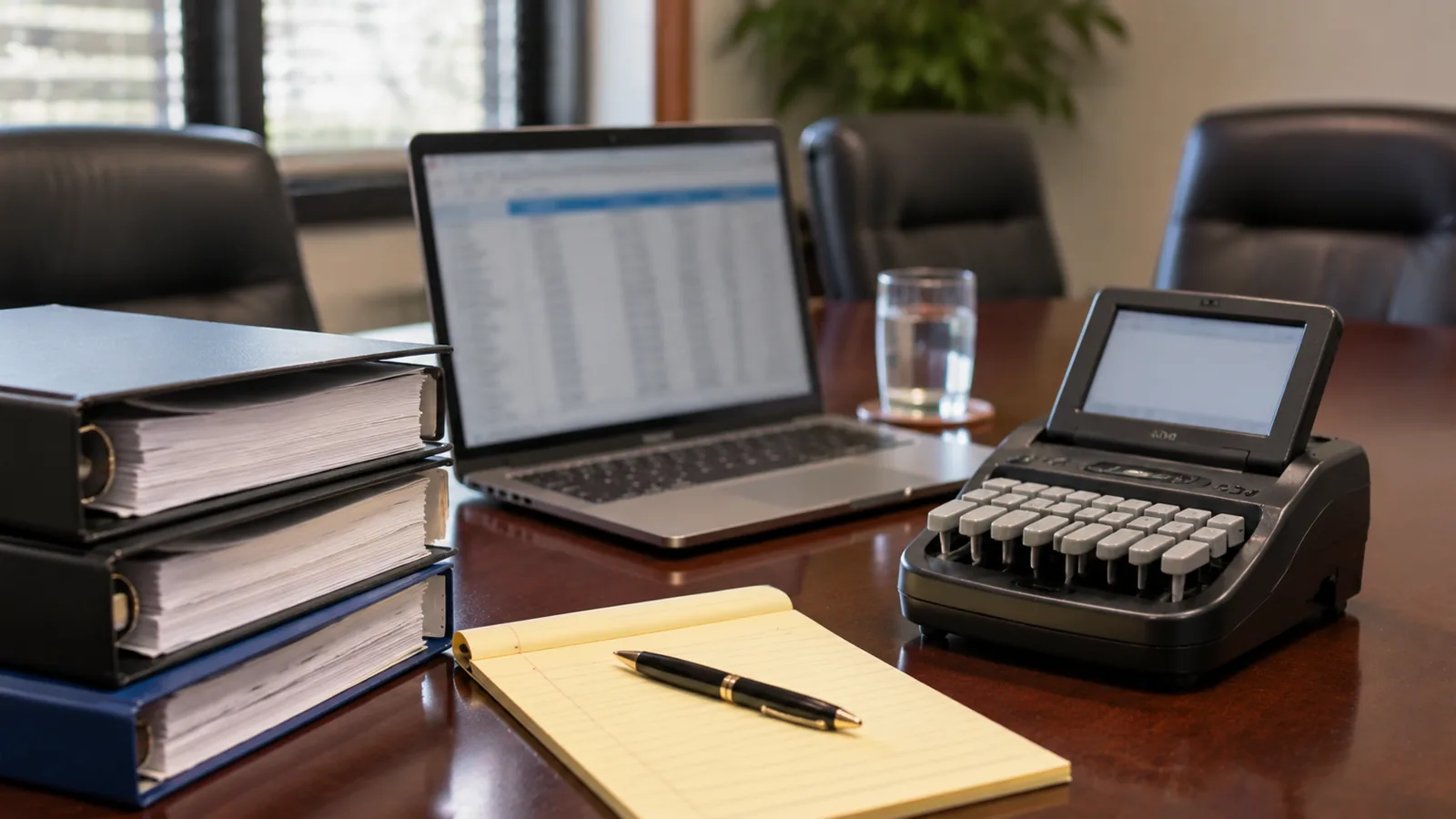
Discovery in a Kroger fall case should get the records and testimony that answer the real disputes: how long the hazard was there, who controlled the area and what the fall did to you. Start from the condition, time, location and custodians. Focused requests and well-framed corporate deposition topics beat broad accusations about the store's recordkeeping.
Records to request first, and the witness who can explain them
- The incident report, video and inspection entries for that aisle, with the employee who made the entry, for notice of the hazard.
- Leases, service contracts and work orders, with a facilities or contract custodian, for control of the area.
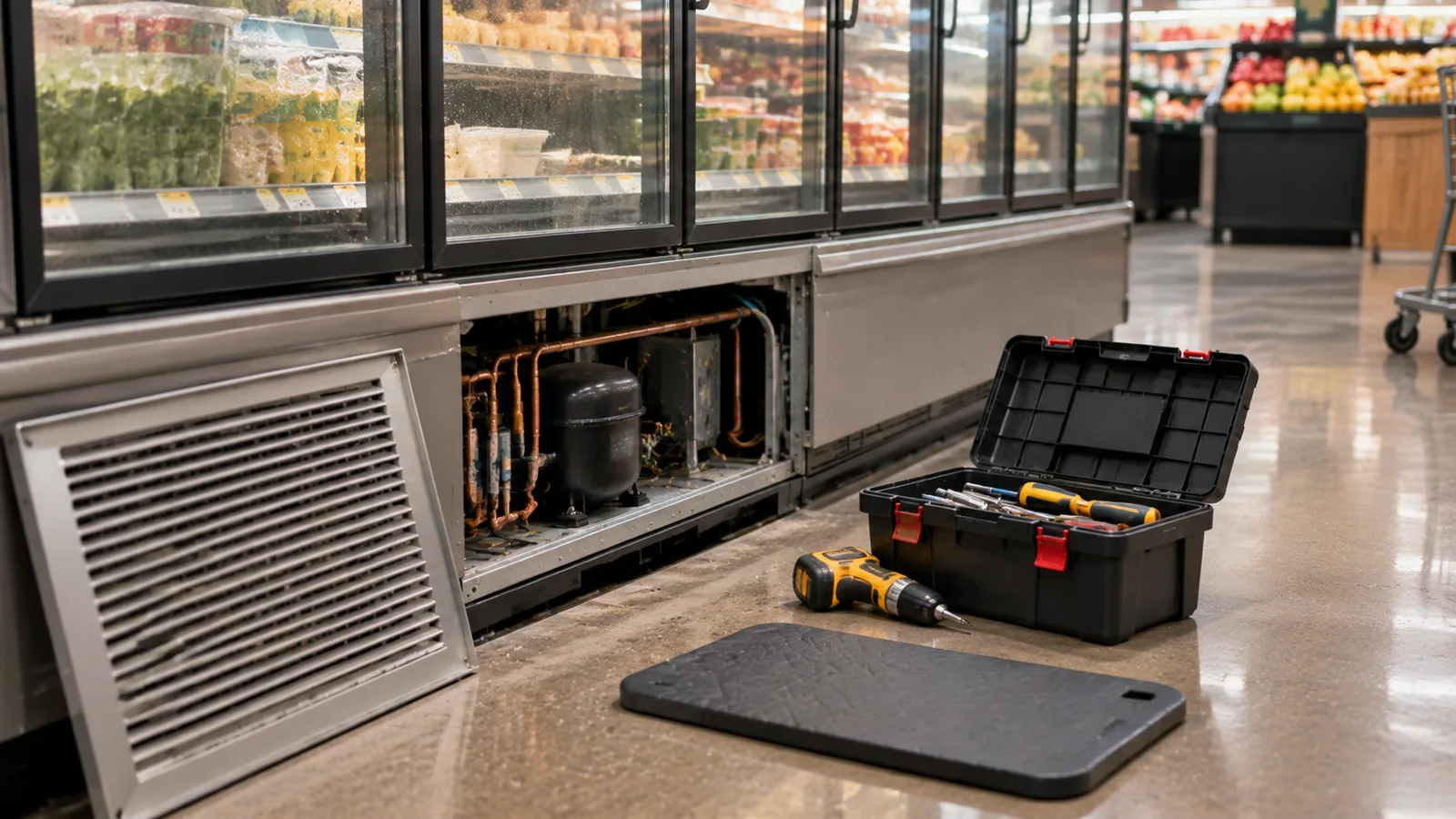
- Refrigeration tickets for that fixture, with the technician or the vendor's records custodian, for a leaking cooler.
- Records from before and after the fall, with treating providers, for medical causation.
This guide is part of our Kroger injury knowledge hub. If you're in a Kroger case or about to file one, tell us about your Kroger fall or call (214) 200-4878.
Bring this
- The store address, date and exact location, since every request is tied to them.
- The incident report reference, the first thing to ask the store to produce.
- Original photographs, whose files carry the camera's recorded time.
- Witness details, which can lead to other custodians.
- Treatment information, for the medical side of discovery.
How do you plan discovery in a Kroger fall case?
Map each element you have to prove, mark the evidence already in hand, and aim requests at the gaps.
| If this is uncertain | Prioritize |
|---|---|
| Notice | Reports, timing and inspections for the spot where you fell. |
| Control | Contracts and who actually did the maintenance. |
| Medical causation | Baseline and post-fall records. |
| The source of water by a cooler | The fixture's service history. |
A file can hold thousands of pages and still say nothing on the deciding element. Pick the witness who can answer each gap; a manager may know response practices but not camera settings.
- Camera configuration, from the person who maintains the video system rather than a store manager.
- Your work restrictions, from your treating doctor rather than a refrigeration vendor.
- What a log code means, from a system custodian rather than a cashier.
What discovery limits apply in a Texas Kroger case?
The plaintiff picks a discovery level in the first paragraph of the petition, and each level carries its own limits under Rule 190. [S6]
- Level 1 applies to expedited actions under Rule 169, where all claimants plead only monetary relief of $325,000 or less as the rule defines it. Its main limits are a 180-day period starting when the first initial disclosures are due; 20 hours of depositions per party; 15 interrogatories, 15 requests for production and 15 requests for admissions.
- Level 2 is the default when no other plan governs. Its main limits are a period that runs from the first initial disclosures until the earlier of 30 days before trial or nine months after they were due; 50 hours per side for opposing parties, their experts and people they control; 25 interrogatories.
- Level 3 is a plan the court orders for the specific case. The court must order one on a party's motion, and it can change the limits.
Federal practice differs, so check the rules, the scheduling order and local requirements before serving requests or counting days. [S11]
Other Texas rules
- Initial disclosures are generally due within 30 days after the first answer or general appearance (Rule 194.2).
- Discovery reaches unprivileged matters relevant to the subject matter of the case (Rule 192.3).
- The court should limit discovery that's cumulative, available more cheaply elsewhere or more burdensome than it's worth (Rule 192.4).
- No side may examine an individual witness for more than six hours (Rule 199.5(c)).
How specific should a request for Kroger's incident records be?
Specific enough to identify the event: store, date, location and the report number, plus the attachments and recordings tied to it.
Ask for
- The complete incident report with attachments, because the printed narrative may not be the whole record.
- Photographs and messages about the event, which can show timing and who knew.
- Which systems were searched, since an "incident file" may mean different things to the store, the claims administrator and the litigation team.
- How the occurrence was identified in each system, as a search of one system can leave another untouched.
Don't claim material is missing without a factual basis. Clarifying terms sets the scope; it isn't an accusation.
Privilege questions
- Is an internal report privileged because a lawsuit followed?
- Is every post-fall message discoverable?
- What if the store withholds something?
- Can you ask employees about protected talks informally?
The careful answers, in the same order.
- Not automatically; it takes legal analysis.
- No; some may be protected.
- Rule 193.3 requires it to say what was withheld and the privilege claimed; on request it must describe the material within 15 days.
- No; use the governing procedure.
What do inspection and maintenance records actually show?
Only what the entry was built to record, so ask how each one was created, edited and kept.
What to pin down
- Does a sweep-log time stamp mark assignment, completion or later data entry?
- Does a checklist box require looking at this aisle or only a general acknowledgment?
- Is the repair history for the floral cooler bounded to this fixture and a reasonable time before the fall?
Another store's maintenance file usually won't answer either question.
Neither side's assumption holds by default. Completed paperwork doesn't prove an adequate inspection, and missing paperwork doesn't prove no inspection happened.
| Witness says | Test it with |
|---|---|
| "We checked but didn't write it down" | What anchors the memory: a shift, a task, a time. |
| "The log shows it was done" | Whether the route reached the accident spot. |
| "Policy requires hourly sweeps" | Under Peterson, an internal policy doesn't raise the standard of care, so tie it to what a check would have found [S19]. |
How should you request electronic records from Kroger?
Ask specifically for electronic data under Rule 196.4 and name the form you want. A screenshot can drop the fields that matter. [S6]
What to specify
- Camera identifiers, the export, retention information and a way to view the files, for video.
- Plausible custodians, channels and time periods, for messages.
- Attachments and what each status means, for work orders.
- Native data with field definitions and audit history, for inspection software.
The store must produce data reasonably available in its ordinary course of business or object. If a court orders production, the requester pays reasonable costs of any extraordinary retrieval steps.
First steps for production problems
- A note in a production audit and a focused question, for missing attachments or unreadable files.
- A question about the naming convention, before calling a gap in file names an omission.
- Requests aimed at people who plausibly communicated about the event, not at every employee's phone.
For a dispute you can't resolve, Rule 191.2 requires a certificate that a reasonable effort to resolve it failed.
What should a corporate deposition notice cover?
Matters described with reasonable particularity and tied to this fall, such as inspection duties, reporting, cameras and maintenance control.
Corporate deposition rules
- The notice describes the matters with reasonable particularity; a reasonable time before the deposition, the organization designates one or more people and states what each will cover (Texas Rule 199.2(b)(1)).
- Texas designees testify to matters known or reasonably available to the organization.
- Federal practice uses a similar designation, plus a duty for both sides to confer in good faith about the matters before or promptly after service (Federal Rule 30(b)(6)) [S11].
- Each designee counts as a separate witness for the six-hour limit in Texas.
A notice labeled "corporate representative" doesn't cover every possible subject. A demand that one witness know every safety topic at every store for decades isn't focused either. [S6]
| Good topic | Too broad |
|---|---|
| Inspection responsibilities for the produce department on the date of the fall | All safety practices company-wide. |
| Searches made to preserve video from the cameras covering that aisle | Every camera policy since the store opened. |
| Who controlled maintenance of the refrigerated case in question | All vendor contracts nationwide. |
How do you question a corporate representative?
Separate what the organization knows from what the witness personally remembers, and ask what sources prepared the answer.
What to ask
- The records, people and systems the witness reviewed, because that shows whether preparation reached the topic.
- Whether an answer is the company's position or the witness's own memory, because they carry different weight.
- Who else would know, because a new custodian can move the case forward.
- What the witness can't answer on the topic, because that makes a clean record of the gap.
If a designee is unprepared, document the gap and seek proper relief. Don't push the witness to invent an answer, and don't treat every imperfect answer as grounds for sanctions.
| Refrigerated-case sequence | Question |
|---|---|
| Equipment | Which unit, and where it sits. |
| Complaints | How a report of floor water gets logged. |
| The ticket | Who received it and what was done. |
| Repair versus cleanup | A cooler can run fine with water still on the floor, or fail with none. |
Hypothetical: an inspection log the manager can't explain
A 10:15 a.m. entry and a fall at about 10:40 a.m. leave a 25-minute gap, but only if the entry covers that aisle.
| Step (hypothetical) | Question | Purpose |
|---|---|---|
| Foundation | Who created and maintains this record? | Identify competence and source. |
| Meaning | What does the location code include? | Determine scope. |
| Timing | What event creates the timestamp? | Avoid a false chronology. |
| Practice | How was the route actually walked? | Connect the system to what was seen. |
| Limits | What can't this entry establish? | Preserve the uncertainty. |
Don't jump to calling the log false. If a system custodian later says the code excludes the aisle, the entry may not show an inspection there; if it includes the aisle, look for evidence that contradicts completion.
Results and their effect (hypothetical)
- A code that excludes the aisle, which leaves no documented inspection of that spot.
- A code that includes the aisle, which means testing completion against video and witnesses.
- A precise limitation on the record, which may matter more at summary judgment than a general concession that safety matters.
Hypothetical: a log, a video and a ten-minute window
The log says 1:00 p.m., video shows a worker passing at 1:02 p.m., and the fall comes at 1:10 p.m.
| Step (hypothetical) | What to establish |
|---|---|
| Reconcile clocks | Whether the log and camera use the same time. |
| Define the entry | Whether "complete" means the worker walked the whole aisle. |
| Watch the video | Whether this is the inspection, and whether the worker could see the floor around pallets or displays. |
| Ask about late entry | Whether the log was filled in later for an earlier action, and whether that practice is documented. |
Only after those foundations should anyone ask whether the entry is inaccurate. A verified mismatch persuades; an unsupported claim of falsified records distracts.
Possible findings and the element each affects (hypothetical)
- The worker never looked down the aisle (reasonable care).
- The log synced late from an earlier walk (timing).
- A missing witness turns up (knowledge).
What will Kroger ask you in discovery?
The store gets discovery too, so you'll answer questions about the fall, your symptoms, work, daily activities and earlier conditions.
| Your obligation | What to do |
|---|---|
| Photos, posts and messages | Keep them; don't delete anything. |
| An overbroad request | Let your lawyer object or seek a protective order. |
| Medical and employment records | Gather them with counsel's help. |
| Prior statements | Review them before your deposition. |
Answer from memory and label estimates. Ask for clarification when a question doesn't make sense. Accuracy protects you better than a perfect-sounding story.
| Instead of | Say what's true (hypothetical wording) |
|---|---|
| "I could do nothing" | I could shop for ten minutes before my back gave out. |
| Denying prior treatment shown in records | Describe the earlier treatment and how this injury differs. |
| Adopting a lawyer's premise | I don't agree with how that's put. |
What happens if Kroger loses evidence?
The trial judge decides whether spoliation happened and picks a proportionate remedy; missing evidence isn't an automatic win. [S5]
| Brookshire Bros., Ltd. v. Aldridge (Tex. 2014) | What it means |
|---|---|
| Who decides | The trial judge, not the jury. |
| The remedy | It must be proportionate to the harm. |
| A spoliation instruction | Reserved for intentional loss, or negligent loss that irreparably deprived the other side of any meaningful ability to present a claim or defense. |
The same rules apply to you. Selective deletion by a shopper can create its own problems; see our guide to preserving Kroger surveillance evidence for the store's side.
Options before suit
- A Rule 202 deposition, if you need testimony to investigate a claim, but only if the court finds it may prevent a failure or delay of justice, or its benefit outweighs the burden.
- A prompt, specific preservation letter, if you need the store's video kept.
How do discovery fights affect summary judgment?
They can decide it, so calendar discovery against the expert and summary judgment deadlines and bring disputes early.
| Situation | What to do |
|---|---|
| A real deficiency | Meet and confer on the specific gap, the fix and why it matters. |
| Motion practice | A short record showing why the material matters and what relief fits. |
| A Texas motion filed on or after March 1, 2026 | The response is due within 21 days after filing unless leave or agreement changes it [S17]. |
| A no-evidence motion under Rule 166a(b)(3)(B) | It still requires adequate time for discovery; identify what's missing and why. |
| A federal case | Rule 56 has separate requirements. |
An unanswered discovery request doesn't postpone a summary judgment response on its own. The store's likely motions are covered in our guide to Kroger fall defenses and summary judgment.
Exhibit index fields
- Source and custodian, for who can sponsor it.
- Relevant issue, whether notice, control or damages.
- Foundation still needed, such as authentication under Rule 901 or a business-record foundation [S7].
- Readable extract and complete record, so context stays available for trial.
How should a lawyer report discovery results to you?
In terms of the element each result affects, with the cost explained before it's spent.
What a report should say, with examples
- What the deposition was for, such as control of the entrance, notice or a video foundation.
- What it resolved, for example that the designee identified the vendor's dispatcher.
- What stays open, like whether the cooler ticket predates the fall.
- What it changes, such as whether a proposed settlement accounts for the remaining risk.
A corporate deposition won't necessarily produce a decisive admission or force a settlement. The number of depositions isn't a measure of success.
Where to focus discovery, by grocery theory
- Fixture identity, service records, complaints and inspection history, for a refrigeration leak.
- The display arrangement, handling, floor protection and observations of that condition, for produce on the floor.
- Staff assignments at the checkout lane and the video, for a checkout spill.
- A defined similarity in mechanism, location or equipment and a justified time period, for comparable incidents.
Questions people ask about Kroger fall discovery
How long does discovery take in Texas? It depends on the level; Level 2 generally runs until the earlier of 30 days before trial or nine months after the first initial disclosures were due.
Can Kroger make me sit for a deposition? Yes; a party can be deposed, and you prepare with your lawyer first.
Who testifies for Kroger? Whoever the organization designates for each listed matter.
Will a missing video win the case? No; the judge decides spoliation and any remedy.
Can I get the store's inspection logs? Usually, if tied to the area and time; ask what the entries mean.
Where should I start? Read what to document after a Kroger fall, then the Kroger litigation guide.
How the firm can help
Aaron A. Herbert is Board Certified in Personal Injury Trial Law by the Texas Board of Legal Specialization, which isn't a guarantee or a ranking. [S1]
Ask any lawyer you consider
- How will discovery answer the store's notice defense?
- Which records could change the case value?
- How will expenses be controlled?
A useful answer includes these, in the same order.
- Specific records and witnesses, in order.
- Named records, not a page count.
- A plan tied to the disputed elements.
Related topics include our guides to proving Kroger knew about a hazard, identifying the responsible defendant, choosing an expert for the disputed issue, and mediation and trial preparation. The Law Firm of Aaron A. Herbert, P.C. can review your records. Tell us about your Kroger fall or call (214) 200-4878.
Bring this
- The store address, date, exact location and report reference, which requests are tied to.
- Original photographs, correspondence and witness details, which lead to custodians.
- Treatment information, which frames the medical discovery.
Sources
Kroger is named only to identify the store. This guide isn't affiliated with or endorsed by Kroger.
- [S1] State Bar of Texas profile for Aaron A. Herbert.
- [S5] Brookshire Bros., Ltd. v. Aldridge (Tex. 2014).
- [S6] Texas Rules of Civil Procedure 166a, 169, 190-199 and 202.
- [S7] Texas Rules of Evidence, including Rule 901.
- [S11] Federal Rules of Civil Procedure 30(b)(6) and 56.
- [S17] Misc. Docket No. 26-9012 (Tex. 2026).
- [S19] H-E-B, LP v. Peterson (Tex. 2026).

ABOUT THE ATTORNEY
Aaron A. Herbert
Founding Attorney
Board Certified in Personal Injury Trial Law
Aaron founded The Law Firm of Aaron A. Herbert in 2010 to focus on developing each client's case and seeking its maximum value. For over a decade, he has represented people seriously injured in major accidents and industrial catastrophes, pursuing trial verdicts and settlements while working to reduce the stress of litigation.
Education
- Texas A&M University · B.S., Criminal Justice, 1999
- University of Oklahoma College of Law · J.D., 2002; graduated in the top of his class
Trial experience & approach
Aaron earned numerous jury verdicts at boutique personal injury litigation firms. According to his biography, he spent a year as the top-earning litigation attorney at a firm that frequently appeared in verdict searches as having one of the highest numbers of trial wins in Texas. At another Dallas personal injury firm, he moved from managing pre-litigation attorney to managing litigation attorney over seven years as the firm grew into one of Dallas's largest personal injury firms.
His biography describes a reputation as one of America's most aggressive trial lawyers, with noteworthy recoveries from judges and juries and substantial pretrial settlements. Most of those settlements included confidentiality agreements requested by the defense. Aaron has said the recoveries were justified by the injuries and losses involved, which no amount of money could make someone choose to experience.
His approach combines passion, preparation, persistence and courtroom imagination. He believes a well-supported, engaged and motivated team working cooperatively helps deliver strong representation, with the goal of achieving the best possible result for every client.
Dallas roots, military service & publication
Born and raised in Dallas, Aaron enlisted in the United States Marine Corps after high school and later received an Honorable Discharge. He completed his university and law degrees after his military service and became a lifelong Sooners football fan in law school.
Publication: “Litigating Dog Bite Cases,” Texas Dog Law Seminar, Dallas, 2009.
Professional affiliations & recognition
Professional affiliations and recognition listed in Aaron’s biography:
- State Bar of Texas
- American Bar Association
- Association of Trial Lawyers of America (now American Association for Justice)
- Texas Trial Lawyers Association
- Dallas Trial Lawyers Association
- Dallas Bar Association
- Tarrant County Bar Association
- Million Dollar Advocates Forum
- The National Trial Lawyers – Top 100 Trial Lawyers