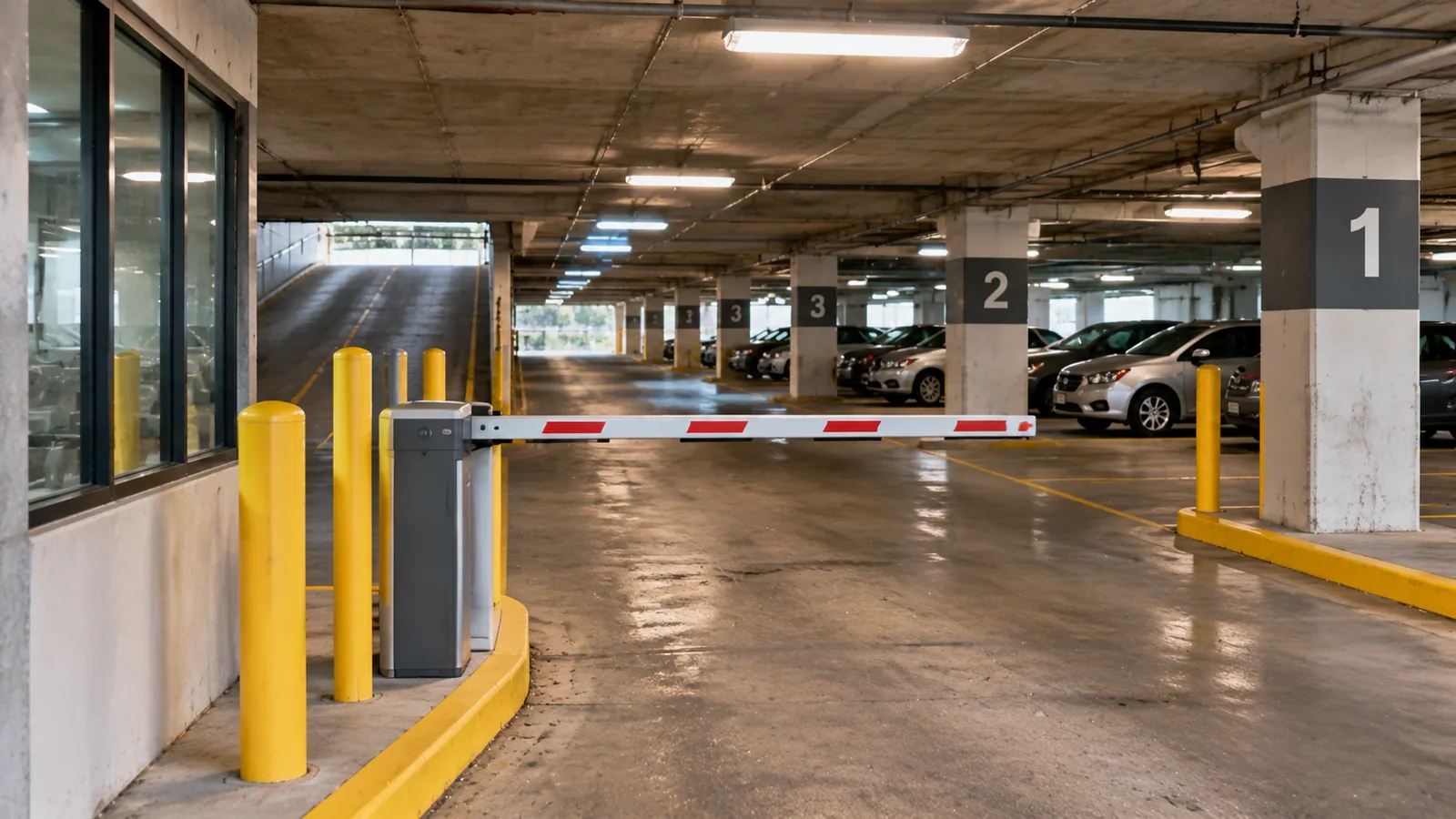
If a city, county, state agency, public university, or transit authority owns the lot where you were hurt, the claim follows the Texas Tort Claims Act. That law generally requires written notice within six months, a city charter can set a shorter period, and immunity and damages caps apply [S19]. A lot that's open to the public isn't necessarily owned by the government, and a campus police report doesn't automatically count as legal notice. This guide is part of the Texas parking lot injury knowledge hub. If a public owner may be involved, request an urgent review of your parking lot injury or call (214) 200-4878 now.
Question | Short answer |
|---|---|
How long do I have to give notice? | Generally six months, and a city charter can require less [S19]. |
Does an incident report count as notice? | Not automatically. Written notice is the safe course. |
Can I sue a city at all? | Only where the Tort Claims Act waives immunity for that kind of claim. |
Is a store lot open to everyone public property? | No. Ownership decides it, not who can park there. |
Who actually owns and runs the lot?
Find the legal owner and the operator from records, because a sign or a uniform won't tell you. What to check for each possible owner or operator:
- A city or county, for property records and the garage's operating agreement
- A public university, for which campus entity owns the structure
- A transit authority, for park-and-ride ownership and maintenance contracts
- A private parking company, for its contract with the public owner
- A payment app, which usually processes fees only
A private company running a city garage is judged on its own conduct. A claim against that company follows ordinary rules, while the claim against the city follows the Tort Claims Act.
Why does public access differ from public ownership?
A grocery lot open to everyone is still private property, and a city garage is still government property even when you pay to park.
Lot (hypothetical) | Likely category |
|---|---|
Supermarket lot open to all shoppers | Private |
A downtown garage the city owns, with a pay kiosk | Government (city) |
University visitor lot | Government (public university) |
Shopping center lot next to city hall | Private, unless records show otherwise |
What does the Tort Claims Act require? The key rules
These are the rules from Chapter 101 of the Civil Practice and Remedies Code that come up most in parking lot cases [S19].
- Written notice is due no later than six months after the incident, describing the injury, the time and place, and what happened (§101.101(a)).
- City charter and ordinance notice periods are ratified and can be shorter (§101.101(b)).
- Written notice isn't required if the government unit actually knew of the injury (§101.101(c)).
- Immunity is waived for some injuries from an employee's use of a motor vehicle and from the condition or use of tangible property (§101.021).
- For a premise defect, the unit owes only the duty owed to a licensee, unless you paid for use of the premises (§101.022(a)).
- A different duty to warn applies to special defects such as excavations or obstructions on highways, roads, or streets (§101.022(b)).
- Parking facilities are listed as a governmental function of a city (§101.0215(a)(25)).
- Damages caps set dollar limits per person and per occurrence, depending on the type of entity (§101.023).
Each rule has conditions, and a lawyer has to apply them to your facts.
Why isn't immunity just a technicality?
You can't sue a government unit unless the statute waives immunity for your kind of claim, however serious the injury.
Hypothetical theories, each with its own question:
- A broken curb in the garage, for the condition of real property
- A city employee backing a truck into you, for an employee's use of a motor vehicle
- A complaint that the lot was laid out badly, for a design or policy decision, which can face exceptions
These theories aren't interchangeable. The pleadings and the evidence on jurisdiction have to be built for the one that fits.
How is the duty different from a store customer's claim?
For an ordinary premise defect, a government unit generally owes you only what a private owner owes a licensee, unless you paid to use the premises [S19].
Status | What you usually have to prove |
|---|---|
Invitee (a store customer) | The owner knew or should have known of the danger. |
Licensee | The owner actually knew of the danger and you didn't [Payne]. |
That makes the owner's actual knowledge and your own awareness much more important. If you paid to park, keep the parking ticket or receipt (it shows payment and entry time), the app or card record (it shows who collected the fee) and any permit or hangtag (it shows the terms of use). Whether the payment changes the duty depends on what was paid for and to whom, so let counsel decide its effect.
Is a pothole a special defect?
Usually not. The statute's examples of special defects are excavations or obstructions on highways, roads, and streets, so a parking-lot defect is usually analyzed as an ordinary premise defect [S19].
- A worn depression in a parking space, likely a premise defect
- An open trench across a public street, a possible special defect
- A broken wheel stop in a garage, likely a premise defect
Don't assume the exception applies because a hole was big or the injury was severe. The classification is a legal question.
When is the notice deadline, and what must it say?
Written notice is generally due within six months, and a city charter or ordinance can require it sooner [S19].
- The injury, such as a fractured left wrist (hypothetical)
- The time and place, such as 5:40 p.m., March 3, level 2 near the elevator, city garage on Main
- The incident, such as a fall when a foot caught a raised slab edge
Confirm the right recipient and delivery method, and keep proof of delivery. An online portal's confirmation screen doesn't prove the submission met the legal requirements.
Not the same as written notice | Why |
|---|---|
A campus police report | May not show the unit knew of a claimed injury |
A garage attendant's log | May never reach the right office |
A work order to fix the slab | Shows the condition, not your injury |
"Actual notice" means more than someone knowing an accident happened. Preserve these records, but don't rely on them in place of a timely written notice.

Do damages caps limit what a government entity pays?
Yes. Chapter 101 sets maximum amounts that depend on the type of government entity [S19].
Entity | Bodily injury per person | Bodily injury per occurrence | Property damage |
|---|---|---|---|
State government | $250,000 | $500,000 | $100,000 |
Municipality (city) | $250,000 | $500,000 | $100,000 |
Other unit of local government | $100,000 | $300,000 | $100,000 |
These are legal ceilings, not insurance limits or settlement figures. A cap only matters after immunity, waiver, duty, and causation are established. It doesn't limit a separate claim against a private operator or contractor.
What about design and policy decisions?
Claims about the original layout or a policy choice can run into exceptions in the statute, so separate them from maintenance problems.
Claim type (hypothetical) | Likely issue |
|---|---|
"The garage should have had wider walkways." | Design decision, possible exception |
"A reported broken slab sat for months." | Maintenance and actual knowledge |
"A sign was knocked down and never replaced." | Traffic-control questions |
Pull the plans, the complaint emails and the work orders. "They could have made it safer" won't get you past immunity; records showing what the city actually knew and did might.
A public garage example (hypothetical)
A visitor trips on a raised slab in a city-owned garage that a private company operates. The ticket names the operator but not who handles repairs.
That one fall calls for three separate investigations: the city, for ownership, the notice deadline, waiver, the licensee duty and the cap; the private operator, for its contract duties and what it actually did; and the repair contractor, for any work on that slab.
A good claim against the operator doesn't create a waiver against the city. The city's defenses don't automatically protect the operator, either. Each one is analyzed on its own.
What should go on a government-claim checklist?
Build a separate checklist at intake and set short internal deadlines while ownership is still being confirmed.
- possible government involvement, flagged on day one even before ownership is confirmed, since a standard premises investigation that waits months for maintenance records can blow past a government notice deadline
- the entity's legal name and type, confirmed
- notice sent and delivered, with proof saved
- a waiver theory matched to §101.021
- the licensee or paid-use question, answered
- design, policy and other exceptions, checked
- the cap, once the entity type is confirmed
- the lawsuit deadline, calendared (Texas generally allows two years; see the two-year filing deadline for Texas injury cases)
Government lot questions
Should I wait until treatment ends to notify the government?
No. Don't assume waiting is safe. You can give notice while your damages are still developing.
Can a private contractor also be responsible?
Possibly. Its own work and contract are investigated separately, and government involvement doesn't decide every claim against a private company.
What if six months may already have passed?
Get advice right away and bring exact dates and every communication. A lawyer has to check the local rules, the actual-notice exception, and what options remain.
Request an urgent review
Request an urgent review of your parking lot injury or call (214) 200-4878, and say up front if a city, county, university, or other public body may own the lot. Aaron Herbert is Board Certified in Personal Injury Trial Law by the Texas Board of Legal Specialization [S1]. Ask which notice and preservation steps your case needs now. For the rest of the process, read how to file and litigate a Texas parking lot injury claim.
Sources
ID | Source |
|---|---|
S1 | State Bar of Texas, Aaron Alan Herbert profile (Bar No. 24036761) |
S19 | Texas Civil Practice and Remedies Code chapter 101 (§§101.021, 101.0215, 101.022, 101.023, 101.101) |
Payne | State Department of Highways & Public Transportation v. Payne, 838 S.W.2d 235 (Tex. 1992) |

ABOUT THE ATTORNEY
Aaron A. Herbert
Founding Attorney
Board Certified in Personal Injury Trial Law
Aaron founded The Law Firm of Aaron A. Herbert in 2010 to focus on developing each client's case and seeking its maximum value. For over a decade, he has represented people seriously injured in major accidents and industrial catastrophes, pursuing trial verdicts and settlements while working to reduce the stress of litigation.
Education
- Texas A&M University · B.S., Criminal Justice, 1999
- University of Oklahoma College of Law · J.D., 2002; graduated in the top of his class
Trial experience & approach
Aaron earned numerous jury verdicts at boutique personal injury litigation firms. According to his biography, he spent a year as the top-earning litigation attorney at a firm that frequently appeared in verdict searches as having one of the highest numbers of trial wins in Texas. At another Dallas personal injury firm, he moved from managing pre-litigation attorney to managing litigation attorney over seven years as the firm grew into one of Dallas's largest personal injury firms.
His biography describes a reputation as one of America's most aggressive trial lawyers, with noteworthy recoveries from judges and juries and substantial pretrial settlements. Most of those settlements included confidentiality agreements requested by the defense. Aaron has said the recoveries were justified by the injuries and losses involved, which no amount of money could make someone choose to experience.
His approach combines passion, preparation, persistence and courtroom imagination. He believes a well-supported, engaged and motivated team working cooperatively helps deliver strong representation, with the goal of achieving the best possible result for every client.
Dallas roots, military service & publication
Born and raised in Dallas, Aaron enlisted in the United States Marine Corps after high school and later received an Honorable Discharge. He completed his university and law degrees after his military service and became a lifelong Sooners football fan in law school.
Publication: “Litigating Dog Bite Cases,” Texas Dog Law Seminar, Dallas, 2009.
Professional affiliations & recognition
Professional affiliations and recognition listed in Aaron’s biography:
- State Bar of Texas
- American Bar Association
- Association of Trial Lawyers of America (now American Association for Justice)
- Texas Trial Lawyers Association
- Dallas Trial Lawyers Association
- Dallas Bar Association
- Tarrant County Bar Association
- Million Dollar Advocates Forum
- The National Trial Lawyers – Top 100 Trial Lawyers