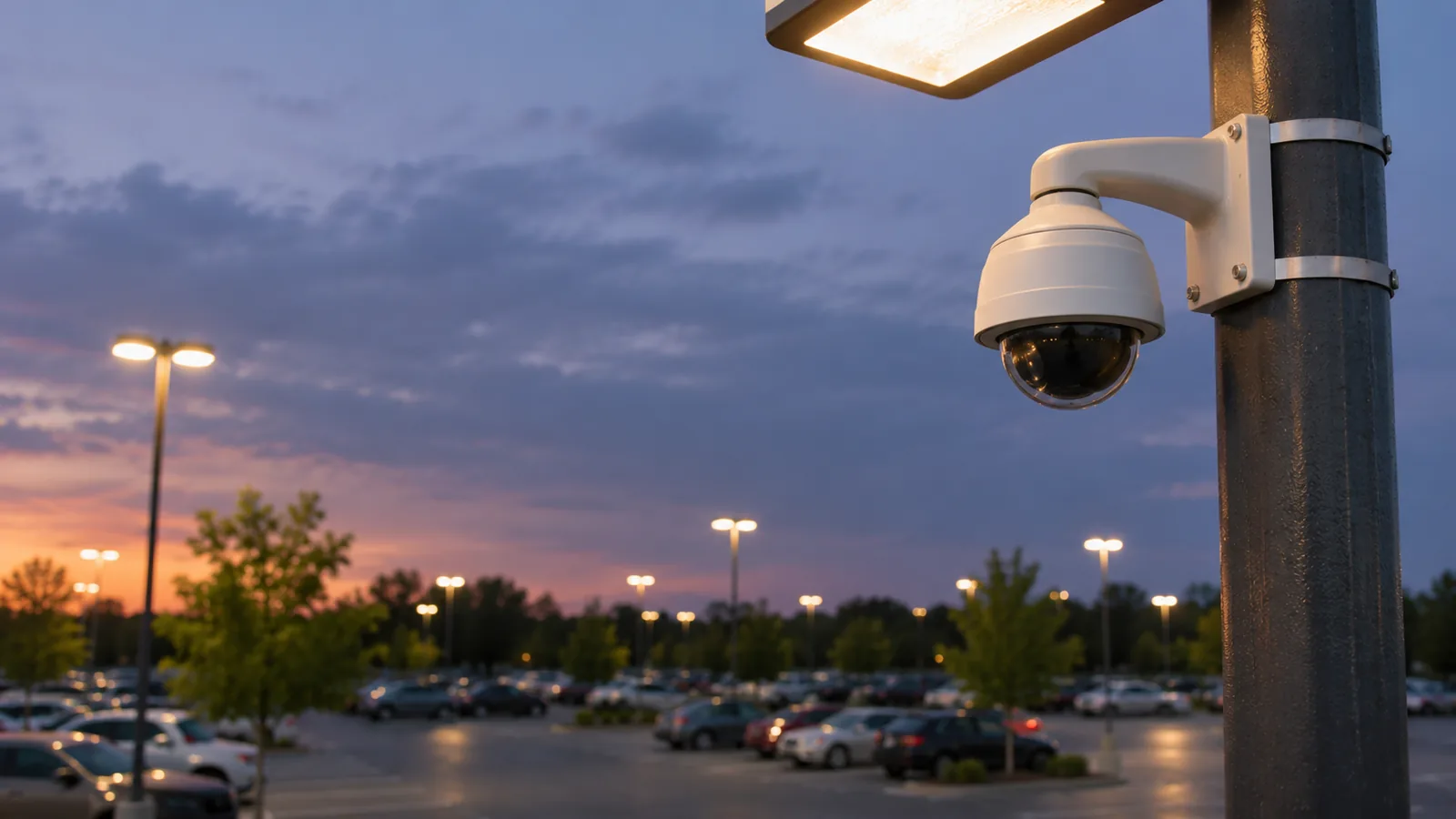
Save recordings, photos, witness names, physical items, and records quickly after a parking lot injury. Figure out who controls each camera and ask them to keep footage for a time window tied to what happened, including the minutes before. A request doesn't guarantee you'll get a copy, and missing video doesn't prove anyone was negligent.
Question | Short answer |
|---|---|
Will asking get me a copy of the video? | Not necessarily. Keeping footage and handing it over are separate steps. |
How long do lots keep video? | There's no universal retention period for every Texas parking facility. |
Who controls the cameras? | It may be the owner, the property manager, a store, a parking operator, a security company, or a neighbor. |
What if the video is gone? | Other evidence may still prove the claim. Missing video doesn't win or lose the case by itself. |
This guide is part of the Texas parking lot injury knowledge hub. If footage may be overwritten soon, request a review of your parking lot injury or call (214) 200-4878.
What question does the evidence need to answer?
Start with the question, because it decides which views and records matter.
Type of case | The question the evidence must answer |
|---|---|
A fall on a spill or a defect | When the condition appeared or was reported. |
A backing crash or pedestrian strike | The approach, speed, sightlines, and movement. |
A fall near paving work | Where the barriers were and what the crew was doing. |
A short clip of the impact can look dramatic without showing how long a puddle was there or why a driver didn't see you. Keep the context, not only the moment of injury.
Who might have footage or records?
Usually more than one business.
Possible source | What it may hold (hypothetical) |
|---|---|
Property owner or manager | Pole cameras covering the common lot. |
Store tenant | Entrance and cart-corral cameras. |
Parking operator | Garage level cameras and gate logs. |
Security company | Patrol notes and offsite recordings. |
Neighboring business | A camera that happens to face your aisle. |
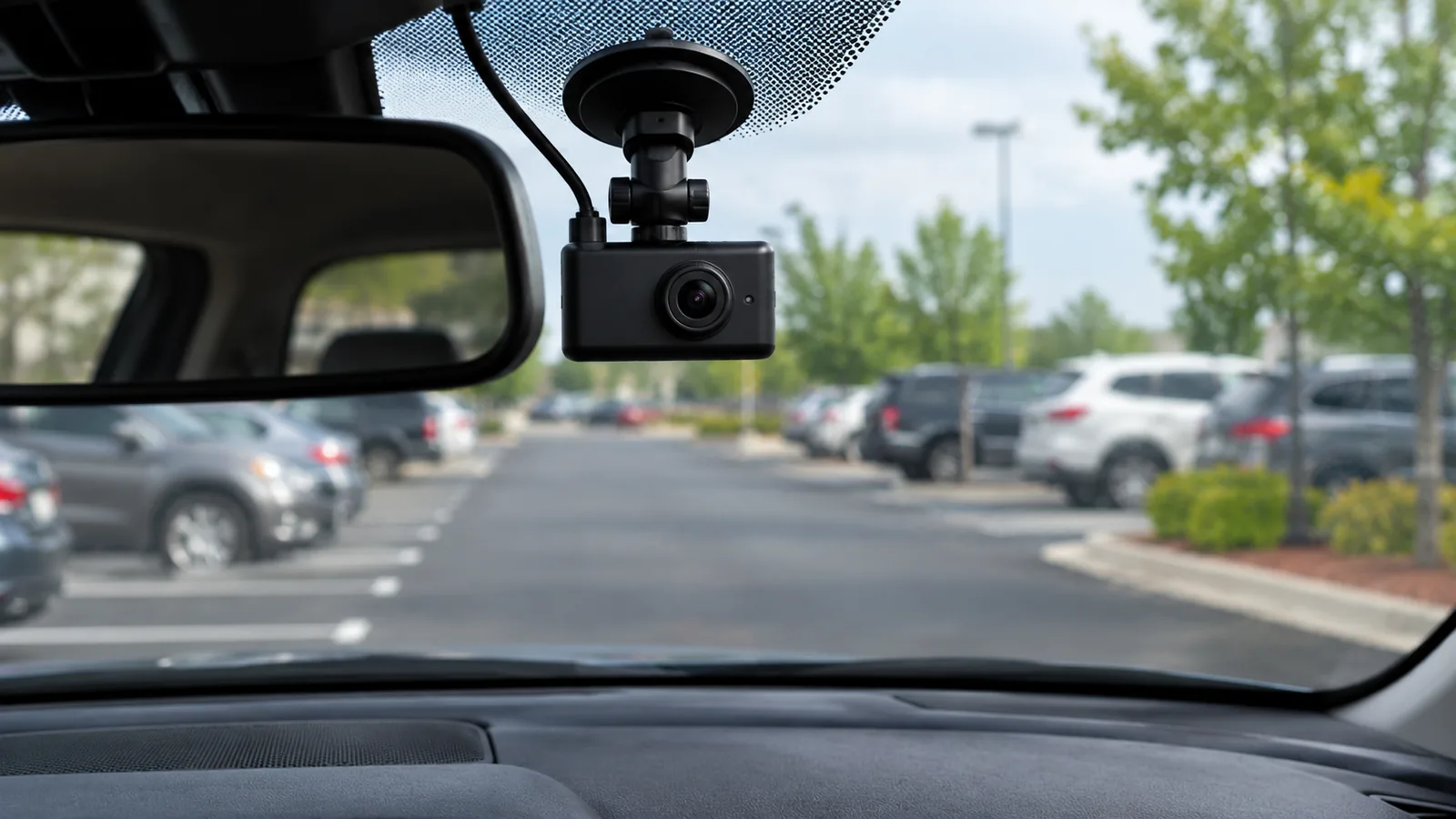
Drivers and witnesses | Dashcam and doorbell video. |
Paving or maintenance contractor | Daily work logs and job photos. |
A payment kiosk or gate system can fix the time you entered even if it never shows the injury. Find out who controls retention and export. A request sent to a corporate inbox may never reach the person who can stop the system from recording over the footage. Keep proof of delivery and every reply.
What should a preservation request say?
Give the exact site, date, best timing references, the spot in the lot, and what happened.
Include | Example (hypothetical) |
|---|---|
The location | The shopping center address and "Row F, near the cart corral". |
Timing references | A receipt at 5:51 p.m. and a 911 call at 5:58 p.m. |
What happened | "Pedestrian struck by a reversing pickup." |
Why earlier footage matters | "The oil may have been there before I arrived." |
Routes to cover | The driving lane the pickup came from and the walkway to the store. |
Don't demand an arbitrary "all video for 90 days" with no reason. A targeted request can still be broad enough to cover the hazard's history. The right time window depends on how the injury happened and what other evidence exists.
How should you handle electronic files?
Keep the original files and work from copies.
Keep | Why |
|---|---|
Native video files and any player software | Exports can lose quality and timestamps. |
Metadata and export details | They show where and when the file came from. |
The email or letter that came with the file | It shows who supplied it. |
Notes on clock differences | Camera clocks, receipts, and phones often disagree. |
A phone recording of a monitor can lose detail and timing, so treat it as a lead, not the best copy. A time mismatch is something to investigate. It isn't automatically proof that someone altered the video. Write down how any corrected timeline was worked out.
What should your own photos show?
Your photos should show both the approach and the detail.
Photo | Example (hypothetical) |
|---|---|
The defect or spill | The exposed anchor bolt, with a ruler for scale. |
The route | The path from your parking space to the door. |
Signs, lighting, and barriers | A burned-out pole light near the fall spot. |
Vehicles | Where the pickup stopped. |
The wider layout | The whole aisle from the entrance. |
Take pictures only from safe, lawful positions. Note anything that changed before you took them, such as a cleanup, a moved car, a repair, or a repositioned cone. A later photo can still help if its date and differences are labelled. An unlabelled reconstruction can mislead.
Which physical items can matter?
Items connected to how the injury happened.
Item | What it may show |
|---|---|
Shoes | Tread wear and residue from the surface. |
Clothing | Tire marks or oil stains. |
A cane, walker, or wheelchair | Damage from the fall or impact. |
A broken container or bag | What spilled and where. |
Vehicle parts | Damage pointing to the direction of impact. |
Talk with a lawyer before cleaning, testing, or throwing anything away. Don't collect dangerous substances or take property that isn't yours. Proper inspection and lawful access can preserve the evidence without creating a new safety or ownership problem.
How should witness accounts be handled?
Get each person's contact information and what they personally saw.
Witness (hypothetical) | What they can and can't say |
|---|---|
Saw the oil ten minutes earlier but not the fall | How long the hazard was there. |
Saw the impact but not the approach | Where you were struck, not how the driver approached. |
Heard a manager mention earlier complaints | A lead to records, not proof by itself. |
Ask how they remember the time and whether they saw the condition earlier. Don't put the answer in the question. Keep their uncertainty, and never merge two witnesses into one account that neither of them gave.
Who keeps police and business records?
Different records sit with different custodians.
Record | Who usually keeps it |
|---|---|
Crash report | TxDOT and the investigating agency [S4]. |
Scene photos, bodycam, and notes | The investigating police agency. |
Incident report | The store, manager, or operator. |
Daily work logs | The contractor. |
One request won't reach all of them. A report can point you to sources without proving every statement in it. Trace important statements back to the person who made them.
What happens if footage is missing?
Missing video can matter a lot, but it doesn't prove negligence on its own. In Brookshire Brothers v. Aldridge, the Texas Supreme Court set the framework Texas courts use for lost evidence [S14].
Brookshire Brothers point | What it means |
|---|---|
The judge decides the first questions | Whether there was a duty to preserve and whether it was breached. |
The remedy must fit the harm | Relief has to be proportionate to the lost evidence's importance. |
A spoliation instruction is a harsh remedy | It's generally reserved for intentional concealment, or a rare negligent loss that leaves the other side without any meaningful way to present its claim or defense. |
Separate a real loss from a slow response, an unusable format, an incomplete export, or an objection about scope. Each problem needs a different fix, and other evidence may still exist when one source is gone.
Hypothetical | What to ask |
|---|---|
A garage hands over video of the fall but not the hour before it. | Does earlier footage still exist? |
A maintenance ticket shows a complaint during that hour. | Who chose what to export, and what retention steps were taken? |
The rest of the hour was recorded over. | What does the gap prevent you from proving? |
The ticket may help, but it doesn't show what the missing footage would have shown. A request for relief should explain the gap and the harm without pretending to know what was on the lost video.
How do lawyers keep track of the evidence?
With an evidence register.
Column | Example (hypothetical) |
|---|---|
Item and custodian | Garage level 2 camera, parking operator. |
Request and response | Letter sent day 2; reply day 9. |
Format and handling | Native export, chain of custody noted. |
Authentication witness | The operator's security manager. |
Issue it supports | How long the oil was there. |
Status | Requested, received, reviewed, or disputed. |
The register also makes client updates more useful. "We sent nine letters" means less than "the gate log came in, and we're still waiting on the level 2 camera." Review it before the demand, expert work, mediation, and trial.
Common questions
Can I ask to see the camera footage right away?
Ask for preservation and get advice about lawful access. Don't enter restricted areas or try to get into a camera system yourself.
Should I delete a post that looks bad?
No. Keep it and talk with a lawyer about context and privacy. Deleting posts selectively can create evidence and credibility problems.
Does missing video mean the case is over?
Not necessarily. Other evidence may support your claim, and missing video doesn't mean you automatically win either.
Talk to the firm about preservation
Request a review of your parking lot injury or call (214) 200-4878, and say which recordings or physical items may still be available. Aaron Herbert is Board Certified in Personal Injury Trial Law by the Texas Board of Legal Specialization [S1]. For first steps, see what to do in the first 72 hours after a Texas parking lot injury; for the full process, read how to file and litigate a Texas parking lot injury claim.
Sources
ID | Source |
|---|---|
S1 | State Bar of Texas, Aaron Alan Herbert profile (Bar No. 24036761) |
S4 | TxDOT, Crash Reports and Records |
S14 | Brookshire Brothers, Ltd. v. Aldridge, 438 S.W.3d 9 (Tex. 2014) (majority opinion) |

ABOUT THE ATTORNEY
Aaron A. Herbert
Founding Attorney
Board Certified in Personal Injury Trial Law
Aaron founded The Law Firm of Aaron A. Herbert in 2010 to focus on developing each client's case and seeking its maximum value. For over a decade, he has represented people seriously injured in major accidents and industrial catastrophes, pursuing trial verdicts and settlements while working to reduce the stress of litigation.
Education
- Texas A&M University · B.S., Criminal Justice, 1999
- University of Oklahoma College of Law · J.D., 2002; graduated in the top of his class
Trial experience & approach
Aaron earned numerous jury verdicts at boutique personal injury litigation firms. According to his biography, he spent a year as the top-earning litigation attorney at a firm that frequently appeared in verdict searches as having one of the highest numbers of trial wins in Texas. At another Dallas personal injury firm, he moved from managing pre-litigation attorney to managing litigation attorney over seven years as the firm grew into one of Dallas's largest personal injury firms.
His biography describes a reputation as one of America's most aggressive trial lawyers, with noteworthy recoveries from judges and juries and substantial pretrial settlements. Most of those settlements included confidentiality agreements requested by the defense. Aaron has said the recoveries were justified by the injuries and losses involved, which no amount of money could make someone choose to experience.
His approach combines passion, preparation, persistence and courtroom imagination. He believes a well-supported, engaged and motivated team working cooperatively helps deliver strong representation, with the goal of achieving the best possible result for every client.
Dallas roots, military service & publication
Born and raised in Dallas, Aaron enlisted in the United States Marine Corps after high school and later received an Honorable Discharge. He completed his university and law degrees after his military service and became a lifelong Sooners football fan in law school.
Publication: “Litigating Dog Bite Cases,” Texas Dog Law Seminar, Dallas, 2009.
Professional affiliations & recognition
Professional affiliations and recognition listed in Aaron’s biography:
- State Bar of Texas
- American Bar Association
- Association of Trial Lawyers of America (now American Association for Justice)
- Texas Trial Lawyers Association
- Dallas Trial Lawyers Association
- Dallas Bar Association
- Tarrant County Bar Association
- Million Dollar Advocates Forum
- The National Trial Lawyers – Top 100 Trial Lawyers