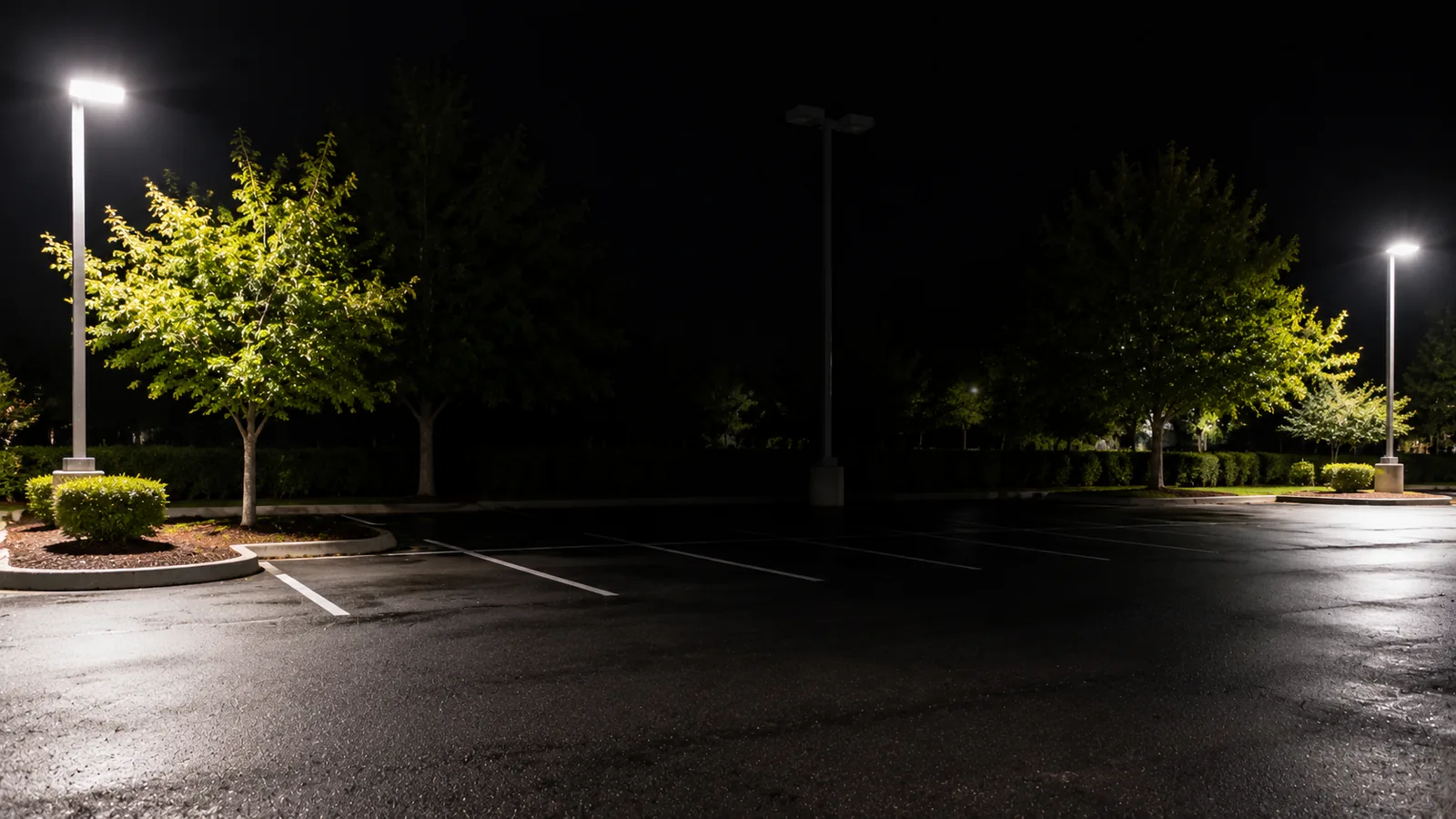
A broken light can matter in an injury claim when the darkness kept a driver or walker from seeing a hazard and that led to the injury. An assault in a parking lot raises separate questions about whether the owner owed a duty to guard against that kind of crime and whether a reasonable step would have made a difference. Neither a dead lamp nor a crime proves the property owner is responsible on its own terms. The evidence has to connect the failure to what happened to you.
Question | Short answer |
|---|---|
Does a dark lot prove negligence? | No. Control, duty, knowledge, and cause still need proof. |
Is a trip in the dark a security claim? | Usually not. It's typically a premises claim about seeing a hazard. |
What decides an assault claim? | Whether the crime was foreseeable, whether the risk was unreasonable, and whether a precaution would have helped. |
Does a criminal case pause my deadline? | Don't assume it does. Get advice early. |
This guide is part of the Texas parking lot injury knowledge hub. Hurt or attacked? Get safe and get care first. Then, whenever you're up to it, request a confidential review or call (214) 200-4878.
Is a lighting claim different from a security claim?
Yes. The same dark lot can lead to very different cases.
What happened | The central question |
|---|---|
A car hit a pedestrian at night | What could the driver and the pedestrian see? |
A walker tripped on a curb in the dark | Could a careful person have seen it on approach? |
Someone was attacked | Was there a developing threat, and what precaution was missing? |
Figure out how the injury happened before calling it a security case or a premises case. A general description of a dark parking lot doesn't answer all three questions.
How do you preserve what the lighting was like?
Record the scene at the same time of night as soon as it's safe.
What to capture
- Night photos of your route, for shadows, glare, and obstacles.
- Every nearby light pole, for which lights were on or out.
- Original files with settings, since phone cameras often brighten a dark scene.
- Trees, parked trucks, weather, since these can block or change the light.
A phone's automatic exposure can make a scene look brighter than it was to your eyes. If someone inspects the lot later, they should note what has changed since that night. The goal is a fair comparison, not a recreation that quietly changes the conditions.
Who was responsible for the lights?
Find out who could inspect, report, fix, and approve repairs.
Records and what they can show
- Outage complaints, for who knew a light was out and when.
- Work orders and service calls, for how long the repair took.
- The lighting contract, for who was hired to maintain fixtures.
- Timer or control settings, for whether lights were switched off on purpose.
A store tenant may report outages to a common-area manager, and an electrical contractor may only respond to calls it's assigned. Those roles need records, not guesses.
How does a broken light connect to the injury?
Only if the darkness affected what someone could see or avoid at that spot.
What to ask, with hypothetical examples
- Where exactly you were, such as two stalls from the dead pole.
- What needed to be seen, such as a landscape curb in the walking path.
- Whether other lights covered it, such as a storefront sign that lit the curb, or didn't.
- What a measurement showed, such as a light reading at the actual spot and time.
A qualified expert can help measure light and visibility, but the opinion needs a sound method and the right facts. A reading taken later at the wrong location doesn't show what you could see that night.
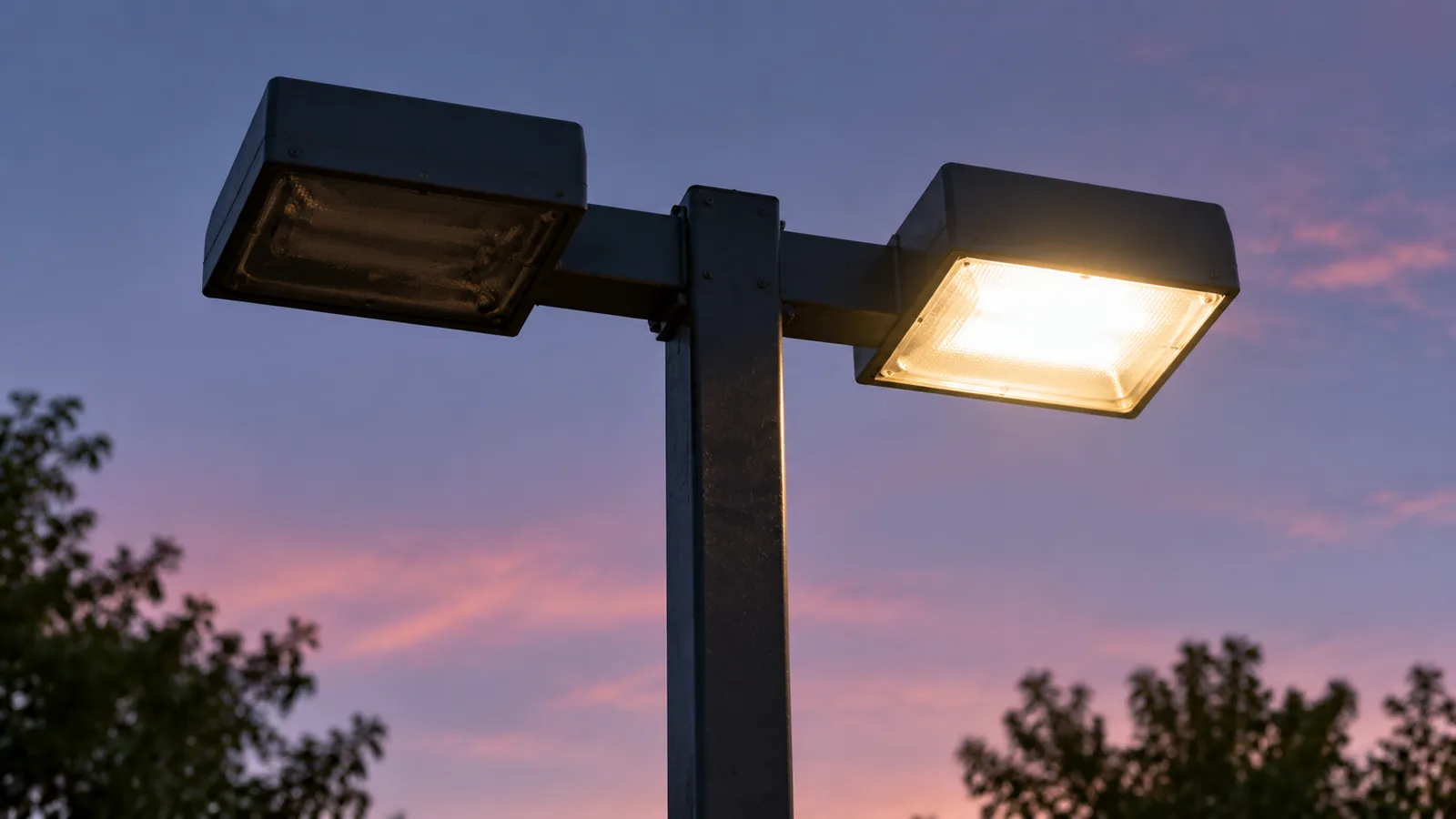
Why are assault claims analyzed differently?
Because an owner's duty to protect against crime depends on more than the fact that a crime happened.
Factor | What to look for |
|---|---|
Earlier incidents | Similar crimes, close in place and time. |
What the owner knew | Reports, complaints, and police calls. |
The risk itself | Whether it was unreasonable, not just possible. |
The proposed precaution | Its cost and whether it likely would have helped. |
In UDR Texas Properties, L.P. v. Petrie, a case about an assault in an apartment complex parking lot, the Supreme Court of Texas treated whether the crime was foreseeable and whether the risk was unreasonable as separate questions [S13]. A crime map of a whole ZIP code may not establish the specific duty being claimed. Our Dallas negligent security lawyer page explains how the firm handles these cases.
What evidence shows how an incident developed?
The timeline of the threat matters as much as the attack itself.
What to preserve
- When the threat or confrontation began, for whether there was time to act.
- Who saw it and whether staff were told, for what the business knew.
- 911 calls and police report numbers, to fix the timing.
- Security logs and recordings, for what guards or cameras did.
A sudden attack raises a different question than a disturbance that went on for some time. Hindsight isn't evidence; don't assume a guard, a camera, or a brighter lamp would have stopped every event. Our guide to preserving video and physical evidence after a Texas parking lot injury explains how to ask for footage before it's overwritten.
What about a security company's role?
Compare what the security company agreed to do with what it actually did.
- How often did patrols run, and where?
- Was anyone watching the cameras live?
- Who received reports, and who could act on them?
- Was there access control at that lot, such as gates or badges, or nothing?
A security contract doesn't create every possible duty to every person. A guard's presence or a company logo is a starting point. The claim still has to identify the specific failure and how it led to the harm.
How would an outage and a trip be evaluated?
By testing the outage against the actual lighting at the spot (hypothetical).
Fact | How it cuts |
|---|---|
A complaint shows a nearby light was reported out the day before | Supports the knowledge question. |
Another light fully lit the curb | The outage's role gets weaker. |
Photos and analysis show the route stayed in shadow | The outage's role gets stronger. |
A pedestrian trips over a landscape curb after dark. The case still has to prove the condition, the duty, what the person could see, the response, and the cause.
Your questions about dark lots and assaults
Does poor lighting automatically prove negligence?
No. Control, duty, knowledge, risk and cause all need evidence. Lighting can matter a great deal without deciding every element.
Do cameras make a lot safe?
Having cameras doesn't guarantee prevention. They can record events or help with monitoring; the question is what the system and the people running it actually did.
Must I wait for the criminal case to finish?
Don't assume a criminal case pauses your civil filing deadline or the need to preserve evidence. Most Texas injury suits have a two-year filing deadline, with exceptions [S15], so get advice about the civil claim early.
Request a confidential evaluation
Request a confidential review or call (214) 200-4878 with the date, the location, your medical care, any police report number, and the evidence you have. Aaron Herbert is Board Certified in Personal Injury Trial Law by the Texas Board of Legal Specialization [S1]. For the full process, read how to file and litigate a Texas parking lot injury claim.
Sources
ID | Source |
|---|---|
S1 | State Bar of Texas, Aaron Alan Herbert profile (Bar No. 24036761) |
S13 | UDR Texas Properties, L.P. v. Petrie, 517 S.W.3d 98 (Tex. 2017) |
S15 | Texas Civil Practice and Remedies Code chapter 16 |

ABOUT THE ATTORNEY
Aaron A. Herbert
Founding Attorney
Board Certified in Personal Injury Trial Law
Aaron founded The Law Firm of Aaron A. Herbert in 2010 to focus on developing each client's case and seeking its maximum value. For over a decade, he has represented people seriously injured in major accidents and industrial catastrophes, pursuing trial verdicts and settlements while working to reduce the stress of litigation.
Education
- Texas A&M University · B.S., Criminal Justice, 1999
- University of Oklahoma College of Law · J.D., 2002; graduated in the top of his class
Trial experience & approach
Aaron earned numerous jury verdicts at boutique personal injury litigation firms. According to his biography, he spent a year as the top-earning litigation attorney at a firm that frequently appeared in verdict searches as having one of the highest numbers of trial wins in Texas. At another Dallas personal injury firm, he moved from managing pre-litigation attorney to managing litigation attorney over seven years as the firm grew into one of Dallas's largest personal injury firms.
His biography describes a reputation as one of America's most aggressive trial lawyers, with noteworthy recoveries from judges and juries and substantial pretrial settlements. Most of those settlements included confidentiality agreements requested by the defense. Aaron has said the recoveries were justified by the injuries and losses involved, which no amount of money could make someone choose to experience.
His approach combines passion, preparation, persistence and courtroom imagination. He believes a well-supported, engaged and motivated team working cooperatively helps deliver strong representation, with the goal of achieving the best possible result for every client.
Dallas roots, military service & publication
Born and raised in Dallas, Aaron enlisted in the United States Marine Corps after high school and later received an Honorable Discharge. He completed his university and law degrees after his military service and became a lifelong Sooners football fan in law school.
Publication: “Litigating Dog Bite Cases,” Texas Dog Law Seminar, Dallas, 2009.
Professional affiliations & recognition
Professional affiliations and recognition listed in Aaron’s biography:
- State Bar of Texas
- American Bar Association
- Association of Trial Lawyers of America (now American Association for Justice)
- Texas Trial Lawyers Association
- Dallas Trial Lawyers Association
- Dallas Bar Association
- Tarrant County Bar Association
- Million Dollar Advocates Forum
- The National Trial Lawyers – Top 100 Trial Lawyers