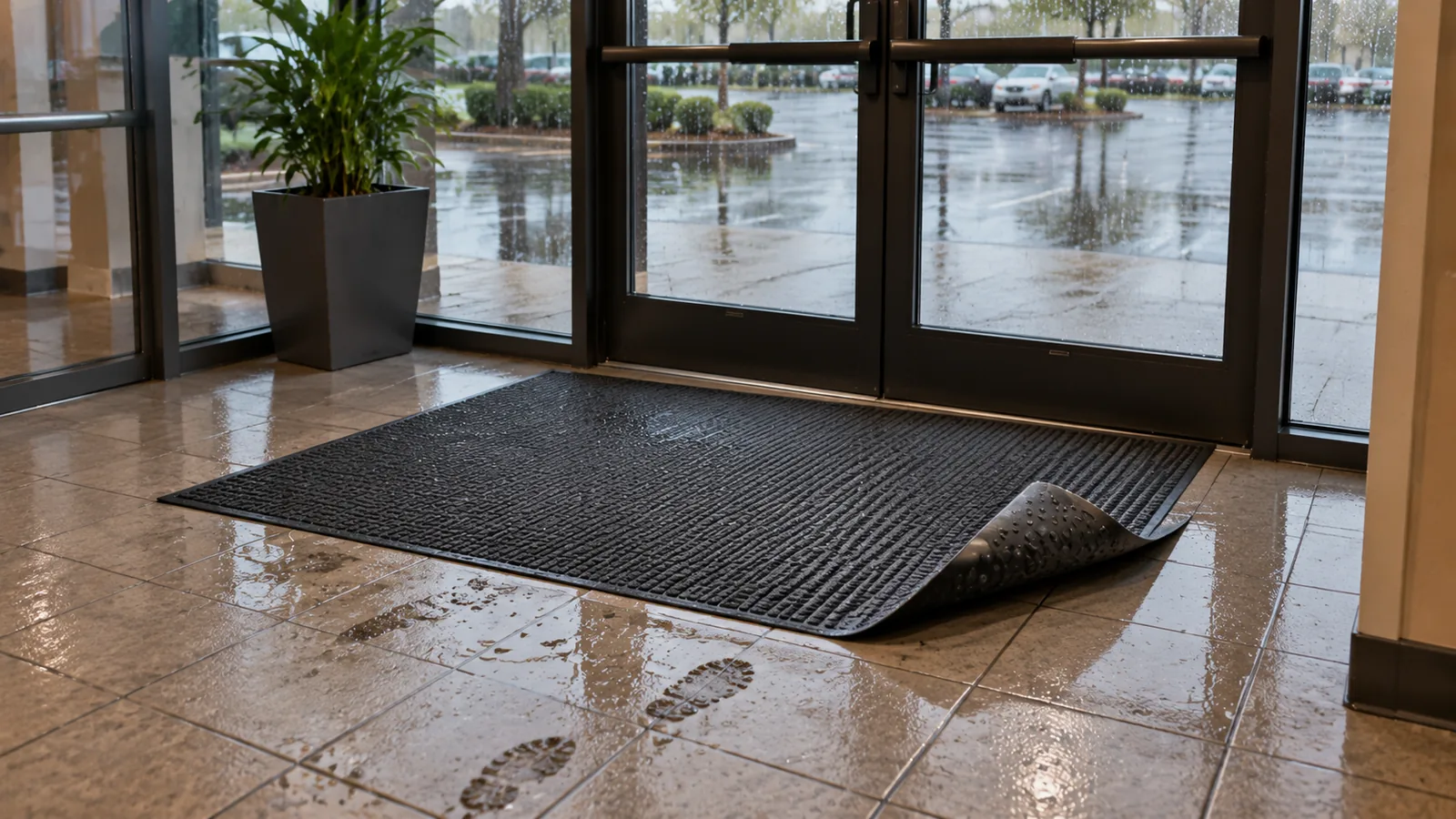
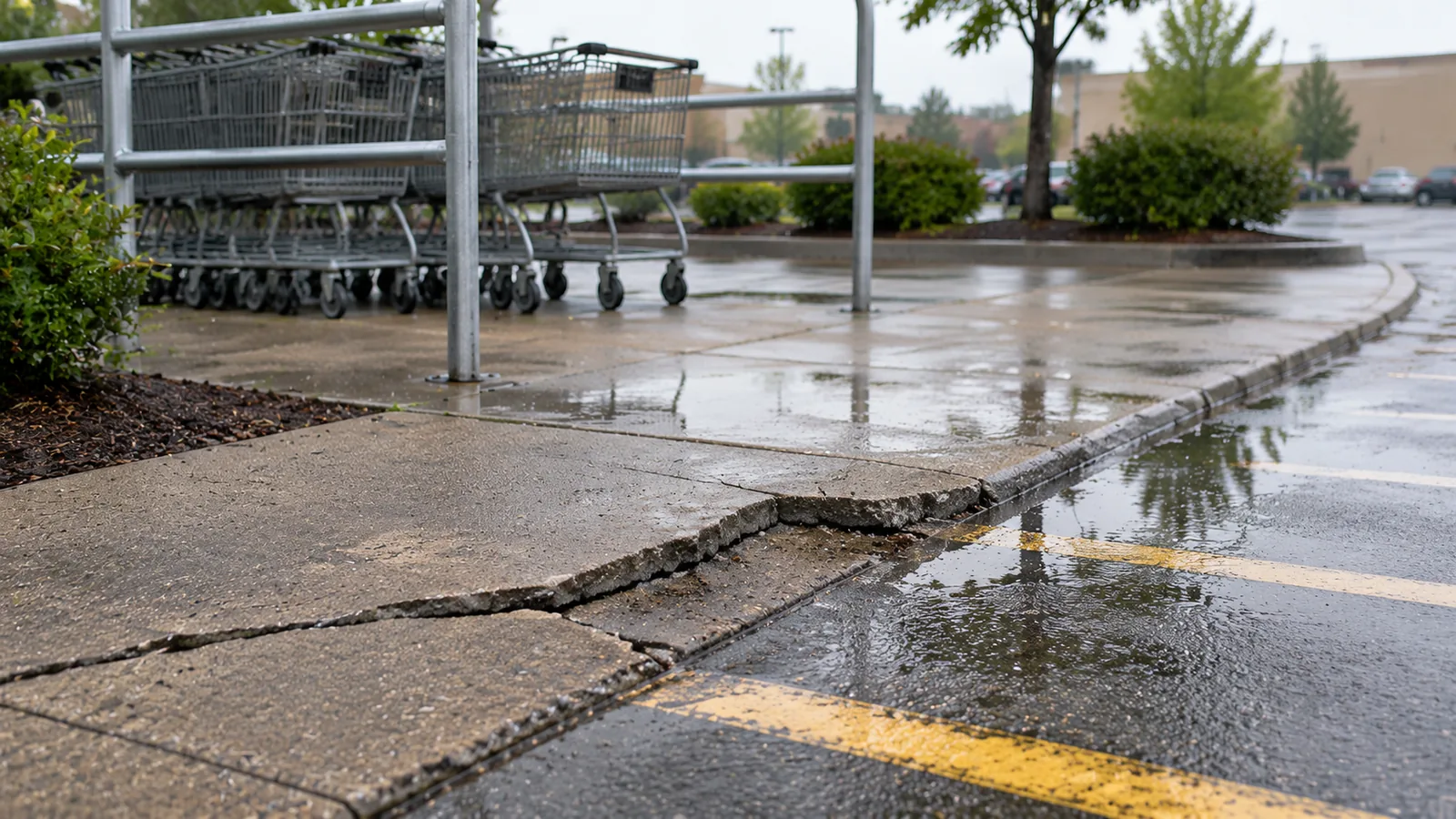
A puddle by the coolers, a curled mat at the door, a hanger in the checkout lane, and a broken curb in the lot are four different cases. Each one points to a different source, a different time window, and sometimes a different company in charge. Whatever the hazard, a Texas claim generally needs proof of where the condition came from, how long it was there, what the store or other responsible company knew or should have known about it, and that it caused the fall.
| Hazard | First questions |
|---|---|
| Liquid on the floor | Where did it come from, and how long was it there? |
| Entrance mat | Was the edge curled, and who placed and checked the mat? |
| Merchandise or packaging | Was it on the floor before you fell, or did it drop during the fall? |
| Pavement or curb | Exactly where, and who maintains that strip of the lot? |
This guide is part of the Target injury knowledge hub. To have a lawyer look at the hazard in your case, tell us about your Target fall or call (214) 200-4878.
Is a photo of water enough to prove a wet-floor claim?
No. A photo shows that liquid was there; the claim also needs its source, how long it sat and what the store knew.
Evidence that can confirm or rule out each possible source (hypothetical)
- Service tickets for the unit and photos of the floor around it, for a refrigerated case dripping condensation.
- Video of the aisle in the minutes before the fall, for a shopper's dropped smoothie.
- Product remnants and the cleanup record, for a broken jar of salsa.
- The cleaning time, the method and any warning signs placed, for a team member mopping.
Being near the cooler is a reason to look at the cooler, not proof that it leaked. A work order for the same unit may matter, but only if the problem continued in that spot on that day.
Photos to take, and why
- A close-up of the liquid, for color, size and residue.
- A wide shot from where you walked, for the route, displays and any warning sign.
- The shoes you were wearing, for tread and wear.
What if the floor was being cleaned?
Find out whether you walked into a cleaning job in progress or a wet floor left behind afterward. Texas law treats those differently [S9].
| Record | What it may and may not show |
|---|---|
| Cleaning log at 2:15 p.m. | When the task was signed off, not when the floor dried. |
| Purchase record for floor cleaner | Which products were on hand, not which one was used. |
| Video of a team member with a mop | Activity nearby; the exact spot still needs checking. |
| Wet-floor sign photographed later | The scene after the fall, maybe not before it. |
Photograph any warning from the direction you approached. A sign facing the far end of the aisle may not have been visible to you.
How do rainy-day entrance falls work?
Rain explains why water could be there. It doesn't prove who was responsible for the spot where you fell.
Details to record, with hypothetical examples
- Where water pooled, such as a 3-foot wet patch just past the second set of doors.
- The mat setup, such as one mat inside the doors and bare tile beyond it.
- Warnings, such as a sign by the carts, facing the exit.
- Weather, such as steady rain since 9 a.m., per a weather service record.
Weather records give context, not the floor's condition at the moment you fell. Whether a wet entrance was obvious or hidden is a duty question for your lawyer under current Texas law.
Tripped on a mat?
Photograph the whole mat, its edges, the flooring around it, the door swing, and your path in.
What to pin down about the mat
- Whether the corner was curled before you stepped on it.
- Whether someone straightened it while helping you.
- Who supplies and checks the mats.
- Whether the mat can be preserved.
Why each matters, in the same order
- Separating a pre-existing condition from one caused by the fall.
- A changed scene, which should be noted.
- A mat vendor's agreement, which may assign some duties.
- A request from a lawyer, not taking store property yourself.
A curl seen two weeks later isn't automatic proof of the earlier condition. The mat may have been swapped or moved since.
Tripped over merchandise or packaging?
First establish that the item was on the floor before you fell and that your foot hit it.
| Evidence | What it shows |
|---|---|
| Video of the lane before the fall | Whether the box was already there. |
| A witness who walked around it | That it was visible and for how long. |
| A stocking cart parked nearby | A question to ask, not proof an employee dropped it. |
| Product tags or a SKU photo | Which item it was. |
Duration still matters when constructive notice is the theory. General proof that merchandise sometimes falls in stores won't replace evidence about this item at this spot.
Did a display narrow the aisle or block your view?
A display can change where shoppers look and how they move.
Measure or note, with hypothetical examples
- Display height, such as a 5-foot stack of patio cushions.
- Passage width, such as about 30 inches left between the display and the shelf.
- What you were doing, such as turning a full cart into the aisle.
- Sightline, such as the floor beyond the display hidden until you were past it.
A diagram helps only if its measurements are real or clearly labeled as illustrative. A camera angle that makes the aisle look narrower than it was will hurt credibility.
Who is responsible for the parking lot?
Not always the store. A landlord, a shopping center manager, or a paving contractor may control or maintain the spot where you fell.
Records and witnesses, and what each may show
- The lease, for who handles common-area repairs.
- A property management agreement, for who inspects and arranges paving work.
- A repair contract, for who patched the pavement and when.
- Store staff, for who actually put out cones or called for repairs.
Mark the exact spot on a site map: the curb line, the cart return, the crosswalk. Photograph it with a ruler or tape measure placed honestly, and note the time. Repairs can change the evidence, so a timely inspection matters.
Do accessibility rules decide a curb or ramp case?
Not by themselves. A measurement outside a guideline can be relevant, but it isn't automatic proof of every element of a premises claim.
| Question | Why |
|---|---|
| Which standard applied to this site and date? | Construction and alteration dates matter. |
| Did the deviation cause the fall? | A measurement alone doesn't show causation. |
| Was there another route? | It may bear on duty and responsibility. |
| Was the condition visible? | It affects how the claim is analyzed. |
How the evidence plan changes by hazard
Top priorities, by hazard
- Source, duration, video, reports and the store's response, for water.
- Configuration, placement, preservation and vendor duties, for a mat.
- Presence before the fall, source and notice, for merchandise.
- Exact location, control, measurements and repair history, for pavement.
- Dimensions, sightlines and the space left to pass, for a display.
A request for "all safety records" usually tells you less than a request naming the aisle, the date range, the condition, and the people who keep the records.
When does an expert help?
An expert is worth hiring when a real dispute needs specialized knowledge.
| Dispute (hypothetical) | Possible expert |
|---|---|
| How slippery the tile was with water on it | A premises safety or flooring specialist. |
| Whether a raised slab edge caused the trip | An engineer. |
| Whether a sign was visible from your path | A human factors expert. |
| Whether two camera clocks line up | A forensic video analyst. |
An expert can't fill a missing eyewitness account by assuming your version happened. Ask what the work will cost and whether it answers a question that affects recovery.
Two falls by the same cooler
Here's a made-up comparison.
| Fact | Customer A | Customer B |
|---|---|---|
| What video shows | A shopper drops a drink 20 seconds before the fall. | Water under the cooler for 35 minutes. |
| Prior report | None. | A ticket on the same unit that morning. |
| Employee passes | None. | Three team members walk by. |
| Notice picture | Weak. | Much stronger. |
Same aisle, similar injury, very different claims. And if Customer B actually tripped on a box, the whole analysis starts over.
Why talk to Aaron Herbert about a store hazard?
Aaron A. Herbert is Board Certified in Personal Injury Trial Law by the Texas Board of Legal Specialization [S1][S3]. A consultation should connect that experience to your hazard.
Ask the firm
- How will you find the source?
- Who controlled the spot?
- Do we need an expert?
A useful answer includes these, in the same order.
- The records and video you'd request.
- Which companies to research and why.
- What question they'd answer and the likely cost.
Frequently asked questions
Does a floor defect have to be a certain size?
No single measurement decides every case. The condition, context, duty and causation all matter.
Is the property owner always the defendant?
No. Control, conduct and contracts decide who may be responsible.
Can photos taken later help?
Yes, if their timing and any changes are explained.
Should I keep my shoes?
Yes. Store them as they are, without cleaning them.
Tell us about your Target fall
Tell us about your Target fall through InjuryAttorneyOfDallas.com or call (214) 200-4878. The Law Firm of Aaron A. Herbert, P.C. will look at what caused the fall and who may be responsible.
Bring, with hypothetical examples
- Photos of the hazard, such as the curled mat corner and the wet tile beside it.
- The exact location, such as the second set of doors, left side.
- Your shoes, such as the sneakers you wore that day.
- Treatment records, such as the X-ray report from urgent care.
Educational information only, not legal advice. Representation and fees require a written agreement. This independent resource is not affiliated with or endorsed by Target Corporation.
Related reading
- How to Sue Target in Texas, on the full claim and lawsuit process.
- First 72 hours after a Target fall, on photos, witnesses and reporting.
- Preserving Target surveillance video, on asking the store to keep footage.
- Proving notice in a Target fall claim, on how long the hazard was there.
- Filing a Target injury lawsuit and naming defendants, on the store, landlord or contractor.
Sources

ABOUT THE ATTORNEY
Aaron A. Herbert
Founding Attorney
Board Certified in Personal Injury Trial Law
Aaron founded The Law Firm of Aaron A. Herbert in 2010 to focus on developing each client's case and seeking its maximum value. For over a decade, he has represented people seriously injured in major accidents and industrial catastrophes, pursuing trial verdicts and settlements while working to reduce the stress of litigation.
Education
- Texas A&M University · B.S., Criminal Justice, 1999
- University of Oklahoma College of Law · J.D., 2002; graduated in the top of his class
Trial experience & approach
Aaron earned numerous jury verdicts at boutique personal injury litigation firms. According to his biography, he spent a year as the top-earning litigation attorney at a firm that frequently appeared in verdict searches as having one of the highest numbers of trial wins in Texas. At another Dallas personal injury firm, he moved from managing pre-litigation attorney to managing litigation attorney over seven years as the firm grew into one of Dallas's largest personal injury firms.
His biography describes a reputation as one of America's most aggressive trial lawyers, with noteworthy recoveries from judges and juries and substantial pretrial settlements. Most of those settlements included confidentiality agreements requested by the defense. Aaron has said the recoveries were justified by the injuries and losses involved, which no amount of money could make someone choose to experience.
His approach combines passion, preparation, persistence and courtroom imagination. He believes a well-supported, engaged and motivated team working cooperatively helps deliver strong representation, with the goal of achieving the best possible result for every client.
Dallas roots, military service & publication
Born and raised in Dallas, Aaron enlisted in the United States Marine Corps after high school and later received an Honorable Discharge. He completed his university and law degrees after his military service and became a lifelong Sooners football fan in law school.
Publication: “Litigating Dog Bite Cases,” Texas Dog Law Seminar, Dallas, 2009.
Professional affiliations & recognition
Professional affiliations and recognition listed in Aaron’s biography:
- State Bar of Texas
- American Bar Association
- Association of Trial Lawyers of America (now American Association for Justice)
- Texas Trial Lawyers Association
- Dallas Trial Lawyers Association
- Dallas Bar Association
- Tarrant County Bar Association
- Million Dollar Advocates Forum
- The National Trial Lawyers – Top 100 Trial Lawyers