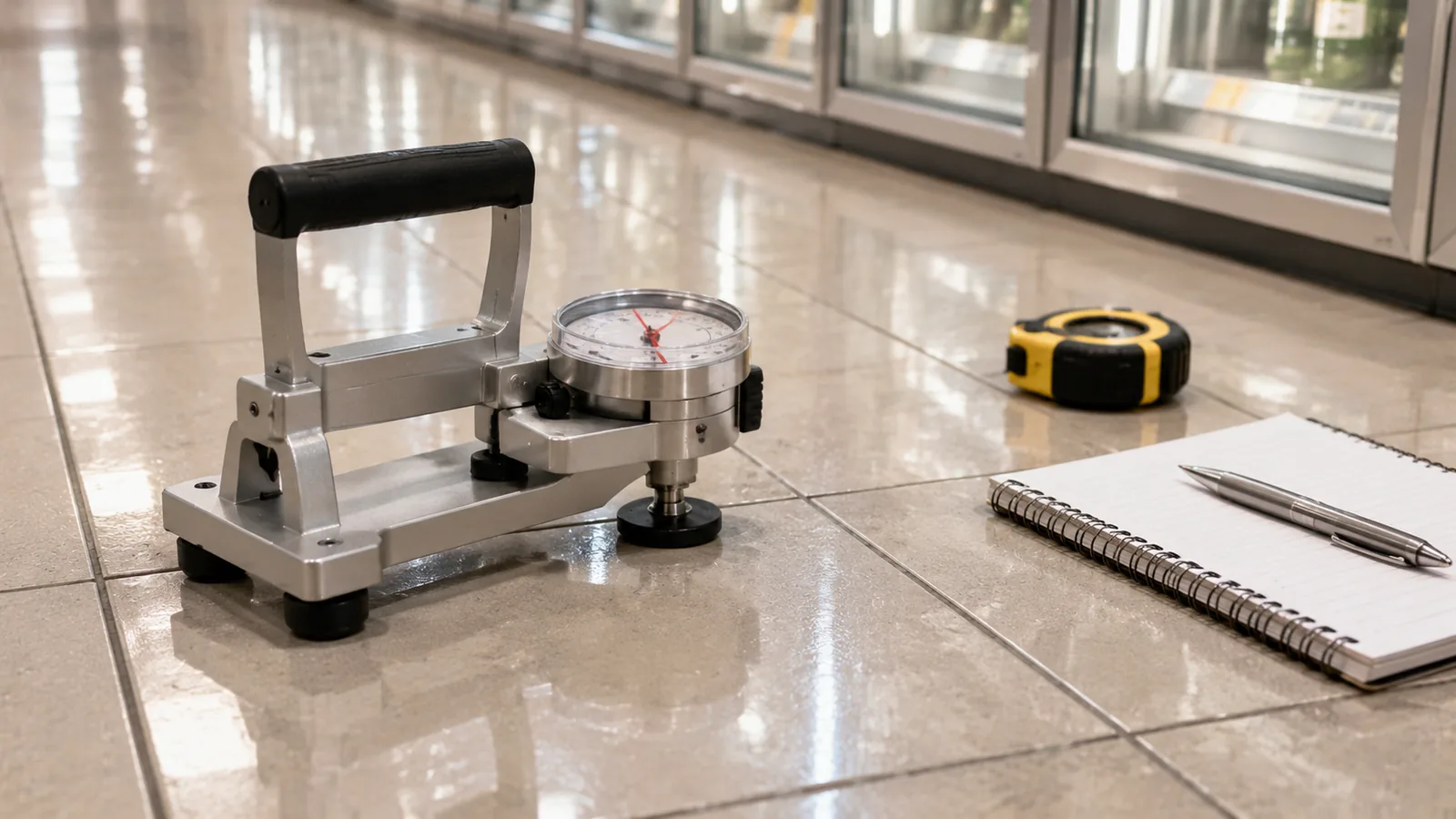
An expert is worth hiring when a real, important dispute needs specialized knowledge that ordinary witnesses can't supply. The size of the store doesn't decide it. The open question in your case does.
Who might answer each disputed question (hypothetical)
- A premises safety or flooring specialist, for how slick this tile was with clear liquid on it.
- A civil or structural engineer, for whether a half-inch slab edge caused the trip.
- A human factors expert, for whether you could have seen the sign from your route.
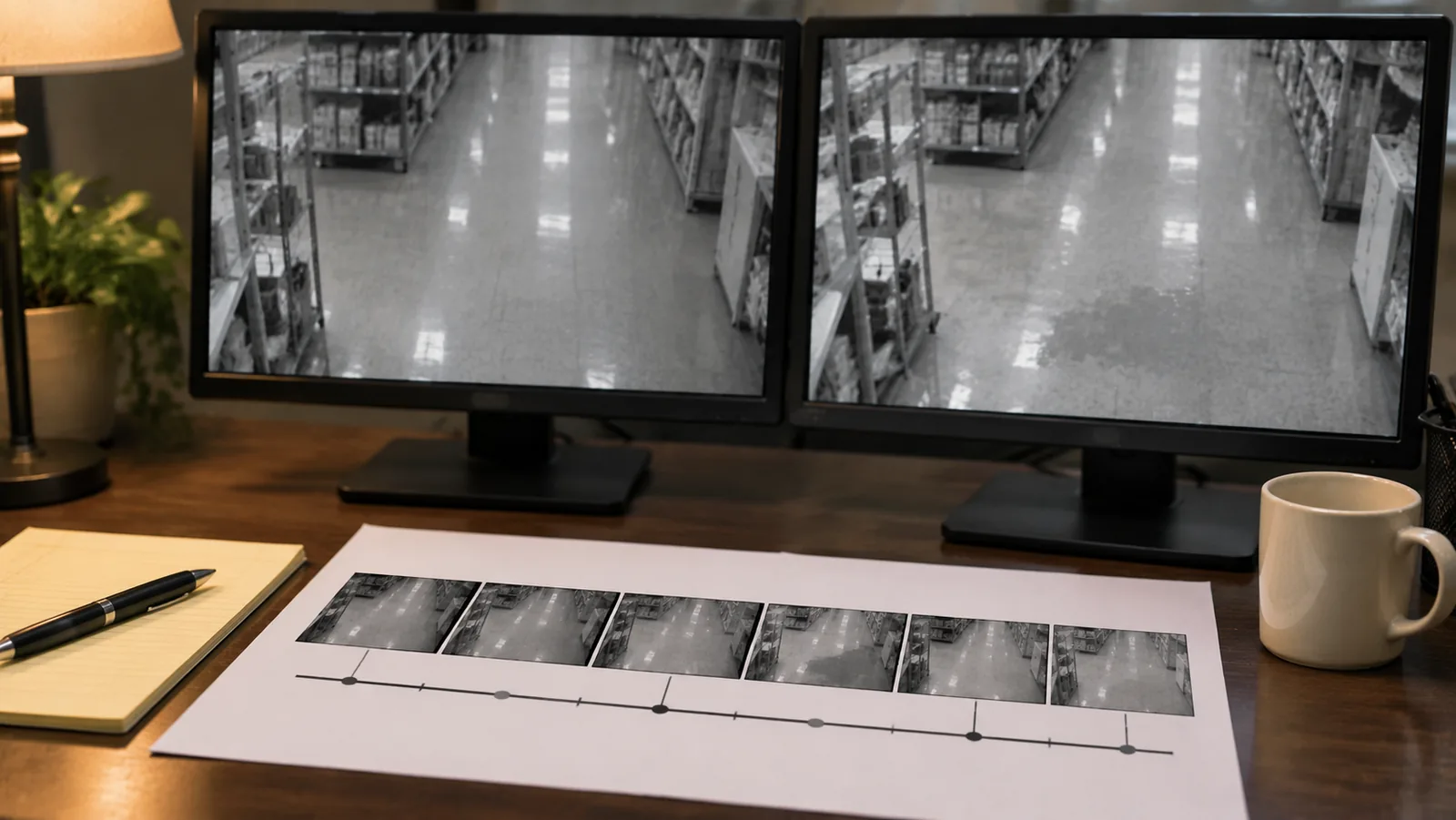
- A forensic video analyst, for whether the two camera clocks match.
- An orthopedic physician, for whether the fall caused the torn meniscus.
This guide is part of the Target injury knowledge hub. To ask a lawyer whether your case needs an expert, tell us about your Target fall or call (214) 200-4878.
How do you decide whether an expert is needed?
Start with the disputed question, written as narrowly as you can, and choose the discipline after that.
| Too broad | Useful |
|---|---|
| "Was the floor unsafe?" | "How slip-resistant was this vinyl tile with water on it?" |
| "Was the lot dangerous?" | "Did the slab edge at the cart return exceed what's typical, and could it catch a shoe?" |
| "Is she hurt?" | "Does the March MRI show a tear that the 2019 MRI didn't?" |
A traction test is wasted money when nobody can say how long the puddle sat there. The photos, the video and your older medical records should be in hand before anyone is hired.
What does a premises safety expert do?
A premises safety expert studies the floor surface and how it was cleaned, along with mats, layout, lighting or the store's inspection routines.
Sources the expert may cite
- A voluntary industry guideline.
- A manufacturer's cleaning instruction.
- A company policy.
- A statute or code.
What each is, in the same order.
- A benchmark, not a law.
- How the product was meant to be used.
- The store's own expectations.
- A legal requirement, if it applies.
A sound opinion keeps those four apart instead of folding them into one "rule." A traction reading taken on a different floor, under different conditions, may not say much about your fall either. Hazard-specific evidence is covered in Wet floors, mats, and parking lot falls.
When is an engineer useful?
When the dispute turns on pavement, slopes, drainage, transitions or equipment.
| Step | Why |
|---|---|
| Measure the exact spot. | Plans show design, not current conditions. |
| Confirm which code applied. | Construction and alteration dates matter. |
| Connect the feature to the fall. | A defect that didn't cause the fall doesn't help. |
What does a human factors expert add?
An analysis of contrast, lighting, attention, sightlines and warnings, made from where you actually were.
Factors, each with a hypothetical example
- A puddle that a ceiling camera sees and a shopper at 5'4" pushing a cart may not, for viewpoint.
- A sign placed behind a pallet of bottled water, for obstruction.
- Clear liquid on white tile under bright LEDs, for contrast.
This expert doesn't decide who's telling the truth, and doesn't give legal conclusions.
Do you need a video expert?
Only for a concrete problem with the footage, such as file integrity, clock offsets, frame rate or compression limits.
The rule for each task
- Keeping the original and documenting the method, for brightening a frame.
- A clearer view with no added detail that isn't there, for enlarging a frame.
- A shared event, like a door opening on two cameras, for matching clocks.
- Displayed and corrected times kept separate, for reporting times.
The Target surveillance video guide covers getting the footage saved first.
What do medical experts address?
Diagnosis, causation, aggravation of an old injury, restrictions and future care, each within the doctor's training.
| Record | What it does and doesn't show |
|---|---|
| ER note: "slipped at Target" | The history you gave, not proof of fault. |
| MRI showing a tear | The injury, not when it happened. |
| Doctor's causation opinion | Links the fall to the injury, with reasons. |
| "May need surgery someday" | A possibility, not necessarily a reasonably certain future cost. |
Prior records matter. A doctor should deal with them openly rather than assume every later symptom came from the fall.
When do vocational and economic experts help?
When supported medical restrictions affect earning capacity.
What's needed in each situation (hypothetical)
- Payroll records and usually no expert, for six weeks off a warehouse job.
- A vocational assessment, for a permanent lifting limit for a nurse.
- Profit rather than revenue, plus expense records, for a self-employed contractor losing jobs.
- An economist with stated assumptions, for a lifetime earnings projection.
Precise math doesn't rescue a speculative medical premise.
What about life care plans?
For serious lasting injuries, a planner lists future needs and costs.
What each item should show, with hypothetical examples
- Who recommended it, such as the treating orthopedist.
- Why it's needed, such as ongoing knee instability.
- How often and how long, such as physical therapy twice a week for 12 weeks.
- The cost basis, such as local provider rates.
The plan is evidence to be weighed. It doesn't promise that every item will be awarded.
Does floor testing match the day you fell?
Only if conditions are comparable.
| Document | Why |
|---|---|
| Floor material and finish | Resurfacing changes results. |
| The liquid used | Water behaves differently from oil or soda. |
| Instrument and calibration | Others must be able to check the result. |
| Number and location of readings | One favorable number invites challenge. |
A demonstration that uses different shoes, lighting or mat placement should say so. It can illustrate a principle, but it can't recreate facts that haven't been proven.
What rules govern expert testimony?
The rule in each court
- Texas Rule of Evidence 702, plus case law on reliability, for Texas state court [S14].
- Federal Rule of Evidence 702, with its own wording, for federal court [S11].
- The procedural rules and the scheduling order, for deadlines in either court.
A hypothetical 40-page report lists the expert's degrees and then says "the store was at fault" with no math behind it. Opposing counsel will go straight for that gap.
Tasks and their timing
- Designating experts, by the court's deadline.
- Producing reports, as the forum's rules require.
- Preparing for depositions, before the opposing side's questioning.
- Answering a reliability challenge, ideally before the motion is filed.
How to Sue Target in Texas walks through the full claim and lawsuit process.
How is an expert prepared for trial?
What preparation covers
- Direct examination, such as starting with the question asked, using diagrams tied to evidence and staying in their field.
- Cross-examination, such as facing testing differences head-on, admitting what wasn't reviewed and not overstating concessions.
An expert who agrees that a spill can be dangerous hasn't admitted that the store had notice. Agreeing that falls can hurt backs is also different from an opinion that this fall caused this injury.
Two budget decisions
Both cases are made up.
| Case | Gap in proof | Sensible choice |
|---|---|---|
| A | No evidence of how long the liquid was there. | Skip the costly traction test; it won't answer notice. |
| B | Video shows the timeline, but the store says its sign was visible. | A focused human factors analysis. |
The right expert follows the gap, because an unnecessary expert can reduce what you take home. How damages are valued is covered in Target injury settlements and net proceeds.
Why talk to Aaron Herbert about experts?
Aaron A. Herbert is Board Certified in Personal Injury Trial Law by the Texas Board of Legal Specialization [S1][S3]. That won't guarantee an expert is admitted or believed, so ask how the firm uses them.
Ask the firm
- Do we need an expert?
- What will it cost?
- What could go wrong?
A useful answer includes these, in the same order.
- The specific question and why.
- A range and how it compares with likely value.
- The opinion's weak points.
Frequently asked questions
Does every fall case need an engineer?
An engineer is needed only when a material question calls for technical analysis, so no.
Can my treating doctor testify?
A treating doctor can testify within their qualifications and the disclosure rules, so possibly.
Do more experts mean a bigger settlement?
Duplicate or weak opinions add cost and risk, so not automatically.
Who pays for experts?
Your fee agreement should explain how costs are advanced and repaid.
Tell us about your Target fall
Tell us about your Target fall through InjuryAttorneyOfDallas.com or call (214) 200-4878. The Law Firm of Aaron A. Herbert, P.C. will explain whether your case needs expert work.
Bring, with hypothetical examples
- Photos of the hazard, such as the slab edge with a tape measure.
- Your shoes, such as the sandals you wore.
- Medical records, including older ones, such as the 2019 knee MRI.
- Work records, such as pay stubs for the weeks you missed.
First 72 hours after a Target fall covers what to keep right away, and Preserving Target surveillance video covers getting footage saved early.
Sources
| Ref | Source | What it supports |
|---|---|---|
| S1 | State Bar of Texas, Aaron Alan Herbert | License and board certification. |
| S3 | Texas Board of Legal Specialization, Personal Injury Trial Law standards | Certification requirements. |
| S11 | Federal Rules of Civil Procedure; Federal Rule of Evidence 702 | Federal procedure and expert testimony. |
| S14 | Texas Rules of Evidence, effective July 2, 2026 | Rules 702 to 705. |
Educational information only, not legal advice. Representation and fees require a written agreement. This independent resource is not affiliated with or endorsed by Target Corporation.

ABOUT THE ATTORNEY
Aaron A. Herbert
Founding Attorney
Board Certified in Personal Injury Trial Law
Aaron founded The Law Firm of Aaron A. Herbert in 2010 to focus on developing each client's case and seeking its maximum value. For over a decade, he has represented people seriously injured in major accidents and industrial catastrophes, pursuing trial verdicts and settlements while working to reduce the stress of litigation.
Education
- Texas A&M University · B.S., Criminal Justice, 1999
- University of Oklahoma College of Law · J.D., 2002; graduated in the top of his class
Trial experience & approach
Aaron earned numerous jury verdicts at boutique personal injury litigation firms. According to his biography, he spent a year as the top-earning litigation attorney at a firm that frequently appeared in verdict searches as having one of the highest numbers of trial wins in Texas. At another Dallas personal injury firm, he moved from managing pre-litigation attorney to managing litigation attorney over seven years as the firm grew into one of Dallas's largest personal injury firms.
His biography describes a reputation as one of America's most aggressive trial lawyers, with noteworthy recoveries from judges and juries and substantial pretrial settlements. Most of those settlements included confidentiality agreements requested by the defense. Aaron has said the recoveries were justified by the injuries and losses involved, which no amount of money could make someone choose to experience.
His approach combines passion, preparation, persistence and courtroom imagination. He believes a well-supported, engaged and motivated team working cooperatively helps deliver strong representation, with the goal of achieving the best possible result for every client.
Dallas roots, military service & publication
Born and raised in Dallas, Aaron enlisted in the United States Marine Corps after high school and later received an Honorable Discharge. He completed his university and law degrees after his military service and became a lifelong Sooners football fan in law school.
Publication: “Litigating Dog Bite Cases,” Texas Dog Law Seminar, Dallas, 2009.
Professional affiliations & recognition
Professional affiliations and recognition listed in Aaron’s biography:
- State Bar of Texas
- American Bar Association
- Association of Trial Lawyers of America (now American Association for Justice)
- Texas Trial Lawyers Association
- Dallas Trial Lawyers Association
- Dallas Bar Association
- Tarrant County Bar Association
- Million Dollar Advocates Forum
- The National Trial Lawyers – Top 100 Trial Lawyers