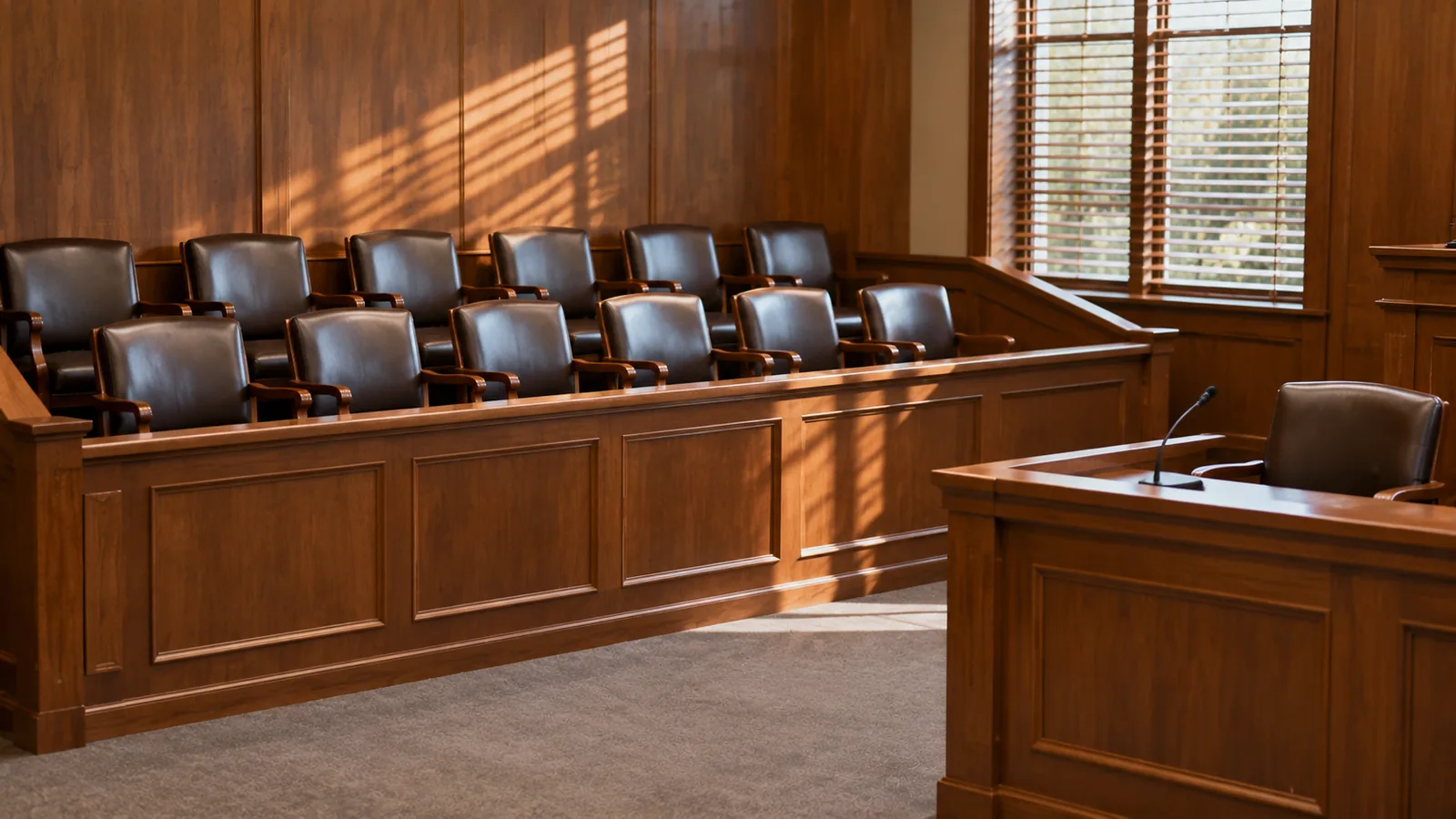
Most cases never reach a jury, but getting ready for one is what tells you what the evidence will really support. That preparation should shape the decision you make at mediation.
| Stage | What happens |
|---|---|
| Mediation | A neutral mediator helps both sides try to settle. |
| Jury selection (voir dire) | Lawyers question potential jurors about bias. |
| Trial | Witnesses, exhibits, and experts present each side. |
| Charge and verdict | The judge instructs the jury, and the jury answers questions. |
| After the verdict | Motions, appeals, and payout can still change the outcome. |
This guide is part of the Target injury knowledge hub. To talk with a lawyer about your case's next stage, tell us about your Target fall or call (214) 200-4878.
How should you prepare for mediation?
Go in knowing the weak spots as well as the strong ones. You shouldn't hear about a serious problem for the first time from the mediator.
Prepare, with hypothetical examples
- A short timeline, such as spill visible at 3:40, fall at 4:05, cone at 4:09.
- The key exhibits, such as the Camera 14 clip and the sweep log.
- Damages support, such as surgery records and lost-pay stubs.
- Known weaknesses, such as a prior knee injury in 2019.
- What matters to you, such as timing, confidentiality and future care.
You decide whether to settle. Your lawyer advises.
What should the mediation presentation include?
A clear story and the evidence for it, not hundreds of unsorted pages.
| Include | Avoid |
|---|---|
| Video with displayed times and any known clock offset. | An edited clip that hides gaps. |
| Recoverable medical expenses. | Billed charges presented as recoverable. |
| Future care a doctor recommends. | A projection built on "might need surgery." |
| An honest note on prior conditions. | Pretending they don't exist. |
How do you compare offers?
By what you'd actually receive, not the headline number.
What to confirm on each line
- The percentage in your signed agreement, for the fee.
- The itemized amount to date, for case expenses.
- Final figures or a reserve, for liens and repayments.
- Who is released and what's given up, for release terms.
- When funds arrive and any approvals needed, for payment timing.
Ask how confidentiality, indemnity language or structured payments would affect you. Tax and benefits questions may need separate professional advice.
What if mediation fails?
Find out what blocked agreement and what could change it.
The next step for each sticking point (hypothetical)
- A deposition of the employee who walked the aisle at 3:52, for how long the spill sat there.
- A human factors analysis of the sightline, for whether the sign was visible.
- An updated opinion from the orthopedist, for future surgery.
Cases often settle later as the evidence firms up. Preparation for court deadlines has to continue in the meantime.
What is voir dire?
It's jury selection: the lawyers and judge question potential jurors to find out whether anyone's views would keep them from following the law.
| Belief to explore | Neutral way to ask (example) |
|---|---|
| Stores should pay for every injury. | Does anyone think a business is automatically responsible when a customer gets hurt? |
| People who fall weren't careful. | Does anyone think a shopper can never recover because they should always watch the floor? |
| Distrust of pain claims. | Could you consider damages for pain if the evidence supports them? |
| Circumstantial evidence. | Would anyone refuse to consider it even if the judge allows it? |
The goal is to find bias, not to get jurors to commit to a result or a dollar figure before hearing evidence.
What limits apply to jury selection?
Strikes for cause need a legal basis on the record. Peremptory strikes can't be used to discriminate [S13].
Lawyers may ask about retail jobs or prior falls, follow up on a strong stated belief and use a consultant to organize juror information. They may not ask jurors to decide liability in advance, strike jurors based on race or sex or use stereotypes in place of answers.
What should an opening statement promise?
Only what the evidence will show.
A strong opening sticks to points such as where the spill was, when it appeared, what the store did and didn't do and how the injury changed your life. A risky one makes claims about secret corporate policies, promises an exhibit that may be excluded or accuses the store of destroying evidence without a ruling.
In what order do witnesses testify?
Whatever order makes the case easiest to follow, subject to availability and the rules of evidence.
What each witness covers
- You, on what you saw and how the injury affects you.
- A shopper, on the spill's appearance and timing.
- A store manager, on what the records mean.
- An expert, on specialized questions, after the facts are in.
- Family, on changes they've observed, not diagnoses.
Some exhibits need a records custodian to lay a foundation, so plan for schedule changes.

How is direct testimony kept credible?
With open questions and honest answers.
Credible testimony says you can garden for 20 minutes now, not two hours, separates what you saw from what you learned later and says "I don't remember" when that's true. It doesn't claim you can't do anything at all, repeat what someone else told you as your memory or fill gaps with guesses.
How are the other side's experts cross-examined?
By testing the assumptions behind the opinion.
What to ask each type of expert
- Floor testing, on whether the surface and the liquid were the same and the instrument was calibrated.
- Video analysis, on frame rate, compression and clock offset.
- Medical, on whether the expert reviewed the records from before the fall.
A concession that spills can be dangerous isn't agreement that the store had notice. The expert's fees may be relevant, but they don't replace a challenge to the method.
What makes a good demonstrative?
One that's traceable to the evidence.
What to label each exhibit with
- The source and that it's not to scale, for a route diagram.
- Displayed times and corrected times, separately, for a timeline.
- Which parts are generic anatomy, for a medical illustration.
- That it illustrates a theory, not a recording, for an animation.
Get rulings on disputed exhibits early enough to revise them.
Why does the jury charge matter?
The questions the jury answers have to match the theory tried and the evidence. A mismatch can undo a verdict [S9][S13].
Proposed questions get drafted early, because they shape what evidence is needed, and revised as the evidence comes in, because the proof may shift. Objections have to be made and kept, because they preserve issues for appeal.
Is a verdict the same as getting paid?
No. Fault percentages, settlement credits, interest, post-trial motions, appeals, liens, and fees can all affect the amount and the timing.
After the verdict
- Your share of fault applied.
- Credit for other settlements.
- Post-trial motions or appeal.
- Fees, expenses and liens.
The possible effect of each, in the same order.
- A lower judgment.
- A further reduction.
- Months or years of delay.
- Deductions from what you receive.
Why talk to Aaron Herbert about trial?
Aaron A. Herbert is Board Certified in Personal Injury Trial Law by the Texas Board of Legal Specialization [S1][S3]. That's directly relevant to contested litigation, but it doesn't guarantee a verdict or a settlement.
Ask the firm
- How do you prepare for mediation?
- How do you approach jury selection?
- What happens after a verdict?
A useful answer includes these, in the same order.
- A timeline, exhibits and a net estimate.
- Lawful questions aimed at bias.
- The steps before you're paid.
Frequently asked questions
| Question | Short answer |
|---|---|
| Will my Target case go to trial? | Probably not. Many cases settle or end on motions. |
| Can I reject a settlement offer? | Yes. You decide, with your lawyer's advice and any required approvals. |
| Does a verdict mean immediate payment? | No. Post-trial steps and liens affect timing. |
| Do I have to testify? | Usually yes, if the case goes to trial. |
Tell us about your Target fall
Tell us about your Target fall through InjuryAttorneyOfDallas.com or call (214) 200-4878. The Law Firm of Aaron A. Herbert, P.C. will explain what mediation and trial could look like in your case.
Bring, with hypothetical examples
- Any offer letters, such as the defense's last written offer.
- Your medical updates, such as the surgeon's latest note.
- Lien notices, such as the health plan's reimbursement letter.
- Questions about timing, such as when you need the case resolved.
Educational information only, not legal advice. Representation and fees require a written agreement. This independent resource is not affiliated with or endorsed by Target Corporation.
Related reading
- How to Sue Target in Texas, on the full claim and lawsuit process.
- Preserving Target surveillance video, on footage that may become a trial exhibit.
- First 72 hours after a Target fall, on where the evidence starts.
- Expert witnesses in Target cases, on preparing and testing experts.
- Target injury settlements and net proceeds, on comparing offers.
Sources
| Ref | Source | What it supports |
|---|---|---|
| S1 | State Bar of Texas, Aaron Alan Herbert | License and board certification. |
| S3 | Texas Board of Legal Specialization, Personal Injury Trial Law standards | Certification requirements. |
| S9 | United Scaffolding, Inc. v. Levine, 537 S.W.3d 463 (Tex. 2017) | Matching the charge to the theory. |
| S13 | Texas Rules of Civil Procedure, official compilation | Jury selection and the charge (Rule 278). |

ABOUT THE ATTORNEY
Aaron A. Herbert
Founding Attorney
Board Certified in Personal Injury Trial Law
Aaron founded The Law Firm of Aaron A. Herbert in 2010 to focus on developing each client's case and seeking its maximum value. For over a decade, he has represented people seriously injured in major accidents and industrial catastrophes, pursuing trial verdicts and settlements while working to reduce the stress of litigation.
Education
- Texas A&M University · B.S., Criminal Justice, 1999
- University of Oklahoma College of Law · J.D., 2002; graduated in the top of his class
Trial experience & approach
Aaron earned numerous jury verdicts at boutique personal injury litigation firms. According to his biography, he spent a year as the top-earning litigation attorney at a firm that frequently appeared in verdict searches as having one of the highest numbers of trial wins in Texas. At another Dallas personal injury firm, he moved from managing pre-litigation attorney to managing litigation attorney over seven years as the firm grew into one of Dallas's largest personal injury firms.
His biography describes a reputation as one of America's most aggressive trial lawyers, with noteworthy recoveries from judges and juries and substantial pretrial settlements. Most of those settlements included confidentiality agreements requested by the defense. Aaron has said the recoveries were justified by the injuries and losses involved, which no amount of money could make someone choose to experience.
His approach combines passion, preparation, persistence and courtroom imagination. He believes a well-supported, engaged and motivated team working cooperatively helps deliver strong representation, with the goal of achieving the best possible result for every client.
Dallas roots, military service & publication
Born and raised in Dallas, Aaron enlisted in the United States Marine Corps after high school and later received an Honorable Discharge. He completed his university and law degrees after his military service and became a lifelong Sooners football fan in law school.
Publication: “Litigating Dog Bite Cases,” Texas Dog Law Seminar, Dallas, 2009.
Professional affiliations & recognition
Professional affiliations and recognition listed in Aaron’s biography:
- State Bar of Texas
- American Bar Association
- Association of Trial Lawyers of America (now American Association for Justice)
- Texas Trial Lawyers Association
- Dallas Trial Lawyers Association
- Dallas Bar Association
- Tarrant County Bar Association
- Million Dollar Advocates Forum
- The National Trial Lawyers – Top 100 Trial Lawyers