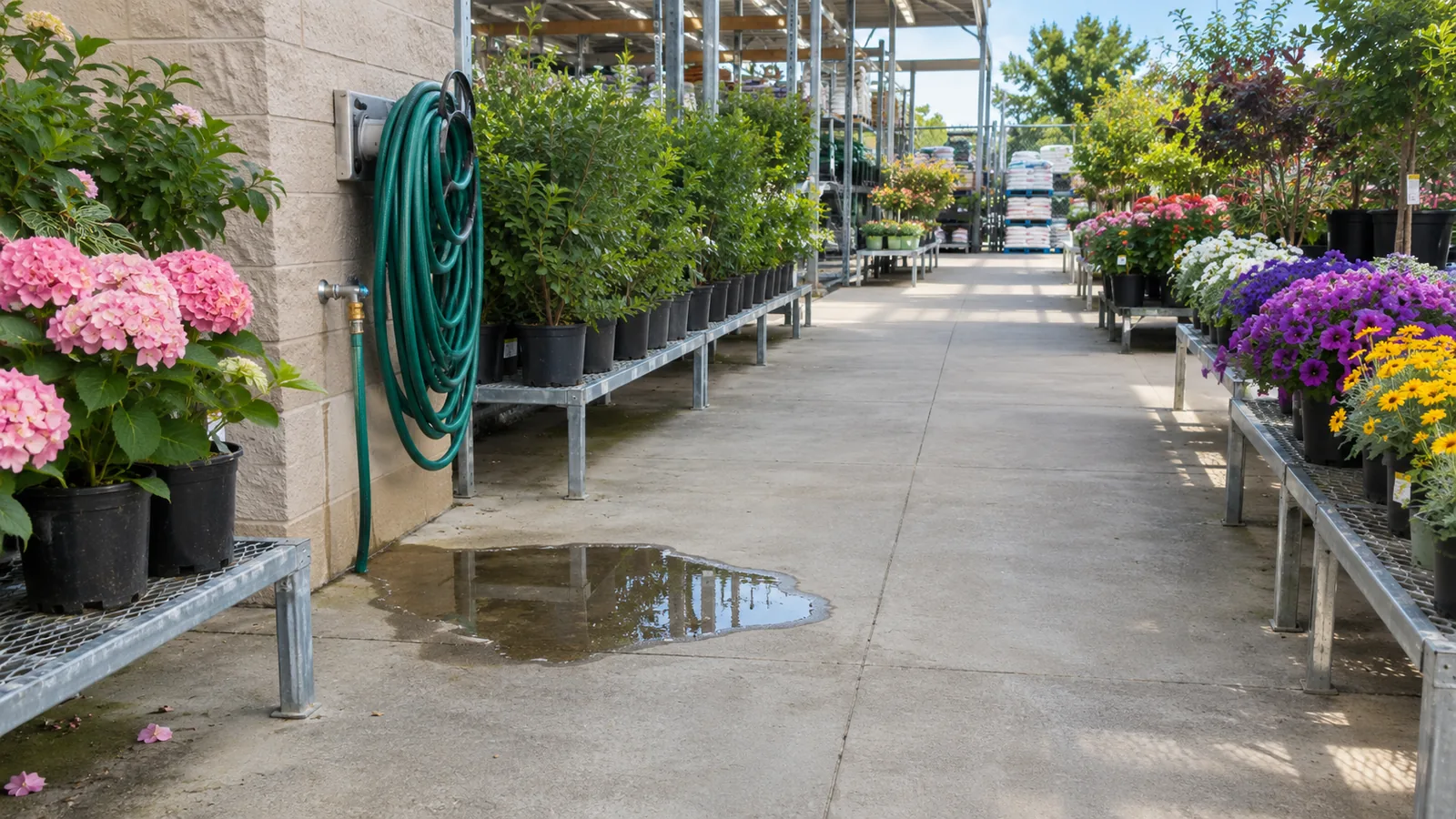
Illustration: In a garden-center case, the source of the water and how long it sat there both need proof.
Most Texas slip-and-fall cases against a store turn on one question: did the store know, or should it have known, about the hazard before you fell? That's the notice element, and it's where many Home Depot claims are won or lost. To prove it, you need evidence that an employee actually knew about the condition, or that it was there long enough that the store should have found it.
Short answer
- You must prove notice.
- A nearby employee isn't enough.
- Time is the key fact.
- A policy isn't proof.
What each means for you, in the same order.
- Texas law asks whether the store actually knew about the condition or whether it existed long enough that the store should have found it.
- The Texas Supreme Court has said proximity alone only shows the store could have found the hazard.
- Evidence of how long the spill, strap or water was there usually decides constructive notice.
- An inspection policy or a missed check can help, but it doesn't prove the store knew about your hazard.
This guide is part of the Home Depot Injury Knowledge Hub. For the full case framework, see the Home Depot litigation guide.
What does "notice" mean in a Texas Home Depot fall case?
Notice means the store knew about the dangerous condition, or should have known about it, before the fall. A customer injured by a condition on the premises generally has to prove this as part of a premises liability claim.
Three common ways to show it
- The store created the condition, such as when an employee spilled water, left a packing band or set out a display that caused the fall, shown by video, witness accounts or stocking records.
- Actual notice, such as when someone told an employee, or an employee saw the hazard, before the fall, shown by a customer's warning, a radio call or a work order.
- Constructive notice, such as when the hazard was there long enough that a reasonable inspection would have found it, shown by time-stamped video or witnesses who saw it earlier.
A photo of liquid on the floor after you fell proves the liquid was there. It doesn't prove how long it was there or who knew about it. The same picture fits a spill from ten seconds earlier and a leak from an hour earlier, and only the rest of the evidence can tell those stories apart.
Why isn't an employee standing nearby enough?
Because Texas courts require proof of time, not just closeness. In Wal-Mart Stores, Inc. v. Reece (Tex. 2002), the Texas Supreme Court held that an employee's proximity "merely indicates that it was possible" for the store to discover the condition. There must be some proof of how long the hazard was there.
Proximity still matters. The court said that how close employees were and how conspicuous the hazard was can affect how much time is enough. But it can't replace time evidence entirely.
In Reece, 81 S.W.3d 812, a customer slipped on a puddle of clear liquid at a store snack bar. An employee was about five to eight feet away and hadn't noticed it. Nothing showed how long the spill had been there, so there was no constructive notice, and the result was a take-nothing judgment.
In Wal-Mart Stores, Inc. v. Spates, 186 S.W.3d 566 (Tex. 2006), a clear plastic six-pack ring sat on the floor three to five feet behind an employee for 30 to 45 seconds. That was no evidence of constructive notice, and the court reinstated summary judgment for the store.
Neither case sets a fixed number of minutes. A large, bright object in a main aisle may need less time than a clear puddle in a corner, so the details of your hazard matter.
How do you prove actual notice?
You prove actual notice with evidence that a specific person at the store learned about the specific hazard before the fall. A warning from another shopper, an employee's radio call or a maintenance ticket can all qualify if they match your location and condition.
For each report, a lawyer will want to pin down five things.
- Who saw the hazard first, because a firsthand observer carries more weight than someone repeating a rumor.
- Who received the report, because notice to an employee with responsibility for that area is stronger than a passing comment to a cashier.
- Exactly what was reported, because "Water by the hose display" is more useful than "a mess somewhere in garden."
- When it was reported, because the time has to come before the fall, with a reliable time anchor.
- What happened next, because a response, or the lack of one, can matter to the question of reasonable care.
| What you heard | How to treat it |
|---|---|
| "Someone mentioned water earlier." | A lead. Ask for records, but don't call it proof that a manager ignored this spill. |
| "I told the guy in the vest about it." | Stronger. Find out which employee, when, and what was said. |
| The store says the report was about the restroom. | Check the location records before arguing either way. |
An employee statement also needs a foundation before it can be used as the company's admission. Record who said it, the exact words and the setting. The Texas Rules of Evidence decide what can come in and for what purpose.
How do you prove constructive notice with a timeline?
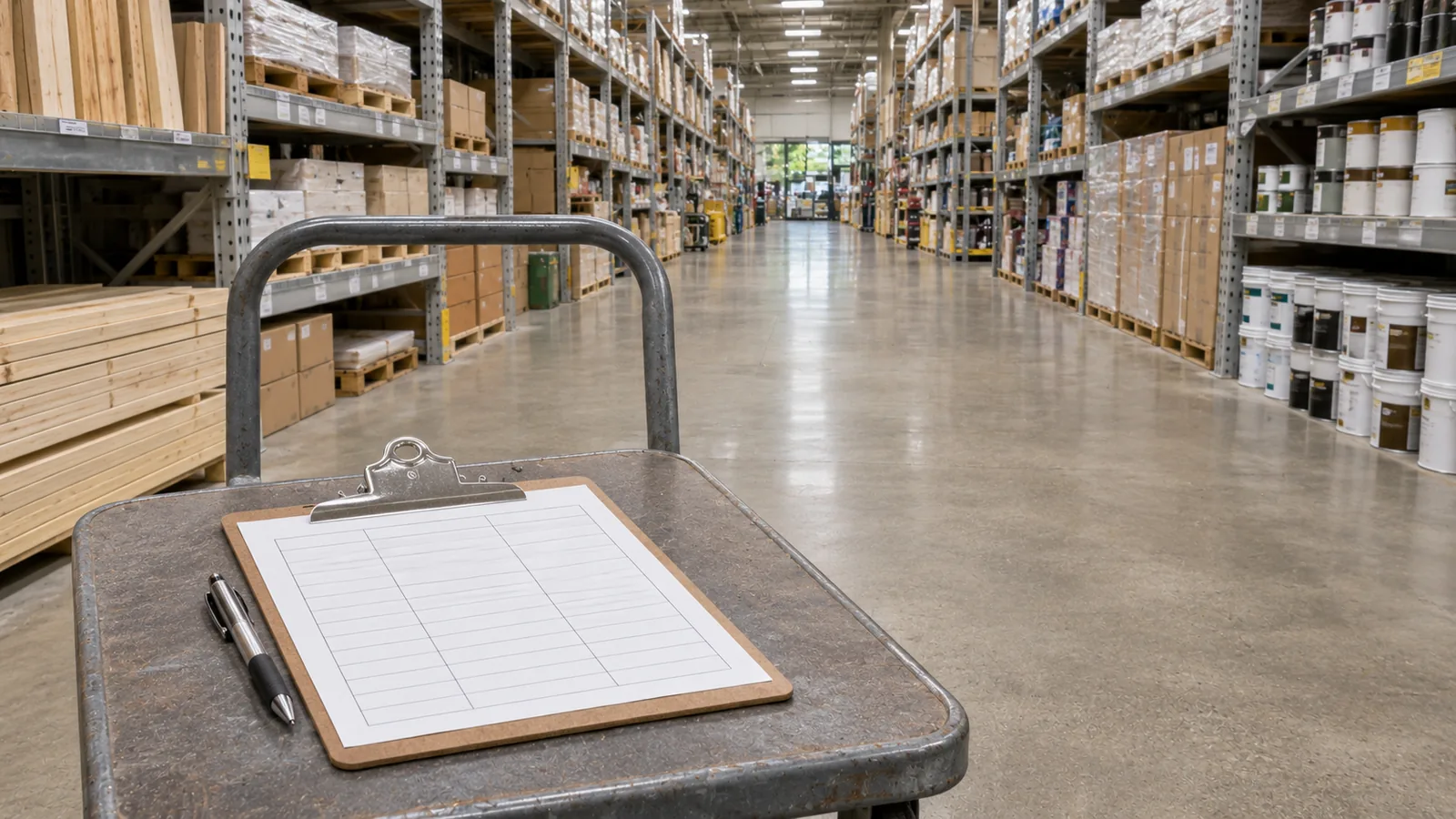
It takes two reliable times: the earliest sighting of the hazard and the last view of the floor before the fall. Video timestamps, receipts, texts and work orders can supply them, but each one needs checking. A text sent at 5:20 p.m. doesn't mean the person first saw the spill at 5:20.
Take a made-up example. Ana falls in a lumber aisle at 5:30 p.m.
| Time | What the file shows |
|---|---|
| 5:10 | Last logged inspection. |
| 5:15 | Video shows the aisle, but a cart blocks the floor. |
| 5:24 | Cart moves away. |
| 5:25 | An object shows up where Ana later falls. |
| 5:30 | Ana falls; a witness says a strap was there "for a while." |
So the video proves about five minutes, not twenty.
| Lead | What has to be checked | What's still unknown |
|---|---|---|
| Witness saw a packing strap | Her original words and an independent time anchor. | What "for a while" means. |
| Inspection logged at 5:10 | What the entry records, which route, and who did it. | Whether the strap was there then. |
| Object on video at 5:25 | Whether it's the same strap, in the same place. | Whether image quality supports that. |
| Cart blocks the view | Other camera angles. | What happened between 5:15 and 5:24. |
Another camera showing a customer dropping the strap at 5:24 would hurt the claim. A radio log mentioning a strap in that aisle at 5:12 would help it. Look for both.
Two time gaps that are easy to confuse
- Time since the last inspection, which measures how long the store went without checking the area. Say the last check was thirty minutes before the fall.
- Time the hazard was visible, which measures how long the store had a chance to find this hazard. Say the strap first appears on video three minutes before the fall.
Those are two different facts, and a demand letter shouldn't swap one for the other.
Do inspection logs and store policies prove notice?
No, not on their own. A written inspection procedure can identify who was assigned to the area, what records exist and how problems get reported. That makes it a useful map for finding witnesses and documents.
| A policy or log can | A policy or log can't |
|---|---|
| Show who was responsible for checking the area. | Prove the store knew about your specific hazard. |
| Point to records that should exist. | Set the legal standard of care by itself. |
| Help test an employee's testimony. | Turn every missed check into a separate claim. |
| Show a gap in documentation. | Prove that no one actually walked the aisle. |
Ask which version of a policy applied at that store on that date. A policy found online may not have governed the location. A log entry at 2:00 p.m. could mean the walk started, finished or was written up later, so the system's own witness should explain the fields.
The Home Depot litigation guide explains how discovery requests for these records should stay focused on the store, area and time window tied to your fall.
How is notice different in a garden center?
Garden centers raise their own questions because water, soil and plant debris are part of normal operations. Not every wet spot is an unreasonably dangerous condition, so the claim has to say exactly what the hazard was.
- A transient spill or puddle, for the source, how long it was there, complaints and inspection opportunities.
- A continuing source, like a leaking hose or fixture, for repair requests, when the leak started and who knew.
- Soil, gravel or plant material in the walkway, for display arrangement, stocking activity and cleanup routines.
- Algae, mildew or surface growth, for how long it takes to form, cleaning records and prior reports.
- Drainage problems, for slope, drain location, weather and who controls the area.
Prideaux v. Home Depot U.S.A., Inc. (S.D. Tex. Nov. 13, 2025) came out of the outdoor garden center at the Alvin store, where the alleged condition was water combined with algae and mildew. Summary judgment was denied on the premises claim, with fact issues on open and obvious and on the warnings, and granted on gross negligence. Nobody was found liable; the premises claim just moved forward.
Photograph the approach, the drainage direction, nearby hoses and any warning signs if you can do it safely. A later photo of the same spot may show a clean surface or a different pattern, so it can't stand in for the scene at the time of the fall.
What about a repair ticket or a recurring leak?
It depends on whether the ticket matches your hazard. Check the equipment number, the time, the wording, who got it and whether anyone fixed it.
| Record | What it may show | What it may not show |
|---|---|---|
| Ticket reporting floor water at the same station before the fall | Possible actual notice. | That the water stayed there continuously. |
| Ticket reporting low water pressure only | A problem with the equipment. | Water on the walkway. |
| Repair completed days earlier | The condition was addressed. | That it came back by the date of the fall. |
| Contractor service invoice | Witnesses and timing. | Notice to the store itself. |
If an outside contractor serviced the fixture, notice to the contractor isn't automatically notice to the store. Contract terms and what each company actually did will matter. An old leak at a different store doesn't prove knowledge of the condition at yours.
How should witnesses describe what they saw?
Witnesses should describe only what they personally saw and heard. Ask where they were standing, what the lighting was like, how far away they were and what blocked their view. A shopper facing away from the aisle may know when an employee walked by but not whether the employee looked at the floor.
| Ask | Avoid |
|---|---|
| "What did you see before the fall?" | "The spill was there a long time, right?" |
| "How do you know what time that was?" | Supplying a timeline for the witness to agree with. |
| "Did anyone tell you that, or did you see it?" | Mixing family conversations with memory. |
A witness who heard the duration from someone else can still help with other details. But each statement needs a clear source. At a deposition, the right person to explain software fields is the system's witness, not whichever manager happens to be available.
How does notice evidence hold up in court?
It has to be admissible by the time it counts. Leads are fine in a demand letter. In a summary judgment response, each piece needs a witness or record that can bring it in.
| Stage | What the notice evidence has to do |
|---|---|
| Demand and early negotiation | Show a credible route to proving notice. |
| Summary judgment response | Present admissible evidence on each element; under the 2026 version of Texas Rule 166a, a response is generally due within 21 days after the motion is filed unless the court or the parties allow otherwise. |
| Trial | Show the jury a timeline that labels what's proven and what's unknown. Mark the gaps honestly: with only two sightings, don't draw one long bar between them, since the defense will point that out. |
If key evidence is still missing, go after it early. Don't wait for a summary judgment motion to learn that an important employee was never identified or that an earlier video window was never requested. Our surveillance video guide covers how to ask for footage before it's overwritten.
Frequently asked questions
How long does a spill have to be on the floor for Home Depot to be responsible?
Spates found 30 to 45 seconds wasn't enough on its facts, but there's no fixed number. Texas courts look at how long it was there along with how visible it was and how close employees were.
Does it help if an employee was in the same aisle?
It can help, but it isn't enough by itself, because Reece requires some proof of how long the hazard existed.
Can I get Home Depot's inspection records?
You can usually request records about the area and time of your fall in discovery once a lawsuit is filed. A lawyer can also send a preservation letter early.
What if I don't know how long the water was there?
Say so. A lawyer may be able to fill the gap with video, witnesses or maintenance records.
Does a garden center fall work differently?
The same notice rules apply, but the investigation focuses on watering, drainage, debris and surface growth.
What should I do right after a fall?
Get medical care first. Then see our first 72 hours guide for what to document.
Sources
- Wal-Mart Stores, Inc. v. Reece, 81 S.W.3d 812 (Tex. 2002)
- Wal-Mart Stores, Inc. v. Spates, 186 S.W.3d 566 (Tex. 2006)
- Prideaux v. Home Depot U.S.A., Inc., No. 3:24-cv-00211, Doc. 53 (S.D. Tex. Nov. 13, 2025)
- Texas Supreme Court, Misc. Docket No. 26-9012 (Rule 166a) (for motions filed on or after March 1, 2026)
- Texas Rules of Evidence

ABOUT THE ATTORNEY
Aaron A. Herbert
Founding Attorney
Board Certified in Personal Injury Trial Law
Aaron founded The Law Firm of Aaron A. Herbert in 2010 to focus on developing each client's case and seeking its maximum value. For over a decade, he has represented people seriously injured in major accidents and industrial catastrophes, pursuing trial verdicts and settlements while working to reduce the stress of litigation.
Education
- Texas A&M University · B.S., Criminal Justice, 1999
- University of Oklahoma College of Law · J.D., 2002; graduated in the top of his class
Trial experience & approach
Aaron earned numerous jury verdicts at boutique personal injury litigation firms. According to his biography, he spent a year as the top-earning litigation attorney at a firm that frequently appeared in verdict searches as having one of the highest numbers of trial wins in Texas. At another Dallas personal injury firm, he moved from managing pre-litigation attorney to managing litigation attorney over seven years as the firm grew into one of Dallas's largest personal injury firms.
His biography describes a reputation as one of America's most aggressive trial lawyers, with noteworthy recoveries from judges and juries and substantial pretrial settlements. Most of those settlements included confidentiality agreements requested by the defense. Aaron has said the recoveries were justified by the injuries and losses involved, which no amount of money could make someone choose to experience.
His approach combines passion, preparation, persistence and courtroom imagination. He believes a well-supported, engaged and motivated team working cooperatively helps deliver strong representation, with the goal of achieving the best possible result for every client.
Dallas roots, military service & publication
Born and raised in Dallas, Aaron enlisted in the United States Marine Corps after high school and later received an Honorable Discharge. He completed his university and law degrees after his military service and became a lifelong Sooners football fan in law school.
Publication: “Litigating Dog Bite Cases,” Texas Dog Law Seminar, Dallas, 2009.
Professional affiliations & recognition
Professional affiliations and recognition listed in Aaron’s biography:
- State Bar of Texas
- American Bar Association
- Association of Trial Lawyers of America (now American Association for Justice)
- Texas Trial Lawyers Association
- Dallas Trial Lawyers Association
- Dallas Bar Association
- Tarrant County Bar Association
- Million Dollar Advocates Forum
- The National Trial Lawyers – Top 100 Trial Lawyers