
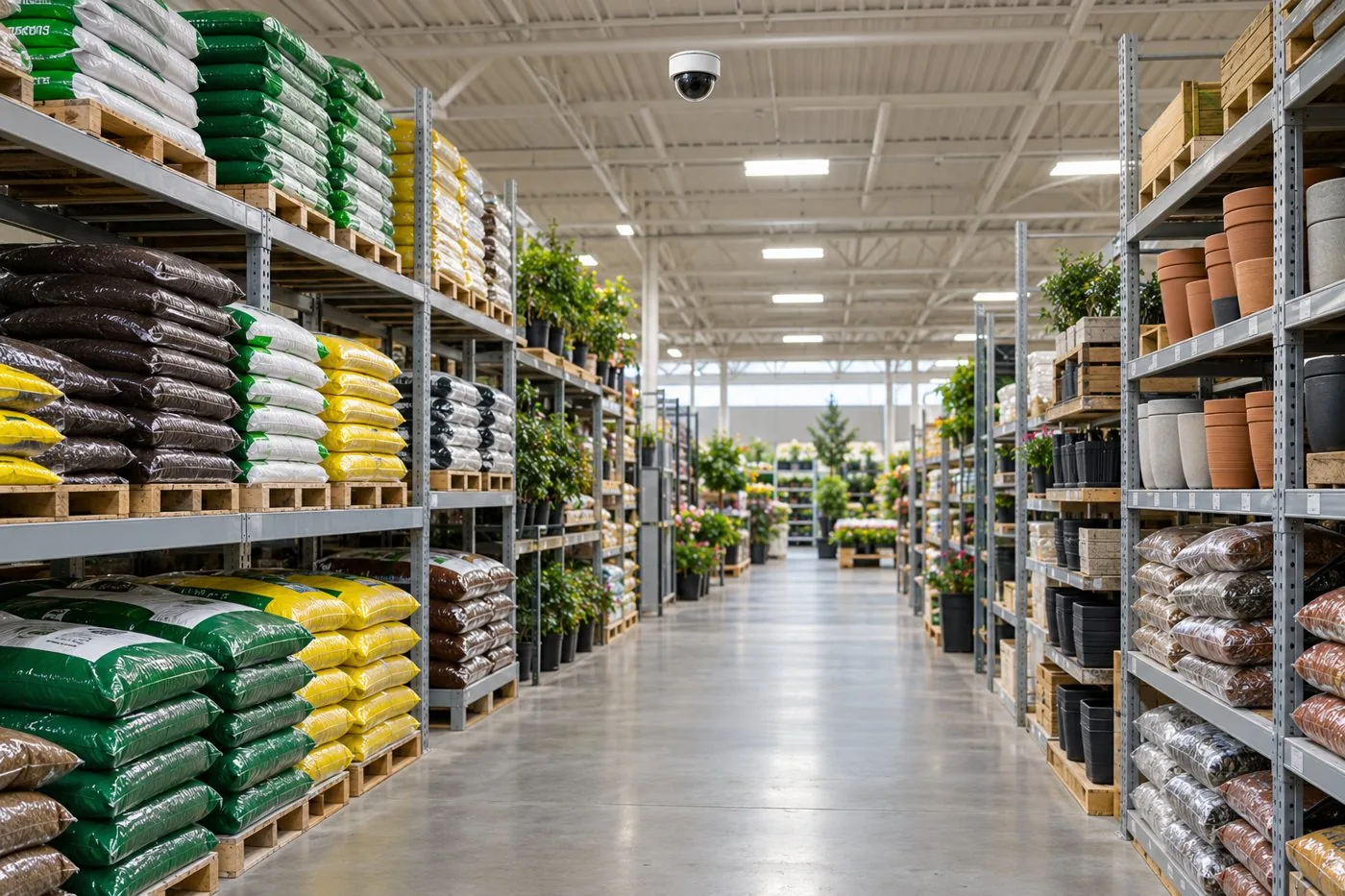
Illustration: Camera location and field of view can affect what a recording can establish.
Ask promptly for preservation of the recordings that matter, including a reasonable period before and after the fall.
Step | What it means in practice |
|---|---|
Identify the recordings | Name the store, department, approximate time, and the views that may show the approach, the floor, and the response. |
Preserve the originals | Ask for native files, export details, and timing information where they exist. |
Know the limits | A preservation request doesn't guarantee that footage exists, and it doesn't create an immediate right to receive it. |
Missing video | Lost footage doesn't automatically prove a claim or entitle anyone to a jury instruction. |
Hypothetical footage from the paint aisle at 3:19 p.m. may show what a dazed shopper on the floor never saw. Related reading: the first 72 hours guide and the full litigation pillar.
Define the question before the interval
Pick the time window from the disputed fact and each camera's view; no fixed number of hours fits every fall.
Part of the recording | What it may show |
|---|---|
The fall clip | Contact and mechanism, but often nothing about how long a hazard existed. |
Earlier footage | When the condition appeared, customer traffic, inspections, or a report to staff. |
Later footage | Employees who responded, cleanup, and where witnesses were standing. |
Hypothetically, a clip from 3:19 to 3:21 p.m. shows the slip but misses a 2:55 p.m. spill. Refine scope as camera maps arrive.
Location detail for the request | Hypothetical example |
|---|---|
Store and department | The garden center at a specific store address, near the bagged soil display. |
Approach and landmarks | Walking from the self-checkout lane toward the outdoor watering station. |
Approximate time | About 3:20 p.m., with the reason for each earlier and later period explained. |
Why several views matter | A self-checkout corridor camera may show the approach while a nearby aisle camera shows the floor. |
Separate systems | A landlord may control exterior footage, so a request sent only to the store may not protect it. |
Map cameras by the question they answer
At a home improvement store, the camera directly above a fall may not show the floor clearly.
Area | What a camera might show | What it might miss |
|---|---|---|
Lumber aisle | Handling activity and rack geometry. | The floor beneath a flatbed cart. |
Garden center | Watering activity and people moving through. | Enough detail to tell water from soil. |
Entrance | The route a shopper walked. | The height of a small projection. |
Checkout or display area | Employees responding to a complaint. | The floor behind a promotional display or watering station. |
Camera existence doesn't prove the critical event was recorded clearly. Ask what views actually existed, rather than assuming every visible camera was working, recording, or controlled by the same entity.
Zone on the location map | Interval that may be justified |
|---|---|
Event area and approach | Enough before the fall to test notice, and enough after to show the response. |
Moving equipment path | The equipment's approach, loading, and departure. |
Stationary band or pallet | When it was placed and later chances to discover it. |
Recurring leak allegation | A longer contextual period, with the reason stated in the request. |
Neighboring tenant's view | A separate preservation and production path, since it may belong to another custodian. |
Identify custodians and record systems
Ask who operates the system, who can export recordings, and whether an outside vendor is involved.
Question | Why it matters |
|---|---|
Who can watch playback? | A manager who can play video may not control retention settings or a permanent hold. |
Who can implement a hold? | The request should reach the person or department able to suspend routine deletion. |
Is a vendor or contractor involved? | A contractor that keeps work-order messages separately may need its own request. |
Is the corporate family one custodian? | No, so follow the control and discovery rules for each entity. |
Electronic evidence can go beyond video. Don't assume every category exists at every store, and a national retailer's size doesn't prove a particular database holds the entry you need.
Record category | Likely source to map |
|---|---|
Incident report attachments | The store's incident reporting process. |
Employee messages about the event | Systems the employees actually used, identified through investigation. |
Inspection entries and maintenance tickets | The operator or a maintenance contractor. |
Export logs | Whoever exported the footage, including any vendor. |
Draft a preservation request with specifics
A lawyer-adapted request should give the recipient enough facts to find the right records.
Element | What to include |
|---|---|
The occurrence | Location, date, approximate time, the claimant, and the mechanism. |
Cameras or zones | Describe them from known facts, without inventing camera numbers. |
Recordings | Relevant native recordings, exports, associated metadata, and available system time information. |
The export process | Records about how footage was preserved and exported. |
Before and after | An explanation of why footage on each side of the event may matter. |
Other electronic sources | Incident attachments, authorized maintenance communications, equipment records, or messages about the occurrence, described by category and tied to the disputed issue. |
The hold | A request to suspend routine destruction of relevant material in the recipient's possession or control, consistent with the applicable duty. |
A public article is not a finished legal notice. Counsel tailors scope, recipients, and timing to the case, and an organizational witness can later explain the actual platform, custodians, retention settings, and export process.
Common assumption | What actually applies |
|---|---|
"Save everything forever" protects me. | A focused list of the records and issues that will reasonably matter is more useful and easier to defend. |
The template is self-executing law. | A recipient may dispute scope, control, or whether litigation was reasonably anticipated. |
Sending an email starts a production deadline. | Preservation is different from voluntary disclosure, and a retailer may preserve while disputing access, scope, or privilege. |
A refusal at the service desk means the footage was destroyed. | That refusal is not proof of destruction. |
I can look at employee systems myself. | Never access employee systems or use someone else's credentials. Counsel can use voluntary requests, discovery, subpoenas, and court relief. |
There's a set Home Depot retention period to wait for. | This resource has no verified Home Depot-wide retention schedule, so act promptly and record delivery and follow-up. |
Track each request by status
Five different statuses tell counsel which records are actually protected.
Status | What it proves | What it doesn't prove |
|---|---|---|
Requested | The request went out on a known date. | That anyone received it. |
Acknowledged | The letter arrived. | That the files were held. |
Preserved | Someone says a clip was saved. | That the requested interval and every relevant view were included. |
Produced | Files were delivered. | That the export is complete or the clock is correct. |
Disputed | The recipient objects to scope, control, or access. | Who will win the dispute, which may need a court ruling. |
Keep every response. A clear request-and-response history helps explain any relief later sought from the court.
Missing-piece question | What the answer can reveal |
|---|---|
Does the 2:50 p.m. native recording still exist on the system? | If yes, the short clip was an export choice; if no, ask when it was overwritten. |
Who picked the one-minute export window, and why? | A manager's guess points to a scope dispute; a deleted file points to a preservation issue. |
Were other views reviewed? | Whether another camera holds the same information. |
Did the date search use the correct clock? | Whether an ordinary retrieval error explains the missing file. |
Was a file left out because it needs special software? | Whether a technical fix resolves the apparent gap. |
Preserve original exports and working copies
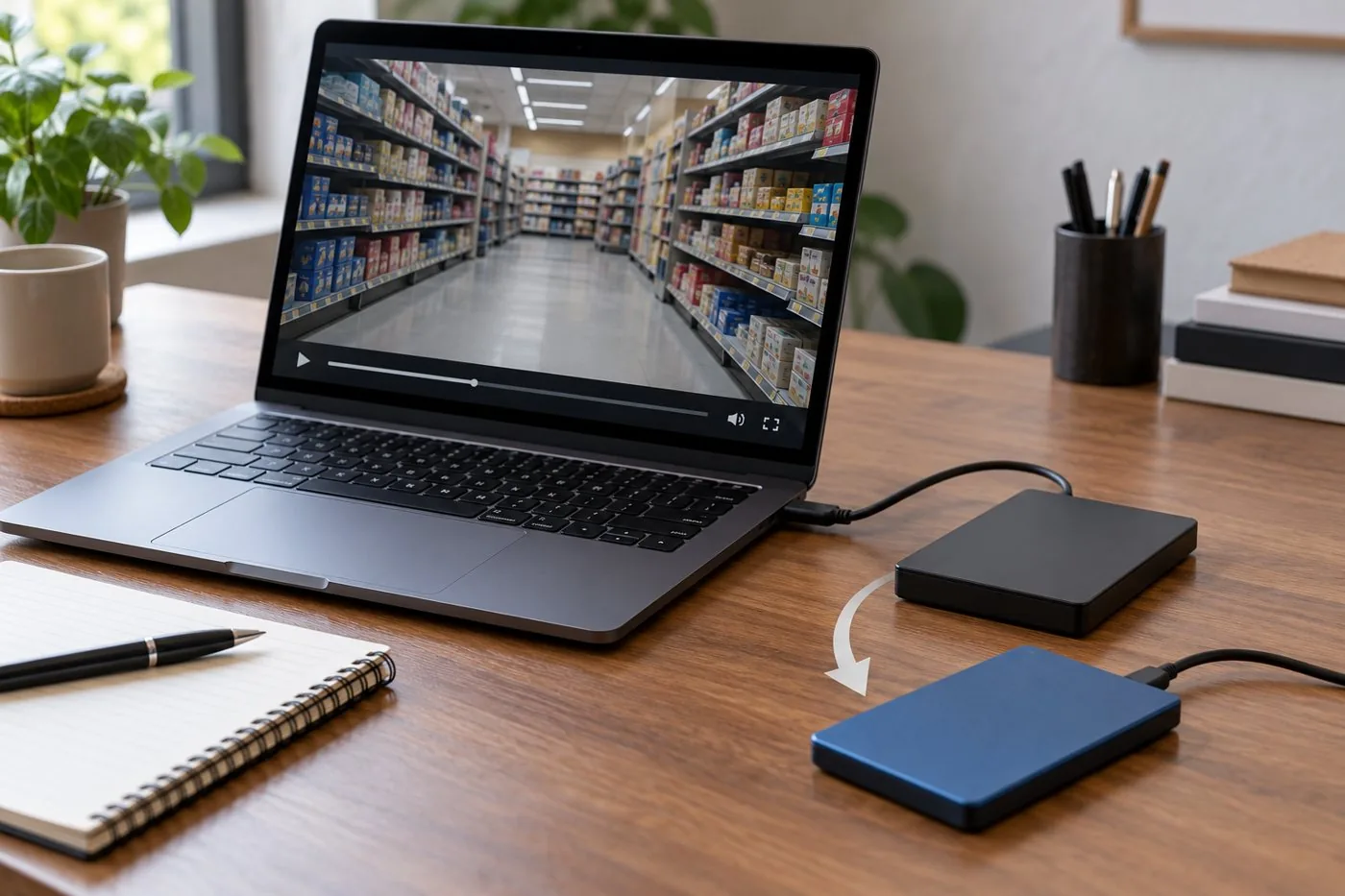
Keep the received file untouched and do all review on separate working copies.
Handling step | Example log entry |
|---|---|
Request the format | Native or original-format export, the player software, and any ordinary export report. |
Log receipt | Source, received date, filenames, file sizes, format, and any explanation supplied with the export. |
Compare scope | The requested views and intervals listed beside what was delivered. |
Protect the original | A read-only original, with playback tested without modifying it. |
Document identity | A file hash and the tool used, recorded in a handling log where appropriate. |
A screen recording of playback may drop metadata, lower image quality, or change frame timing. It can still help, but its limits should be stated plainly, and it shouldn't be called "original video."
What a matching hash shows | What it doesn't show |
|---|---|
The collected file hasn't changed since collection. | That the camera clock was correct. |
Copies match the file received. | That the export includes every recorded frame or relevant interval. |
The handling log is consistent. | That the original system captured every relevant event. |
For phone footage from a client, keep the original file and the device information. Messaging apps may compress or rename files, so ask the sender to preserve the original instead of sending repeated screenshots.
Review an export before using it
Watch the footage at normal speed first, then prepare any working aids.
Review step | How to handle it |
|---|---|
Normal-speed playback | Record pauses, jumps, missing channels, and views blocked by people or merchandise before picking stills. |
Stills and slowed playback | Label them as working aids and keep the ordinary-speed sequence with its surrounding context. |
Enlargement | It can't recover detail the camera never recorded. |
Low frame rate | Tell it apart from a deliberate edit. |
Unfamiliar file format | Ask the custodian about the export process instead of inferring misconduct. |
Technical help | Consider it when proprietary players, shifting timestamps, or re-encoded copies affect interpretation. |
Demonstratives in court | Any demonstrative needs the proper foundation under the applicable evidence rules. S7 S11 |
Digital expert | Can explain compression or frame limits, but can't name gravel or a puddle that the pixels don't show. |
Log entries should say only what the frame shows.
Hypothetical log entry | Better wording |
|---|---|
"Pallet placed 2:41 p.m." | "Pallet first visible at 2:41 p.m. on channel 4; earlier floor view blocked by a display." |
"Employee saw the spill." | "Employee walked through the aisle at 2:47 p.m.; the video doesn't show whether the employee looked at the floor." |
"Floor clear at 2:30 p.m." | "No object visible at 2:30 p.m.; transparent liquid may not appear at this resolution." |
Test clocks, continuity, and visibility
Check each of these three issues separately, because a recording can pass one and fail another.
Issue | How to test it | Caution |
|---|---|---|
Clock | Compare the timestamp with a register transaction, a documented call, or an employee entry. | Cameras can use different settings, and daylight saving changes, manual adjustments, or export steps can shift the displayed time. |
Continuity | Ask how the system works and check logs or custodian testimony when relevant. | Motion-activated recording, export limits, dropped frames, or a blocked view can create apparent gaps. |
Visibility | State exactly what the frame shows and what it doesn't. | A continuous camera can record an aisle and never show clear liquid on the floor. |
Offsets and gaps | Record an offset only with supporting evidence. | A jump isn't proof of deletion, and an unexplained gap isn't automatically harmless. |
Three hypothetical readings follow.
Hypothetical situation | Reasonable reading |
|---|---|
A display blocks the area until the shopper falls. | The recording can't show how long a hazard was there; the notice article explains how that limits duration analysis. |
The recording jumps 40 seconds. | Investigate system settings and logs before drawing any conclusion. |
Two cameras disagree by 90 seconds. | Anchor both to an independent event and document the offset. |
Three cameras and one 3:20 p.m. fall
In this hypothetical, a shopper falls beside a mulch display at 3:20 p.m., and three views were produced.
Recording | Potential use | Important limitation |
|---|---|---|
One-minute lead-in, starting at 3:19 p.m. | Approach and mechanism. | Little information about earlier duration. |
Upper-body view, 2:50 to 3:30 p.m. | Traffic and employee movements. | The floor condition may be invisible. |
Floor view, from 3:05 p.m. onward | Position and observable timing. | Identity and clarity of the condition still need verification. |
Suppose the floor view shows an object at 3:08 p.m. and again at the fall. Counsel should confirm it's the same object and that the view stays clear the whole time.
If the floor view shows | Proper analysis |
|---|---|
A clear, unblocked view from 3:08 to 3:20 p.m. | The 12-minute interval supports analysis, subject to clock and identity checks. |
A cart blocking the area for six minutes | The recording may not prove uninterrupted presence, so mark the gap instead of smoothing it into a continuous 12-minute hazard. |
A demonstrative timeline | Cite the source for each point and mark unknown intervals. |
A proposed reconstruction | Disclose its assumptions, never add an animated object that isn't visible, and get the needed evidentiary rulings before showing it as proof. |
What garden and lumber footage can't show
Keep a two-column ledger for each recording.
Footage | Can resolve | Can't reliably resolve |
|---|---|---|
Garden-center recording | Personnel movement, watering activity, signs, the route, and cleanup. | Surface composition, microscopic growth, friction, or exact moisture depth. |
Lumber event | Visible movement of boards, carts, and people. | A contact hidden behind the rack. |
An expert shouldn't turn a blocked view into positive proof of a preferred mechanism. When testimony conflicts with the recording, identify the precise discrepancy before claiming anyone is dishonest.
Conflict | Possible explanation to test |
|---|---|
A witness gives a different time. | The witness may remember the sequence correctly but estimate the time poorly. |
A witness describes a different view. | The camera angle differs from the person's perspective. |
The recording corrects one detail. | Keep the useful part of the witness's account and acknowledge what the video corrects. |
Missing footage versus footage that can't answer
Two very different problems can look alike when a clip seems incomplete.
Problem | Example | Next step |
|---|---|---|
Image limitation | A clip accurately shows a customer fall but reveals nothing about a transparent puddle. | Look for other views, records, or witnesses; this isn't necessarily a deletion. |
Short export | A clip begins after a material event because only a brief interval was exported. | Ask whether the earlier native recording exists and who chose the interval. |
Possible loss | The earlier recording no longer exists after a request. | Preserve the correspondence; it may show a retrieval problem, a scope disagreement, or a preservation issue for the court. |
What Texas spoliation law requires
Brookshire Brothers puts key spoliation decisions with the trial court and addresses duty, breach, prejudice, and remedies. S5
Common belief | What the framework says |
|---|---|
Missing video is an automatic admission. | It isn't, and the analysis is fact-specific. |
An adverse-inference instruction follows every retention problem. | That instruction isn't the routine result, and each remedy needs its own showing. |
A short retained clip proves a missing liability element. | It raises scope questions but doesn't establish the missing element. |
The law in this area never changes. | Counsel should check the precise record and current subsequent treatment of the cases. |
A spoliation motion needs specific proof. If the lost interval is the only evidence of hazard duration, explain that link without claiming to know what the footage would have shown.
What the motion should establish | Hypothetical example |
|---|---|
What existed | A native recording of aisle 14 that ran all afternoon. |
Who controlled it | The store operator's system, not a neighboring tenant's. |
When duties arose | The date the request arrived or litigation was reasonably anticipated. |
What was retained | Only a one-minute clip starting at 3:19 p.m. |
How the loss causes prejudice | No other camera or witness shows when the condition appeared. If other sources supply the same information, prejudice may be weaker. |
The client has preservation duties too. Keep relevant photos, messages, and posts, and don't delete material because it looks unfavorable.
Client concern | How to handle it |
|---|---|
A post looks bad for the case. | Keep it and tell counsel; selective deletion can start a separate dispute. |
Some content is private. | Counsel can address privacy and discovery scope. |
Phone storage is full. | Back up the originals before clearing anything. |
Get production through the proper procedure
The route to the footage depends on whether a lawsuit has been filed and which court has the case.
Stage | Available tools |
|---|---|
Before suit | Counsel may ask for cooperation and evaluate presuit remedies. Texas Rule 202 requires its own grounds and judicial findings, and it is not unlimited discovery before deciding whether to sue. S6 |
After suit in state court | The governing Texas discovery rules, court orders, and proportionality standards. S6 |
In federal court | Federal procedure differs from Texas state practice. S11 |
Incomplete production | Identify the precise gap: a missing camera, a wrong clock in the date search, or a file left out for lack of software. |
Start on authentication well before trial. A persuasive clip that can't be used reliably may be worth less than a plainer, well-supported record. S7
Authentication task | Example question |
|---|---|
Source and system | Who can explain where the recording came from and how the system works? |
Changes in working copies | Which copies have captions, enlargements, or altered playback speed? |
Foundation witness | Can the organizational witness describe the platform, custodians, and export process? |
What to expect from counsel
Aaron Herbert's State Bar profile lists his board certification in Personal Injury Trial Law. S1
Question to ask the firm | A useful answer explains |
|---|---|
Was a preservation notice sent, acknowledged, and followed by a production request? | Which of those separate milestones has actually happened. |
How will you preserve recordings and verify timing? | A method that can be explained and checked, with no promise that video will prove the store wrong. |
How will you use video to test notice? | How footage before the fall, not just the fall itself, connects to the required proof. |
Which missing record could change my case? | Whether formal discovery is appropriate to get it. |
How will you check whether the system is complete? | How the result ties to the elements the claim must prove. |
No lawyer can promise immediate access to a private retailer's recordings because an injury happened. Good, missing, or partial footage can each strengthen a case, expose a weakness, or narrow the issues enough to avoid unnecessary expert costs.
What you can do now | Why it helps |
|---|---|
Give the exact location, date, and store address. | It lets counsel describe the right zones and interval. |
Keep your original photos and messages. | Originals preserve metadata that copies may lose. |
Disclose earlier calls, emails, or statements. | Counsel can evaluate them only if they know about them. |
Say promptly if someone told you footage may be deleted. | It may change how fast preservation steps happen. |
Contact the Law Firm of Aaron A. Herbert, P.C. with what you have. | You don't need to know the camera model before asking for an evaluation. |
Read the knowledge hub for related resources. | The notice and inspection evidence article covers employee knowledge, and the discovery and corporate depositions article covers who can explain the system or export. |
Sources and legal context
Each source below applies only to the facts, law, and orders of a given case. Cases listed aren't firm results, and the hypotheticals aren't client matters.
Ref | Source | What it supports |
|---|---|---|
S1 | Aaron Herbert's Texas license and board certification in Personal Injury Trial Law. | |
S5 | The Texas spoliation framework: duty, breach, prejudice, and remedies decided by the trial court. | |
S6 | Texas Judicial Branch current rules directory and Texas Rules of Civil Procedure compilation | Current Texas civil procedure, including Rule 202 and the discovery rules. |
S7 | Foundation and authentication of recordings and demonstratives. | |
S11 | US Courts current Federal Rules of Civil Procedure and current rules directory | Federal procedure and evidence rules, which differ from Texas practice. |