

Illustration: Record the walking route and surrounding conditions when it's safe to do so.
Protect your health, report the fall accurately, and keep the information that could disappear.
Priority | What it means in practice |
|---|---|
Health first | Get medical care that fits your symptoms before any evidence work. |
An accurate report | Tell the manager where and roughly when you fell, plus what you did and didn't see. |
Original records | Keep original photos, witness contacts, receipts, footwear, and messages. |
Prompt legal advice | Ask a lawyer soon about relevant video, responsible parties, and deadlines. |
The 72-hour label | It organizes the first few days. It isn't a statutory filing period, and it doesn't promise that evidence will last that long. |
A fall inside Home Depot doesn't automatically create a Texas premises claim. The Home Depot knowledge hub holds the full resource library.
Reader | How this article helps |
|---|---|
Injured shopper or family member | It shows what you can safely document and what to keep. |
Practitioner | It shows how to turn early information into an investigation of duty, condition, knowledge, response, and causation. |
At the store: care, location, and a factual report
Medical needs come before any evidence checklist.
Situation | What to do |
|---|---|
You can't stand safely or have worrying symptoms | Ask for help and stay where you are. Don't try to finish an evidence checklist first. |
A paramedic or doctor asks what happened | Describe the mechanism and symptoms truthfully. Don't skip a symptom because it's awkward to mention, and don't overstate one because a claim may follow. |
You have to leave quickly | Ask a companion to note the aisle number, department, nearby display, or receipt that places the fall. |
You text yourself a note | It can preserve a useful timestamp. The message time isn't the fall time, because people often text several minutes later. |
When you talk to the manager, say where and about when you fell, and describe only what you observed.
If this is what happened | A factual way to say it |
|---|---|
You noticed liquid only after you fell | "I didn't see anything before. I saw the liquid once I was on the floor." |
Your foot caught a rack base | "My toe stopped against the rack base and I pitched forward." Explain how you know. |
You honestly aren't sure | "I don't know yet." |
Ask for a report number and the name or job title of the person taking the report.
Statement issue | What to do |
|---|---|
You're handed a written statement | Read it before signing, and ask the store to correct anything inaccurate. |
No copy is offered | Note when you gave your account and to whom, then write down your own recollection. |
The store won't share its internal report | That refusal doesn't prove liability. A missing report doesn't defeat a claim either. |
For practitioners: the first account is imperfect | Preserve it anyway, compare it with later records, and ask for an honest explanation of real inconsistencies. A rewritten, more favorable version can backfire at deposition or on cross-examination. |
Photographs: wide first, then close
Take photos only when it's safe, and never change the scene to get a better shot.
Don't | Why |
|---|---|
Climb racks, move lumber, operate equipment, or reenter a blocked area | A better photo isn't worth a second injury. |
Move the suspected hazard or block cleanup | A moved object can't show where it was. If an employee removes items, note the action and the time. |
Touch electrical equipment or collect a substance | It could expose you or others to danger. Counsel can decide whether a safe professional examination or formal inspection is appropriate. |
A companion can photograph an accessible scene if that's permitted and safe.
Shot | What it captures |
|---|---|
1. Wide view | The approach, merchandise, lighting, and nearby warnings. |
2. Medium view | How the condition sits in relation to the walking path. |
3. Close view | Visible details of the condition, taken from more than one position. |
4. Any warning sign | Its placement and whether it was visible from your actual approach. |
5. Aisle sign or fixed landmark | The location, since "next to the sale items" may be hard to find later. |
Before each photo, note whether cleanup or relocation has already happened, and label any photo taken after the scene changed.
Photo handling | Practice |
|---|---|
Original files | Keep every full original with metadata, not only screenshots or social-media copies. |
Edits | Don't apply filters, delete unfavorable shots, or crop the only copy. Make clearly labeled working copies instead. |
Timestamps | Metadata may help show creation time and device, but timestamps still need verification. |
Missing signs | Don't claim there was no sign anywhere because none appears in a tight crop. A warning around a corner raises different questions from one in your path, and the attorney needs the real configuration. |
Counsel should ask what each photo actually establishes, since a documented set is worth more than one dramatic image without provenance.
Image | What it may show | What it may hide |
|---|---|---|
Close shot of a packing strap | Its shape and position. | How visible it was from the walking route. |
Distant shot of the aisle | The layout. | Transparent liquid on the floor. |
Record the department and your route
After medical needs, the most useful Home Depot detail is often the route you were walking.
Where it happened | What to note |
|---|---|
Lumber aisle | The nearest rack label or aisle sign, and whether lumber or a flatbed cart was moving. |
Outdoor garden center | Rain, watering, tracked material, and how the surface looked. |
Checkout or self-checkout | Which lane and which direction you were walking. |
Entrance path or loading area | The exact route and surface you crossed. |
Keep details you saw at the time separate from details a companion supplied later. If a cart, pallet, or piece of equipment was involved, say whether it was moving.
Detail | Example |
|---|---|
Was it moving? | "An employee was pushing the flatbed toward me," compared with "The pallet was sitting at the end of the aisle." |
Who was handling it | The employee or customer pushing it, if you know. |
Where the load sat | "Boards stacked on the front half of the flatbed." |
What made contact | "The front corner of the flatbed hit my cart." That's more useful than a guess about forklift negligence, and a lawyer can identify the equipment later. |
Describe what you saw without naming a source you didn't see.
Observation | Conclusion that needs more support |
|---|---|
"Clear liquid beside the watering station." | "The watering equipment leaked." |
"Loose gravel beside my shoe after I fell." | "The gravel had been there for an hour." |
"Dirt on my pant leg afterward." | "The walkway was covered in soil before I fell." |
Note whether you saw dripping, a damaged package, a wet cart, or cleanup equipment. Water, soil, plant material, and surface growth can carry different evidentiary weight.
Item | What to do |
|---|---|
Clothing or shoes with residue | Keep them as they are until counsel advises you. Don't wash them or try chemical analysis at home. |
Loose material near a display | Photograph how it sits relative to the display and walking route. Its appearance alone may not show how long it was there. |
Items moved during the fall or cleanup | Write down the sequence. An object in an after-fall photo may not be in its original position. |
Find witnesses before they're hard to locate
Ask for names and contact details from anyone who saw your approach, the contact, the condition, or the response.
Witness | What to record |
|---|---|
Someone who saw only the response | Which stage they observed. A witness doesn't need to have seen everything to help. |
Someone who saw the initial contact | Their account. It can be more informative than several people who arrived afterward. |
A companion who heard your explanation | Whether each detail is their own observation or a repeat of what you said. |
A store employee | Their name or role. Counsel handles proper contact, representation, and witness procedures. |
Counsel should interview witnesses separately when appropriate and record where each detail came from. A clean record of limited knowledge beats several matching statements built on one person's assumption.
Avoid | Reason |
|---|---|
Asking witnesses to agree on negligence, duration, or cause | Ask what each person saw or heard. Independent accounts can reveal differences worth investigating. |
Promising payment or pressuring an employee to talk privately | Leave witness contact and procedures to counsel. |
Confrontational interviews by family members | An aggressive exchange can lose cooperation without producing reliable evidence. Families should pass along leads and existing information. |
Protect objects, records, and claim messages
Keep the items and records from that day in their current condition where practical.
Item | How to preserve it |
|---|---|
Footwear | Keep the shoes as they are. Photograph the soles and any damage before ordinary wear changes them. |
Packaging and personal items | Don't clean, repair, discard, or alter them without talking to counsel. If you must use an item, note its condition and why. |
Payment, ride, and message records | Save what helps establish the time and location. |
Phone or wearable data | Note the app, the device, and whether data were exported or edited. A step count gives context but doesn't resolve how you fell. |
An adjuster's request for a recorded statement or a broad authorization isn't a routine form. A lawyer can explain its purpose and scope before you respond.
Claim contact | What to do |
|---|---|
A representative calls or emails | Keep the message, claim number, name, and date, and ask counsel how to respond. |
You've already given a statement or signed something | Tell your lawyer. Earlier communication can be evaluated, while hiding it creates a separate problem. |
Someone says they're "taking care of it" | Ask counsel what the correspondence means. A claim number doesn't identify every responsible entity or prove that limitations were extended. |
Use shopping records as timing leads
A receipt, digital receipt, or order history can show a transaction time, but not necessarily when you fell.
Sequence | What the receipt time means |
|---|---|
You paid, then fell near the exit | The purchase came before the fall. |
You fell in an aisle, kept shopping, then checked out | The purchase came after the fall. |
A companion completed or canceled the purchase | Say so, because the timestamp reflects their transaction. |
Write the sequence down while it's fresh, and keep the full receipt privately for counsel, including the store and transaction details.
Record issue | Practice |
|---|---|
Looking for witnesses online | Don't publicly post payment details or another person's shopping information. |
No paper receipt | A loyalty account or payment record may identify the visit. |
How much data to share | Counsel should request only what the case needs. A month of purchases isn't automatically relevant to one fall. |
Shared accounts | Explain whose account it is and whether anyone else used it, since that affects what the timestamp shows. |
Ask about video promptly
If you can do it safely, note the visible cameras and the areas they may cover.
Do | Don't |
|---|---|
Note camera positions you can see from the aisle. | Enter restricted spaces or touch recording equipment. |
Ask a lawyer to request preservation quickly. | Demand the recorder or expect immediate production. |
Give the incident, store, location, and time window. | Assume a retention period, since this article has no verified Home Depot-wide period. |
A request to preserve evidence differs from a legal obligation to produce it immediately. Read preserving surveillance evidence for export and timing details.
Question | Short answer |
|---|---|
Which time window should a request cover? | It should tie to the actual issues. Views before the fall may matter to notice, and response footage may identify witnesses. |
How will the footage be obtained? | Counsel can pursue appropriate voluntary and formal procedures. |
Does missing video mean the store is liable? | No. Missing video requires investigation and doesn't automatically establish spoliation or liability. Texas law gives the trial court a central role in deciding preservation failures and remedies. S5 |
A hypothetical first-day evidence audit
In this hypothetical, a shopper trips near a rack at about 11:30 a.m., and the records show four different times.
Source | Time shown | What it may establish | What remains uncertain |
|---|---|---|---|
Receipt | 11:12 a.m. | A transaction at 11:12. | The exact fall time. |
Companion's three photographs | 11:36 a.m. | How the scene looked at capture. | The earlier layout and the contact. |
Manager report | 11:45 a.m., when the manager began the form | The recorded account and response. | Whether its time marks the fall or the report. |
Companion | No timestamp | Observations the companion personally made. | Details outside the companion's view. |
These times can coexist without anyone being dishonest, because they describe different events.
For | The lesson |
|---|---|
The shopper | Keep the records rather than forcing them to agree too early. |
The practitioner | Reconcile clocks and event labels before building a minute-by-minute chronology. Neither the report time nor the claimant's estimate is automatically right, so look for anchors such as calls, video, or employee messages. |
Notice analysis | The notice guide explains why a few minutes can matter differently depending on the hazard and the knowledge theory. |
In a second hypothetical, a shopper has a documented ankle fracture and a photo of water on the floor. The injury is clear, but the store's knowledge is uncertain.
New fact | Effect on the investigation |
|---|---|
A companion remembers warning an employee before the fall | Identifying the companion and the exact words may materially change the liability investigation. |
The warning concerned a different aisle | It may not help. |
A favorable sentence is added to the account later | It adds nothing, because the value comes from verification. The notice article covers that analysis. |
Treatment and work records over the next days
Keep discharge instructions, referrals, and appointment details.
Topic | What to do |
|---|---|
New symptoms | Tell your providers about them. |
Relevant prior problems | Describe them accurately. A new injury or aggravation may need comparison with your baseline, and leaving one out can create a credibility problem without helping causation. |
Care you can't get | Write down the real obstacle, such as cost or transportation, and tell the provider and counsel. Don't create an explanation later or assume a gap doesn't matter. |
Employer records | Ask your employer to keep schedules, attendance, and restrictions where appropriate. |
Missed work | Record missed shifts and the basis for any claimed loss. |
Self-employment | Keep business records instead of estimating lost revenue from memory. Missed work, earnings, and medical restrictions may each need separate analysis. |
A short activity record should capture real changes and avoid absolutes that records or ordinary activity will contradict. Accurate entries help a lawyer weigh both damages and the claim's limits.
Vague entry | Specific entry (hypothetical) |
|---|---|
"I can't do anything anymore." | "My spouse helped me up the stairs on Monday and Tuesday." |
"I stopped driving." | "I drove only to work this week and skipped the Saturday errands." |
"I can't sleep." | "Ankle pain woke me twice a night." |
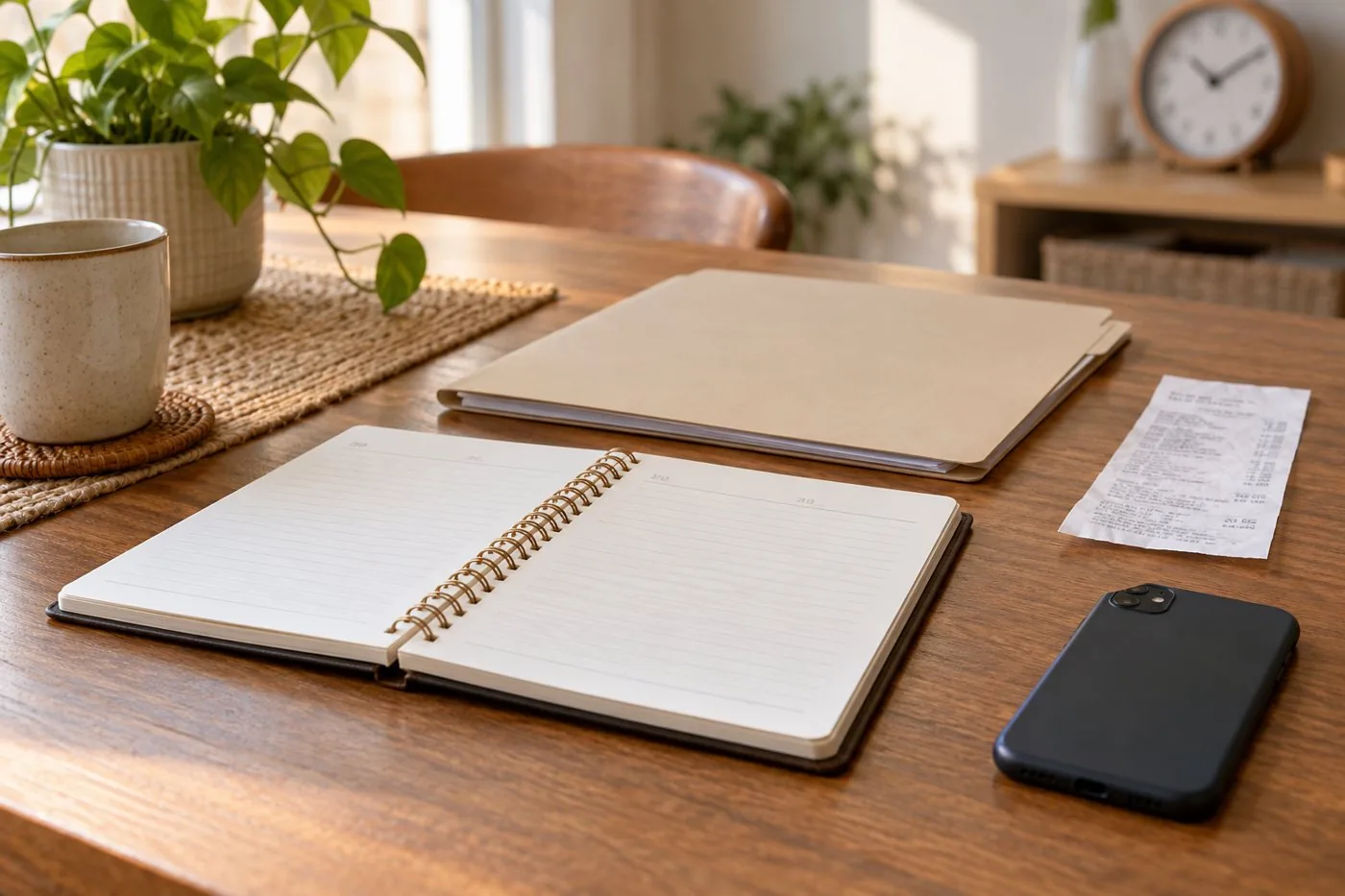
Build a first-contact packet for the firm
A short packet helps the first consultation focus on what's known and what's still missing.
Packet item | Notes |
|---|---|
Chronology | The visit date, approximate arrival, fall time, report time, departure, and first medical evaluation. Mark estimates as estimates. |
Receipts and travel records | The original electronic receipt, plus any parking or ride records you already have. |
Store details | The store address and report number, if one was given. |
Scene evidence | Photographs and witness contacts. |
Medical and work | Treatment provider names and work restrictions. |
Claim correspondence | Copies of everything sent to an insurer or representative. |
Prior symptoms and injuries | An accurate description, including facts that may worry you. |
On the lawyer's side, early intake should find urgent preservation work without interfering with medical care.
Intake question | Why it matters |
|---|---|
Who is still at the scene? | Those people may still be reachable for names and observations. |
Was a report made? | It points to the store's record and the person who wrote it. |
Which original files exist? | Specific instructions beat "save everything." Name the phone photos, shoes, and messages actually involved. |
What the first 72 hours don't decide
No rule says a legitimate case needs a finished report, preserved video, and a diagnosis within 72 hours.
Assumption | Reality |
|---|---|
Symptoms show up right away | Some symptoms evolve over days. |
Witnesses are found at the scene | Some are located later. |
Records arrive quickly | Records take time. |
72 hours is a legal deadline | It isn't. The filing and service calendar needs separate attorney review. Texas personal-injury limitations are generally two years, subject to case-specific exceptions, and evidence can disappear well before then. S3 |
Early records answer some questions and leave others open, so the attorney's next step is to name the missing point and the source most likely to answer it.
Record | It may establish | It doesn't establish by itself |
|---|---|---|
Incident report | That the event was recorded. | Liability. Its absence doesn't automatically defeat a claim either. |
Manager's account | The response after the fall. | That the manager saw the condition beforehand. |
Photograph | That an object was there. | Notice. |
Choosing counsel and what to ask
Aaron Herbert's official State Bar profile confirms his Texas license and lists board certification in Personal Injury Trial Law. S1
Point | What it means for you |
|---|---|
Board certification | It's a verified qualification that supports including him in your attorney evaluation. It doesn't guarantee a recovery. |
An early consultation | It can identify time-sensitive work before treatment ends. It doesn't mean every case should be filed now or that the firm accepts every matter. |
Incomplete records | Don't wait until every photo, bill, and witness is assembled. Bring what you have and name what's missing. |
Use the consultation to test how the credential turns into a plan for your specific fall.
Question to ask | What a useful answer covers |
|---|---|
What would you preserve right now for my type of fall? | A garden-center fall and a lumber-handling collision shouldn't get identical answers. |
Is the hazard plausible, or should another mechanism be tested? | Who may control the location and what notice evidence is still needed. |
Who will review the footage? | How the firm will separate an existing condition from active equipment handling. |
Is technical help likely, and what is already preserved? | Which issue an expert would address, and which steps are done versus only planned. |
Who will follow up, and how do fees and expenses work? | A named contact, a timeframe, and the costs explained before you decide. |
Early organization secures facts before memories fade or systems overwrite them, but it can't make the facts favor you. For the full litigation sequence, read the comprehensive pillar guide.
Next step | How |
|---|---|
Request an evaluation | Contact the Law Firm of Aaron A. Herbert, P.C. with the evidence you have and the gaps you know about. |
Expect a candid answer | A full recording could show a stronger notice timeline or show the condition arose moments before contact. A good lawyer explains either result instead of making a promise based on a retailer's name. |
Sources and legal context
These sources give legal and credential context. Application depends on the facts, current law, and court orders, and the hypotheticals here aren't client matters.
Ref | Source | What it supports |
|---|---|---|
S1 | His Texas license and board certification in Personal Injury Trial Law. | |
S3 | The general two-year personal-injury limitations rule, subject to exceptions. | |
S5 | Brookshire Brothers, Ltd. v. Aldridge, 438 S.W.3d 9 (Tex. 2014), majority opinion reproduced by Justia | The trial court's role in spoliation findings and remedies. |