The short answer
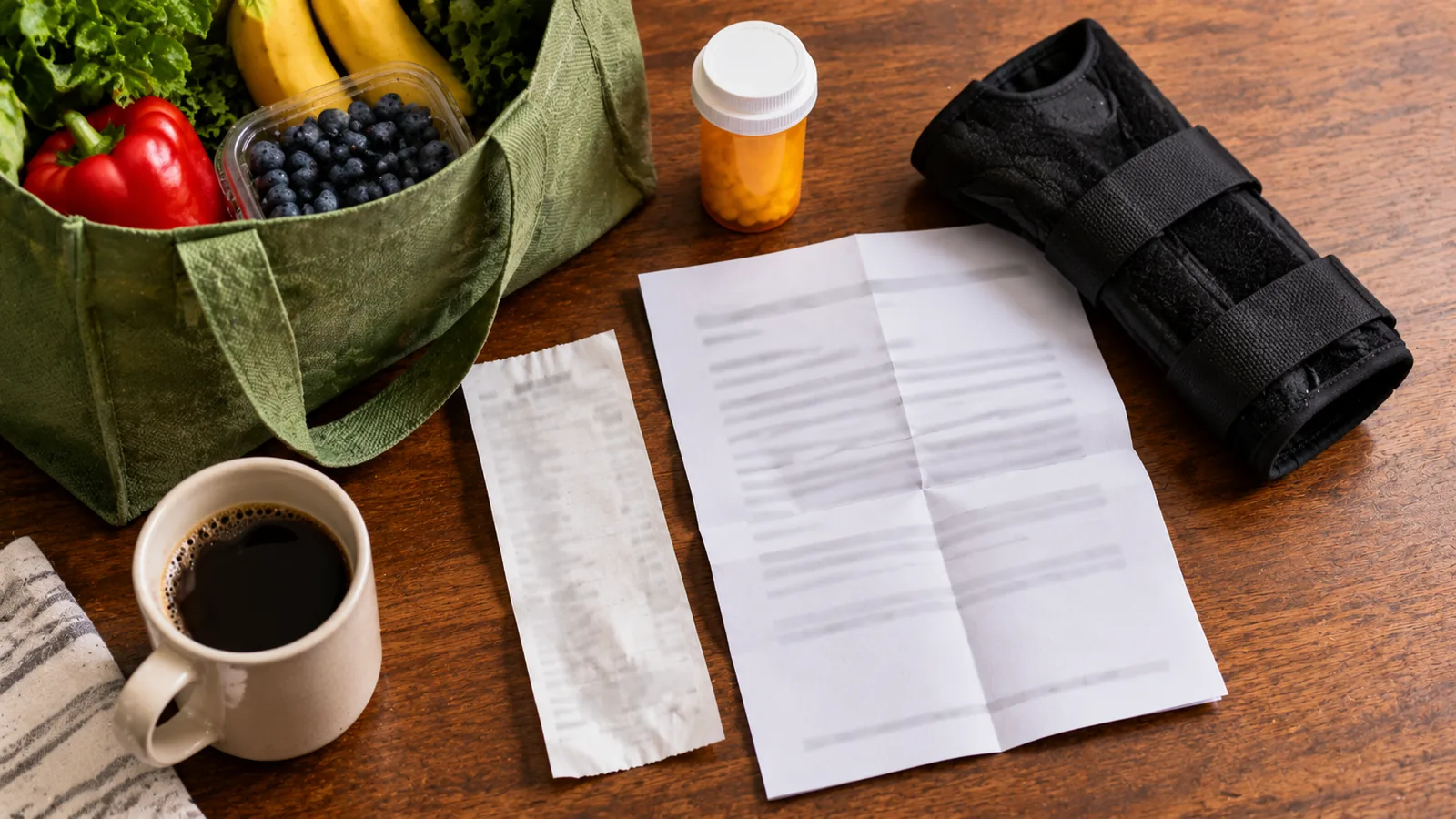
A claim's value rests on two kinds of proof: evidence that the fall caused your injuries, and evidence for each kind of loss you're claiming. A stack of bills doesn't prove causation, and a diagnosis doesn't prove future loss. There's no verified Tom Thumb or Albertsons settlement average or standard multiplier, so a fair estimate starts with your records, the liability proof and what you would actually keep.
Where to read more
- Tom Thumb and Albertsons injury knowledge hub, for every article in the series.
- Litigation guide, for the whole case.
- First 72 hours after a fall, for medical care and records in the first few days.
Your health before the fall
Your lawyer and doctor need the baseline: how you moved before you went down by the dairy case and how things went after.
What to gather or say
- Earlier records for the same back or knee, because not every finding on the new MRI is new.
- The chiropractor you saw two years ago for the same lower back, so the records can show a new injury, a flare-up or a condition already getting worse.
- A chart note that says "patient reports pain after fall," which records your history and isn't the same as a doctor's reasoned opinion about cause.
- An old injury in the same spot, since a preexisting condition and an aggravation can exist together and new symptoms don't automatically mean the fall caused them.
- The urge to leave the old injury out, because hiding it causes more credibility trouble than the history would.
Four questions behind "I need surgery"
"I need surgery because of the fall" squeezes four separate questions into one sentence, and a doctor may be ready to answer one but not another.
The four questions
- diagnosis, or what the condition is, such as a torn rotator cuff on an imaging report
- causation, or whether the fall caused it, since imaging can't say when a tear happened or what pain it causes, and normal imaging doesn't settle every complaint
- prognosis, or the expected course
- treatment, or proposed care
What to know about the last two, in the same order.
- In a dispute, prognosis may need a specialist beyond your treating doctor, though an extra expert who repeats the same opinion only adds cost.
- Proposed care should follow medical need, never the claim, and counts toward future damages only if the record supports how likely it is and how it connects to the fall.
Give your doctor the mechanism as you actually know it, not a confident story someone pieced together later. An opinion built on a wrong history is easy to attack.
Tell the doctor, with examples near the produce misting rack
- "My foot went out from under me by the misting rack," for what you saw.
- "I think the water came from the rack," for what you're guessing.
- "I never looked at the floor before I fell," for what you don't know.
A separate guide in the knowledge hub covers expert witnesses.
Bills versus what you can recover
Section 41.0105 of the Texas Civil Practice and Remedies Code limits recovery of medical expenses to the amount "actually paid or incurred by or on behalf of the claimant." S8
| Visit near the deli counter (hypothetical) | Billed and paid | Where the number comes from |
|---|---|---|
| ER visit on March 3 | $4,800 billed, $1,150 paid by the health plan, $0 still owed. | The plan's explanation of benefits. |
| Orthopedic follow-up on March 10 | $650 billed, $210 paid, $95 copay still owed. | The clinic's statement. |
| Twelve physical therapy visits in April | $3,600 billed, payment not known yet. | A records request still open with the clinic. |
The billed charge, the insurer's adjustment, the payment and the leftover balance are four different numbers. Mark disputed entries and write down your assumptions. A spreadsheet like this organizes proof but doesn't replace the records or make them admissible.
What Section 18.001 says
- The affidavit can support that a charge was reasonable and a service was necessary.
- The affidavit "is not evidence of" causation. S9
- The affidavit deadline is generally the earlier of 90 days after the defendant answers or the expert-designation date, with separate timing for new providers.
- The counteraffidavit deadline is generally the earlier of 120 days after the answer or the designation date.
- The parties can change those dates by agreement or with leave of court. S9
Proving lost pay
Lost pay needs records that match the real job and the real restriction.
What to keep
- Schedules, pay stubs, missed shifts and work restrictions, if you work for someone else.
- The doctor's note and a description of your job duties, if you run a register and the note says no lifting over 15 pounds for three weeks.
- The canceled contracts, bookkeeping that shows expenses and pay to a fill-in helper, for a self-employed caterer who loses two weekend events (hypothetical).
Watch out for these, in the same order.
- Paid leave and unpaid time off are tracked separately.
- "Couldn't work" overstates a restriction like that.
- Gross sales aren't income, and a slow month can have other causes, so explain the baseline.
Future earning capacity can take a doctor, a vocational expert and an economist. A bad assumption stays bad in a polished spreadsheet.
Each expert's role in a future earning-capacity claim
- A doctor, for the medical restriction the others rely on.
- A vocational expert, for your education, skills, restrictions and the work that's realistically still open.
- An economist, to price a scenario, but not to supply the medical restriction it depends on.
Pain and daily limits
Pain, mental anguish, physical impairment and disfigurement come through best as specific changes, and your lawyer makes sure the same loss isn't counted twice.
Instead of
- "I'm in pain all the time."
- "I can't shop anymore."
- "I don't sleep."
- "I can't do anything."
Say something like these, in the same order.
- "It takes twenty minutes to put on socks."
- "I can't push a loaded cart, and my daughter carries the bags in from the car."
- "I wake at 3 a.m. when I roll onto the wrist."
- Say what you can still do, because an absolute claim one photo contradicts can bury the accurate story.
Family members can describe what they've seen, like helping you bathe for six weeks, but they shouldn't predict your medical future.
Household help to record
- Rides to therapy and cooking, with who helped and for how long.
- Paid services and unpaid family help, kept separate so your lawyer can sort out which the law allows.
- Small inconveniences, without a made-up hourly rate on each one.
Why bills times three doesn't work
A fixed multiple of medical bills, a number borrowed from an unrelated verdict or the retailer's size doesn't measure your harm, so a damages request needs reasons tied to evidence.

| Hypothetical shopper | Detail |
|---|---|
| Injury | A broken wrist after slipping on a crushed grape near the produce tables. |
| Work | Eight weeks on restricted work. |
| Later care | A recommendation for more therapy. |
| Bills | $30,000 at face value, with incomplete payment records. |
| Pay | The employer confirms some missed shifts, while payroll shows paid leave for others. |
That $30,000 doesn't become $90,000 under a three-times rule. Liability may be disputed, the recoverable expenses may be lower and the therapy may never happen. This is a teaching example, not a Tom Thumb or Albertsons result or any firm's valuation practice.
- $30,000 in original invoices, for medical expense, which still needs the explanations of benefits and balances to find the amount paid or incurred.
- A one-page letter from the employer, for past lost pay, which still has to be matched to payroll, leave records and the work restriction.
- One line in a doctor's note, for future therapy, which still needs the doctor's answer on how likely it is, how many visits and at what cost.
- The shopper's and a spouse's accounts, for daily limits, which still need dated examples checked against the medical chart.
How liability changes the value
A serious fracture can come with a weak record on what the store knew, and clear liability can come with a quick recovery and modest losses.
| Case | What happened | What the court held |
|---|---|---|
| Albertsons, LLC v. Mohammadi, 689 S.W.3d 313 (Tex. 2024) (per curiam) | The claimant worked at a Wells Fargo inside a Houston Randalls and slipped by a cart where an employee had put leaking items. | Assuming, without deciding, that the claimant was an invitee, the Court held that the wet floor, not the leaking products, was the danger that counted and found no evidence the store actually knew about it. S15 |
| Johnson v. Tom Thumb Stores, Inc., 771 S.W.2d 582 (Tex. App.—Dallas 1989, writ denied) | The fall happened on a glass light fixture in a common-area sidewalk, and the lease gave the landlord control there. | The court affirmed a directed verdict for Tom Thumb, the tenant, and reversed and remanded the claim against the landlord. S16 |
A settlement trades the risk of trial for agreed terms, so weigh an offer against both sides. Store video often bears on these questions, as the surveillance video guide explains.
What you may hear, and the reality
- A percentage chance of winning, which no one can honestly give you, though a risk scenario labeled as an assumption can help.
- An average Tom Thumb or Albertsons payout, when published opinions and a few verdicts aren't a complete record and confidential settlements never show up.
- Waiting on treatment until the case is clearer, when your treatment shouldn't wait for any of this.
What you keep from an offer
Before you accept, ask for a written estimate that subtracts the fee under your own agreement, reimbursable case expenses and any medical or other reimbursement obligation that legally applies.
| Line on a hypothetical worksheet | Figure | Where it comes from |
|---|---|---|
| Gross offer | $90,000 | The adjuster's written offer. |
| Attorney's fee | Not shown | Your signed fee agreement sets it, and this example assumes no amount or percentage. |
| Case expenses | $6,000 | The filing fee, two deposition transcripts and records charges. |
| Health plan reimbursement, resolved | $9,000 | The plan's final payoff letter. |
| Hospital balance, still disputed | $4,500 | An open account the hospital hasn't confirmed. |
In this made-up example, the non-fee lines take $15,000 off the offer, or $19,500 if the hospital balance holds. These are teaching figures, not a Tom Thumb or Albertsons outcome and not any law firm's fee terms.
Before you decide
- A bill or an asserted claim, since a bill isn't automatically a lien and an asserted claim isn't always enforceable at face value.
- A change in one assumption, which changes the remainder, so ask for updated estimates and avoid surprises at distribution.
- A bigger offer after more litigation, which can net less if it costs a lot more to get, though that doesn't mean taking every early offer, so compare the cost, risk, wait and what matters to you.
- Minors, public benefits or structured payments, which can call for specialized advice, and a separate guide in the knowledge hub covers trial and mediation.
Common questions
The adjuster says my case is worth three times my bills. Is that how it works?
There's no verified multiplier for Tom Thumb or Albertsons claims, so no.
I hurt the same knee years ago. Do I still have a claim?
An earlier injury doesn't automatically end a claim for an aggravation the records support, so possibly.
Does an 18.001 affidavit prove the fall caused my injury?
Section 18.001 says the affidavit isn't evidence of causation, so no; that proof usually comes from a qualified medical provider. S9
When can a lawyer tell me what my case is worth?
Usually not on the first call. A range comes later, with written assumptions, and changes when your restrictions or care change.
Talking to a lawyer about your fall
Bring your discharge papers, a list of your doctors, your missed shifts and the claims company's letters. Ask how the Law Firm of Aaron A. Herbert, P.C. would connect the fall to your treatment and explain what an offer would leave you. To start, request a case evaluation or call (214) 200-4878.
| Credential | Where to check it |
|---|---|
| Board Certified in Personal Injury Trial Law by the Texas Board of Legal Specialization | Aaron Herbert's State Bar of Texas profile S1 |
Sources
S8 Tex. Civ. Prac. & Rem. Code § 41.0105 (medical expenses actually paid or incurred). Read source.
S9 Tex. Civ. Prac. & Rem. Code §§ 18.001-18.002 (medical expense affidavits). Read source.
S15 Albertsons, LLC v. Mohammadi, 689 S.W.3d 313 (Tex. 2024) (per curiam). Read source.
S16 Johnson v. Tom Thumb Stores, Inc., 771 S.W.2d 582 (Tex. App.—Dallas 1989, writ denied). Read source.
S1 Aaron Alan Herbert, State Bar of Texas attorney profile (Board Certified, Personal Injury Trial Law, Texas Board of Legal Specialization). Read source.

ABOUT THE ATTORNEY
Aaron A. Herbert
Founding Attorney
Board Certified in Personal Injury Trial Law
Aaron founded The Law Firm of Aaron A. Herbert in 2010 to focus on developing each client's case and seeking its maximum value. For over a decade, he has represented people seriously injured in major accidents and industrial catastrophes, pursuing trial verdicts and settlements while working to reduce the stress of litigation.
Education
- Texas A&M University · B.S., Criminal Justice, 1999
- University of Oklahoma College of Law · J.D., 2002; graduated in the top of his class
Trial experience & approach
Aaron earned numerous jury verdicts at boutique personal injury litigation firms. According to his biography, he spent a year as the top-earning litigation attorney at a firm that frequently appeared in verdict searches as having one of the highest numbers of trial wins in Texas. At another Dallas personal injury firm, he moved from managing pre-litigation attorney to managing litigation attorney over seven years as the firm grew into one of Dallas's largest personal injury firms.
His biography describes a reputation as one of America's most aggressive trial lawyers, with noteworthy recoveries from judges and juries and substantial pretrial settlements. Most of those settlements included confidentiality agreements requested by the defense. Aaron has said the recoveries were justified by the injuries and losses involved, which no amount of money could make someone choose to experience.
His approach combines passion, preparation, persistence and courtroom imagination. He believes a well-supported, engaged and motivated team working cooperatively helps deliver strong representation, with the goal of achieving the best possible result for every client.
Dallas roots, military service & publication
Born and raised in Dallas, Aaron enlisted in the United States Marine Corps after high school and later received an Honorable Discharge. He completed his university and law degrees after his military service and became a lifelong Sooners football fan in law school.
Publication: “Litigating Dog Bite Cases,” Texas Dog Law Seminar, Dallas, 2009.
Professional affiliations & recognition
Professional affiliations and recognition listed in Aaron’s biography:
- State Bar of Texas
- American Bar Association
- Association of Trial Lawyers of America (now American Association for Justice)
- Texas Trial Lawyers Association
- Dallas Trial Lawyers Association
- Dallas Bar Association
- Tarrant County Bar Association
- Million Dollar Advocates Forum
- The National Trial Lawyers – Top 100 Trial Lawyers