A case gets ready for trial by building around admissible evidence and the questions the jury will actually answer. That preparation helps at mediation too. It doesn't guarantee Ross will settle or pay a certain amount.
| Stage | Goal |
|---|---|
| Voir dire | Find bias within the court's limits. |
| Witnesses | Present each one within what they know. |
| Demonstratives | Explain the evidence without overstating it. |
| Mediation | Decide using real strengths, weaknesses, and costs. |
| Verdict or settlement | Understand what happens next. |
This guide isn't about any particular Ross lawyer or case. It's part of the Ross Dress for Less injury knowledge hub; the Ross slip and fall litigation guide covers the investigation that comes first.
What should trial preparation focus on?
The issue that decides the dispute. A speech about powerful retailers doesn't help a jury answer the questions on its verdict form.
What proves each possible deciding issue
- The report, its recipient and timing, for whether the earlier report concerned this hazard.
- Video, sightings and records, for whether the hazard was there long enough.
- Lighting, angle and your approach, for whether the obstruction was visible.
- Baseline records and expert reasoning, for whether the medical change is related.
A good theme is specific enough to test. "The same obstruction stayed after the report" depends on proof of identity, timing and response. "Stores must prevent every fall" overstates the law.
Working backward from the expected jury charge
- Which witness or exhibit supports each answer?
- Can you fix a missing link before trial?
For clients, this is why trial prep may focus on a few facts instead of every frustrating moment since the fall.
How does jury selection work in an injury case?
Voir dire is for learning jurors' attitudes, not for getting promises. Potential jurors may feel strongly about injury suits, big companies, personal responsibility or old injuries.
What a juror response may mean
- Skepticism about lawsuits, where the juror may still follow the instructions fairly.
- A fixed belief against any claim, which may prevent fair consideration.
The court controls the questioning. Commitment-question rules limit what lawyers can ask. Don't ask jurors to promise a verdict or a damages number on selected facts. Check proposed questions against current law, local practice and the judge's directions.
| Good follow-up | Avoid |
|---|---|
| "Tell me more about that." | Turning a mild concern into "I can't be fair." |
| "Would that keep you from following the instructions?" | Supplying a detailed hypothetical and asking for a result. |
| Record the actual answer. | Paraphrasing it. |
Which questions help uncover juror bias?
Open questions. These are proposed teaching prompts only, subject to the court's rulings, not approved questions for any trial.
Issues
- Injury claims.
- Corporate parties.
- Prior conditions.
- Shared responsibility.
- Invisible symptoms.
A proposed opening prompt for each, in the same order
- What comes to mind when you hear about an injury lawsuit?
- What experiences might affect how you see a retail business as a party?
- What would be hard about weighing evidence of an old condition that got worse?
- How do you think about the conduct of more than one person?
- What concerns do you have about symptoms you can't see in a photo?
The goal is a fair panel, not jurors who automatically favor plaintiffs. Stereotypes about jobs, age or shopping habits are no substitute for listening to actual answers.
How should witnesses be organized?
By what each one can prove. Don't ask a witness to carry an issue outside their knowledge.
What each witness should cover
- Scene witness, on where they stood and what they saw, in sequence.
- Records witness, on how the system works and the foundation.
- Treating provider, on history, findings, cause and prognosis.
- Retained expert, on method and fit.
- You, with your truthful account, including what you're unsure of.
Review earlier statements so differences can be explained. Don't memorize a script. Practical preparation, including breaks and accommodations, can reduce anxiety without changing your testimony.
| Order of witnesses | Why |
|---|---|
| Scene orientation first | Technical testimony makes more sense after it. |
| Mechanism before medicine | Medical testimony is clearer once the fall is established. |
What makes a demonstrative exhibit trustworthy?
Honesty about its limits. A visual aid explains testimony; it doesn't add new evidence.
What each exhibit must show
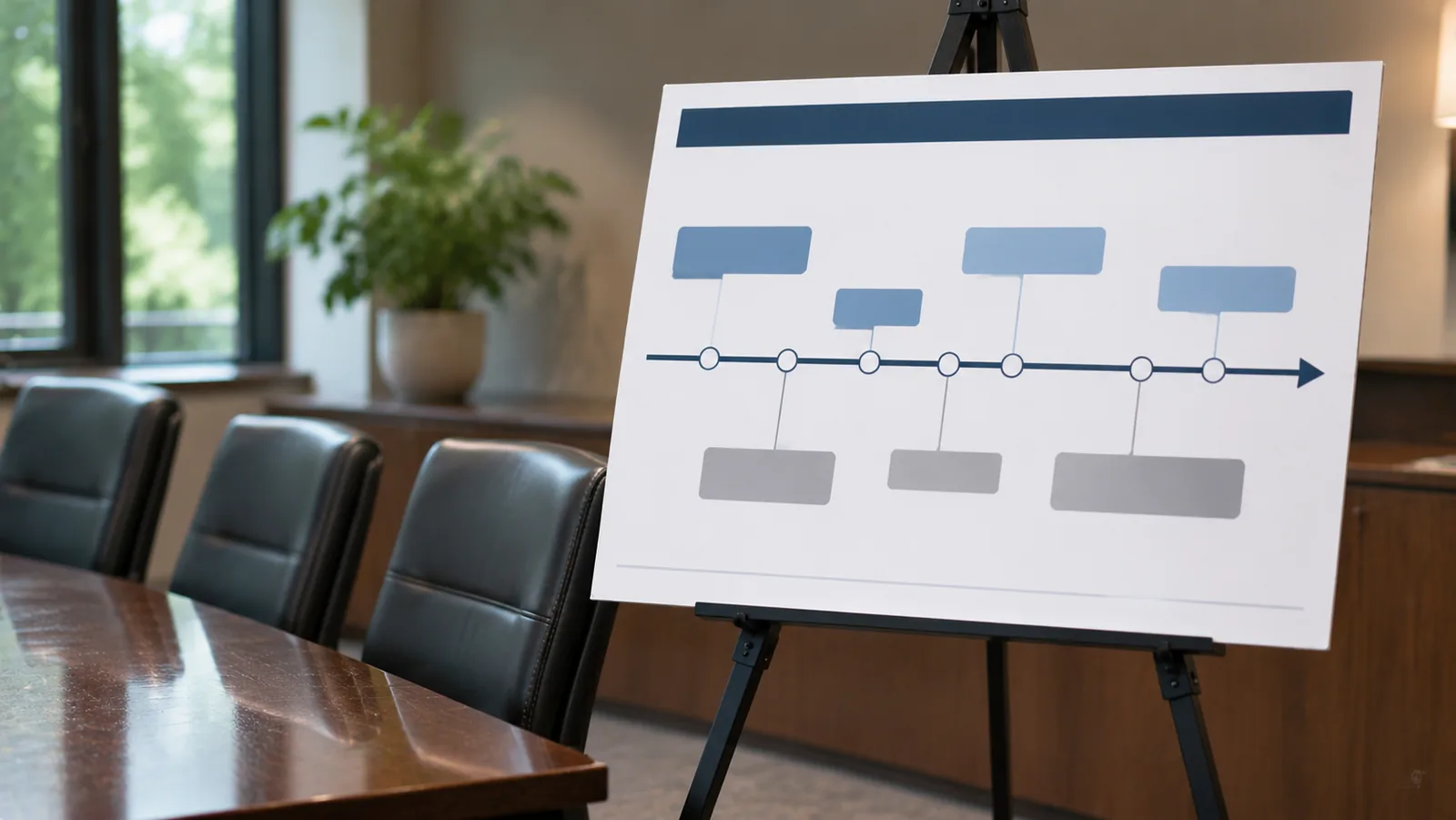
- A timeline, showing verified events, estimates and unknown periods.
- A scene diagram, showing which dimensions were measured and which reconstructed.
- A video excerpt, showing context plus disclosed speed changes or labels.
- An animation, showing stated assumptions and the court's ruling.
Don't animate an invisible spill just because a party says it was there. Keep a printed backup in case software fails. A simple timeline often works better than a complicated graphic.
How should cross-examination be handled?
Go after the proposition, not the person.
What to test with each witness
- Inspection employee, on timing, route, what they saw and what the record means.
- System custodian, on exports, clocks and limits.
- Medical expert, on history, assumptions and other causes.
Being paid doesn't make an expert unreliable. Point to the actual mismatch, such as a dry-floor test offered for a wet-floor fall. Apply the same scrutiny to your own witnesses before trial so a fair limit doesn't become an impeachment.
How do you prepare for mediation?
Treat it as a decision process. The mediation brief should address the real dispute, with exhibits and an accurate damages analysis.
| Include | Why |
|---|---|
| Weaknesses the other side already knows. | A mediator can't help if they're hidden. |
| A short hazard duration or unclear mechanism. | Explain your answer to it. |
| A significant prior condition. | Address it directly. |
Prepare the client for
- Offers and breaks.
- Net recovery.
- No agreement.
What to discuss, in the same order
- How the day usually goes.
- Estimates after fees, expenses and reimbursements.
- What happens next, and the added cost.
You decide whether to settle, after advice. Trial preparation doesn't guarantee a higher offer, and an opening number doesn't predict the end. If terms are reached, review the release, payment terms, which parties are covered and reimbursement issues. The dollar figure isn't the whole deal.
What happens at the end of trial?
The record has to be protected, and the result explained. Review the jury charge, requested questions, objections and rulings under current Texas or federal rules. A complaint raised after the jury leaves may be too late. [S6] [S7] [S11]
| Closing argument | Avoid |
|---|---|
| Tie admitted evidence to each question. | A number based on corporate wealth. |
| Explain economic calculations. | An unrelated headline verdict. |
| Give a reasoned basis for noneconomic damages. | Treating lost video as a presumption the court didn't authorize. |
What to explain after a verdict or settlement
- What's next and when, for judgment and post-trial deadlines.
- Realistic options, for appeal possibilities.
- When money arrives and what comes out, for payment and reimbursement.
A verdict isn't always the final collectible amount, or paid right away.
Frequently asked questions
Will my Ross case go to trial?
It depends on the case. Prepare as if it will.
Can lawyers ask jurors to promise a verdict?
No. Commitment questions are limited.
Do I have to accept the mediation offer?
No. You decide after advice.
Is the verdict what I'll receive?
Not necessarily. Post-trial steps, appeals and deductions can follow.
Talk to a lawyer about trial readiness
Aaron A. Herbert is Board Certified in Personal Injury Trial Law by the Texas Board of Legal Specialization. His State Bar of Texas profile lists it. [S1]
Ask the firm
- What's the deciding issue in my case?
- How would you prepare me to testify?
- How would you handle mediation?
- Will we win at trial?
A useful answer, in the same order
- Names it, with the evidence.
- Explains the process.
- Covers net recovery and risks.
- No promise.
Fees, expenses and communication are set in the engagement agreement. Tell us about your case to The Law Firm of Aaron A. Herbert, P.C., or call (214) 200-4878.
Sources
| Ref. | Source | Type |
|---|---|---|
| [S1] | Official profile for Aaron Alan Herbert | State Bar of Texas |
| [S6] | Texas Rules of Civil Procedure | Current Texas Judicial Branch compilation |
| [S7] | Texas Rules of Evidence | Effective July 2, 2026 |
| [S11] | Federal Rules of Civil Procedure and Evidence | United States Courts |
ABOUT THE ATTORNEY
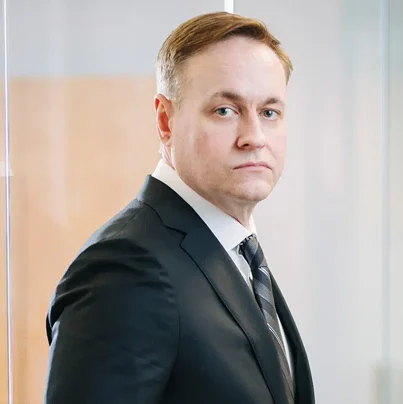
Aaron A. Herbert
Founding Attorney
Board Certified in Personal Injury Trial Law
Aaron founded The Law Firm of Aaron A. Herbert in 2010 to focus on developing each client's case and seeking its maximum value. For over a decade, he has represented people seriously injured in major accidents and industrial catastrophes, pursuing trial verdicts and settlements while working to reduce the stress of litigation.
Education
- Texas A&M University · B.S., Criminal Justice, 1999
- University of Oklahoma College of Law · J.D., 2002; graduated in the top of his class
Trial experience & approach
Aaron earned numerous jury verdicts at boutique personal injury litigation firms. According to his biography, he spent a year as the top-earning litigation attorney at a firm that frequently appeared in verdict searches as having one of the highest numbers of trial wins in Texas. At another Dallas personal injury firm, he moved from managing pre-litigation attorney to managing litigation attorney over seven years as the firm grew into one of Dallas's largest personal injury firms.
His biography describes a reputation as one of America's most aggressive trial lawyers, with noteworthy recoveries from judges and juries and substantial pretrial settlements. Most of those settlements included confidentiality agreements requested by the defense. Aaron has said the recoveries were justified by the injuries and losses involved, which no amount of money could make someone choose to experience.
His approach combines passion, preparation, persistence and courtroom imagination. He believes a well-supported, engaged and motivated team working cooperatively helps deliver strong representation, with the goal of achieving the best possible result for every client.
Dallas roots, military service & publication
Born and raised in Dallas, Aaron enlisted in the United States Marine Corps after high school and later received an Honorable Discharge. He completed his university and law degrees after his military service and became a lifelong Sooners football fan in law school.
Publication: “Litigating Dog Bite Cases,” Texas Dog Law Seminar, Dallas, 2009.
Professional affiliations & recognition
Professional affiliations and recognition listed in Aaron’s biography:
- State Bar of Texas
- American Bar Association
- Association of Trial Lawyers of America (now American Association for Justice)
- Texas Trial Lawyers Association
- Dallas Trial Lawyers Association
- Dallas Bar Association
- Tarrant County Bar Association
- Million Dollar Advocates Forum
- The National Trial Lawyers – Top 100 Trial Lawyers