
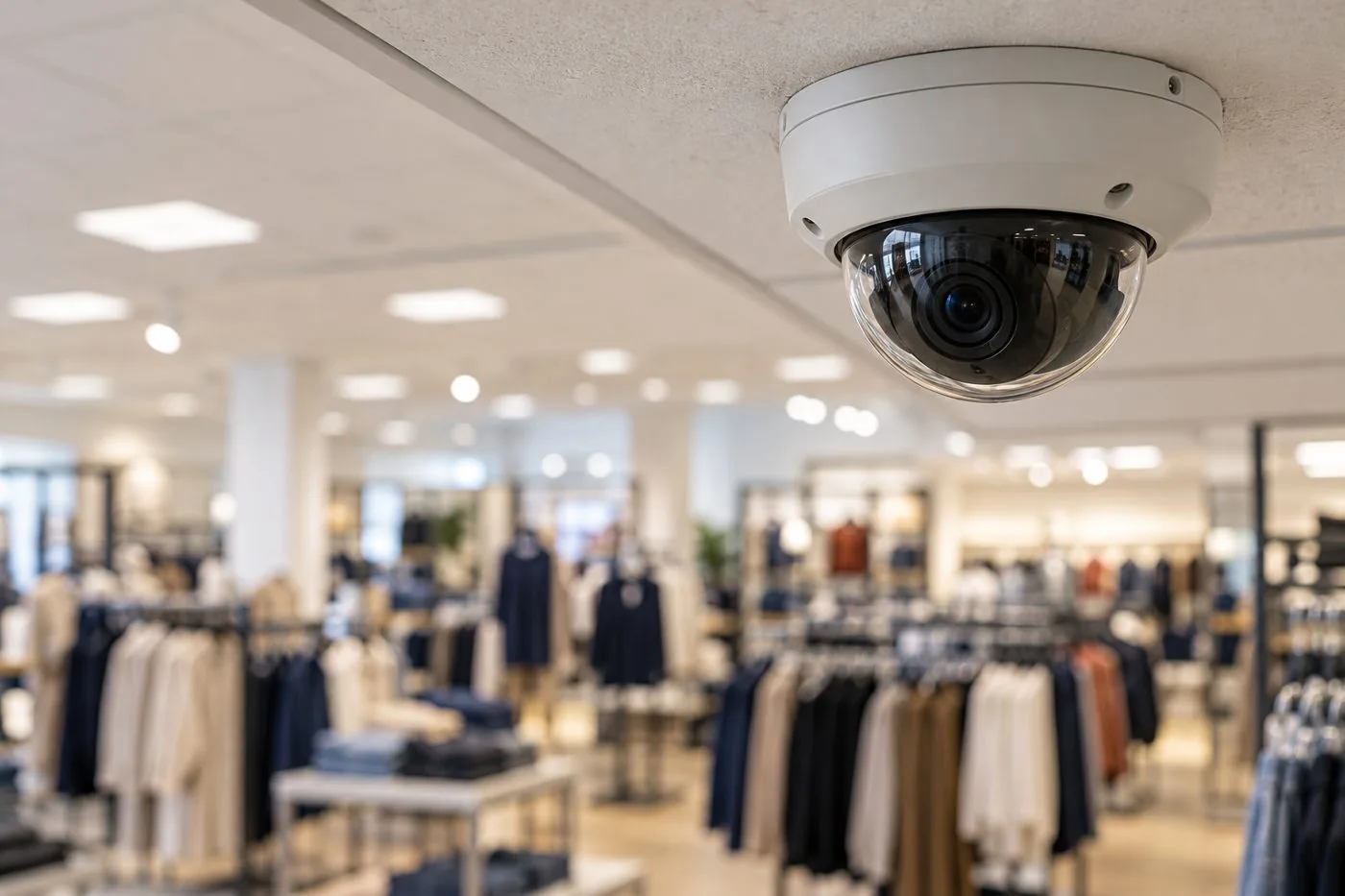
Camera location alone does not establish what was recorded or how long it will be retained.
A recording of your fall can answer one question and leave another wide open. It might show your foot slipping but not when the liquid reached the floor. A camera across the aisle might catch employees walking past while a display hides the spot where you fell.
What you may need the video to show | Why a short clip may not be enough |
|---|---|
How long the spill or object was there | The answer may sit in footage from well before the fall |
Whether an employee walked past it | That may be on a different camera |
The moment you went down | Often the only part a short clip covers |
Ask a lawyer promptly about camera views, the time window, and related records. The store doesn't have to hand you its recording on request.
A quick word on limits: this guide doesn't rely on any universal Ross retention period, can't promise that footage exists, and doesn't treat missing video as proof of fault.
Describe the location well enough for someone to find the footage
Detail | Example or tip (hypothetical) |
|---|---|
Store address and date | The street address printed on your receipt |
Approximate time | "About 3:20 p.m." Say which times you know and which are estimates. |
Department and nearby displays | "Shoes, next to the clearance endcap" |
Time anchors | A receipt, a phone call log, or a companion's photos can narrow the window |
Cameras you noticed | "Dome camera above the register; another over the fitting-room entrance" |
Noting where cameras are is helpful. Going into a restricted area, touching equipment, or demanding access to the recorder is not. You can point to useful leads without trying to run the system yourself.
Different views answer different questions:
Footage | What it might show |
|---|---|
Before the fall | A condition developing, an inspection, or someone reporting the hazard |
After the fall | Cleanup, and witnesses you didn't catch |
Outside the store | Possibly a landlord's or a neighboring business's camera, not Ross's |
The right time window depends on the facts. Ask only for the seconds around your fall and you may miss evidence about how long the hazard was there. Demand every recording without explaining why and you invite an avoidable fight. Counsel can narrow or widen the scope after learning which views and systems existed.
Find out who can preserve the records
The employee who watches a camera feed may have no control over how long files are kept or how they're exported. Ask who operates the system, who can save files, and whether an outside vendor is involved. Legal control and practical access are two separate questions.
Video may be only part of the picture. There may also be incident-report attachments, inspection entries, maintenance tickets, employee messages, and export logs. Whether those exist, and where, needs investigating. Don't assume they do just because the retailer is large.
Record (hypothetical fall) | Likely custodian |
|---|---|
Interior store video | The store operator |
Parking-lot or exterior video | The landlord |
A work-order message about a leaking display | A maintenance contractor |
That's why one letter to one recipient can leave other sources unprotected.
What a preservation request should accomplish
An attorney can adapt a request to identify:
Element | Example wording (hypothetical) |
|---|---|
The occurrence, place, and time window | "The fall in the shoe department on (date), 2:50 to 3:30 p.m." |
Camera views and related record types | "All views covering the shoe aisle and the nearest entrance, plus the incident report and any attachments" |
Original files and export information | "Native files with available metadata and ordinary export reports" |
Suspending routine loss | Asking the recipient to stop routine overwriting of relevant material within its possession or control, consistent with the applicable preservation duty |
A contact person | Someone to confirm what was saved and sort out scope questions |
Keep the request, the delivery confirmation, every reply, and your follow-up. Those records show what was communicated. They don't prove a hold was actually put in place.
Stage | What you can say at this point |
|---|---|
Requested | "We asked." |
Acknowledged | "They received our letter." That's different from saving the files. |
Preserved | "They confirmed these specific files were saved." A saved clip may still miss views or time periods. |
Produced | "We have copies." |
Disputed | "We disagree about scope, control, or burden." |
A letter isn't self-executing law. Whether litigation was reasonably anticipated, who had control, how broad the scope should be, and how heavy the burden is may all need legal analysis. The letter also doesn't create an automatic production deadline or guarantee sanctions if a recording later goes missing.
Keep the received file unchanged
When they're reasonably available, ask for native or original-format exports, any player software needed to open them, and the ordinary export reports. A screen recording of playback can lose detail or timing. It may still help, but don't call it an original export.
For each file, log who supplied it, when it arrived, its filename, and how it was handled. Keep one untouched copy, and use separate working copies for viewing or annotating.
A file hash works like a fingerprint. It can show whether the collected file changed later. It can't tell you the camera clock was right, that every frame was exported, or that nothing happened just outside the frame.
Phone video | What to do |
|---|---|
The original | Keep it on the device that recorded it, even if that's a relative's phone |
Copies sent through apps | Note them; apps may compress the file |
Screenshots and re-sent copies | Don't rely on them; they hide what the first file showed |
Check the clock, gaps, and view
Treat a timestamp as a starting point, not a fact.
Timing check | Example (hypothetical) |
|---|---|
Compare with an independent event | The receipt says 3:24 p.m.; the register camera shows that same purchase at 3:31 |
Compare cameras with each other | The entrance camera and the aisle camera may be set differently |
Look for things that shift the clock | Daylight saving changes, manual adjustments, export processes |
Record an offset | Only when something supports it, like that seven-minute receipt gap |
What you see | Possible explanations to check |
|---|---|
A jump in playback | Motion-triggered recording, dropped frames, export limits, or a blocked lens |
A missing stretch of time | The same causes, or a gap that removes the very period you need |
Shoppers visible but no hazard | Clear liquid may simply never show up clearly on camera |
Don't call a jump deliberate deletion without evidence. Don't brush past a gap either, if it removes the period needed to answer a material question. And when a recording runs without interruption but never shows the floor clearly, say what the image supports and what stays out of view.
Three recordings, one fall: a hypothetical
A shopper falls beside a display at 3:20 p.m. The store produces three recordings.
View | Potential use | Limit |
|---|---|---|
Clip beginning at 3:19 p.m. | Approach and fall mechanism | Little evidence of earlier duration |
Upper-body view, 2:50–3:30 p.m. | Traffic and employee movements | Floor condition may be invisible |
Clear floor view beginning at 3:05 p.m. | Position and observable timing | Object identity and continuity still need checking |
What the floor view shows | What you can't conclude yet |
|---|---|
An object on the floor at 3:08 p.m. | That it stayed there for the next twelve minutes |
The same-looking object at 3:20 p.m. | That it's the same object, untouched |
A cart parked in front of the spot at 3:12 p.m. | What happened behind the cart |
Someone may have moved the object while the cart blocked the view. Review the actual sequence and keep those uncertainties on the record.
Building a timeline | Do | Don't |
|---|---|---|
Events | Label each one with its source | Mix sources without saying so |
Unseen stretches | Mark them as unknown intervals | Fill them in with guesses |
Graphics | Show only what the footage shows | Animate an object where none is visible |
Reconstructions | Disclose every assumption and get evidentiary review | Present one as if it were footage |
If footage is missing
Brookshire Brothers v. Aldridge leaves important spoliation decisions to the Texas trial court. The court looks at the duty to preserve, whether it was breached, the prejudice, and the remedy. An adverse-inference instruction isn't the automatic result of every lost recording. Intentional loss and narrow exceptional circumstances call for careful analysis. [1]
Investigation question | Why it matters |
|---|---|
What existed? | You can't argue about a loss you can't describe |
Who controlled it? | Control affects who had the duty |
When did the duty to preserve arise? | Loss before that point is treated differently |
What exactly was lost, and what issue does it affect? | Losing the only view of how long a hazard sat there is a different prejudice question than losing a view another camera duplicates |
Don't claim missing footage would certainly have helped you. Its absence may make that impossible to show.
Preservation runs both ways. Keep your own photos, texts, and posts about the fall, unflattering ones included, and ask your lawyer about privacy or discovery concerns before deleting anything.
Getting evidence through the proper process
Stage | What controls access to the video |
|---|---|
Before a suit is filed | Voluntary requests sometimes get cooperation. Presuit court procedures need their own legal basis: Texas Rule 202 covers depositions only under specified conditions and judicial findings, not unlimited discovery for anyone considering a claim. [2] |
After filing | The governing rules, court orders, and proportionality limits. State and federal procedure differ, so counsel works from the rules of the actual court. [2] [3] |
If a response comes back incomplete, pin down the problem:
Question to ask | What it can reveal |
|---|---|
Was the wrong date searched? | A simple search error |
Did that camera exist at all? | Whether the view was ever recorded |
Was a file left out because it needed special software? | A format issue rather than a refusal |
Clearing up technical points can settle an apparent dispute, or make a request for court help more specific.
Preparing video for trial | What it involves |
|---|---|
A sponsoring witness | Someone who can explain where the recording came from |
Foundation | The basis for using the recording as evidence |
Demonstrative copies | Marked captions, enlargements, playback-speed changes, and other edits |
However persuasive a clip looks, it still needs a reliable evidentiary foundation. [4]
What to bring to counsel
Bring | Notes |
|---|---|
The date and store address | Exact if you have it |
Your photos and witness information | Originals, not just screenshots |
Any correspondence about recordings | Letters, emails, texts |
Word that files may be overwritten | Tell the firm right away |
The camera model | Not needed |
Aaron Alan Herbert's State Bar profile lists his Board Certification in Personal Injury Trial Law. Ask how the firm would preserve the relevant files, verify the timing, and look into gaps in your case. The qualification is verifiable; a good result isn't promised. [5]
You can ask for an evaluation from The Law Firm of Aaron A. Herbert through injuryattorneyofdallas.com.
Related guide | What it covers |
|---|---|
The first 72 hours | Your own records |
Notice and inspections | Why timing matters |
Discovery and corporate depositions | Records and witnesses |
How these tasks fit the wider case |
Sources
Ref. | Source | Type |
|---|---|---|
[1] | Brookshire Bros., Ltd. v. Aldridge, 438 S.W.3d 9 | Texas Supreme Court, 2014 |
[2] | Texas Rules of Civil Procedure, including Rule 202 | Current Texas Judicial Branch compilation |
[3] | Federal Rules of Civil Procedure | Current, from United States Courts |
[4] | Texas Rules of Evidence, including Rule 901 | Effective July 2, 2026 |
[5] | Official profile for Aaron Alan Herbert | State Bar of Texas |