

Medical needs come before evidence gathering.
Your first job after a fall is getting the medical help you need. You don't have to work through an evidence checklist before you leave the store. If someone is with you and it's safe, that person can jot down details while you're being looked after.
Over the next few days | Where this guide covers it |
|---|---|
Write down what happened while it's fresh | At the store, and the first-day timeline |
Keep the original photos, receipts, and messages | Photographs, and at home |
Ask a lawyer about evidence the store or others may hold | Ask about video promptly |
Why 72 hours? It's only a way to organize the work. It isn't a statutory deadline, and it doesn't mean surveillance footage will still exist on day three.
A fall at Ross Dress for Less doesn't automatically give you a claim. An investigation still has to look at the condition or activity involved, the responsible party's duty and knowledge, how it responded, and whether the fall caused your injuries. The Ross knowledge hub and the litigation guide cover that bigger picture.
At the store: care, location, and a factual report
Situation | What to do |
|---|---|
You can't move safely | Stay put and ask for help |
A paramedic or doctor asks what happened | Say where it hurts and how you fell. Don't downplay it out of embarrassment or overstate it because a claim may follow. |
If you have to leave quickly, ask a companion to write down:
Detail | Example (hypothetical) |
|---|---|
Department and aisle | "Home goods, second aisle from the back wall" |
Nearby display | "End of the rack with the blue bath towels" |
Exact store address | The street address from the receipt or a map app |
A text you send yourself can help you remember. Keep in mind that its timestamp shows when you sent it, not necessarily when you fell.
When you talk to a manager, stick to what you observed:
If this is what happened | You might say |
|---|---|
You noticed the liquid only after you fell | "I didn't see anything beforehand. I saw the wet spot once I was on the floor." |
You think your foot caught a rack base | "I think my foot caught the rack base, because my toe stopped short and I pitched forward." |
You honestly aren't sure | "I don't know yet." |
You remember a new detail days later | Don't quietly change your first account. Write down what you now recall and tell your lawyer why it changed. |
Ask for the report number and the name or job title of the person taking it down. If you're handed a written statement, read it before you sign, and ask them to fix anything that's wrong. No copy offered? Note when you gave your account and to whom.
A lawyer can work with a discrepancy. A hidden one is much harder to deal with.
Photographs: capture context before detail
Take photos only if it's safe. Don't move the suspected hazard to get a clearer shot, and don't get in the way of cleanup.
Shot | What it captures |
|---|---|
1. Wide view | The aisle and the route you walked |
2. Surroundings | Merchandise nearby, warning signs, lighting, and anything blocking the view |
3. The condition | The suspected hazard from several positions |
4. Close-ups | Details that are hard to see from farther back |
Before each photo, note what has changed. A picture taken after a rack was moved can still help, but it shouldn't be passed off as the original layout.
Keep the original files on your phone. Screenshots, social-media posts, and messaging apps can strip out information or compress the image. If you want to crop or mark one up, use a separate copy. Keep the unflattering pictures too.
No one photo tells the whole story. A close-up of a hanger shows its shape but not how visible it was as you walked toward it. A wide shot shows the aisle and may miss clear liquid on the floor. Together, with an honest note of when and where you took each one, they're far more useful.
Witnesses: record what each person actually saw
Do | Don't |
|---|---|
Get names and phone numbers before people leave | Wait until later to track people down |
Note which part each person saw: your approach, the fall, the condition afterward, or the response | Lump everyone together as "witnesses to the fall" |
Ask open questions, like "What did you see?" | Ask someone to agree that Ross was careless |
Pass the names and what you know to your lawyer | Pressure employees, argue with witnesses, or offer money for a helpful statement |
Keep a friend's secondhand account separate | Let a friend who only heard your explanation repeat it as something they saw |
Lawyers sometimes interview witnesses separately to tell independent memory apart from later conversation, then decide on proper contact and discovery steps.
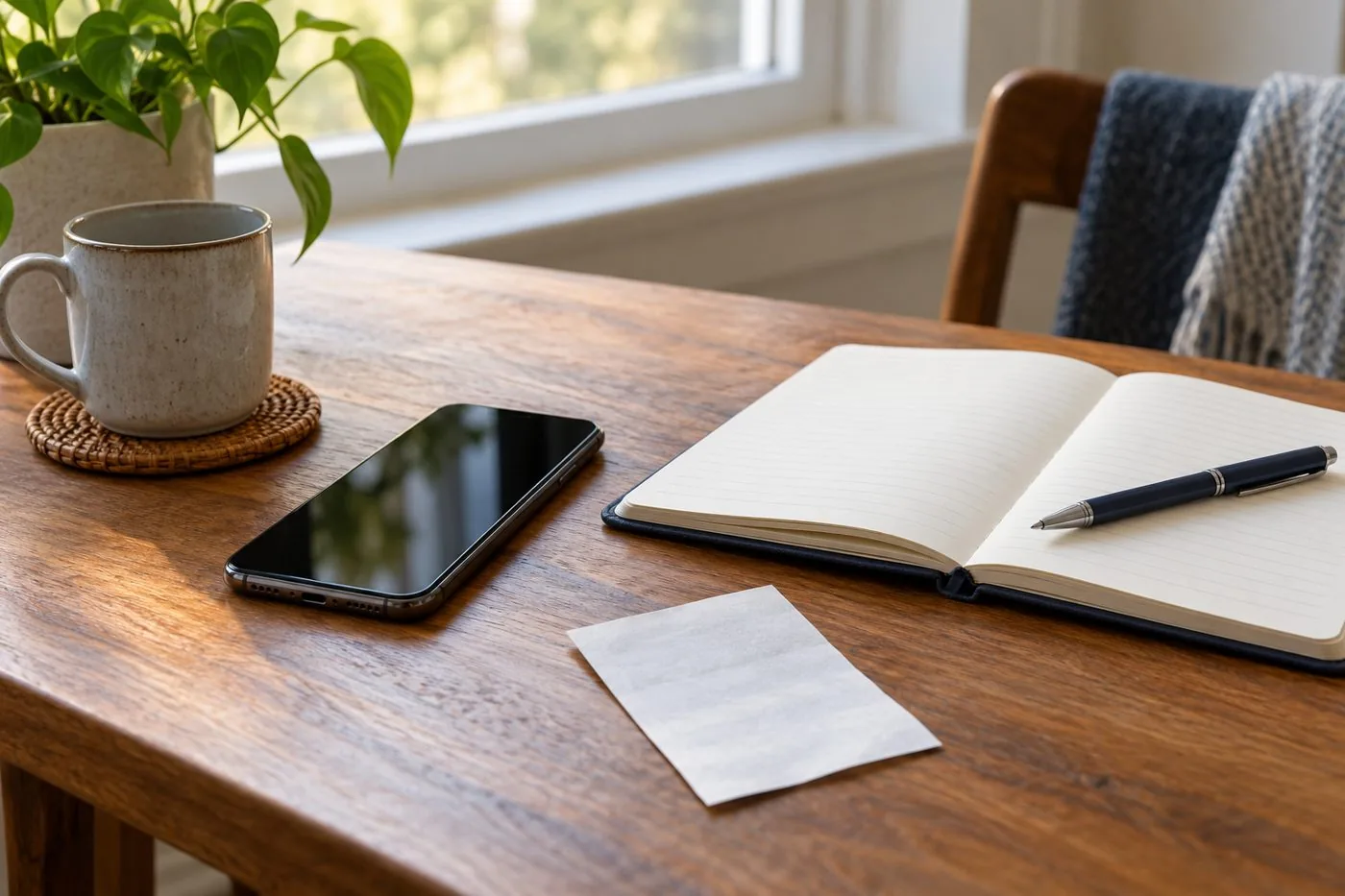
At home: keep the items and records together
Item or record | What to do with it |
|---|---|
The shoes you wore | Keep them and photograph their condition |
Clothing and personal items | Set aside anything relevant. Ask your lawyer before you clean, repair, throw out, or alter it. If you have to keep using something, document its condition and why. |
Receipts, payment records, and ride details | Save them with your other papers |
Messages and claim letters | Keep them, including the ones that don't help you |
Phone or wearable data | Note the device or app, and whether an export was edited. A step count gives context but can't explain how you fell. |
Calls from insurance adjusters | Log each caller's name, the date, the claim number, and what was said or asked for |
A request for a recorded statement or broad authorization | Have it reviewed before you agree. Already talked, signed, or sent something? Tell your lawyer and keep a copy. |
A simple first-day timeline
Different records carry different times, and that's normal. In this hypothetical, a shopper trips near a rack at about 11:30 a.m.
Record | Time on it | What it helps establish | What it does not establish by itself |
|---|---|---|---|
Receipt | 11:12 a.m. | Time of the transaction | Exact fall time |
Photographs | 11:36 a.m. | Appearance when captured | Earlier layout or actual contact |
Manager's report | 11:45 a.m. | Account recorded and response | Whether the stated time means fall or report |
Companion's account | "About 11:30" | Events personally observed | Events outside that person's view |
Four records, four events, no conflict. Don't edit your records so the times line up; label which event each time belongs to instead. Your lawyer can compare calls, video, messages, and other anchors, and check whether each clock was accurate.
Why go to the trouble? How long a hazard existed can differ from how long it had been since the last inspection. The notice and inspections guide explains how that affects a claim.
Ask about video promptly
Noticed cameras? Note where they were, but stay out of restricted areas and don't touch equipment. The store, the landlord, or a neighboring business may each control different views.
What a preservation request should identify | Example (hypothetical) |
|---|---|
The store | The Ross at the exact street address on the receipt |
Department and area | Home goods, the aisle by the towel display |
Approximate time | About 11:30 a.m. on the date of the fall |
Footage from before the fall | May help investigate notice |
Footage from after the fall | May show witnesses or the store's response |
A lawyer can decide on a sensible scope and the right recipients. We haven't found any verified universal Ross retention period, so this guide doesn't rely on one.
After the request | What to keep in mind |
|---|---|
Does the request guarantee anything? | No. Footage may not exist or may not have been saved, and it doesn't have to be handed over right away. |
Exports, timestamps, and follow-up | The video-preservation guide covers these |
If footage turns out to be missing | Find out why. Under Brookshire Brothers, missing video doesn't automatically establish liability or entitle anyone to a spoliation instruction. [1] |
During the next few days: treatment and work
Area | What to keep or do |
|---|---|
Medical paperwork | Discharge instructions, referrals, appointment details, and clinical records |
Talking with providers | Mention new symptoms and relevant prior conditions. Follow medical advice, and don't seek treatment just to build a claim. |
Missed or delayed care | If cost, transportation, or appointment availability got in the way, tell your provider and your lawyer the real reason. Don't invent one later, and don't assume a gap won't matter. |
Work | Keep schedules, restrictions, and earnings records. Self-employed? You may need business records showing expenses as well as revenue. |
Lost income needs support. A rough guess about a typical day won't do.
A short activity log helps too. Note what you could still do, what was hard, and whether things improved. If you write a summary later from memory, date it honestly and list the records you used.
A vague log entry | A useful one (hypothetical) |
|---|---|
"Could do nothing." | "Needed help carrying groceries upstairs." |
"Hurt all week." | "Couldn't lift the laundry basket Tuesday. Managed half a load by Friday." |
What to ask at a consultation
Don't wait for a complete file. Call with what you have, tell the lawyer what's missing, and mention any deadline coming up or any word that footage may be deleted.
Question to ask | Why it matters |
|---|---|
What evidence supports the suspected cause, and what other explanation needs checking? | Shows whether the lawyer is testing the theory, not just accepting it |
Who may control the location or the relevant records? | The store, a landlord, and contractors can hold different pieces |
What preservation work is done, and what is only planned? | A letter that's only planned hasn't reached anyone yet |
Who will follow up, and how will I get updates? | Tells you who's actually working the file |
How do the written fee and expense terms work? | Affects what you'd take home from any recovery |
Aaron Alan Herbert's official State Bar profile lists his Texas license and his Board Certification in Personal Injury Trial Law. That's a qualification you can check while choosing a lawyer. It doesn't guarantee a successful claim. [2]
You can ask for an evaluation through The Law Firm of Aaron A. Herbert at injuryattorneyofdallas.com. Mention any statements you've already given and anything you've signed; your lawyer needs those as part of the record.
Deadline question | Short answer |
|---|---|
How long do you generally have to sue? | Two years from accrual for a Texas personal-injury claim, with case-specific exceptions [3] |
Who should work out your date? | Your lawyer, who should also plan for diligent service |
Can evidence disappear sooner? | Yes, often much sooner |
Does an incident report or insurance talk stop the clock? | No. Neither replaces a timely suit. |
For now, aim for appropriate care, a reliable account, and preserved evidence. If the investigation supports going forward, the litigation guide explains what comes next.
Sources
Ref. | Source | Type |
|---|---|---|
[1] | Brookshire Bros., Ltd. v. Aldridge, 438 S.W.3d 9 | Texas Supreme Court, 2014 |
[2] | Official profile for Aaron Alan Herbert | State Bar of Texas |
[3] | Tex. Civ. Prac. & Rem. Code ch. 16, including §§ 16.001 and 16.003 | Texas statute |