Opening an insurance claim and filing a lawsuit are different things. A lawsuit needs supported claims, the right parties, a court with jurisdiction, proper venue and timely service. The name on the store sign doesn't always identify everyone legally responsible.
| Before filing, confirm | Why |
|---|---|
| Who operated the store | The trade name may not be the legal entity. |
| Who controlled the spot where you fell | Inside, sidewalk and parking areas can differ. |
| The filing deadline | Talks with an adjuster don't stop the clock. |
| The right court and county | Jurisdiction and venue are separate questions. |
This guide is part of the Ross Dress for Less injury knowledge hub. It isn't a petition or a substitute for case-specific research. The Ross slip and fall litigation guide covers evidence and litigation in full.
Is reporting a claim the same as filing a lawsuit?
No. A store report and an insurance claim don't put your case in front of a court.
| Step | What it does | What it doesn't do |
|---|---|---|
| Manager's incident report | Records the event through the store's process | Start a lawsuit |
| Claim with an adjuster | Opens investigation and negotiation | Stop the filing deadline |
| Petition filed in court | Begins the court case | Finish service or other requirements |
Keep report numbers and letters. They identify sources and show what was said. If your lawyer says "we're handling the claim," ask which stage that means.
If the adjuster asks for more records near the deadline
- Cooperating with the request.
- Proposed tolling agreement.
- "Don't worry about time."
What to do about each, in the same order
- Fine, but treat it separately from the deadline.
- Get legal review and clear written terms.
- Don't rely on it.
Who is the right defendant for a fall at Ross?
Whoever operated and controlled the location, which has to be verified. Don't assume one corporate name is always correct, or the only one.
| Start with | Use it to |
|---|---|
| Store address and receipt | Pin down the exact location |
| Incident date and report number | Match records |
| Public business records | Identify the operator |
| Reliable case documents | Cross-check entity names |
Keep Ross Dress for Less and dd's DISCOUNTS separate. Company filings may combine them, but a fall at one brand shouldn't be described as happening at the other.
Record your entity research
- The source and the date you checked it, to show why the party was chosen.
- A saved copy of the official record, to survive later website changes.
- Changes found in discovery, to prompt a timely amendment.
A similar entity name in an unrelated case doesn't establish who ran this store. Don't plan to rely on misnomer rules instead of investigating early.
Who controlled the place where you fell?
Control can differ between the aisle, the sidewalk and the parking lot. Ownership alone doesn't answer it.
Possible party by area, with the records that show control
- The store operator inside the store, shown by operations records and testimony.
- The landlord or tenant at a common sidewalk or entrance, shown by the lease and management contract.
- The landlord or management company in the parking lot, shown by service agreements and actual practice.
- A cleaning or maintenance contractor in any area with outside work, shown by scope, timing and work records.
Naming every contractor adds cost without adding proof. A focused investigation shows who belongs in the case and why.
Ask who could inspect, warn, repair and restrict access to the precise spot. A landlord isn't automatically liable for an interior spill. The tenant's sign doesn't automatically settle an exterior common-area duty. A contract doesn't prove a contractor created this hazard.
How long do you have to file a Texas injury lawsuit?
Generally two years. Section 16.003 of the Texas Civil Practice and Remedies Code requires a personal-injury suit within two years after the claim accrues, subject to listed exceptions. [S3]
| Deadline point | What to know |
|---|---|
| Example | A fall on March 3, 2026 usually points to March 3, 2028. Confirm with counsel. |
| Later symptoms | Don't automatically restart the period. |
| A preservation letter | Doesn't start a lawsuit. |
| Claimed tolling | Needs case-specific legal analysis. |
Service is its own task. Filing just before the deadline and then delaying service without explanation creates avoidable risk.
What to keep at each service step
- Registered agent or proper service address, with the source and date checked.
- Attempts and returns, every one.
- Follow-up, with dates and outcomes.
For a child or other special situation, ask whose claim is being evaluated. Tolling of one person's claim doesn't settle every related claim. Families should get individual advice, and early review protects evidence either way.
Which court and county should hear the case?
The answer depends on the facts and the Texas venue statute. Jurisdiction is the court's power; venue is the proper place. [S14]
| Venue factor under Sec. 15.002 (general rule) | Note |
|---|---|
| Where all or a substantial part of the events happened | Often the county of the fall |
| A defendant's principal office in Texas (non-person defendant) | Depends on the entity |
| Your own residence | Not a universal answer; a fallback only |
The amount and type of relief affect procedure, including pleading categories, discovery level and expedited rules. Plead in good faith under current rules. Don't copy a petition from another case.
Client questions
- Where would hearings happen?
- Will I need to travel?
- When is trial?
What counsel should explain, in the same order
- The likely county and court.
- What's expected.
- No promised date; dockets change.
Can the case be moved to federal court?
Possibly. Federal diversity removal depends on citizenship, the amount in controversy, timing and other conditions in the federal statutes. [S10]
What the federal statutes say (summary)
- Diversity jurisdiction needs diverse citizenship and more than $75,000 in controversy (28 U.S.C. 1332).
- Removal is generally due within 30 days after the defendant receives the initial pleading. If a case only becomes removable later, diversity removal is barred more than 1 year after the case began, unless the plaintiff acted in bad faith to prevent removal (28 U.S.C. 1446).
- A remand motion for a procedural defect is due within 30 days after removal; lack of subject-matter jurisdiction can be raised at any time (28 U.S.C. 1447(c)).
A local store doesn't decide a corporation's citizenship. Adding a party without a real claim to block removal can create its own fight.
| After removal | Do |
|---|---|
| Deadlines | Review federal rules and local orders right away. |
| State discovery calendar | Don't carry it over automatically. |
| Remand | Separate jurisdictional grounds from procedural defects. |
| The client | Explain that removal doesn't mean the claim is weak. |
A worked example: the entrance fall
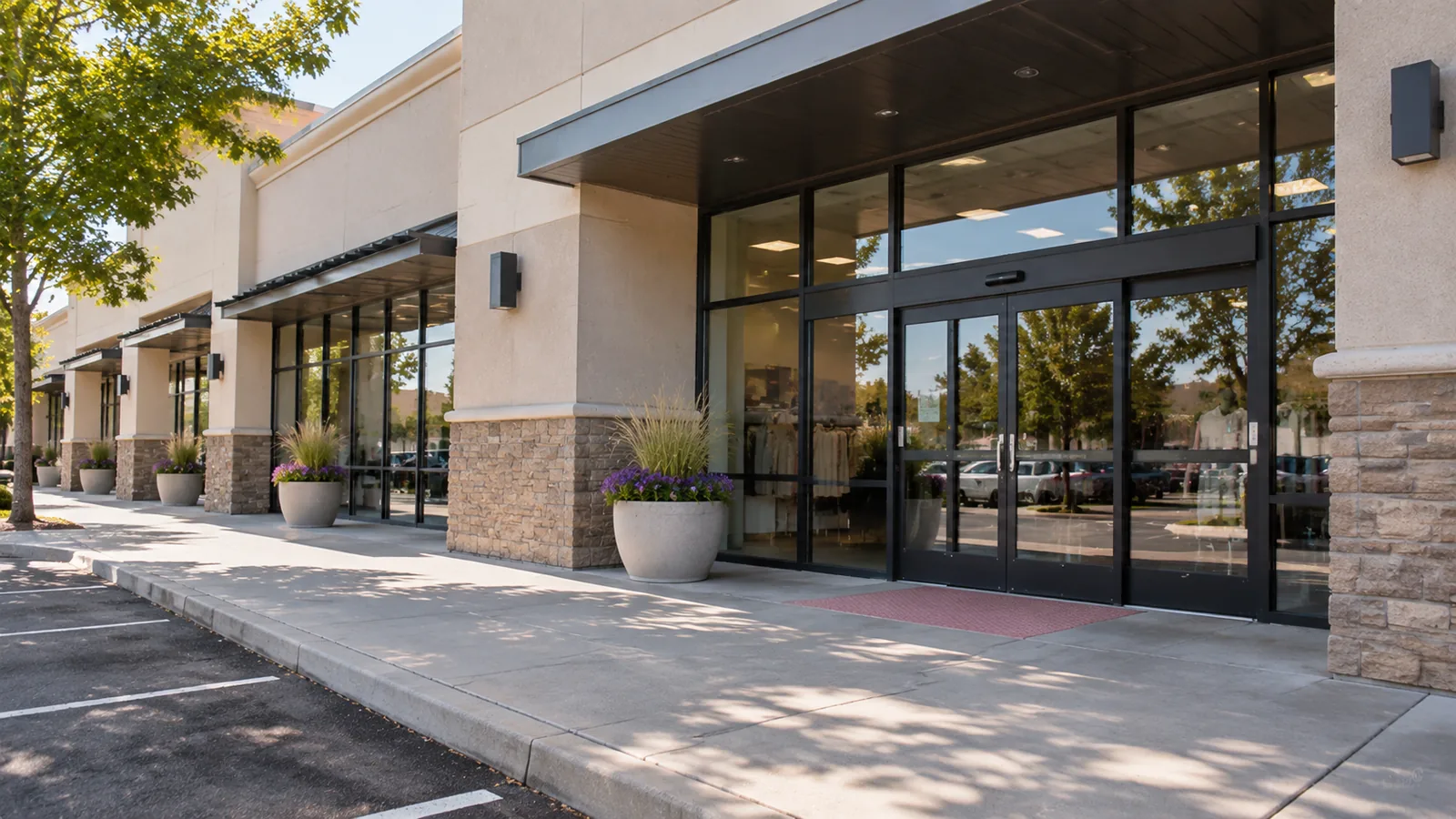
This is a hypothetical. A shopper falls at a shopping-center entrance. A receipt identifies a Ross location. A public record names a property-owning company. A maintenance invoice mentions a contractor, but no contract has been produced.
| Possible party | Question to answer | Useful verification |
|---|---|---|
| Store operator | Control of the entrance and response | Operator records, lease, testimony |
| Property owner | Retained common-area responsibility | Lease and management documents |
| Contractor | Relevant work or undertaking | Scope, timing and performance records |
These are investigation targets, not three automatically liable defendants. If the fall was inside, on a dropped item, the exterior contract may not matter. If the landlord controlled the threshold, the analysis changes.
Different parties may hold different cameras and records. A letter to one doesn't preserve the other's files; see preserving Ross surveillance video.
What should the petition claim?
Only what the facts support. Describe the event and the duties without presenting guesses as facts.
Pleading points
- Separate a hazard left in place (condition) from something happening at the time (activity).
- Alternative theories are allowed with a real basis and a plan to prove each one.
- Exemplary damages require clear and convincing proof of fraud, malice or gross negligence and are not automatic (Sec. 41.003). [S8]
- Consumer-protection claims are not added just because you were shopping.
Keep your account separate from legal conclusions. You can describe the rack, the warning or what an employee said without knowing the doctrine. That keeps the pleading accurate and lets you testify honestly later.
Does contacting a firm mean it's handling your case?
Not by itself. An inquiry, intake form or consultation doesn't establish that a firm has agreed to file suit for you.
- Written confirmation of representation and scope, once you've contacted a firm.
- A word to the new firm if another lawyer represents you, with a list of pending deadlines.
- Coordination of the file and court obligations if you're switching lawyers, since sending documents doesn't substitute counsel.
Frequently asked questions
Is Ross Stores, Inc. always the defendant? Not necessarily. The operator of that location has to be verified.
Does negotiating with the adjuster extend my deadline? No, not without a valid written agreement.
Can I sue in the county where I live? Sometimes, but the venue statute usually looks first to where the fall happened.
Why might my case end up in federal court? Diversity removal, if the federal requirements are met.
Talk to a lawyer before you file
Aaron A. Herbert is Board Certified in Personal Injury Trial Law by the Texas Board of Legal Specialization and licensed in Texas. His State Bar of Texas profile lists both. The credential helps you evaluate counsel; it doesn't mean every Ross claim should be filed. [S1]
| Ask the firm | Bring |
|---|---|
| How will you identify the defendants? | The address, date and report number |
| Who handles service and deadlines? | Letters, emails and photos |
| What evidence is still missing? | Anything you've already signed |
Fees and expenses are set by the written agreement. Tell us about your case to The Law Firm of Aaron A. Herbert, P.C., or call (214) 200-4878.
Sources
- [S1] State Bar of Texas, official profile for Aaron Alan Herbert.
- [S3] Texas Civil Practice and Remedies Code, Chapter 16, including Sec. 16.003.
- [S8] Texas Civil Practice and Remedies Code, Chapter 41, including Sec. 41.003.
- [S10] 28 U.S.C. 1332, 1446 and 1447 (federal statutes).
- [S14] Texas Civil Practice and Remedies Code, Chapter 15, including Sec. 15.002.

ABOUT THE ATTORNEY
Aaron A. Herbert
Founding Attorney
Board Certified in Personal Injury Trial Law
Aaron founded The Law Firm of Aaron A. Herbert in 2010 to focus on developing each client's case and seeking its maximum value. For over a decade, he has represented people seriously injured in major accidents and industrial catastrophes, pursuing trial verdicts and settlements while working to reduce the stress of litigation.
Education
- Texas A&M University · B.S., Criminal Justice, 1999
- University of Oklahoma College of Law · J.D., 2002; graduated in the top of his class
Trial experience & approach
Aaron earned numerous jury verdicts at boutique personal injury litigation firms. According to his biography, he spent a year as the top-earning litigation attorney at a firm that frequently appeared in verdict searches as having one of the highest numbers of trial wins in Texas. At another Dallas personal injury firm, he moved from managing pre-litigation attorney to managing litigation attorney over seven years as the firm grew into one of Dallas's largest personal injury firms.
His biography describes a reputation as one of America's most aggressive trial lawyers, with noteworthy recoveries from judges and juries and substantial pretrial settlements. Most of those settlements included confidentiality agreements requested by the defense. Aaron has said the recoveries were justified by the injuries and losses involved, which no amount of money could make someone choose to experience.
His approach combines passion, preparation, persistence and courtroom imagination. He believes a well-supported, engaged and motivated team working cooperatively helps deliver strong representation, with the goal of achieving the best possible result for every client.
Dallas roots, military service & publication
Born and raised in Dallas, Aaron enlisted in the United States Marine Corps after high school and later received an Honorable Discharge. He completed his university and law degrees after his military service and became a lifelong Sooners football fan in law school.
Publication: “Litigating Dog Bite Cases,” Texas Dog Law Seminar, Dallas, 2009.
Professional affiliations & recognition
Professional affiliations and recognition listed in Aaron’s biography:
- State Bar of Texas
- American Bar Association
- Association of Trial Lawyers of America (now American Association for Justice)
- Texas Trial Lawyers Association
- Dallas Trial Lawyers Association
- Dallas Bar Association
- Tarrant County Bar Association
- Million Dollar Advocates Forum
- The National Trial Lawyers – Top 100 Trial Lawyers