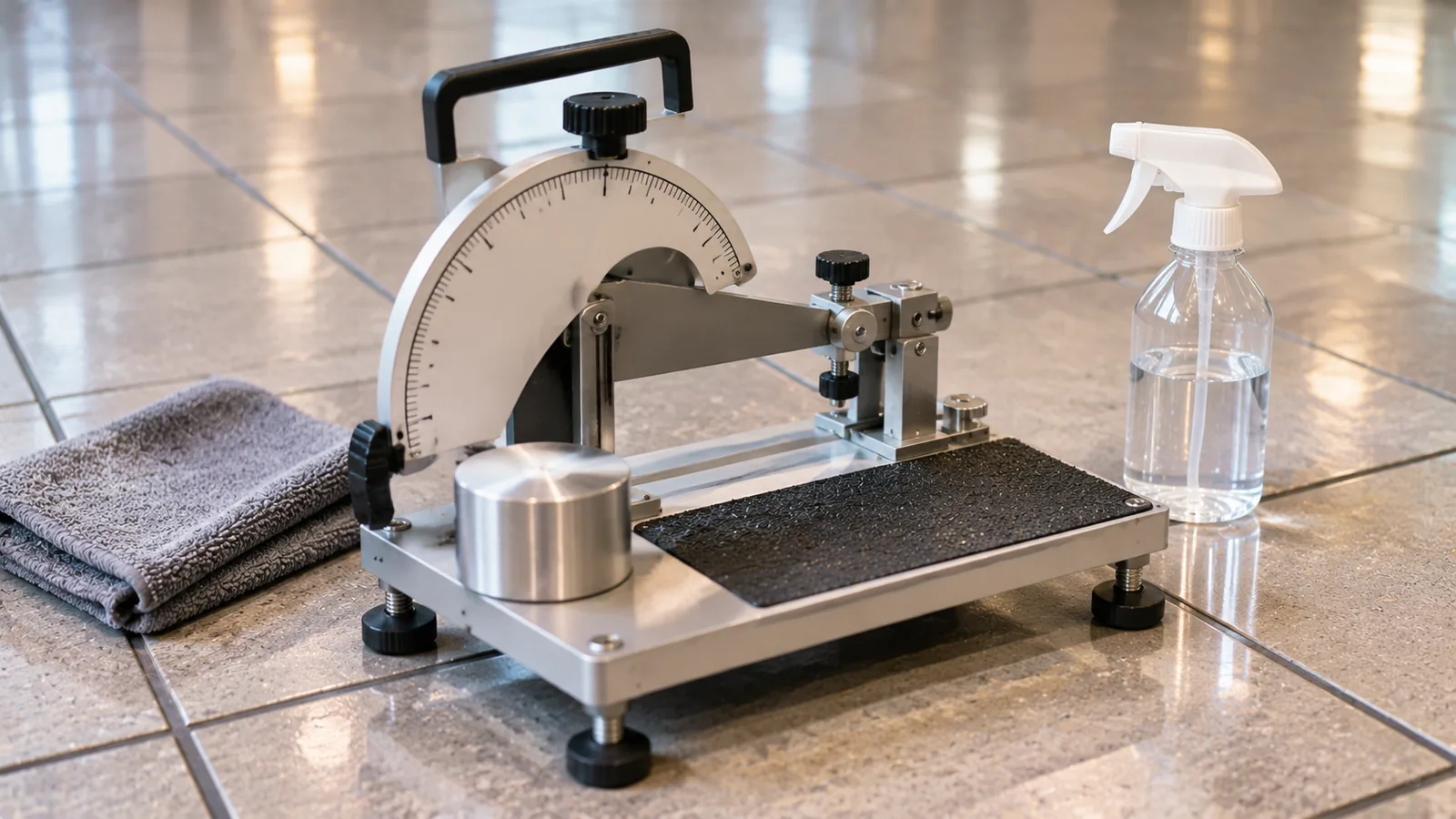
Hire an expert because a disputed question needs specialized knowledge to answer reliably. Not to make the case look expensive. Match the discipline, the method and the data to that question.
What an expert can't do
- Replace firsthand notice evidence, as when a safety consultant can't say when the spill appeared.
- Create a medical restriction, as when an economist needs a doctor's limits first.
- Decide the law, as when a standard isn't a legal duty by itself.
Qualifications, reliability, fit and timely disclosure all matter. Not every Ross case needs every expert below. This guide is part of the Ross Dress for Less injury knowledge hub; the Ross slip and fall litigation guide shows how expert proof fits the case.
What should you decide before choosing an expert?
The question. Write it in plain words first, then find the person who can answer it.
Possible field, by disputed issue
- Floor safety or tribology, for how slippery the floor was.
- Engineering, for how far the rack base stuck out.
- Digital evidence, for whether the video timestamp is right.
- Medicine, for whether the fall caused the injury.
- Vocational, for whether you can return to your job.
- Economics, for what the lost income is worth.
"Prove negligence" is not an assignment. It invites opinions outside the witness's role.
| Before hiring, ask | Why |
|---|---|
| What data does the expert need? | A later clean-floor test may not tell you about a wet floor on the accident date. |
| Does that data exist? | A vocational projection without reliable restrictions is premature. |
| Can a simpler witness answer it? | A clear photo or a treating doctor may be enough. |
An expert should explain the limits before you spend real money, not after designation.
When does a floor safety expert help?
When surface slipperiness is genuinely disputed and the test can be tied to the accident conditions.
The expert should explain
- The test method and equipment, for reliability.
- Calibration, for accuracy.
- Surface condition and contaminant, to show whether the test matches the fall.
- Footwear assumptions, to show whether the test matches you.
A number from a dry tile sample doesn't describe a wet aisle. A replacement floor isn't the original floor. Keep raw readings and note any cleaning, wear or material change.
A standard or threshold isn't self-executing law. The expert explains technical relevance; the court supplies the law.
What can an engineer add?
Measurements and analysis of heights, projections, clearances and how something behaved mechanically, when those questions need expertise.
Engineering work, and what to watch for
- Measuring today's configuration, which may differ from the accident date.
- Photogrammetry from photos, where camera angle, lens distortion and scale matter.
- A reconstruction drawing, for which dimensions were measured, estimated or assumed.
- A code opinion, for the right jurisdiction, version and provision.
A precise-looking diagram can hide uncertain inputs. You should be able to trace each key dimension to its source. A code deviation doesn't automatically create negligence per se or a private claim.
When is a video or digital evidence specialist worth it?
When exports, clock accuracy, frame timing or file integrity are really in dispute. Start by asking whether the system custodian and ordinary records can answer it.
| Digital task | What it can and can't show |
|---|---|
| A hash value | That the file hasn't changed since collection. Not that the clock was right or the whole event was recorded. |
| Image enhancement | Makes existing detail clearer. It can't add detail that isn't there. |
| Slowed or annotated clips | Fine if clearly labeled and the original is kept. |
A vehicle-style reconstruction rarely fits a human fall from a limited camera view. See preserving Ross surveillance video for why certainty can't exceed what the camera saw.
What should a medical expert address?
Diagnosis, causation, prognosis and treatment, each on its own.
Give the doctor
- Baseline records, to separate old from new.
- An accurate account of the fall, since an opinion on a wrong history is weak.
- The full treatment record, to explain the course.
Retained experts and treating providers can have different roles and disclosure duties. Decide which opinions each will give.
| Weak reasoning | Stronger reasoning |
|---|---|
| "Symptoms started after the fall." | Explains the mechanism, the timeline, and why other causes were ruled out. |
| "Every possible surgery is in the plan." | Lists likely care, timing, and frequency, with the clinical basis. |
Treatment decisions belong to doctors and patients. Litigation shouldn't build a care plan to raise a demand.
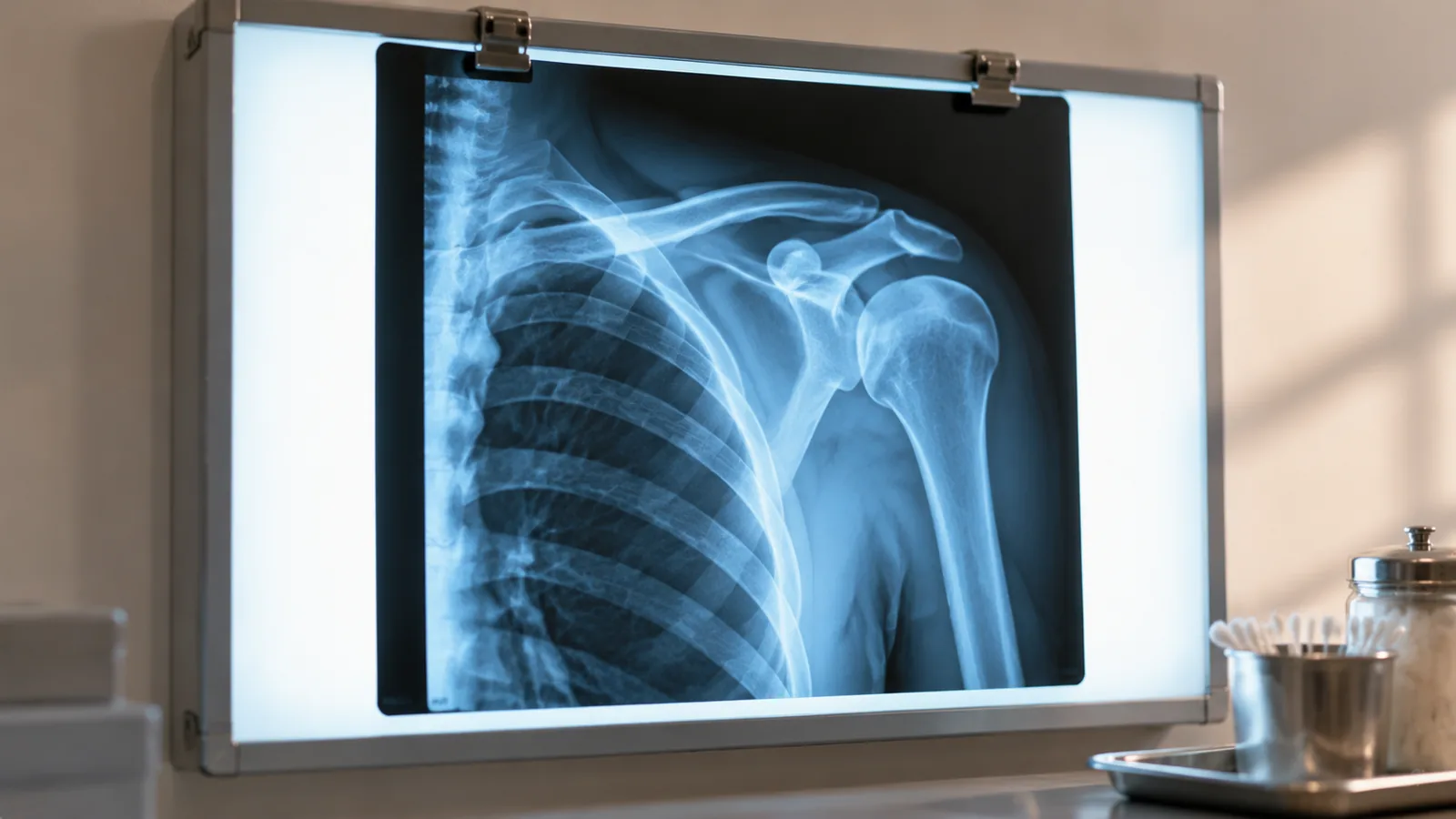
How do vocational, economic and life-care experts fit together?
As a chain. Each link depends on the one before it.
- The physician, for restrictions, based on the medical evidence.
- The vocational expert, for work capacity and realistic jobs, based on those restrictions plus skills and history.
- The economist, for the dollar effect, based on the vocational findings.
- The life-care planner, for future services and costs, based on medical recommendations.
A polished spreadsheet magnifies a bad assumption as easily as a good one. If a recommendation changes, the plan changes.
Client cost questions
- Why this expert, and what question does it answer?
- What will it cost, as an estimate in writing?
- Who pays up front, and are costs advanced or reimbursed under your agreement?
Don't assume expert costs disappear because the attorney fee is contingent. Get the terms in writing.
A worked example: the curled mat
The hypothetical file
- A shopper who says a curled mat caused the fall.
- A prior shoulder condition.
- A struggle to return to warehouse work.
- Photos taken after the fall, but not the original mat.
- Incomplete baseline medical records.
| Question | Possible field | Must come first |
|---|---|---|
| How was the mat configured? | Fact witnesses, then engineering if needed | Reliable scene evidence. |
| Was the shoulder aggravated? | The right medical provider | Records before and after. |
| What are the work limits? | Medical, then vocational | Supported functional limits. |
| What's the income effect? | Economics, if needed | A defensible vocational premise. |
Hiring an economist first won't answer whether the shoulder limits came from the fall. Testing a substitute mat may not show the original configuration. Start with the missing facts and medical foundation.
This example isn't a Ross case or a description of firm practice. A lawyer may recommend fewer experts after reviewing the record, or more if a real technical dispute justifies it.
How do you prepare for a challenge to an expert?
Texas Rules of Evidence 702 through 705 set the framework for expert testimony [S7]. Federal court applies Federal Rule 702 [S11]. Read the report the way the other side will.
Requirements, and what to confirm
- Qualifications, relevant to this specific question.
- A reliable method, accepted and properly applied.
- Fit, where the method connects to the facts.
- Timely designation, under the scheduling order or Rule 195 deadlines.
- Supplementation, done on time when facts change.
On cross-examination, focus on
- Assumptions, missing data and other explanations, for the other side's expert.
- The specific weakness, for payment, which is not proof of dishonesty by itself.
When new video, measurements or records arrive, send them to the expert through counsel and ask if the analysis changes. Keep the earlier version. A change supported by new evidence is legitimate; an unexplained one isn't.
Frequently asked questions
Does every slip and fall need an expert?
Many questions are answered by photos, witnesses and treating doctors, so no.
Can my doctor be my expert?
Your doctor can often serve as the expert on medical issues, subject to disclosure rules, so often, yes.
When are experts disclosed in Texas?
The side seeking relief discloses its experts 90 days before discovery ends, unless the court orders otherwise.
Who pays for experts?
Your written agreement decides that, which is why you should ask before major costs.
Talk to a lawyer about expert proof
Aaron A. Herbert is Board Certified in Personal Injury Trial Law by the Texas Board of Legal Specialization. His State Bar of Texas profile lists it. [S1]
Ask the firm
- Which questions need an expert here?
- How will you check reliability?
- How will you control costs?
- Will certification get the opinion admitted? No promise.
Bring
- Scene photos and information.
- Treatment history.
- Work details.
Tell us about your case to The Law Firm of Aaron A. Herbert, P.C., or call (214) 200-4878.
Sources
| Ref. | Source | Type |
|---|---|---|
| [S1] | Official profile for Aaron Alan Herbert | State Bar of Texas |
| [S7] | Texas Rules of Evidence, including Rules 702-705 | Effective July 2, 2026 |
| [S11] | Federal Rules of Evidence and Civil Procedure | United States Courts |
| [S6] | Texas Rules of Civil Procedure, including Rule 195 | Current Texas Judicial Branch compilation |
ABOUT THE ATTORNEY
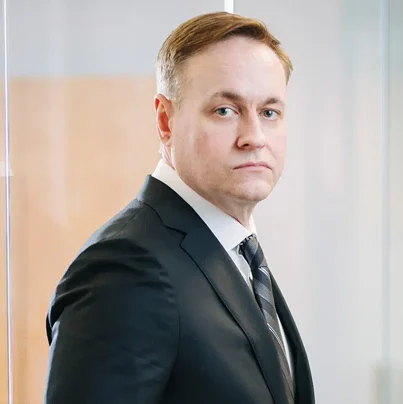
Aaron A. Herbert
Founding Attorney
Board Certified in Personal Injury Trial Law
Aaron founded The Law Firm of Aaron A. Herbert in 2010 to focus on developing each client's case and seeking its maximum value. For over a decade, he has represented people seriously injured in major accidents and industrial catastrophes, pursuing trial verdicts and settlements while working to reduce the stress of litigation.
Education
- Texas A&M University · B.S., Criminal Justice, 1999
- University of Oklahoma College of Law · J.D., 2002; graduated in the top of his class
Trial experience & approach
Aaron earned numerous jury verdicts at boutique personal injury litigation firms. According to his biography, he spent a year as the top-earning litigation attorney at a firm that frequently appeared in verdict searches as having one of the highest numbers of trial wins in Texas. At another Dallas personal injury firm, he moved from managing pre-litigation attorney to managing litigation attorney over seven years as the firm grew into one of Dallas's largest personal injury firms.
His biography describes a reputation as one of America's most aggressive trial lawyers, with noteworthy recoveries from judges and juries and substantial pretrial settlements. Most of those settlements included confidentiality agreements requested by the defense. Aaron has said the recoveries were justified by the injuries and losses involved, which no amount of money could make someone choose to experience.
His approach combines passion, preparation, persistence and courtroom imagination. He believes a well-supported, engaged and motivated team working cooperatively helps deliver strong representation, with the goal of achieving the best possible result for every client.
Dallas roots, military service & publication
Born and raised in Dallas, Aaron enlisted in the United States Marine Corps after high school and later received an Honorable Discharge. He completed his university and law degrees after his military service and became a lifelong Sooners football fan in law school.
Publication: “Litigating Dog Bite Cases,” Texas Dog Law Seminar, Dallas, 2009.
Professional affiliations & recognition
Professional affiliations and recognition listed in Aaron’s biography:
- State Bar of Texas
- American Bar Association
- Association of Trial Lawyers of America (now American Association for Justice)
- Texas Trial Lawyers Association
- Dallas Trial Lawyers Association
- Dallas Bar Association
- Tarrant County Bar Association
- Million Dollar Advocates Forum
- The National Trial Lawyers – Top 100 Trial Lawyers