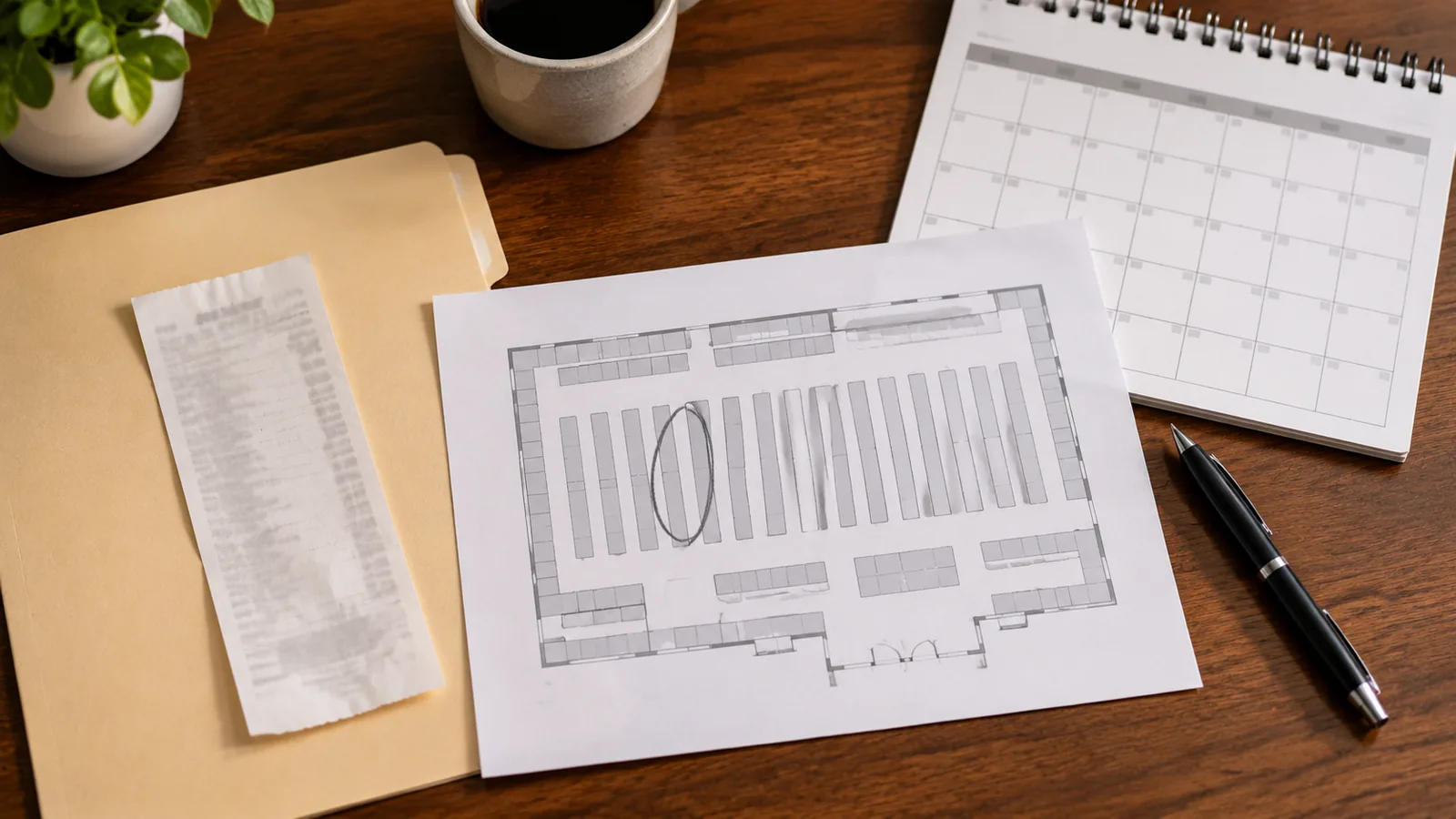
The short answer
An insurance claim and a lawsuit are two different things. A lawsuit starts when a petition is filed with the court clerk, and it still has to name the right company, land in a proper county and get served on time. Talks with an adjuster don't stop the two-year clock. S6 S3
Where to look
- The Tom Thumb and Albertsons injury knowledge hub, for every related topic collected in one place.
- The litigation guide, for how a case runs from the first photo to trial.
Is a claim number a lawsuit?
No. Under Rule 22, a civil suit in district or county court begins with a petition filed in the clerk's office. S6
What you have, and what it really means
- The manager's incident report, which means the store's own process has started, so keep the number, since it names people.
- The claim number on the adjuster's letter, which means a claim file is open but no judge has your case.
- A request for six more months of therapy records, eight weeks before the two-year mark, where sending the records doesn't pause anything.
- A voicemail saying "don't worry about the time", which is no agreement, and any extension needs a lawyer's review and clear written terms.
- A lawyer saying "we're handling the claim", where you should ask whether that means investigating, negotiating or a filed lawsuit with a cause number.
Which company ran your store?
Tom Thumb, Albertsons and Randalls are banners in the Albertsons Companies family, and a banner isn't a defendant. S20
| Source | What it shows | What it can't show |
|---|---|---|
| The caption in Albertsons, LLC v. Mohammadi, 689 S.W.3d 313 (Tex. 2024) (per curiam) | Several related companies doing business as Randall's, including LLCs and a limited partnership. S15 | Who runs a Tom Thumb in Plano, because it's a Houston Randalls case. |
| Johnson v. Tom Thumb Stores, Inc., 771 S.W.2d 582 (Tex. App.—Dallas 1989, writ denied) | The Tom Thumb company that was the tenant at one shopping center in 1989. S16 | Today's operator at any other address. |
| Current business records, saved with the day pulled | The operator matched to your exact address and the date you fell. | Anything about another address or another year. |
Start with the store address, the receipt, the date and the report number. The operator may be a subsidiary you've never seen named on a grocery bag.
- Each party's initial disclosures give the correct names of the parties and any potential parties, generally within 30 days after the first answer (Rule 194.2(b)(1) and (2)), though that helps only after filing. S6
- Certain businesses operating under an assumed name can be sued in that name, with the true name substituted on motion (Rule 28), which is a tool and not a plan. S6
- Misnomer and misidentification are treated differently, and the right company should be verified and served before the deadline rather than fixed afterward.
Who controlled the spot?
The company running the aisles may not control the sidewalk, so the question is who could inspect, warn, repair or rope off that exact spot.
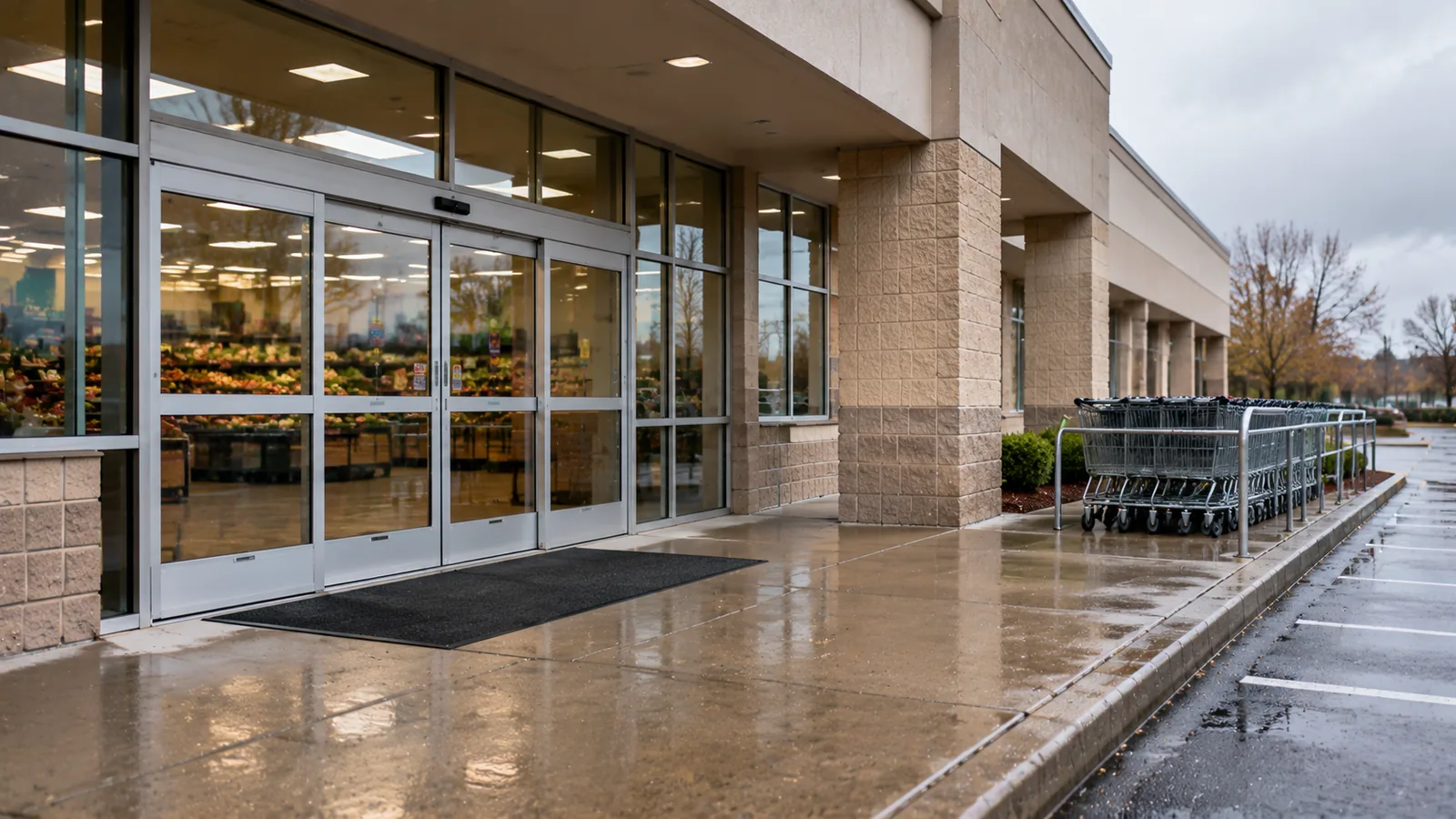
| Case | What happened | What the court held |
|---|---|---|
| Johnson v. Tom Thumb Stores, Inc. | The plaintiff broke a hip on a dew-slick glass light fixture set into the sidewalk about 10 feet from a Tom Thumb entrance, and a stipulated lease gave the landlord control of the common areas. | The court affirmed a directed verdict for Tom Thumb, the tenant, and reversed and remanded the claim against the landlord for a new trial. S16 |
Owning the land doesn't always mean controlling the condition. Leases, management contracts, service agreements and who actually did the work can matter more.
| Where you fell (hypothetical) | Who may control it | Papers that help answer it |
|---|---|---|
| Wet tile by freezer door 3 | The store operator | The sweep log, freezer work orders and aisle video. |
| Entrance mat on a rainy morning | The store operator or a mat service, depending on the contract | Mat service invoices and front-door camera footage. |
| Cracked curb by the cart corral | The landlord or shopping center owner, depending on the lease | Common-area maintenance terms and repair tickets. |
| Floor in front of a leased counter inside the store | The counter's tenant, the store or both | The sublease or license and the cleaning schedule. |
Should a landlord or contractor be named?
Only when the facts and law support it, so this hypothetical file holds three companies to investigate, not three defendants.
| Fact in the file (hypothetical) | Possible party | Where the answer usually is |
|---|---|---|
| A shopper falls at a shopping-center entrance, and the receipt shows a Tom Thumb. | The store operator: did it control the entrance and respond to the hazard? | Operator records, the lease and manager testimony. |
| The county appraisal record lists a property company as owner. | The property owner: did it keep control of the common area? | Lease terms and property management files. |
| A maintenance invoice mentions a refrigeration vendor, but no contract has turned up yet. | The vendor: what work did it do, when and where? | Work-order scope, dispatch times and technician notes. |
A vendor's name in a service history isn't enough. Naming every company in the file adds cost and delay without adding proof, so each added party should come with a written reason.
Situation, and what follows
- A technician fixed a freezer door an hour after your fall, so that technician didn't create the puddle.
- A ticket shows the vendor worked on that same drain line that morning, which is a different story.
- You slipped inside on a grape another shopper dropped, so the exterior contract probably doesn't matter at all.
- A preservation letter went only to the store, which doesn't protect the vendor's dispatch messages or the landlord's parking-lot camera, and the surveillance video guide covers who holds which footage.
How long do you have to file?
Generally two years: Section 16.003(a) requires suit "not later than two years after the day the cause of action accrues." S3
- An exception covers a minor's own claim, and a child's claim and a parent's related claim may run on different schedules (Section 16.001). S3
- Symptoms months later don't automatically restart the clock.
- When the last day lands on a weekend or holiday, the period runs to the next day county offices are open (Section 16.072). S3
- A hypothetical fall on Thursday, September 3, 2026, has two years landing on Sunday, September 3, 2028, and Monday, September 4 is Labor Day, so the filing day would generally be Tuesday, September 5.
The manager's incident report, a preservation letter asking for video and the adjuster's calls or early offers don't start a lawsuit or extend the deadline.
Service step, and what to watch
- Serving the company, which goes through the registered agent or another proper method.
- Keeping the log, in which every attempt, return and follow-up date gets recorded.
- A petition stamped the week before the deadline, where months of unexplained delay in service afterward invites a fight over whether service was diligent.
- The defendant's answer, which is due by 10:00 a.m. on the Monday after 20 days have run from service (Rule 99(b)). S6
Which county, and what's in the petition?
Section 15.002(a)(1) allows suit in the county where all or a substantial part of the events or omissions happened. S14
- Your home county is a fallback used only when the earlier subdivisions don't apply, so a Dallas County home doesn't move a hypothetical Collin County Tom Thumb fall to Dallas (Section 15.002(a)(4)). S14
- The petition states a relief category, such as monetary relief of $325,000 or less, over $325,000 but not more than $1,000,000 or over $1,000,000 (Rule 47(c)). S6
- Pleading only monetary relief of $325,000 or less puts the case in the expedited actions process, which caps the judgment at that amount with listed exclusions such as interest (Rule 169). S6
- Exemplary damages require clear and convincing evidence of fraud, malice or gross negligence, so a serious injury alone doesn't support them (Section 41.003). N1
The category is a good-faith judgment, not a number picked for effect. Alternative theories are fine when each has a real basis and an investigation plan.
Belongs in the petition
- "Slipped on clear liquid near freezer door 3 at about 4:12 p.m.," a fact you can testify to.
- Your description of the cone, the rack and what the stocker said.
- Claims that have a real basis.
Stays out until proof backs it, in the same order
- "The store knew the freezer had leaked for days."
- Legal labels you don't need to know, since leaving them out protects your later testimony.
- A consumer-protection claim added just because you were shopping when you fell.
Can the case move to federal court?
Sometimes, when federal diversity jurisdiction exists and the Title 28 requirements are met. S10
- Federal diversity jurisdiction requires citizens of different states and an amount in controversy over $75,000, exclusive of interest and costs (Section 1332(a)). S10
- There is no removal based only on diversity if any properly joined and served defendant is a citizen of the state where the suit was filed (Section 1441(b)(2)). S10
- A notice of removal generally must be filed within 30 days after the defendant receives the petition (Section 1446(b)). S10
- A case that only becomes removable later generally can't be removed on diversity more than one year after it began, unless the court finds the plaintiff acted in bad faith to prevent removal (Section 1446(c)(1)). S10
- A motion to remand for a defect other than lack of subject-matter jurisdiction must be made within 30 days after the notice of removal is filed (Section 1447(c)). S10
An LLC's citizenship generally follows its members, and a limited partnership's follows its partners, through every ownership layer. So a business entity running a store in Garland isn't necessarily a Texas citizen.
- A plaintiff adds a local defendant with no real claim just to keep the case in state court, which invites an improper-joinder fight.
- The defendant removes the case, so federal rules, the scheduling order and local rules control, even though Texas premises law still decides liability. S11
Is your lawyer handling the deadline?
Ask, because an intake form or a consultation doesn't by itself mean a firm agreed to file your suit.
Ask about, and why it matters
- Written confirmation of what the representation covers, because it shows whether anyone has actually taken on the filing.
- Another lawyer who already has your case, so say so and list any pending dates, because mailing your file to a new office doesn't cancel a deadline or change who your lawyer is.
- How the firm will confirm the operator and who calendars limitations and service, because each task needs a named owner before the deadline.
- Which court it chose and why, because more defendants or a bigger court won't make a recovery larger by themselves, and proof of liability and damages still decides that.
Common questions
The adjuster is still reviewing my claim. Is my deadline paused?
No. An open claim file, a request for more records or settlement talks don't stop the two-year clock under Section 16.003. Ask a lawyer about exceptions. S3
My receipt says Tom Thumb. Can't I just sue Tom Thumb?
The receipt is a lead. The defendant is whichever legal entity operated or controlled the spot, confirmed through business records and, after filing, the defendants' own Rule 194.2 disclosures. S6
If I file in Dallas County, will the case stay there?
Not necessarily. Venue generally follows where the events happened, and a defendant may remove to federal court if the diversity requirements are met. S14 S10
| Question | Short answer |
|---|---|
| I fell on the sidewalk out front. Who's responsible? | It depends on who controlled that stretch of concrete. In Johnson, the lease gave the landlord control of the common areas, and the tenant store won a directed verdict. S16 |
Talking to a lawyer about your fall
Bring the store address, the date, the report number, letters naming any company, your photos and anything you've signed, and ask the Law Firm of Aaron A. Herbert, P.C. which company it would name and why. To start, request a case evaluation or call (214) 200-4878.
Aaron Herbert is Board Certified in Personal Injury Trial Law by the Texas Board of Legal Specialization. You can check it on Aaron Herbert's State Bar of Texas profile. S1
Sources
S6 Texas Rules of Civil Procedure. Read source.
S3 Tex. Civ. Prac. & Rem. Code §§ 16.001, 16.003, 16.072 (limitations; disability; weekend and holiday extension). Read source.
S20 Albertsons Companies, company overview (store banners). Read source.
S15 Albertsons, LLC v. Mohammadi, 689 S.W.3d 313 (Tex. 2024) (per curiam). Read source.
S16 Johnson v. Tom Thumb Stores, Inc., 771 S.W.2d 582 (Tex. App.—Dallas 1989, writ denied). Read source.
S14 Tex. Civ. Prac. & Rem. Code ch. 15, including § 15.002 (venue). Read source.
N1 Tex. Civ. Prac. & Rem. Code § 41.003 (standards for recovery of exemplary damages) Read source.
S10 28 U.S.C. §§ 1332, 1441, 1446, 1447 (diversity jurisdiction and removal). Read source.
S11 Federal Rules of Civil Procedure and Federal Rules of Evidence. Read source.
S1 Aaron Alan Herbert, State Bar of Texas attorney profile (Board Certified, Personal Injury Trial Law, Texas Board of Legal Specialization). Read source.

ABOUT THE ATTORNEY
Aaron A. Herbert
Founding Attorney
Board Certified in Personal Injury Trial Law
Aaron founded The Law Firm of Aaron A. Herbert in 2010 to focus on developing each client's case and seeking its maximum value. For over a decade, he has represented people seriously injured in major accidents and industrial catastrophes, pursuing trial verdicts and settlements while working to reduce the stress of litigation.
Education
- Texas A&M University · B.S., Criminal Justice, 1999
- University of Oklahoma College of Law · J.D., 2002; graduated in the top of his class
Trial experience & approach
Aaron earned numerous jury verdicts at boutique personal injury litigation firms. According to his biography, he spent a year as the top-earning litigation attorney at a firm that frequently appeared in verdict searches as having one of the highest numbers of trial wins in Texas. At another Dallas personal injury firm, he moved from managing pre-litigation attorney to managing litigation attorney over seven years as the firm grew into one of Dallas's largest personal injury firms.
His biography describes a reputation as one of America's most aggressive trial lawyers, with noteworthy recoveries from judges and juries and substantial pretrial settlements. Most of those settlements included confidentiality agreements requested by the defense. Aaron has said the recoveries were justified by the injuries and losses involved, which no amount of money could make someone choose to experience.
His approach combines passion, preparation, persistence and courtroom imagination. He believes a well-supported, engaged and motivated team working cooperatively helps deliver strong representation, with the goal of achieving the best possible result for every client.
Dallas roots, military service & publication
Born and raised in Dallas, Aaron enlisted in the United States Marine Corps after high school and later received an Honorable Discharge. He completed his university and law degrees after his military service and became a lifelong Sooners football fan in law school.
Publication: “Litigating Dog Bite Cases,” Texas Dog Law Seminar, Dallas, 2009.
Professional affiliations & recognition
Professional affiliations and recognition listed in Aaron’s biography:
- State Bar of Texas
- American Bar Association
- Association of Trial Lawyers of America (now American Association for Justice)
- Texas Trial Lawyers Association
- Dallas Trial Lawyers Association
- Dallas Bar Association
- Tarrant County Bar Association
- Million Dollar Advocates Forum
- The National Trial Lawyers – Top 100 Trial Lawyers