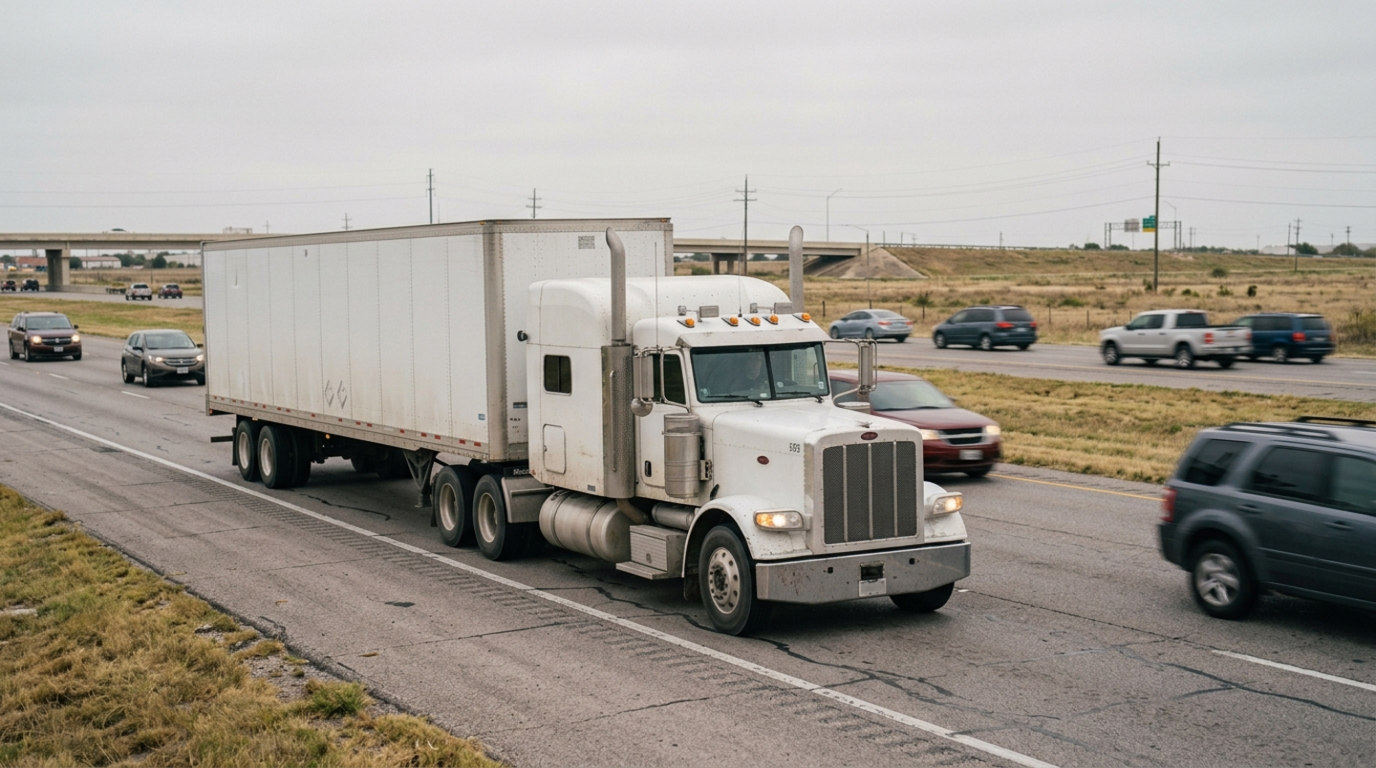
What Is an Electronic Logging Device?
An ELD is an electronic system used to prepare and maintain a driver’s record of duty status, commonly called RODS. Covered drivers generally must use an ELD unless an applicable exception permits another method. The principal federal requirements appear in 49 CFR Part 395, including § 395.8. The device’s primary purpose is hours-of-service recordkeeping—not complete accident reconstruction. ecfr.gov An ELD should therefore be understood as one source in a larger investigation. It may help answer when driving was recorded, which account was associated with the activity, and whether the recorded schedule needs further examination. It may not answer why the truck failed to stop, whether the driver looked away, or how fast the truck was traveling immediately before impact. Why this matters to clients: Calling everything a truck “black box” can hide important differences. An attorney should identify each installed system and preserve the records appropriate to the disputed issue.What Information Does an ELD Record?
ELD information includes duty-status events and associated identifiers and measurements.| Information | Investigative use |
|---|---|
| Date and time | Establish the sequence of recorded events |
| Duty status | Distinguish recorded driving, on-duty non-driving, off-duty, and sleeper-berth periods |
| Location | Place recorded events within a trip |
| Engine hours | Compare engine activity with other records |
| Vehicle miles | Evaluate recorded movement and distance |
| Driver and user identifiers | Examine who was associated with entries and changes |
| Vehicle and carrier identifiers | Connect records to the relevant equipment and operation |
How Precise Is ELD Location Data?
ELD location data can be useful without being precise enough to identify the truck’s position in a particular lane or at a particular street address. FMCSA describes on-duty location accuracy of approximately a one-mile radius. Personal-conveyance records use reduced precision of approximately a 10-mile radius. FMCSA| Technical characteristic | What it means for the investigation |
|---|---|
| Periodic location events | There may be substantial gaps between recorded positions |
| Approximate location | A plotted point should not automatically be treated as an exact address |
| Reduced personal-conveyance precision | Greater uncertainty may apply to those location entries |
| Event-triggered records | Some events can add information between periodic records |

Can an ELD Prove Speed, Braking, or Steering Before Impact?
The required ELD record does not provide a complete account of the seconds before impact. FMCSA states that ELDs are not required to collect vehicle speed, braking action, steering function, or other vehicle-performance parameters. FMCSA Some commercial platforms combine ELD functions with additional telematics services. The presence of those services must be established; it cannot be assumed from the existence of an ELD.| System | Possible evidence | Important limitation |
|---|---|---|
| ELD | Duty-status chronology and related events | Does not directly measure alertness |
| Engine or vehicle-event system | Available operational measurements | Fields and recording triggers vary |
| Fleet telematics | Route, location, or operational information | Sampling and retention vary |
| Dashcam | Visible events and, sometimes, driver behavior | Camera view, timing, and completeness matter |
| Physical inspection | Damage, tires, brakes, and other mechanical evidence | Requires appropriate interpretation |
| Scene evidence | Road geometry, debris, marks, and visibility | Conditions may change after the collision |
Can Investigators Calculate Speed From ELD Mileage?
A distance-and-time calculation may provide a broad consistency check. It generally should not be presented as the truck’s speed at impact. Consider a hypothetical:- One entry reports 100,000 accumulated vehicle miles at 8:00 a.m.
- Another reports 100,054 miles at 9:00 a.m.
Can ELD Records Prove Driver Fatigue?
They can support the investigation, but they do not directly measure fatigue. An off-duty entry does not establish actual sleep. A sleeper-berth entry does not establish restorative sleep. Conversely, an excessive-hours entry does not alone establish that fatigue caused the crash. The analysis should distinguish:- Recorded compliance: What does the duty-status record show?
- Actual activity: Do independent records support that account?
- Fitness to drive: What evidence addresses alertness?
- Causation: Did the unsafe condition contribute to the collision?
What Other Evidence Should Corroborate ELD Records?
ELD evidence becomes more useful when compared with records created independently of the log.| Independent source | Question it may help answer | Qualification |
|---|---|---|
| Dispatch messages | What instructions or fatigue reports were communicated? | Identify the participants and context |
| Gate and delivery records | When did the truck arrive or depart? | Arrival is not necessarily work or driving |
| Bills of lading | What shipment and transportation movement were involved? | Shipment details do not establish every duty-status event |
| Fuel transactions | Was the vehicle or driver associated with a stop? | Transaction and activity times may differ |
| Toll records | Was the vehicle recorded passing a location? | Vehicle movement does not always identify the driver |
| Fleet GPS | Does a separate system support the route? | Check sampling, clocks, and system gaps |
| Payroll and other-work records | Was relevant work omitted from the recorded timeline? | Evaluate the applicable definition of duty time |
| Camera footage | What conduct or conditions are visible? | Synchronize the footage and assess the view |
| Vehicle-event information | What occurred near the collision? | Establish available fields and qualified interpretation |
How Should Attorneys Document the Comparison?
Prepare a source-linked chronology that allows another lawyer, expert, or factfinder to trace material statements to their underlying records. Recommended fields include:- Original timestamp and time zone.
- Normalized comparison time.
- Source, custodian, and record identifier.
- Driver, account, tractor, and trailer identifiers.
- Event type and recorded duty status.
- Supporting or conflicting independent evidence.
- Interpretation and unresolved questions.
- Testimony or technical foundation still needed.
What Does a Corroborated Timeline Look Like?
The following example is hypothetical.| Event | Record | Initial issue | Next step |
|---|---|---|---|
| 5:10 a.m. | Facility gate entry | Truck appears at a loading site | Determine whether the driver was working or relieved |
| 5:25 a.m. | Dispatch message | Driver discusses a loading assignment | Authenticate sender and compare with duty status |
| 7:40 a.m. | ELD driving event | Recorded driving begins | Examine preceding status and complete event history |
| 11:05 a.m. | Fuel receipt | Independent stop information | Reconcile transaction time and identity |
| 4:20 p.m. | Fatigue message | Possible notice of impaired alertness | Obtain the full conversation and response |
| 5:00 p.m. | Collision | Claim arises | Compare video, vehicle data, and scene evidence |

Can ELD Records Be Edited?
Certain corrections and annotations are permitted. An edit is not automatically falsification. 49 CFR § 395.30 addresses certification, annotations, carrier-proposed edits, driver confirmation, and protection of original information. www.ecfr.gov For a disputed edit, examine:- The original entry.
- The proposed or completed change.
- The person or account responsible.
- The annotation explaining it.
- Driver acceptance, rejection, or recertification where applicable.
- Independent records addressing the underlying event.
What Is Unidentified Driving?
Vehicle movement can be recorded without being attributed to an authenticated driver account. Under 49 CFR § 395.32, drivers and carriers have responsibilities concerning unidentified-driving records, including review, assignment, or appropriate explanation. ecfr.gov Those records can raise important questions:- Who moved the truck?
- Was it a driver, mechanic, or another authorized person?
- Does the movement belong in the relevant driver’s timeline?
- How did the carrier resolve it?
- What supporting records exist?
How Should Personal Conveyance and Yard Movement Be Evaluated?
Special recorded categories should be examined in context. For personal conveyance, determine the actual purpose of the movement, the driver’s responsibilities, and whether the applicable criteria were met. A selected label alone does not resolve the issue. For yard movement, compare the event with facility records, location information, and the actual movement involved. A useful inquiry asks: What occurred, what classification was recorded, what rule governed, and what independent evidence supports that classification? This approach avoids treating every special-category entry as either lawful or deceptive without analysis.What if the ELD Malfunctioned or the Carrier Says No Records Exist?
A malfunction does not automatically prove wrongdoing or eliminate all alternative evidence. Investigate the device and provider, affected dates, diagnostic information, malfunction communications, replacement procedures, and any reconstructed or alternative records. Also distinguish these different explanations:- The operation was exempt.
- The device malfunctioned.
- Records existed but were not exported.
- A service provider holds the records.
- The requested period is outside routine retention.
- Records were lost or deleted.
Are All Trucks Required to Have an ELD?
No. Federal exceptions include qualifying limited-use logging situations, specified driveaway-towaway operations, and pre-2000 circumstances. Qualifying short-haul operations also require careful examination of the applicable recordkeeping framework. FMCSA updated its pre-2000 guidance effective October 2, 2026. It explains that qualifying older engines can matter even when the vehicle’s VIN indicates a newer model year, and that the carrier should maintain documentation of engine changes. The guidance itself is interpretive, rather than independently binding law. FMCSA Practitioner application: Obtain the factual basis for the claimed exception. Examine vehicle and engine records where relevant; do not decide the issue solely from a truck’s outward appearance. Client significance: A lawful absence of an ELD does not end the injury investigation. Paper records, dispatch information, facility records, cameras, and other sources may still establish relevant activity.How Long Must ELD Records Be Retained?
Under 49 CFR § 395.8(k), carriers generally must retain duty-status records and required supporting documents for at least six months. Section 395.22(i) separately requires a six-month backup copy on a different device. ecfr.gov That does not mean:- Every potentially relevant electronic source has the same schedule.
- Records must be deleted at six months.
- An injured person can safely wait six months.
- Regulatory retention replaces litigation-preservation analysis.
How Do Attorneys Obtain Usable Electronic Records?
The production request should describe both the information and a reasonably necessary format. For example, a request may seek an event-level export and associated edit history because a static PDF cannot answer who changed an entry or when. Texas Rule of Civil Procedure 196.4 addresses requests for electronic information. In In re State Farm Lloyds, 520 S.W.3d 595 (Tex. 2017), the Texas Supreme Court explained that format disputes require reasonableness and proportionality analysis; neither side simply dictates the result. www.txcourts.gov Counsel should identify the fields needed to resolve the actual dispute rather than demanding every electronic record without explanation. Client significance: Focused discovery can improve the evidence while controlling unnecessary expense, which matters to the eventual net recovery.What Makes ELD Evidence Suitable for Trial?
A useful record must be connected to the relevant driver, equipment, period, and issue. The foundation may require testimony explaining:- How the system records events.
- Which fields are automatic and which involve user input.
- The relevant accounts and identifiers.
- How data was exported.
- Whether the production is complete.
- How edits and clock settings affect interpretation.
What if Relevant ELD Evidence Was Destroyed?
Investigate what existed, who controlled it, when it became unavailable, and whether a preservation duty applied. The Texas spoliation framework described in Brookshire Brothers, Ltd. v. Aldridge, 438 S.W.3d 9 (Tex. 2014) requires more than the observation that something is missing. Petroleum Solutions, Inc. v. Head, 454 S.W.3d 482 (Tex. 2014) illustrates the limits on remedies that do not satisfy the governing standards. www.txcourts.gov Alternative records may still reconstruct part of the timeline. Missing evidence does not automatically establish liability or guarantee an adverse jury instruction. For clients, early preservation is about protecting proof—not promising that evidence loss will produce a larger award.How Can ELD Analysis Help Protect Financial Recovery?
ELD records do not create a fixed settlement premium. Their value depends on whether they help resolve a material liability dispute.| Investigative work | Potential client benefit |
|---|---|
| Verify driver identity | Avoid attributing relevant activity to the wrong person |
| Corroborate work and driving | Address disputed accounts of the trip |
| Examine edits and missing events | Determine whether the final report is reliable |
| Connect records to crash evidence | Support a defensible causation theory |
| Identify relevant company conduct | Evaluate responsibility beyond the driver |
| Prepare admissible proof | Reduce vulnerability to evidentiary challenges |
Aaron A. Herbert’s Analysis: Test the Timeline Before Trusting the Summary
A clean electronic log is a starting point, not a complete investigation. The key questions are: Is this the complete relevant record? Does it identify the correct driver? Do independent sources support it? Does it help explain the collision? An investigation should examine both supporting and contradictory evidence. If the records point toward a mechanical failure or another cause, the analysis should follow the evidence. Aaron A. Herbert has practiced law in Texas since 2002 and has been Board Certified in Personal Injury Trial Law by the Texas Board of Legal Specialization since 2008. His published biography identifies those credentials. injuryattorneyofdallas.com For prospective clients, the practical question is how the attorney will evaluate disputed responsibility and document the full injury claim. Certification does not guarantee an outcome.Frequently Asked Questions
Is an ELD the same as a truck’s black box?
No. ELD duty-status functions differ from engine-event recording, cameras, and other telematics. A commercial platform may contain several functions, but each must be identified.Can an ELD establish the truck’s exact crash location?
Not necessarily. Location precision and recording intervals limit what the required ELD record establishes. Other sources may provide greater detail.Does an edited log prove fraud?
No. Certain corrections are permitted. Material edits should be evaluated with their original entries, explanations, certifications, and corroborating records.What if the logs show no HOS violation?
That does not automatically rule out fatigue or another negligent act. Investigators must evaluate the driver’s actual condition and the collision evidence.Can ELD data increase my settlement?
It may strengthen a relevant liability issue, but there is no automatic increase. Damages, causation, responsibility, coverage, and other circumstances still matter.Do I need to obtain the electronic records myself?
No. An attorney can identify potential custodians and evaluate appropriate preservation and discovery steps.Discuss Your Texas Truck Accident Claim
If you or a family member suffered serious injuries in a commercial truck collision, The Law Firm of Aaron A. Herbert, P.C. can evaluate which records may matter and how the available evidence relates to your claim. You do not need the carrier’s logs before requesting a consultation. Bring available photographs, report information, witness contacts, vehicle identifiers, and medical or insurance correspondence. Request a free consultation with a Dallas truck accident attorney. For attorneys: Contact the firm about a potential referral involving disputed electronic records or a serious truck injury claim.About Aaron A. Herbert
Aaron A. Herbert is a Texas attorney and is Board Certified in Personal Injury Trial Law by the Texas Board of Legal Specialization. He has been licensed to practice law in Texas since 2002 and represents injured clients in Dallas and throughout Texas. His commercial truck accident work includes investigating driver conduct, company responsibility, electronic records, safety compliance, causation, and evidence preservation. Attorney Review Date: October 14, 2026 For a truck accident involving questions about driver qualifications, hiring, supervision, or company responsibility, a case evaluation can focus on what the carrier knew before the crash, what the driver did, what records exist, and whether the evidence establishes a legally sufficient connection between the company's conduct and the injury. This article provides general information, not legal advice. Applicable requirements and available remedies depend on the relevant operation, dates, facts, evidence, and law.
ABOUT THE ATTORNEY
Aaron A. Herbert
Founding Attorney
Board Certified in Personal Injury Trial Law
Aaron founded The Law Firm of Aaron A. Herbert in 2010 to focus on developing each client's case and seeking its maximum value. For over a decade, he has represented people seriously injured in major accidents and industrial catastrophes, pursuing trial verdicts and settlements while working to reduce the stress of litigation.
Education
- Texas A&M University · B.S., Criminal Justice, 1999
- University of Oklahoma College of Law · J.D., 2002; graduated in the top of his class
Trial experience & approach
Aaron earned numerous jury verdicts at boutique personal injury litigation firms. According to his biography, he spent a year as the top-earning litigation attorney at a firm that frequently appeared in verdict searches as having one of the highest numbers of trial wins in Texas. At another Dallas personal injury firm, he moved from managing pre-litigation attorney to managing litigation attorney over seven years as the firm grew into one of Dallas's largest personal injury firms.
His biography describes a reputation as one of America's most aggressive trial lawyers, with noteworthy recoveries from judges and juries and substantial pretrial settlements. Most of those settlements included confidentiality agreements requested by the defense. Aaron has said the recoveries were justified by the injuries and losses involved, which no amount of money could make someone choose to experience.
His approach combines passion, preparation, persistence and courtroom imagination. He believes a well-supported, engaged and motivated team working cooperatively helps deliver strong representation, with the goal of achieving the best possible result for every client.
Dallas roots, military service & publication
Born and raised in Dallas, Aaron enlisted in the United States Marine Corps after high school and later received an Honorable Discharge. He completed his university and law degrees after his military service and became a lifelong Sooners football fan in law school.
Publication: “Litigating Dog Bite Cases,” Texas Dog Law Seminar, Dallas, 2009.
Professional affiliations & recognition
Professional affiliations and recognition listed in Aaron’s biography:
- State Bar of Texas
- American Bar Association
- Association of Trial Lawyers of America (now American Association for Justice)
- Texas Trial Lawyers Association
- Dallas Trial Lawyers Association
- Dallas Bar Association
- Tarrant County Bar Association
- Million Dollar Advocates Forum
- The National Trial Lawyers – Top 100 Trial Lawyers