
Contents
A Texas truck accident case requires identifying responsible parties, preserving the truck and electronic systems, reconstructing the transport operation, connecting federal safety duties to admissible evidence, and proving causation and damages under Texas law. Investigators may need records from the driver, carrier, tractor or trailer owner, shipper, broker, loader, maintenance provider, manufacturer, roadwork contractor or another company with control. Texas Chapter 72, as amended by HB 19, requires bifurcation in qualifying cases when a defendant makes a timely motion. Plan for those trial phases at the outset, including their effect on claims, evidence and expert testimony.
Executive Guide to the Case
A crash involving a commercial truck is not just a larger-scale version of an ordinary car accident. While the physical forces are greater, the key difference lies in the institutional records. A regulated transport operation keeps records relating to the driver, the vehicle, the load, the route, the schedule, the dispatch decisions, maintenance, inspections, electronic activity, safety monitoring and the company's response. Some of these records are kept for specific regulatory periods, but other data can be overwritten, remotely altered, lost during repairs or moved out of easy access when the equipment is returned to service. The lawyer's first concern therefore has to be the preservation of the systems and the relationships, not just photographs.
The situation should be structured around four related questions. The first of these is what mechanically and behaviorally took place in the seconds leading up to the collision. The second question is as to which person or organization was in control of each safety-critical decision. The third question is what each individual knew or had reason to know before the collision occurred. The fourth question is how the plaintiff will show that the safety failure resulted in harm which is legally compensable. Each discovery request, deposition and expert assignment should be aimed at answering one or more of these questions.
1 Why Truck Litigation Requires a Systems Investigation
A tractor-trailer may be owned by one company, leased by another, dispatched by a third, maintained by yet another, loaded by a different one and insured by a separate entity. The logo on the door could indicate a trade name rather than that of the company which is actually operating the vehicle. A driver might refer to himself as an independent contractor even though he is working under the authority of another company. A broker might say that its only role was to arrange the transportation even if its communications, scorecards or operating instructions show that it has played a more significant part. The bill of lading might name the shipper, the consignee and the intermediary but not the contractor who actually loaded the trailer. A systems investigation is carried out to map out these relationships before the legal arguments become firm.
Start by looking at the vehicle's markings, its USDOT number, the license plates, the cab card, the registration, the lease agreement, the shipping papers, the bills of lading, the insurance filings, the dispatch records and the reports submitted after the crash. When you compare the names listed in these documents, confusion can result because of corporate family trees, assumed names, affiliated fleets and common safety departments. The goal is not to take legal action against all the people whose names appear on the papers; rather, it is to find out who had a duty, who had possession or control of the relevant evidence, who carried out a safety function, and whose actions caused or contributed to the incident.
2 Immediate Response and the First 72 Hours
The early hours can determine whether the case eventually contains actual electronic evidence or merely arguments regarding what previously existed. The preservation notice should specify the vehicles, the date, the time, the location, the driver, the trailer, the shipment and the companies involved. It must call for the suspension of regular actions such as deletion, overwriting, recycling, repair, disposal and reassignment. Instead of asking for 'all evidence' it should list the systems in question. This includes ELD records and edits, engine-control data, event data, telematics, dash-camera files, the inward-facing video, GPS history, collision alerts, mobile-device data, dispatch platforms, transportation-management systems, maintenance platforms, inspection applications, messaging systems and cloud repositories.
Counsel should take into account separately the results of a scene inspection, any documentation obtained by means of a drone or a survey, measurements of the roadway, data from traffic signals, video footage from nearby locations, the 911 audio recordings, the body-camera footage, access to the towing yard, post-crash testing, interviews with witnesses, and an agreed-upon inspection procedure. The tractor, the trailer, the tires, the brakes, the lights, the coupling system, the cargo securement devices and the failed components may all require independent preservation. A repair that seems to be a standard one could wipe out adjustment measurements, fault codes, wear patterns or fracture surfaces. Preservation must be appropriate, specific and should be followed by a plan to acquire the data; a simple letter does not serve to prove that the person to whom it was sent actually preserved all the sources.
2A Immediate Control Preservation and Inspection of the Tractor and Trailer
In a serious truck crash case, the tractor and the trailer act as the main sources of evidence. They must be located and placed into a documented preservation scheme as quickly as is legally possible. Just because the equipment is 'captured' does not mean that the claimant can take it over unilaterally. Rather, it means that the owner and the current person in charge should be identified, specific notice should be given, a standstill and an inspection procedure should be negotiated, and expedited discovery or the appropriate judicial remedy should be sought if there is a real risk that the vehicle will be repaired, altered, unloaded, salvaged, sold, destroyed or returned to service. Lawyers should establish who the tow yard is, who the motor carrier is, who owns the tractor, who owns the trailer, who the insurer is, who the cargo owner is and who any recovery vendor is since each of these parties may have control over a different aspect of the evidence.
The requirement regarding preservation should prevent any powering of the vehicle, the clearing of fault codes, the connection of diagnostic equipment, the moving or unloading of the cargo, the adjustment of the brakes, the inflating or replacing of the tires, the repair of collision damage, the removal of parts, the downloading or overwriting of data, and the destruction of consumable items until a reasonable inspection has taken place. It must not result in unnecessary paralysis; it should specify the evidence that is at risk, suggest timely dates for the inspection, allow safety measures which do not affect the physical evidence, and set up a procedure for taking emergency action. In the case where repairs or movement have to be made, advance notice and full documentation of the condition before, during and after the work should be required.
The lawyer should first check if the tractor and the trailer have been separated and if either of them has changed hands. They must note when, where, why and who was responsible for the separation. Towing and recovery records, photographs of the vehicles and cargo stored, inventories, invoices, release documents, chain-of-custody records and all communications should be obtained. The recovery operators might have taken photographs of the vehicles and the cargo before the movement took place; information from their equipment logs and their statements can clarify any damage or displacement of the cargo that occurred as a result of the extraction and not due to the impact.
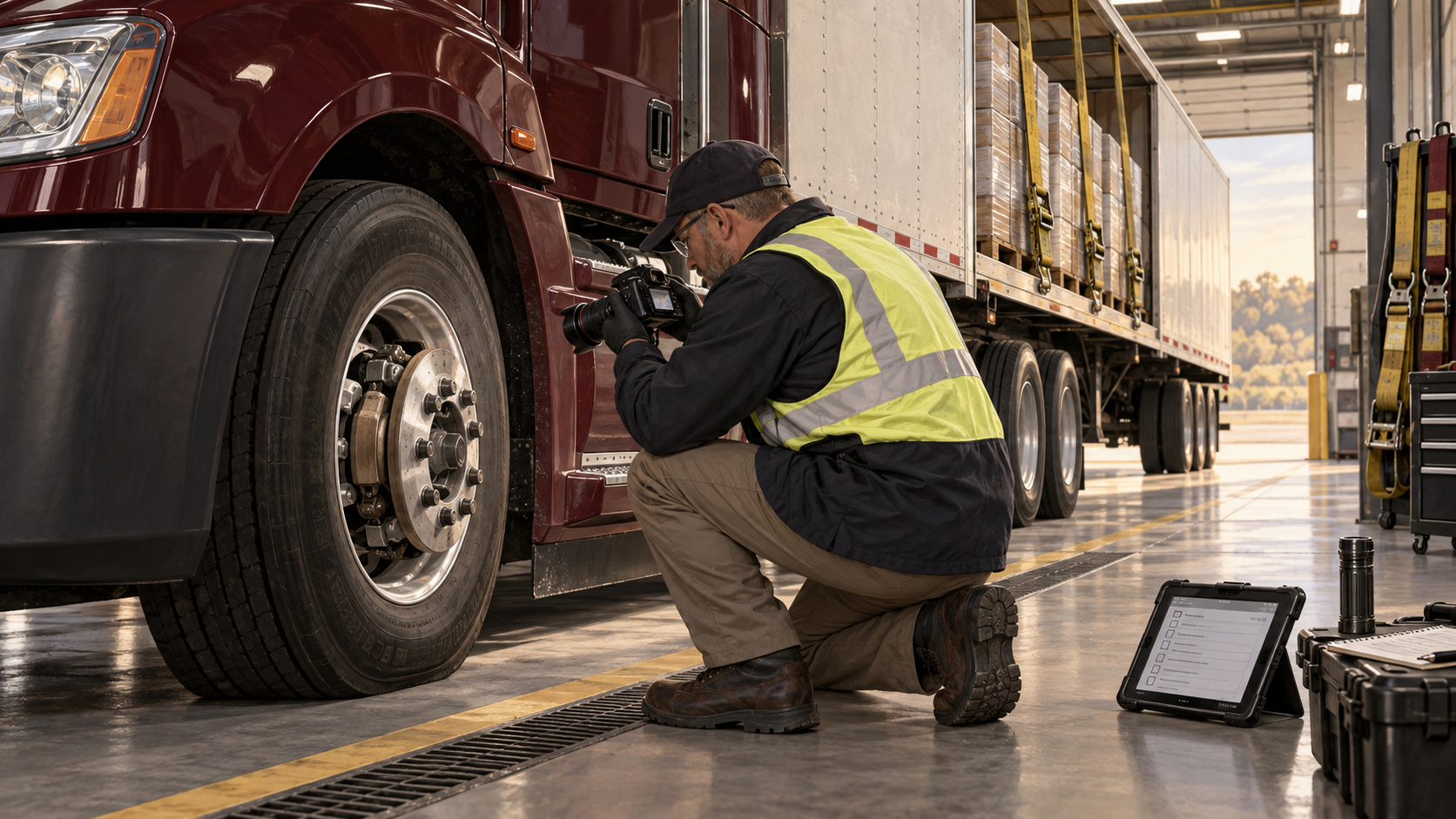
2B Tractor Inspection Protocol
A proper tractor inspection should start with taking complete documentation before the vehicle is touched, moved or powered. Photos should be taken of all sides, the undercarriage, the interior of the cab, the instrument panel, the controls, the warning lamps, the pedals, the seat position, the mirrors, the windshield and any obstructions to the view. The VIN, license plate, USDOT number, unit number, engine and transmission identifiers, the tire information, the odometer reading and any faults that are displayed should be recorded. Seals, the condition of the battery, the position of the ignition and evidence of previous access by another person to the vehicle or to the diagnostic ports should all be documented.
The inspection should be adapted to the type of collision. Possible areas to examine are the air-brake parts and their adjustment, the brake stroke, the linings and the drums or rotors, the integrity of the air system, the tires and wheels, the steering, the suspension, the lamps, the conspicuity material, the underride equipment, the coupling components, the fifth wheel, the kingpin and coupling relationship, collision-avoidance devices, lane-departure systems, automatic emergency braking and other driver-assistance technologies. It is necessary for experts to be able to tell the difference between collision damage, recovery damage and damage that was already present. All measurements, photographs and samples should be traceable to a specific component and location.
Electronic work must be carried out according to a written plan. Before making any connections, all possible modules and data sources should be identified, such as those for the engine, brakes, transmission, supplemental restraint, collision-mitigation, camera and telematics systems. The hardware, cables, adapters, software and versions used should be recorded; the native download and the reports should be kept; hashes should be calculated where appropriate; and screen captures of the material settings should be retained. Actions such as connecting tools, cycling the ignition or moving the vehicle could result in events being generated or the counters being altered. The expert should explain what actions were taken, what might have changed and why the method was reliable.
2C Trailer and Cargo Inspection
The trailer should not be regarded as secondary evidence. You are to note its VIN, unit number, ownership, registration, type, dimensions, gross ratings, axle configuration and the condition of the coupling. A check should be carried out on the brakes, tires, wheels, axles, suspension, ABS equipment, lamps, conspicuity tape, rear-impact guard, doors, latches, structural members, floor, roof, anchor points and any special refrigeration, tanker, flatbed or container system. Diagnostic information must be preserved and it should be determined whether tractor power or an alternative method is needed to obtain it.
If there is any question about the cargo's loading, securement, rollover or stopping performance, then (if it is safe to do so) records should be made of the cargo before it is discharged or rearranged. It is necessary to note the position, orientation, packaging, dunnage, voids, condition of the pallets, the seals, the straps, the chains, the binders, the anchor points and any evidence of movement. Bills of lading, manifests, scale tickets, loading diagrams, warehouse and dock videos, forklift records, seal logs and the identities of the loaders should all be obtained. Any failed securement devices must be preserved. A cargo expert should consider the impact forces and the recovery operations; merely showing displacement after a crash does not suffice to prove that there was negligence in the original loading.
When carrying out any kind of destructive examination—for example, taking apart a brake component, cutting a tire, testing a broken part or modifying a securement device—it is necessary to have first carried out non-destructive documentation and to have given reasonable notice. The procedure should include details regarding the people involved, the order in which things are to be done, the tools to be used, photography, sampling, the handling of the components, the testing laboratory, the preservation of the remnants and the allocation of the costs. If the parties in question are unable to reach an agreement and the evidence in question is material, judicial supervision might then be appropriate.
2D Forensic Crash Reconstruction and Integrated Crash Analysis
A multidisciplinary early reconstruction team might be needed in the case of a serious crash involving a commercial vehicle. The relevant disciplines could be accident reconstruction, commercial-vehicle mechanics, digital forensics, trucking safety, human factors, visibility, fatigue, cargo engineering, traffic engineering and biomechanics. The decision about who to assign should be based on the issues in dispute rather than on the wish to have every possible expert. One expert should be in charge of preparing the shared chronology, the source index and the geometry, while each expert continues to be responsible for the opinions in their own area.
The reconstruction has to take into account both physical and digital evidence—including the damage and crushing of the vehicle, contact marks, material that has been transferred, the final positions of the vehicles, skid and yaw marks, gouges, debris, the road's geometry, its grade, the coefficient of friction, the sight distance, the weather conditions, the lighting, the signal timing, the ELD records, the ECM and event data, the telematics, the GPS readings, the camera footage, information from mobile devices, the dispatch records, the 911 calls and the statements given by witnesses. The electronic data must be checked against the physical evidence of the scene. A value that has been recorded might be incomplete, might have been calculated, filtered, delayed or based on a different clock. A physical mark could have been caused by another vehicle or by a recovery operation. A reliable reconstruction should explain the limitations and consider alternative explanations.
To identify perception points, available response time, braking or steering input and the question of avoidability, a time-distance analysis should be carried out only if the supporting measurements warrant such precision. The braking performance of heavy vehicles differs in a material way from that of passenger vehicles due to factors such as the air system delay, the load, the gradient, the condition of the tires and the degree of articulation. Simulation or animation must not be used in place of actual evidence. All inputs, assumptions, uncertainties and sensitivities should be documented in order that the demonstrative serves an educational purpose rather than making claims that go beyond the evidence.
2E Drone Aerial Survey LiDAR Photogrammetry and Scene Mapping
An early aerial and three-dimensional survey is able to record features that ground-level photographs fail to capture. So long as it complies with legal flight conditions, scene control and the relevant FAA requirements, a qualified operator can record approach paths, lane widths, shoulders, curvature, grade, elevation, intersections, merge areas, sight obstructions, traffic devices, construction configurations, skid marks, gouges, debris fields, barriers, lighting and any nearby properties that have cameras. It is also necessary to document the scene from the point of view of each driver at ground level.
Although drone imagery can be used for photogrammetry, a recreational video by no means constitutes a forensic survey. It is important to keep the original image and video files together with their metadata, flight logs, ground-control data, equipment identifiers, camera settings, date, time, weather conditions, the method of processing and the coordinate system. When accuracy is important, survey-grade control points should be incorporated along with total-station measurements, GNSS, LiDAR or terrestrial laser scanning. One must determine the expected level of accuracy and then check key measurements rather than assuming that visually attractive imagery is exactly dimensional.
Temporary conditions should be given priority since tire tracks disappear, debris is cleared away, signs and barriers are moved, work zones are altered, damaged guardrails are repaired, vegetation is cut down, lighting either stops working or is replaced, and adjacent video footage is erased. Counsel should identify public and private cameras, traffic-management systems, toll readers, weigh stations, nearby businesses and residences, and vehicles that passed through the area and then promptly issue specific requests or subpoenas, keeping records of any negative responses.
2F Scene Public Agency and Independent Source Investigation
The police crash report should be regarded only as the beginning of the investigation, not as the final word on it. You must get the photographs, diagrams, measurements, the body-camera and dash-camera recordings, the 911 audio, the CAD logs, the radio transmissions, the citations, the supplementary reports, the toxicology results, the commercial-vehicle inspection reports and the evidence inventories. Find out if a specialist commercial-vehicle unit, a reconstruction team, the fire department, a hazmat contractor or the medical examiner prepared any separate records. Make sure that independent witnesses are interviewed as soon as possible and that their original communications, photographs and videos are kept.
TxDOT or a city, county, toll authority, contractor or engineering consultant may keep roadway and traffic-control evidence. Possible records consist of construction plans, lane-closure schedules, traffic-control plans, signal timing, change logs, maintenance records, complaints, previous collisions, permits, inspection reports and the records kept by traffic cameras. When claims are made against a governmental body, it is necessary to immediately consider questions of immunity, statutory waivers, notice requirements and time limits. A preservation request does not extend any legal deadline.
To ensure that weather and visibility conditions are accurately assessed, it is necessary to use reliable sources of time and location. These should include official observations, sensors on the roadways, the times of sunrise and sunset, information on precipitation, wind conditions, fog, the activation of lighting, glare angles, and vehicle lighting. Although location data from cell sites or from the application can be useful, it should not be presented as more accurate than the technology actually allows. Records obtained from third parties are generally less susceptible to control by companies and can therefore either confirm or dispute the data collected by the fleet.
2G Rapid Response Insurer and Post Crash Investigation Evidence
Investigations can be started by motor carriers, insurers and the experts they have retained within a short time. The discovery process must show when the collision was reported; who took part in the response; what photographs, scans, measurements, downloads, statements and inspections took place; which components were moved or kept; and what decisions regarding preservation were made. Because of privilege and work-product safeguards, each document has to be carefully and individually examined. Just because there is a claim of protection does not mean that it is unnecessary to find out who the custodians are, when the actions took place, what the nonprivileged business records are or what changes were made to the evidence.
Where appropriate and where it is lawful, requests should be made for post-accident drug and alcohol tests, employer reports, state reports and the company's internal incident procedures. It is important for legal counsel to differentiate between regulatory records and privileged communications with attorneys. The kind of material produced by a company's normal accident review process will be different from that obtained as part of legal counsel's litigation analysis. The investigation must obtain the facts needed for the court to determine the character of the disputed material without itself seeking any confidential advice.
2H Inspection and Reconstruction Checklist
Find the tractor, the trailer, the cargo, the detached parts and the electronic devices; determine all the custodians and owners.
Send the preservation notices which are specific to the source and get written confirmation of the standstill.
Get urgent relief if any evidence that has been identified is about to be altered or lost.
Document condition and chain of custody before moving, powering, connecting to or disassembling the equipment.
Check the tractor and the trailer individually and keep the native downloads, the diagnostic context and the component measurements.
Use ground-based, survey, LiDAR, photogrammetry and drone techniques to create a map and scan of the area.
Secure independent evidence from 911, investigating agencies, roadway and weather sources, toll and weigh-station records, and witnesses.
Combine the physical evidence with data from the ELD, the ECM, the telematics system, the cameras, the phones, the dispatch system, and the maintenance records.
Make use of a written protocol when carrying out destructive testing, sampling, evidence storage and when granting access to other parties.
Keep a ledger that lists the propositions together with the proofs for what each source supports, contradicts, or fails to address.
3 Reconstructing the Collision
Reconstruction involves combining physical evidence with digitally recorded data that is timed to correspond with the events in question. The physical conditions are determined by factors such as skid or yaw marks, gouges, debris, the final resting position of the vehicle, crushing damage, the shape of the road, the slope, the sight distance, the level of lighting and the weather conditions. Electronic control module (ECM) or event data can offer information on speed, the engine condition, brake application and other details, but the specific channels available and the recording intervals differ according to the manufacturer, model, configuration and the triggering event. Telematics can provide a more extended time frame. Video footage can show what the driver perceived, how well they could see, where they were in their lane and how they reacted. Nothing based on a single source should be regarded as completely reliable unless it has been verified.
Experts must keep the original files, determine the extraction tools and their versions, retain the hashes when suitable, record the adapters and connections, and make a clear distinction between data that has been recorded and that which has been calculated or displayed. When comparing ELD events, dispatch messages, video timestamps, toll records and cellular records, time zones and clock drift are important. The reconstruction needs to examine alternative explanations rather than just showing the plaintiff's initial theory.
4 Identifying Potentially Responsible Parties
The driver can be directly held responsible for speeding, failing to maintain a safe distance, improper lane changing, inadequate lookout, distraction, impairment, fatigue, inspection failures or for operating a vehicle that is unsafe. The motor carrier might be subject to vicarious liability if the driver is acting within the course and scope of their employment or if there exists another kind of qualifying agency relationship. Corporate liability could arise through negligent entrustment, hiring, retention, supervision, training or maintenance, but under Texas law and Chapter 72 the way some of these theories and the relevant evidence are handled is affected. The claims set out in the pleadings should be based on the facts and then be amended as discovery shows the true structure.
The case of other candidates needs to be examined separately. A person who owns a tractor or a trailer might have duties relating to maintenance, entrustment or control; a company which rents or leases vehicles may be able to rely on federal statutory protection to avoid liability merely on the ground of ownership. A maintenance contractor can be held liable for negligent inspection or repair. A cargo loader might cause the load to be unstable, overweight or not adequately secured. The shipper might keep control or be responsible for the loading. The broker’s situation can lead to issues that are highly fact-dependent regarding control, undertaking, selection and federal preemption. A product manufacturer may be involved because of a defect in design, in manufacturing or in the warning. A contractor working on the road or a government body may require a special notice, immunity and limitations analysis.
5 Texas Liability Architecture
Usually, negligence involves the presence of a legal duty, a breach of that duty, and proximate causation of damages. In the case of negligence per se, as well as when relying on statutory or regulatory evidence, more detailed analysis is needed than merely demonstrating that a regulation existed. Lawyers should determine the protected class, the hazard, the actor, the operative text, the exceptions, the causal link, and the purpose of the evidence. A safety regulation may establish an operational requirement, provide notice, serve as evidence of the standard of care, form the basis of an expert opinion, or result in the production of records even if it does not create a private cause of action.
The rules set out in Chapter 33 apply to questions of proportionate responsibility in a wide range of Texas tort cases. If a claimant is found to be more than fifty percent at fault, they are generally not entitled to recover under the statute; in all other cases, the amount of damages that can be recovered is reduced by the claimant's share of the responsibility. Responsibility can be allocated to eligible persons, this including designated responsible third parties, provided that the necessary pleadings are filed and proof is given along with compliance with the relevant procedural rules. In cases involving joint and several liability, a separate statutory analysis is required. This arrangement means that full identification of the parties and thorough discovery relating to the defense themes are essential.
6 HB 19 and Chapter 72
HB 19 added Subchapter B to Texas Civil Practice and Remedies Code Chapter 72 for qualifying commercial motor vehicle actions. On a timely motion by a defendant, the court must bifurcate a covered trial. The first phase addresses liability for compensatory damages and the amount of those damages. The second addresses exemplary damages and employer claims that the statute directs to that phase. Eligibility, motion timing, stipulations and evidentiary restrictions require attention to the statutory text. Bifurcation does not mean a trucking company cannot be held accountable.
The result in practice is that sequencing becomes necessary. The plaintiff's lawyers should decide which claims and evidence should be included in each phase, determine which regulatory evidence is relevant to the issue of negligent operation in the first phase, assess how the stipulations regarding course and scope affect the direct claims, and identify what discovery is still relevant even if the presentation is postponed. Corporate materials can be relevant to questions of control, notice, authentication, causation, credibility, punitive damages, or to a claim which has not been removed by agreement. Although the scope of discovery and admissibility at trial are connected, they are not the same. Motions in limine should not be used in place of a ruling based on the specific record.
7 The Federal Motor Carrier Safety Framework
The Federal Motor Carrier Safety Regulations are arranged according to subject matter. Part 382 relates to testing for controlled substances and alcohol; Part 383 deals with commercial driver licensing; Part 390 provides general applicability and definitions; Part 391 covers the qualification of drivers; Part 392 regulates the driving of commercial motor vehicles; Part 393 addresses the parts and accessories needed for safe operation, including those relating to cargo securement; Part 395 sets out the rules concerning hours of service; and Part 396 looks at inspection, repair and maintenance. Part 387 covers financial responsibility, and certain other parts may be relevant depending on whether the operation involves passengers, hazardous materials or special types of operations.
The regulation referred to has to be applied to the vehicle, the driver, the way it is operated and the date in question. Factors such as whether the operation is interstate or intrastate, the weight and configuration of the vehicle, the type of commodity, emergency declarations, the agricultural or short-haul rules, any exemptions and the requirements incorporated from state law could affect the analysis. When making use of 49 CFR the approach should be disciplined in that the relevant subsection should be quoted, the person who is subject to the regulation should be identified, it should be proven that the regulation applies, a connection should be made between the failure and the cause of the crash, and a compliance audit unrelated to causation should be avoided.
7A FMCSA USDOT and DOT Motor Carrier Safety Records
The Federal Motor Carrier Safety Administration, which is part of the United States Department of Transportation, gives out USDOT numbers to identify regulated motor carriers and other entities covered by the regulations. The USDOT number on a power unit can be used to access the carrier's registration record, legal name, doing-business-as name, address, operation classification, cargo classifications, the information that has been reported about its fleet and drivers, and its current status. It is advisable for counsel to take a photograph of the USDOT number at the scene and then compare it with the police report, cab card, registration, lease, insurance filings, bill of lading and dispatch documents. A USDOT number found on the door should be treated as a lead for further investigation; it does not conclusively resolve every question of agency, employment, ownership or control.
The form known as the Motor Carrier Identification Report—that is, Form MCS-150—includes details about the carrier's census and operations and is regularly updated. By referring to past MCS-150 data it is possible to monitor changes in the carrier's name, address, fleet size, type of operation or corporate identity. The FMCSA's SAFER Company Snapshot and Safety Measurement System offer public access to information on registration, inspections, collisions and safety measures. Records of operating authority and filings made by a process agent can be used to identify the legal carrier and any associated entities. However, if it is necessary to establish the exact fact, the original inspection report, crash report, filing or authenticated business record should be obtained; the information available on the public summary screen may be incomplete, updated after the incident has occurred or be subject to admissibility restrictions.
The data on motor-carrier safety issued by DOT should be used with care. The SMS percentiles and categories serve as tools for prioritizing enforcement actions, not as conclusive judgments of negligence. The fact that there was a prior inspection violation does not mean that it is automatically substantially similar to the collision in question. The more appropriate method is to first identify the basic event, get the original document, assess the similarity, find out what the carrier knew, and then link any failure to a legally pertinent matter such as notice, qualification, maintenance, supervision or credibility. Discovery should also inquire whether the carrier looked at the FMCSA data relating to itself, to a leased operator or to a carrier chosen to haul the load and what steps were taken in response.
8 Driver Qualification and Hiring
The driver's qualification file includes information about the application, previous employer inquiries, motor vehicle records, the road test or other relevant documentation, medical qualification and periodic reviews. However, that is only the starting point; discovery should examine what the carrier knew, what it had asked for, what it actually received, how any discrepancies were settled, whether there was disqualifying or high-risk information and whether the driver was still qualified on the date of the collision. Since confidentiality and regulatory procedures are important, the issues relating to the clearinghouse and drug testing must be dealt with carefully.
Just because an imperfect record is found does not mean that a negligent-hiring theory has been established; it is necessary for the evidence to show a link between a failure in hiring or in retaining an employee and a foreseeable risk which actually occurred. In the case of a crash involving fatigue, a remote violation not related to fatigue is likely to have only weak causal importance; whereas, if the crash involves a loss of control and the driver had repeatedly failed skills evaluations, the connection would be stronger. Experts should explain the significance of their views within the industry and in relation to the regulations without giving the jury any legal instructions.
9 Hours of Service Fatigue and Scheduling Pressure
The evidence referred to in Part 395 consists of ELD event data, records of duty status, edits and annotations, unidentified driving events, supporting documents and carrier review. A log may seem to be in compliance even though dispatch records, fuel purchases, tolls, gate receipts, GPS or payroll data show movement or work that is inconsistent with the recorded status. On the other hand, an apparent discrepancy could be due to time zones, personal conveyance, movement within the yard, exempt operations or a valid edit. The analysis should focus on reconstructing the duty, driving, rest and work rather than considering the ELD screen as a full fatigue diagnosis.
Fatigue analysis also takes into account opportunities for sleep, circadian rhythms, medical conditions, medication, the demands of the trip, detention, the compensation system and communications. The fact that a violation has occurred does not necessarily mean that impairment was present at the moment of impact, and a schedule that is in compliance with the law does not automatically rule out fatigue. Experts in human factors and sleep should provide the factual basis for any opinion they express and must keep regulatory compliance separate from physiological capability.
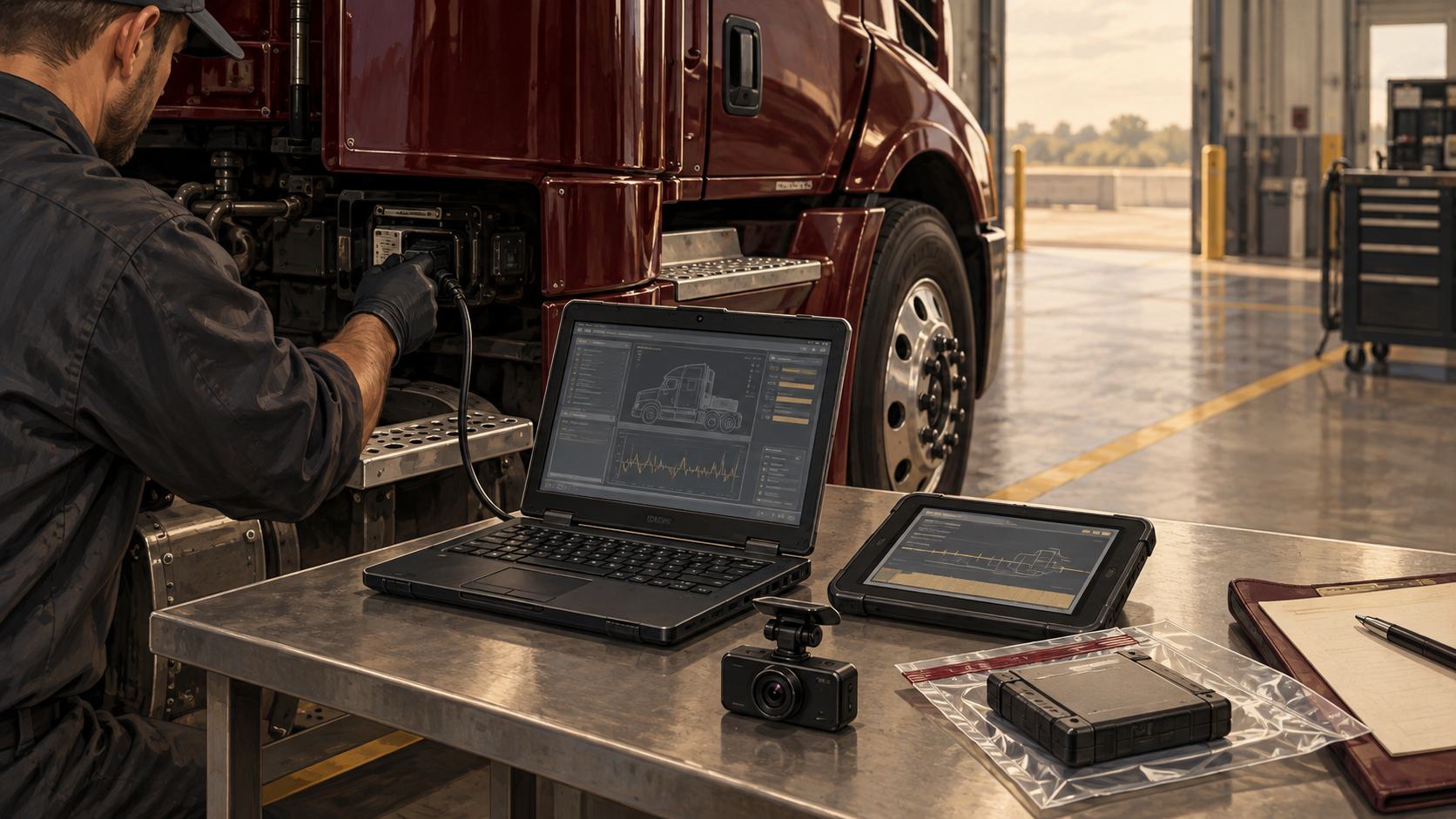
10 Electronic Evidence ELD ECM Telematics Video and Phones
Electronic evidence should be documented according to the custodian, the system, the device, the vendor, the retention policy, the method of export and the authentication witness. The information provided by the ELD covers duty status and driving events. The ECM and the event data can show the vehicle's operation in the vicinity of a qualifying event. Telematics platforms are capable of recording location, harsh braking, speed, alerts, diagnostics and fleet communications. Camera systems can store both road-facing and inward-facing footage either locally or in the vendor's cloud. Mobile phones may include calls, text messages, use of applications, navigation records and metadata, provided that privacy and proportionality limits are taken into account.
When making requests, it is important to ask for native formats that are reasonably usable, along with data dictionaries, audit trails, edit histories, time-zone settings, account configurations, retention policies, preservation actions, and information about the vendor. Screenshots or PDFs are usually not adequate since they may leave out certain fields and metadata. Legal advisers should not ask for every single byte from the entire fleet if a focused request is enough to identify the problem. Observing the principle of proportionality not only enhances credibility but also cuts down on excuses for failing to produce the requested information.
11 Vehicle Condition Maintenance and Inspection
Many of the problems relating to vehicle condition are dealt with in Parts 393 and 396. Evidence for these may consist of periodic inspection reports, driver inspection reports where they are required, roadside inspections, defect reports, repair orders, preventive-maintenance intervals, tire records, brake measurements, technician notes, vendor invoices, the parts history and recall information as well as records of the vehicle being taken out of service. The investigation must tell the difference between a defect that was already present before the crash and damage resulting from the impact.
Before destructive testing, document the chain of custody and the condition through a nondestructive examination, and follow an agreed protocol or appropriate court order. The areas that may be relevant include brake adjustment, the condition of the linings, air-system integrity, the tires, steering, lighting, the underride components, the coupling devices and the trailer systems. Maintenance software can show closed work orders, deferred repairs, repeated complaints or mileage triggers. The important question is not whether the fleet had a written program, but whether the program identified and corrected the hazard which led to the collision.
12 Cargo Loading Securement and Weight
The way in which the cargo is handled has an effect on the vehicle's stability, braking performance, tendency to roll over, and the hazards it poses on the road. In some cases, it will be necessary to have the bills of lading, the manifests, the loading diagrams, the seal records, the scale tickets, the dock video, the forklift records, the securement devices, the characteristics of the commodity, and the communications between the shipper, the loader, the carrier, and the driver. The determination of who is responsible depends on who was in charge of loading, who had access, whether the defects were latent or could be observed, who was in control of the securement, and what inspection responsibilities applied.
What an expert should do is to reconstruct the way the weight was distributed and secured, rather than simply deducing improper loading from the displacement after the crash. The damage to the trailer and the emergency response could alter the way the cargo was arranged. When cargo securement components such as straps, chains, binders, anchor points, dunnage and packaging are in contact with or involved in the failure, they should be preserved. It is necessary to separate the rules concerning cargo securement from the more general principles of loading negligence and to verify the specific requirements for the type of cargo in question.
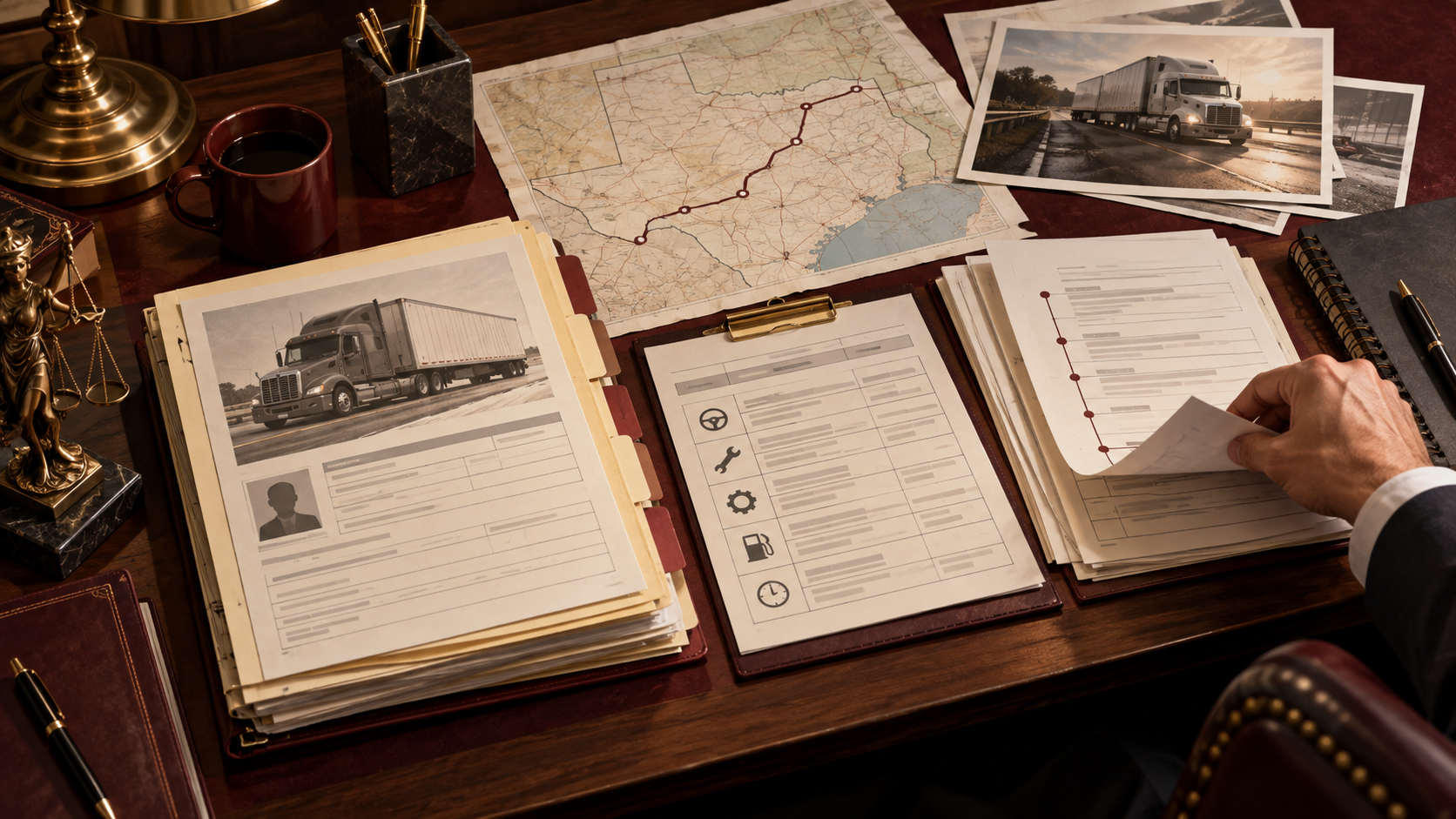
13 Corporate Discovery
Corporate discovery ought to examine decisions, systems, and knowledge. Examples of such categories are organization charts, responsibility matrices, safety manuals, driver-management policies, training modules, dispatch rules, incentive plans, scorecards, exception reports, telematics alerts, audit findings, previous corrective actions, vendor contracts, retention schedules and procedures to be followed after an incident. Requests must be linked to the issues raised, the time periods involved, the custodians and the systems in question. General requests for 'all safety documents' lead to objections and result in unnecessary clutter.
A custodian and system map should be the starting point for a discovery plan. Interrogatories can be used to identify employees, vendors, accounts and repositories. Requests for production should then focus on native records. Depositions are intended to check completeness, terminology and decision pathways. Under Rule 199.2, when dealing with corporate representatives it is necessary to state the matters to be examined with reasonable particularity and to seek organizational knowledge rather than merely requiring a specific witness. Just as important as the substantive answers are the witness's preparation process, the sources that have been reviewed and the information that is missing.
The request should be for the versions of the materials that were in effect at the time the driver was employed, when they were trained, when they were evaluated and when they were involved in the crash. Possible sources are the orientation materials, the defensive-driving modules, the instructions on backing and turning, the following-distance and speed policies, the fatigue education, the rules on distracted driving, the procedures for adverse weather, the cargo and securement instructions, the inspection training, the remedial coaching, the quizzes, the logs from the learning-management system, the qualifications of the instructors, the road-test forms and the acknowledgments. A general current manual does not show what particular material the driver actually received. It is also necessary to obtain the assignment records, the completion records, the score records, the version records, the date records, the language records, the device or account records and the remediation records.
Safety records can comprise policies, audits, roadside inspections, out-of-service events, telematics exceptions, preventability reviews, driver scorecards, complaints, coaching, discipline, corrective actions, insurance recommendations, communications and management reports from the FMCSA or the state. The hazard and the similarity should be defined before asking for several years' worth of company-wide material. Discovery must determine which system collected the information, the thresholds that triggered the alerts, the people to whom they were sent, the escalation rules, the closure requirements and the quality control measures. The aim is to demonstrate genuine organizational knowledge and response, not merely to put together a collection of unrelated flaws.
13A Deposition of the Trucking Company Corporate Representative
The corporate representative's deposition of the trucking company is a key piece of evidence. According to Texas Rule of Civil Procedure 199.2, the notice should specify the subjects to be examined with reasonable particularity. The company is required to name one or more individuals to give evidence regarding information that it knows or that is reasonably available to it. The deposition does not have to rely solely on the designee's personal memory. It is up to the lawyers to find out how the witness prepared, who he or she consulted, which systems and documents were looked at, what information was not available and whether the testimony reflects the company's position.
The topics could be corporate identity and the relationships involved; who owns and controls the tractor and trailer; the driver's position and the range and extent of his duties; the processes of dispatch and trip planning; the requirements relating to driver qualification; the procedures concerning hiring, road testing and retention; the training programs and records of completion; matters relating to supervision and coaching; the monitoring of hours-of-service; the administration of and editing of ELDs; the use of telematics and camera systems; the rules regarding mobile devices; vehicle inspection and maintenance; responsibility for the cargo; the reporting of accidents; the post-crash testing; the preservation and collection; the retention schedules; the review by the FMCSA, the USDOT, the MCS-150, SAFER and SMS; audits; previous similar warnings; and the meaning and completeness of the records produced. The topics should be focused on the collision theories, the relevant time period and the disputed systems.
Once you have collected sufficient native and basic material to enable testing of the witness, arrange the deposition. Include with the testimony organizational charts, manuals, training records, driver files, exception reports, dispatch messages, maintenance records, electronic exports, MCS-150 filings and correspondence regarding preservation as exhibits. Find out who was responsible for the duty, what input was received by that person, what rule or threshold triggered a response, what action was taken and where it was recorded. If the witness is unprepared, prepare a clear, topic by topic record of the failure in preparation, the missing information and the resulting prejudice before asking for any further testimony or relief.
Corporate testimony must be combined with the trial elements and the Chapter 72 phase analysis. It might be used to establish matters such as course and scope, identity, control, authentication, the meaning of the records, notice, causation, impeachment or preservation, even if a direct negligence claim is being postponed or restricted. The allowed purpose should be stated clearly. It is better to ask a corporate witness to give factual testimony regarding responsibilities, systems and decisions than to ask them to draw legal conclusions.
14 Spoliation and Missing Evidence
The analysis of spoliation in Texas is carried out by the court using the framework set out by the Supreme Court of Texas in Brookshire Brothers; lawyers should base their approach on evidence rather than on argumentation when addressing the duty to preserve, any alleged breach, culpability, relevance and prejudice. The fact that a video clip is missing does not mean that an adverse inference can automatically be drawn; likewise, a standard overwrite policy does not necessarily justify the deletion of data once the duty to preserve has arisen. The remedy must take into account the prejudice caused without becoming an inappropriate punishment that is not connected to the court's purpose of ascertaining the truth in the trial.
Create the record by referring to preservation correspondence, acknowledgments, retention policies, litigation-hold notices, system settings, testimony from vendors, audit logs, deletion history, repair activities and testimony regarding what the original source would have captured. Find out when the party reasonably expected litigation to arise, who was responsible for making the preservation decisions, what had been collected, how it had been exported, what had been left out, and whether there is any substitute evidence. If it is necessary, request an evidentiary hearing and suggest a remedy that is appropriate given the proven prejudice.
15 Experts and Proof Integration
The disciplines that could be considered include accident reconstruction, trucking safety, human factors, fatigue, mechanical engineering, biomechanics, medicine, vocational rehabilitation, life-care planning, economics, digital forensics, toxicology and cargo engineering. Having more experts does not necessarily result in a stronger case, and each expert should be given a specific assignment, have access to reliable data, have a clear link to the contested issues, and understand how their opinions relate to those of the other disciplines.
Construct a shared chronology and source index while still maintaining expert independence. Before the depositions, resolve the issues of speed, time, distance, and medical assumptions. Identify the key witnesses for business records and digital exports. When using demonstratives, they should explain the mechanism without going beyond what is accurate. A well-polished animation cannot make up for input that is not supported; each visual element must be traceable to evidence and be disclosed in line with the applicable rules and orders.
16 Causation and Damages
The evidence relating to liability has to be linked to the incident, and the evidence relating to the incident must be connected to the injury. Medical evidence should be used to distinguish between preexisting conditions, susceptibility, aggravation, a new injury, the need for treatment and the likelihood of future medical needs. The medical records, the imaging results, the findings from surgery, the functional tests and the expert testimony all need to tell a coherent story. Any gaps, alternative causes and later events must be looked into rather than kept hidden.
Economic damages may consist of paid or incurred medical expenses as allowed by Texas law, as well as future medical needs, lost earning capacity, household services and other legally recoverable losses. In regard to noneconomic damages, the plaintiff must provide specific evidence of pain, impairment, disfigurement, mental anguish and loss of relationship where such evidence is legally available. In catastrophic cases, each item requested should be linked to definite consequences for the plaintiff's life and should be supported by evidence rather than depend on the size of the truck to increase the damages.
17 Depositions That Build the Trial Record
The deposition of the driver should set out details regarding route, dispatch, rest periods, inspections, communications, training, distractions, perception, decisions and behavior after the crash, without assuming that the electronic record is complete. The maps, photographs, logs and relevant messages should be used in chronological order. The safety director or a company representative should explain who was responsible for each duty, how exceptions were detected, what the company knew, and the reasons why the records do or do not exist. The witnesses from the maintenance team should be able to outline the sequence from the complaint to the repair, and witnesses from vendors might be required for the telematics, camera or ELD exports.
The order in which things are done is important; taking depositions early may result in witnesses being bound by an incomplete account, while delaying them carries the risk that memories will fade and the witnesses will provide coordinated explanations. You should first get the essential native data and the basic documents, then depose factual witnesses, corporate designees, and experts in accordance with the issues, and you must reserve the right to continue if a designated witness is unprepared or if changes in the production require that the examination be altered, provided that such actions are in line with court rules and orders.
18 Motions Summary Judgment and Admissibility
One should anticipate disagreements concerning negligent hiring and entrustment following stipulation, regulatory relevance, subsequent remedial actions, previous incidents, safety ratings, hearsay, authentication, the reliability of expert evidence, demonstratives, punitive evidence and the sequence under Chapter 72. In responding to a no-evidence summary-judgment motion, it is necessary to provide, for each element, the relevant proof together with references to the record, not merely to attach the investigation file. For a traditional summary-judgment motion, address the movant’s actual grounds and evidence. Check the applicable version of Rule 166a, including the revisions effective March 1, 2026 for motions filed on or after that date.
Digital evidence needs to be well established. While business-record affidavits might deal with some of the problems they won't address questions such as whether an export is complete, the meaning of a field or how the timestamps were created. In such cases, a knowledgeable witness, the system documentation and the forensic process may be necessary. It is important to record any objections and make offers of proof. If the evidence has more than one allowable use, then the reason for its relevance—namely, that it is non-character, non-punitive or relates to the first phase—must be stated clearly.
19 Trial Architecture
A strong truck trial consists of a clear series of safety decisions rather than being a full-scale collection of regulations. You must introduce the people involved and the way in which they operated, explain the hazard, show how it could have been prevented, reconstruct how the incident took place, establish the way in which the injury occurred, and prove the human and economic consequences. The regulations that actually help to make those decisions should be used. The jurors should understand who had the ability to do something, when they knew this, and how the failure led to the event.
The charge and the verdict form must have an effect on the discovery process from the start; you should identify all proposed responsibilities, any agency issues, the damage elements and the grounds for awarding exemplary damages. Chapter 72 has the possibility of altering the order of the phases. Witnesses and demonstrative evidence should be prepared for the phase in which the evidence might be admitted. Do not include any issues that ask the jurors to punish lawful trucking or decide the case on the basis of a general fear.
20 A Litigation Work Plan
| Stage | Core Work |
|---|---|
| First 72 hours | Send system-specific preservation; secure vehicles and components; inspect scene; collect public and third-party sources. |
| First 30 days | Map entities and insurance; obtain crash materials; identify systems, vendors and custodians; retain essential experts. |
| Pleadings stage | Plead supported direct and vicarious theories; analyze Chapter 72, Chapter 33, venue, limitations and federal issues. |
| Written discovery | Request native evidence, policies, contracts and source-system information in sequenced, issue-specific sets. |
| Depositions | Take driver, eyewitness, investigating officer, company, maintenance, vendor, medical and expert depositions in a planned order. |
| Dispositive and evidentiary motions | Build element-by-element proof charts; brief admissibility, spoliation, Chapter 72 and expert issues. |
| Trial | Align chronology, witnesses, exhibits, charge, phase structure, causation and damages into one verifiable narrative. |
21 Frequently Asked Questions
What makes a truck-accident lawsuit different from a car-accident claim?
The commercial trucking industry generates regulated corporate and electronic records and can involve a number of companies each having their own responsibilities. A typical investigation will look at federal safety regulations, the records of the motor carrier, the vehicle's systems, the cargo documents, corporate witnesses, and specialist experts.
Who may be liable?
The defendants who may be involved will depend on the question of duty, control, or causation, and can include the driver, the motor carrier, the owner of the tractor or trailer, the lessor, the contractor responsible for maintenance, the person who loaded the cargo, the shipper, the broker, the manufacturer, the contractor who carried out work on the road, or another driver.
What electronic data should be preserved?
Possible sources are the ELD event files and edits, the ECM or event data, the telematics, the GPS history, the dash-camera and inward-camera files, the mobile devices, the dispatch messages, the collision alerts, the maintenance platforms and the cloud vendor data.
Does a federal safety violation automatically win the case?
No. Counsel has to show that the rule applied to the operation, name the person who was the subject of the regulation, prove the breach with admissible evidence, and link it to the collision and the harm claimed.
What is HB 19?
HB 19 established a statutory framework in Chapter 72 of Texas for actions involving commercial motor vehicles, covering the bifurcation procedures and the rules relating to the order and use of evidence.
Can a trucking company erase ELD or video data?
With ordinary retention settings, systems may overwrite data, but a duty to preserve can come about if it is reasonable to anticipate litigation. The question of whether missing evidence entitles one to relief will depend on duty, breach, culpability, relevance and prejudice.
How are multiple defendants handled?
The Texas Chapter 33 may apportion the percentage of responsibility among persons who qualify. A claimant's own percentage can either reduce or eliminate recovery, and separate rules apply to responsible third parties and joint-and-several liability.
How long does a person have to sue?
Most personal-injury and wrongful-death claims in Texas are covered by a two-year limitation period, but in cases involving accrual, tolling, governmental notice, survival claims, minors and other situations an individual assessment is required. Steps should be taken to preserve the evidence as early as possible.
Is the police report enough to identify the carrier?
The report is a starting point; vehicle markings, the USDOT records, the registration, the leases, the bills of lading, the cab cards, the dispatch records and the insurance documents could be used to identify further entities.
Why does native data matter?
The native files can include the fields, metadata, audit history and relationships which are left out by a screenshot or PDF; native production also enables qualified experts to check completeness, timestamps and meaning.
Does compliance with hours-of-service rules eliminate fatigue?
No—regulatory compliance and physiological fatigue are related yet distinct; sleep opportunity, circadian timing, health, work demands and actual behavior can still be important.
What does a corporate representative do?
A witness who has been properly designated gives evidence concerning matters that are known or reasonably accessible to the organization having carried out reasonable preparation. The deposition can be used to show the systems, the responsibilities, the meaning of the records and the corporate positions.
This material is for educational purposes only and should not be regarded as legal advice or as establishing an attorney-client relationship. Since regulations, statutes and cases are constantly changing and exceptions may affect the outcome, it is necessary for a qualified lawyer from Texas to examine the specific facts and the current law in individual cases.
Evidence Source Map
An evidence map which is defensible should list the source, the owner, the custodian, the vendor, the date range, the retention setting, the method of export, the format, the authentication witness, the preservation status and the relevance of each source. For instance, in the case of a telematics platform the map should show whether the carrier or the vendor has the authoritative copy; whether the raw values differ from the displayed values; how events are triggered; what time zone the interface employs; whether historical configuration is available; and whether an export includes any deleted, edited or unassigned events. The map then acts as a discovery control document and helps to avoid the usual mistake of receiving a visually appealing report which omits the fields required by the expert.
Entity and Control Map
The map of the entity should position contracts next to conduct. Although a written agreement might exclude control, dispatch instructions, compulsory routing, performance scorecards, branded technology, the right to terminate, or the possibility of real-time intervention all indicate how the work was carried out. On the other hand, a company's commercial interest in a shipment by itself does not establish a tort duty. For each defendant that is proposed, it is necessary to note the duty claimed, the evidence of control or undertaking, the causal act, the defenses, the discovery that is required and that is available, and the insurance that is in place. By adopting this systematic approach the map avoids both failing to include enough and making indiscriminate claims.
FMCSA and USDOT Research File
Prepare a research file for each USDOT number and company name dated accordingly. Make sure that the SAFER snapshot, the registration status, the MCS-150 details, the operating-authority records, the insurance and process-agent information, and any relevant SMS or inspection materials are all included. Then get the original records for any facts that are to be used in pleadings, depositions, or at trial. Compare the agency identifiers with those found on the tractor, trailer, cab card, lease agreement, shipping papers, and the dispatch platform. Note the date and time when each public page was accessed since the agency data may change.
Chronology and Knowledge Proof
Prepare parallel chronologies for the vehicle, the driver, the trip, the load, and the corporation. The timeline for the driver should include details about resting, carrying out duties, moving, undergoing inspections, making communications, and taking decisions. For the vehicle, the timeline should cover complaints, inspections, faults, repairs, and mileage. The corporate timeline should include alerts, the results of audits, coaching actions, scheduling matters, decisions regarding retention, and the post-event actions taken. Once these chronologies are aligned, they show who was given a warning and whether the organization took action before the risk actually occurred. They also highlight any conflicts in the timestamps that have to be resolved before testimony is given.
Regulation to Evidence Matrix
For every regulation that is cited, the operative date, the exact subsection, the facts relating to applicability, the person who is regulated, the conduct that is required, the alleged failure, the supporting record, the causal mechanism, the witness, and the anticipated defense should be identified. This matrix prevents an expert from including irrelevant violations and enables him or her to tell the difference between a recordkeeping deficiency and the unsafe behavior which the recordkeeping was intended to monitor. The matrix must be updated whenever exemptions, intrastate rules or a disputed carrier status arise.
Native Production Protocol
A production protocol may indicate the file format, the metadata, the files to be loaded, the data dictionaries, the audit history, the time-zone information, the de-duplication procedure, the redaction method and the means for secure transfer. It must allow for proportionality and include provisions for confidential information. In the case of databases, a negotiated export might be more useful than an image of the user interface. With regard to video, ask for the native clip, the player if needed, the associated metadata, the event trigger, the pre- and post-event buffers and the retention settings. For ELDs, ask for event-level data, edits, annotations, unidentified-driving events and the supporting documents.
Inspection Protocol
The inspection procedure must specify the participants, give notice, state the location, list the equipment, define the permitted operations, indicate the data connections, allow photography and scanning, permit the removal of components, include destructive testing, deal with sample custody and assign the costs. Make a note of the vehicle's condition before anyone powers it, moves it or attaches a diagnostic tool. Take photographs of the identifiers and seals. When parties who are competing are present, keep to an agreed order and let them observe. Destruction can only take place after non-destructive documentation and with the appropriate agreement or order.
Corporate Knowledge and Notice
Corporate notices can be generated on the basis of driver reports, roadside inspections, maintenance complaints, telematics alerts, coaching sessions, audit findings, claims, customer reports and entries on the exception dashboards. The appropriate question to ask is not whether the company had vast quantities of data, but rather whether a specific system sent a significant warning to someone who had responsibility for taking action. Discovery should focus on identifying the thresholds, the people to whom the alerts are sent, the escalation rules, the closure fields and the quality checks. A red alert indicating that no one had been assigned to look at it might lend support to one theory whereas an alert which had been actively investigated and reasonably closed would support a different one.
Prior Incidents and Similarity
Although past incidents may be relevant when considering notice, feasibility or some other permitted objective, it is necessary to establish both similarity and admissibility. The hazard should be defined as narrowly as possible—for example, in terms of the same driver behavior, component, alert, route condition, training failure or method of cargo. One must gather sufficient information to compare the circumstances rather than depending on the number of incidents. Accidents, citations, complaints and internal coaching events should all be treated separately since each type has different levels of reliability and evidential significance.
Damages Source File
When preparing a damages source file, each claimed consequence must be linked to admissible evidence and track providers, diagnoses, objective findings, treatment, restrictions, bills, the amounts that have been paid, future recommendations, work history, wage records and the impact on daily life. Alternative defenses and any missing evidence should also be recorded. In the case of a catastrophic injury, the life-care plan, medical opinions, economic projections and family testimony all have to be based on the same set of assumptions; demonstratives should make these assumptions clear rather than just giving a single total without explanation.
Trial Proof Chart
Build the trial proof chart around the elements, witnesses, exhibits and admissibility foundations. Include the Chapter 72 phase in which each item belongs and the proposed responsibility submissions. The chart should reveal missing proof while there is still time to obtain it. A persuasive account of the company's conduct still has to establish the required negligence, causation and damages for each defendant.
Advanced Issue Spotting Field Manual
Treat this field manual as a tool for developing cases instead of as a pleading checklist. When taking in the cases, classify each issue as either potentially relevant, currently unsupported, excluded because of the known mechanism, or requiring the input of an expert. After the vehicles have been examined, the native data has come in and the main witnesses have been interviewed, go back and revise the classification. A theory which seemed central in the initial crash report might turn out not to be relevant when video or physical evidence shows a different sequence of events. On the other hand it is also possible that a normal rear-end collision will only show signs of a dispatch, fatigue, brake, or distraction problem after the data from different sources has been brought together.
For every live issue, keep a record that lists propositions and proofs. State the factual proposition in a neutral way, give a list of sources that support it and those that contradict it, state the foundation on which it is based, note any risks concerning its preservation, assign responsibility for it together with a deadline, and specify the element or defense that is affected. This kind of ledger separates the process of investigating from that of advocating and helps to reduce confirmation bias. It also enables counsel to explain why a requested system, custodian or time period is proportionate. If a source goes against the current theory, then the conflict must be preserved and looked into. Credibility with both the court and the jury relies on admitting what the evidence does and does not establish.
The field manual should also be coordinated with the requirements relating to confidentiality, privacy and protective orders. When it comes to driver medical records, drug and alcohol test materials, personnel data, customer contracts, proprietary system documentation and video of people who have no connection to the case, narrower requests, redactions, attorney-eyes-only status or court supervision may be necessary. It is important that protection maintains legitimate confidentiality without permitting a party that is producing the evidence to substitute it with an unusable summary. A protocol that has been negotiated can cover the secure transfer, access, involvement of experts, return or destruction and the use of the materials at deposition and trial.
This field manual discusses common investigation questions. A public guide cannot disclose client confidences, protected discovery or the strategy of a pending case. Any use of these methods in litigation must account for the client's facts, confidentiality duties and current legal authority.
ELD integrity
The definition of the issue should involve unidentified driving, edits, annotations, personal conveyance, yard movements and the relevant documentation. Counsel should start off by looking at the collision mechanism and the disputed element before specifying the smallest complete set of facts necessary to resolve the issue. This avoids a general safety audit taking the place of evidence. It also allows the recipient to keep the identifiable systems and enables the court to assess proportionality having a specific record.
Record and witness plan. The main sources to consider are the event-level export, the user accounts, the edit audit trail, the records of device malfunctions, and the motor-carrier review. For each of these sources, it is necessary to determine who the owner is, who the custodian is, who the vendor is, the date range, the native format, the metadata, the retention policy, the method of export, and the authentication witness. Wherever possible, the record produced should be compared with an independent source. If the information is not available, then it should be noted when it existed, how it was lost, who made the decisions regarding preservation, and what substitute records remain. A corporate representative should be ready to provide knowledge about the organization, not just rely on personal memory.
The main aim is to determine whether the reconstructed timeline of duties supports a fatigue theory, that there has been falsification, that the review was inadequate, or that there is no substantial violation. To answer this, it is necessary to link together the duty, the breach, the causation and the damages where these elements apply. Regulatory language, internal company policy and practices within the industry may have different evidentiary values and should not be combined into a single standard. Make preparations for the anticipated defense, provide the basic response, assign the expert and propose the stage for trial. Record any uncertainties rather than forcing a conclusion that the source does not support.
ECM and event data
The definition of the issue should involve looking at speed, braking, throttle position, engine condition, diagnostic events, and the limitations of the recording. Counsel should start off by examining the mechanism of the collision and the element in dispute, then identify the minimal set of facts necessary to determine the issue. This approach ensures that a general safety review does not take the place of actual evidence. At the same time it allows the recipient to keep the identifiable systems and enables the court to assess the proportionality based on a specific record.
Record and witness plan. The priority sources should be the native download, the adapter, the software version, the calibration details, the tire information, the trigger explanation, and the chain of custody. For each of these sources, it is necessary to determine the owner, the custodian, the vendor, the date range, the native format, the metadata, the retention policy, the method of export, and the authentication witness. Wherever possible, the record produced should be compared with an independent source. If the information is not available, then it should be recorded whether the information existed, how it was lost, who made the decision regarding preservation, and what substitutes are still in place. A corporate representative should be ready to provide knowledge about the organization, not just rely on personal memory.
The main aim is to determine whether the values reliably cover the pertinent seconds and are in line with physical evidence. To answer this, the duties, any breach, the question of causation and the damages must all be taken into account. Regulatory language, internal company policy and practices within the industry may have different evidential functions and should not be combined into a single standard. Make preparations for the likely defense, provide the basic response, assign the expert and propose the stages for the trial. It is necessary to note the uncertainties rather than forcing a conclusion that the source does not support them.
Telematics and camera systems
The definition of the issue involves the telematics and camera systems investigation covering GPS history, harsh-event alerts, the road-facing video, the inward video, diagnostics, and coaching events. Counsel should start off by looking at the collision mechanism and the contested aspect before specifying the minimal set of facts necessary to decide the issue. This approach ensures that a general safety audit does not take the place of actual evidence and also allows the recipient to keep the identifiable systems while enabling the court to assess the proportionality based on a specific record.
Record and witness plan. The main sources should be the vendor identity, the historical configuration, the event buffer, the raw export, the metadata, and the retention and access logs. For each of these sources, it is necessary to determine the owner, the custodian, the vendor, the date range, the native format, the metadata, the retention policy, the method of export, and the authentication witness. Wherever possible, the record produced should be compared with an independent source. If the information is not available, then it should be noted when it existed, how it was lost, who was responsible for the decision regarding preservation, and what substitutes are still in place. A corporate representative should be ready to provide knowledge about the organization, not just rely on personal memory.
The main aim is to determine whether the platform gave a warning about the specific risk and whether the video or the data is complete. To answer this, the duty, the breach, the causation and the damages must all be taken into account as appropriate. Since regulatory language, internal policy and industry practice may have different evidential values, they should not all be combined into a single standard. Make preparations for the likely defense, provide the basic response, assign the expert and propose the stage for the trial. Note the uncertainties rather than forcing a conclusion that the source does not support.
Driver qualification
The definition of the issue involves looking at the truth of the application, the driver's previous employers, their licensing, medical fitness, the road test, and the annual review. The lawyer should start off by examining the mechanism of the collision and the element in dispute, then identify the minimal set of facts necessary to decide the issue. This stops a complete safety audit taking the place of actual evidence and also allows the recipient to keep identifiable systems, enabling the court to assess proportionality against a specific record.
Record and witness plan. The main sources to consider are the complete qualification file, the source inquiries, the motor-vehicle records, material that complies with Clearinghouse requirements, and the decision notes. For each of these sources, it is necessary to determine who the owner is, who the custodian is, who the vendor is, the date range covered, the native format, the metadata, the retention period, the method of export, and the authentication witness. Wherever possible, the record in question should be compared with an independent source. If the information is not available, then it should be recorded clearly stating when it existed, how it was lost, who was responsible for the preservation decisions, and what substitute records remain. A corporate representative should be ready to provide knowledge about the organization, not just rely on personal memory.
The main aim is to determine whether the carrier knew or ought to have known about a qualification risk that was causally connected. To answer this, it is necessary to consider the elements of duty, breach, causation and damages as are relevant. Regulatory statements, internal policies and practices within the industry may have different evidential functions and should not be combined into a single standard. You should prepare the expected defense, the basic response, the appointment of an expert and the suggested stage for trial. Document the uncertainty rather than forcing a conclusion that the source does not support.
Dispatch and scheduling
The definition of the issue should involve looking at appointment times, route requirements, detention time, compensation, relays, weather conditions and management communications. Counsel should start off by examining the mechanism of the collision and the disputed aspect, then specify the minimum set of facts necessary to decide the issue. This stops a general safety audit taking the place of evidence and also allows the other party to keep identifiable systems, enabling the court to assess proportionality based on a specific record.
Record and witness plan. The main sources to be used are the TMS data, the load tender, the dispatch messages, the GPS data, the payroll records, the customer records and the exception reports. For each of these sources, the owner, the custodian, the vendor, the date range, the native format, the metadata, the retention period, the method of export and the authentication witness should be identified. Where possible, the record produced should be compared with an independent source. If the information is not available, then it should be noted when it existed, how it was lost, who made the decision regarding preservation and what substitute records remain. A corporate representative should be ready to provide knowledge of the organization, not just rely on personal memory.
The main aim is to determine whether the business requirements foreseeably encouraged unsafe speed, fatigue, or omissions during inspection. To answer this, it is necessary to link together duty, breach, causation and damages where these are relevant. Regulatory language, internal policy and industry practice may have different evidential values and should not be reduced to a single standard. Make preparations for the likely defense, the basic reply, the appointment of an expert and the suggested stage for trial. It is important to note the uncertainties rather than forcing a conclusion which the source does not support.
Vehicle maintenance
The definition of the issue should involve repeat complaints, preventive maintenance intervals, repairs that have been postponed, violations that occur on the roadside, and the condition of the components. Counsel should start off by looking at the collision mechanism and the disputed element before identifying the minimum set of facts required to determine the issue. This approach ensures that a general safety audit does not take the place of evidence. At the same time it allows the recipient to keep the identifiable systems and enables the court to assess proportionality based on a specific record.
Record and witness plan. The main sources to consider are the export from the maintenance database, the work orders, the technician's notes, the parts, the invoices, the DVIR material and the results of the physical examination. For each of these sources, it is necessary to determine who is the owner, who is the custodian, who the vendor is, the date range, the native format, the metadata, the retention period, the method of export, and the authentication witness. Wherever possible, the record produced should be compared with an independent source. If the information is not available, then it should be noted when it existed, how it was lost, who took the decision regarding preservation, and what substitute records remain. A corporate representative should be ready to provide knowledge about the organization, not just rely on personal memory.
The main aim is to determine whether a defect was present before the collision, whether it could have been detected and whether it affected the vehicle's performance. To answer this, the duties involved, any breach of those duties, the question of causation and the issue of damages must all be taken into account. Regulatory language, internal company policy and practices within the industry may have different evidential values and should not be combined into a single standard. Make preparation for the likely defense, provide the basic response, assign the expert and propose the stages of the trial. It is important to record any uncertainties rather than forcing a conclusion that goes beyond what the source can support.
Cargo and securement
Defining the issue: the investigation into the cargo and the way it is secured must cover weight, distribution, working-load limits, the behavior of the cargo, the seals and access for inspection. The legal adviser should start off by looking at the mechanism of the collision and the point in dispute, and then identify the minimum set of facts necessary to decide the issue. This avoids a general safety review taking the place of evidence. It also allows the recipient to keep identifiable systems and enables the court to assess proportionality on the basis of a specific record.
Record and witness plan. The main sources to consider are the bill of lading, the scale ticket, the dock videos, the loading diagram, the securement devices, and the testimony of the loader. For each of these sources, it is necessary to determine the owner, the custodian, the vendor, the date range, the native format, the metadata, the retention policy, the method of export, and the authentication witness. Wherever possible, the record in question should be compared with an independent source. If the information is not available, then it should be noted when it existed, how it was lost, who was responsible for making the decision regarding preservation, and what substitute records remain. A corporate representative should be ready to provide knowledge about the organization, not just rely on personal memory.
The main aim is to determine whether it was the act of loading or the method of securement that caused the instability or roadway hazard claimed. To answer this, it is necessary to link together duty, breach, causation and damages where these factors are relevant. The language found in regulations, internal company policy and industry practice may have different evidential values and should not be combined into a single standard. We should prepare our anticipated defense, our basic response, make arrangements for the expert to be engaged and decide the proposed stage for the trial. Instead of forcing a conclusion on the source, we should record the uncertainty.
Carrier identity
Start with the names on the truck and its paperwork. Does the USDOT display match the carrier operating under the authority for this trip? Compare the logo, cab card, lease and insurance records, then find out who dispatched the driver. Conflicting names are a reason to investigate, not a reason to name every business as a defendant. Tie the disputed identity or control question to the alleged crash mechanism. That gives the custodian a specific set of records to preserve and gives the court a basis for assessing the scope and burden of the request.
Record and witness plan. The main sources to consider are the FMCSA SAFER system, the MCS-150 history, the authority records, the registration documents, the lease agreements, the trip documents and corporate testimony. For each of these sources, it is necessary to determine the owner, the custodian, the vendor, the date range, the native format, the metadata, the retention policy, the method of export, and the authentication witness. Wherever possible, the record in question should be compared with an independent source. If the information is not available, then it should be noted when it existed, how it was lost, who was responsible for the decision regarding preservation, and what substitute materials remain. A corporate representative should be ready to provide information based on the organization's knowledge, not just on personal memory.
The main aim is to determine which organization was in control of the vehicle and which other organizations controlled the relevant functions. To arrive at an answer, it is necessary to link duty, breach, causation and damages where these are applicable. Regulatory wording, internal policy and industry practice may have different evidential values and should not be combined into a single standard. Make preparation for the anticipated defense, provide the basic response, assign the expert and propose the stage for trial. It is important to note the uncertainties rather than forcing a conclusion that goes beyond what the source can support.
Broker and shipper conduct
Defining the issue: the investigation of broker and shipper conduct should examine matters relating to the choice of carrier, the allocation contained in the contract, the instructions given, the scorecards, tracking and loading. The legal advisers should start off by examining the mechanism of the collision and the element in dispute, then identify the minimum set of facts necessary to decide the issue. This avoids a general safety review taking the place of evidence and at the same time allows the recipient to keep identifiable systems, enabling the court to assess the question of proportionality on the basis of a specific record.
Record and witness plan. The main sources to consider are the vetting file, the contracts, the communications, the platform data, the insurance verification and the customer requirements. For each of these sources, the owner, custodian, vendor, date range, native format, metadata, retention period, method of export and authentication witness should be identified. Where possible, the record in question should be compared with an independent source. If the information is not available, then it should be noted when it existed, how it was lost, who made the decisions regarding preservation and what substitute records remain. A corporate representative should be ready to provide knowledge about the organization, not just rely on personal memory.
The main aim is to determine whether a supported duty and causally connected undertaking remain valid in the face of specific statutory and preemption arguments. To do this, the elements of duty, breach, causation and damages must be linked as relevant. Regulatory statements, internal policy and practices within the industry may have different evidentiary functions and should therefore not be combined into a single standard. It is necessary to prepare the likely defense, the basic reply, the appointment of an expert and the proposed stages of the trial. Uncertainty should be noted rather than forcing a conclusion that goes beyond what the source can support.
Chapter 72 sequencing
Defining the issue. The investigation into chapter 72 sequencing should cover the qualifying action, the employer defendant, the employee defendant, the stipulation, the timing of the motion and the assignment of phases. The lawyers should start off with the collision mechanism and the contested element and then specify the smallest complete set of facts necessary to decide the issue. This avoids a general safety audit taking the place of evidence. It also allows the recipient to keep identifiable systems and enables the court to assess proportionality based on a concrete record.
Record and witness plan. The main sources to consider are the operative pleadings, the stipulations, the orders, the proposed exhibit list, the charge questions and the offers of proof. For each of these sources, it is necessary to determine who the owner is, who the custodian is, who the vendor is, the date range, the native format, the metadata, the retention policy, the method of export, and the witness responsible for authentication. Wherever possible, the record in question should be compared with an independent source. If the information is not available, then it should be recorded clearly stating when it existed, how it was lost, who took the decision regarding preservation, and what substitute materials remain. A corporate representative should be ready to provide knowledge about the organization, not just rely on personal memory.
The main aim is to work out a way of keeping direct theories and allowed uses without confusing the scope of discovery with the question of whether evidence is admissible in trial. The solution has to take account of duty, breach, causation and damages where these apply. Regulatory language, internal company policy and practices within the industry may have different evidentiary functions and should not be reduced to a single standard. We should prepare the anticipated defense, the basic response, the assignment of experts and the suggested trial stage. We should note the uncertainties rather than forcing a conclusion that the source does not support them.
Corporate knowledge
The definition of the issue involves dealing with alerts, audits, complaints, coaching, previous events, escalations and corrective actions. The legal adviser should start off by looking at the collision mechanism and the disputed element before identifying the minimal set of facts necessary to determine the issue. This avoids a general safety audit taking the place of actual evidence. It also allows the recipient to keep the identifiable systems and enables the court to assess the proportionality having regard to a specific record.
Record and witness plan. The main sources should be the dashboard rules, the recipient lists, the closure notes, the audit reports, the meeting records and the testimony of the responsible person. For each of these sources, the owner, custodian, vendor, date range, native format, metadata, retention policy, method of export and authentication witness should be identified. Where possible, the record in question should be compared with an independent source. If the information is not available, then it should be noted when it existed, how it was lost, who made the decisions regarding preservation and what substitute records remain. A corporate representative should be ready to provide knowledge about the organization, not just rely on personal memory.
The main aim is to determine whether the person making the decision got a substantial warning and yet did not take a reasonable action. To answer this, the duty, the breach, the question of causation and the damages must all be taken into account. Regulatory statements, internal policies and practices in the industry may have different evidential values and should not be combined into a single standard. Make preparation for the likely defense, provide the basic response, assign the expert and propose the stage for trial. Document the uncertainty rather than forcing a conclusion that goes beyond what the source can support.
Spoliation
The definition of the issue should involve dealing with the anticipation of litigation, routine overwrite, the scope of the hold, the collection, the repair, and missing sources. The lawyers should start by looking at the collision mechanism and the contested element and then specify the smallest complete set of facts necessary to decide the issue. This avoids a general safety audit taking the place of evidence. It also allows the recipient to keep identifiable systems and enables the court to assess proportionality on the basis of a specific record.
Record and witness plan. The priority sources should be preservation letters, acknowledgments, hold notices, policies, system settings, logs, testimony from vendors, and substitutes. For each of these sources, the owner, custodian, vendor, date range, native format, metadata, retention period, method of export, and authentication witness should be identified. Where possible, the record in question should be compared with an independent source. If the information is not available, then it should be noted when it existed, how it was lost, who was responsible for the preservation decisions, and which substitutes remain. A corporate representative should be prepared to provide knowledge about the organization, not just rely on personal memory.
The main aim is to determine if duty, breach, culpability, relevance and prejudice justify a remedy that is proportionate; the analysis must address duty, breach, causation and damages where these factors apply. Regulatory language, internal policy and industry practice may have different evidentiary functions and should not be combined into a single standard. Make preparation for the likely defense, provide the basic reply, assign the expert and propose the stage for trial. It is necessary to note the uncertainties rather than forcing a conclusion that the source cannot support them.
Medical causation
Defining the issue: the medical investigation into causation must consider the mechanism, the timing, the objective findings, any preexisting condition, the course of treatment, and the future probability. Counsel should start off by looking at the mechanism of the collision and the point of contention, then identify the smallest set of facts necessary to decide the issue. This ensures that a general safety review does not take the place of proper evidence. It also allows the recipient to keep the specific systems in mind and enables the court to assess proportionality based on a clear record.
Record and witness plan. The priority sources should be those provided by EMS, imaging, operative findings, the testimony of the treating physician, previous records, functional testing, and the expert differential analysis. For each of these sources, it is necessary to determine the owner, the custodian, the vendor, the date range, the native format, the metadata, the retention policy, the method of export, and the authentication witness. Wherever possible, the record produced should be compared with an independent source. If the information is not available, then it should be noted when it existed, how it was lost, who was responsible for the decision regarding preservation, and what substitutes remain. A corporate representative should be ready to provide knowledge about the organization, not just rely on personal memory.
The main aim is to determine whether the collision caused or worsened each of the conditions and future needs claimed. To answer this, it is necessary to link duty, breach, causation and damages where relevant. Regulatory language, internal policy and industry practice may have different evidential functions and should not be combined into a single standard. Make preparations for the expected defense, provide the basic response, assign the expert and propose the stage for trial. It is important to record any uncertainties rather than forcing a conclusion that cannot be supported by the source.
Economic and human loss
A family may describe several changes after the same injury: money spent on care, time away from work, tasks the injured person cannot manage and distress that does not appear on a bill. Keep those losses distinct when collecting the proof.
| Claimed loss | Records and witnesses to examine |
|---|---|
| Medical expenses and future care | Billing evidence, treatment recommendations and the life-care plan. Trace a proposed future service to the medical support for it. |
| Earning capacity | Employment and tax records, vocational analysis and economic calculations. Ask about differences between the employer records and the tax returns. |
| Household function and impairment | Evidence of the activities performed before the injury and the limitations afterward, including family observations and relevant clinical findings. |
| Disfigurement and mental anguish | Plaintiff-specific medical and personal evidence addressing the particular loss claimed. A description of pain does not automatically establish every other category. |
The file still needs to show where each item came from: owner, custodian or vendor; relevant dates; native files and metadata; retention and export details; and the witness who can authenticate it. Compare a produced record with an independent source where possible. If something is missing, record when it existed, how it was lost, who made preservation decisions and what substitutes remain. A company designee should be prepared on the organization’s knowledge when that testimony is needed.
For each requested amount, check the governing Texas law and the assumptions about this plaintiff. Flag uncertainty instead of burying it in a total. Prepare for the expected defense, the required expert and foundation, and the permitted trial phase. Keep the liability analysis separate: duty, breach and causation still require proof. Regulations, company policies and industry practices may serve different purposes and should not be treated as one legal standard.
Trial integration
Walk through the proposed verdict form with the exhibit list beside it. If a question asks about the driver’s negligence, which witness and exhibit supply the facts for that answer? If responsibility is also sought against another company, identify the conduct and any agency relationship the evidence supports. Check the trial phases and the court’s admissibility rulings before deciding when the jury can hear each item. A general account of poor safety practices cannot fill a gap in the proof of this collision.
Keep the element chart with the witness order, expert assignments, exhibit foundations, motion rulings, offers of proof and charge-conference materials. For a disputed dispatch entry, the working file should identify its custodian and vendor, the relevant dates, the native file and metadata, how it was retained and exported, and who can explain it. Compare it with an independent record when one is available. If it is gone, record what happened and which substitute may be usable. Where the testimony comes from a corporate designee, establish the company information reviewed in preparation as well as the witness’s personal knowledge. Those details also help explain why a focused discovery request was necessary and proportionate.
Try the defense’s objection against each proposed exhibit before trial. An animation may need an expert to explain its measurements; a policy may need a witness to identify the version in effect. State the purpose for offering a regulation, internal policy or industry practice instead of treating them as equivalent duties. Leave unsupported measurements out of demonstratives, and acknowledge unresolved conflicts. The presentation must let the jury follow the supported sequence from conduct to injury and loss. Generalized fear or a demand to punish the industry does not supply that sequence.
Return to the Texas Truck Accident Litigation Knowledge Hub.
Discuss your case with The Law Firm of Aaron A. Herbert, P.C.

ABOUT THE ATTORNEY
Aaron A. Herbert
Founding Attorney
Board Certified in Personal Injury Trial Law
Aaron founded The Law Firm of Aaron A. Herbert in 2010 to focus on developing each client's case and seeking its maximum value. For over a decade, he has represented people seriously injured in major accidents and industrial catastrophes, pursuing trial verdicts and settlements while working to reduce the stress of litigation.
Education
- Texas A&M University · B.S., Criminal Justice, 1999
- University of Oklahoma College of Law · J.D., 2002; graduated in the top of his class
Trial experience & approach
Aaron earned numerous jury verdicts at boutique personal injury litigation firms. According to his biography, he spent a year as the top-earning litigation attorney at a firm that frequently appeared in verdict searches as having one of the highest numbers of trial wins in Texas. At another Dallas personal injury firm, he moved from managing pre-litigation attorney to managing litigation attorney over seven years as the firm grew into one of Dallas's largest personal injury firms.
His biography describes a reputation as one of America's most aggressive trial lawyers, with noteworthy recoveries from judges and juries and substantial pretrial settlements. Most of those settlements included confidentiality agreements requested by the defense. Aaron has said the recoveries were justified by the injuries and losses involved, which no amount of money could make someone choose to experience.
His approach combines passion, preparation, persistence and courtroom imagination. He believes a well-supported, engaged and motivated team working cooperatively helps deliver strong representation, with the goal of achieving the best possible result for every client.
Dallas roots, military service & publication
Born and raised in Dallas, Aaron enlisted in the United States Marine Corps after high school and later received an Honorable Discharge. He completed his university and law degrees after his military service and became a lifelong Sooners football fan in law school.
Publication: “Litigating Dog Bite Cases,” Texas Dog Law Seminar, Dallas, 2009.
Professional affiliations & recognition
Professional affiliations and recognition listed in Aaron’s biography:
- State Bar of Texas
- American Bar Association
- Association of Trial Lawyers of America (now American Association for Justice)
- Texas Trial Lawyers Association
- Dallas Trial Lawyers Association
- Dallas Bar Association
- Tarrant County Bar Association
- Million Dollar Advocates Forum
- The National Trial Lawyers – Top 100 Trial Lawyers
Trial experience & approach
Aaron earned numerous jury verdicts at boutique personal injury litigation firms. According to his biography, he spent a year as the top-earning litigation attorney at a firm that frequently appeared in verdict searches as having one of the highest numbers of trial wins in Texas. At another Dallas personal injury firm, he moved from managing pre-litigation attorney to managing litigation attorney over seven years as the firm grew into one of Dallas's largest personal injury firms.
His biography describes a reputation as one of America's most aggressive trial lawyers, with noteworthy recoveries from judges and juries and substantial pretrial settlements. Most of those settlements included confidentiality agreements requested by the defense. Aaron has said the recoveries were justified by the injuries and losses involved, which no amount of money could make someone choose to experience.
His approach combines passion, preparation, persistence and courtroom imagination. He believes a well-supported, engaged and motivated team working cooperatively helps deliver strong representation, with the goal of achieving the best possible result for every client.
Dallas roots, military service & publication
Born and raised in Dallas, Aaron enlisted in the United States Marine Corps after high school and later received an Honorable Discharge. He completed his university and law degrees after his military service and became a lifelong Sooners football fan in law school.
Publication: “Litigating Dog Bite Cases,” Texas Dog Law Seminar, Dallas, 2009.
Professional affiliations & recognition
Professional affiliations and recognition listed in Aaron’s biography:
- State Bar of Texas
- American Bar Association
- Association of Trial Lawyers of America (now American Association for Justice)
- Texas Trial Lawyers Association
- Dallas Trial Lawyers Association
- Dallas Bar Association
- Tarrant County Bar Association
- Million Dollar Advocates Forum
- The National Trial Lawyers – Top 100 Trial Lawyers