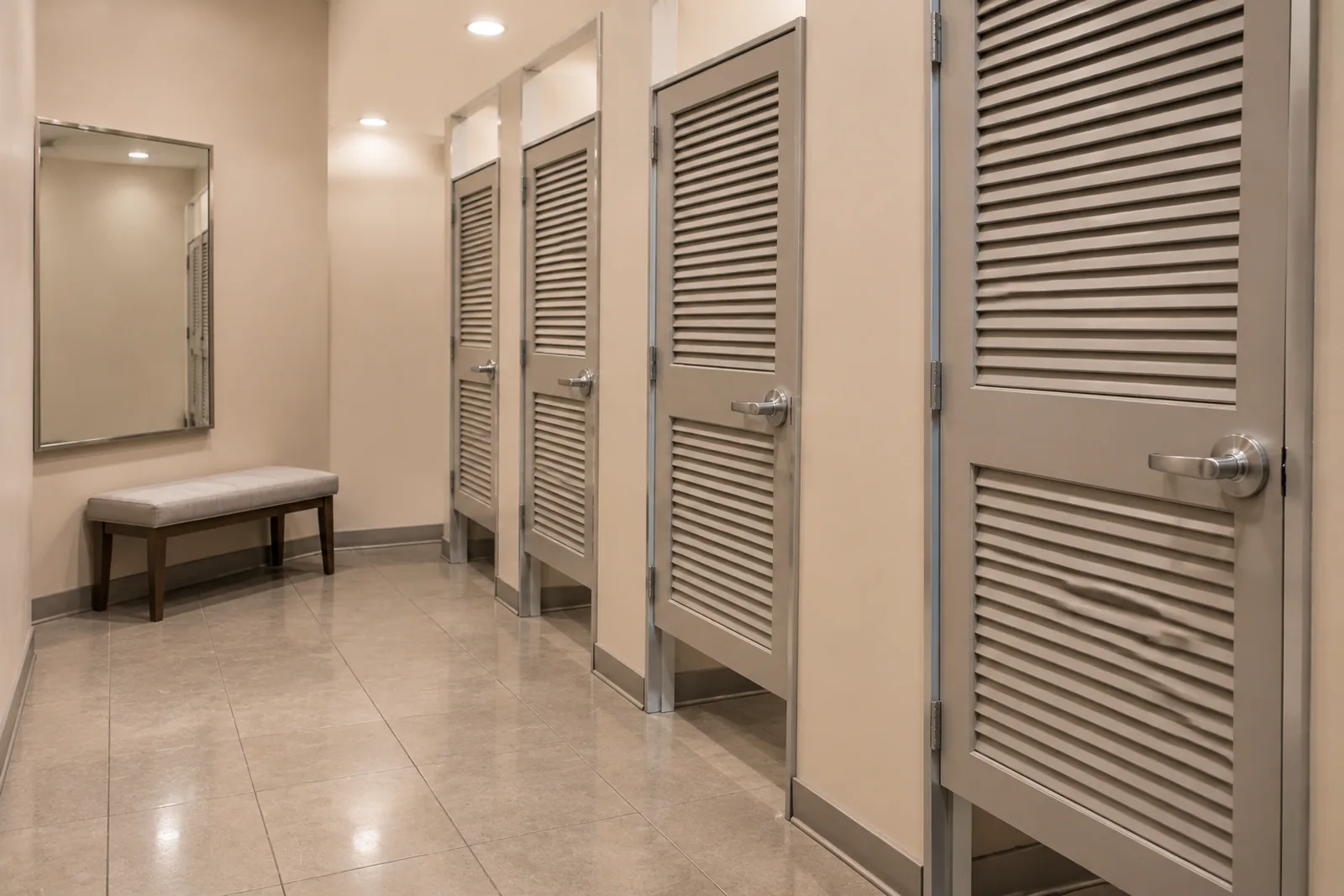
A fitting-room injury at Burlington is investigated through the specific part that failed or moved and how it hurt you. A chair collapse, a falling mirror, a door strike, a broken threshold, and an item left in a doorway each need different proof.
What happened, with hypothetical examples
- seating that failed, where a fitting-room bench tipped when a shopper sat down to try on shoes
- a mirror that fell, such as a wall mirror that came loose from its bracket
- a door that struck you, as with a swinging door that bounced back from its stop
- a transition that caught your foot, for instance a metal threshold strip lifted at one end
- an item that blocked the doorway, here a pile of returned clothes on the floor of the stall
Getting hurt in a fitting room doesn't automatically prove store negligence. The claim still needs a duty, a failure, causation and damages. It also needs knowledge or discoverability where the law requires it.
What you can do now, with hypothetical examples
- medical care, such as urgent care the same afternoon for a cut forearm
- keeping the evidence, such as photos of the bench and the loose leg
What should you record about the part that failed?
Describe what the part did and what you were doing, without testing a damaged part or taking store property.
For more on retaining and documenting broken hardware, see falling merchandise and fixture claims at Burlington.
What to record, by part
- whether it moved, tipped, broke or felt unstable before it failed, for seating
- which way it swung, how it operated, where it hit you and whether anyone else was involved, for a door
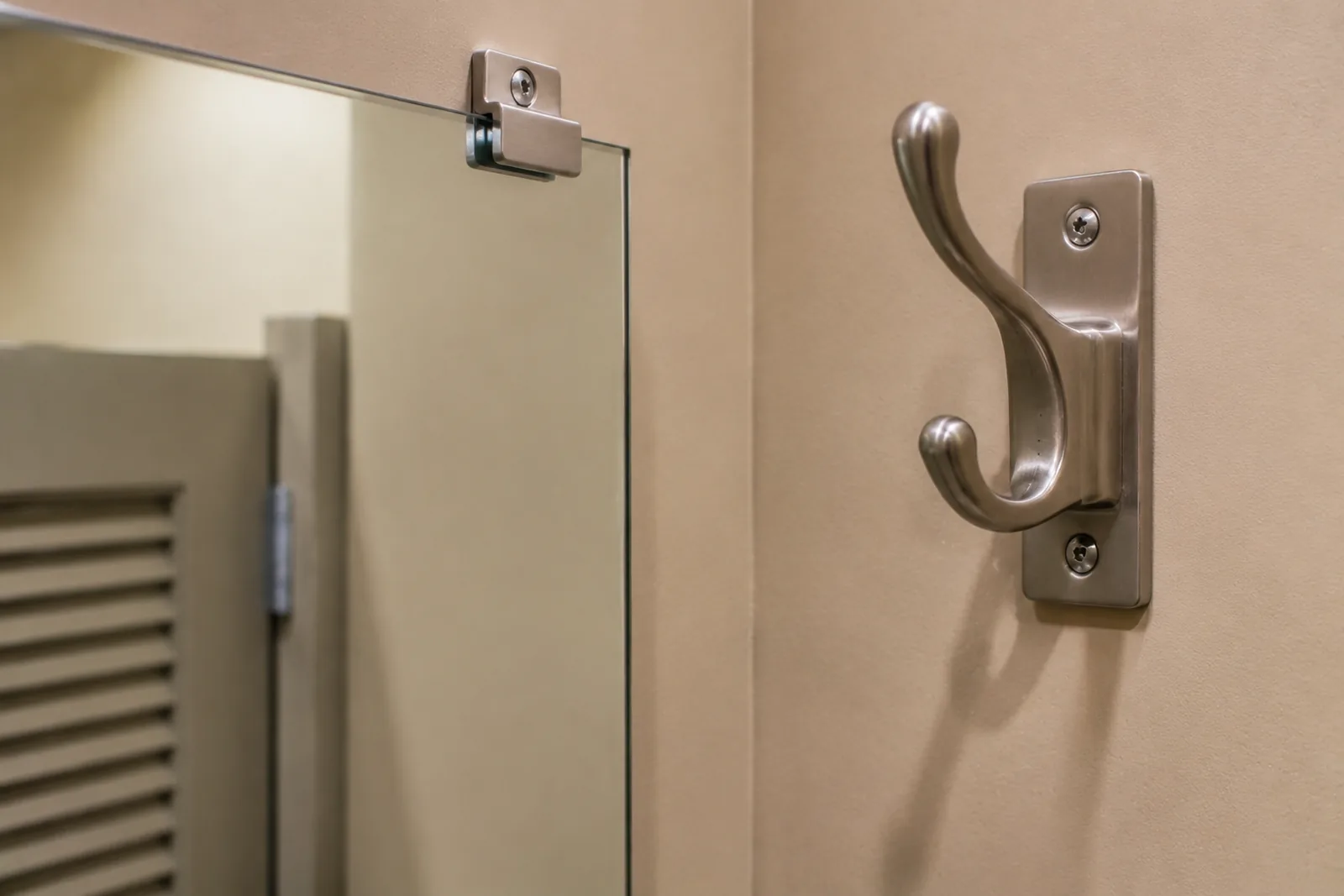
- the attachment point and where it was mounted, for a mirror or hook, if you can photograph it safely
Photograph the room, the route, nearby fixtures, the lighting, and any changes made before your photos. A photo taken after the part was fixed can still help, but it shouldn't be shown as the original condition.
Evidence | What it can show |
|---|---|
Photos | The room and the part, from a safe spot. |
A witness | Movement or earlier problems that photos can't show. |
Your notes | What you were doing, written the same day. |
Who knew about the problem?
Earlier complaints, repair requests, inspections, photos, and employee observations can show the store knew about this specific part.
Stronger notice proof
- a complaint last week that this bench wobbled
- a repair ticket for the same door closer
- the name of the employee who got the report
Weaker notice proof, in the same order.
- proof the benches were bought years ago
- a general note that the fitting rooms needed attention
- "Someone told the staff."
For a temporary item or spill on the fitting-room floor, timing can decide the claim. A lasting defect raises different questions, but it still needs evidence.
Type of hazard | Key question |
|---|---|
Rule | H-E-B, LP v. Peterson and Wal-Mart Stores, Inc. v. Reece focus on the specific hazard and how long it existed, and general inspection criticism or an employee being nearby may leave a gap. [S5, S6] |
Item on the floor | How long was it there before you entered? |
Broken fixture | Who knew it was broken, and for how long? |
Did a vendor or repair company play a part?
An installer, repair company, manufacturer, or other vendor may have a role, so get the actual scope of their work.
What to get, with hypothetical examples
- scope and dates, such as a contractor rehanging the mirrors during a remodel last spring
- methods and instructions, meaning which anchors were used and the bracket maker's instructions
- later changes, for instance store staff moving the mirror to a different wall
Don't assume the manufacturer caused damage that came from later misuse, and don't assume hiring a vendor ends every duty the operator has.
Early check | Why |
|---|---|
Finished work | Under Strakos v. Gehring, finished work isn't automatically immune, but negligence and causation still have to be proved. [S21] |
Construction and repair deadlines | Chapter 16 includes 10-year repose statutes. [S12] |
Certificate of merit | Claims arising from licensed architects' or engineers' services need one filed with the complaint. [S22] |
How do you connect the injury to the event?
Describe your symptoms and any earlier conditions truthfully to every provider, and keep records of treatment and lost work.
What to keep, with hypothetical examples
- restrictions, such as "No lifting over 10 pounds for four weeks."
- treatment records, here the ER visit and two physical therapy sessions
- receipts, with pharmacy and copay receipts in one folder
- work loss, shown by a letter from your employer listing missed days
A part failing can cause a serious injury without explaining every later diagnosis, so medical opinions may be needed to tie a new injury or a worsened condition to the event.
What to ask about before you accept an offer
- one bill paid, and whether the payment comes with a broad release
- future care, and whether the release covers treatment you may still need
- the net amount, meaning what you keep after fees, expenses and reimbursement claims
Questions about fitting room injuries
Short answers to common questions.
Question | Short answer |
|---|---|
Can I claim if nobody saw it happen? | Possibly. Physical evidence, records, photos, and other admissible proof may establish the facts. No eyewitness is a gap to investigate, not a reason to guess. |
Does an employee's apology prove liability? | Not automatically. Write down the exact words and the circumstances, but the case still needs the legal elements. |
You can contact The Law Firm of Aaron A. Herbert, P.C. about the part, its repair history, notice, and medical proof. Aaron Herbert is Board Certified in Personal Injury Trial Law by the Texas Board of Legal Specialization. [S1] The Law Firm of Aaron A. Herbert, P.C. is not affiliated with or endorsed by Burlington Stores, Inc.
Tell us about your Burlington injury or call (214) 200-4878.
More from the Burlington knowledge hub
- Texas Burlington injury knowledge hub, with all the Burlington guides in one place.
- How to file and litigate a Texas Burlington injury claim, the full process from evidence through trial.
Sources
- S1. State Bar of Texas, Aaron Alan Herbert profile.
- S5. H-E-B, LP v. Peterson, No. 24-0310 (Tex. Apr. 10, 2026).
- S6. Wal-Mart Stores, Inc. v. Reece, 81 S.W.3d 812 (Tex. 2002).
- S12. Texas Civil Practice and Remedies Code chapter 16.
- S21. Strakos v. Gehring, 360 S.W.2d 787 (Tex. 1962).
- S22. Texas Civil Practice and Remedies Code chapter 150.
Each source above was checked on October 31, 2026, and the key holdings were rechecked on November 2, 2026.

ABOUT THE ATTORNEY
Aaron A. Herbert
Founding Attorney
Board Certified in Personal Injury Trial Law
Aaron founded The Law Firm of Aaron A. Herbert in 2010 to focus on developing each client's case and seeking its maximum value. For over a decade, he has represented people seriously injured in major accidents and industrial catastrophes, pursuing trial verdicts and settlements while working to reduce the stress of litigation.
Education
- Texas A&M University · B.S., Criminal Justice, 1999
- University of Oklahoma College of Law · J.D., 2002; graduated in the top of his class
Trial experience & approach
Aaron earned numerous jury verdicts at boutique personal injury litigation firms. According to his biography, he spent a year as the top-earning litigation attorney at a firm that frequently appeared in verdict searches as having one of the highest numbers of trial wins in Texas. At another Dallas personal injury firm, he moved from managing pre-litigation attorney to managing litigation attorney over seven years as the firm grew into one of Dallas's largest personal injury firms.
His biography describes a reputation as one of America's most aggressive trial lawyers, with noteworthy recoveries from judges and juries and substantial pretrial settlements. Most of those settlements included confidentiality agreements requested by the defense. Aaron has said the recoveries were justified by the injuries and losses involved, which no amount of money could make someone choose to experience.
His approach combines passion, preparation, persistence and courtroom imagination. He believes a well-supported, engaged and motivated team working cooperatively helps deliver strong representation, with the goal of achieving the best possible result for every client.
Dallas roots, military service & publication
Born and raised in Dallas, Aaron enlisted in the United States Marine Corps after high school and later received an Honorable Discharge. He completed his university and law degrees after his military service and became a lifelong Sooners football fan in law school.
Publication: “Litigating Dog Bite Cases,” Texas Dog Law Seminar, Dallas, 2009.
Professional affiliations & recognition
Professional affiliations and recognition listed in Aaron’s biography:
- State Bar of Texas
- American Bar Association
- Association of Trial Lawyers of America (now American Association for Justice)
- Texas Trial Lawyers Association
- Dallas Trial Lawyers Association
- Dallas Bar Association
- Tarrant County Bar Association
- Million Dollar Advocates Forum
- The National Trial Lawyers – Top 100 Trial Lawyers