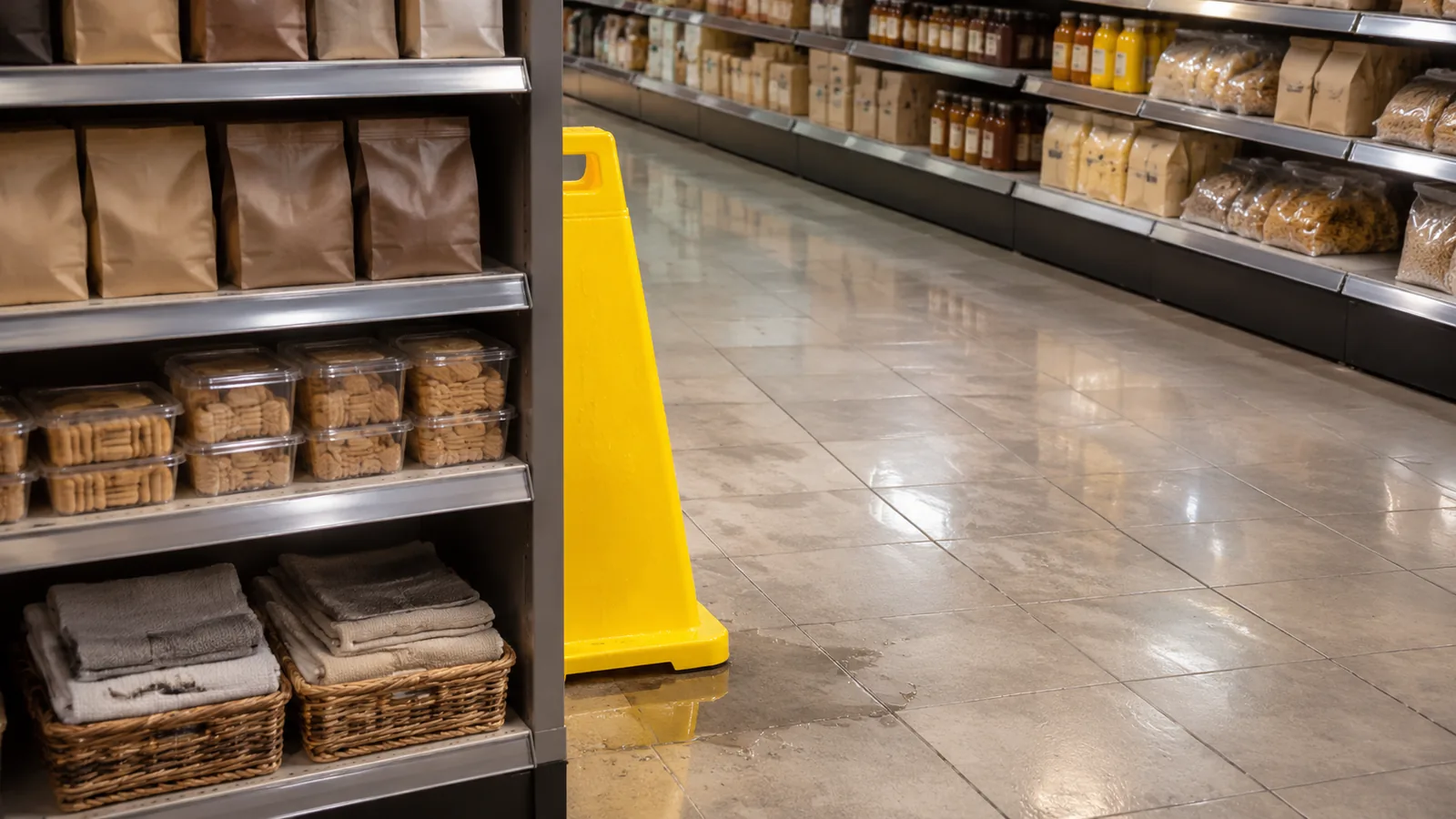
Texas grocery store injury resources
Texas Brookshire's injury attorney: a knowledge hub for BGC store injuries
An injury at a Texas store run by Brookshire Grocery Company (BGC) may support a claim when the evidence shows that a legally responsible party failed to use reasonable care about an actionable hazard and that the failure caused the injury.

The Law Firm of Aaron A. Herbert, P.C., Dallas, Texas.
Texas Bar license #24036761. Board Certified in Personal Injury Trial Law by the Texas Board of Legal Specialization since 2008.
Type at least 2 characters. Use arrow keys to choose a result and Enter to open it.
| What the evidence has to show | What doesn't prove it alone |
|---|---|
| An actionable hazard, such as melted ice in front of a drink station | Being hurt inside the store. |
| The party that legally controlled that spot | The banner on the storefront. |
| Knowledge of the condition, where the law requires it | The fact that any grocery floor can get wet. |
| A failure to use reasonable care that caused the injury | The seriousness of the injury. |
| Where to start | Prompt medical care, an accurate report, preserved evidence, and an investigation of the particular condition. |
This hub is for injured shoppers and their families, and it gives Texas practitioners a route into the deeper litigation guides. The examples describe situations to investigate, not findings that any Brookshire's store acted negligently.
| Who this hub is for | Where to begin |
|---|---|
| A shopper hurt in the last few days | The first 72 hours after a Brookshire's injury. |
| A family member helping someone who fell | The "Getting help after a store injury" section below. |
| A lawyer handling a BGC premises case | The complete Brookshire's injury claims and lawsuits guide. |
Getting help after a store injury
Get medical care first, then report the incident and keep what you already have.
| Step | What to do | Hypothetical example |
|---|---|---|
| Get care | If the injury looks serious, get emergency help; don't delay care for paperwork or photos | A relative handles the store report while you go to the emergency room. |
| Report it | When it's safe, tell management where and when it happened and what you personally saw | "I fell by the floral cooler near the front doors at about 5:20 p.m." |
| Get names | Ask for the manager's name and an incident reference | Both written on the back of the receipt. |
| Keep paper | Keep the receipt and anything in writing from the store or a claims representative | The receipt and the adjuster's first letter in one folder. |
Photos help when they show the overall scene, your approach route, the condition, and any warnings. Keep the originals, note who took them, and remember that a photo taken after the fall may not show where a warning sat before employees responded.
| Do | Don't |
|---|---|
| Get each witness's contact information, since one may have seen the fall and another the condition earlier | Write an account for a witness to repeat. |
| Write down what each person actually saw | Alter the scene or handle a hazardous substance. |
| Keep what you saw separate from what you think happened | Speculate about how long a spill was there. |
Want a lawyer to look at it? Tell us about your Brookshire's injury or call (214) 200-4878. Bring the store address, the date, what happened, your photos, witness names, and your medical providers. Contacting the firm doesn't create an attorney-client relationship.
| Read next | What it covers |
|---|---|
| Steps to take in the first three days | How shoppers and families can preserve useful information while putting health first. |
Start with these guides
A Brookshire's claim needs a company-specific investigation
BGC is the Tyler, Texas grocer founded in 1928, and its stores operate under several banners, so the first job is pinning down which store and which company you're dealing with.
| Company fact | What it means for a claim |
|---|---|
| Banners | Brookshire's, Super 1 Foods, Spring Market, FRESH by Brookshire's, Reasor's, and FRESH by Reasor's all belong to BGC. |
| Size | BGC says it operates more than 200 stores across Texas, Louisiana, Arkansas, and Oklahoma (company careers page, viewed November 2, 2026). |
| What that number isn't | It isn't a Texas-only count, it isn't a count on any injury date, and not every banner operates in every state. |
| Out-of-state stores | This hub covers Texas injury claims; it doesn't assume Texas law applies to an occurrence in another state. |
Identify the actual store, the street address, the date, and the part of the store where you were hurt. A receipt, a photo of the storefront, an online order confirmation, or an incident reference can help.
| Record | What it can show |
|---|---|
| Register receipt | The store number, address, and a transaction time that can anchor the timeline. |
| Pickup or delivery confirmation | Which location filled the order and when you were there. |
| Incident reference | That a report was made, and to whom. |
| Claims letter | Which company or administrator is handling the claim, as a lead to check. |
The legal operator, the property owner, a maintenance contractor, and an insurer may each have a different role. You don't have to sort out the corporate structure before asking for help, but your legal team should look into it promptly and not rely on a sign.
| Don't confuse | Why it matters |
|---|---|
| Brookshire Grocery Company (BGC) and Brookshire Brothers | They're different companies. Brookshire Brothers was founded in Lufkin, Texas, in 1921; the two split in 1928 and have been separate ever since. |
| Brookshire Bros., Ltd. v. Aldridge, 438 S.W.3d 9 (Tex. 2014) | It's a Brookshire Brothers case about lost store video (spoliation). It isn't a BGC case, and the similar name says nothing about BGC's history or responsibility. |
| Hurt at a Brookshire Brothers store instead? | That's a different company, so it gets its own guide: the Brookshire Brothers injury hub (proposed). |
Why the exact store and responsible entity matter
The name on a storefront may differ from the legal entity that operates the business.
| Possible party | What might connect it |
|---|---|
| Store operator | Day-to-day control of the aisles, staff, and cleaning. |
| Property owner or landlord | The building, the parking lot, or a shared walkway. |
| Maintenance or cleaning contractor | Equipment or work that created the condition. |
| Claims administrator or insurer | The letters and calls after the incident. |
A receipt, property record, or claims letter is a lead, but none of them answers every responsibility question alone. Where you fell matters too.
| Location | Why it can change the analysis |
|---|---|
| An indoor aisle | The store operator usually controls it, but the evidence still has to show that. |
| A shared parking lot | A landlord, a tenant, or a paving contractor may have the relevant duty. |
| An exterior walkway or cart corral | Control may be split among several parties. |
| A leased space inside the store, such as a bank branch | The tenant may control the area, not the grocer. |
| Read next | Identifying the correct Brookshire's defendant explains how records and testimony establish the relationships. |
You don't have to solve the identification question before getting advice. Preserve what's available and say what's uncertain.
| Who does what | Timing |
|---|---|
| You | Keep the receipt, the photos, and every letter as you got them. |
| Counsel | Investigate the legal parties early enough to handle filing, amendment, and service issues. |
BGC cases explain why the details matter
Reported BGC cases, including Taylor, Bowman, and Dimmitt, show how much turns on the exact condition, who knew about it, and when.
| Case | What happened | Result |
|---|---|---|
| Brookshire Grocery Co. v. Taylor, 222 S.W.3d 406 (Tex. 2006) | A shopper slipped on partially melted ice in front of a self-service soft drink dispenser | The Supreme Court of Texas held the dispenser wasn't itself the dangerous condition, the ice was, and there was no evidence of how long the ice had been there; it reversed and rendered judgment that the shopper take nothing. |
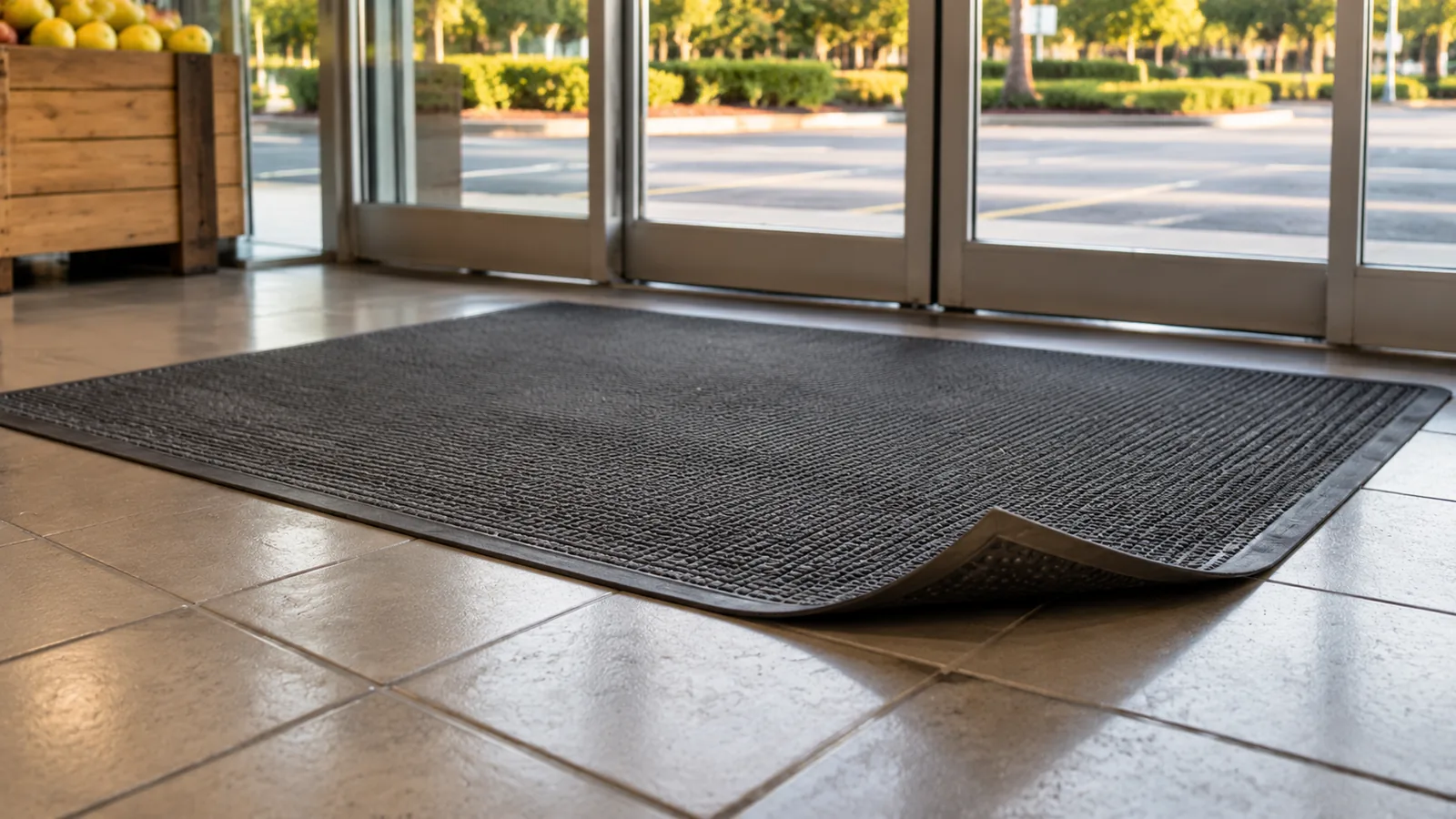
| Bowman v. Brookshire Grocery Co., 317 S.W.3d 500 (Tex. App.—Tyler 2010) | A shopper tripped on the ruffled edge of an exit mat at the Bullard store | The court held the condition was the ruffled edge, not the mat; reports from other stores didn't show knowledge at Bullard; it affirmed summary judgment for the store. |
| Dimmitt v. Brookshire Grocery Co., No. 11-12-00129-CV (Tex. App.—Eastland June 26, 2014) (mem. op.) | A contractor's floor scrubber left excess water at the Comanche store, and the nearest cone was assumed to be at least 20 feet away | The court reversed the summary judgments and sent the case back; that is not a recovery or a damages award. |
These are other people's cases, and their outcomes differ. They're research starting points about a specific condition, notice, mats, cleaning, and warnings, and they don't decide whether a new claim will succeed or fail.
| A reported case is | A reported case isn't |
|---|---|
| A public court opinion about one set of facts | A firm result or a payment to anyone. |
| A guide to which facts the court found important | A prediction for your claim. |
| Read next | The complete claims and lawsuits guide gives the citations and explains how to use them without mistaking a procedural ruling for a paid recovery. |
For a shopper, the useful questions are concrete. For a practitioner, the same questions become an evidence plan.
| Question for the shopper | What the practitioner turns it into |
|---|---|
| What made your foot slide or catch? | The mechanism of injury and the condition to prove. |
| Who saw the condition before you fell? | A witness list, with each person's actual observations. |
| What warning could you see as you approached? | Approach photos, video, and the cone's placement. |
| Was the condition still there when the photo was taken? | A timeline tying each photo to a source and a time. |
| Anything else? | Follow-up on foundations, records, and witnesses, without leaping from the seriousness of the injury to a conclusion about notice. |
What a Texas premises claim must establish
A typical shopper's premises claim has to prove four things, subject to the duty and facts that apply.
| Element | Hypothetical example |
|---|---|
| The responsible party knew, or should have known, about the condition | A cashier was told about a broken jar of salsa 20 minutes before the fall. |
| The condition posed an unreasonable risk of harm | Salsa and glass spread across the walking path by the chip display. |
| The party failed to use reasonable care to reduce or eliminate the risk | No one cleaned or blocked off the area. |
| That failure caused the injury | The shopper slipped on that salsa and broke a wrist. |
A store isn't an insurer of every visitor's safety. The injury itself doesn't establish the required knowledge or breach.
| Kind of knowledge | What it takes |
|---|---|
| Actual knowledge | Evidence the responsible party knew of the condition before the accident, such as an employee report or a customer complaint. |
| Constructive knowledge | A fact-specific showing that the condition lasted long enough that the store should have discovered it. |
| Not enough | A general possibility that grocery floors can get wet, which doesn't show notice of the particular condition. |
| Read next | Proving store notice in a Brookshire's slip and fall claim shows how to organize the time, place, employee, and record evidence. |
Claims about ongoing employee activity may need a different analysis than claims about a condition left on the floor.
| Situation (hypothetical) | Likely theory to examine |
|---|---|
| A stocker pushes a loaded cart into a shopper | Negligent activity, if the injury happened as a contemporaneous result of the activity itself. |
| A shopper slips on water a mop left behind after the employee moved on | A premises condition, with the usual knowledge questions. |
| A label doesn't fit the facts | Counsel should look at what actually happened and the governing law, not the label. |
Floors, warnings, and store operations
The first question is what actually caused the injury, because a nearby condition isn't necessarily the one that caused the fall.
| Condition to investigate | Where it might show up (hypothetical) |
|---|---|
| Liquid near refrigeration | The dairy case or the floral cooler by the front doors. |
| Grease or other residue | The deli counter or the hot food case. |
| Loose produce | A grape or a lettuce leaf below the misted produce tables. |
| Obstructed walking routes | A pallet jack left at the end of an aisle. |
| Unstable merchandise | A stacked display of canned goods near checkout. |
| Entrance mats | A curled or bunched mat at the exit doors. |
| Pavement defects | A broken curb or a pothole in the parking lot. |
A later repair doesn't automatically prove earlier negligence. Warnings need an approach-based analysis.
| Warning question | Why it matters |
|---|---|
| Could the shopper see the cone from the route actually taken? | A cone on the far side of a display may not warn anyone coming from the other direction. |
| Did a display block it? | A sign behind an endcap may not be a usable warning. |
| Did it address the relevant danger? | A general "wet floor" sign may or may not warn of a particular condition. |
| When was it placed? | A cone set out after the fall doesn't show the warning before it. |
| Read next | Wet floors, mats, and warning signs explains why location and sequence matter. |
A warning doesn't automatically defeat a claim, and a missing warning doesn't automatically prove one. Parking lot incidents need their own investigation.
| Parking lot question | Why it matters |
|---|---|
| Who owns and maintains this part of the lot? | A landlord, a tenant, or a contractor may have the relevant role. |
| Was a vehicle involved? | Owning a lot doesn't make a business responsible for every collision in it. |
| What does the photo actually show? | A store sign in a photo doesn't prove control of the exact area. |
Evidence that can change the case
Video may show when a condition appeared, who walked past it, what warnings were up, and how the injury happened, but only if the right footage is asked for.
| Evidence | What to ask for |
|---|---|
| Store video | Footage from before the condition appeared through the response, not only the moment of the fall. |
| Other camera angles | The aisle ends, the entrance, and the checkout lanes nearby. |
| Inspection and sweep records | Who walked the area, when, and how it was logged. |
| Maintenance and work orders | Repairs to a cooler, a drink machine, or a roof leak. |
| Employee communications | Radio calls, texts, or reports about the area. |
| Witness accounts | What each person saw, recorded in that person's own words. |
A preservation notice should identify the incident well enough for the recipient to find the material, and it should ask for relevant records without inventing a retention policy. A request doesn't guarantee that the evidence exists or will be handed over voluntarily.
| Read next | What it covers |
|---|---|
| Preserving store video and digital evidence | Original files, exports, metadata, clock differences, and questions about missing footage. |
Your own evidence needs the same care.
| Keep | Don't |
|---|---|
| Original photos and videos on the device that took them | Crop, filter, or re-save them in place of the originals. |
| Relevant texts, emails, and existing social media posts | Delete unfavorable material or change a timestamp. |
| Medical documents and work records | Rewrite them into a polished account that can't be reconciled with the originals. |
From investigation to a filed lawsuit
Before deciding how to proceed, a lawyer should evaluate liability, damages, defenses, parties, deadlines, and whether more investigation is worth it.
| Issue | What to know |
|---|---|
| Limitations | Texas personal injury suits are generally subject to a two-year period under Section 16.003 of the Civil Practice and Remedies Code, with accrual, exceptions, and service questions that need legal analysis. |
| Negotiation | A claim may settle without suit, but ongoing talks don't extend the deadline. |
| Parties | The right defendants have to be named and served in time. |
If a lawsuit is filed, each stage has its own job.
| Stage | Its job | Read next |
|---|---|---|
| Written discovery | Get the records and identities needed for specific disputed issues | Written discovery in a Brookshire's injury lawsuit. |
| Depositions | Test what witnesses know and how their accounts fit the records | Manager, employee, and corporate depositions. |
| Experts | Help with technical or medical questions when reliable specialized analysis is needed | Experts and reliable testing. |
A defendant may move for summary judgment before trial. A response needs competent evidence on the challenged grounds and has to follow the procedure that applies.
| Summary judgment point | What to know |
|---|---|
| Current rule | Tex. R. Civ. P. 166a was rewritten effective March 1, 2026, for motions filed on or after that date; use its current text, not old subsection labels or remembered deadlines. |
| Local practice | Check local rules, standing orders, and the scheduling order too. |
| The injury itself | A serious injury doesn't remove the need to prove each legal element. |
| Read next | Responding to summary judgment in a Brookshire's case. |
Medical proof and the losses that can be recovered
A claim has to connect the incident to the injury through medical and factual evidence, and prior conditions, treatment gaps, later events, and improvement all have to be weighed honestly.
| Medical question | What to know |
|---|---|
| Prior condition | It doesn't automatically defeat a claim, but it calls for careful analysis of what changed and why. |
| Treatment gap | It needs an explanation, such as a delayed appointment or a cost barrier. |
| Later event | A second fall or a car wreck may affect causation. |
| Improvement | Recovery belongs in the record alongside the limits. |
Each kind of loss needs its own proof.
| Loss | What supports it |
|---|---|
| Medical expenses | Records and bills; the amount on a bill isn't automatically the recoverable amount. |
| Lost income | Pay records and employer statements. |
| Future care | Individualized medical support; a diagnosis doesn't establish every claimed future expense. |
| Pain and functional limits | Concrete facts about tasks affected, help needed, and how long it lasted. |
| Read next | Medical proof and damages after a store fall covers chronologies, ledgers, work records, and support for future needs. |
Describe noneconomic losses with concrete facts and acknowledge recovery. Avoid claiming the same loss twice.
| Weak description | Stronger description (hypothetical) |
|---|---|
| "I can't do anything anymore." | "For six weeks I couldn't lift my grandson or carry groceries up the porch steps; I can now, with some pain." |
| "My life is ruined." | "I missed my Thursday bowling league from March through May." |
Settlement, mediation, and the client decision
Settlement depends on the evidence, legal risks, supported damages, coverage or assets, expenses, obligations, and the client's goals, and no reliable formula values every grocery store injury.
| What a lawyer should separate | Why |
|---|---|
| A preliminary estimate | It's based on what's known early and can change. |
| A supported current assessment | It reflects the records and testimony in hand. |
| What could change it | Video, a deposition, or a medical opinion still to come. |
You should understand the gross settlement and the estimated net recovery.
| Reduces the amount you receive | What to check |
|---|---|
| Attorney fees under the contract | How the fee is calculated. |
| Case expenses | Which costs have been advanced and how they're repaid. |
| Enforceable obligations | Liens and reimbursement claims, with confirmed amounts separated from estimates. |
| Release terms | Who is released, which claims, and any indemnity language. |
| Read next | Settlement value, mediation, and net recovery includes an arithmetic example and questions about mediation, early offers, and final disbursement. |
What public data can and can't tell you
This hub doesn't supply a guessed BGC annual injury total, average settlement, or universal liability limit, because the research didn't find reliable figures for those questions.
| Not available here | Why |
|---|---|
| A Texas-wide annual Brookshire's injury total | No reliable public source reports one. |
| A settlement average | Selected lawsuits and publicized results aren't a representative dataset. |
| A universal liability limit | Coverage depends on the policies in a given case. |
Unknown isn't zero. Claims exist, but selected lawsuits, publicized outcomes, and a regional store count can't responsibly be turned into a Texas statistic.
| The guides do distinguish | From |
|---|---|
| Public court opinions | Firm results. |
| Hypothetical examples | Reported incidents. |
| Proposed legal work | Evidence already obtained. |
| Read next | Choosing a Brookshire's injury attorney and understanding public claim data explains what public sources can establish and what a defensible study would need. |
Trial preparation and protecting the result
A trial-ready case connects admissible evidence to the questions the jury may decide, and that work starts well before trial.
| Preparation task | Read next |
|---|---|
| Witness preparation, exhibits, expert foundations, and jury selection | Trial preparation and voir dire. |
| Witness examination, jury charge questions, and closing argument | Trial proof and the jury charge. |
| Verdict, judgment, appeal, and payment as separate stages | Post-trial motions and appeals. |
Preparation can inform negotiation, but it doesn't force a particular settlement or guarantee a verdict. Preservation and deadline management begin before anyone knows the outcome.
| For practitioners | Where to go |
|---|---|
| The full lifecycle in one place | The pillar guide covers investigation through appeal. |
| Focused treatment of one stage | The cluster guides listed below. |
| A limit on all of them | Every litigation decision still requires the actual record, current governing law, and the court's orders. |
Questions to ask before you hire a lawyer
Aaron Herbert is Board Certified in Personal Injury Trial Law by the Texas Board of Legal Specialization. Certification isn't a promise about any result.
| Consider | What to ask or check |
|---|---|
| The credential | A credential is easier to verify than a ranking, so check it, and weigh it with the questions below. |
| Experience | Ask what relevant experience the firm can accurately describe. |
| Plan | Ask who will preserve video, identify the responsible parties, evaluate the condition and knowledge evidence, and get the medical records. |
| Uncertainty | Ask which legal issue is most uncertain right now and how the firm would investigate it. |
| Communication | Ask who will handle the work and how major decisions will be explained to you. |
| Language | If you or a witness prefer another language, ask how interpretation and translated documents are handled. |
A lawyer who can explain an evidence weakness and a plan to look into it gives you a firmer basis for a decision than one who quotes a settlement figure before seeing the records. Read the written fee agreement before you sign.
| Fee agreement question | Why it matters |
|---|---|
| What's the percentage, and how is it calculated? | Contingency agreements don't all have identical terms. |
| Which expenses are charged, and who advances them? | Costs affect your net recovery. |
| What happens if there's no recovery? | You should know your obligations either way. |
| Does the scope include appeal or enforcement? | Some agreements stop at judgment. |
| Will I get a net recovery explanation before I decide on a settlement? | Confirmed deductions should be separated from estimates. |
What to bring to a claim evaluation
A consultation should cover the incident date and location, the condition, witnesses, preservation, medical care, relevant prior history, work effects, and communications.
| Bring | Why |
|---|---|
| The store address and the incident date | They direct the preservation request to the right place. |
| Photos and videos, as originals | They show the scene before anything changed. |
| Witness names and contact information | Each person may know a different part of the event. |
| Medical provider names | They let counsel request the records. |
| Letters, emails, and claim numbers | They show who has been in contact and what was said. |
| Anything you signed and any money offered | A form or release can affect the advice. |
| Earlier lawyers or proceedings | They may affect deadlines and options. |
Bring the actual documents, not only a cleaned-up summary. Incomplete information can change an assessment later and leave important issues unprotected.
| What the first discussion decides | Possible outcomes |
|---|---|
| Whether the facts support representation | Further investigation, acceptance, a referral, or a conclusion that the available evidence doesn't support a claim. |
| What urgent work may be needed | Preservation letters, records requests, and deadline tracking. |
| How to send records | Use the firm's private channel for medical records, never a public comment. |
| When you're represented | Only after the firm confirms acceptance and scope; don't assume a deadline is protected until responsibility is clear. |
Guides in this hub
Each guide below takes one stage of a Brookshire's injury case further.
| Guide | What it answers |
|---|---|
| Brookshire's injury claims and lawsuits in Texas | How a BGC store injury case moves from investigation through appeal. |
| The first 72 hours after a Brookshire's injury | What to do about care, reporting, photos, and witnesses right away. |
| Proving store notice in a Brookshire's slip and fall claim | How to show the store knew or should have known about the condition. |
| Wet floors, mats, and warning signs at Brookshire's | When a wet floor, a mat, or a cone's placement helps or hurts a claim. |
| Identifying the correct Brookshire's business and property defendants | Which company, owner, or contractor controlled the spot where you fell. |
| Preserving surveillance video and digital evidence after a store injury | How to ask for footage and records before they're lost. |
| Written discovery in a Brookshire's injury lawsuit | Which records, prior incidents, and witness identities to request after suit is filed. |
| Store manager, employee, and corporate depositions in injury cases | How to question managers, staff, contractors, and a company representative under oath. |
| Experts and reliable testing in Brookshire's injury litigation | When an expert is needed and what makes the opinion reliable. |
| Medical records, causation, and damages after a store fall | How to tie the fall to the injury and prove each loss. |
| Settlement value, mediation, and net recovery in Brookshire's claims | How offers are weighed and what you'd actually take home. |
| Responding to summary judgment in a Brookshire's injury case | How to answer a motion under the current Rule 166a. |
| Trial preparation and jury selection in Brookshire's injury litigation | How to get witnesses, exhibits, and voir dire ready. |
| Witness testimony, jury questions, and closing argument | How trial proof connects to the questions the jury answers. |
| Post-trial motions, appeals, and protecting a judgment | What happens after the verdict and which deadlines protect it. |
| Choosing a Brookshire's injury attorney and understanding public claim data | What to ask a lawyer and what public data can and can't tell you. |
Hurt at another grocery chain? See the guides for Kroger slip and fall claims in Texas and Tom Thumb and Albertsons slip and fall claims.
| More from the firm | What it covers |
|---|---|
| Texas grocery store injury lawyer | Retail and grocery injuries across Texas. |
| Dallas grocery store injury lawyer | Store injuries in Dallas and Dallas County. |
| Fort Worth grocery store injury lawyer | Store injuries in Fort Worth and Tarrant County. |
| Texas slip and fall lawyer | Slip, trip, and fall claims at any business. |
Frequently asked questions
Here are short answers to the questions injured shoppers ask most often.
| Question | Short answer |
|---|---|
| Can I sue after falling at Brookshire's? | Possibly, if the evidence supports duty, a dangerous condition or negligent activity, knowledge where required, breach, causation, and damages; the injury alone doesn't establish liability, and the facts and responsible parties need investigation. |
| What should I do first? | Get medical care, report the incident accurately, preserve safe and available evidence, and get advice about investigation and deadlines. Don't delay treatment to finish a report or take photos. |
| How much is my claim worth? | It depends on the evidence, defenses, medical causation, supported losses, coverage or assets, expenses, and other facts. This hub supplies no verified Brookshire's settlement average, and a medical-bill multiplier isn't a reliable evaluation. |
| What if the store says it didn't know about the spill? | Counsel should investigate actual and constructive knowledge with location- and time-specific evidence, such as video, witnesses, reports, and records. Assuming employees must have known isn't proof. |
| Does a warning cone prevent a claim? | Not automatically. Its timing, placement, visibility, relation to the hazard, and the governing duty all matter, and a cone placed after the fall doesn't show the warning before it. |
| Will my claim have to go to trial? | Some claims settle and others need litigation or trial, and no outcome is guaranteed. Your lawyers should build the evidence around the required proof and explain the options and risks as the record develops. |
| Is Brookshire Brothers the same company as Brookshire's? | No. Brookshire Brothers is a separate company based in Lufkin; Brookshire's stores belong to Brookshire Grocery Company in Tyler. |
Request a case evaluation
If you were hurt at a Texas Brookshire's, Super 1 Foods, Spring Market, FRESH by Brookshire's, or another store that may be connected with BGC, the firm can review the facts, the preservation needs, the medical proof, and the litigation risks.
| Before you reach out | Details |
|---|---|
| Credential | Aaron Herbert is Board Certified in Personal Injury Trial Law by the Texas Board of Legal Specialization. Certification isn't a promise about any result. |
| What to have ready | The store address, the incident date, a short description of what happened, photos, witness names, and medical providers. |
| How to reach the firm | Tell us about your Brookshire's injury or call (214) 200-4878. |
| Office | The Law Firm of Aaron A. Herbert, P.C., 8330 Lyndon B. Johnson Freeway, Suite 700, Dallas, Texas 75243. |
| What to confirm directly | Engagement, scope, and fee terms. |
| Important limits | No result is guaranteed, and contacting the firm doesn't create an attorney-client relationship. |
Sources and legal authorities
These primary sources support the legal and factual statements in this hub.
| Source | What it supports |
|---|---|
| Brookshire Grocery Company, About Us | BGC's 1928 founding in Tyler, Texas, and its banners: Brookshire's, Super 1 Foods, Spring Market, FRESH by Brookshire's, Reasor's, and FRESH by Reasor's. |
| Brookshire Grocery Company, Careers | BGC's statement that it operates more than 200 stores across Texas, Louisiana, Arkansas, and Oklahoma (viewed November 2, 2026). |
| Brookshire Brothers, About Us | Brookshire Brothers' 1921 Lufkin founding and the 1928 split that formed a separate company in Tyler. |
| Brookshire Grocery Co. v. Taylor, 222 S.W.3d 406 (Tex. 2006) | Melted ice by a soft drink dispenser; no evidence of how long the ice was there; take-nothing judgment for the store. |
| Bowman v. Brookshire Grocery Co., 317 S.W.3d 500 (Tex. App.—Tyler 2010) | The ruffled mat edge as the condition; summary judgment for the store affirmed. |
| Dimmitt v. Brookshire Grocery Co., No. 11-12-00129-CV (Tex. App.—Eastland June 26, 2014) (mem. op.) | Contractor scrubber water and a general warning; summary judgments reversed and remanded. |
| Brookshire Bros., Ltd. v. Aldridge, 438 S.W.3d 9 (Tex. 2014) | A Brookshire Brothers spoliation case about lost store video, cited only for Texas evidence principles. |
| H-E-B, LP v. Peterson, No. 24-0310 (Tex. Apr. 10, 2026) | The need for some evidence of how long a condition existed to show constructive notice. |
| Texas Civil Practice and Remedies Code, Chapter 16 | The general two-year limitations period in Section 16.003. |
| Supreme Court of Texas order amending Rule 166a | The rewritten summary judgment rule for motions filed on or after March 1, 2026. |
| Texas Judicial Branch, current statewide rules | The current Texas Rules of Civil Procedure, Evidence, and Appellate Procedure, viewed November 2, 2026. |
| State Bar of Texas profile, Aaron Alan Herbert, Bar No. 24036761 | Aaron Herbert's Texas license and bar number. |
| Texas Board of Legal Specialization profile | His Board Certification in Personal Injury Trial Law. |
Legal sources checked November 2, 2026. The Law Firm of Aaron A. Herbert, P.C. isn't affiliated with, sponsored by, or endorsed by Brookshire Grocery Company or Brookshire Brothers, Ltd. Apply the governing law and court orders to the individual facts; this educational information doesn't create an attorney-client relationship.