
Examining lane positions, timing and sightlines in a motorcycle lane-change collision.
Where were the motorcycle and the other vehicle before the lane change began? Their final positions and the damage may help locate the point of contact, but they do not necessarily show how either vehicle got there. A driver may say the motorcycle was in a blind spot. The rider may describe a car crossing the lane line without warning. Compare both accounts with the video, witness observations, road measurements and physical marks.
Texas Transportation Code § 545.0605 recognizes a motorcyclist's full use of a lane. The same law includes specific restrictions on a rider's between-lane and same-lane passing conduct. Identify the exact maneuver before using “lane splitting” as a conclusion. A bike near a lane line, a bike riding two abreast with another motorcycle and a bike passing a car within its lane are not identical scenarios.
When it is safe, photograph both sides of each vehicle, the broken parts and the lane markings. Note nearby cameras. Ask witnesses where they were standing or traveling and what they saw before the impact. Video that starts at contact can miss the lane positions that matter most. If the motorcycle then hit a guardrail or another object, document that impact separately so it can be considered when examining how the injuries occurred.
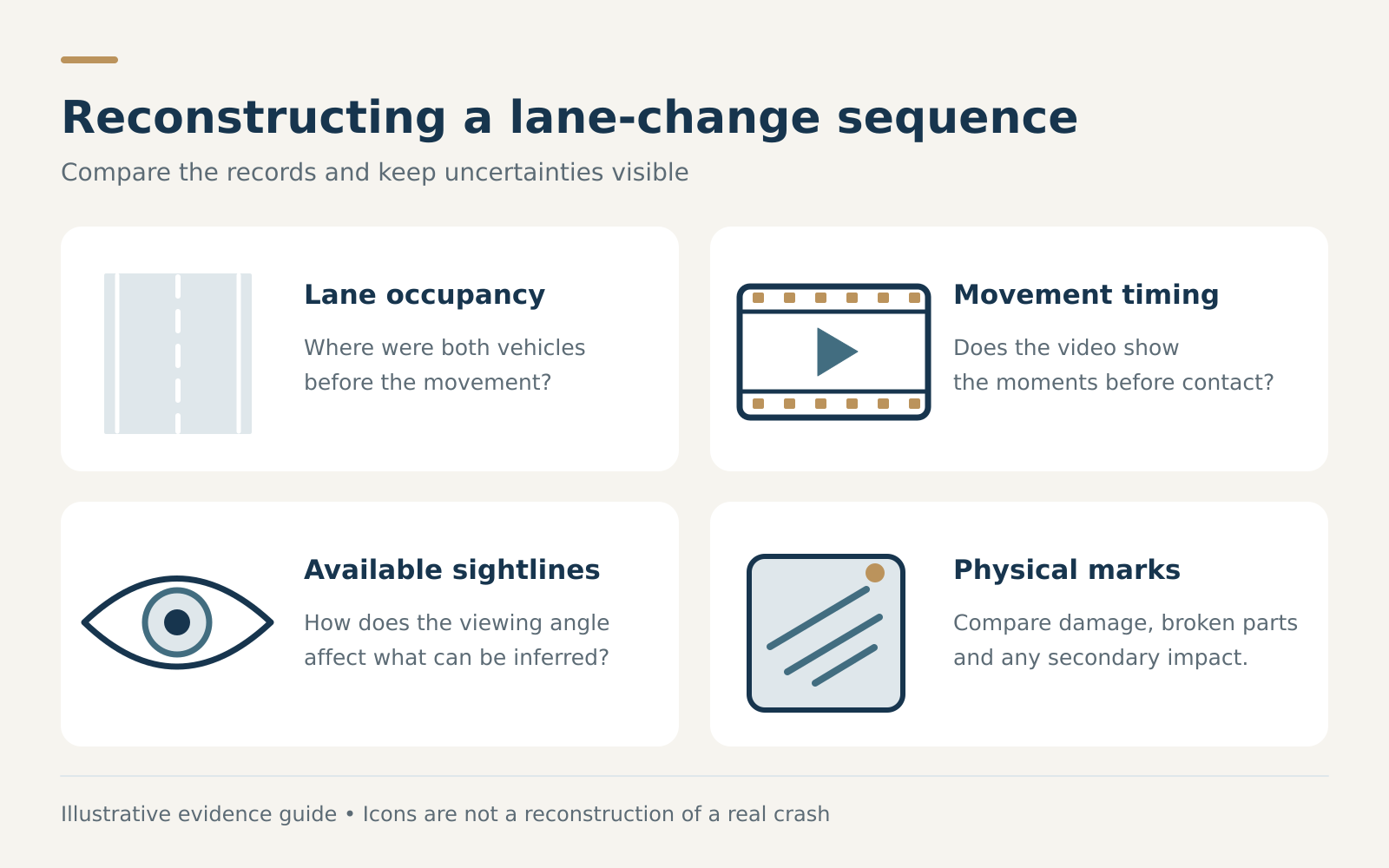
A reconstructionist can compare the available position and timing evidence. Any conclusion about the motorcycle's precise lane position must stay within what that evidence supports. Mirror adjustment and camera angle can also affect an assessment of the driver's view. If the driver says the bike was “invisible,” examine when and how often the driver checked, including whether the bike could have been seen before the lane change began. The evidence may leave that question unresolved.
Read the motorcycle pillar's lane-change section for a technical framework and the hub for the client path. If you need an evaluation of a Dallas collision, contact the firm. Read § 545.0605 for the actual motorcycle lane rules.
Does a blind spot excuse the driver? It is a factual issue, not an automatic defense. The available sightlines, checks and timing need review.

ABOUT THE ATTORNEY
Aaron A. Herbert
Founding Attorney
Board Certified in Personal Injury Trial Law
Aaron founded The Law Firm of Aaron A. Herbert in 2010 to focus on developing each client's case and seeking its maximum value. For over a decade, he has represented people seriously injured in major accidents and industrial catastrophes, pursuing trial verdicts and settlements while working to reduce the stress of litigation.
Education
- Texas A&M University · B.S., Criminal Justice, 1999
- University of Oklahoma College of Law · J.D., 2002; graduated in the top of his class
Trial experience & approach
Aaron earned numerous jury verdicts at boutique personal injury litigation firms. According to his biography, he spent a year as the top-earning litigation attorney at a firm that frequently appeared in verdict searches as having one of the highest numbers of trial wins in Texas. At another Dallas personal injury firm, he moved from managing pre-litigation attorney to managing litigation attorney over seven years as the firm grew into one of Dallas's largest personal injury firms.
His biography describes a reputation as one of America's most aggressive trial lawyers, with noteworthy recoveries from judges and juries and substantial pretrial settlements. Most of those settlements included confidentiality agreements requested by the defense. Aaron has said the recoveries were justified by the injuries and losses involved, which no amount of money could make someone choose to experience.
His approach combines passion, preparation, persistence and courtroom imagination. He believes a well-supported, engaged and motivated team working cooperatively helps deliver strong representation, with the goal of achieving the best possible result for every client.
Dallas roots, military service & publication
Born and raised in Dallas, Aaron enlisted in the United States Marine Corps after high school and later received an Honorable Discharge. He completed his university and law degrees after his military service and became a lifelong Sooners football fan in law school.
Publication: “Litigating Dog Bite Cases,” Texas Dog Law Seminar, Dallas, 2009.
Professional affiliations & recognition
Professional affiliations and recognition listed in Aaron’s biography:
- State Bar of Texas
- American Bar Association
- Association of Trial Lawyers of America (now American Association for Justice)
- Texas Trial Lawyers Association
- Dallas Trial Lawyers Association
- Dallas Bar Association
- Tarrant County Bar Association
- Million Dollar Advocates Forum
- The National Trial Lawyers – Top 100 Trial Lawyers
Trial experience & approach
Aaron earned numerous jury verdicts at boutique personal injury litigation firms. According to his biography, he spent a year as the top-earning litigation attorney at a firm that frequently appeared in verdict searches as having one of the highest numbers of trial wins in Texas. At another Dallas personal injury firm, he moved from managing pre-litigation attorney to managing litigation attorney over seven years as the firm grew into one of Dallas's largest personal injury firms.
His biography describes a reputation as one of America's most aggressive trial lawyers, with noteworthy recoveries from judges and juries and substantial pretrial settlements. Most of those settlements included confidentiality agreements requested by the defense. Aaron has said the recoveries were justified by the injuries and losses involved, which no amount of money could make someone choose to experience.
His approach combines passion, preparation, persistence and courtroom imagination. He believes a well-supported, engaged and motivated team working cooperatively helps deliver strong representation, with the goal of achieving the best possible result for every client.
Dallas roots, military service & publication
Born and raised in Dallas, Aaron enlisted in the United States Marine Corps after high school and later received an Honorable Discharge. He completed his university and law degrees after his military service and became a lifelong Sooners football fan in law school.
Publication: “Litigating Dog Bite Cases,” Texas Dog Law Seminar, Dallas, 2009.
Professional affiliations & recognition
Professional affiliations and recognition listed in Aaron’s biography:
- State Bar of Texas
- American Bar Association
- Association of Trial Lawyers of America (now American Association for Justice)
- Texas Trial Lawyers Association
- Dallas Trial Lawyers Association
- Dallas Bar Association
- Tarrant County Bar Association
- Million Dollar Advocates Forum
- The National Trial Lawyers – Top 100 Trial Lawyers