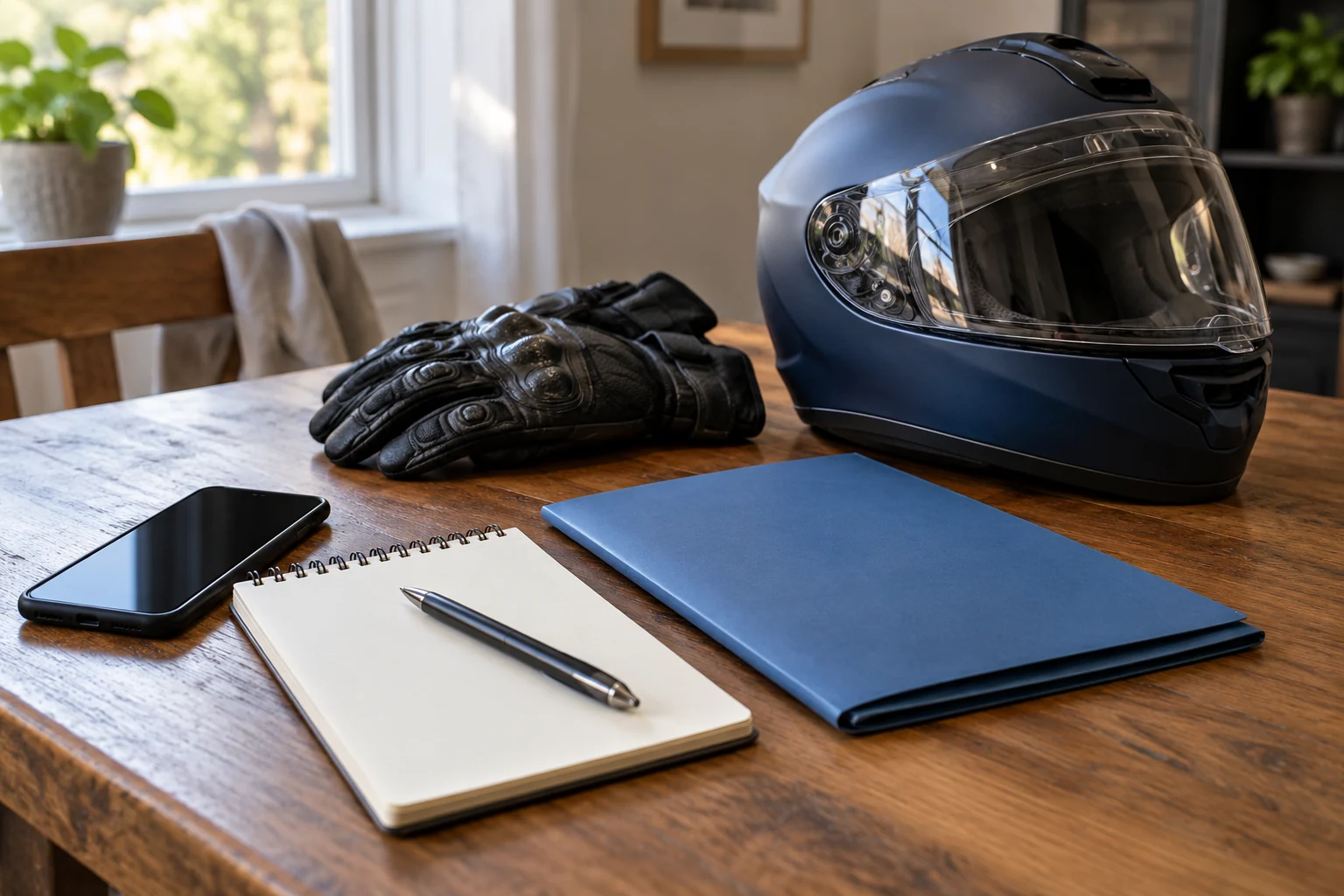
First-day medical care, reporting and evidence preservation after a motorcycle crash.
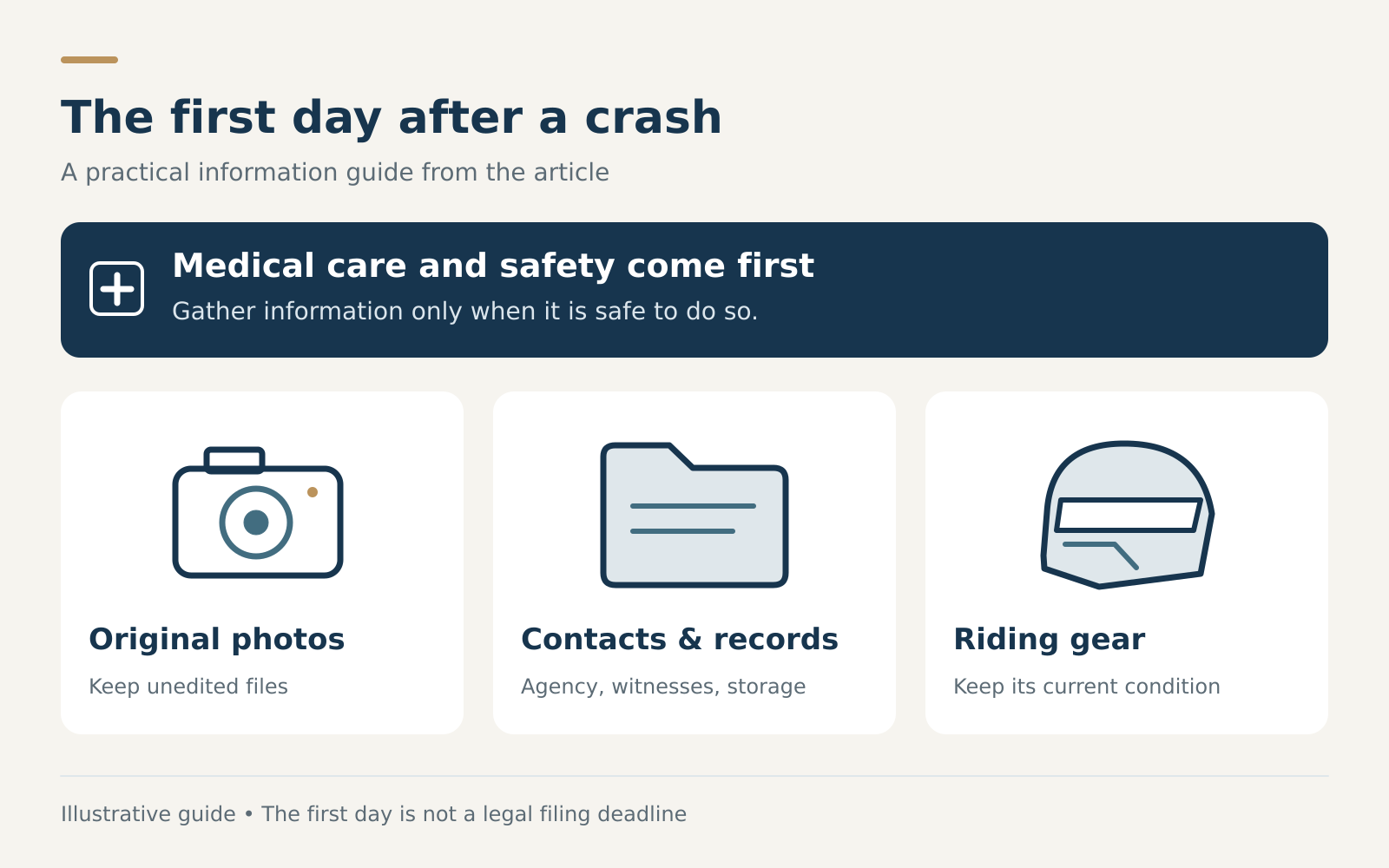
A rider's first job after a crash is to get appropriate medical care and reach safety. A legal investigation can wait until emergency needs have been addressed, but some information can change quickly. If you or a trusted person can do so safely, record the investigating agency, report number, witnesses, motorcycle storage location and possible cameras. The first day is not a legal filing deadline; it is a sensible time to identify evidence that someone else may soon move, repair or overwrite.
If it is safe to take photos, work from the wider scene toward the details. A scrape photographed at close range may be hard to place later without a view showing where it sits in the intersection or lane-change area. Record the approaches, traffic signs and signal heads, lane markings, vehicles, debris and damage. Note when you took the images and the direction of travel. Retain the original files if you later crop or annotate copies. Save a helmet or motorcycle camera recording in its native form before its storage gets reused.
Describe the crash and your symptoms accurately to the people treating you. Keep the discharge instructions and information about follow-up appointments. Being able to walk away does not tell you whether you need an assessment. Get medical advice; this article cannot diagnose an injury. Photographs of the bike can wait when care is needed. Once emergency needs are addressed, find out where the tow company is taking the motorcycle and whether anyone plans to repair or dispose of it. Keep the helmet, jacket, gloves and boots as they are if they may help explain the impact.
An early call from an insurer may involve a statement or a settlement offer. Keep a record of it. Stick to what you know about speed and injuries instead of filling gaps with guesses. Read any proposed release and understand its scope before accepting it. Separately, tell counsel promptly about a nearby business that may have recorded the crash. Its address and the direction of the camera can help identify the recording’s custodian. You cannot require the business to give you a copy merely by asking, but counsel can contact the custodian and address preservation.
You can discuss the crash with a lawyer while you are still waiting for the report. Bring what you have collected. The Texas motorcycle hub explains the next questions, and the Dallas motorcycle lawyer page offers a case-review path. Texas's general personal-injury limitations period under § 16.003 differs from evidence retention and any special government notice rules.
What if I was hospitalized and took no photos? You were getting treatment, which comes first. Explain what you remember and where you are unsure. Counsel can look for evidence from the investigating agency, witnesses, other vehicles and people or businesses that may have kept recordings.
For the broader legal framework, read the Texas motorcycle claims and litigation guide.

ABOUT THE ATTORNEY
Aaron A. Herbert
Founding Attorney
Board Certified in Personal Injury Trial Law
Aaron founded The Law Firm of Aaron A. Herbert in 2010 to focus on developing each client's case and seeking its maximum value. For over a decade, he has represented people seriously injured in major accidents and industrial catastrophes, pursuing trial verdicts and settlements while working to reduce the stress of litigation.
Education
- Texas A&M University · B.S., Criminal Justice, 1999
- University of Oklahoma College of Law · J.D., 2002; graduated in the top of his class
Trial experience & approach
Aaron earned numerous jury verdicts at boutique personal injury litigation firms. According to his biography, he spent a year as the top-earning litigation attorney at a firm that frequently appeared in verdict searches as having one of the highest numbers of trial wins in Texas. At another Dallas personal injury firm, he moved from managing pre-litigation attorney to managing litigation attorney over seven years as the firm grew into one of Dallas's largest personal injury firms.
His biography describes a reputation as one of America's most aggressive trial lawyers, with noteworthy recoveries from judges and juries and substantial pretrial settlements. Most of those settlements included confidentiality agreements requested by the defense. Aaron has said the recoveries were justified by the injuries and losses involved, which no amount of money could make someone choose to experience.
His approach combines passion, preparation, persistence and courtroom imagination. He believes a well-supported, engaged and motivated team working cooperatively helps deliver strong representation, with the goal of achieving the best possible result for every client.
Dallas roots, military service & publication
Born and raised in Dallas, Aaron enlisted in the United States Marine Corps after high school and later received an Honorable Discharge. He completed his university and law degrees after his military service and became a lifelong Sooners football fan in law school.
Publication: “Litigating Dog Bite Cases,” Texas Dog Law Seminar, Dallas, 2009.
Professional affiliations & recognition
Professional affiliations and recognition listed in Aaron’s biography:
- State Bar of Texas
- American Bar Association
- Association of Trial Lawyers of America (now American Association for Justice)
- Texas Trial Lawyers Association
- Dallas Trial Lawyers Association
- Dallas Bar Association
- Tarrant County Bar Association
- Million Dollar Advocates Forum
- The National Trial Lawyers – Top 100 Trial Lawyers
Trial experience & approach
Aaron earned numerous jury verdicts at boutique personal injury litigation firms. According to his biography, he spent a year as the top-earning litigation attorney at a firm that frequently appeared in verdict searches as having one of the highest numbers of trial wins in Texas. At another Dallas personal injury firm, he moved from managing pre-litigation attorney to managing litigation attorney over seven years as the firm grew into one of Dallas's largest personal injury firms.
His biography describes a reputation as one of America's most aggressive trial lawyers, with noteworthy recoveries from judges and juries and substantial pretrial settlements. Most of those settlements included confidentiality agreements requested by the defense. Aaron has said the recoveries were justified by the injuries and losses involved, which no amount of money could make someone choose to experience.
His approach combines passion, preparation, persistence and courtroom imagination. He believes a well-supported, engaged and motivated team working cooperatively helps deliver strong representation, with the goal of achieving the best possible result for every client.
Dallas roots, military service & publication
Born and raised in Dallas, Aaron enlisted in the United States Marine Corps after high school and later received an Honorable Discharge. He completed his university and law degrees after his military service and became a lifelong Sooners football fan in law school.
Publication: “Litigating Dog Bite Cases,” Texas Dog Law Seminar, Dallas, 2009.
Professional affiliations & recognition
Professional affiliations and recognition listed in Aaron’s biography:
- State Bar of Texas
- American Bar Association
- Association of Trial Lawyers of America (now American Association for Justice)
- Texas Trial Lawyers Association
- Dallas Trial Lawyers Association
- Dallas Bar Association
- Tarrant County Bar Association
- Million Dollar Advocates Forum
- The National Trial Lawyers – Top 100 Trial Lawyers