A search for Fort Worth motorcycle accident statistics often brings up a Texas-wide number. Look at the report before using it. In the TxDOT report discussed below, 559 is the number of people killed statewide in 2025, including motorcycle passengers. It does not tell you how many motorcycles crashed inside Fort Worth. For that, you need a local search.
Key Takeaways:
- Read the geography field. A search for Tarrant County also includes places outside Fort Worth.
- An allegation of fault needs evidence. The Chapter 33 rules below explain when an assigned percentage reduces or bars recovery.
- Riding without a helmet is legal for qualifying adults. If helmet use becomes an issue in a head-injury claim, the injuries and medical evidence matter.
- Statewide crash totals do not identify who caused a particular collision. Fault must be assessed using evidence about that crash.
- Have the filing dates checked. The general two-year personal-injury rule has exceptions, and a government claim can require earlier notice.
What Tarrant County Motorcycle Crash Data Actually Shows

TxDOT maintains CRIS using reportable motor vehicle traffic crash information submitted by Texas law enforcement. Its annual reports summarize those records. When comparing Fort Worth with Tarrant County or Texas, the geography, year and motorcycle-specific filters must match.
When saving a local query, keep the search settings with the results:
- Place: Fort Worth city limits or all of Tarrant County?
- Dates: Which crash years did you select, and when did you download the records?
- Measure: Crashes, injured people or deaths? Are passengers included?
- Filters: Which motorcycle and injury categories did you choose?
- Limitations: Are reports still arriving or being corrected?
A count alone cannot tell you the risk of an individual trip. A heavily used intersection may have more crashes simply because more vehicles pass through it.
Consider a hypothetical list of crashes near an intersection. One entry appears twice; another occurred a block away but was assigned to the junction. Counting both would inflate the total. Read the CR-3 narratives and check the coordinates before ranking locations. A comparison also needs one consistent date range and boundary around every junction. Keep separate columns for fatal crashes and crashes with serious injuries.
What Do the Latest Texas Motorcycle Fatality Figures Show?
| Report | Year | Texas motorcyclist deaths | Scope |
|---|---|---|---|
| TxDOT’s 2025 annual report | 2025 | 559 | Operators and passengers; reports processed through April 7, 2026 |
| NHTSA | 2024 | 583 | Statewide; second-highest state total in this report |
These reports count deaths across Texas. A Fort Worth or Tarrant County crash count requires a separate local query with its own dates and filters.
What Factors Should a Fort Worth Motorcycle Crash Investigation Examine?
TxDOT warns that drivers can misjudge a motorcycle’s speed or distance at intersections, particularly during left turns. In an individual crash, the investigation may examine yielding, speed, attention and visibility. The crash report, video, witness accounts and other evidence must be evaluated before assigning responsibility.
Why Do Time and Location Matter to Crash Evidence?
After a crash on I-35W, Loop 820, Jacksboro Highway or another Tarrant County road, record the exact location, direction of travel, lane positions, lighting and traffic conditions. Photos, available video and witness accounts can help explain the collision. A road’s name or a statewide seasonal pattern does not establish who caused a particular crash.
What Texas Law Says About Rider Fault and Motorcycle Claims
Texas Civil Practice and Remedies Code Chapter 33 governs proportionate responsibility in claims to which it applies. Under its 51 percent bar rule, a rider assigned more than 50 percent of the responsibility cannot recover damages. The evidence must support the conduct attributed to each person and its contribution to the harm. A statewide crash pattern does not supply that proof.
Does Texas's Helmet Law Create a Comparative Fault Problem?
Yes. Riding without a helmet legally can still open the door to a comparative fault argument. Texas Transportation Code Section 661.003 provides a helmet exception for riders age 21 or older who have successfully completed a motorcycle operator training and safety course under Chapter 662 or have a health insurance plan covering injuries from a motorcycle collision, but doing so legally does not stop an insurer from raising it.
Ask the insurer to identify the injury it attributes to the absence of a helmet. Then review that contention with the treating doctors and, where needed, a qualified expert. A statement that a rider wore no helmet does not by itself establish what caused an injury or justify a particular reduction in damages.
Does Lane Splitting Affect Fault After a Fort Worth Crash?
Texas Transportation Code Section 545.0605 prohibits lane splitting. A motorcyclist traveling between lanes of traffic at the time of a crash opens a comparative fault argument even when another driver caused the collision.
The primary reason this matters in Tarrant County claims: any percentage of fault assigned to you under Texas's proportionate responsibility system reduces your recovery by that same percentage.
A 20 percent fault finding cuts your award by 20 percent. A finding of 51 percent or more eliminates your claim entirely, regardless of what the other driver did.
How Do Insurers Use Motorcycle Accident Statistics Against Riders?
Insurance adjusters frequently reference statewide TxDOT data to frame a motorcycle crash as consistent with patterns involving rider error. That framing shifts focus away from the other driver's specific conduct and onto the motorcyclist's general behavior.
Keep a short record of what each source actually covers:
- Witness: Where was the person standing, and when did they first notice the motorcycle?
- Video: Does it show the approach, the impact or only the aftermath? Check the camera’s clock.
- Photographs: Match each view to a vehicle and location before drawing conclusions from the damage.
- Police report: Compare the Fort Worth Police Department’s official crash report with the other records. Flag conflicting accounts for follow-up.
A reconstruction expert may need to review those materials together before explaining the sequence of the collision.
Why Motorcycle Crash Injuries Produce Different Legal Outcomes
Compared with a typical passenger car, a motorcycle generally provides less surrounding structure to protect its rider in a crash. Equipment varies by model; some motorcycles have airbags.
That physical reality drives the injury profile in Fort Worth motorcycle cases, and the injury profile drives everything about how a claim gets built and valued.
Why Are Motorcycle Accident Injuries More Severe Than Car Accident Injuries?
Nationally in 2024, the motorcyclist fatality rate per vehicle mile traveled was almost 27 times the rate for passenger-car occupants.
In Fort Worth motorcycle accident cases, claims frequently involve traumatic brain injury, spinal cord injury, severe abrasion injuries, and orthopedic fractures as claim categories. These injuries create long treatment timelines, significant economic losses, and life disruptions that a fully documented claim should capture completely.
How Does Injury Severity Shape the Value of a Tarrant County Motorcycle Claim?
Injury severity drives claim value in two directions simultaneously. It increases the total damages available, and it raises the stakes of every insurer's decision made along the way. Cases involving permanent impairment or long-term disability require a different evidentiary approach than soft-tissue claims.
Specifically, documentation from the right medical specialists, matched to the injury type, builds the record that supports a complete damages calculation.
Insurers use gaps in specialist referrals and inconsistent treatment timelines to argue that injuries were not as serious as the rider claims. Closing those gaps early protects the claim's full value.
Practical Steps After a Fort Worth Motorcycle Accident
What you do in the first days after a motorcycle crash can affect the strength of your legal claim:
- Request the crash report promptly. The Fort Worth Police Department processes crash report requests directly. That report captures the responding officer's fault notations and becomes one source of information for the investigation of your claim.
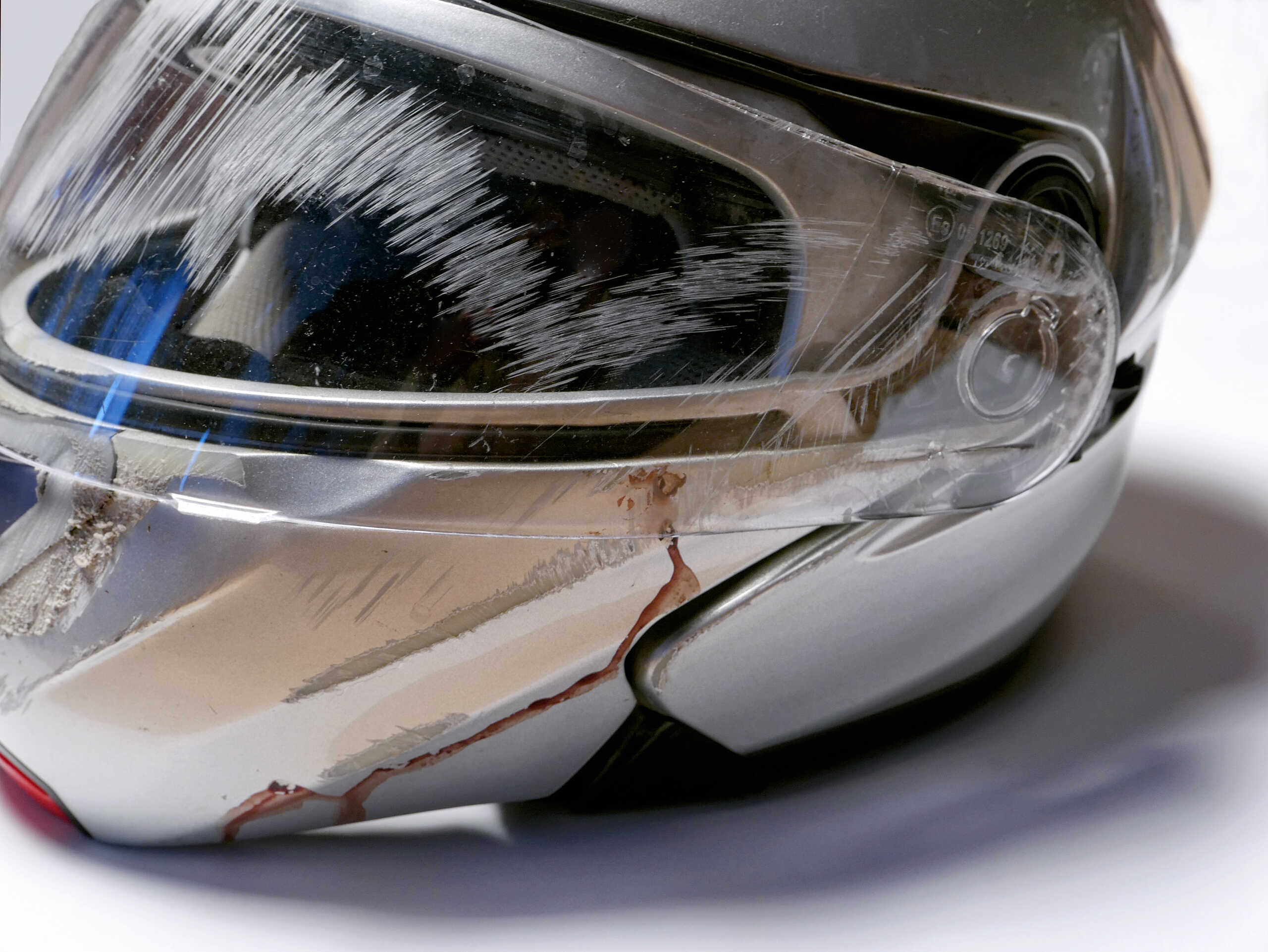
- Document and preserve your safety gear. Keep your helmet, jacket, gloves and boots, and photograph their condition. Do not discard or alter them while they may be relevant evidence. The gear and photographs may help address a dispute about whether protective equipment affected the injuries.
- Back up the dashcam file before it gets overwritten. Keep the minutes leading up to impact. Send your lawyer witness contact details and the names of businesses whose cameras might face the road.
- Keep referral paperwork and appointment records together. If a visit is delayed because of cost, transportation or a scheduling problem, make a note of what happened. Discuss treatment questions with your clinician. An accurate record is more useful than an unexplained gap in the dates.
Consulting with our Fort Worth motorcycle accident attorney before giving a recorded statement can help you understand your obligations. You generally have no contractual duty to give a voluntary recorded statement to the other driver’s insurer, but your own policy may require cooperation with your insurer’s investigation. Review the policy and the request before declining, and avoid guessing about facts you do not know.
Fort Worth Motorcycle Accident Questions Answered by Our Attorneys
Where can I find official Fort Worth and Tarrant County motorcycle crash data?
TxDOT’s crash-data page links to annual statistics and the public CRIS Query tool. A local motorcycle comparison requires a query for the relevant year and city or county. NHTSA’s Traffic Safety Facts reports provide national and state motorcycle data.
What if a mechanical defect on my motorcycle contributed to the Fort Worth crash?
A mechanical failure, such as defective brakes or a tire blowout, can support a products liability claim against the manufacturer or distributor alongside a negligence claim against another driver. That claim falls under Texas Civil Practice and Remedies Code Chapter 82, which has different evidentiary requirements. Preserve the motorcycle unrepaired after the crash, because those parts become the physical evidence.
Can a road defect in Fort Worth support a separate legal claim?
Road hazards that TxDOT or the City of Fort Worth failed to correct can sometimes support a claim against a government entity in addition to a third-party driver. Governmental claims in Texas carry specific notice requirements and shorter deadlines under Texas Civil Practice and Remedies Code Chapter 101. An attorney should evaluate this possibility early because missing the required notice window can eliminate that portion of the claim permanently.
Are Fort Worth motorcycle cases more likely to go to trial than car accident cases?
The crash statistics cited here do not establish that motorcycle cases are more likely than car accident cases to go to trial. Texas court-reporting instructions combine automobile, truck and motorcycle cases in one category. Disputes about fault, injuries, or damages can prevent an early settlement. If a lawsuit is filed, the proper court depends on jurisdiction and venue rules. Tarrant County has several civil district courts and county courts at law, and local rules generally provide for random assignment among courts designated for the subject matter.
Does the type of motorcycle I was riding affect my claim?
The motorcycle's make and model rarely affect fault analysis, though they can affect the damages calculation. High-performance bikes may raise different insurance coverage questions, and aftermarket modifications sometimes prompt scrutiny of the motorcycle's condition. Insurers more commonly focus on the rider's endorsement status, helmet use and the other driver's specific conduct.
Do motorcycle accident statistics in Texas affect the value of my claim?
Statistics can shape an insurer's initial response. The value of your claim depends on the evidence: the other driver's conduct, documentation of your injuries, and the economic and personal cost of the crash. A statistical pattern may start the insurer's argument, but the details of your case determine its value.
What if the driver who caused my Fort Worth motorcycle crash had no insurance?
Uninsured or underinsured motorist coverage may help if an at-fault driver has no insurance or insufficient limits. Check whether you have coverage that applies to this motorcycle crash; payment depends on the policy, covered losses and applicable limits. Also ask about PIP, medical-payments coverage and any other responsible parties. The driver’s personal assets are not necessarily the only other possible source of recovery.
How long do I have to file a motorcycle accident claim in Fort Worth?
The usual deadline under Texas Civil Practice and Remedies Code Section 16.003 is two years after the personal-injury claim accrues, often on the crash date. Do not wait until that anniversary to ask about it. Give your lawyer the crash date, the injured person’s age and the names of any government entities involved. Those details can affect the deadline analysis or reveal an earlier notice requirement.
Related resources: Explore the Texas Motorcycle Accident Knowledge Hub and Texas Motorcycle Accident Claims and Litigation.
What These Numbers Mean for You Specifically
Statistics describe what happened to other people in other crashes. They do not describe what happened to you.
In a Fort Worth motorcycle accident claim, the difference between population-level data and your individual facts is exactly where a strong case gets built and where insurers look for room to minimize what they pay.
Aaron Herbert is Board Certified in Personal Injury Trial Law by the Texas Board of Legal Specialization, and he handles motorcycle cases by identifying the evidence that separates your situation from the statistical baseline, connecting clients with the right medical specialists, and staying personally involved with every client from the first call through resolution.
You speak with Aaron directly. He walks you through what the evidence shows, what the claim is worth, and what the path forward looks like from here.
Consultations are free and carry no obligation. We are available 24/7, and there is no recovery, no fee, so you owe nothing unless we recover for you. Spanish-language services are available. Call (214) 200-4878 or reach out through the contact page.

ABOUT THE ATTORNEY
Aaron A. Herbert
Founding Attorney
Board Certified in Personal Injury Trial Law
Aaron founded The Law Firm of Aaron A. Herbert in 2010 to focus on developing each client's case and seeking its maximum value. For over a decade, he has represented people seriously injured in major accidents and industrial catastrophes, pursuing trial verdicts and settlements while working to reduce the stress of litigation.
Education
- Texas A&M University · B.S., Criminal Justice, 1999
- University of Oklahoma College of Law · J.D., 2002; graduated in the top of his class
Trial experience & approach
Aaron earned numerous jury verdicts at boutique personal injury litigation firms. According to his biography, he spent a year as the top-earning litigation attorney at a firm that frequently appeared in verdict searches as having one of the highest numbers of trial wins in Texas. At another Dallas personal injury firm, he moved from managing pre-litigation attorney to managing litigation attorney over seven years as the firm grew into one of Dallas's largest personal injury firms.
His biography describes a reputation as one of America's most aggressive trial lawyers, with noteworthy recoveries from judges and juries and substantial pretrial settlements. Most of those settlements included confidentiality agreements requested by the defense. Aaron has said the recoveries were justified by the injuries and losses involved, which no amount of money could make someone choose to experience.
His approach combines passion, preparation, persistence and courtroom imagination. He believes a well-supported, engaged and motivated team working cooperatively helps deliver strong representation, with the goal of achieving the best possible result for every client.
Dallas roots, military service & publication
Born and raised in Dallas, Aaron enlisted in the United States Marine Corps after high school and later received an Honorable Discharge. He completed his university and law degrees after his military service and became a lifelong Sooners football fan in law school.
Publication: “Litigating Dog Bite Cases,” Texas Dog Law Seminar, Dallas, 2009.
Professional affiliations & recognition
Professional affiliations and recognition listed in Aaron’s biography:
- State Bar of Texas
- American Bar Association
- Association of Trial Lawyers of America (now American Association for Justice)
- Texas Trial Lawyers Association
- Dallas Trial Lawyers Association
- Dallas Bar Association
- Tarrant County Bar Association
- Million Dollar Advocates Forum
- The National Trial Lawyers – Top 100 Trial Lawyers
Trial experience & approach
Aaron earned numerous jury verdicts at boutique personal injury litigation firms. According to his biography, he spent a year as the top-earning litigation attorney at a firm that frequently appeared in verdict searches as having one of the highest numbers of trial wins in Texas. At another Dallas personal injury firm, he moved from managing pre-litigation attorney to managing litigation attorney over seven years as the firm grew into one of Dallas's largest personal injury firms.
His biography describes a reputation as one of America's most aggressive trial lawyers, with noteworthy recoveries from judges and juries and substantial pretrial settlements. Most of those settlements included confidentiality agreements requested by the defense. Aaron has said the recoveries were justified by the injuries and losses involved, which no amount of money could make someone choose to experience.
His approach combines passion, preparation, persistence and courtroom imagination. He believes a well-supported, engaged and motivated team working cooperatively helps deliver strong representation, with the goal of achieving the best possible result for every client.
Dallas roots, military service & publication
Born and raised in Dallas, Aaron enlisted in the United States Marine Corps after high school and later received an Honorable Discharge. He completed his university and law degrees after his military service and became a lifelong Sooners football fan in law school.
Publication: “Litigating Dog Bite Cases,” Texas Dog Law Seminar, Dallas, 2009.
Professional affiliations & recognition
Professional affiliations and recognition listed in Aaron’s biography:
- State Bar of Texas
- American Bar Association
- Association of Trial Lawyers of America (now American Association for Justice)
- Texas Trial Lawyers Association
- Dallas Trial Lawyers Association
- Dallas Bar Association
- Tarrant County Bar Association
- Million Dollar Advocates Forum
- The National Trial Lawyers – Top 100 Trial Lawyers