Yes, if the evidence ties the spill to someone the law holds responsible. Being near a sample table is not enough by itself.
What is the short answer?
A spill near a sample table can support a claim. Being near the table can't prove who spilled it or when. So the evidence has to link the spill, the store's knowledge and a poor response to your fall.
| Way to show knowledge | Example |
|---|---|
| The store or its agent created the spill. | A witness saw a worker drop a sample. |
| The store actually knew about it. | A shopper reported the spill to staff. |
| It was there long enough to be found. | Video shows the spill sat for a meaningful time. |
Why isn't the sample table enough?
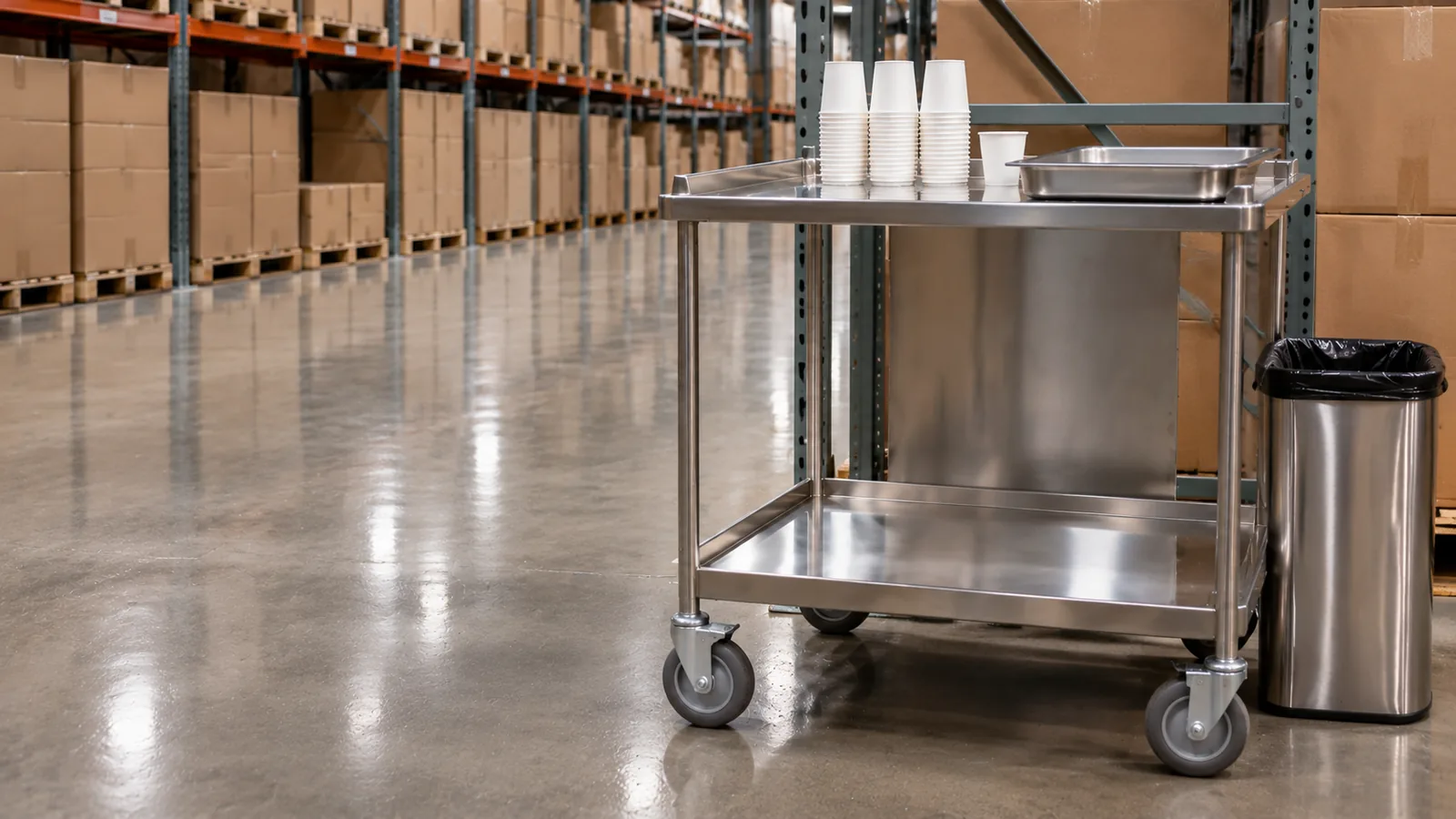
Saturday, 1:15 p.m., at a warehouse off I-635: three tasting stations within 30 feet of each other, a line for hot dogs, a few hundred people carrying open cups. A shopper steps on something sticky and goes down. The nearest table is handing out mango smoothie shots.
It's natural to blame that table. But a jury needs more than proximity. It needs to know who spilled what, and when.
What happened in the macaroni salad case?
Texas courts have heard the "it looked like it had been there a while" argument about food before. In Wal-Mart Stores, Inc. v. Gonzalez, 968 S.W.2d 934 (Tex. 1998), a shopper slipped on macaroni salad. There was testimony about tracks through it, about "a lot of dirt" in it, and that it seemed like it had been there awhile. The Texas Supreme Court held that was no evidence the store should have known about it.
In April 2026 the court came back to that case in H-E-B, LP v. Peterson. It repeated that cart tracks, footprints and dirt don't meet the time-notice rule, and that the size of a puddle alone doesn't let a jury infer how long it sat.
What this means for you: A smeared, dirty sample tells you people walked through it. It doesn't tell you when it hit the floor. That has to come from somewhere else.
Who was actually running the station?
Tasting tables are often staffed by an outside demonstration company, and the food court may have its own crew. Find out:
- who set out the samples that day
- who was supposed to keep the station clean
- who walked the floor around it
- who took reports from shoppers
A logo on the table skirt doesn't prove who was in charge of each of those jobs. When control is disputed, ask for the demo company's contract, the session schedule and the cleaning assignments for that aisle.
How do you connect the spill to its source?
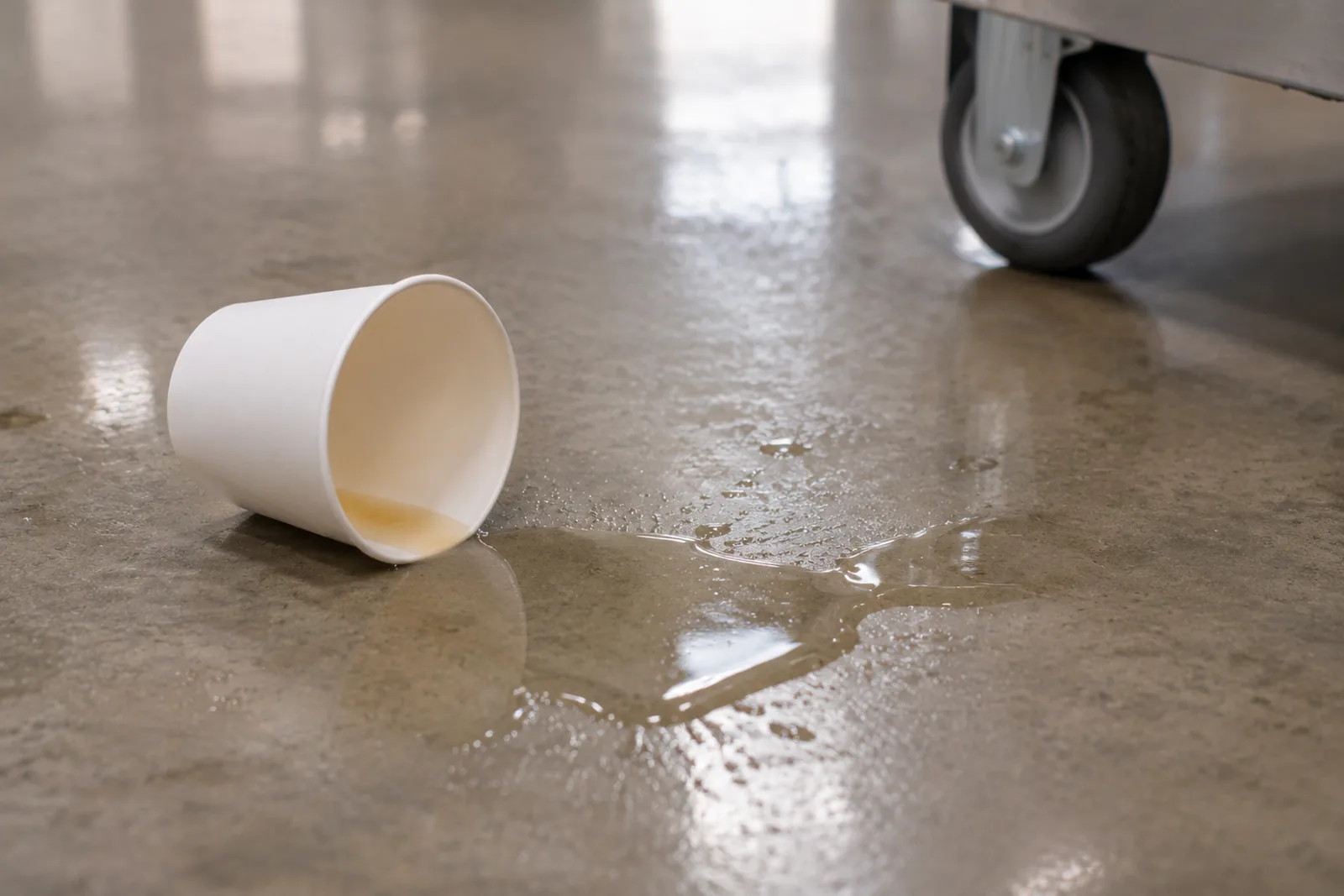
A cup on video doesn't prove liquid spilled at that moment. Replace each guess with something firmer:
| Weak inference | Better proof |
|---|---|
| The spill looks like the sample. | A recovered cup or witness account. |
| Sampling ran all shift. | Video showing when this spill appeared. |
| The table was close. | The path from the table to the spot. |
Then gather the physical evidence: original video frames (not a phone recording of a monitor), the paper cup if someone kept it, your shoes as they are, and the towels a worker used to clean up.
What does a dispute look like?
Here is a hypothetical example, not an actual case. It's 1:17 p.m. and a shopper is on the floor next to a smoothie demo table, one sneaker coated in something pink. Ask three people what happened and you get three times. The floor worker swears the demo packed up at 1:00. The demo company's tablet log, printed weeks later, says 1:15. And a man who was in line for pizza thinks a customer dropped a drink around 1:16.
Q: Who's telling the truth about 1:00 versus 1:15?
It may not matter much. A schedule only shows who had the chance to make the mess.
Q: Then what does matter?
When the spill appeared. Ask for the video from 12:45 to 1:20, not the whole day.
Q: And the "pink" part?
Compare the residue on the shoes with the sample product. Color alone won't carry it.
Do earlier complaints help?
They can, if they're close in time, place and type. Rules 401 and 403 of the Texas Rules of Evidence decide whether a jury hears about them.
| Complaint | Likely weight |
|---|---|
| "The food court is often messy." | Too general. |
| Same sticky residue at the same station that day. | Stronger. |
| Report to staff minutes before the fall. | May show actual knowledge. |
What to do now: Put your shoes and clothes in a bag without washing them. Photograph the spot, the nearest station and any sign on the table, write down the time and the workers' names, and ask the warehouse in writing to keep the video for that area.
Frequently asked questions
The sample table was run by an outside company. Can I still claim against Costco?
It depends on the contract, who controlled the area, and what each of them knew.
Samples were out from 10 to 2. Doesn't that mean the spill sat there for hours?
A four-hour demo shift only shows samples were out. You still need proof of when this particular spill showed up.
A worker dropped the cup right in front of me. Does that change things?
It can. A worker dropping it is evidence the store created the hazard.
Should I go back and take more pictures?
Only if you can do it safely. The first photos from the day of the fall matter most.
For more on notice, read How Can You Prove Costco Knew About a Spill and How Long Must a Spill Be on a Costco Floor, or visit the Costco injury claims in Texas hub.
Sources
This article is general information, not legal advice. Reading it does not make you our client, and every claim turns on its own facts and deadlines.

ABOUT THE ATTORNEY
Aaron A. Herbert
Founding Attorney
Board Certified in Personal Injury Trial Law
Aaron founded The Law Firm of Aaron A. Herbert in 2010 to focus on developing each client's case and seeking its maximum value. For over a decade, he has represented people seriously injured in major accidents and industrial catastrophes, pursuing trial verdicts and settlements while working to reduce the stress of litigation.
Education
- Texas A&M University · B.S., Criminal Justice, 1999
- University of Oklahoma College of Law · J.D., 2002; graduated in the top of his class
Trial experience & approach
Aaron earned numerous jury verdicts at boutique personal injury litigation firms. According to his biography, he spent a year as the top-earning litigation attorney at a firm that frequently appeared in verdict searches as having one of the highest numbers of trial wins in Texas. At another Dallas personal injury firm, he moved from managing pre-litigation attorney to managing litigation attorney over seven years as the firm grew into one of Dallas's largest personal injury firms.
His biography describes a reputation as one of America's most aggressive trial lawyers, with noteworthy recoveries from judges and juries and substantial pretrial settlements. Most of those settlements included confidentiality agreements requested by the defense. Aaron has said the recoveries were justified by the injuries and losses involved, which no amount of money could make someone choose to experience.
His approach combines passion, preparation, persistence and courtroom imagination. He believes a well-supported, engaged and motivated team working cooperatively helps deliver strong representation, with the goal of achieving the best possible result for every client.
Dallas roots, military service & publication
Born and raised in Dallas, Aaron enlisted in the United States Marine Corps after high school and later received an Honorable Discharge. He completed his university and law degrees after his military service and became a lifelong Sooners football fan in law school.
Publication: “Litigating Dog Bite Cases,” Texas Dog Law Seminar, Dallas, 2009.
Professional affiliations & recognition
Professional affiliations and recognition listed in Aaron’s biography:
- State Bar of Texas
- American Bar Association
- Association of Trial Lawyers of America (now American Association for Justice)
- Texas Trial Lawyers Association
- Dallas Trial Lawyers Association
- Dallas Bar Association
- Tarrant County Bar Association
- Million Dollar Advocates Forum
- The National Trial Lawyers – Top 100 Trial Lawyers