
Hypothetical: it's 5:40 on a weekday evening, and your heel slides on something wet by the produce misters at your H-E-B. You land on your wrist. Now what?
Get checked out, give the manager a short factual account, photograph the floor if it's safe, and get witness names before people head to their cars. You can ask a lawyer about video and records without knowing how long the spill was there, which company to sue, or your final prognosis.
Tell us about your H-E-B injury or call (214) 200-4878. Bring the store address, incident date, injury details, photos, and the names of any witnesses.
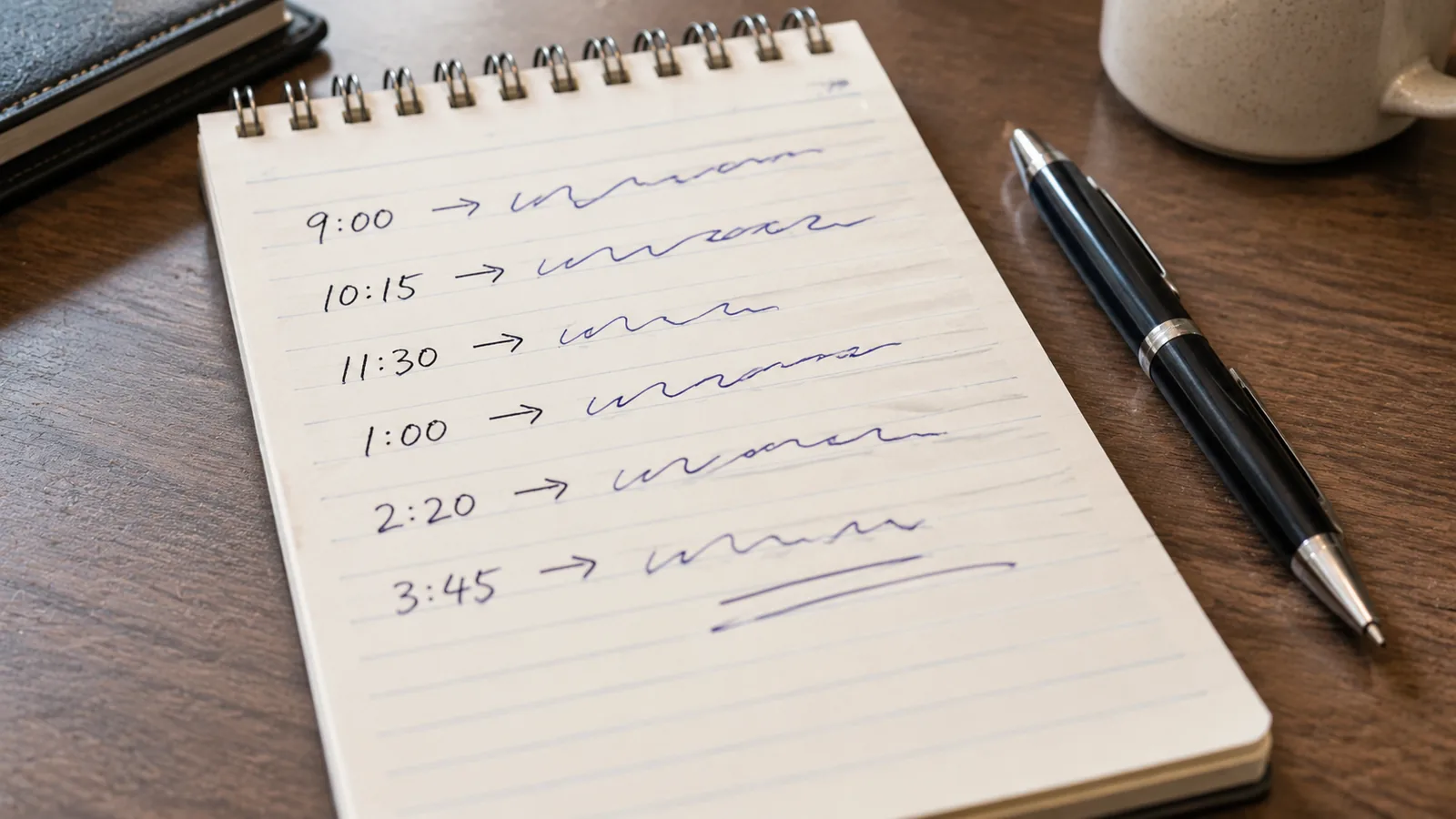
A sample timeline for the first three days
Here's how those 72 hours could go for the hypothetical shopper above.
| When | What she does |
|---|---|
| Day 1, 5:45 p.m. | Reports the fall at the service desk; gets a bystander's number. |
| Day 1, 5:50 p.m. | Husband photographs the aisle, wide and close, and keeps the receipt. |
| Day 1, 8:30 p.m. | Urgent care wraps her wrist; the shoes go in a bag, uncleaned. |
| Day 2 | Writes a dated account; saves texts and photos as originals. |
| Day 3 | Notes the adjuster's claim number; asks a lawyer about saving video and records. |
Nothing on that list needs a lawyer's say-so first. After day 3, she keeps bills and work notes, leaves the shoes and clothes unwashed, doesn't delete posts, and keeps an eye on the filing deadline [S14].
Put your health and safety first
Get away from the hazard before you think about a claim. If it's safe, step clear of carts, unstable displays, electrical hazards, and the slick spot itself.
Did your head hit the tile? Call 911. Don't drive.
Tell the urgent-care nurse how you fell, what hurts, any old injury to that spot, and every medication you take.
Before you leave, check that you have:
- the discharge sheet;
- any prescriptions;
- a work-restriction note, if you got one.
After that, follow your clinician's advice, and skip visits you don't need.
If your spouse came with you, give them the receipt and your phone. They can handle three things before a mop changes the floor:
- The store address.
- Names and numbers of anyone who saw the fall.
- Photos of the spot, wide and close.
How to word your report to the manager
Keep your report to when, where, and what you saw yourself. Here's hypothetical wording beside the common slips.
| Topic | Hypothetical wording to use | What to avoid |
|---|---|---|
| Time and place | I fell by the frozen-food case on aisle 12 at about 4:15. | Guessing the time if you didn't check it. |
| What you saw | After I fell, I saw clear water on the floor. | Saying you watched it leak, unless that's true. |
| How long it was there | I don't know how long it was there. | Estimating the spill's age. |
| Your injuries | My wrist and lower back hurt. | Saying you're fine before you've been checked. |
Why does "I don't know" carry so much weight? An adjuster may ask the same question months later, and your answer should match the report.
Photos to take before the floor is mopped
Go back to that spill by the misters (hypothetical). A photo from the end of the aisle shows where it was, and one from a foot away shows what it was.
- Wide shots of the aisle sign, your route, displays, cones or the lack of them, and nearby coolers, produce misters, ceiling stains, or the entry mat.
- Close shots of the liquid or object, its edges, footprints, cart tracks, and any dirt in it.
- Your shoe beside the hazard for scale.
- Bruising and swelling on day one, then again over the next few days.
- The soles of the shoes you were wearing.
Keep the original files unedited, and note which ones came before cleanup and which came after. Time stamps can help build the timeline.
What to keep from the first few days
Save anything that shows where you were, when, and what the fall did to you, in its original form.
- Your receipt or app purchase history, which shows the store, the date, and your checkout time.
- Shoes and clothing, unwashed, which can show the substance and the condition of your soles.
- A dated written account of your route, what you noticed before the fall, and what you learned only afterward.
- Texts, bills, and work notes that show what you told people, your treatment, and missed work.
- Your own social media posts, kept as they are, because deleting or altering them can create a spoliation problem [S12].
- Witnesses' own photos and notes, which they should keep while describing events in their own words, not yours.
Paperwork the store may ask you to sign
Hypothetical: it's 5:55, and the manager hands you a clipboard. Take these steps before the pen touches paper.
- Ask for a copy of the incident report. If the manager says no, go home and write your own account that night.
- Read how far any medical records authorization reaches. It can cover records that have nothing to do with this fall.
- Keep a copy of any payment agreement, because it can carry conditions.
- Don't sign a page titled "Release." It can end your claim, so talk to a lawyer first.
What H-E-B v. Peterson decided in 2026
H-E-B, LP v. Peterson (Tex. Apr. 10, 2026) turned on how long the water had sat on the floor [S6].
A shopper slipped on a clear puddle in the toy aisle. Video showed no employee walked down that aisle in roughly the two hours before the fall, but it didn't show how long the puddle had been there. Clear liquid is hard to date from photos [S6].
The store had a heightened rainy-weather inspection protocol and knew of earlier roof leaks elsewhere in the store. Neither supplied the missing duration evidence. The Court reversed the court of appeals and reinstated summary judgment for H-E-B, holding that the shopper needed some evidence of how long the puddle had been there to raise a fact issue on constructive notice [S6].
So who can fill that gap in your case? Maybe the shopper behind you, who says she saw the puddle twenty minutes before you fell (hypothetical). That's the kind of time evidence Peterson found missing [S6].
What about a stocker who was a few feet away? Under Wal-Mart Stores, Inc. v. Reece (Tex. 2002), that alone doesn't do it. The Court required some evidence of how long the hazard was there [S8].
Peterson still leaves room for claims based on what the store actually knew, and it doesn't decide every wet-floor case. The notice rules are covered in how to prove notice in an H-E-B slip and fall.
Does Texas law treat 72 hours as a deadline?
Hypothetical: you fell on a Monday in March. By Thursday, no legal deadline has passed. Under §16.003 of the Civil Practice and Remedies Code, you generally have two years to file a personal injury suit, and exceptions and other rules can change that [S14].
So why hurry? In that example, a stocker has mopped the aisle by 6:30 Monday evening, and the spill is gone. On Tuesday the shopper who saw the puddle is back at work across town and harder to reach. By Thursday, her memory of when she first noticed it is already fading.
Two things the 72 hours won't do. They won't add time to the two years, and neither will an incident report or a claim number. They also don't promise any recovery.
Act as soon as reasonably possible, but don't delay care or return to danger to do it.
Asking a lawyer about video and records
A lawyer can send H-E-B a focused preservation request that fits your store and your fall. Hypothetical examples of what it might cover:
- Video of the aisle, the nearest endcap display, and the entrance, well before and after the fall.
- Incident, inspection, and cleanup records, such as the manager's report and that day's floor checks for the aisle.
- Maintenance and contractor records, such as work orders on the frozen-food case or roof, and any cleaning or refrigeration vendor.
Missing video isn't an automatic win, because Texas spoliation law calls for a case-specific inquiry [S12].
In Brookshire Bros., Ltd. v. Aldridge (Tex. 2014), the alleged hazard was grease that leaked from a container near the store's rotisserie-chicken Grab-N-Go. The store kept only about eight minutes of video, and the rest was recorded over [S12].
Who decides what happens then? Aldridge says the trial judge does, and the remedy has to be proportionate. A spoliation jury instruction is kept for intentional spoliation, or for a negligent loss that irreparably deprived the other side of any meaningful ability to present a claim or defense [S12].
Questions a claims adjuster may ask
If an adjuster calls, keep it short. Answer with the facts you know, and say so plainly when you don't know.
| If the adjuster asks | A factual way to answer |
|---|---|
| Who is calling? | Write down the caller's name, role, company, and claim number every time. |
| How long was the spill there? | I don't know. I saw it after I fell. |
| Have you hurt that knee before? | Give accurate prior conditions. Hiding them costs credibility. |
| Will you give a recorded statement? | You can talk with a lawyer first; it isn't a required step before legal advice. |
| Will you sign this release? | Not before you know the extent of your injuries and have advice. |
You aren't required to have every answer on that first call.
Frequently asked questions
Should I go back to recreate the fall?
No. Don't stage a re-enactment by the cooler or walk back onto a wet floor. Your own safe photos, plus an inspection a lawyer arranges properly, can show the condition.
What if I didn't report the injury right away?
Tell your lawyer exactly when you reported it and why it wasn't sooner, even if you called the store at 9 the next morning (hypothetical). A late report may affect the proof. It doesn't justify claiming an earlier report, and it doesn't mean the claim is lost.
Why talk with Aaron Herbert?
He's Board Certified in Personal Injury Trial Law by the Texas Board of Legal Specialization [S1], which isn't a ranking or a guarantee. Ask The Law Firm of Aaron A. Herbert, P.C. about saving video, notice evidence, fees, and what comes next.
Tell us about your H-E-B injury
Bring the store address, incident date, injury details, photos, and witness names. Tell us about your H-E-B injury or call (214) 200-4878.
Also bring, if you have them:
- Insurer letters.
- Any legal papers.
- Notes on continuing treatment, repairs, or a planned procedure.
Missing documents shouldn't hold up an urgent call.
Related pages on H-E-B injuries
- Texas HEB injury knowledge hub: every guide in one place.
- How to file and litigate a Texas HEB injury claim: the claim and lawsuit process.
- Texas grocery store falls attorney: the firm's grocery store fall page.
Sources
- [S1] State Bar of Texas, Aaron Alan Herbert, Bar No. 24036761. Board certification.
- [S6] H-E-B, LP v. Peterson, No. 24-0310 (Tex. Apr. 10, 2026).
- [S8] Wal-Mart Stores, Inc. v. Reece, 81 S.W.3d 812 (Tex. 2002).
- [S12] Brookshire Bros., Ltd. v. Aldridge, 438 S.W.3d 9 (Tex. 2014).
- [S14] Tex. Civ. Prac. & Rem. Code ch. 16.

ABOUT THE ATTORNEY
Aaron A. Herbert
Founding Attorney
Board Certified in Personal Injury Trial Law
Aaron founded The Law Firm of Aaron A. Herbert in 2010 to focus on developing each client's case and seeking its maximum value. For over a decade, he has represented people seriously injured in major accidents and industrial catastrophes, pursuing trial verdicts and settlements while working to reduce the stress of litigation.
Education
- Texas A&M University · B.S., Criminal Justice, 1999
- University of Oklahoma College of Law · J.D., 2002; graduated in the top of his class
Trial experience & approach
Aaron earned numerous jury verdicts at boutique personal injury litigation firms. According to his biography, he spent a year as the top-earning litigation attorney at a firm that frequently appeared in verdict searches as having one of the highest numbers of trial wins in Texas. At another Dallas personal injury firm, he moved from managing pre-litigation attorney to managing litigation attorney over seven years as the firm grew into one of Dallas's largest personal injury firms.
His biography describes a reputation as one of America's most aggressive trial lawyers, with noteworthy recoveries from judges and juries and substantial pretrial settlements. Most of those settlements included confidentiality agreements requested by the defense. Aaron has said the recoveries were justified by the injuries and losses involved, which no amount of money could make someone choose to experience.
His approach combines passion, preparation, persistence and courtroom imagination. He believes a well-supported, engaged and motivated team working cooperatively helps deliver strong representation, with the goal of achieving the best possible result for every client.
Dallas roots, military service & publication
Born and raised in Dallas, Aaron enlisted in the United States Marine Corps after high school and later received an Honorable Discharge. He completed his university and law degrees after his military service and became a lifelong Sooners football fan in law school.
Publication: “Litigating Dog Bite Cases,” Texas Dog Law Seminar, Dallas, 2009.
Professional affiliations & recognition
Professional affiliations and recognition listed in Aaron’s biography:
- State Bar of Texas
- American Bar Association
- Association of Trial Lawyers of America (now American Association for Justice)
- Texas Trial Lawyers Association
- Dallas Trial Lawyers Association
- Dallas Bar Association
- Tarrant County Bar Association
- Million Dollar Advocates Forum
- The National Trial Lawyers – Top 100 Trial Lawyers