Type at least 2 characters. Use arrow keys to choose a result and Enter to open it.
To file an H-E-B injury claim in Texas, pin down the exact condition or activity that hurt you, find out which company controlled that spot, and save proof of notice, causation and damages. Report it, get treatment, and if negotiation doesn't resolve the claim, file and serve a supported lawsuit, generally within two years, subject to exceptions [S14].
| Step | What it involves |
|---|---|
| 1. Name the hazard | The specific puddle, mat, display, shelf or wheel stop that caused the injury. |
| 2. Find the right defendant | The entity that operated the store or controlled the sidewalk, lot or equipment on the incident date. |
| 3. Preserve notice evidence | Prior reports, witness accounts, video and records that show the store knew or should have known. |
| 4. Document damages | Medical records, bills, work restrictions and a dated account of daily limits. |
| 5. Negotiate, then file | A demand built on the proof, and a lawsuit filed and served if talks don't resolve it. |
This guide, part of the Texas HEB injury knowledge hub, is written for injured people and the lawyers who handle these cases. Tell us about your H-E-B injury or call (214) 200-4878, and bring the store address, incident date, injury details, photos and the names of any witnesses.
| Where it happened | What this guide covers |
|---|---|
| Inside the store | Floors, entrances, displays, equipment, falling objects and construction. |
| Outside the store | Sidewalks, parking areas and curbside pickup activity. |
| After the injury | Medical proof, insurance, discovery, experts, motions, mediation, voir dire, jury instructions and collection. |
In this guide
The guide runs in four stages, from the first report to a verdict or settlement.
| Sections | What they cover |
|---|---|
| Sections 1-9 | Before a claim: the condition, safety, the store, reporting, the defendant, the elements, and notice. |
| Sections 10-19 | Common H-E-B hazards: produce, leaks, mats, falling stock, employee activity, parking lots, curbside, contractors, security, and warnings. |
| Sections 20-29 | Evidence and damages: video, records, spoliation, medical causation, income, insurance, deadlines, the demand, the petition, and discovery. |
| Sections 30-39 | Litigation and resolution: depositions, experts, summary judgment, mediation, trial, appeal, public data, hypotheticals, the case audit, and settlement math. |
1. Start with the condition and the legal theory
An accident on store property is where the investigation starts, not proof that H-E-B was negligent.
| A shopper describing a concern | A shopper identifying facts (hypothetical) |
|---|---|
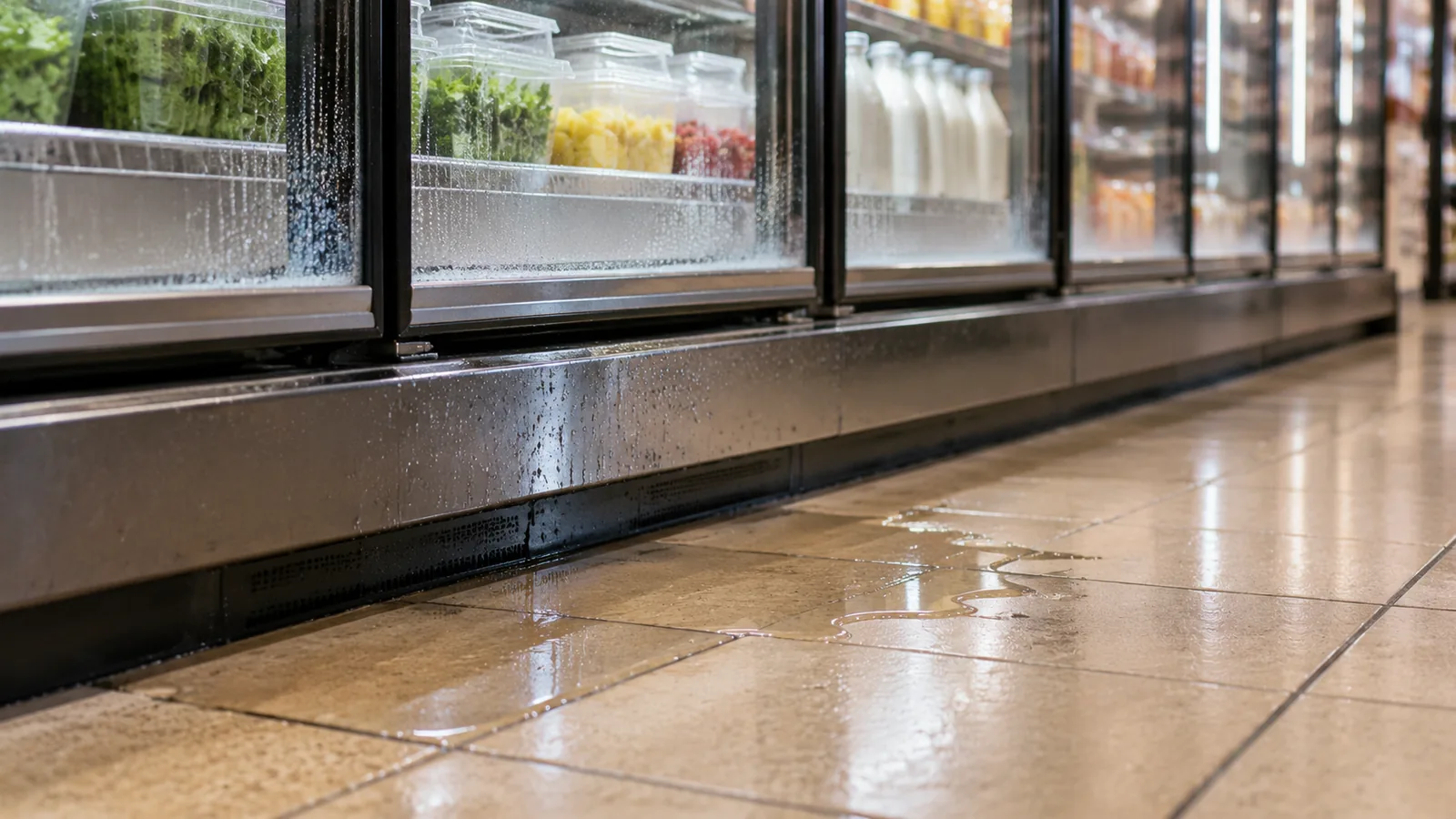
| "The store was unsafe." | A puddle beside the frozen-food case on aisle 12. |
| "Someone should have seen it." | A witness who reported the water to an employee before the fall. |
| "That spot is always bad." | A repair record for that same freezer. |
The attorney has to test those facts, weigh the defenses, and decide whether the evidence meets Texas law, and a strong demand or a viable lawsuit grows out of that work.
| This guide is | This guide isn't |
|---|---|
| A set of hypothetical illustrations | A report of Aaron Herbert case results. |
| A summary of Texas law and practice | A description of undisclosed H-E-B procedures. |
| A way to understand how claims are built | A promise of a settlement or a prediction of what a jury will do. |
Aaron Herbert is Board Certified in Personal Injury Trial Law by the Texas Board of Legal Specialization [S1]. The credential bears on choosing a lawyer, but it isn't a guarantee or a ranking, and the firm doesn't publish H-E-B results here.
| State Bar profile | Detail |
|---|---|
| Bar number | 24036761 [S1]. |
| Licensed in Texas | November 6, 2002 [S1]. |
| Status | Eligible to practice [S1]. |
| What to ask the firm | How The Law Firm of Aaron A. Herbert, P.C. would investigate the circumstances described in this guide. |
2. Protect health and safety before collecting evidence
Get out of danger and get medical care first, because repeating the movement that hurt you won't prove the hazard and a second fall won't help the claim.
| If the area has | What to do |
|---|---|
| Unstable merchandise on an endcap display | Step away before taking any photos. |
| Electrical danger near a cooler or sign | Leave the area and tell a manager. |
| Active construction | Stay outside the work zone. |
| Broken glass in the aisle | Move clear and let staff block it off. |
| Moving vehicles near the Curbside pickup spaces | Get to the sidewalk and call for emergency help if you need it. |
Safe photos now and a qualified inspection later can cover the evidence without putting you at risk again.
| Tell your providers | Hypothetical example |
|---|---|
| What happened | You slipped on water by the produce misters and landed on your right hip. |
| Symptoms, accurately | A head impact is different from dizziness you noticed later, and immediate knee pain is different from swelling that built over two days. |
| Prior conditions and medication | An old back injury or a blood thinner you take every morning. |
A lawyer shouldn't direct your medical treatment or encourage procedures to raise damages, since clinical decisions belong with health professionals and your care needs.
| Keep | Why it helps |
|---|---|
| Discharge instructions, prescriptions and appointment details | They show the course of care. |
| Work restrictions and receipts | They document lost time and costs. |
| A short dated account | It records trouble standing through a shift, driving, carrying groceries or sleeping, along with any improvement. It doesn't replace medical causation evidence. |
For a day-by-day checklist, read what to do in the first 72 hours after an H-E-B injury.
| A companion at the scene can | Hypothetical example |
|---|---|
| Keep the receipt and identify the store | Photograph the receipt and the store sign by the automatic doors. |
| Get witness contacts | Ask the shopper by the sample stand for a name and phone number. |
| Record facts, not arguments | Write down what the floor looked like instead of debating fault with employees. |
| Let the manager handle safety | The manager addresses safety and the incident report, and the claim gets evaluated later. Accuracy and preservation help more than an admission under stress. |
3. Identify the store and the accident location precisely
Write down exactly which store and which spot, down to the aisle, entrance or parking space.
| Record | Hypothetical example |
|---|---|
| Street address and store identifier | The store number on the receipt, if it shows one. |
| Date and approximate time | Tuesday, about 5:40 p.m. |
| Exact location | Aisle 12, the restroom hallway, parking aisle C or Curbside space 4. |
A receipt or purchase history can help show you were there and when, but a transaction time may come before or after the injury, so compare it with witness memories and other records before treating it as the accident time.
| Photo | What it should show |
|---|---|
| Wide shot | How the condition sits in the shopping route. |
| Close-up | The liquid, a mat edge, damaged flooring, a shelf connection or a wheel stop. |
| Warning sign | The sign in relation to the hazard, not just the sign by itself. |
| Original files | Untouched originals, with arrows and labels added only to copies. |
| Changed scene | A note of what changed before the photos and who saw the original scene. |
Your account should describe movement, and admitting what you don't know is better than presenting a later reconstruction as direct memory.
| Question to answer | Why it matters |
|---|---|
| Where did your foot land? | It ties the fall to the condition. |
| What did your body hit? | It connects the injury to the mechanism. |
| Did the object fall before or after anyone touched the display? | It can separate a premises theory from an activity theory. |
| Was a cart moving or stopped? | It affects causation and which theory fits. |
| Did you notice the condition before the fall or after? | It bears on causation and the defenses. |
Outside the building, a street address alone may not show who controlled a particular sidewalk or parking aisle.
| Outdoor detail | What to record |
|---|---|
| Your path | The route from your parking space past the cart corral to the entrance. |
| Shared areas | Whether the spot lay in a shopping-center area shared with other tenants. |
| A simple sketch | The location marked against fixed landmarks you also photograph, so legal control can be tied to the exact place you were hurt. |
4. Report the event and manage early claim communications
Make a prompt report that says what happened, where, when, and that you were hurt.
| On the report form | What to do |
|---|---|
| Your copy | Ask for one, or keep the written message you sent. |
| Factual statements | Read them carefully and correct anything wrong. |
| "Customer saw nothing on the floor" | Don't sign it if you saw liquid after the fall. |
| How long the hazard was there | Don't claim to know if you don't. |
Keep the names and roles of everyone who contacts you, plus claim numbers, letters and records requests.
| The person calling may be | What to confirm |
|---|---|
| A store employee | Their role, not just the company name. |
| A claims administrator | Which administrator handles the claim. |
| An insurer | The settlement process and record retention practices. |
| A lawyer | The basis for any request for your statement. Don't assume every claim follows the same procedure. |
You should be truthful, but you don't have to guess about engineering, medicine or legal responsibility, so talk with counsel before giving a recorded account or signing a broad authorization.
| Request | Before you agree |
|---|---|
| A recorded statement | Understand what's being asked and why. |
| A medical authorization | Check the wording, since it can reach records beyond this injury. Narrow, appropriate exchange is different from signing everything on an early call. |
| An offer to pay a bill or a courtesy payment | Get the actual terms, because it may include a release. |
A small payment can carry a broad legal effect if the signed document says so, and a claim number or ongoing calls don't extend filing deadlines [S14].
| Before accepting a payment, find out | Why |
|---|---|
| Which people, companies, incidents and claims are released | A release can reach far past the store. |
| Whether future treatment is included | You may still need care. |
| Whether you take on lien or indemnity obligations | Those can reduce what you keep. |
5. Establish the correct defendant and control
The name on the building identifies a brand, not necessarily every entity responsible for the incident.
| Fact | What counsel verifies |
|---|---|
| H-E-B, LP was the named party in Peterson | The entity that actually operated this store [S6]. |
| A separate owner or contractor may exist | Who owned the property and who did the work. |
| Ownership, leases or service arrangements can change | Who held each role on the incident date. |
| A published case name | Current entity research, since copying a defendant's name from a case is no substitute. |
For a parking area, find out whether the grocery operator, a landlord, a property manager or a maintenance vendor controlled inspection and repair.
| Record | What it can show |
|---|---|
| Incident records and store information | Who responded and who operated the store. |
| Property records and leases | Who owned the land and who controlled common areas. |
| Service agreements and vendor documents | Who was hired to inspect, clean or repair. |
| Business filings | The legal names of the entities. |
A contract may assign responsibilities while actual practices show who carried them out, so check both instead of assuming ownership settles the duty.
| Party | Liable only if |
|---|---|
| A parent, affiliate or business partner | There's an independent basis for the claim against it. |
| A company that supplied unrelated products | It had some responsibility for the damaged entrance, which it may not. |
| A cleaning contractor | It created or failed to address a condition within an applicable duty. |
| A company with insurance | There's a supported claim, since naming companies only for their insurance distracts from the real case. |
Keep a working responsibility chart for each participant and revise it as records arrive, because it shows whether the case is strong against one entity or several and helps explain to the client why a company is added, dismissed or pursued under a different theory.
| Chart column | Hypothetical entry for a floor-care vendor |
|---|---|
| Proposed duty | Nightly floor cleaning under a service agreement. |
| Control or conduct | Its crew mopped aisle 12 at closing. |
| Notice evidence | A crew log noting a leaking freezer. |
| Causal contribution | Residue near the case where the shopper fell. |
| Insurance lead | The vendor's certificate of insurance. |
| Unresolved question | Whether the store or the vendor handled daytime spills. |
6. Prove the elements of a customer premises claim
For an ordinary invitee premises claim, you need evidence of four elements [S6, S9].
| Element (Keetch) | Hypothetical proof |
|---|---|
| Actual or constructive knowledge of the condition | An employee's report of water by the floral cooler before the fall [S9]. |
| An unreasonable risk of harm | Clear liquid on smooth tile in a busy route [S9]. |
| No reasonable care to reduce or eliminate the risk | No cone, no mop and no warning after the report [S9]. |
| Proximate cause | Your foot slid in that liquid and you fell [S9]. |
Confirm entrant status and control instead of treating the elements as an abstract checklist, since a lawful shopper is in a different position from someone in a restricted work area [S6].
| Evidence | What it can show | What it doesn't show |
|---|---|---|
| A photo of liquid | The condition existed. | Notice. |
| An employee's report | Notice. | Why you fell. |
| Medical records | Treatment. | A link between every diagnosis and the fall. |
The attorney's job is to connect those pieces with admissible evidence, not to let the seriousness of the injury fill in missing liability facts.
| Unreasonable-risk factor | How it plays out |
|---|---|
| Location, expected use and route | A mat edge at the automatic doors on a rainy afternoon draws heavy traffic. |
| Visibility, surface and surroundings | Clear water on light tile under bright lights is hard to see. |
| An ordinary feature | It isn't dangerous just because someone encountered it. |
| A small defect | It can still matter even if it looks minor in a close-up. |
| Labels | Reliable measurements and observations beat unsupported labels such as "extremely hazardous" in a demand letter. |
If your injury happened outside a grocery store, the firm's Dallas premises liability lawyer and Fort Worth premises liability lawyer pages cover its broader premises work.
| Reasonable care question | What to investigate |
|---|---|
| What could the duty require? | A correction, an adequate warning or another appropriate measure. |
| What was actually done? | What the store did, when, and whether it addressed the risk that caused the fall. |
| Does an inspection policy help? | It can be useful evidence, but an internal rule isn't automatically the legal standard or proof of every element. |
| Who decides? | The court applies Texas law to the facts, including defenses and any limits on duty. |
7. Find actual knowledge before relying only on constructive notice
Actual knowledge can come from a report before the fall, an employee's observation, a response to the condition, or other evidence of awareness.
| What you're told | Develop it into |
|---|---|
| "Someone told the store about a leak." | Who spoke, what they described, which location they named, and when the message was received. |
| "People complained about the building." | Whether the complaint concerned the puddle at issue, since a general complaint may not. |
Preserve witness names and contact information promptly, and don't coach anyone to adopt a legal conclusion.
| Hypothetical witness | What makes the account useful |
|---|---|
| A shopper who warned a worker about the grape bin | Independent observations. |
| A companion who saw an employee set out a cone | What was seen and when. |
| A vendor who reported a freezer problem | The basis for any time estimate, which helps more than repeating that the store obviously knew. |
Records can show knowledge too, but you have to find out which organization had them and what its employees knew.
| Record | What to check |
|---|---|
| Service requests and employee messages | Who sent them and who received them. |
| Photographs and inspection entries | When they were made and what location they show. |
| Cleanup activity and incident communications | Which company's employees were involved. |
| Vendor knowledge | It isn't automatically attributed to every related company without an applicable legal basis. |
| Employee role | An employee's role and duties can affect how knowledge is evaluated. |
Keetch warns against treating store-created conditions as automatic knowledge [S9].
| If the store created the condition | What it means |
|---|---|
| It can support an inference of knowledge | It's relevant evidence for the factfinder [S9]. |
| It doesn't prove knowledge as a matter of law | A disputed record still goes to the factfinder [S9]. |
| What to investigate | What the worker did, what was visible, and what the store knew or should have known. |
| How to argue it | A carefully supported inference is stronger than claiming every employee-created condition wins the case. |
8. Develop temporal proof for constructive notice
Constructive notice asks whether the store reasonably should have discovered the danger, and for a transient spill that means evidence of how long it was there.
| Evidence | Can it place the spill on a timeline? |
|---|---|
| A puddle visible after the fall | No, it doesn't show when the puddle formed. |
| Store video | Yes, if it shows the spot before the fall. |
| Earlier observations or reports | Yes, if they identify the same spot and a time. |
| Track marks or cart lines through the liquid | Possibly, with a reliable foundation and no speculation. |
Reece explains why an employee's proximity alone doesn't establish constructive notice [S8].
| Reece rule | What it means |
|---|---|
| Time-notice rule | There must be some evidence of how long the hazard existed [S8]. |
| Proximity and conspicuousness | They can bear on how much time was reasonably needed to discover it, but they don't replace proof of duration [S8]. |
| An employee passing nearby | That employee had a chance to see the spill only if it was there, visible and present long enough [S8]. |
Build the timeline with confirmed times, estimates and unknown intervals kept separate, so it shows the gaps in proof as clearly as the helpful evidence.
| Hypothetical timeline issue | What to do |
|---|---|
| A witness saw water before checking out | Compare the receipt and the witness's route with the account. |
| The video clock runs fast | Document the offset. |
| A photo has no original metadata | Identify its source instead of assigning an exact time. |
Persistent defects need their own inquiry into duration and discoverability. For more on notice evidence, read how to prove notice in an H-E-B slip and fall.
| Condition | How duration proof differs |
|---|---|
| Worn flooring or deterioration | It may support different inferences than a spill that appeared seconds earlier. |
| Repeated equipment problems | Expert analysis may show what developed over time and what a reasonable inspection would reveal. |
| An old object | Its age isn't the same as how long the particular danger existed. |
9. How does Peterson apply to your evidence?
Peterson is a recent Texas Supreme Court decision involving H-E-B and a puddle, and it turned on missing proof of how long the puddle had been there [S6].
| Peterson detail | What the Court found |
|---|---|
| The fall | A customer slipped on a clear puddle in the toy aisle [S6]. |
| The video | No employee walked down that aisle in roughly the two hours before the fall [S6]. |
| Other evidence | The store had a heightened inspection protocol for rainy weather and knew of earlier roof leaks elsewhere in the store, but that didn't supply the missing time fact [S6]. |
| The result | The Court reversed the court of appeals and reinstated summary judgment for H-E-B because there was no evidence of the puddle's duration [S6]. |
Read the actual opinion and its procedural posture instead of relying on a headline saying stores can never be liable for leaks.
| Practitioner proof audit | What it means |
|---|---|
| What shows the danger at this spot before the fall? | Identify it exactly. |
| Is the only proof that the roof leaked elsewhere or no one inspected the aisle? | More investigation is needed. |
| Can a maintenance expert fill the gap? | No. An expert can't create a historical fact the record doesn't support. |
That's why your lawyer may ask about details that seem minor at first.
| Counsel may ask | Why |
|---|---|
| Who saw water earlier? | It may show duration. |
| Did you hear a prior report? | It may show actual knowledge. |
| Which direction did the employee come from? | It may show whether the spill was visible to staff. |
| Does any photo predate the fall? | It may place the hazard in time. These questions look for proof of an element that can decide the case before trial, and they aren't a judgment about how badly you were hurt. |
Don't overread the decision.
| Peterson doesn't | What still matters |
|---|---|
| End actual-knowledge claims | Evidence that the store knew about the specific hazard. |
| Bar reliable proof of duration | Video, reports or witnesses that place the hazard in time. |
| Control different conditions or legal theories | The analysis can change with the facts and the theory. |
| Excuse every maintenance failure or decide another shopper's claim | Connecting the specific hazard, place and time to admissible evidence before asking a court to send the claim to a jury. |
10. Produce sampling and recurring spill arguments
A sampling display nearby doesn't, by itself, prove an unreasonable risk of harm [S7].
| Case | What it means for a produce claim |
|---|---|
| Resendez | The Texas Supreme Court rejected the proposition that the sampling display alone supplied the necessary unreasonable-danger proof. You need evidence about the actual condition and circumstances, not a general claim that self-service grocery operations are dangerous [S7]. |
| Taylor | A shopper slipped on partially melted ice in front of a self-service soft drink dispenser; the Court held the only unreasonably dangerous condition was the ice on the floor, not the dispenser. It addresses the distinction between an antecedent setup and the condition at the time and place of injury. A history of spills may be relevant, but it can't be used to bypass notice for a specific spill without a supported theory [S10]. |
If a grape caused the fall, prove that mechanism, because a shopper seeing grapes nearby afterward doesn't show which object was stepped on.
| What to investigate at the produce stand | Why it matters |
|---|---|
| How the display and sample stand were set up | It shows the setting, not the danger by itself. |
| The substance on the floor and where it sat | The claim has to match the condition that caused the fall. |
| Employee activity, cleaning, and prior observations | These bear on what the store knew and did. |
| Photos, witness accounts, and any physical evidence | Preserve them safely and lawfully. Don't move items and then present the new arrangement as the original scene. |
Notice of a recurring spill is its own fight, covered in proving notice in an HEB slip and fall.
| Facts that may support a broader system issue | Facts that don't replace proof |
|---|---|
| Video of produce falling during stocking | Calling the department busy. |
| A report that identified the spill | Calling the display self-service. |
| Repeated records about the same spot and the same mechanism | A general sense that grocery floors get messy. |
| Evidence the store failed to use reasonable care in a way that caused this injury | A history of spills with no tie to this occasion. |
11. Refrigeration leaks, cleaning and wet entrances
A water claim has to trace both where the water came from and the dangerous walking condition it left.
| One fact | What it doesn't prove by itself |
|---|---|
| The freezer case on aisle 12 needed service | That it made the puddle at issue. |
| It rained that afternoon | How water reached a particular aisle. |
| The floor had just been mopped | That it stayed unreasonably slippery. |
| H-E-B has a wet-day policy | Liability. It may explain expected precautions. |
Get the timing, source evidence, surface condition, warnings, and opportunity to discover the water instead of assuming one fact proves the whole sequence.
| Record to request | Practical note |
|---|---|
| Service calls for the exact equipment | Ask for work descriptions and photographs. |
| Cleaning assignments and cleaning-product information where material | Don't assume every store uses the same maintenance database or cleaning process. |
| Reports before the incident | Discovery should ask what systems and records actually existed at that location and time, then pursue them proportionately. |
At the entrance, look at the entry mat by the automatic doors, transitions, umbrellas, cart routes, drainage, and how the store ran that rainy day, then apply Peterson's notice lessons to the actual floor condition [S6].
| Entrance question | Hypothetical example |
|---|---|
| What was the dangerous condition | Standing water past the edge of the mat by the automatic doors. |
| What H-E-B knew or should have known | Whether anyone saw or reported the water, and how long it was there. |
| Whether a warning or correction happened | A cone placed at the doors, or a mop sitting unused in the back. |
Wet-floor cases often turn on this kind of detail, and the broader rules are on our page about Texas grocery store fall claims.
| If you use surface or equipment testing | Caution |
|---|---|
| Qualified testing may help when the mechanism is disputed | It should reflect relevant conditions and disclose its limits. |
| A friction reading taken after cleaning, repair, or a weather change | It may not reproduce the incident conditions. |
| The expert's number | The expert should explain how the test relates to the event, not present the number as conclusive. |
| Product labels, methods, and observations | Preserve what's needed to evaluate the analysis. |
12. Mats, thresholds and ordinary walking routes
For a mat or threshold trip, pin down the point of contact and what made it dangerous.
| Question | What to look for |
|---|---|
| Was the mat curled, folded, displaced, or wet | Or sitting on a changing surface. |
| Did a threshold loosen or hide its edge | An obscured edge can matter. |
| Does a later photo show a flat mat | It doesn't disprove an earlier curl, but you still need reliable proof of the earlier condition. |
| Is there video or a witness | These count most when the object moves easily. |
Context and mechanism matter, so don't assume every visible edge is unreasonably dangerous or every small height change is legally harmless.
| Document | How |
|---|---|
| Route, lighting, contrast, nearby displays, traffic, and obstructions | Note anything that affected visibility. |
| Measurements | Tie them to the exact spot and method, and identify any changes after the incident. |
| A removed component | Request preservation through appropriate channels. |
Notice may come from earlier complaints, repeated movement, employee adjustment, inspection, or other evidence.
| Evidence | What it shows |
|---|---|
| Who owns the mat | Not how long a particular curl existed. |
| An employee seen repositioning the mat shortly before the fall | A lead that needs closer investigation. |
| Your notes | Keep confirmed observations apart from guesses about what must have happened. |
Deal with warnings and known dangers early, because the line between duty and comparative responsibility can decide whether the case reaches trial, not just the percentage of damages [S11].
| If the shopper | What to evaluate |
|---|---|
| Saw the edge or used the same route moments earlier | What was known and whether a duty exception could apply [S11]. |
| Took that route because it was convenient | Convenience alone doesn't make a route legally necessary. |
13. Falling merchandise, fixtures and structural components
A falling object can come from unstable stacking, defective shelving, an impact, installation problems, deterioration, or active handling, and each is a different causal story.
| Hypothetical example | Causal account |
|---|---|
| A worker was lifting stock on the endcap display when it fell | Active handling. |
| Another customer bumped the display | A third party's impact. |
| A shelf bracket detached from the fixture | A fixed component failure. |
Identify the item, support system, height, position, and sequence of movement, and preserve the evidence before picking the theory that sounds best.
| Request | Why |
|---|---|
| Photos of the original arrangement and relevant video | They show how it was stacked. |
| Assembly instructions where material, inspection history, and repair records | They show how it was built and kept. |
| Vendor involvement | Find out who built, stocked, altered, or maintained the display or fixture. |
| Who is responsible | A merchandise supplier may have no part in the store's later stacking, while a fixture installer may have installation duties. The brand on the item alone doesn't show who caused the fall. |
Ceiling failures and construction-related falling parts may need engineering or construction analysis.
| Step | Detail |
|---|---|
| Find the mechanism | A leak, an attachment, a repair, an impact, or something else. |
| Preserve components | Coordinate testing where possible. |
| Check building codes | Confirm actual adoption, dates, alterations, and applicability. A model code provision found online doesn't automatically govern every Texas H-E-B building. |
Construction and design claims can raise repose and certificate-of-merit issues, so get completion dates and identify covered professional services early [S14, S22].
| Rule | What it means here |
|---|---|
| Two-year injury deadline (§16.003), with exceptions | It doesn't preserve every claim against every project participant [S14]. |
| 10-year repose (§16.008, §16.009) | It can cut off claims against design professionals and builders of improvements [S14]. |
| Certificate of merit (Ch. 150) | Required with the first pleading against a licensed architect, engineer, land surveyor, or landscape architect [S22]. |
| Theory selection | Identify the actual component and building configuration before choosing design or maintenance theories. The investigation follows the specific failure. |
14. Employee activity versus a condition left behind
A worker steering a pallet jack into you is ongoing activity; tripping later over a cart someone left in the aisle is a condition.
| Rule | Source |
|---|---|
| Negligent activity requires injury by or as a contemporaneous result of the activity itself | Keetch [S9]. |
| A condition created by an earlier activity sounds in premises liability, not general negligence | United Scaffolding [S13]. |
| The claim has to match the timing and physical mechanism | Keetch and United Scaffolding [S9, S13]. |
Save enough video to show whether work was happening at the moment of injury and what caused contact.
| Identify | Caution |
|---|---|
| The worker's employer, task, equipment, line of sight, warnings, and movements | A uniform or a spot inside H-E-B may not conclusively prove employment. |
| Vendors and contractors in the same spaces | Agency and vicarious liability need a supported legal and factual basis. |
Labels don't replace proof.
| Pleading issue | What follows |
|---|---|
| A petition alleging negligent stocking, inspection, and maintenance | It may still describe a premises condition that needs the premises elements. |
| Alternative pleading | It can be appropriate when facts support it, but the lawyer must develop the evidence and get findings for the theory actually submitted. |
| A moving story | It doesn't cure an incorrect jury charge. |
Treat causation and damages separately even when contact is clear.
| Video shows | What it doesn't settle |
|---|---|
| A cart touching a shopper | That every later diagnosis came from that contact. Medical history and qualified opinions may be needed. |
| A small-looking movement | That there's no injury. Appropriate medical analysis is still needed. |
15. Parking lot falls and shared premises control
Start a parking-lot claim with the exact point of contact and the mechanism.
| Possible condition | What you should describe |
|---|---|
| Pothole, uneven pavement, or a depression | Whether your foot caught, slid, or stepped into it. |
| Wheel stop or exposed anchor | Whether you struck an object. |
| Drainage, lighting, or the pedestrian route | How it contributed, while admitting any uncertainty. |
A photo of many cracks across the lot can hide which one caused the fall.
| Who may control the spot | How to tell |
|---|---|
| The grocery operator | Its actual inspection, repair, and report practices. |
| The landlord or property manager | A shopping-center lease may assign parking maintenance differently from the store interior. |
| A contractor | Who hired vendors and who received reports. |
| Not the answer | A store sign, or the fact you were walking toward H-E-B, doesn't prove ownership, or control. |
Preserve repair history, prior complaints, invoices, photos, drainage records, and inspection evidence.
| Notice and visibility point | Why it matters |
|---|---|
| A long-standing pothole versus a fresh oil spill | They have different notice records. |
| Being outside | It doesn't make a condition long-standing. |
| Lighting | Document it with appropriate methods. A phone camera's exposure can make a dark area look brighter or darker than a person saw it. |
A parking-lot crash also raises auto-insurance questions, which the Texas Department of Insurance's auto guide explains in plain terms [S21].
| Expert work | Practical limit |
|---|---|
| Geometry, drainage, surface condition, or causal analysis | Not every defect needs an expensive technical investigation. Weigh the disputed issue and case value first. |
| Standards | Show that they apply to the particular feature and time. |
| The goal | A supported explanation of unreasonable danger and causation, not a list of every departure from an ideal parking design. |
16. Pedestrian collisions, curbside service and drivers
When a vehicle hits you, preserve the driver's identity, vehicle, insurance lead, witnesses, video, direction of travel, and where you were standing.
| Driver question | Note |
|---|---|
| Backing, speed, distraction, sightlines, warnings, and reaction time | Investigate each. |
| The private lot | It doesn't remove ordinary questions about reasonable driving care, but the duties and facts still need analysis. |
A property theory is a separate claim with its own proof.
| Property theory | What has to be explained |
|---|---|
| Poor drainage, a hidden depression, an obstruction, failed lighting, or work-zone routing | How it contributed to the collision or a separate injury. |
| Control | What the property defendant controlled. The event happening near the store isn't enough. |
| Danger, notice, and correction | What made the condition unreasonably dangerous, what notice was required, and how a reasonable fix would have changed the outcome. |
Curbside operations bring carts, loading, moving customers, parked vehicles, contractors, and delivery services into the same space.
| Hypothetical example at the Curbside pickup spaces | Relationship to check |
|---|---|
| A shopper backing out in a personal vehicle | Not an H-E-B employee by default. |
| A store-associated loading worker | Who employed and directed that worker. |
| An app-based delivery driver | Don't assume the same employment or agency facts. Get the records before asserting vicarious liability. |
Before you sign anything a driver's insurer sends, tell us about your H-E-B injury or call (214) 200-4878, and bring the store address, incident date, injury details, photos, and witness names.
| Coordination point | Why |
|---|---|
| PIP, UM/UIM, liability, commercial, and excess policies | They have different terms and requirements [S20-S21]. |
| Property damage and bodily injury releases | Keep them separate for review. |
| Settling with the driver | It may affect claims against others, and Chapter 33 can affect allocations and credits [S16]. |
| Every offer | Look at all releases together, not one isolated transaction at a time. |
17. Contractors, vendors and completed work
A cleaning, refrigeration, construction, paving, or fixture contractor may be responsible when its negligent work or undertaking caused injury under an applicable duty.
| Get | Why |
|---|---|
| Contract, work scope, dates, location, methods, changes, and warnings | They define what the contractor undertook. |
| Actual performance | A vendor that serviced one case in another aisle isn't automatically to blame for the puddle. Establish the connection. |
A narrow scope matters, but it doesn't excuse every dangerous act.
| Hypothetical example | Analysis |
|---|---|
| A contractor hired to repair a drain | It may not have undertaken a full floor inspection, but it may still answer for a danger it created during the work. |
| An indemnity clause between businesses | Don't turn it into a direct tort duty to the injured shopper without analysis. |
| The question to ask | What was foreseeable within the undertaking and what legal duty applies. |
Strakos rejected blanket immunity based only on acceptance of completed work, but negligence and causation still have to be proved [S25].
| Timing issue | Effect |
|---|---|
| Completed work | It may be relevant long after a vendor leaves. |
| Construction repose and limitations | They can affect the claim [S14]. |
| Intervening changes | Proof of later changes can matter. Get project and repair dates before assuming a late-added contractor claim is still available [S14, S25]. |
Insurance and additional-insured arrangements can affect defense and payment.
| Document | Limit |
|---|---|
| Contracts and endorsements | Request the actual ones through discovery. |
| A certificate of insurance | It doesn't disclose every exclusion or condition. |
| Another policy | Build the case against the vendor on its own merits, not on hope that a policy will respond. |
| An added defendant | Useful only when its responsibility is supported and the procedural and collection consequences are understood. |
18. Security incidents and the duty against crime
An assault in a store or parking lot doesn't automatically make the property owner liable, because Texas generally doesn't require owners to insure against all third-party crime [S24].
| Element of a negligent security theory | What's required |
|---|---|
| Control | Over the place where it happened. |
| A legally sufficient duty | Foreseeability and unreasonableness are distinct questions under UDR Texas Properties v. Petrie [S24]. |
| Unreasonable and foreseeable risk | Supported by reliable evidence. |
| Reasonable precautions and causation | The proposed precaution needs a supported causal role. Saying more security would have helped isn't enough. |
Look at prior events and actual warnings with attention to timing, location, similarity, and knowledge.
| Evidence | Problem to watch for |
|---|---|
| A list of police calls | It may include incidents unrelated to the attack. |
| A neighborhood crime map | It can mislead if it doesn't separate type of risk, distance, and time period. |
| Volume of incidents | It isn't proof on its own. Explain how reliable records relate to this incident. |
Preserve video, lighting records, security contracts, incident communications, access information, and witness accounts.
| Situation | Note |
|---|---|
| Employee misconduct | It can raise different theories and relationships than a stranger's crime. Don't fold them into one generic premises allegation. |
| The victim's needs | Put safety, medical care, and privacy first. |
| The criminal case | Don't confront suspects or interfere. Civil counsel can coordinate lawful evidence gathering and seek protection for sensitive information. |
| The historical insurance decision | H.E. Butt Grocery Co. v. National Union Fire Ins. Co. involved different facts and decades-old coverage. It doesn't imply that a current security claim has the same value, policy, or outcome [S5]. |
19. Warnings, known dangers and the claimant's conduct
A warning can be central evidence, but only if it addressed the actual risk at the relevant time.
| Warning question | What the photos or footage should show |
|---|---|
| Where was the sign placed | Its position relative to the hazard. |
| Could a shopper see it along the route | The view from the path you walked. |
| Was the area closed or just marked | Tape or a barrier versus a single cone. |
| Was it there before the fall or added during cleanup | Timestamps, not just proof that a cone appeared somewhere in the store. |
Known or obvious conditions can affect duty, and Austin discusses the general rule and its limited exceptions [S11].
| Issue | How to handle it |
|---|---|
| Your prior awareness | Disclose it and analyze it honestly. |
| A necessary-use argument | Investigate alternatives and the circumstances. Needing to finish shopping doesn't automatically satisfy the exception. |
| Duty versus comparative responsibility | Related but distinct questions [S11]. |
Talk through hard facts early so your lawyer can assess them before a demand, deposition, or motion response.
| Defense argument | Response |
|---|---|
| Distraction, footwear, impairment, or route choice | Evaluate the evidence and its causal weight. A shoe style doesn't explain a broken fixture. |
| Ignoring warnings or an unrelated medical event | Test it against the record. |
| Video that contradicts your account | It can create serious credibility problems. |
Nobody can promise that your share of fault will be absorbed by a small reduction, and the claim may fail on duty or causation before allocation ever comes up.
| Chapter 33 rule | Effect |
|---|---|
| Claimant responsibility over 50 percent | Generally bars recovery in covered cases [S16]. |
| A share of 50 percent or less | Reduces damages by your percentage [S16]. |
| Other participants, settling persons, and joint liability | The statute addresses each separately [S16]. |
| A realistic evaluation | It identifies both the threshold issues and the possible percentages. |
20. Preserve video with an incident-specific request
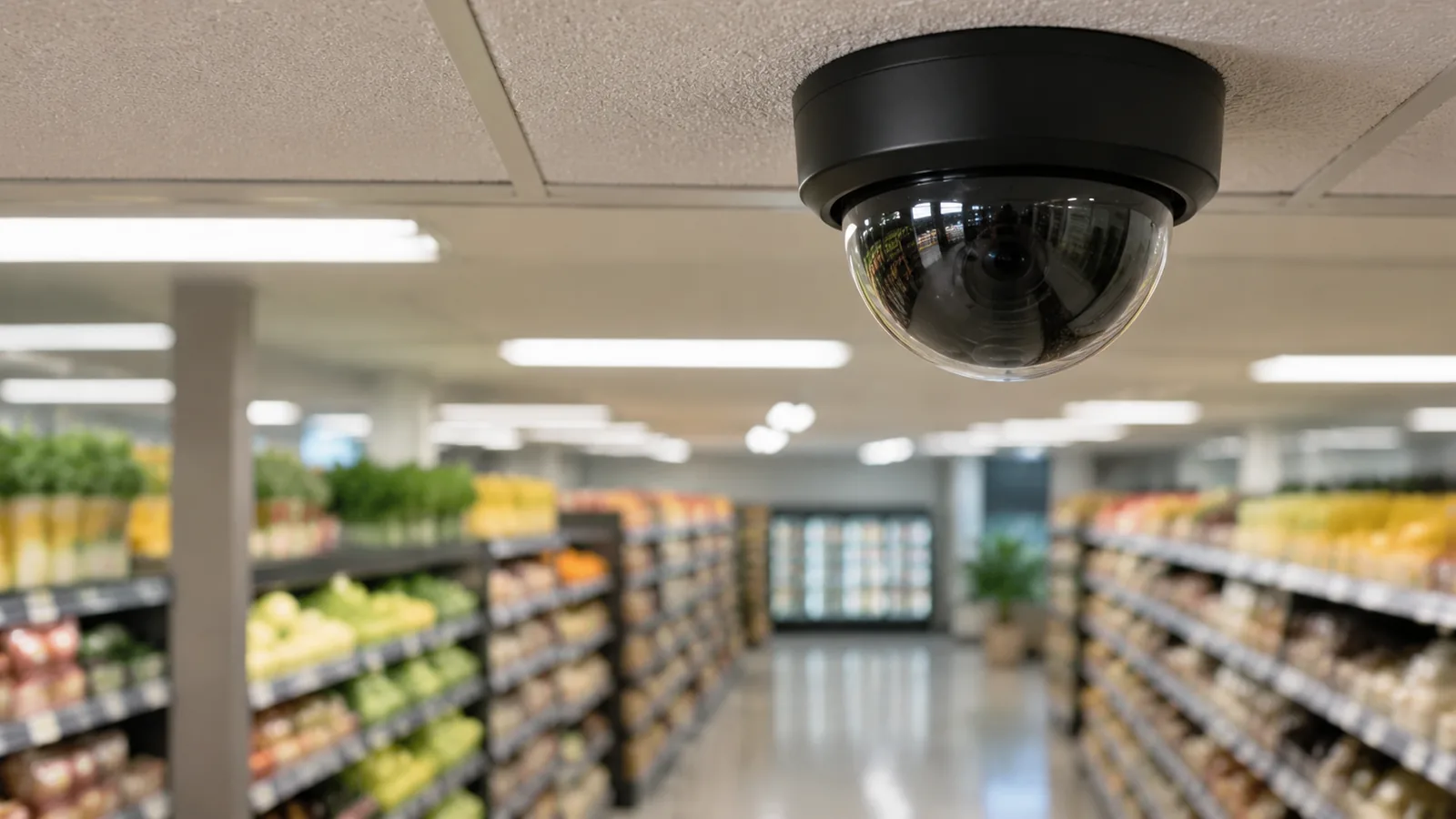
A good preservation request names the store, the date, the spot, the approximate time, the camera views, and the stretch of time needed to judge both the fall and notice.
| Put this in the request | Hypothetical example |
|---|---|
| Store and exact location | The H-E-B on the listed street address, the floor in front of the produce misters. |
| Date and approximate time | Tuesday, about 4:15 p.m. |
| Camera views | Any camera covering the produce aisle and the nearby sample stand. |
| Surrounding period | Enough time before the fall to show when the condition formed and whether anyone walked past or reported it. |
| Questions about the system | What systems existed, who controlled them, how the clocks were set, and what was actually preserved. |
Don't assume every aisle is recorded or that a store keeps footage for some standard public period. Camera coverage and retention practices have to be verified for the specific store and incident.
| Why surrounding footage matters | What it can show |
|---|---|
| The fall clip alone may miss the start | When the condition formed or when someone first reported it. |
| Activity before the fall | Stocking, customer movement, inspections, warnings, or cleanup. |
| Sight lines | Whether employees had an unobstructed view of the spot. |
| Scope | A proportionate window. A demand for every camera for months can start needless fights and still miss the short period that answers the central question. |
Keep the video in a form that holds up later. For the first steps a shopper can take, see what to do in the first 72 hours.
| Video handling step | Why |
|---|---|
| Preserve native exports, metadata, playback information, and clock-offset evidence | They help prove timing and authenticity. |
| Keep an original copy | Document any conversion or annotation. |
| Label slowed or enlarged clips | A demonstration should be identified as one. |
| Respect the limits of video | Blind spots, low resolution, obstructions, and uncertain depth can block reliable conclusions. |
| Avoid overstatement | Don't say a dark patch is definitely liquid or that a distant movement proves contact without a sound basis. |
Preservation runs both ways [S12].
| The injured shopper should | Why |
|---|---|
| Keep personal footage and messages | Deleting a post because it seems unhelpful can create a new problem. |
| Tell the lawyer quickly about lost devices, changed accounts, or overwritten files | Early disclosure is easier to explain. |
| Treat preservation as a plan for both sides | That's a better foundation than hoping a later spoliation dispute will make up for missing proof [S12]. |
21. Obtain inspections, maintenance records and incident history
Ask for records tied to the actual condition and a reasonable time period, and ask what the system records and what its terms mean.
| Record to request | What to ask about it |
|---|---|
| Inspection and cleaning entries | Who made them, at what time, and for which area. |
| Equipment service and work orders | Whether a completion status means the work was done, canceled, duplicated, or reassigned. |
| Complaints, photographs, and vendor communications | Whether a printed summary leaves out attachments and audit history that matter to the timeline. |
Don't claim insider knowledge of H-E-B's proprietary forms or databases. The right discovery asks which records existed at that store, how they were kept, and who searched for them.
| If an employee says inspections happened without entries | The fair approach |
|---|---|
| Investigate the practice | Look at the supporting evidence. |
| Don't assume the testimony is false | Undocumented inspections aren't automatically fiction. |
| Don't assume a general practice proves a specific inspection | A routine doesn't show that someone checked aisle 12 at 3:30 p.m. that day (hypothetical). |
Prior incidents need relevance and care.
| Prior incident | Likely value |
|---|---|
| Similar reports at the same store or the same component | May help show notice or a recurring issue. |
| Unrelated events at distant stores | May not help. |
| Before asking for history | Define the mechanism, place, and period first. |
| Other customers' information | Protect it with proportionate redaction or a protective order instead of demanding unnecessary disclosure. |
Tie every record to a witness, because a log can be useful or wrong.
| Question for the log | Why |
|---|---|
| Who created the entry and who received it | It shows who knew. |
| What happened next and whether the hazard stayed | It shows what the store did with the knowledge. |
| What the location code and the actual observation were | The author can explain them. |
| Whether it matches photos, receipts, footage, and testimony | The goal is a reliable timeline, not a stack of documents assumed to explain themselves. |
22. Manage physical evidence, inspections and spoliation issues
Physical evidence can be a mat, a shoe, a broken fixture, a shelf part, a cart, a fastener, or a surface sample, so identify what's relevant and who has it.
| Do | Don't |
|---|---|
| Ask for preservation and propose an inspection protocol | Remove store property without authority. |
| Cover identification, photographs, measurements, access, and storage in the protocol | Run unsafe testing. |
| Address any testing that might change the item before it happens | Let destructive testing go forward without agreement. |
Necessary safety work isn't forbidden. A reasonable process documents the condition before repair, keeps removed parts where it can and allows appropriate observation.
| If emergency repairs came first | What to collect |
|---|---|
| The entry mat by the automatic doors was replaced the next morning (hypothetical) | Photographs, work descriptions, invoices, and witness accounts that remain. |
| A later inspection is still possible | Explain accurately how what's inspected relates to the original condition. |
Brookshire Bros. v. Aldridge sets the Texas framework for spoliation [S12].
| Aldridge point | What it means |
|---|---|
| Who decides | The trial judge decides whether spoliation occurred and what remedy fits [S12]. |
| What the judge weighs | Whether a duty to preserve existed, whether it was breached, and a remedy proportionate to culpability and prejudice [S12]. |
| The spoliation instruction | Reserved for intentional spoliation, or negligent loss that irreparably deprived the other side of any meaningful ability to present a claim or defense [S12]. |
| The facts of the case | Grease that leaked from a container near the store's rotisserie-chicken Grab-N-Go was the alleged hazard, and the store kept only about eight minutes of video while the rest was recorded over [S12]. |
| The takeaway | Missing video or a discarded item doesn't automatically produce a favorable instruction or prove liability. Investigate existence, custody, timing, and loss before making accusations [S12]. |
Document the shopper's own preservation too.
| The injured shopper should | Why |
|---|---|
| Keep relevant clothing and devices without alteration | They may be inspected later. |
| Preserve messages, even uncertain, or unhelpful ones | An honest early remark can be explained; deletion creates another issue. |
| Treat evidence management as part of the case | A credible, complete record helps in negotiation, and in proving the case in court. |
23. Build medical causation separately from premises liability
A dangerous condition and a diagnosis answer different questions, so the claim needs proof that the fall caused the injury or a compensable aggravation in addition to proof of the condition and legal responsibility.
| Causation evidence | When it matters |
|---|---|
| Medical records, imaging, and treatment history | In every case. |
| Prior-condition information | Whenever there's earlier pain, surgery, or degeneration. |
| Medical opinions | When causation is disputed or the condition is complex. |
An aggravation claim can be legitimate without pretending the body was perfect before.
| Be candid about | How to handle it |
|---|---|
| Earlier pain, surgeries, and degeneration | Identify what changed, when and why the fall is medically connected to the change. |
| Prior claims and later accidents | Disclose them. A lawyer shouldn't ask a client to minimize prior conditions. |
| Provider opinions | Don't ask providers to adopt unsupported conclusions. |
Gaps and delayed symptoms should be explained with facts, not stories built after the fact.
| Issue | What to know |
|---|---|
| Treatment gap | Transportation, scheduling, cost, or symptom progression may explain it. Keep records and raise concerns promptly. |
| A medical bill | It doesn't by itself prove the treatment was caused by the fall, reasonable, necessary, or recoverable in the amount charged. |
| Section 18.001 affidavits | A set procedure for showing charges were reasonable and services necessary. It isn't automatic proof of medical causation or store liability [S18]. |
| Paid-or-incurred rule (§41.0105) | Recoverable medical expenses are limited to amounts actually paid or incurred [S17]. |
| The lawyer's job | Evaluate current deadlines, objections, counteraffidavits, and other proof instead of treating a billing spreadsheet as the final damages case [S17-S18]. |
24. Document earnings, daily limitations and future damages
Lost-earnings claims need dates, restrictions, wage rates, and records, backed by a method the other side and the court can check.
| Worker type | Evidence to gather |
|---|---|
| Employee | Dates missed, restrictions, wage rate, overtime patterns, leave, and employer records. |
| Self-employed person | Tax, business, expense, and substitute-labor records that separate lost earnings from revenue changes caused by other factors. |
Reduced earning capacity is different from a short absence from work.
| Claim | What supports it |
|---|---|
| Short absence | Employer records and the dates off. |
| Reduced earning capacity | Medical restrictions and the person's work history showing changed jobs, hours, or physical tasks. |
| Vocational and economic opinions | Realistic alternatives and disclosed assumptions, not an assumption that injury alone means permanent inability to work. |
Daily limits are best shown through specific observations from people who saw them.
| Hypothetical observation | Who can describe it |
|---|---|
| Can't carry a toddler up the apartment stairs | A spouse, in plain words, not legal terms. |
| Has to sit down halfway through a shift | A coworker who worked beside her. |
| Stopped driving to the H-E-B two miles away | A neighbor who now drives her. |
| What she can still do | Include it. A balanced account of recovery is more credible than one that hides every sign of improvement. |
Future damages need qualified support, a reasonable cost basis, and no overlap [S17].
| Category | What to watch |
|---|---|
| Future medical care | Qualified support and a reasonable cost basis. Don't list every conceivable procedure as if all are certain. |
| Assistance, equipment, and work effects | Keep them distinct from future treatment so nothing is counted twice. |
| Pain, impairment, and disfigurement | Support each under the applicable law without duplicating the same loss [S17]. |
| Exemplary damages | Separate legal standards apply. They aren't automatic because the company is large [S17]. |
25. Investigate insurance retentions and collection
Get the applicable policy information through proper requests and discovery, because coverage and liability are separate questions [S20].
| Policy material | What to identify |
|---|---|
| Declarations, insuring agreements, forms, endorsements, and schedules | The insured entity, location, period, and covered allegations. |
| Retentions, deductibles, exclusions, and excess layers | Other claims that affect what's available. |
| A certificate or a representative's shorthand | Neither is the complete contract [S20]. |
A self-insured retention isn't an insurer's coverage limit [S5].
| H.E. Butt Grocery Co. v. National Union Fire Ins. Co., 150 F.3d 526 (5th Cir. 1998) | What it does and doesn't show |
|---|---|
| What the case was | A historical policy dispute in a 1998 Fifth Circuit decision over 1994 events, not a slip-and-fall claim [S5]. |
| The retention | The court described a $1 million per-occurrence self-insured retention under the policy then at issue [S5]. |
| What it doesn't establish | Today's coverage, the amount available for a current customer fall or a cap on the defendant's liability. A retention isn't a coverage limit [S5]. |
No current, universal H-E-B per-store customer liability limit was verified in this research. Don't fill that gap with a generic $1 million or $2 million commercial policy example.
| Coverage question | Why it matters |
|---|---|
| A large retailer's arrangements | They may require document review. |
| A contractor or driver | May have a separate policy. |
| Additional-insured and indemnity provisions | They can shift who pays without proving the claimant's negligence case. |
Talk about collection candidly.
| Collection issue | What the client should hear |
|---|---|
| A verdict | It isn't automatically immediate cash. |
| Stacking limits | Limits can't always be stacked. |
| Coverage disputes, assets, excess conditions, costs, and appeal risk | Each can change strategy. |
| The company's size | An assumption about resources doesn't replace a supported valuation and collection plan. Explain what's known, what's uncertain, and why a resolution is recommended. |
26. Calculate limitations, service and professional prerequisites
Texas generally allows two years to file a personal injury suit (§16.003), subject to accrual rules, and statutory exceptions [S14].
| Deadline question | What to do |
|---|---|
| When the clock starts | Work from the actual event date. Evaluate minority, disability, death, or other facts individually [S14]. |
| What doesn't stop it | Treatment, a claim number, an insurer's investigation, or ongoing negotiation. |
| Evidence | Preserve it right away. The general deadline isn't permission to wait. |
Filing has to line up with the right defendant and diligent service.
| Service step | Why |
|---|---|
| Confirm entity names and registered agents | A petition against the wrong entity creates avoidable disputes. |
| Use reliable service methods and document the effort | An unserved party can cause the same trouble. |
| Don't confuse a letter with service | A demand sent to the store manager isn't service of a lawsuit under the governing rules. |
Construction and design claims carry their own limits [S14, S22].
| Issue | What to know |
|---|---|
| Repose | Construction and design cases may involve separate repose periods measured from completion-related events. Get project dates, later work dates, warranties, and facts bearing on exceptions [S14]. |
| A recent patch | Don't assume it restarts every claim against the original participants. |
| Chapter 150 | Covered professional-service claims can require a certificate of merit with the first pleading, subject to the statute's provisions. Spot this before filing [S22]. |
Build a calendar that keeps each requirement separate.
| Calendar item | How to handle it |
|---|---|
| Limitations, service, and professional prerequisites | Use the earliest plausible deadline while facts are incomplete, and investigate urgently. |
| Discovery, expert deadlines, and court settings | Track each one on its own line. |
| The client | Explain deadlines in plain language. A missed requirement can bar recovery even when the injury is serious and responsibility might otherwise be shown. |
27. Present a demand that addresses the difficult issue
A strong demand identifies the responsible entity or insured, the event, the legal theory, the evidence, medical causation, damages, and the requested resolution, and it takes on the central proof problem directly.
| If the defense disputes | Point to |
|---|---|
| Notice | The actual report or the evidence of how long the condition was there. |
| Cause | The mechanism and the record supporting it. |
| Liability while the demand stresses surgery | Nothing changes. Ignoring a missing liability element gives the adjuster little reason to rethink the defense. |
Organize exhibits by purpose.
| Exhibit | How to present it |
|---|---|
| Photographs | Labeled with source and date where known. |
| Work orders | The relevant one, not an unexplained bulk production. |
| Medical evidence | Tied to the claimed injury. |
| Expert opinions | Stated accurately with their foundation and limits. |
| Unrelated private information | Handled reasonably while still giving what's needed for evaluation. |
Value each claim on its own facts.
| Valuation factor | Caution |
|---|---|
| Comparative fault, admissibility, and medical uncertainty | Weigh them honestly. |
| Future needs, coverage, collection, and remaining expenses | Include them. |
| Multipliers and borrowed verdicts | Don't apply an unsupported multiplier to bills or import another lawyer's selected verdict. |
| The client's net | Explain the gross and potential net result, including deductions that are still estimates. |
Demand deadlines call for judgment and legal analysis.
| Demand issue | What to know |
|---|---|
| Policy-limits demands | Strong language alone doesn't create insurer exposure beyond the policy. Recipient, information, terms, timing, and governing standards matter. |
| Offers and developments | Convey them to the client as required and document decisions. |
| What a demand can do | Open a chance to resolve the case. It can't guarantee payment or remove the need to sue. |
28. File a petition with supported claims and proper parties
Before filing, confirm venue, jurisdiction, parties, service, limitations, factual support, and any professional prerequisites.
| Theory | Keep in mind |
|---|---|
| Premises liability | The usual theory for a condition on the floor. |
| Contemporaneous negligent activity | Only for injury by or as a contemporaneous result of the activity itself. |
| Vicarious liability and contractor negligence | Each needs its own supported facts. |
| Alternative pleading | Fine when evidence is incomplete, but allegations still need a reasonable factual basis, not a claim that every defendant did everything. |
Plan for entity and forum questions.
| Forum issue | What to know |
|---|---|
| Removal | A state-court filing doesn't guarantee the case stays there. |
| Federal court | Texas substantive premises law may apply, but not every Texas state procedural deadline does. The plan has to fit the actual forum. |
Match the theory to the mechanism [S9, S13].
| Rule | What it means |
|---|---|
| United Scaffolding v. Levine and Keetch v. Kroger | A condition left behind isn't automatically an ongoing activity [S9, S13]. |
| General negligence allegations | They can't be expected to cure missing premises findings at trial. |
| Evidence plan | Identify what each theory requires and develop it through discovery and experts. |
Explain the filing decision to the client [S19].
| Filing brings | What to discuss |
|---|---|
| Formal discovery and a path toward trial | Likely records requests, deposition preparation, and inspections. |
| Duties, expense, and risk | Scheduling and possible motions [S19]. |
| A step in a prepared strategy | Not a promise that the defendant will quickly raise its offer. |
29. Use written discovery to answer control, notice and causation
Start with the disputed elements and ask for the records that answer them.
| Disputed element | Requests that fit |
|---|---|
| Control | Ownership and lease documents, vendor scopes, and insurance agreements. |
| Notice | Inspection and cleaning records, complaints, video, and incident materials. |
| Causation | Maintenance records for the same component and mechanism. |
| Scope | A defined location and period. Every incident at every store for decades is usually less effective than a focused request, with broader discovery if a reasonable basis appears. |
Ask how the electronic systems work before assuming an export is complete.
| If the response says | Follow up on |
|---|---|
| Here's the standard export | Attachments, internal comments, status history, and separate audit data. |
| No records exist | Whether none was created, none was kept, or the search was incomplete. Each needs a different follow-up. |
| A search was done | The custodians and search methods, proportionate to the issues. |
Use each discovery tool for what it does well.
| Tool | Good use |
|---|---|
| Interrogatories | Identify employees, vendors, factual contentions, and relevant practices. |
| Requests for admission | Narrow authenticity or genuine factual disputes, within the rules, not as a substitute for evidence on every legal conclusion. |
| Any request | Aim for material usable in a motion, deposition, expert analysis, or trial, not a bigger file. |
Respect privilege and privacy while testing unsupported withholding [S19].
| Issue | Approach |
|---|---|
| Claims files | They can hold both protected and unprotected material, depending on the circumstances. |
| Customer and employee records | Redaction or protective terms may be needed. |
| Disputes | Address them specifically, confer where required, and seek court relief with a clear explanation of relevance and proportionality. A focused approach saves time and the client's money [S19]. |
30. Prepare depositions around decisions and observations
Each deposition should have a purpose tied to the liability map, so notice doesn't stay unresolved while the hours go to background.
| Witness | What they can usually speak to |
|---|---|
| Store employee | What was seen, reported, cleaned, stocked, or repaired near the floral cooler or the frozen-food case. |
| Manager | Authority, reporting, inspections, and how the store responded. |
| Corporate representative | Identified organizational topics, such as video retention or inspection systems. |
| Vendor | The scope and methods of its work, like a refrigeration service call. |
Use documents carefully, and compare memory to the records without assuming the records are error-free.
| When using a document, ask | Why it helps |
|---|---|
| What the location code or term means | A maintenance entry is useless if nobody knows which case "D-14" is. |
| What the timing and attachments show | A report time or photo attachment can fix when something was known. |
| Who made the decision, if not this witness | It names the next person and the communication to find. |
| Who received the report | A clear answer here often helps more than asking whether the witness agrees the store was negligent. |
Corporate topics should be tailored and properly noticed under the applicable rule.
| Corporate deposition step | Practical point |
|---|---|
| Identify the topics | The incident, the system, the records, control, and preservation questions. |
| Keep the scope fair | Don't demand an unprepared witness's personal knowledge of every store operation. |
| Read the answer correctly | A witness's lack of personal memory isn't the same as the organization's full answer. |
| Handle disputes | Follow up through appropriate procedures when preparation or scope is disputed. |
Client preparation is about truthfulness, listening, and the difference between memory and inference.
| Client preparation task | What it looks like |
|---|---|
| Review prior statements and records | Go over the difficult facts too, not only the helpful ones. |
| Don't supply a story | The client's own memory is the testimony; no narrative is handed over for adoption. |
| Explain good answers | An accurate answer can be brief, qualified, or uncertain. |
| Avoid speculation | Guessing about medical causation, equipment, or legal duty creates contradictions careful preparation would avoid. |
31. Retain experts for material technical questions
Hire an expert because a material issue needs specialized knowledge, and match the expert's qualifications to that exact question.
| Possible field | Example question |
|---|---|
| Floor safety | How slippery the tile by the produce misters was when wet. |
| Refrigeration | Whether the frozen-food case on aisle 12 was leaking. |
| Construction or structural engineering | Whether a canopy or display fixture was built and anchored correctly. |
| Accident reconstruction or human factors | How a person moving a cart would see or miss a hazard. |
| Medicine, vocational capacity, or economics | What the injury is, what work remains possible, and what the losses are worth. |
General retail experience doesn't automatically qualify someone to analyze a structural connection or a medical diagnosis.
| Give and ask the expert for | Why |
|---|---|
| Favorable and unfavorable evidence | An opinion built on half the file won't survive cross-examination. |
| Methods, assumptions, alternatives, and limits | These are what a reliability challenge targets. |
| The link between the failure and the injury | The opinion has to connect the alleged failure to what happened. |
| A real basis for any duration opinion | "The store must have been negligent because she fell" is circular, and a claim that a puddle sat for a long time needs a reliable factual and methodological foundation. Expert confidence can't replace missing historical evidence [S6]. |
Testing should be reproducible where appropriate and tied to the incident conditions.
| Testing record | What to write down |
|---|---|
| Equipment and calibration | The tester used and when it was last calibrated. |
| Surface and environment | Floor state, moisture, temperature, and lighting at the time of the test. |
| Protocol and changes | The method used and every change to the area since the accident. |
| Destructive testing | Identify it in advance and coordinate access and preservation. |
| Honest labels | A post-repair friction reading or a rebuilt load test isn't a direct measurement of an unchanged incident scene. |
Budget and schedule matter as much as the opinion itself.
| Planning item | Point to keep in mind |
|---|---|
| Deadlines | Track designation and report deadlines, deposition needs, and likely reliability challenges [S19]. |
| Certificate of merit | Where Chapter 150 requires one, it is separate from ordinary later expert designation [S22]. |
| Expenses | Discuss significant costs with the client under the engagement terms. |
| Number of experts | One qualified expert answering the central question can be worth more than several overlapping opinions that don't strengthen the contested element [S19, S22]. |
32. Respond to summary judgment with current procedure and evidence
A summary judgment response has to answer each ground with admissible evidence, organized so the court sees which exhibit creates a genuine issue on which challenged point.
| Type of motion | What the response needs |
|---|---|
| Traditional summary judgment | Evidence raising a genuine fact issue on the defendant's ground. |
| No-evidence summary judgment | Admissible proof of each challenged element, such as control, knowledge, unreasonable danger, or causation. |
| Both combined | A response to every ground; a general negligence story doesn't substitute for proof. |
Texas Rule 166a changed for summary judgment motions filed on or after March 1, 2026 [S15].
| Rule 166a (2026) point | What it means |
|---|---|
| Response deadline | For motions filed on or after March 1, 2026, a response is generally due 21 days after the motion is filed, unless leave is granted, or the parties agree, subject to the rule's other provisions [S15]. |
| Older practice | Don't rely on the former shorthand for covered motions; read the current rule and any applicable orders [S15]. |
| Federal court | Federal summary judgment practice needs its own procedural analysis [S15]. |
Audit the evidence before the motion arrives.
| Audit question | Why it matters |
|---|---|
| Is the witness account sworn and based on personal knowledge? | An unsworn summary may not count as evidence. |
| Is the record authenticated as required? | A store log nobody can authenticate may be excluded. |
| Does the expert explain a reliable method? | An opinion without a method can be struck. |
| Does the video show what you say it shows? | The court will watch it. |
| Is constructive notice at issue? | Point to proof of time, not just general criticism of inspections [S6]. |
| Is a known danger asserted? | Address duty and any exception, not only fault percentages [S11]. |
If needed discovery isn't available yet, ask for more time, or other relief with supporting facts; a general statement that discovery is ongoing may not be enough.
| Also do | Result |
|---|---|
| Preserve objections and rulings | They stay available for review. |
| Use the work for settlement | Summary judgment preparation shows which claims have enough evidence to proceed and which remain vulnerable. |
33. Negotiate and mediate with the net recovery in view
Mediation should reflect the actual case, not the strongest version anyone can imagine.
| Factor to assess | What to figure out |
|---|---|
| Liability | How likely a finding is on each element. |
| Supported damages | Which losses the records support. |
| Comparative responsibility | What share a jury might assign the claimant [S16]. |
| Coverage and collection | What insurance applies and what can actually be collected. |
| Trial cost, timing, and appeal risk | What it will take to get a final, paid result. |
Explain the range of reasonable outcomes without claiming a precise forecast, since a client may reasonably weigh certainty or timing differently than counsel does.
| If the defense's strongest point is | Address it this way |
|---|---|
| How long the spill was there | Show the evidence on duration and admit any gap. |
| The claimant saw the hazard | Explain the duty analysis. |
| Treatment was delayed | Give the actual facts and medical support where available. |
| Any weakness at all | Repeating that the injury was severe rarely resolves why the parties disagree. |
Review the settlement terms as carefully as the dollar amount.
| Term to review | What to watch for |
|---|---|
| Released parties and claims | Who and what the release ends. |
| Confidentiality and indemnity | What the client is promising in return. |
| Liens and payment timing | Who gets paid and when. |
| Effect on remaining defendants | A partial settlement has to fit Chapter 33 credits and the broader strategy [S16]. |
| Separate claims | The release shouldn't give up a property or vehicle claim the client thought was still open [S16]. |
Give the client an estimated distribution, and keep final figures apart from estimates still open.
| Distribution line | Note |
|---|---|
| Gross recovery | The headline number. |
| Fees and known costs | Under the written engagement terms. |
| Medical balances and reimbursement claims | Mark which are confirmed and which are estimates. |
| Net to client | It can differ a lot from the headline amount. |
| What the recommendation rests on | The specific evidence and the client's informed goals, never board certification, H-E-B's size, or selected verdicts. |
34. Prepare voir dire and the trial proof
Organize the trial evidence around the questions the jury will have to answer.
| Jury question | Proof to line up |
|---|---|
| What was the condition or activity? | Original video, photographs, and witness accounts. |
| What was the defendant's role? | Control documents and employee testimony. |
| Was there notice, where required? | Reports, logs, and timing evidence. |
| Was reasonable care used? | Inspection and cleanup records. |
| Causation and damages | Medical records and qualified opinions. |
A timeline and a few accurately explained exhibits often persuade more than a pile of photographs with no clear mechanism.
| Voir dire topic | Lawful approach |
|---|---|
| Customer responsibility and corporate defendants | Explore attitudes within the court's rules. |
| Injury claims, medical treatment, and damages | Ask open questions to find bias and grounds for challenge. |
| Shopping at H-E-B | Don't assume a regular H-E-B shopper is favorable or unfavorable. |
| Commitments | Don't seek promises about a verdict before evidence is heard. |
Witnesses and exhibits have to stay accurate enough to hold up on cross-examination.
| Trial element | Standard |
|---|---|
| Witnesses | Explain observations and their limits. |
| Technical expert | Speak plainly without overstating certainty. |
| Demonstratives | Disclose source, scale, assumptions, and changes. |
| Reenactments or edited video | Never let them look like original surveillance. |
| Evidentiary objections | Anticipate them and preserve the needed proof through proper procedure [S19]. |
The jury charge must match the supported theories and the law.
| Charge issue | Why it needs care |
|---|---|
| Premises versus activity claims | They have different elements [S13]. |
| Proportionate responsibility and settling persons | Chapter 33 governs allocation and credits [S16]. |
| Damages categories | Each needs its own support. |
| Charge objections | Preserve them and the rulings [S19]. |
| Legally sufficient findings | A favorable verdict without proper findings or legally sufficient evidence may not survive review, so trial readiness starts during investigation [S13, S16, S19]. |
35. Understand verdicts, appeals and collection
The amount announced in the courtroom isn't automatically the amount the client receives right away.
| After a verdict | What it can mean |
|---|---|
| Posttrial motions | The judgment can be changed or challenged. |
| Appeal | Payment can be delayed and the result can change. |
| Judgment enforcement | Collection depends on insurance, assets, and payment arrangements. |
| Further settlement talks | The parties may resolve it for a certain, faster amount. |
Explain those possibilities before trial, not after.
| A large verdict requires | It is not guaranteed by |
|---|---|
| A supported damages record and favorable findings on responsibility | The store's revenue, its number of locations, or the severity of suffering alone. |
| Exemplary damages proof under their separate standards and statutory provisions | Ordinary negligence, which doesn't automatically establish entitlement [S17]. |
| A request counsel can support | An aspirational number [S17]. |
Keep the client informed about material rulings, offers, costs, and risks, and don't treat a client's preference as irrational because it differs from counsel's appetite for risk.
| At distribution | What the client should get |
|---|---|
| Accounting | A clear statement of fees, expenses, liens, reimbursements, and client proceeds. |
| Documents | The release and payment records, kept on file. |
| Open items | Any unresolved obligation named as unresolved, not shown as final. |
| The measure of the result | The supported, usable result, and the client's understanding of it, not the largest gross figure a marketing headline could show. |
36. Use public metrics honestly and choose counsel deliberately
H-E-B's newsroom describes the company's stores in Texas and Mexico, but no public source gives a count of Texas H-E-B injuries [S2].
| Public figure | What it does and doesn't show |
|---|---|
| H-E-B newsroom store count | A company description of stores in Texas and Mexico, not a count of Texas stores on any injury date [S2]. |
| Commercial location datasets | They exist, but they aren't official counts and their completeness hasn't been independently audited. |
| H-E-B's official store locator | Use it to verify an individual address and banner, not as an injury dataset [S4]. |
None of these figures counts injuries, and none should be used as the denominator of an injury rate without a matching, reliable numerator, and consistent definitions [S2, S4].
| This research did not find | Why the gap matters |
|---|---|
| A complete annual total of Texas H-E-B customer injuries | There's no statewide injury count to cite. |
| A total of attorney-negotiated settlements, or a representative mean, or median | There's no settlement average to quote. |
| A current universal customer liability limit | There's no policy limit to assume. |
| One source covering everything | Court filings, appellate opinions, employee injury logs, private claims, and selected published results cover different populations. |
| A shortcut | Don't multiply store counts by a national rate or present old insurance facts as current coverage. |
Choose counsel through verified qualifications, a practical evidence plan, substantiated experience, written fees, and good communication.
| Ask a lawyer | What a useful answer covers |
|---|---|
| How will you deal with Peterson? | A plan for proving how long the hazard was there [S6]. |
| How will you identify control? | Which entity ran the store, the lot, or the equipment on that date. |
| How will you preserve video? | Specific camera views and a prompt written request. |
| How will you evaluate experts and prepare for motions and trial? | Who, why, and when. |
| What's the context for a result you cite? | The facts behind it, since a specific H-E-B verdict, or settlement claim needs separate reliable support. |
Aaron Herbert is Board Certified in Personal Injury Trial Law by the Texas Board of Legal Specialization [S1]. That's a useful credential, not a guarantee, or a ranking, and missing records shouldn't delay an urgent preservation discussion.
| To request an evaluation, bring | Example |
|---|---|
| Store address and incident date | The H-E-B on a named street, and the day, and time of the fall. |
| Your account of what happened | Where you were and what you stepped on or hit. |
| Photographs, witness details, and claim correspondence | Phone photos, names, and any letters from an adjuster. |
| Medical information | Where you were treated and what you were told. |
| Next step | Tell us about your H-E-B injury or call (214) 200-4878 to reach The Law Firm of Aaron A. Herbert, P.C. The right next step depends on your facts, deadlines, and an agreed representation. |
37. Work through two hypothetical claim investigations
Two hypotheticals show why preservation and a disciplined theory can change how a claim is evaluated.
| Hypothetical one: refrigerated case | What happened |
|---|---|
| 3:35 p.m. | A witness texts a companion about water at that same refrigerated case and later says she told an employee (this fact surfaces only later in the investigation). |
| 3:55 p.m. | An employee is in the department. |
| 4:00 p.m. | The customer slips near the case and suffers a serious wrist fracture. |
| After the fall | A companion photographs water on the floor. |
| The week before | Service records show a different case elsewhere in the store needed repair. |
At first, these facts identify an injury, and leads, but employee proximity and an unrelated service record may leave the central question of time unresolved [S6, S8].
| First preservation request asks for | Matching investigation question |
|---|---|
| The exact case, floor area, and camera views | Whether anyone saw the water earlier. |
| The incident report | Whether a report was made. |
| Service history | Whether the equipment at that location was leaking. |
| Communications | Whether stocking or cleaning created the water. |
| What not to ask | Don't demand that the client give a spill time the client never saw; the job is finding evidence that answers the legal question. |
The 3:35 text may materially change the actual or constructive notice analysis, but it still needs work.
| With the new witness evidence | Next step |
|---|---|
| The original message | Preserve it in its original form. |
| The witness's basis for time and place | Identify how she knows it was that case at that time. |
| The employee she told | Interview through appropriate channels. |
| The video and records | Compare them with her account. |
| Proof still required | Authentication, a credibility assessment, and a causal link to the condition the customer encountered. |
The damages work runs alongside the liability work.
| Damages task | Caution |
|---|---|
| Records on the fracture, treatment, prognosis, and work restrictions | Gather them, plus future needs if supported. |
| A surgery recommendation | It doesn't automatically make all claimed future expenses recoverable. |
| Prior wrist problems and later events | Evaluate them candidly. |
| Liability versus damages | A stronger liability record helps negotiation, but the medical and economic proof decides which losses can reasonably be sought. |
| Hypothetical two: parking entrance | What is known |
|---|---|
| The fall | A customer trips near an H-E-B parking entrance and remembers the right foot catching. |
| The photographs | A wheel stop, cracked pavement, and a dark area. |
| The open question | The customer can't yet say which feature was contacted. |
| A bystander | Recalls a delivery cart crossing the route. |
| The trap | Naming the store, landlord, driver, and every maintenance vendor right away wouldn't answer whether a fixed condition, active movement, or something else caused the fall. |
Preserve the route and footage first, then get control documents and maintenance history once the location is fixed.
| If the evidence shows | Where the inquiry goes |
|---|---|
| A broken wheel-stop anchor catching the shoe | A focused premises and notice inquiry [S9]. |
| A worker actively pushing a cart into the customer | The activity and employment inquiries may become central [S9, S13]. |
| A contractor repaired the area | Get scope, dates, and photographs; a recent paving invoice may cover an unrelated aisle. |
| The landlord kept parking maintenance | Check whether the grocery operator still had relevant control or conduct. |
| The pleadings | They follow the evidence, not the first assumption, and may support one defendant, several, or no viable property claim [S9, S13]. |
Neither example supplies a settlement number.
| Still case-specific in both | Why |
|---|---|
| Legal and factual uncertainty, medical harm, and fault | They decide liability and value. |
| Insurance, collection, and costs | They decide what can be recovered. |
| The lesson | A convincing claim comes from resolving the disputed links, not from assigning an ambitious value before anyone knows what caused the injury. |
38. Audit the case before a major decision
Before a final demand, a new filing, mediation, or announcing ready for trial, review the file element by element.
| Issue | Useful supporting proof | Question to resolve |
|---|---|---|
| Control | Lease terms and actual maintenance practices | Which entity controlled this location on this date. |
| Notice | A prior report or reliable duration evidence | Whether the proof concerns this specific condition. |
| Mechanism | Original video, photographs, and witness accounts | What caused the contact or loss of balance. |
| Medical harm | Relevant records and qualified opinions | Which injuries and future needs are causally supported. |
| Recovery | Policies, collection analysis, and an expense estimate | What the client could receive after obligations. |
A short written audit can show that extensive discovery produced many pages without answering the question a motion will raise.
| Provenance check | Possible fix |
|---|---|
| A helpful photo with no known date | A witness who can date it. |
| A maintenance entry | An explanation of the location code. |
| A medical opinion | A complete history behind it. |
| An expert's method | A clarification before the decision point, not during cross-examination. |
Then check client understanding and the calendar.
| Has the client been told | Done? |
|---|---|
| The principal defense | Yes or no. |
| The remaining expense and the gap between gross and net | Yes or no. |
| What accepting the release would end | Yes or no. |
| Every material offer, with a reasoned recommendation | Yes or no. |
| Filing, service, expert, and motion deadlines checked | Yes or no. |
Finally, separate confidence from evidence.
| These can all be true at once | What the audit does with it |
|---|---|
| Counsel believes a witness | Still needs admissible support for the specific element. |
| The injury is devastating | Liability can still be contested. |
| The retailer has a strong public reputation | Particular negligent conduct may still be provable. |
| All of the above | The audit lets them coexist, which supports credible negotiation and a trial focused on the actual claim. |
39. Compare settlement options with an illustrative accounting
A hypothetical accounting shows why the gross amount alone tells an incomplete story.
| Hypothetical line item | Amount |
|---|---|
| Offer | $100,000. |
| Attorney's fee under a hypothetical written fee agreement | $33,333. |
| Expenses | $8,000. |
| Medical or reimbursement obligations | $18,000. |
| Remaining before any other adjustment | $40,667 ($100,000 minus $33,333, $8,000 and $18,000). |
These figures are invented teaching inputs, not a typical H-E-B settlement, the firm's fee quote, or a prediction of net recovery.
| Before comparing offers, ask | Why |
|---|---|
| Which contract terms apply? | The actual engagement may calculate fees and expenses differently. |
| Which amounts are confirmed and which are estimates? | Obligations can change after review or negotiation. |
| What would a higher future offer cost to reach? | Added litigation expense or changed obligations can offset part of the increase; that doesn't make litigation unwise, it means the comparison needs a full accounting. |
Weigh uncertainty along with the arithmetic.
| Situation | Honest framing |
|---|---|
| A larger possible verdict | It may carry a real risk of no recovery if notice or causation is disputed. |
| A supported claim with strong proof | It may justify rejecting an inadequate offer. |
| The decision | The lawyer explains the evidence and remaining risk; the client decides with appropriate advice. |
| Probabilities | Don't assign a precise percentage just to make a spreadsheet look scientific. |
Timing and release terms belong in the same comparison.
| Timing or term | Consideration |
|---|---|
| Continued treatment | May clarify prognosis, while waiting may add costs or strain. |
| Trial and appeal | Can delay payment. |
| Structured arrangement, minor settlement, or unresolved lien | Each raises its own issues; discuss them before signing. |
| Global release versus coordinated partial settlement | They can end very different sets of persons and claims. |
| Indemnity, reimbursement, confidentiality, and payment conditions | The accounting and the release should tell the same story about the resolution, whether it comes before filing, at mediation, during trial, or after judgment. |
Frequently asked questions
| Question | Short answer |
|---|---|
| Does a fall at H-E-B mean H-E-B must pay? | No. A claim generally needs proof of knowledge of the condition, unreasonable risk, a failure of reasonable care, and causation, and fault can be shared under Chapter 33 [S9, S16]. |
| Do I need video? | Video helps, but it isn't the only proof. In Peterson, the shopper needed some evidence of how long the puddle had been there, and witnesses, messages, and records can supply that too [S6]. |
| How long do I have to sue? | Generally two years for personal injury in Texas, with exceptions, so check the deadline early [S14]. |
| What changed in Rule 166a in 2026? | For summary judgment motions filed on or after March 1, 2026, a response is generally due 21 days after the motion is filed, unless leave is granted, or the parties agree [S15]. |
| Is there an average H-E-B settlement? | No reliable statewide injury count, settlement average, or policy limit was found, and any number depends on the specific evidence. |
| Why talk with Aaron Herbert? | Aaron Herbert is Board Certified in Personal Injury Trial Law by the Texas Board of Legal Specialization [S1]. Certification isn't a guarantee of any result. |
Talk to a lawyer about an H-E-B injury
Tell us about your H-E-B injury or call (214) 200-4878.
| What to bring | Why it helps |
|---|---|
| The store address and incident date | They identify the location, the camera views, and the deadline. |
| Your injury details | Where you were treated and what you were told. |
| Photos | The floor, the display, or the parking area as it looked that day. |
| Names of witnesses | A companion, another shopper, or the employee you told. |
Sources
| Source | What it supports |
|---|---|
| [S1] State Bar of Texas, Aaron Alan Herbert profile (Bar 24036761), checked Oct. 31, 2026 | Licensure and board certification. |
| [S2] H-E-B Newsroom release, Oct. 28, 2026 | The company's own description of its stores in Texas and Mexico. |
| [S4] H-E-B official store locator | Verifying an individual store address and banner. |
| [S5] H.E. Butt Grocery Co. v. National Union Fire Ins. Co., 150 F.3d 526 (5th Cir. 1998) | A historical retention and occurrence dispute over 1994 events. |
| [S6] H-E-B, LP v. Peterson, No. 24-0310 (Tex. Apr. 10, 2026) | Constructive notice needs some evidence of how long the condition existed. |
| [S7] H.E. Butt Grocery Co. v. Resendez, 988 S.W.2d 218 (Tex. 1999) | A shopper fell near two grape displays, one with loose grapes for sampling; a sampling display alone isn't evidence of an unreasonable risk of harm. |
| [S8] Wal-Mart Stores, Inc. v. Reece, 81 S.W.3d 812 (Tex. 2002) | Employee proximity alone isn't constructive notice; the time-notice rule. |
| [S9] Keetch v. Kroger Co., 845 S.W.2d 262 (Tex. 1992) | Premises liability elements and the condition-versus-activity distinction. |
| [S10] Brookshire Grocery Co. v. Taylor, 222 S.W.3d 406 (Tex. 2006) | A premises claim needs the condition that caused the fall. |
| [S11] Austin v. Kroger Texas, L.P., 465 S.W.3d 193 (Tex. 2015) | Known and obvious conditions and their exceptions. |
| [S12] Brookshire Bros., Ltd. v. Aldridge, 438 S.W.3d 9 (Tex. 2014) | Preservation, spoliation, and proportionate remedies. |
| [S13] United Scaffolding, Inc. v. Levine, 537 S.W.3d 463 (Tex. 2017) | Premises conditions versus negligent activity. |
| [S14] Tex. Civ. Prac. & Rem. Code ch. 16 | Limitations and construction and design repose. |
| [S15] Supreme Court of Texas Misc. Docket No. 26-9012 (Rule 166a amendments, eff. Mar. 1, 2026) | The current summary judgment response deadline. |
| [S16] Tex. Civ. Prac. & Rem. Code ch. 33 | Proportionate responsibility, settlements, and joint liability. |
| [S17] Tex. Civ. Prac. & Rem. Code ch. 41 | Paid or incurred medical expenses and exemplary damages. |
| [S18] Tex. Civ. Prac. & Rem. Code § 18.001 | Expense affidavits. |
| [S19] Texas Rules of Civil Procedure, official compilation current Oct. 1, 2026 | Procedure for discovery, experts, evidence, and the charge. |
| [S20] Texas Department of Insurance, commercial general liability insurance | How commercial liability coverage works. |
| [S21] Texas Department of Insurance, automobile insurance guide | How auto coverage works. |
| [S22] Tex. Civ. Prac. & Rem. Code ch. 150 | Certificate of merit for covered professional claims. |
| [S24] UDR Texas Properties, L.P. v. Petrie, 517 S.W.3d 98 (Tex. 2017) | Unreasonable and foreseeable risk of third-party crime. |
| [S25] Strakos v. Gehring, 360 S.W.2d 787 (Tex. 1962) | Contractor liability after completed work. |

ABOUT THE ATTORNEY
Aaron A. Herbert
Founding Attorney
Board Certified in Personal Injury Trial Law
Aaron founded The Law Firm of Aaron A. Herbert in 2010 to focus on developing each client's case and seeking its maximum value. For over a decade, he has represented people seriously injured in major accidents and industrial catastrophes, pursuing trial verdicts and settlements while working to reduce the stress of litigation.
Education
- Texas A&M University · B.S., Criminal Justice, 1999
- University of Oklahoma College of Law · J.D., 2002; graduated in the top of his class
Trial experience & approach
Aaron earned numerous jury verdicts at boutique personal injury litigation firms. According to his biography, he spent a year as the top-earning litigation attorney at a firm that frequently appeared in verdict searches as having one of the highest numbers of trial wins in Texas. At another Dallas personal injury firm, he moved from managing pre-litigation attorney to managing litigation attorney over seven years as the firm grew into one of Dallas's largest personal injury firms.
His biography describes a reputation as one of America's most aggressive trial lawyers, with noteworthy recoveries from judges and juries and substantial pretrial settlements. Most of those settlements included confidentiality agreements requested by the defense. Aaron has said the recoveries were justified by the injuries and losses involved, which no amount of money could make someone choose to experience.
His approach combines passion, preparation, persistence and courtroom imagination. He believes a well-supported, engaged and motivated team working cooperatively helps deliver strong representation, with the goal of achieving the best possible result for every client.
Dallas roots, military service & publication
Born and raised in Dallas, Aaron enlisted in the United States Marine Corps after high school and later received an Honorable Discharge. He completed his university and law degrees after his military service and became a lifelong Sooners football fan in law school.
Publication: “Litigating Dog Bite Cases,” Texas Dog Law Seminar, Dallas, 2009.
Professional affiliations & recognition
Professional affiliations and recognition listed in Aaron’s biography:
- State Bar of Texas
- American Bar Association
- Association of Trial Lawyers of America (now American Association for Justice)
- Texas Trial Lawyers Association
- Dallas Trial Lawyers Association
- Dallas Bar Association
- Tarrant County Bar Association
- Million Dollar Advocates Forum
- The National Trial Lawyers – Top 100 Trial Lawyers