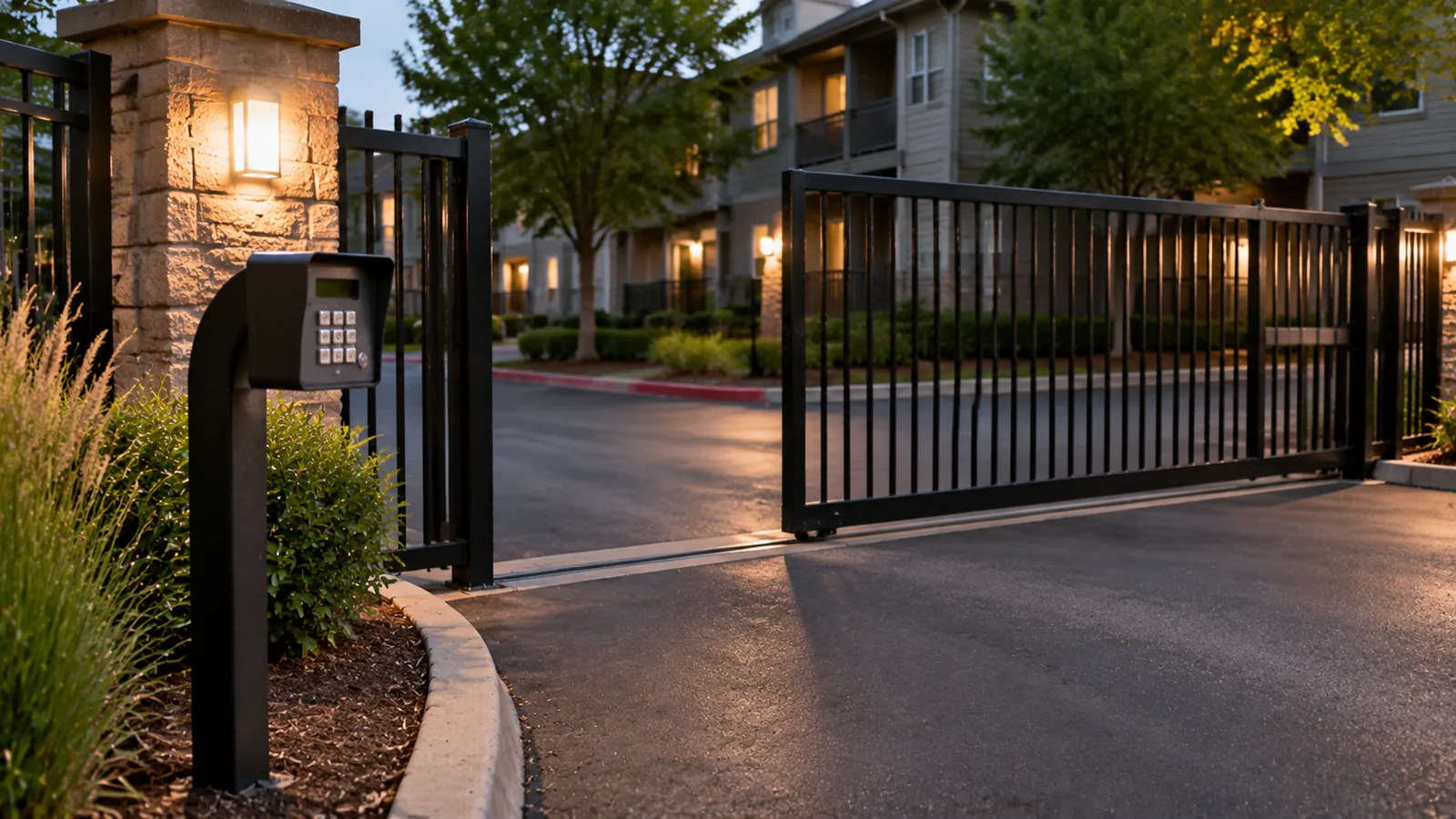
Illustration of a generic setting, not an actual property or incident.
An elevator or automatic gate injury needs an investigation tied to the exact way the equipment moved, before anyone assumes which part failed.
What to pin down, by what happened
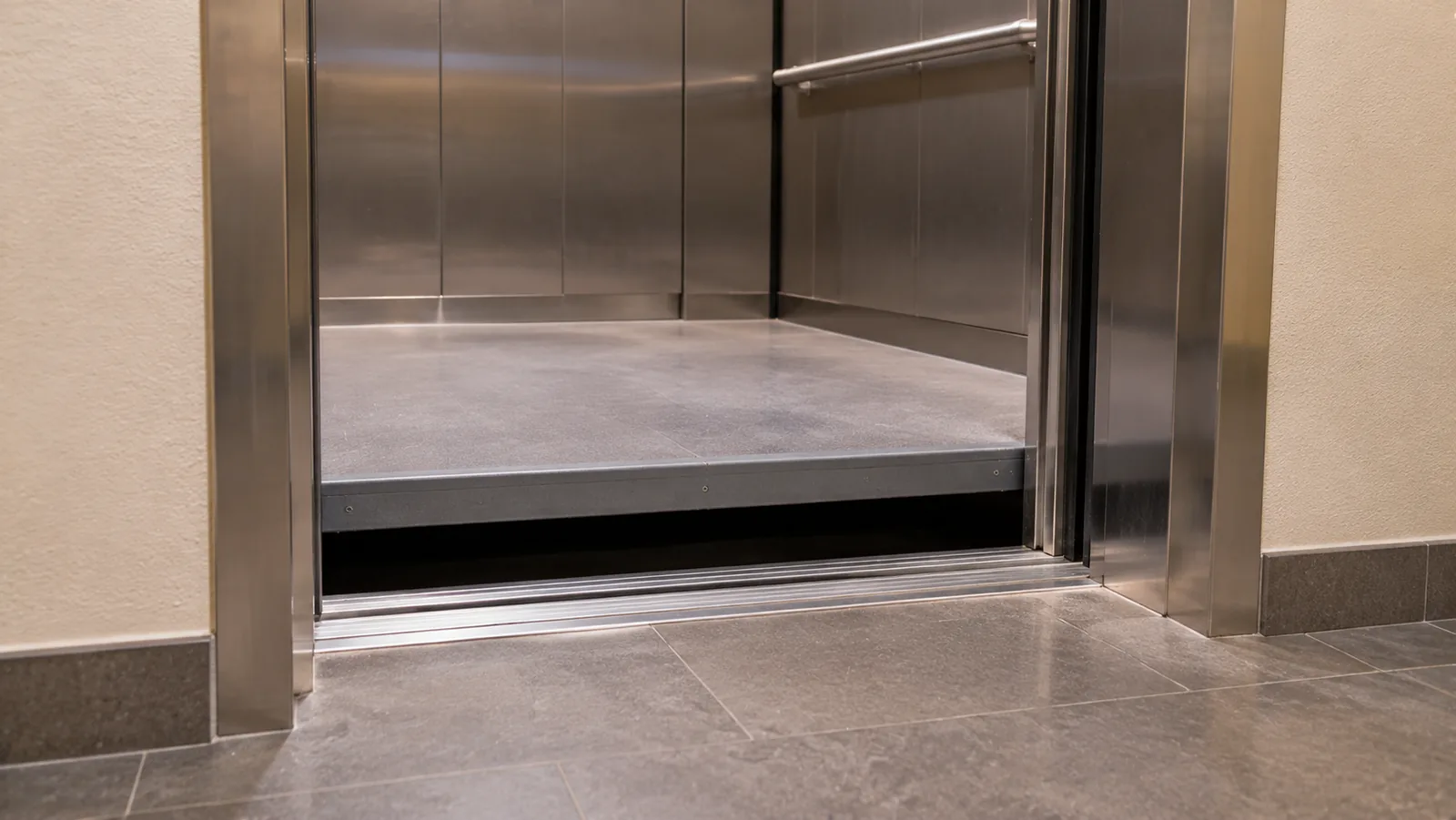
- Which car, which landing and how far off it was, for an elevator that stopped above or below the floor.
- Whether the door sensor should have reopened the doors, for doors that closed on you.
- When it happened and what it did before, for a car that moved abruptly.
- Which gate, its direction and whether the safety sensor reacted, for a vehicle or pedestrian gate that struck you.
If an apartment elevator or gate hurt you, tell us about your apartment injury or call (214) 200-4878.
What to do right after an elevator or gate injury
Get medical care and don't try to recreate what happened.
Do | Don't |
|---|---|
Note the car number or gate location and the time | Stand in a gate's path to test it. |
Photograph the equipment and any posted operator information | Try to defeat an elevator safety device. |
Save witness names | Let the incident go unreported to management. |
Qualified testing can be done later under a safe protocol, with notice to everyone involved.
Identify the equipment and service history
Records about the same machine and the same malfunction are the most useful.
Records and what they can show
- Service agreements, for who maintained the equipment.
- Repair calls, for how often it broke and how it was fixed.
- Inspection records, for what inspectors found.
- Fault codes and logs, for what the controller recorded at the time.
- Prior complaints, for earlier reports of the same problem.
A general complaint that the elevator was unreliable says less than reports that it kept stopping above the floor at the third-floor landing.
Party | Possible role |
|---|---|
Owner | Controlled the equipment and hired vendors. |
Manager | Received complaints and called for service. |
Installer | Put the equipment in. |
Maintenance company | Serviced it under contract. |
Manufacturer | Designed and built it. |
A maintenance company isn't automatically responsible for every part ever installed, and an owner isn't automatically off the hook because it hired a vendor.
Use regulatory records carefully
The Texas Department of Licensing and Regulation regulates elevators, escalators, and related equipment, and its inspection and compliance records can help identify the equipment's history and the companies involved [S21].
Records
- A current certificate.
- A lapsed certificate.
- Inspection reports.
What each does and doesn't prove, in the same order.
- Evidence, not a guarantee that every function was safe at the moment of injury [S21].
- No proof by itself of how a passenger was hurt.
- What was checked and when.
Automatic gates usually leave a different paper trail, so ask for the gate's own records.
Gate evidence and why it matters
- The operator model, which identifies the manufacturer and safety features.
- The sensor setup, which shows whether obstruction sensing was installed.
- Access logs and video, for the timing of the opening and closing.
- Service history and removed parts, which show whether a safety device was altered or bypassed.
The causal analysis should explain how the failure produced contact and what a working system would have done.
Preserve technical data before replacement
A repair can erase fault codes or replace the part that failed.
Ask early for | Hypothetical example |
|---|---|
Controller data | The fault log for Elevator 2 from the day of the injury. |
Removed parts | The door sensor the technician replaced the next morning. |
Photos before repair | The gate arm and its sensor bracket. |
Service tickets | The technician's notes on what was found. |
Needed repairs can go ahead with documentation and retention arrangements. A lawyer can seek an inspection protocol that balances safety, access, and reliable proof.
If evidence is lost, find out
- Whether it existed.
- Who had custody.
- When it was lost.
- How its loss affects the case.
Missing records don't automatically mean a favorable instruction; under Brookshire Brothers v. Aldridge, the judge decides spoliation and a proportionate remedy [S19].
Frequently asked questions
Do I need an expert?
Often, when how the equipment worked or failed is disputed. The expert's background should match the equipment, with methods explained clearly.
Can several companies share responsibility?
Each needs a supported duty and causal role, and fault is allocated under Chapter 33 [S15], so possibly. Don't assume all their policies can be added together [S17].
What should I ask Aaron Herbert?
Ask about saving the equipment and data, qualified inspection, identifying contractors, costs, and communication. Aaron Herbert is Board Certified in Personal Injury Trial Law by the Texas Board of Legal Specialization [S1].
Tell us about your apartment injury
Bring photos of the elevator or gate, the time it happened, and any complaints you or neighbors made. Tell us about your apartment injury or call (214) 200-4878.
Related pages
- Texas apartment injury knowledge hub, with every apartment guide in one place.
- How a Texas apartment injury claim is built, on the claim and lawsuit process.
- Who is liable for an apartment injury in Texas, on owners, managers, and vendors.
- Preserving evidence after a Texas apartment injury, on data, parts, and protocols.
- Texas apartment injury lawyer, the firm's statewide apartment page.
- Dallas premises liability lawyer, the firm's Dallas property-injury page.
Sources
Source | What it supports |
|---|---|
[S1] State Bar of Texas, Aaron Alan Herbert, Bar No. 24036761 | Board certification. |
Proportionate responsibility. | |
[S17] Texas Department of Insurance, commercial general liability insurance | Liability coverage. |
Spoliation remedies. | |
[S21] Texas Department of Licensing and Regulation, elevators program | Elevator regulation. |

ABOUT THE ATTORNEY
Aaron A. Herbert
Founding Attorney
Board Certified in Personal Injury Trial Law
Aaron founded The Law Firm of Aaron A. Herbert in 2010 to focus on developing each client's case and seeking its maximum value. For over a decade, he has represented people seriously injured in major accidents and industrial catastrophes, pursuing trial verdicts and settlements while working to reduce the stress of litigation.
Education
- Texas A&M University · B.S., Criminal Justice, 1999
- University of Oklahoma College of Law · J.D., 2002; graduated in the top of his class
Trial experience & approach
Aaron earned numerous jury verdicts at boutique personal injury litigation firms. According to his biography, he spent a year as the top-earning litigation attorney at a firm that frequently appeared in verdict searches as having one of the highest numbers of trial wins in Texas. At another Dallas personal injury firm, he moved from managing pre-litigation attorney to managing litigation attorney over seven years as the firm grew into one of Dallas's largest personal injury firms.
His biography describes a reputation as one of America's most aggressive trial lawyers, with noteworthy recoveries from judges and juries and substantial pretrial settlements. Most of those settlements included confidentiality agreements requested by the defense. Aaron has said the recoveries were justified by the injuries and losses involved, which no amount of money could make someone choose to experience.
His approach combines passion, preparation, persistence and courtroom imagination. He believes a well-supported, engaged and motivated team working cooperatively helps deliver strong representation, with the goal of achieving the best possible result for every client.
Dallas roots, military service & publication
Born and raised in Dallas, Aaron enlisted in the United States Marine Corps after high school and later received an Honorable Discharge. He completed his university and law degrees after his military service and became a lifelong Sooners football fan in law school.
Publication: “Litigating Dog Bite Cases,” Texas Dog Law Seminar, Dallas, 2009.
Professional affiliations & recognition
Professional affiliations and recognition listed in Aaron’s biography:
- State Bar of Texas
- American Bar Association
- Association of Trial Lawyers of America (now American Association for Justice)
- Texas Trial Lawyers Association
- Dallas Trial Lawyers Association
- Dallas Bar Association
- Tarrant County Bar Association
- Million Dollar Advocates Forum
- The National Trial Lawyers – Top 100 Trial Lawyers