In April 2026 the Texas Supreme Court ruled against a shopper who slipped on a clear puddle in an H-E-B toy aisle, because nothing showed how long the water had been there [S6].
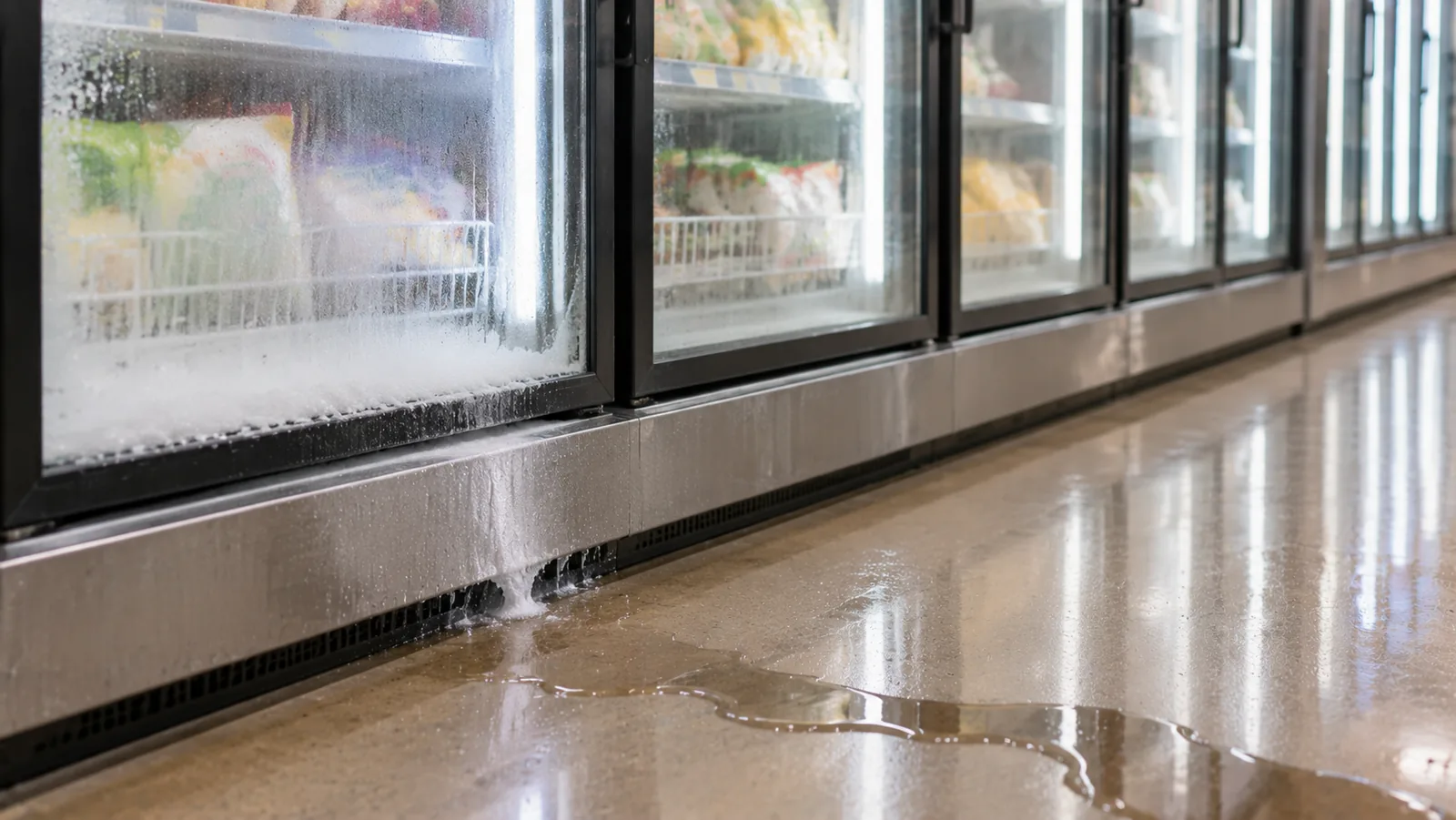
Suppose that at 4:40 on a Thursday your shoe slides in a line of water at the base of the frozen-food case on aisle 12, and the case sits right there, humming.
Before you leave, get:
- A photo from the end of the aisle showing the case, the water, and any cone.
- A close photo of where the water starts, if you can see it.
- The names and numbers of anyone who saw water there before you fell.
- A note of the exact case and aisle.
Keetch v. Kroger Co. (Tex. 1992) lists what you'd have to prove [S9]:
- The water on the floor posed an unreasonable risk of harm [S9].
- H-E-B knew about this puddle, or it was there long enough that the store reasonably should have found it [S6, S9].
- H-E-B failed to use reasonable care to reduce or eliminate the risk [S9].
- That failure caused your fall and your injuries [S9].
To have a lawyer look at the timeline, tell us about your H-E-B injury or call (214) 200-4878. Bring the store address, incident date, injury details, photos, and witness names.
Five places the water could have come from
Water near a cooler can come from refrigeration, cleaning, customers, rain, products, or another source. The explanation has to follow the evidence, not the first guess after a fall.
A steady drip line under the case?
That suggests a leaking case. Check repair requests, service descriptions, and video of the case.
Water pooled along the base of the dairy cooler?
It may be condensation or defrost water. Ask whether the drain or pan at that case had trouble before.
A shiny streak with no wet-floor sign?
It may be left from mopping. Find out what was done, when, by whom, and what remained on the surface.
A torn milk jug on the bottom shelf?
That points to a broken product. Ask whether a shopper or worker reported it, and when.
Wet cart tracks from the entrance?
It may be rain tracked in. Check whether the water reached the case from the front of the store.
What to say when you don't know where it came from
You can accurately report that there was water without knowing how it got there. Here's example wording and why each line works.
| Say this | Why |
|---|---|
| "The floor in front of the frozen-food case was wet, and my shoe slid." | It's a direct observation. |
| "I saw water dripping from the bottom of the case after I fell." | It ties the source to what you saw, and when you saw it. |
| "I don't know where the water came from." | Honest gaps are better than a theory you can't back up. |
Work orders, vendor notes and video for aisle 12
Ask for the records that name this case, this aisle and this afternoon:
| Record | What it can show | Its limit |
|---|---|---|
| Repair requests and work orders | The case had a leak problem before the fall | They don't date this puddle. |
| A refrigeration vendor's service notes | What was fixed, where, and when | A record for a different case may not show notice of this puddle. |
| Employee reports | Someone saw water at the case before the fall | Only if they concern the same hazard. |
| Photographs | Where the puddle was and how big | Post-fall photos usually can't show how long it was there. |
| Store video | When the water appeared and who walked past | Watch for clock offsets and blind spots. |
The toy-aisle puddle that lost: Peterson
A shopper slipped on a clear puddle in the toy aisle of an H-E-B. The store had earlier roof leaks, but they were concentrated in the southern portion of the store, not near the toy aisle. It had a heightened inspection protocol for rainy weather, and the rain had stopped about two hours before the fall [S6].
Video showed no employee walked down the aisle in the two hours before the fall. Peterson conceded H-E-B had no actual knowledge, so the case was about constructive notice only [S6].
What does that mean for a leak at a cooler? Three example sets of records compare like this.
| Record | Where notice stands |
|---|---|
| A work order on the dairy cooler from last month, and nothing else | It shows equipment history, not how long this puddle was there. |
| A work order on the same case plus a shopper's time-stamped photo of water there 30 minutes before the fall | A fact issue on notice is more likely, though nothing guarantees a recovery. |
| A stocker told about the drip at 4:10 who didn't put out a cone before a 4:40 fall | That points to actual notice, which Peterson didn't address. |
The closer a record ties to this case, this puddle, and this hour, the more it can do.
For the full notice rules, read how to prove H-E-B knew about a spill. General complaints about maintenance aren't a substitute for proof tied to this place and time.
Cleaning, cones, and store policy
If cleaning came before the fall, find out what was done, when, by whom, and what was left on the floor. Four questions and what to save:
- Who cleaned the area? The worker's name or description and the time.
- What product was used? The name and label, when it matters to the slipperiness.
- Was there a written cleaning schedule? Any records that exist, through proper legal requests.
- Was a sign out, and where? Photos showing the sign's distance from the puddle.
What to check about any warning sign:
- A cone placed after the injury is different from one clearly visible before you entered the area.
- A sign at the end of the freezer aisle may or may not warn of a puddle three cases down.
- A sign directly over the water before you walked up means H-E-B will argue the risk was warned of; a lawyer should look at visibility and placement.
- No sign at all is one fact, but it doesn't prove notice by itself.
There's more in H-E-B warning signs and shared fault.
When a vendor worked on the case
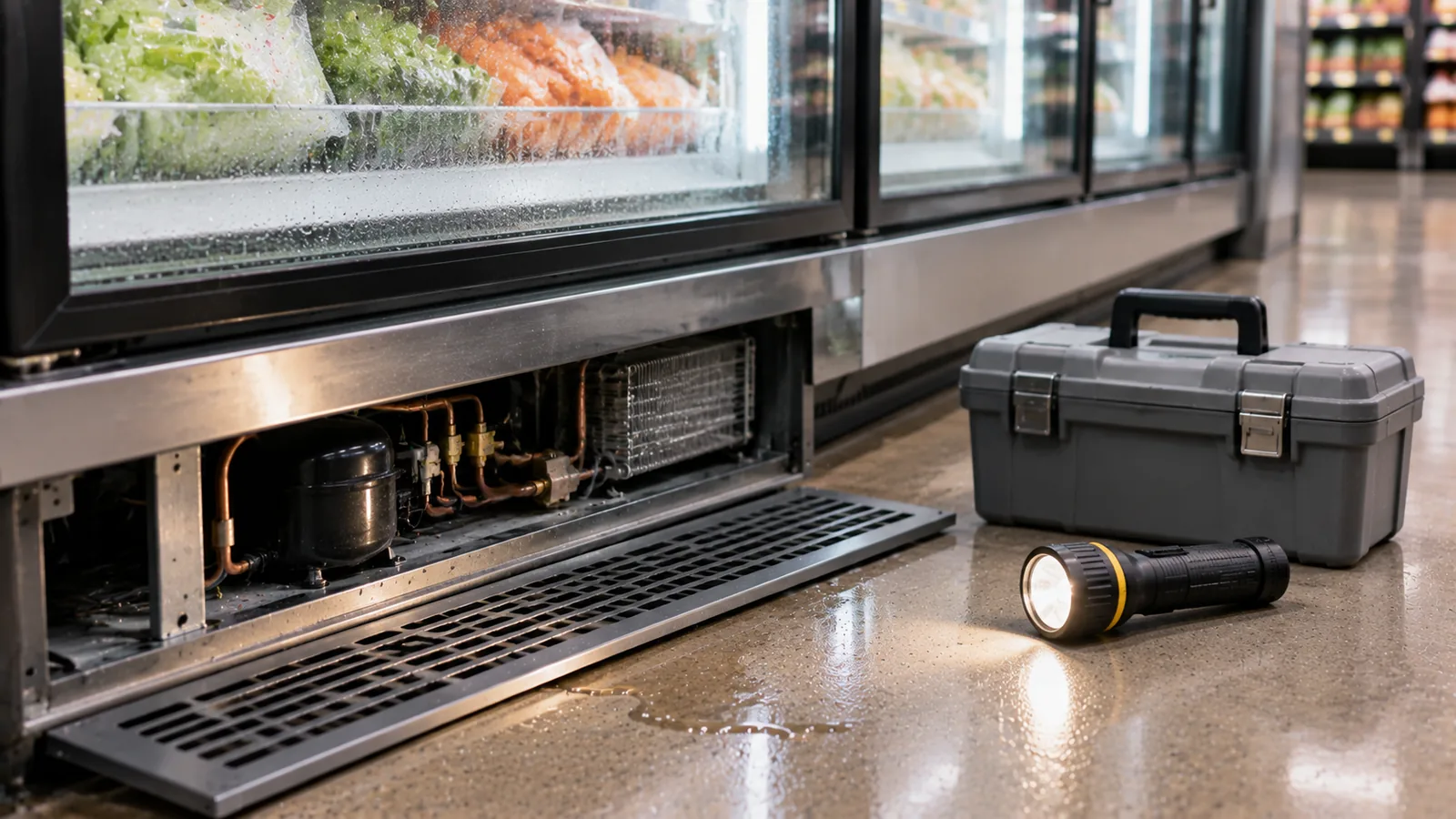
A refrigeration or cleaning contractor may share responsibility if its work caused the condition under an applicable duty. For example, suppose a vendor's technician worked on the dairy cooler's drain two days before your fall.
What did the contract cover?
What the vendor was supposed to do, and at which case.
When was the work done?
The dates of the work compared with the fall.
What did the technician actually do?
The methods and location, not just the invoice.
What did H-E-B and the vendor say to each other?
Messages about the leak.
Deadlines and prerequisites can differ by defendant:
- Personal injury claims are generally due two years after the claim accrues, with exceptions [S14].
- Sections 16.008 and 16.009 set a 10-year repose period for some design professionals and builders of improvements [S14].
- Under Chapter 150, claims against licensed architects, engineers, land surveyors, or landscape architects require a certificate of merit with the first pleading [S22].
- Identify the people and companies involved and their work dates early, instead of assuming they can always be added later.
If the case gets fixed before anyone tests it
Can an expert still help?
Yes, on leakage, drainage, the floor surface or the cleaning, if the method is sound and the facts fit your fall.
What's the catch?
Say the case is repaired the next Thursday and tested Friday. Three limits:
- That test may not reflect the condition at the time of the fall, and the limit has to be disclosed.
- A dry-floor or different-liquid test may not match what you stepped in.
- A friction number isn't a substitute for proof that you encountered the tested condition.
Medical proof is a separate file
Medical records separately prove the injury and its effects. Keep:
- Treatment records and bills, for the injury and the care it required.
- Records of prior conditions, for what changed after the fall.
- Work-loss records, for missed time and lost pay.
- Notes on recovery, for how the injury affects daily life and what care may still be needed.
Frequently asked questions
The case broke down three times this year. Did H-E-B know about my puddle?
Not automatically. Breakdowns are history. The evidence still has to connect what H-E-B knew, or a fair chance to find the water, to the puddle you slipped in [S6].
What if an employee was nearby?
Proximity can be relevant, but constructive notice still requires some evidence of how long the water was there [S8].
The case was dripping when I got up. Isn't that enough?
It helps show the source, but it doesn't show how long the water had been on the floor before you fell [S6].
What if a stocker was told about the drip before I fell?
That points to actual notice, which doesn't depend on Peterson's duration rule [S6].
H-E-B has a cleaning policy. Does that win my case?
No. Peterson says a store's own policy doesn't raise the standard of care [S6].
Could the refrigeration company be responsible?
Possibly, if its work on the case caused the water and it owed a duty. Finished work isn't automatically off-limits, but negligence and causation still need proof [S25].
Who can look at the evidence with me?
Aaron Herbert, who is Board Certified in Personal Injury Trial Law by the Texas Board of Legal Specialization [S1], can look at the equipment records, the floor, the warnings and the timeline. Certification isn't a guarantee or a ranking.
Tell us about your H-E-B injury
Bring the store address, incident date, injury details, photos, and witness names. Tell us about your H-E-B injury or call (214) 200-4878.
Related pages on H-E-B injuries
- Texas HEB injury knowledge hub: all the H-E-B guides.
- How to file and litigate a Texas HEB injury claim: the lawsuit process.
- Dallas premises liability: Dallas property injuries.
Sources
- [S1] State Bar of Texas, Aaron Alan Herbert, Bar No. 24036761.
- [S6] H-E-B, LP v. Peterson, No. 24-0310 (Tex. Apr. 10, 2026).
- [S8] Wal-Mart Stores, Inc. v. Reece, 81 S.W.3d 812 (Tex. 2002).
- [S9] Keetch v. Kroger Co., 845 S.W.2d 262 (Tex. 1992). Premises elements.
- [S14] Tex. Civ. Prac. & Rem. Code ch. 16.
- [S22] Tex. Civ. Prac. & Rem. Code ch. 150.
- [S25] Strakos v. Gehring, 360 S.W.2d 787 (Tex. 1962).

ABOUT THE ATTORNEY
Aaron A. Herbert
Founding Attorney
Board Certified in Personal Injury Trial Law
Aaron founded The Law Firm of Aaron A. Herbert in 2010 to focus on developing each client's case and seeking its maximum value. For over a decade, he has represented people seriously injured in major accidents and industrial catastrophes, pursuing trial verdicts and settlements while working to reduce the stress of litigation.
Education
- Texas A&M University · B.S., Criminal Justice, 1999
- University of Oklahoma College of Law · J.D., 2002; graduated in the top of his class
Trial experience & approach
Aaron earned numerous jury verdicts at boutique personal injury litigation firms. According to his biography, he spent a year as the top-earning litigation attorney at a firm that frequently appeared in verdict searches as having one of the highest numbers of trial wins in Texas. At another Dallas personal injury firm, he moved from managing pre-litigation attorney to managing litigation attorney over seven years as the firm grew into one of Dallas's largest personal injury firms.
His biography describes a reputation as one of America's most aggressive trial lawyers, with noteworthy recoveries from judges and juries and substantial pretrial settlements. Most of those settlements included confidentiality agreements requested by the defense. Aaron has said the recoveries were justified by the injuries and losses involved, which no amount of money could make someone choose to experience.
His approach combines passion, preparation, persistence and courtroom imagination. He believes a well-supported, engaged and motivated team working cooperatively helps deliver strong representation, with the goal of achieving the best possible result for every client.
Dallas roots, military service & publication
Born and raised in Dallas, Aaron enlisted in the United States Marine Corps after high school and later received an Honorable Discharge. He completed his university and law degrees after his military service and became a lifelong Sooners football fan in law school.
Publication: “Litigating Dog Bite Cases,” Texas Dog Law Seminar, Dallas, 2009.
Professional affiliations & recognition
Professional affiliations and recognition listed in Aaron’s biography:
- State Bar of Texas
- American Bar Association
- Association of Trial Lawyers of America (now American Association for Justice)
- Texas Trial Lawyers Association
- Dallas Trial Lawyers Association
- Dallas Bar Association
- Tarrant County Bar Association
- Million Dollar Advocates Forum
- The National Trial Lawyers – Top 100 Trial Lawyers