
The wrongful death statute says who can sue, but the type of defendant often decides how hard the case is and how fast you must act.
Which rules apply to which kind of defendant?
Each kind of defendant brings its own rule set and its own first problem to check.
| Kind of defendant | Main rule set | Early issue to check |
|---|---|---|
| Property owner or business | Texas premises liability law. | Whether the owner knew or should have known of the condition. |
| Product maker or seller | Civil Practice and Remedies Code chapter 82. | Who made the product and whether it was changed after sale. |
| Doctor, hospital, or nursing facility | Chapter 74. | Notice letter and the 120-day expert report. |
| City, county, or state agency | The Texas Tort Claims Act, chapter 101. | Notice within six months, or sooner under a city charter. |
| Employer | Labor Code workers' comp rules. | Whether the employer had comp coverage. |
| Commercial truck operator | Chapter 72, known as HB 19. | Trial structure and evidence rules. |
Short answer: No. Chapter 71 decides who can sue. But if a hospital, a city vehicle, a store's floor, or a defective product played a part, another set of rules sits on top, with its own notice deadline, expert report, or damage cap. Some of those deadlines run in as little as six months.
A related article on workplace deaths and another on truck crash deaths in this hub are being prepared. For truck cases now, see our guide to HB 19 and commercial truck lawsuits.
How do premises claims work?
Here's a made-up example. A 70-year-old grandmother falls on a broken loading ramp at a rented warehouse store and dies from a head injury. Her family would need to find out:
- who controlled the ramp, the landlord or the store;
- whether anyone reported the damage before her fall;
- how long the ramp had been broken.
The deed shows who owns the building. Leases, service contracts, and who ran the place day to day show who controlled the ramp.
Two Kroger cases set the ground rules:
- In Keetch v. Kroger Co., the water a shopper slipped on had been there at least 30 minutes, so the Texas Supreme Court treated it as a premises condition, not negligent activity.
- In Austin v. Kroger Texas, L.P., the court held there's generally no duty to warn about hazards that are open and obvious or already known, with two narrow exceptions.
What does a product defect claim require?
Say a space heater tipped over and started the fire that killed your brother. Chapter 82 decides who you can sue and what you'll have to prove:
- Section 82.001(2) covers any theory against a manufacturer or seller, including negligence and warranty.
- Under § 82.003(a), a store that didn't make the heater is generally not liable unless one of seven exceptions applies, such as altering the product or knowing of the defect.
- A design claim needs a safer alternative design under § 82.005(a) and (b). It must have been feasible when the heater left the maker's control and would have prevented or significantly reduced the risk.
- Section 16.012(b) requires most suits to be filed within 15 years after the defendant sold the product, with limited exceptions.
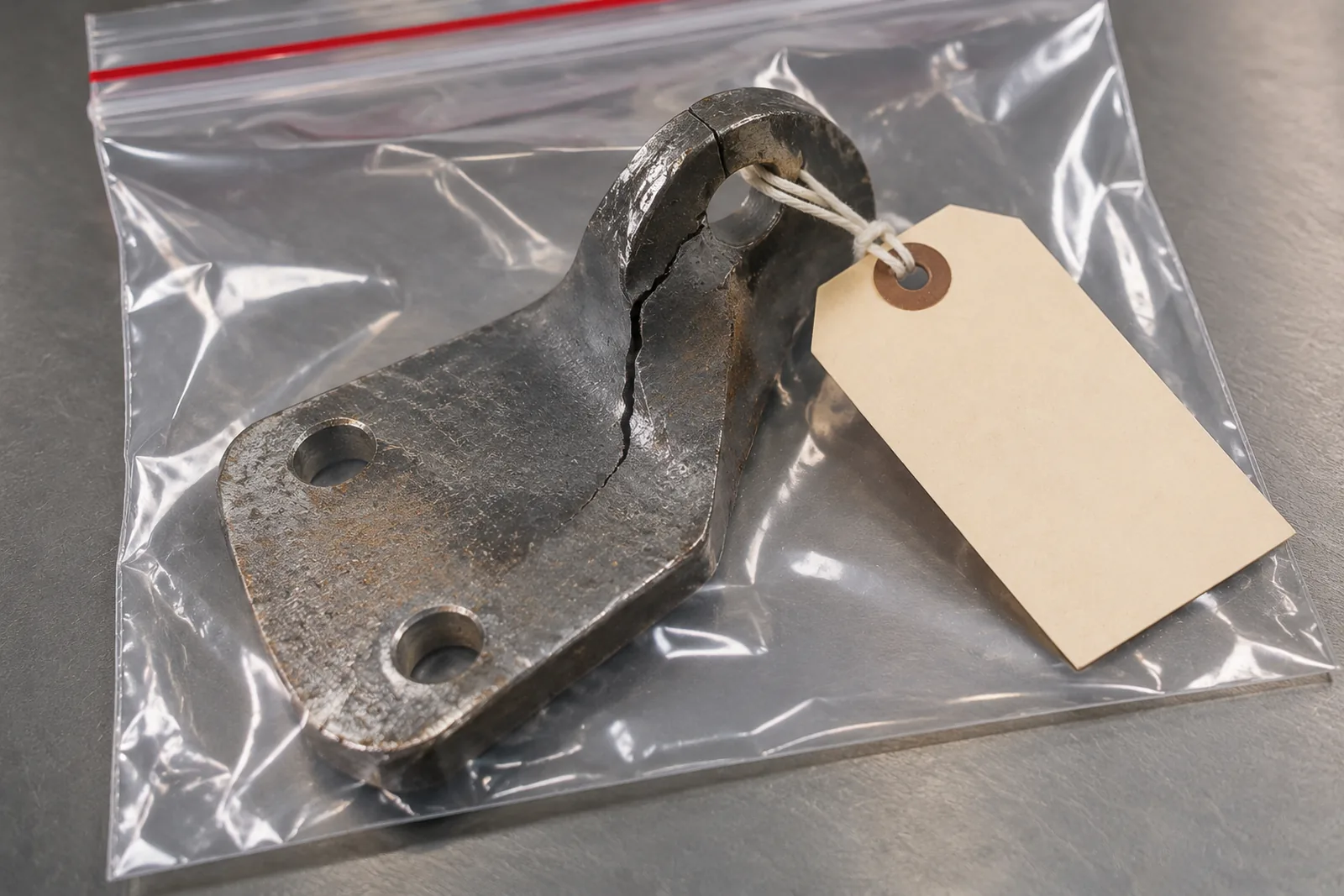
What to do now: Put the space heater, the ladder, or the car seat somewhere safe, along with the box and the manual. Don't let anyone test or take apart the part until every side has notice, because a part damaged in a crash can look like a part that failed before it.
What's different about a death after medical care?
Chapter 74 adds three procedural requirements, and missing any of them can end the claim.
| Chapter 74 rule | What happens |
|---|---|
| Notice by certified mail with a medical records authorization, at least 60 days before suit (§ 74.051). | The notice tolls limitations for 75 days for all parties. |
| An expert report for each provider within 120 days after that defendant's answer (§ 74.351(a)). | Missing it can lead to dismissal with prejudice and a fee award. |
| Suit within two years from the breach or the end of the treatment at issue (§ 74.251(a)). | Minority and disability tolling are mostly cut off, and there's a 10-year outer limit. |
Key point: Section 74.303 caps total damages per claimant in a wrongful death or survival case, adjusted for inflation. Past and future medical care costs don't count toward that cap under § 74.303(c).
A claim is a health care liability claim based on what it's about, not how it's labeled. If the claim challenges medical care or safety directly related to health care, calling it ordinary negligence won't get around chapter 74.
When can a family sue a government unit?
The Tort Claims Act waives immunity in two main situations. Section 101.021(1) covers deaths caused by an employee's use of a motor vehicle or motor-driven equipment, like a city garbage truck backing into a pedestrian. Section 101.021(2) covers deaths caused by a condition or use of tangible property. Discretionary decisions and intentional torts are excluded under §§ 101.056 and 101.057.
Section 101.023 caps the damages:
- $250,000 per person against the state or a city;
- $100,000 per person against other local units, like a county or a school district.
Notice is due within six months of the incident under § 101.101(a), and a city charter can set a shorter period under § 101.101(b). Formal notice isn't required if the unit had actual notice that a death occurred under § 101.101(c). And filing suit against the unit bars suing the individual employee over the same matter under § 101.106(a).
Which deadlines apply in every case?
The general clock is § 16.003(b): a wrongful death suit is usually due two years after the death. Three other rules can change the math. Section 16.001 generally pauses a minor's time until age 18. Section 16.062 suspends limitations for 12 months after a death, or until an executor or administrator qualifies. And under § 71.006, a criminal case against the person who caused the death doesn't stop the civil claim.
Don't lean on the minor rule in a medical case. Chapter 74 overrides most of it. See the first days after a fatal accident for early steps.
Frequently asked questions
We sent the city a notice letter. Does that mean it has to pay? No. The letter only keeps the claim alive. You still have to fit the death inside one of the statute's waivers.
Can we sue the store that sold the heater? Sometimes. One of the § 82.003 exceptions has to apply, or the maker has to be insolvent or outside the court's reach.
Is a nursing home claim a medical malpractice case? Often, yes. Chapter 74 covers many nursing facility claims, so the notice, expert report, and cap rules apply.
What if several defendants fall under different rules? Each one gets its own analysis and calendar. A short deadline for one shouldn't wait on the investigation of another.
More guides are in the Texas Wrongful Death Knowledge Hub and the Texas wrongful death claims and litigation strategy guide, including how to preserve evidence after a death.
Texas statutes and cases cited in this article
- Tex. Civ. Prac. & Rem. Code ch. 82
- Tex. Civ. Prac. & Rem. Code ch. 74
- Tex. Civ. Prac. & Rem. Code ch. 101
- Tex. Civ. Prac. & Rem. Code ch. 16
- Austin v. Kroger Texas, L.P., 465 S.W.3d 193 (Tex. 2015), citing Keetch v. Kroger Co., 845 S.W.2d 262 (Tex. 1992)
This article is general information about Texas law, not legal advice about a particular case. Results depend on the facts, the evidence, the court and the law that applies. Reading it does not create an attorney-client relationship.
Families who need grief programs, funeral and survivor benefit help, or a needs assessment can use our Wrongful Death and Family Support Center.

ABOUT THE ATTORNEY
Aaron A. Herbert
Founding Attorney
Board Certified in Personal Injury Trial Law
Aaron founded The Law Firm of Aaron A. Herbert in 2010 to focus on developing each client's case and seeking its maximum value. For over a decade, he has represented people seriously injured in major accidents and industrial catastrophes, pursuing trial verdicts and settlements while working to reduce the stress of litigation.
Education
- Texas A&M University · B.S., Criminal Justice, 1999
- University of Oklahoma College of Law · J.D., 2002; graduated in the top of his class
Trial experience & approach
Aaron earned numerous jury verdicts at boutique personal injury litigation firms. According to his biography, he spent a year as the top-earning litigation attorney at a firm that frequently appeared in verdict searches as having one of the highest numbers of trial wins in Texas. At another Dallas personal injury firm, he moved from managing pre-litigation attorney to managing litigation attorney over seven years as the firm grew into one of Dallas's largest personal injury firms.
His biography describes a reputation as one of America's most aggressive trial lawyers, with noteworthy recoveries from judges and juries and substantial pretrial settlements. Most of those settlements included confidentiality agreements requested by the defense. Aaron has said the recoveries were justified by the injuries and losses involved, which no amount of money could make someone choose to experience.
His approach combines passion, preparation, persistence and courtroom imagination. He believes a well-supported, engaged and motivated team working cooperatively helps deliver strong representation, with the goal of achieving the best possible result for every client.
Dallas roots, military service & publication
Born and raised in Dallas, Aaron enlisted in the United States Marine Corps after high school and later received an Honorable Discharge. He completed his university and law degrees after his military service and became a lifelong Sooners football fan in law school.
Publication: “Litigating Dog Bite Cases,” Texas Dog Law Seminar, Dallas, 2009.
Professional affiliations & recognition
Professional affiliations and recognition listed in Aaron’s biography:
- State Bar of Texas
- American Bar Association
- Association of Trial Lawyers of America (now American Association for Justice)
- Texas Trial Lawyers Association
- Dallas Trial Lawyers Association
- Dallas Bar Association
- Tarrant County Bar Association
- Million Dollar Advocates Forum
- The National Trial Lawyers – Top 100 Trial Lawyers