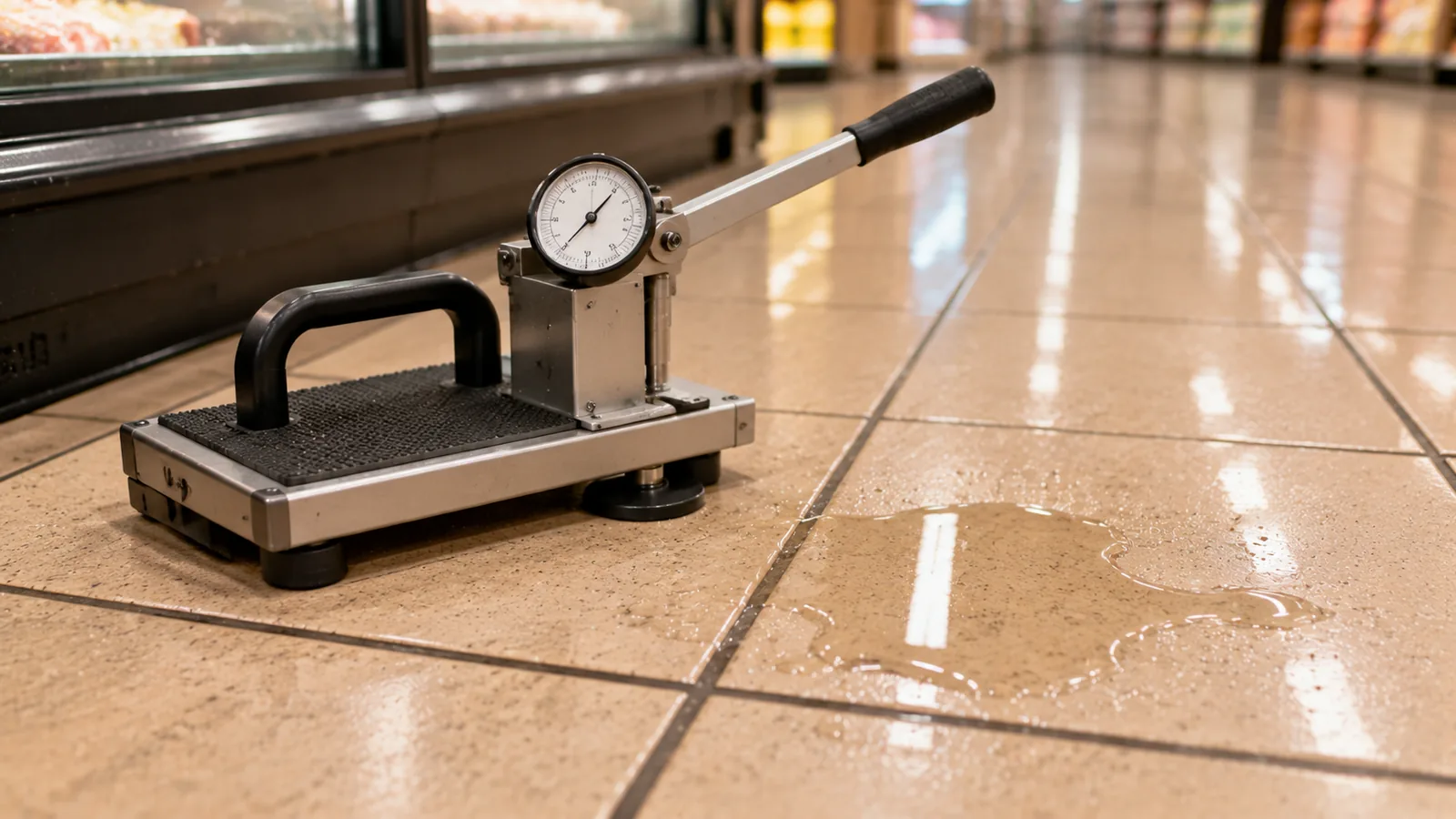
Water by the chicken case at a La Michoacana Meat Market. A broken wrist. Two service tickets that mention a drain line on that case. A file like that might call for a refrigeration engineer, a floor-testing expert, and an orthopedic surgeon. It might call for none of them.
Experts explain technical and medical questions that ordinary experience can't answer. They can't supply missing evidence of what happened before the fall, they don't decide negligence, and they can't promise a verdict. Under Texas law the court or jury makes those calls. And every expert has to meet the same reliability bar: in Gammill v. Jack Williams Chevrolet, Inc. (1998), the Supreme Court of Texas applied Robinson's reliability requirement to all expert testimony. Years of experience don't excuse an analytical gap between the data and the conclusion.
Before anyone hires an expert, hold on to:
- your original, unedited photos and any video of the spot
- the shoes you wore
- anything the store gave you, and the names of employees who responded
- your medical records from the first visit on
This article is about the La Michoacana Meat Market grocery chain, not the ice cream shops (paleterías) or independent businesses that also use the "La Michoacana" name.
The sign may not name the defendant. In a 2018 Houston appeal, the defendant was LMMM Houston #41, Ltd., d/b/a La Michoacana Meat Market #41.
Read this with the actual records, photos, video, and medical evidence. Nothing here says any La Michoacana location broke a duty.
Hurt at a La Michoacana store? Tell us about your La Michoacana injury or call (214) 200-4878.
Which experts would the chicken-case fall need?
Possibly none. Each disputed question gets matched to someone who can actually answer it, and stacking experts against the defense wins nothing.
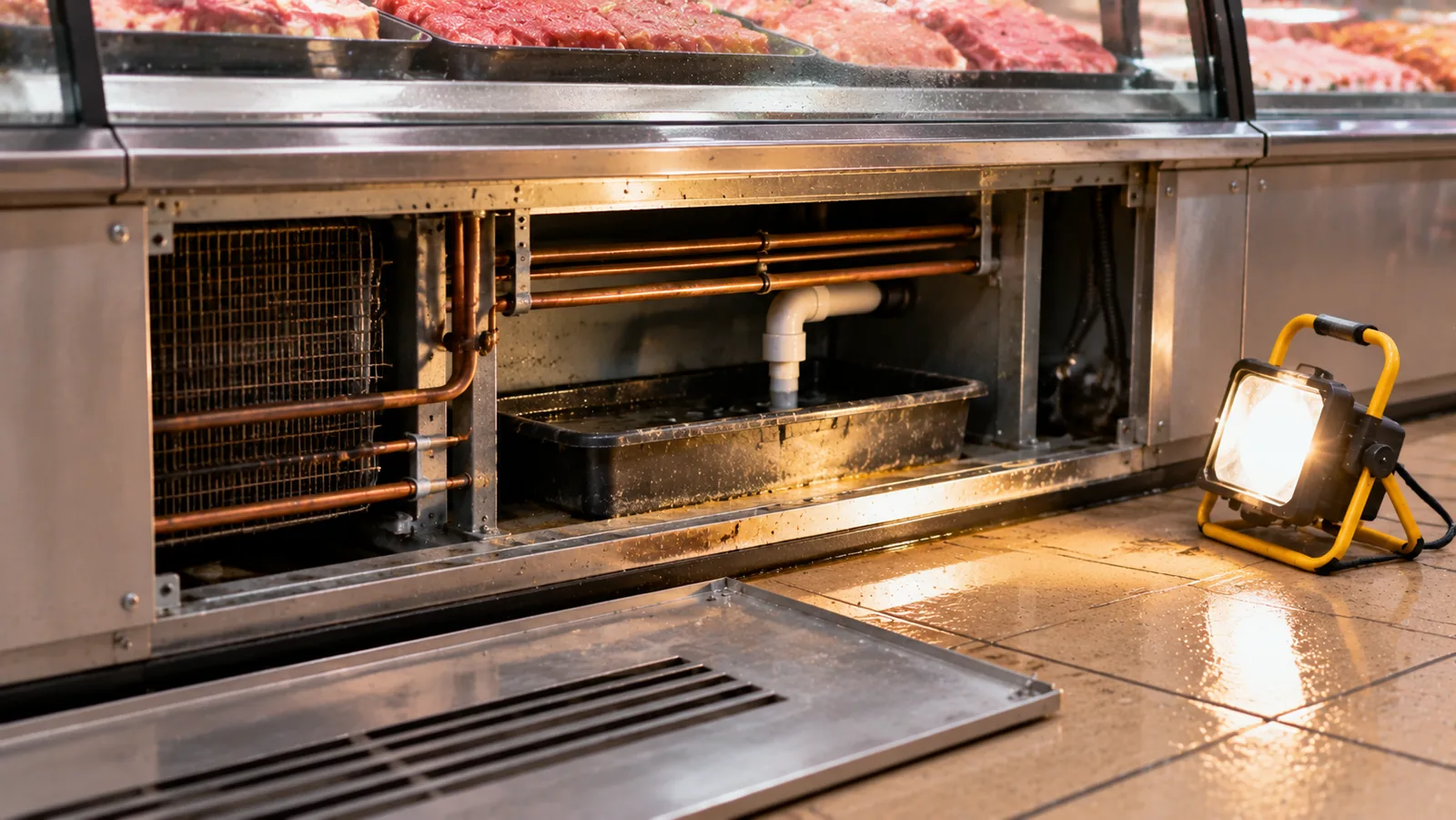
- A refrigeration engineer or qualified technician, for whether a refrigeration system, drain or condensation source produced the water.
- A flooring or slip-resistance expert, for whether the floor surface affected slip resistance.
- A premises-safety or human-factors expert, for whether the condition was detectable through reasonable inspection.
- A retail-operations expert, for whether inspection and cleanup procedures were appropriate for the risk.
- A biomechanics expert or treating physician, for whether the fall mechanics are consistent with the claimed injuries.
- A medical expert, for whether the injuries required the treatment provided.
- A medical expert, with a life-care planner if supported, for whether the client will need future care or have lasting limits.
Plenty of questions need no expert. The stocker who saw water on the floor can testify to it herself. Video may show whether a clerk walked right past it. Experts come in when the source of the water, or some disputed property of the floor, needs explaining.
Your lawyer keeps one line per issue. For the water, it might read:
- the issue, here the source of the water by the chicken case
- the evidence, here two service tickets, drain-pan photos and an employee statement
- the field, here commercial refrigeration
- the question, here whether a clogged drain line could put water on the walkway
- the due date, here the designation date in the scheduling order
What goes in the expert's assignment letter?
| In the letter | Why |
|---|---|
| The condition and the date | The opinion stays tied to this fall, not the store in general. |
| All the materials, including the bad ones | An opinion built on a hand-picked set can collapse once the rest comes out. |
| Every assumption | Each one is either backed by evidence or labeled as an assumption. |
| Testing needs and expected limits | You learn early what the expert can and can't answer. |
| Preservation | Communications and work product are kept under the applicable rules. |
The second row is the one people skip. Give the expert the bad documents too.
The store-operations expert
This is the person who looks at how the store really ran that day, as opposed to how the manual says it should. In the chicken-case fall, the file might show clear water on light tile, in a narrow aisle squeezed between the meat case and a pallet of canned goods. It was a busy Saturday afternoon with one stocker on the floor. Floor walks were supposed to happen hourly, logged as initials on a paper sheet at the service desk, with no times. Training was a one-page orientation sheet. And there's the question of how long it took to get a mop and a cone out after someone reported the water, and where the cone ended up.
What that expert can't do is tell the jury the store was negligent. Negligence and premises liability belong to the court or jury. The expert also has to separate a recognized industry practice from personal preference, and lay out the facts, method, and experience behind every opinion.
Refrigeration, drains, and other technical causes
Each technical theory leaves its own paper trail.
- Service records, equipment specifications, photos, repair history and the unit's condition, for a refrigeration leak.
- The floor-drain layout and maintenance records, for bad drainage.
- Floor-care records and product information, for a worn floor.
- Measurements and photos, for an uneven transition.
- Service tickets and the failed part, if kept, for failed equipment.
- Assembly instructions, the load and who built it, for falling shelving or a display.
- Building records, inspection reports, installation records and later work orders, for a structural problem or bad fixture.
No record on that list proves cause by itself. A water stain next to a refrigerated display doesn't show the refrigeration made the water.
A refrigeration opinion holds up only with three pieces.
| Piece | In the chicken-case fall |
|---|---|
| A failure mode | A drain line that clogs and overflows |
| A link to the walkway | Records or observations showing the liquid reached it before the fall |
| Candor about gaps | A leak path possible on paper isn't proof it happened then; missing facts get stated |
What does a site visit find months later?
Usually a repaired case and a refinished floor. Your lawyer arranges access, gives notice, and settles documentation and any testing protocol. The inspector writes down what's changed and doesn't change anything.
| Note | Because |
|---|---|
| The surface | It may have been resurfaced or replaced. |
| How clean it is | Residue or a new finish changes readings. |
| The lighting | It affects visibility and glare. |
| The weather, at an entrance | Tracked-in rain is a different question from a cooler leak. |
| Every change since the fall | Moved displays and new equipment change the scene. |
Testing a different surface, or using a different liquid, can still answer a narrow question. Just don't call it a reproduction of the fall unless the conditions back that up.
Destructive testing is its own category. Before anything gets cut, scraped, or taken apart, five things are settled:
- Who may attend, with notice to all parties.
- What will be altered, in a written description of the procedure.
- How samples will be kept, including chain of custody and storage.
- What documentation is needed: photos, video, and notes.
- Whether agreement or court supervision is needed.
A method that damages the only evidence without safeguards can start a separate fight that has nothing to do with the injury.
What makes a friction reading worth anything?
A coefficient of friction is just a number. It's only as good as what's behind it, and weak answers to these questions invite a reliability challenge:
- the instrument's last calibration, and who did it
- the person who ran the test, and their training
- the test method, and whether it fits this floor
- temperature, humidity, and how clean the surface was
- the test liquid (water, meat juice, grease, or produce mist) and the sole material assumed
- whether the test reflects the spot and the conditions of the fall
Could you have seen it?
When visibility is disputed, a human-factors expert may rebuild the scene the way the shopper walked into it, glare and all:
- clear water on white tile, under bright lights over the meat case
- a dimmer aisle, and glare off a fresh floor finish
- her eyes on the prices as she walked toward the case
- an endcap blocking part of the view, and a pallet narrowing the aisle
- sale signs and a crowd at the counter
- a small puddle at the base of the case
- a cone, if one stood anywhere she could see it
| The visibility expert can | The expert can't |
|---|---|
| Judge the scene as it was then, as far as reliable evidence allows | Treat photos in other lighting, or after the store was rearranged, as that day |
| Offer an opinion the factfinder weighs | Decide whether the condition was open and obvious, or whether a duty existed; those are legal questions under Texas law |
Which medical opinions does the case need?
The ones that hold up in a fight over causation, the need for treatment, whether the symptoms fit the fall, and whether future care is reasonably probable. A sound opinion walks through:
- symptoms and exam findings
- imaging, which can show a fresh injury, older changes, or both
- prior history, asking what the fall caused or aggravated rather than whether your history was spotless
- how the fall happened
- any later event, like a second fall, and other explanations
Which doctor depends on the injury.
- Orthopedic surgery, for fractures and joint damage.
- Neurology, for nerve injuries and headaches.
- Neurosurgery, for spinal conditions that need surgery.
- Pain medicine, for chronic pain and injections.
- Rehabilitation medicine, for functional limits.
- Radiology, for the images.
Is my treating doctor the right trial expert?
Sometimes. A treating physician can give strong evidence on diagnosis, treatment, prognosis, restrictions, and future care. A retained expert may still be needed when a disputed issue calls for more analysis, or when the treating doctor's testimony doesn't reach it. The opinions, qualifications, disclosures, and foundation all have to fit, and billing, future costs, and job consequences may need other witnesses.
What makes a future-care number believable?
Support, row by row.
| Invites a challenge | Holds up better |
|---|---|
| "She may need surgery someday." | "Surgery is reasonably probable within two years, at this frequency and this cost." |
| A life-care plan listing every conceivable treatment because the diagnosis sounds serious. | A plan tied to medical recommendations and supported assumptions. |
| An economic model that quietly assumes the worst outcome. | A model built on the function actually lost and the evidence for future consequences. |
The math can be perfect and still rest on an unsupported assumption of permanent disability. That's why the economist needs your job duties, employment records, restrictions, education and work history, labor data, and the facts about any return to work.
| Common mistake | Why it hurts |
|---|---|
| Missed wages and lost earning capacity lumped together | They're different claims |
| One loss counted in two categories | Double recovery invites a challenge |
| Assumptions ahead of the medical opinions | The math then rests on support it doesn't have |
| A return to work with accommodations ignored | It may change the type or amount of loss, without wiping out every claim |
Medical proof and damages after a La Michoacana injury covers bills, prior conditions, and future care. The La Michoacana injury case and trial preparation guide carries the damages case through trial.
How did the fall happen?
The defense might argue that a fall from standing height can't cause this injury. A biomechanics expert can look at the forces, body position, surface, point of impact, and the medical evidence. If the defense says you fell forward and not backward, the expert studies the video, where the witnesses were standing, and the injury pattern.
These experts have limits. A biomechanical engineer isn't a physician and shouldn't be presented as someone who can diagnose an injury or decide medical causation. A reconstruction shouldn't go further than the physical and documentary evidence reliably supports.
Can every expert testify?
No. First the expert has to get past Texas Rules of Evidence 702 through 705. Under Rule 702, whoever calls the expert must show two things. The witness is qualified by knowledge, skill, experience, training, or education. And the testimony will help the factfinder.
| Authority | What it addresses | Weight in Texas |
|---|---|---|
| E.I. du Pont de Nemours & Co. v. Robinson, 923 S.W.2d 549 (Tex. 1995) | Rule 702 reliability factors | Binding: Supreme Court of Texas |
| Gammill v. Jack Williams Chevrolet, Inc., 972 S.W.2d 713 (Tex. 1998) | Robinson's reliability test reaches all expert testimony; no analytical gap between data and conclusion | Binding: Supreme Court of Texas |
| Kumho Tire Co. v. Carmichael, 526 U.S. 137 (1999) | Technical experts, federal rules | Federal; persuasive only in Texas state courts |
A court may exclude an opinion that can't show how the facts lead to its conclusion. So qualifications, method, data, assumptions, fit, and disclosure duties get checked early.
What should a floor expert be able to say?
In the chicken-case file, a solid floor expert could point to each of these:
- the materials, here the video, service tickets, photos and medical records
- the method, here a named slip-resistance method with a written protocol, chosen to match the floor type and the liquid
- the key assumption, here water present at the time the video shows, based on the timestamp and a witness statement
- the limit, here that the floor was refinished after the fall
- the alternative weighed, here tracked-in rain versus a cooler leak
- the reasoning, here a path from the data to the opinion, with no leap
A polished report or a long résumé won't rescue a weak method, and it won't show the opinion fits this case.
When are experts due?
Look in three places: your discovery-control plan, Texas Rule of Civil Procedure 195, and the scheduling order. A bare-bones designation may not be enough. Report requirements differ, so your lawyer checks Rule 195 and the order for designation, discovery, and reports. If expert work runs late, the opinions, the expert discovery, and trial preparation can all suffer.
What goes in your lawyer's expert file:
- engagement papers, CV, fee schedule
- what the expert was given, listed apart from what the expert actually reviewed
- dated, sourced photos and demonstratives
- the final report and any supplements
- protocols, raw data, calculations
- discoverable prior testimony, publications, communications
- each opinion, one line, with its basis
Robinson challenges and expert depositions
The defense can go after the expert's qualifications, the method, the facts, or the step from evidence to opinion. In Texas that's called a Robinson challenge. Federal courts call it Daubert. Your lawyer runs a practice examination to find the soft spots first.
| Line of attack | What gets checked first |
|---|---|
| Scope | Opinions outside the expert's field invite exclusion |
| Facts | A missing record is a common attack, so the materials list |
| Method | The method itself, and the other side's alternative explanations |
| Assumptions | The ones most likely to draw fire |
Testing a defense expert starts with four questions. Did that expert inspect the same surface, watch the whole video, read the relevant earlier records, or assume facts nobody proved? Disagreement alone doesn't make either opinion unreliable. A defect in method or evidence that changes the conclusion does.
Expert challenges often arrive with or before summary judgment; see responding to summary judgment in a La Michoacana case. Where experts fall in witness order and jury selection is in trial preparation and voir dire in a La Michoacana case.
Six months later, the floor is new
Suppose a floor expert inspects the store six months after the fall. The floor has been resurfaced and the liquid is long gone.
| What the expert can honestly do | What the expert can't claim |
|---|---|
| Describe the current condition. | That the original surface was measured under the original conditions. |
| Evaluate photographs from the incident date. | That a test today reproduces the fall. |
| State the limits clearly in the report. | Certainty the evidence doesn't support. |
Then:
- Hunt for older maintenance records, product data, original photos, or testimony.
- If they support a different reliable analysis, use it.
- If they don't, shrink the opinion to what the evidence supports and lean on proof that doesn't need the old surface.
- Say up front that the floor changed.
Five experts for one fall?
Suppose a customer falls near a refrigerated meat display and hurts her shoulder and lower back. A full plan might list five:
- premises safety, on inspection and response
- a refrigeration engineer, only if the evidence points to a leak
- medical, on diagnosis and causation
- a life-care planner, only if permanent limits are supported
- an economist, on future economic losses
She doesn't automatically need all five. Each one has to add evidence that records, fact witnesses, or treating doctors can't supply.
When new evidence lands after the report
Compare the report's assumptions with the record as it stands now.
| New evidence | Next step |
|---|---|
| A later deposition changes who walked the aisle | Ask the expert whether the opinion changes. |
| Another camera shifts the timing | The expert reviews the new footage. |
| A medical record shows an earlier symptom | The medical expert addresses it. |
A material change gets handled through supplementation. A few things to know:
- changing a conclusion is fine if the reason is out in the open and supported
- your lawyer thinks about timing, prejudice, court orders, and admissibility
- holding on to an assumption the record contradicts can do more harm than revising
- a jury hears the method, facts, and limits in plain words; credentials come second
What do experts cost?
Your lawyer weighs the fees against the issues, what the case may be worth, how complex it is, and the odds the opinions get in. A bigger expert plan isn't always a stronger one, and no expert can promise a verdict.
Frequently asked questions
Does every slip and fall need a floor expert?
Many don't. Photos, video, fact witnesses answering the disputed question: a floor expert may add nothing. The dispute and the evidence decide.
Is my treating doctor automatically the right trial expert?
The opinions, qualifications, disclosures, and foundation have to fit the issues. Sometimes they do, and sometimes a retained expert is needed too.
Is Kumho Tire binding in Texas courts?
Kumho Tire is a federal decision and only persuasive in Texas state courts. Robinson and Gammill are the Supreme Court of Texas decisions on expert reliability.
Can an expert say the store was negligent?
Negligence is for the court or jury. The expert gives specialized opinions that help the factfinder decide it.
Talk with Aaron Herbert's office
Bring the store address, the incident date, photos, receipts, witness names. Tell us about your La Michoacana injury or call (214) 200-4878. Aaron Herbert is Board Certified in Personal Injury Trial Law by the Texas Board of Legal Specialization. The Law Firm of Aaron A. Herbert, P.C. is at 8330 Lyndon B. Johnson Freeway, Suite 700, Dallas, Texas 75243. Contacting the firm doesn't create an attorney-client relationship, and no result is guaranteed.
Related pages on La Michoacana injuries
- Texas La Michoacana supermarket injury knowledge hub: every guide in this series.
- La Michoacana injury case and trial preparation guide: the complete lawsuit.
- Medical proof and damages after a La Michoacana injury: causation and future care.
- Responding to summary judgment in a La Michoacana injury case: challenged elements.
- Trial preparation and jury selection in a La Michoacana case: witnesses and voir dire.
Sources and legal authorities
- E.I. du Pont de Nemours & Co. v. Robinson, 923 S.W.2d 549 (Tex. 1995).
- Gammill v. Jack Williams Chevrolet, Inc., 972 S.W.2d 713 (Tex. 1998).
- Kumho Tire Co. v. Carmichael, 526 U.S. 137 (1999).
- Texas Rules of Evidence, amendments effective July 2, 2026, Rules 702 through 705.
- Texas Rules of Civil Procedure, as amended October 1, 2026, Rule 195.
- Texas Judicial Branch, rules and standards, viewed November 2, 2026. Local rules, standing orders, and the scheduling order must also be checked.
Legal sources checked November 2, 2026.

ABOUT THE ATTORNEY
Aaron A. Herbert
Founding Attorney
Board Certified in Personal Injury Trial Law
Aaron founded The Law Firm of Aaron A. Herbert in 2010 to focus on developing each client's case and seeking its maximum value. For over a decade, he has represented people seriously injured in major accidents and industrial catastrophes, pursuing trial verdicts and settlements while working to reduce the stress of litigation.
Education
- Texas A&M University · B.S., Criminal Justice, 1999
- University of Oklahoma College of Law · J.D., 2002; graduated in the top of his class
Trial experience & approach
Aaron earned numerous jury verdicts at boutique personal injury litigation firms. According to his biography, he spent a year as the top-earning litigation attorney at a firm that frequently appeared in verdict searches as having one of the highest numbers of trial wins in Texas. At another Dallas personal injury firm, he moved from managing pre-litigation attorney to managing litigation attorney over seven years as the firm grew into one of Dallas's largest personal injury firms.
His biography describes a reputation as one of America's most aggressive trial lawyers, with noteworthy recoveries from judges and juries and substantial pretrial settlements. Most of those settlements included confidentiality agreements requested by the defense. Aaron has said the recoveries were justified by the injuries and losses involved, which no amount of money could make someone choose to experience.
His approach combines passion, preparation, persistence and courtroom imagination. He believes a well-supported, engaged and motivated team working cooperatively helps deliver strong representation, with the goal of achieving the best possible result for every client.
Dallas roots, military service & publication
Born and raised in Dallas, Aaron enlisted in the United States Marine Corps after high school and later received an Honorable Discharge. He completed his university and law degrees after his military service and became a lifelong Sooners football fan in law school.
Publication: “Litigating Dog Bite Cases,” Texas Dog Law Seminar, Dallas, 2009.
Professional affiliations & recognition
Professional affiliations and recognition listed in Aaron’s biography:
- State Bar of Texas
- American Bar Association
- Association of Trial Lawyers of America (now American Association for Justice)
- Texas Trial Lawyers Association
- Dallas Trial Lawyers Association
- Dallas Bar Association
- Tarrant County Bar Association
- Million Dollar Advocates Forum
- The National Trial Lawyers – Top 100 Trial Lawyers