
The Aaron Herbert Texas Truck Accident Knowledge Hub
Texas Truck Accident Evidence and Litigation Knowledge Hub
After a serious truck crash, medical care comes first. The investigation may then take you well beyond the roadside. Someone has custody of the tractor and trailer. A nearby business may have video, while the carrier holds dispatch messages and the driver's records. Other companies may hold records too, even though nobody from those businesses came to the scene. Finding each custodian gives counsel a place to begin arranging lawful preservation and inspection before equipment or records change.
This hub helps injured families understand those questions and gives referring lawyers a route into the deeper Texas litigation material. It covers Dallas–Fort Worth cases while explaining Texas law and federal motor carrier rules where they actually apply. A regulation, company name or missing file does not by itself decide fault. Each fact needs to be tied to the collision and the resulting injury.

Texas Bar No. 24036761. Board Certified in Personal Injury Trial Law by the Texas Board of Legal Specialization since 2008.
The Law Firm of Aaron A. Herbert, P.C. · Dallas, Texas
Featured pillar article
Advanced Texas Truck Accident Litigation Guide
I am a lawyer investigating the crash. Read the Advanced Texas Truck Accident Litigation Guide for tractor and trailer protocols, electronic records, federal safety rules, Chapter 72, corporate discovery, causation and trial proof. This page provides the topic directory below.
Read the complete article →Start with the question you have now
I or a family member was hurt. Start with what to do after a Dallas–Fort Worth truck collision below for immediate steps and records to save. If a vehicle is about to be repaired, read the vehicle preservation and inspection section in the advanced guide.
I need to identify the companies involved. Read Who Can Be Held Liable for a Commercial Truck Accident in Texas? An individual driver's employer, equipment owner, maintenance provider or loader may be different entities; involvement alone is not liability.
I want to discuss a Dallas case. Visit the existing Dallas Truck Accident Lawyer page or call (214) 200-4878 to request a consultation.
Evidence at a glance
Use the table to work out where to look. First find out what equipment was on this truck: a system described here may not have been installed, and an installed system may store only a few kinds of events. Getting its data out may require a specialist. A download or a public carrier record still has to be connected to what happened in this collision.
| Question | Where relevant information may be found | Who can help preserve or obtain it |
|---|---|---|
| What physically happened? | Scene and vehicle photos, crash report, witnesses, road and vehicle inspection | Police agency, witnesses, vehicle custodians and counsel |
| What did the truck's systems record? | ELD, camera, ECM or event data where available, telematics, dispatch | Carrier, vendors and qualified technical examiner |
| Which company made which decision? | USDOT records, lease and ownership documents, trip records, repair and loading records | Counsel through investigation and lawful discovery |
| What injuries and losses followed? | Medical records, account histories, work records, prognosis, family observations | Treating clinicians, employers and qualified experts where needed |
What to do after a Dallas–Fort Worth truck collision
Attend to emergency treatment and follow the advice of your treating clinicians. Report the crash and ask which agency is investigating it and how to obtain the report number. From a safe place, you or a family member can save original photographs, note the truck's identifying numbers and record the time and location. Keep witnesses' contact details. There is no reason to step into a dangerous roadway to get a photograph, and you should not enter another person's vehicle or account to look for evidence.
As soon as practicable, note businesses or traffic cameras that might have recorded the scene. Video may be overwritten on schedules that vary by system; do not assume a fixed retention period. Counsel can identify appropriate custodians, send specific preservation requests and pursue lawful inspection or court relief when necessary. FMCSA describes a six-month retention rule for certain driver duty records and supporting documents, but that is not a universal retention rule for dash camera, ECM, telematics or third-party video. See the first 72 hours section and electronic evidence section in the advanced guide.
How the investigation moves from records to proof
The advanced sections that follow address the tractor, trailer, cargo, electronic systems, company decisions, federal rules, Chapter 72, corporate testimony and damages. Read them as an investigation map. A service complaint can identify a component worth examining; it does not alone show that component failed. A dispatch message can show a schedule; it does not alone prove that the driver was fatigued. A missing recording warrants an inquiry into whether it existed, who controlled it and why it is missing; its absence does not automatically yield a spoliation remedy.
Why Truck Litigation Requires a Systems Investigation
A photo can indicate the location where the truck stopped without explaining why it got there. In order to find out why, counsel may need a delivery message from dispatch, the repair complaint from last week, a camera file or the driver’s log. The individuals who possess those records might never have gone to the crash site. Locating them is part of the investigation.
Begin by looking at what each individual did. Who was the one who decided to send the truck out? What did that person know at the time? Did this decision play a part in the collision and the injuries that are being claimed? A shipping document might prompt counsel to investigate another company’s role. A company’s name on that document does not, by itself, establish its liability.
The sections below follow the work from preserving the equipment to preparing proof for trial. For the detailed protocols, turn to the pillar guide. You can also use the directory near the bottom of this page to reach a particular issue without reading the full guide in one sitting.
Immediate Response and the First 72 Hours
When scene safety and emergency treatment have been attended to, the first legal problem that tends to occur is the risk that evidence may not remain available. The truck can be repaired or put back into operation again. A camera is capable of overwriting its own files. Nearby businesses may keep their video recordings for only a short time. The first step therefore should be to find the evidence and the person who can keep it.
It thus requires locating both the tractor and the trailer, finding out who has custody of them, and checking whether the cargo has been unloaded or whether any parts have been taken away. Towing photographs can be of some help since they may show the equipment before the changes brought about by the recovery operation. Even though the police report is the starting point, the agency's photographs, the body-camera footage, the dispatch logs and the witness videos together may tell a more complete story.
The preservation notice should identify the exact vehicles, the journey and the systems in question. Requesting 'all evidence' provides the person receiving it with less practical advice than specifying the camera files, the electronic logs, the dispatch messages and the inspection records. It is also necessary for counsel to draw up a plan for acquiring the material. However, sending the notice does not prove that all the recipients have ceased their routine deletion.
Tractor Inspection Protocol
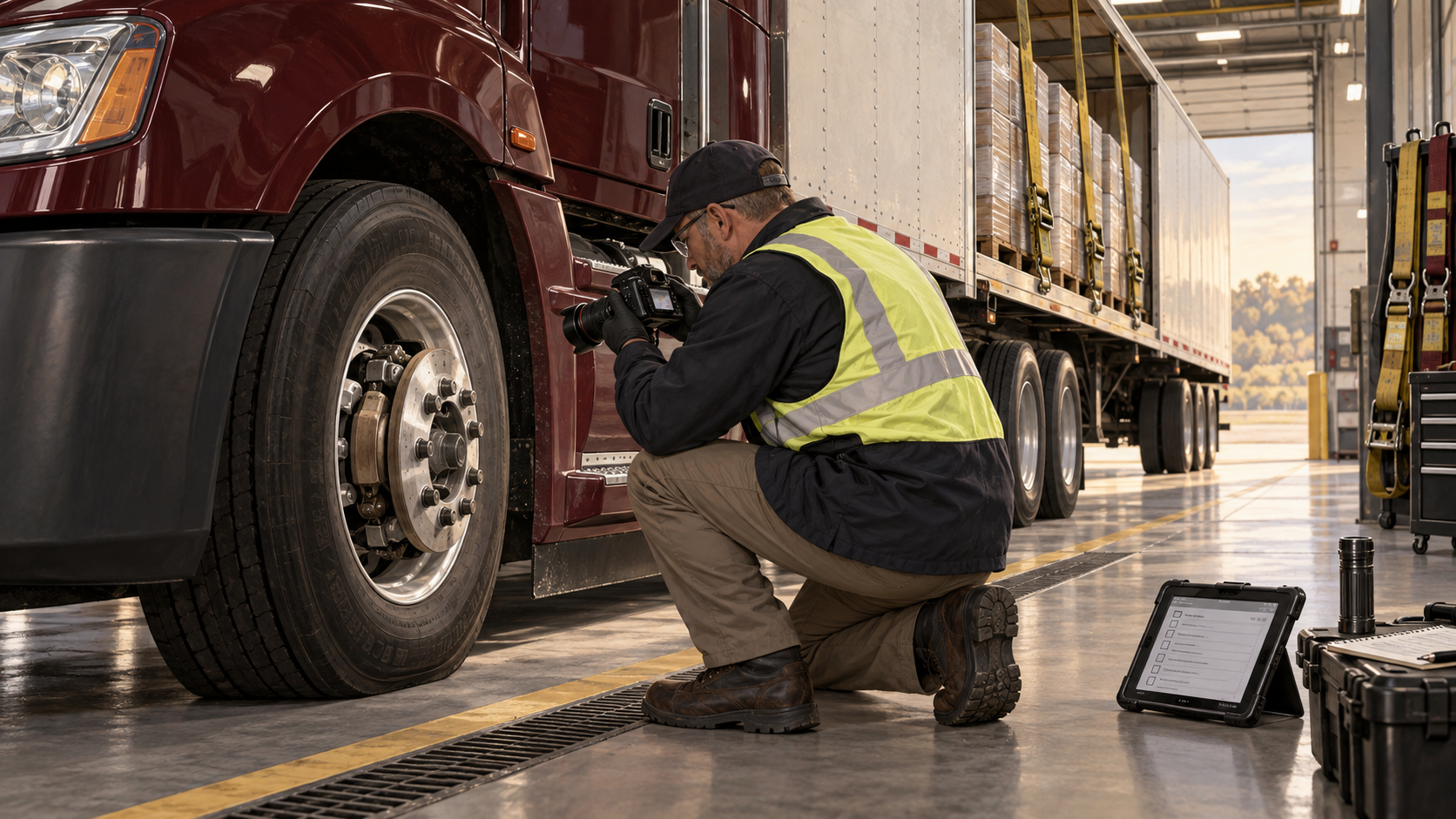
It should be noted what condition the equipment was in before testing was carried out; photographs, the identification details, the measurements and the records of custody all help to show exactly what the expert examined. Whether or not the brake adjustment, the tires, the steering, the lights, the warning systems and the diagnostic information are important will depend on how the collision took place.
The trailer must be considered on its own. It is not necessary for the person who owns it to be the one who looks after it. In the case of a rollover accident or a disagreement about stopping distance, various factors such as the way the cargo is arranged, the use of straps, the anchor points, the axle layout and the trailer's braking system can take on great importance. The fact that the load shifted after the collision does not prove that it had not been properly secured prior to the impact; it is necessary to consider the recovery operations and the forces involved in the accident.
Destructive testing requires special care because cutting a tire or disassembling a component might prevent another expert from being able to see its original condition. The written procedure should include the steps for giving notice, for recording the details, for carrying out the sequence of the testing and for keeping the leftover material; the full guide gives these steps together with the methods for conducting scene surveys and reconstructions.
Electronic Evidence ELD ECM Telematics and Cameras
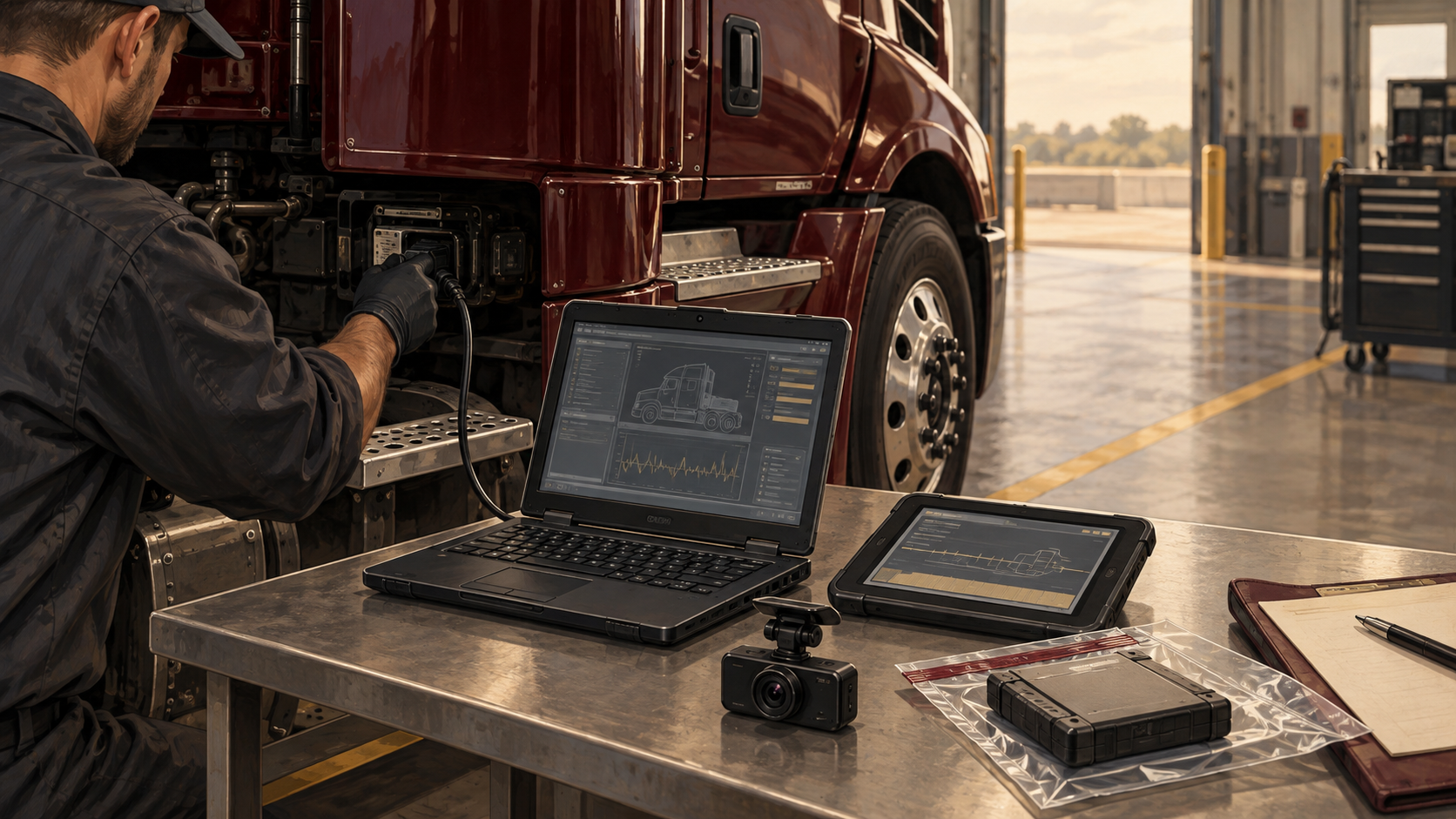
An electronic logging device maintains records about driving and duty status; meanwhile, the engine or some other part of the vehicle may have different information relating to the operation or a particular event. Telematics, cameras and dispatch platforms may provide location information, communications or video. The information obtained from these different sources cannot be treated as interchangeable and no single download should be seen as a complete account of the crash.
Time is often the cause of mistakes. For example, a camera, a mobile phone, an engine module and the dispatch system might be using different clocks or time zones. Before a message can be compared with a braking event, an investigator must know how each timestamp was obtained. The sequence could still be incorrect even if the spreadsheet appears to be very accurate.
Just as much attention should be paid to the native files, the edit history, the audit trails and the details about the export process as to the printed report. The case also needs a person who can explain the system and who can authenticate the record. The electronic results have to be checked against the vehicle damage, the scene measurements and the statements of independent witnesses. When the sources give conflicting accounts, that discrepancy should be investigated rather than making a convenient choice between them.
Resource
What Electronic Evidence Must Be Preserved After a Texas Truck Accident
Electronic logs, engine data, telematics, GPS records and camera footage may tell different parts of a collision’s story. This guide explains which sources to identify, why native data and surrounding records matter, and how counsel can plan preservation before information changes or becomes unavailable.
Read the truck electronic-evidence preservation guide →Identifying Potentially Responsible Parties
The person who is the driver, the operator of the carrier, the owner of the tractor, the owner of the trailer, the maintenance contractor and the cargo loader might all be different. Start by looking at the USDOT number, the registration, the lease agreements, the bills of lading and the dispatch records, and compare the names and dates. A logo on a door could indicate a trade name rather than the name of the legal entity which was in control of the trip.
When looking at the contracts together with the trip records, it should be noted that a contract can assign maintenance to one business whereas a repair order may identify the individual who actually received the defect report. The dispatch records might indicate who authorized the departure. In the case of questions regarding loading, you should find out who loaded the cargo and who checked the restraints. For each conclusion reached about who had control, record the document or witness that supports it.
The broker's role must be looked at on its own separate from that of the carrier. The fact that the shipment was arranged does not mean that the broker had control over the way the driver operated the truck. Lawyers should look into any safety undertaking or specific operational decision claimed and then consider the relevant law and the available defenses, such as preemption. In order to make out a claim against any one party, there must be evidence linking that party's actions to the incident.
Federal Safety Rules and Compliance Evidence
Federal motor carrier records may be used to determine the rules that applied to a driver, a vehicle or the way in which the operation was carried out. They can also show which records it is worth asking for. First, however, applicability must be verified since both the type of transportation and the specific regulatory provision are important. The present Federal Motor Carrier Safety Regulations should be the main point of reference.
The files which are used to assess a driver's qualification can record the hiring inquiries, the driver's record, and the decisions reached regarding qualification. The evidence relating to hours of service may consist of the log, the edits and the supporting trip records. Evidence concerning maintenance can indicate a reported fault, a repair order and the choice to release the equipment. However, a problem discovered in one of these files does not on its own establish all the elements of negligence.
With regard to an allegation of fatigue, the log should be compared to the records of fuel purchases, the dispatch messages, the location data and all other pertinent evidence. Although a scheduling message may help to explain the pressure experienced by the driver, evidence is still required both concerning the fatigue and the connection between the fatigue and the collision. Just as in the case of an earlier complaint about the brakes, the complaint only becomes relevant after the specific component has been examined, the actions taken and the alleged crash mechanism have been taken into account.
Resource
How FMCSA and 49 CFR Safety Regulations Prove Negligence in a Texas Truck Accident Case
Learn how to identify a carrier through federal records, determine which safety rules apply and connect an alleged violation to the collision evidence. The article distinguishes SAFER and SMS information from proof of fault and explains why a regulatory record alone does not establish negligence in a particular crash.
Read how federal safety records support a truck investigation →HB 19 and Chapter 72
With regard to legal cases involving commercial vehicles in Texas, care should be taken to consider Civil Practice and Remedies Code Chapter 72, the chapter generally associated with HB 19. The rules concerning trial and evidence may affect the manner in which a proper case is presented. Instead of assuming that all truck cases are handled in the same way, lawyers should examine the statutory requirements as well as the actual claims that have been pleaded.
The plan for presenting proof should be developed before discovery is complete. Evidence which is meant to explain the driver's conduct, to establish the employer's responsibility, to support a direct claim or to deal with exemplary damages may have different functions. A document can be of use in the course of an investigation without being admissible for all purposes or at all stages of the trial.
When dealing with an important company record, you should set out the point that it proves and the reason why it would be provided. This note can be used to guide a request for a document or when asking a question during a deposition. It also provides counsel with a basis on which to respond to an objection since the record is being asked for in relation to a specific issue, together with an explanation of its relevance.
Resource
How Texas HB 19 Changes Commercial Truck Accident Lawsuits
Chapter 72 can affect trial structure and the purposes for which commercial-vehicle evidence is offered. This article examines the statutory framework and explains why counsel should plan discovery and proof around the claims, parties and trial issues rather than assume every truck case follows the same procedure.
Read about HB 19 and commercial truck litigation →Corporate Discovery and Depositions
Let us imagine that a manual instructs drivers to report any defects before they leave the yard. It will not say whether a report was made on this particular trip, who received it or what took place afterwards. Instead, those details might be found in dispatch messages, the repair records and in testimony. When making discovery requests, one should investigate the link between the rule and the event, within reasonable limits as to subject and time.
Before questioning a corporate representative, decide what records the witness will need in order to explain the matter. In some cases, preparation may have to be carried out involving dispatch, maintenance, or an outside vendor. If the witness is unable to answer a question within the topic that has been noticed, then ask about that preparation—specifically, who was contacted, which records were looked into, and where else the information might be located. The mere production of a large file does not mean that the question has been answered.
If a recording is missing, the lawyer's first step should be to find out whether it actually existed and who possessed it. It is important to take into account the date on which it was lost together with the circumstances surrounding the loss, as well as the duty to keep it. Once this has been done, the lawyer can then consider the relevant law and the effects it will have on the case. However, the fact that a file is missing by itself does not mean that there is liability or that a favorable jury instruction will result.
Causation Damages and Trial Proof
The areas that reconstruction and medical evidence address are different; thus, the expert in reconstruction is able to deal with issues concerning movement, visibility, or avoidability, whereas medical evidence concentrates on the injuries and on the link between those injuries and the incident. Neither of the two fields should be asked to handle matters which are outside its area of expertise.
The account of the damages ought to include details of the previous treatment, supported future care, the lost income and the effect on daily life; previous conditions and later developments must be examined honestly. A prognosis should not be given as a guarantee of permanent disability and a possible procedure should not be assigned a price as though it were certain without the relevant supporting evidence.
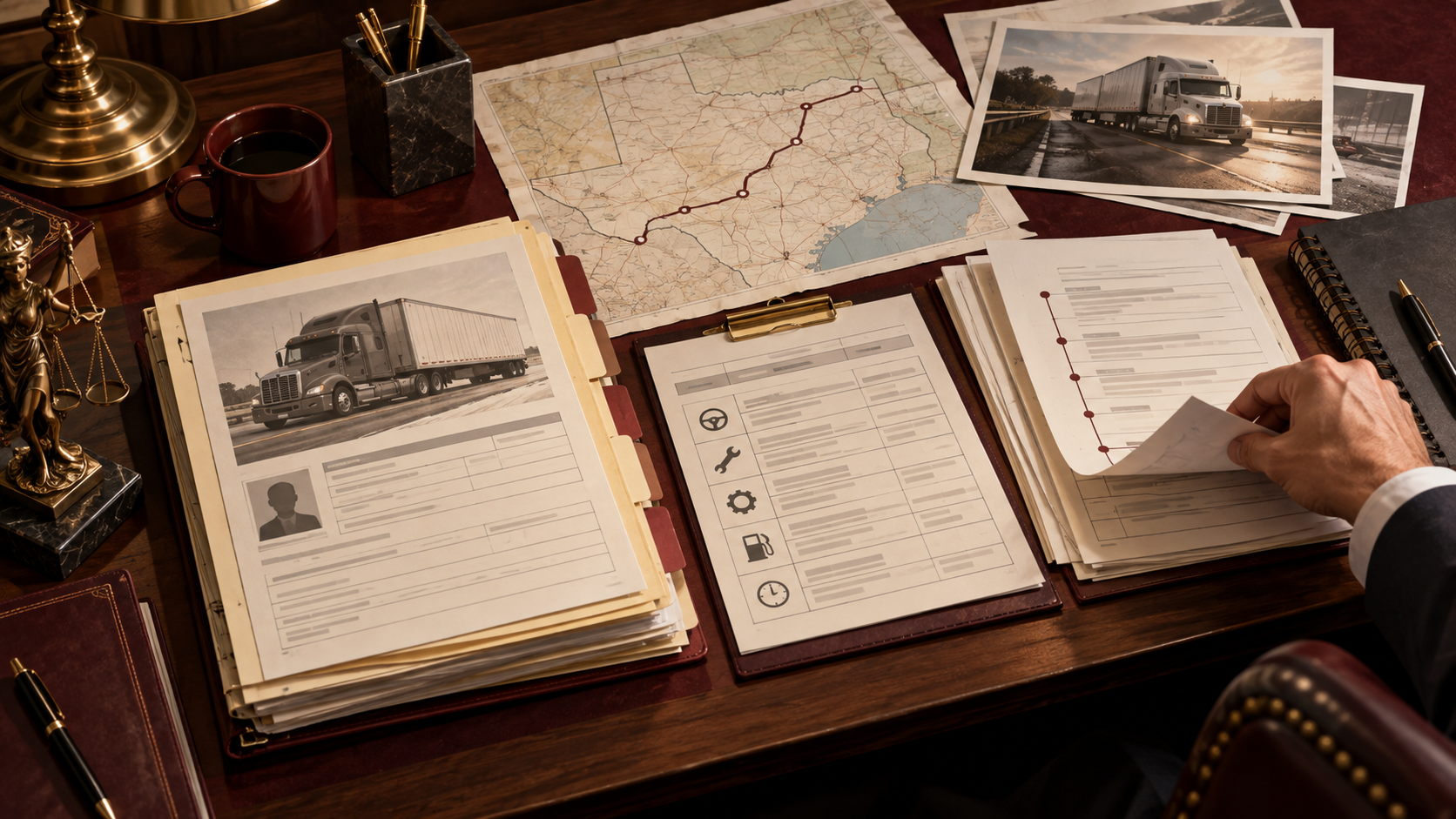
When preparing for trial, each significant assertion should be supported by an exhibit, a witness, and a basis for admitting it. An animation can be used to explain the supported measurements, but it cannot supply any that are missing. A damages table can organize the supported costs without making a speculative treatment plan any more reliable. These differences also enable a family to understand the suggestion for settlement before deciding whether to accept it.
If you would like to look at the medical evidence, the responsibility percentages and the difference between a gross offer and the expected net proceeds, then you should read the Texas Injury Claim Value and Litigation hub.
Explore focused guides
For injured people and families
- What to do after a Dallas–Fort Worth truck collision — care, scene records and questions about preservation.
- Who Can Be Held Liable for a Commercial Truck Accident in Texas? — the existing published liability guide.
- The first 72 hours: read this section in the advanced guide — vehicle custody and preservation requests.
- The First 72 Hours After a Texas Truck Accident
- Electronic evidence: read this section in the advanced guide — ELD, cameras, vehicle data, dispatch and native records.
- Vehicle repair and inspection: read this section in the advanced guide — preservation and lawful access.
- Future care and lost earnings: read this section in the advanced guide — treatment, work and supported projections.
Advanced litigation references
The references below lead to sections of the published advanced guide. They are not separate published articles.
Maintenance, brakes, tires and inspection evidence
Cargo loading, securement and shifting loads
Spoliation and missing electronic evidence
FMCSA, USDOT and motor carrier safety records
Driver qualification and hiring
Hours of service, fatigue and scheduling
Broker and shipper conduct
HB 19 and Chapter 72
Corporate discovery
Company safety decisions and corporate knowledge
Corporate representative depositions
Causation, damages and trial proof
Common questions
Can I take possession of the truck after a crash?
No general right to seize another party's vehicle arises from being injured. Counsel may arrange agreed preservation and inspection or seek appropriate court relief.
Are ELD records the truck's black box?
No. An ELD chiefly records duty-status information; vehicle event data, engine records, cameras and telematics are different sources, depending on installed systems.
Does a federal safety violation prove my case?
Applicability, breach, causation, admissibility and damages require separate analysis. The applicable rule and crash mechanism matter.
Is the name painted on the truck enough to identify every defendant?
No. Compare the displayed name and USDOT number with trip-specific leases, employment, ownership and control records.
How long do I have to bring a claim?
Texas's general personal injury limitations period is two years under Civil Practice and Remedies Code § 16.003, but exceptions, notice requirements and different claims can change the analysis. Get individualized advice promptly; evidence can be lost much sooner than a filing deadline.
Primary sources: Texas Civil Practice and Remedies Code Chapter 72 · Federal Motor Carrier Safety Regulations.
About the author: Aaron A. Herbert
Founding Attorney
Aaron A. Herbert is a Texas attorney, Board Certified in Personal Injury Trial Law by the Texas Board of Legal Specialization.
For over a decade he has shown an unwavering commitment to clients who were seriously injured by major accidents and industrial catastrophes. During that time he has earned the reputation as one of America’s most aggressive trial lawyers by achieving noteworthy recoveries from judges and juries, as well as substantial settlements prior to trial, the majority of which contained negotiated confidentiality agreements at the request of the defense. When asked about these cases, Mr. Herbert has said that each case not only justified the recovery level, but that no one would trade places with any one of these victims in return for any amount of money, once they know the facts and severity of the injuries and tragedy involved. According to Mr. Herbert, “there can be no substitute for passion, preparation and persistence in the practice of law.” He is known not only for this tenacious preparation, but also for his imagination in the courtroom. He is passionate and persistent in seeking to obtain the maximum case value for each individual client at trial or through settlement, while reducing the stress of litigation on his clients.
Born and raised in Dallas, Texas, Mr. Herbert enlisted in the United States Marine Corps after high school and later received an Honorable Discharge. After the Marines, he obtained a Bachelor of Science in Criminal Justice from Texas A&M University, then a Juris Doctorate from the University of Oklahoma College of Law. There he graduated in the top of his class and became an eternal Sooners Football fan. Aaron has worked as a zealous advocate for injured clients at several boutique personal injury litigation firms where he amassed numerous jury verdicts. After spending a year as the top earning litigation attorney at a firm that frequently tops verdict search as one with the highest number of trial wins in Texas, Aaron accepted a position as the managing pre-litigation attorney at another Dallas personal injury firm. Over the next seven years he transitioned to the managing litigation attorney, and that firm grew to one of the largest personal injury firms in Dallas. In 2010 he formed the Law Firm of Aaron A. Herbert, to get back to a focus on developing each individual case and maximizing case value for each client.
Mr. Herbert practices law with the belief that a well taken care of, highly engaged and motivated team of employees working in a cooperative team environment will result in superior representation and great results for the firm clients. He believes in always setting a goal of achieving the best possible results for each and every client.
Education
- Texas A&M University (B.S. Criminal Justice, 1999)
- University of Oklahoma College of Law (J.D., 2002)
Professional Associations
- Licensed to practice in Texas (2002)
- Board Certified in Personal Injury Trial Law, Texas Board of Legal Specialization (2008)
Publications
- Litigating Dog Bite Cases, Texas Dog Law Seminar, Dallas 2009
Member
- State Bar of Texas
- American Bar Association
- American Trial Lawyer Association
- Texas Trial Lawyers Association
- Dallas Trial Lawyers Association
- Dallas County Bar Association
- Tarrant County Bar Association
- Million Dollar Advocates Forum
- National Trial Lawyers – Top 100 Trial Lawyers
Texas Bar #24036761 · The Law Firm of Aaron A. Herbert, P.C. · Dallas, Texas
Need help with a Dallas truck accident?
If your family is dealing with a serious Dallas–Fort Worth truck collision, request a case evaluation through the Dallas Truck Accident Lawyer page or call (214) 200-4878. An attorney can identify which records matter in your specific case.
These guides provide general information about Texas law. They do not provide legal advice, create an attorney-client relationship or promise a result.