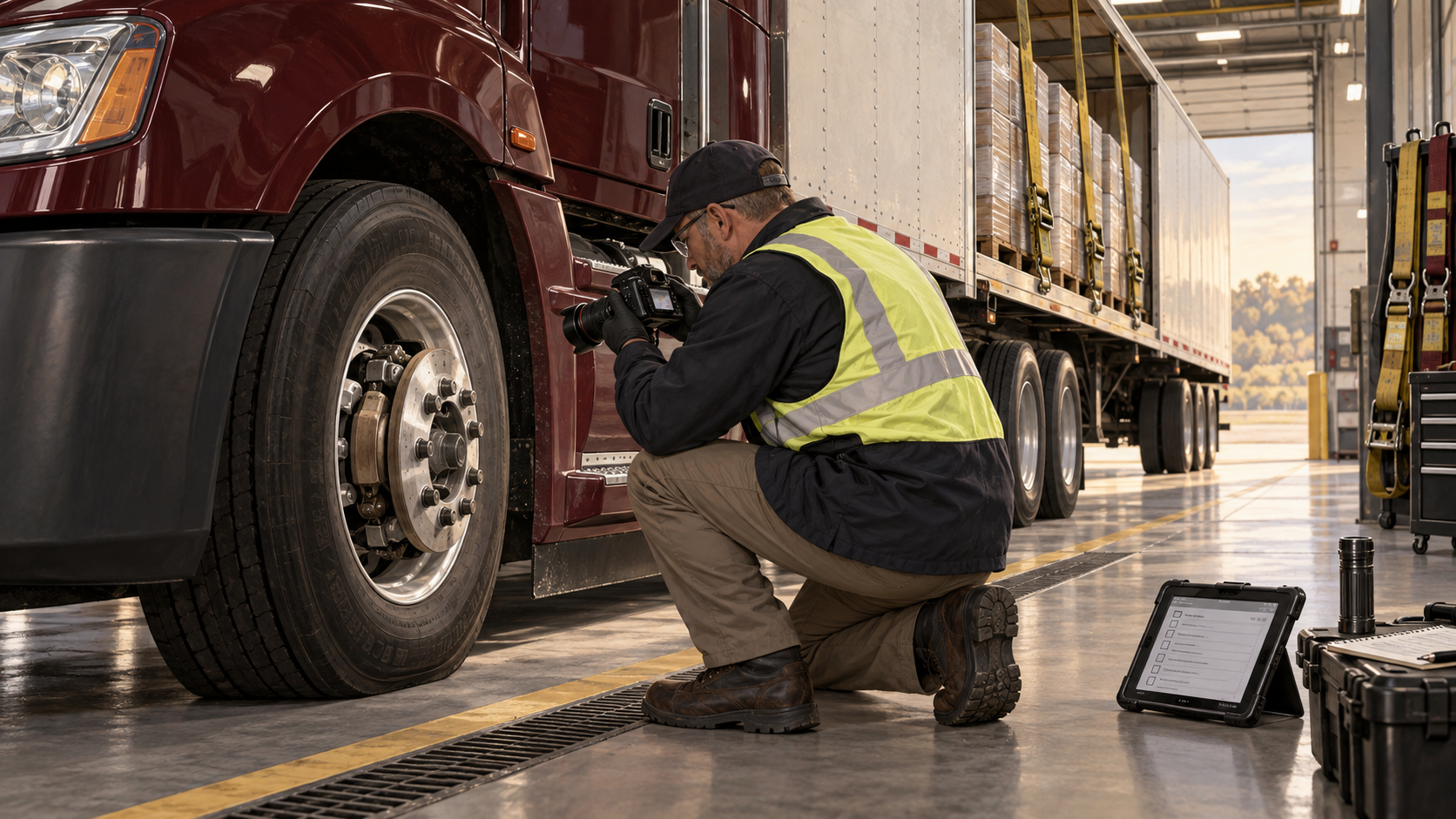
“Safety culture” is not a separate element of a truck-accident claim. Useful evidence concerns a particular decision, a known risk, the response and the causal connection. A broad argument that a company puts profit ahead of safety cannot replace proof of what happened on the trip being litigated.
How do you turn a general concern into a specific question?
Start with the event being questioned. A fatigue allegation might lead to a dispatch message sent near the end of a shift. A maintenance allegation might lead to a brake complaint followed by a return-to-service entry. Find out who saw the warning, what it meant and what response was expected. Those details give counsel something to compare with the records and the witnesses’ accounts.
Get the policy that applied on the date of the trip. Then look for evidence of how it was used: a supervisor’s message, an audit finding or a coaching entry, for example. The manual and the operational records answer different questions. Keep both, rather than treating the written rule as proof of what an employee did.
What is the permitted evidentiary purpose?
The Texas Rules of Evidence require attention to relevance, unfair prejudice and prohibited character reasoning. Rules 401–404 are part of that analysis. Explain the consequential fact the item helps prove rather than offering it only to portray a company as generally bad.
For an earlier incident, identify the relevant similarity, timing and person who received notice. Differences may materially weaken its usefulness. Do not combine unrelated events into a pattern without explaining their connection to the issue before the court.
How does HB 19 apply to the actual claim and phase?
Civil Practice and Remedies Code Chapter 72 applies to covered commercial-vehicle cases. It provides for bifurcation and limits how employer-related and regulatory evidence is used. Review the claims, any employer stipulation, statutory exceptions and the phase in which the item is offered. Neither “all company evidence is barred” nor “all safety evidence is admissible” is an adequate analysis.
Prepare a short evidence chart showing the item, proposed purpose, witness, relevant phase and anticipated objection. That chart helps identify an admissibility problem before the exhibit appears in an opening statement or witness outline.

Why use concrete questions instead of slogans?
Some lawyers call advocacy that focuses on danger and community safety “Reptile.” It is not a rule of evidence. A witness who agrees that safety matters has not established the disputed duty, breach or cause.
| Slogan topic | Concrete question to ask instead |
|---|---|
| Safety comes first | What the witness knew about the brake complaint before dispatch. |
| Never send out a dangerous truck | What choices the witness had when the complaint came in. |
| Safety is everyone’s job | What the record shows the company did next. |
Hypothetical: a driver logs a brake complaint at 6:10 a.m., and dispatch releases the truck at 7:00 a.m. Put the two entries in date order. If the dispatcher says someone else cleared the truck, ask who that was and where the clearance was recorded. Then follow up with that person or record. If the witness never saw the complaint, establish that too.
Why keep ordinary negligence and punitive issues distinct?
Before putting an exhibit in the outline, write down what it is supposed to prove. Evidence of a missed repair may be offered on negligent maintenance. An argument for exemplary damages asks a different question and must meet a separate legal standard.
Read the motion and stipulation themselves, not just a checklist entry.
| Provision or issue | What to check |
|---|---|
| §72.052 motion | A timely motion in a covered case puts compensatory liability and damages in the first phase and exemplary liability and damages in the second. |
| §§72.053–.054 | How the statute treats each exhibit. |
| Employment-and-scope stipulation | Whether it restricts first-phase proof, subject to the statute’s specified negligent-entrustment exceptions. |
| Maintenance claim | Whether it requires proof that the employee was negligent before the employer can be found negligent. If it does not, it may remain in the first phase. |
| Court rulings | What the court has allowed before counsel uses the record with a witness. |
Which records show how a safety rule was used?
Preserve the operational record around the hazard alleged in this crash. For fatigue, that may include dispatch deadlines, electronic logs, alerts and the response. A maintenance dispute may call for defect reports, repair decisions and return-to-service records. A written rule is only one part of that sequence.
- Obtain the version of the policy in effect on the trip, along with the training or coaching record relevant to the disputed duty.
- Request the audit findings, telematics alerts and escalation messages that reached the responsible people before the crash.
- If a deadline or incentive is part of the allegation, obtain the records showing how it affected this trip. The existence of a target alone does not show that anyone made an unsafe choice.
- Find out who keeps the records and which platform holds them. Ask about the vendor, retention settings and relevant dates. Where screenshots leave questions unanswered, seek usable underlying data and the edit history needed to understand it.
A preservation request should identify the occurrence, vehicles, people and systems and ask that relevant routine deletion stop. Follow up on what was collected, when and by whom, and on gaps in the production. Where a source is unavailable, look for acknowledgments, exports and related messages that may explain what happened.
What changes when a company takes corrective action after the crash?
Keep pre-crash warnings and responses separate from later remedial measures. Under Texas Rule of Evidence 407, a subsequent measure that would have made the injury less likely is not admissible to prove negligence or culpable conduct. A proposed alternative use, such as disputed control or feasibility, still requires a proper basis and the court’s ruling. Do not call a later repair or policy change an admission of earlier fault.
How should the deposition be organized?
| Witness or tool | Use it to |
|---|---|
| Interrogatories and targeted production requests | Identify the people and systems behind the decision. |
| Fact witness | Learn what happened. |
| Properly prepared corporate designee | Cover information known or reasonably available to the organization. |
| Vendor or technical witness | Explain an alert’s meaning, timestamp, or audit history. |
Build the exhibit sequence around the warning, the person receiving it, the required response and the recorded action. Ask who created each entry, whether it could be changed, how changes appear and whether the record is complete. Check which documents and employees the corporate witness consulted in preparation. These questions give a specific operational concern a testable foundation.
Texas Rules of Civil Procedure 192.3, 192.4, 196.4 and 199.2 govern the scope and limits of this work. Electronic requests should identify the information and desired format; reasonable availability, proper objections and retrieval burdens matter. Corporate-deposition topics should describe the subjects with reasonable particularity.
How can the evidence withstand common objections?
| Defense position | Focused response |
|---|---|
| The request is overbroad | Limit it to the hazard, relevant operation, custodians, and reasonable period; consider staged discovery. |
| The record is unavailable | Examine retention settings, deletion history, preservation steps, and vendor-held or substitute records. |
| The safety rule does not apply | Establish its vehicle-, driver-, operation- and date-specific application, including any exemption. |
| The decision did not cause the crash | Connect the warning and response to the collision mechanism through chronology and qualified testimony. |
| The corporate evidence is inadmissible | Specify the non-character purpose, foundation, and trial phase. Address unfair prejudice and any Chapter 72 restriction rather than relying on a general safety theme. |
Frequently asked questions
Can the written safety manual prove how dispatch operated?
It shows the rule on paper. Messages, coaching, audits and trip records show whether and how the rule was applied to the disputed decision.
Why preserve native alert data instead of only a PDF?
A PDF may omit the recipient, the acknowledgment, later edits or the setting that triggered the alert. Request the usable underlying data when those details matter to notice or response.
Does an earlier safety incident establish negligence in this crash?
An earlier incident proves that earlier incident. To use it here, counsel must show what connects it to a disputed fact, including timing and meaningful similarities. The cause of this collision still needs its own proof.
Can the carrier and a technology vendor both hold needed records?
The carrier may see only a dashboard while the vendor keeps the system-level data. Ask who controls each source and what each production includes.
Does HB 19 prevent corporate discovery?
HB 19 does not close corporate discovery. Relevance and proportionality still govern requests for company records. Whether the jury may see a record depends on the trial phase, Chapter 72, the evidence rules and the judge’s ruling.
This article provides general information about Texas law, not advice about a particular case.

ABOUT THE ATTORNEY
Aaron A. Herbert
Founding Attorney
Board Certified in Personal Injury Trial Law
Aaron founded The Law Firm of Aaron A. Herbert in 2010 to focus on developing each client's case and seeking its maximum value. For over a decade, he has represented people seriously injured in major accidents and industrial catastrophes, pursuing trial verdicts and settlements while working to reduce the stress of litigation.
Education
- Texas A&M University · B.S., Criminal Justice, 1999
- University of Oklahoma College of Law · J.D., 2002; graduated in the top of his class
Trial experience & approach
Aaron earned numerous jury verdicts at boutique personal injury litigation firms. According to his biography, he spent a year as the top-earning litigation attorney at a firm that frequently appeared in verdict searches as having one of the highest numbers of trial wins in Texas. At another Dallas personal injury firm, he moved from managing pre-litigation attorney to managing litigation attorney over seven years as the firm grew into one of Dallas's largest personal injury firms.
His biography describes a reputation as one of America's most aggressive trial lawyers, with noteworthy recoveries from judges and juries and substantial pretrial settlements. Most of those settlements included confidentiality agreements requested by the defense. Aaron has said the recoveries were justified by the injuries and losses involved, which no amount of money could make someone choose to experience.
His approach combines passion, preparation, persistence and courtroom imagination. He believes a well-supported, engaged and motivated team working cooperatively helps deliver strong representation, with the goal of achieving the best possible result for every client.
Dallas roots, military service & publication
Born and raised in Dallas, Aaron enlisted in the United States Marine Corps after high school and later received an Honorable Discharge. He completed his university and law degrees after his military service and became a lifelong Sooners football fan in law school.
Publication: “Litigating Dog Bite Cases,” Texas Dog Law Seminar, Dallas, 2009.
Professional affiliations & recognition
Professional affiliations and recognition listed in Aaron’s biography:
- State Bar of Texas
- American Bar Association
- Association of Trial Lawyers of America (now American Association for Justice)
- Texas Trial Lawyers Association
- Dallas Trial Lawyers Association
- Dallas Bar Association
- Tarrant County Bar Association
- Million Dollar Advocates Forum
- The National Trial Lawyers – Top 100 Trial Lawyers