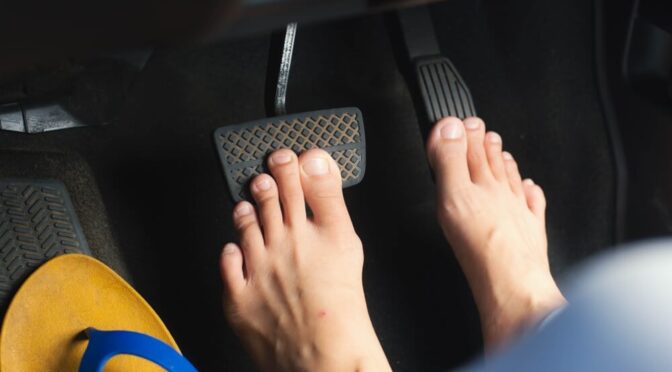
Many Dallas drivers wonder how to stay safe behind the wheel, especially when temperatures rise and sandals come off. Asking if it is illegal to drive without shoes in Texas helps motorists make smarter choices that prevent distractions and reduce the risk of losing control. While no law forbids barefoot driving, practicing a few safety habits can greatly improve comfort, responsiveness, and overall confidence on the road. The Law Firm of Aaron A. Herbert, P.C. often helps drivers navigate these challenging cases, protecting their rights when seemingly minor details, like footwear, become major factors in determining liability and compensation.
Can You Drive Barefoot in Texas?
Yes, you can legally drive barefoot in the state. This frequently misunderstood question has led to widespread myths about traffic laws. Nonetheless, the Texas Transportation Code does not require drivers to wear shoes while operating a motor vehicle. The same is true across the United States—no state has laws explicitly prohibiting barefoot driving.
According to a report by DriveSafe Online, a well-respected provider of traffic education programs, there are no regulations that mandate footwear while driving. While law enforcement officers cannot issue a citation for barefoot driving, there are circumstances in which it might be viewed as unsafe.
For instance, if an accident occurs and it’s determined that driving without shoes contributed to the incident—such as your foot slipping off the brake or accelerator—you could still face a citation for reckless or negligent driving. In such cases, the legality of driving barefoot may not shield you from liability.
With traffic conditions in Dallas changing at a moment's notice, it's important to make sure you're able to maintain full control over your vehicle. Although the law allows you to drive barefoot, one should always be prepared and cautious.
How Can Insurers Blame Me for Driving Without Shoes?
Insurance companies often search for ways to reduce or deny claims, and driving without shoes can provide an easy excuse to shift blame. Although Texas does not specifically prohibit barefoot driving, insurers may treat the behavior as evidence of unsafe operation or poor vehicle control. During the claims process, an adjuster might argue that a driver’s bare feet played a role in causing the collision for reasons such as:
- Slipped off the brake or gas pedal, causing a loss of control.
- Reacted more slowly during an emergency stop.
- Maintained poor control due to reduced pedal traction.
In the case a jury questions if is it illegal to drive without shoes in Texas, insurers often focus instead on whether a driver’s shoeless condition contributed more than 50 percent to the collision, showing carelessness or negligence. Then, recovery for damages may disappear completely under Texas’ proportionate responsibility rules. That makes early representation by a Dallas car accident lawyer essential.
Is Driving Barefoot Dangerous?
Although in no way, is it considered perilous. Shoes increase friction and stability for one's feet on the pedal while driving. In conditions with no emergencies, then a person may drive in shoesless. The feet have been noted to slip easily on wet or smooth pedals, thereby reducing one's time for quick reaction for such conditions which may be serious, to prevent an accident.
As good as this may feel, driving without shoes also presents some drawbacks. Barefoot Is Legal, a nonprofit group dedicated to people who prefer going shoeless, points out that the practice is technically legal but not necessarily good for drivers, who can have pedal discomfort or even loss of control.
For instance, during the hot months in Dallas, heat at the vehicle floorboard might even burn or at least unsettle you enough to not drive safely. Your unwillingness to protect your feet will therefore make you hesitate during aggressive braking or acceleration.
While driving barefoot does not have a dangerous default position, this is the fact to be weighed. Poor wearing could contribute to an emergent situation where every second counts. It is upon drivers not to drive barefoot without weighing the probable implications of such acts before hitting the road, more especially in long drives or during traffic-high stress conditions.
[second-free-consultation id="1"]
Dangers of Driving Shoeless
Even though no Texas statute forbids barefoot driving, the practice still creates safety concerns. Drivers rely on consistent friction and pedal sensitivity, which diminish without shoes. Driving without shoes may make it more difficult to control the vehicle, especially when braking.
Several hazards accompany shoeless driving, particularly during sudden stops or emergency maneuvers:
- Reduced grip: Bare feet can slide on smooth pedal surfaces, delaying braking.
- Discomfort and distraction: Heat, vibration, or pedal texture may divert focus from the road.
- Injury risk: Bare feet have no protection against glass, metal, or debris entering the footwell after impact.
- Foot fatigue: Long trips without support can cause cramping and slow reaction times.
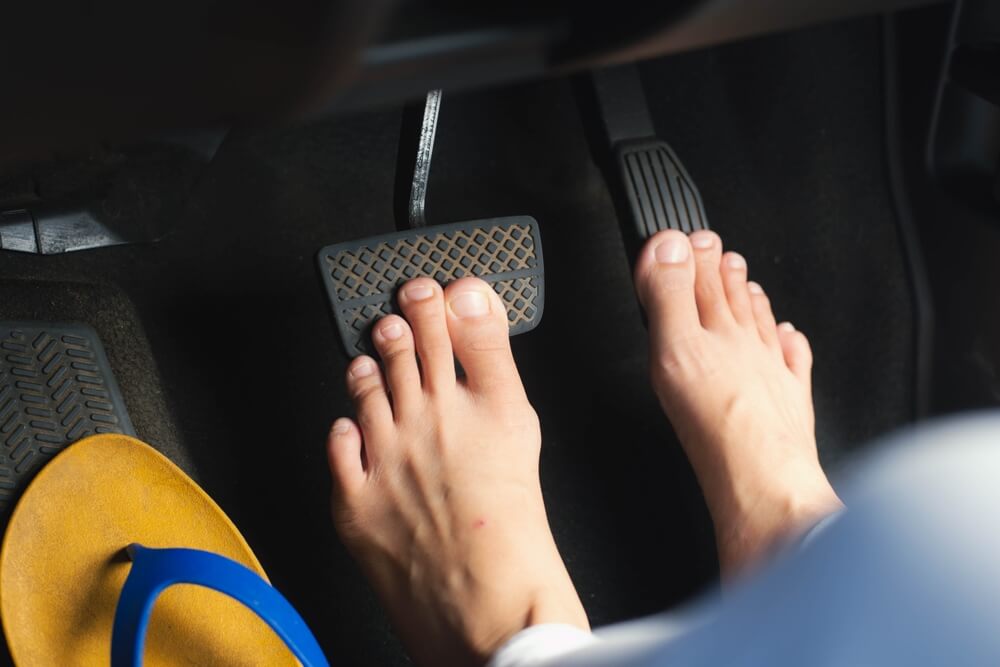
Footwear such as flip-flops can get stuck under the pedals, causing a dangerous situation and potentially triggering a serious crash. In these circumstances, law enforcement officers may still issue citations under Texas Transportation Code §545.401 for reckless driving if a motorist’s lack of footwear leads to unsafe control or endangers others or their property.
This distinction matters in car accident cases. While operating a vehicle without shoes does not violate a specific law, it can still influence how insurers or courts assign fault after a collision. Following an accident, the other driver’s insurer might argue that improper footwear contributed to negligence. Consulting a Dallas attorney immediately after a crash helps ensure the investigation documents every factor accurately, not just assumptions about footwear.
What Types of Shoes Are Dangerous for Driving?
While there is some risk associated with driving barefoot, there are shoes that can be more dangerous to drive in. Any shoe that can cause interference with your control over the pedals will greatly increase your accident risks. The following are the most hazardous kinds of shoes to avoid while driving:
- Flip-Flops and Sandals: Open-toe wear can slide off your feet and wedge underneath the pedals, preventing them from moving.
- High Heels: High heels are higher, so only a small portion of your foot can remain in contact with the pedal, which reduces your stability and control.
- Thick-Soled Shoes: Thick-soled shoes, such as platform shoes, reduce the sensation in your foot on the pedals and may delay reaction times when trying to accelerate or stop.
- Loose Shoes: oversized sneakers or clogs. Shoes that are too loose may slip or slide while operating the vehicle. It may cause the foot to slip completely off the pedal.
- Heavy Boots: large rigid sole boots can restrict movement of the ankle and reduce your ability to precisely control the pedals.
For optimal safety, wear snug, thin-soled shoes with good traction. Keeping a pair of driving-appropriate footwear in your vehicle is a simple way to avoid these hazards and guarantee safer travels.
Safety Tips for Driving Barefoot
Although no rule bans barefoot driving, motorists can follow certain precautions to reduce risk and prevent potential liability. The Texas Department of Transportation (TxDOT) encourages all drivers to maintain safe habits every time they drive:
- Be courteous toward other drivers.
- Ensure all passengers are buckled up, regardless of time of day.
- Focus entirely on driving; silence or store mobile devices.
- Adjust speed for traffic, weather, or road conditions.
- Obey all stop signs and red lights.
- Pass only when it can be completed safely and legally.
- Never operate a vehicle after consuming alcohol or drugs that cause drowsiness.
- Slow down or change lanes for roadside vehicles with flashing lights (law enforcement, emergency, tow, or TxDOT).
Additional barefoot driving safety suggestions include several practical habits that promote control, comfort, and overall roadway safety:
- Keep a pair of closed-toe shoes inside the vehicle.
- Check pedals for moisture or dirt before driving barefoot.
- Avoid wearing loose footwear such as sandals or flip-flops that can slip under the pedals.
- Recognize when barefoot operation reduces sensitivity or control, especially on longer drives.
In Dallas, the answer to it is illegal to drive without shoes in Texas is no, but caution remains essential. While not illegal, authorities can still issue a ticket if a law enforcement officer determines your lack of footwear or inappropriate footwear impairs safe driving. A motorist involved in an accident might face legal scrutiny not for being barefoot, but for how that decision influenced vehicle control.
Speak to a Dallas Car Accident Attorney
If you’ve been involved in a car accident—whether you were driving barefoot, in flip-flops, or with proper shoes—it’s vital to seek legal advice right away. At The Law Firm of Aaron Herbert, P.C., we specialize in helping Dallas residents car accident cases with confidence and expertise. Call us today at 214.200.4878 for a free consultation and learn how we can assist you in protecting your rights and pursuing the compensation you deserve.