
Do insurance companies and Defense Firms keep records on plaintiffs’ attorneys achievements?
Yes — and the records are now a formal, productized part of the insurance claims industry, not just adjuster folklore. But the way it works is different from how it’s usually described in plaintiff-firm marketing, and that distinction matters strategically.
Here’s what the evidence actually supports, in descending order of documentation quality.
1. Purpose-built attorney scoring is a real product carriers buy
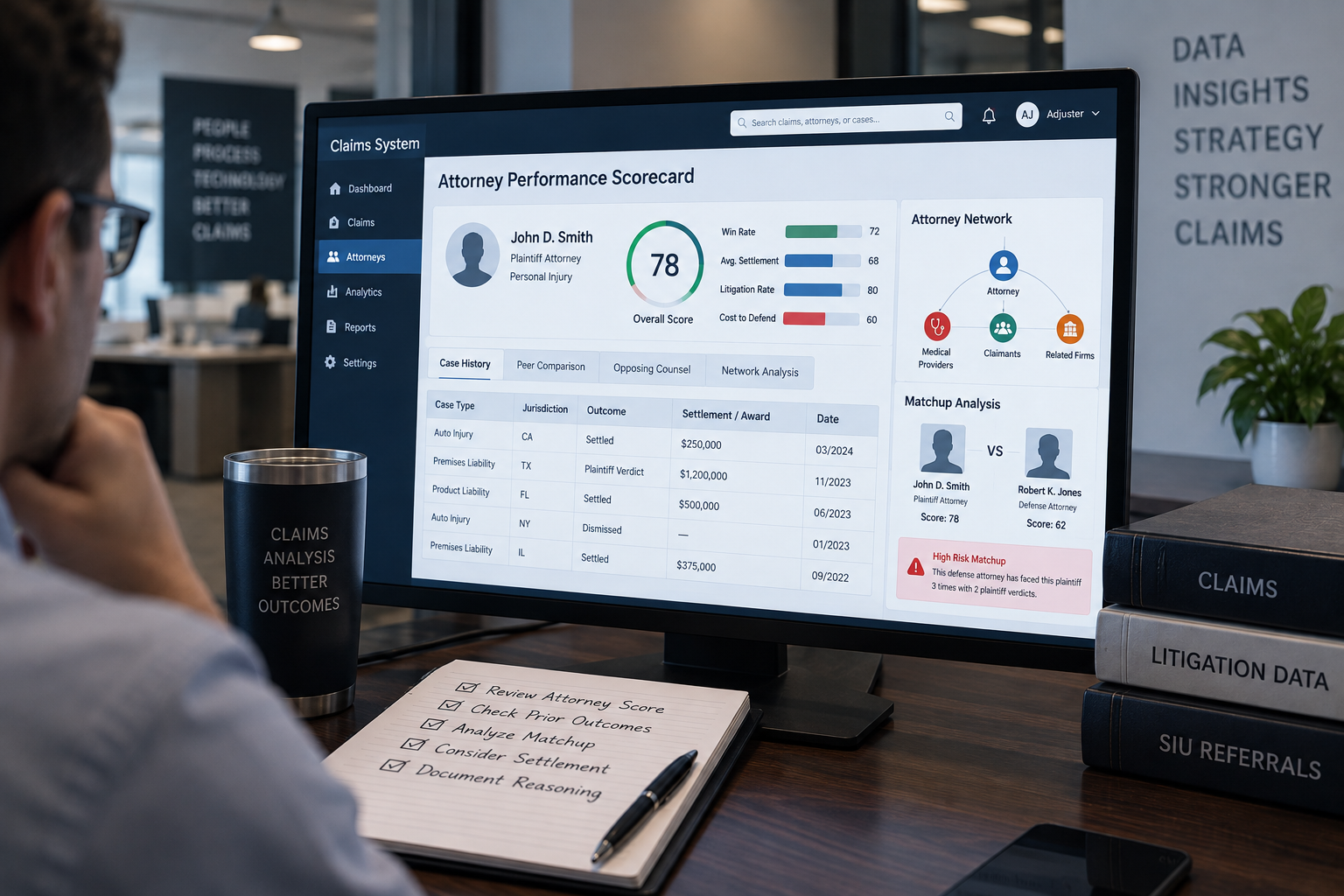
This is the strongest, least-speculative evidence. CLARA Analytics sells a litigation module that looks at attorney outcomes on prior claims and scores those attorneys on factors including performance and cost. Gen Re — a Berkshire reinsurer, writing to its carrier clients — describes it plainly: it offers detailed scorecards for both plaintiff and defense counsel using historical data, benchmarks defense counsel against peers, and includes head-to-head matchup analysis showing whether the assigned defense attorney has previously faced the opposing plaintiff’s counsel.
Adjusters are prompted to identify cases where their defense attorney is up against a high-scoring plaintiff’s attorney, raising the risk of an expensive outcome, and to use score explanations to decide whether to replace counsel or push for settlement. It ships as a pre-built Guidewire integration, meaning the score can sit inside the core claims system an adjuster works in all day.
The same vendor also maps relationships between plaintiff attorneys, medical providers, and claimants across millions of claims to flag SIU referrals — i.e., attorney-provider network analysis, not just win rates.
2. Claims valuations is subtler and arguably worse for claimants
Each carrier “tunes” the program to its own settlement history and regions, which drives the dollar range it produces. If a firm consistently settles cheaply, those settlements feed the tuning data. The attorney effect is real but largely emergent — baked into the comparables — rather than a discrete “reputation” field.
3. Public docket and verdict analytics
Lex Machina produces data on law firms and individual attorneys, showing the most active litigation firms and their track records, plus timing distributions for summary judgment, trial, and termination — drawn from PACER and state systems and updated daily. Bloomberg Law offers attorney and law firm analytics covering over 100,000 lawyers and nearly 800 firms. Trellis does the same for state trial courts, which is where nearly all PI lives.
Settlement databases matter more than verdict databases here. CaseMetrix was built on the premise that 95%+ of cases settle and no one — plaintiff bar, defense bar, or carriers — had a comprehensive guide to those values, and it explicitly treats insurance companies, adjusters, and plaintiff and defense attorneys as searchable variables alongside injury and venue. Plaintiff attorneys, defense attorneys, and insurance carriers use it.
4. Defense law firms: formalized, but qualitative
Defense firm evaluation of opposing counsel is doctrine, not gossip. A published med-mal case evaluation guide instructs defense counsel to identify plaintiff’s counsel, investigate opposing counsel’s reputation, experience, and willingness to try or settle cases, and evaluate what impact the quality of opposing counsel will have on the outcome.
CLM — the claims-and-litigation-management trade body — runs practitioner guidance on evaluating opposing counsel that tells adjusters to look up plaintiff counsel’s bar date, assess negotiation style and the artfulness of the complaint and discovery, and canvass colleagues handling claims in the same jurisdiction. Note the tell: it treats defense counsel’s prior experience with that specific plaintiff’s attorney as one of the most significant advantages defense counsel brings to a claim.

5. Industry-level surveillance of the plaintiff bar
Beyond reviewing individual files, X Ante tracks nearly all law-firm television advertising in mass tort and product liability, plus Google, Facebook, and other online legal advertising, and sells it to insurers, pharma, and defense firms. Triple-I and APCIA maintain the “legal system abuse” research program, tracking $2.5 billion in legal-services ad spend across 26.9 million ads.
The analytical caveats
- Selection bias can cut both ways. A firm with a 90% trial win rate may just be trying only its best cases. A firm that tries a lot and loses some may be more feared by defense law firms and Insurance carriers, and correctly so.
- case outcomes in the Court Docket data is thin and weak where PI results actually reside. Federal PACER coverage is excellent; county-level state court coverage is uneven. A high-volume soft-tissue practice can be nearly invisible in Lex Machina.
- Confidential negotiated settlements between litigants are the missing 95%.
- Contributory databases (CLARA’s closed-claim pool, CaseMetrix’s attorney network) exist precisely because the public record can’t answer the question.
- The case outcome scoring predicts behavior, not necessarily quality. The operative variable is “will this lawyer actually file, work up, prepare and try this case,” which is a filing-rate and cycle-time question more than a verdict question.
Regulatory and discovery angles worth knowing
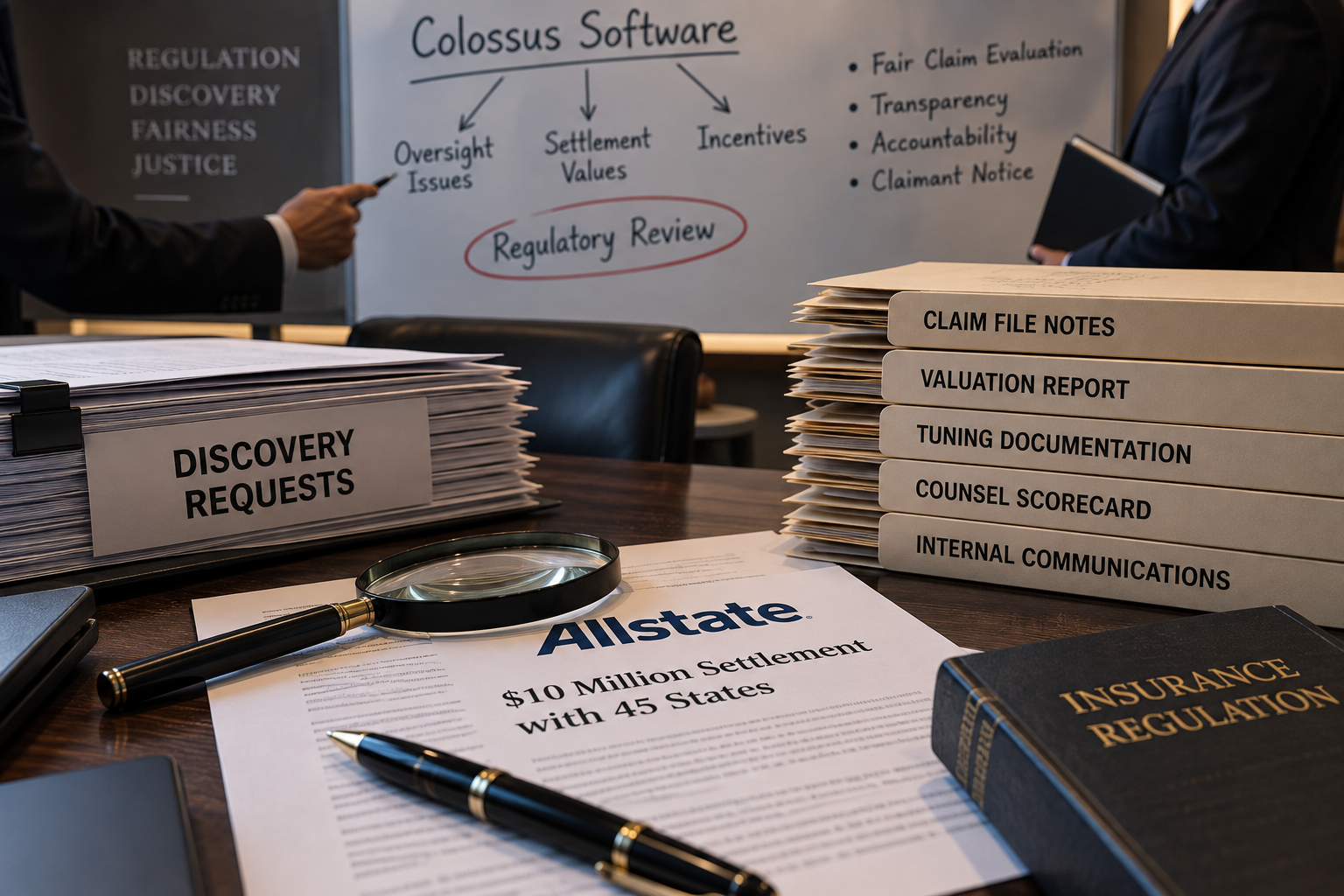
The Allstate NAIC multistate exam produced a $10 million agreement with 45 states after examiners found inconsistencies in Allstate’s oversight of Colossus software, requiring, among other things, that adjusters not be required to settle based solely on the Colossus value, that incentives tied to Colossus amounts be eliminated, and that claimants be notified when the software is used. Consumer advocates argued the exam was too narrow, covering only one company using only one system.
The practical upshot for a PI practitioner: the existence of attorney scoring is a discovery and bad-faith fact pattern, not just a marketing grievance. Claim file notes, the valuation report and range, tuning documentation, and any counsel scorecard output are all things to request — and the presence of a low offer paired with an internal “low litigation risk” attorney score is exactly the kind of evidence that supports a failure-to-evaluate theory.