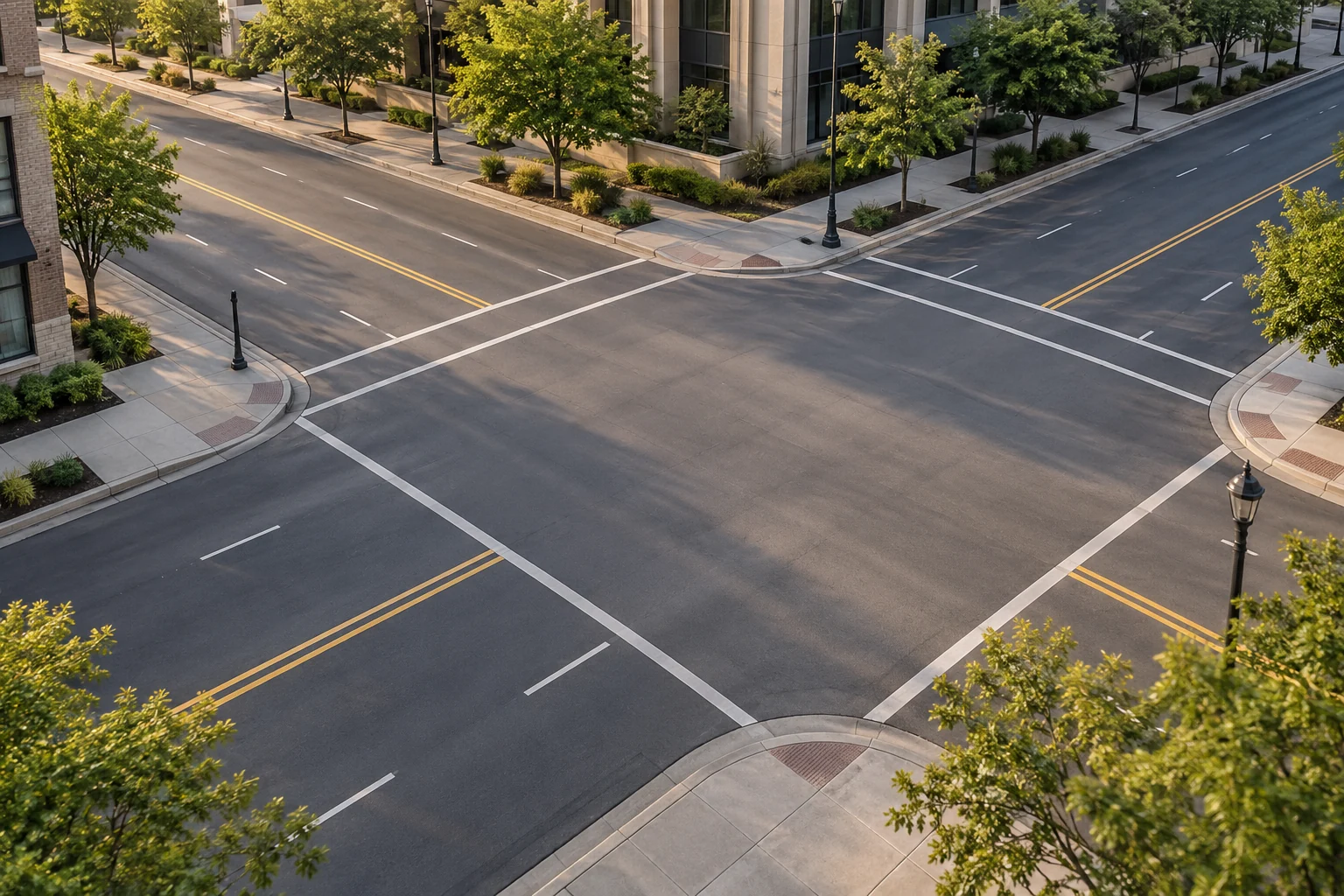
Proving the Sequence Before Assigning Responsibility
Fault in a multi-vehicle or intersection crash depends on the sequence, each driver's conduct, and the causal effect of that conduct. The vehicle with front-end damage is not necessarily the vehicle that began the chain, and the driver who had a favorable signal may still face questions about reasonable care.

Separate the event into stages
Begin with approach, perception, reaction, maneuver, first contact, later contacts, and final positions. Ask each witness which stage was actually observed. A person hearing two impacts may not know which vehicle made the first contact. A driver feeling a rear impact may not have seen an earlier collision ahead.
Physical evidence should be evaluated against competing sequences. Damage patterns, debris, roadway marks, vehicle data, and photographs may support or contradict an account. Final resting positions alone may not identify the original contact point because vehicles can rotate or be pushed after impact.
For clients, describe observations honestly and identify what you learned from others. Do not turn an inference into a memory. Counsel can investigate a plausible sequence without asking you to claim knowledge you do not have.
Investigate the intersection as it existed then
Record lanes, signs, signals, sight obstructions, lighting, weather, and construction conditions. A later visit may show a changed roadway. Date photographs and identify what has changed. Determine which signal governed each movement rather than assuming all drivers faced the same indication.
If timing is disputed, identify available signal records and recordings. Evaluate camera clock accuracy before comparing timestamps. A witness's view of one signal may not establish the signal controlling another lane. The investigation should identify the factual basis for each assertion.
A left-turn crash requires more than a label. Examine permission to turn, the approaching vehicle's speed, visibility, and opportunities for both drivers to respond. Several acts can contribute. Likewise, a rear-end collision may involve following distance, sudden movement, an earlier impact, or a vehicle pushed from behind.
Use experts for defined questions
A reconstructionist may evaluate time, distance, speed, contact sequence, and consistency with physical evidence. Give the expert complete material information, including unfavorable facts. Ask which assumptions are measured, which are estimated, and what uncertainty remains.
The expert should not be hired simply to reinforce the first account received. A useful opinion tests alternatives and explains why one is better supported. If the evidence cannot distinguish two sequences reliably, that limitation affects settlement and trial strategy and should be explained to the client.
For practitioners, a collision chart can pair each proposed act with source, time, causal role, and missing proof. That chart can guide depositions and document requests. It prevents collecting a large file without obtaining the one record that could resolve the decisive dispute.
Apply responsibility rules after the facts
Texas Chapter 33 governs proportionate responsibility in covered actions. Analyze the evidence supporting each actor's inclusion and allocation, including any responsible-third-party issue. A percentage stated by an adjuster is not an evidentiary substitute for identifying the negligent conduct and its causal role.
An illustrative chain collision may involve a middle vehicle that stopped before being pushed into the lead vehicle. Counsel should test that account through impact timing, damage, witness positions, and available data. If supported, the middle vehicle's front damage does not automatically establish negligent following.
Conversely, evidence that the middle driver struck the lead vehicle before the rear impact may change the analysis. The same photograph can fit different sequences. That is why investigation should precede a confident responsibility statement.
Questions clients often ask
Does everyone share fault in a pileup?
No automatic equal allocation applies simply because several vehicles were involved. Each actor's conduct and causal contribution require evaluation.
Is the last driver always responsible?
No. That driver may have contributed, but earlier conduct and separate impacts can also matter.
Can a passenger have a different claim from the driver?
Yes, potentially. Responsibility, coverage, and conflicts should be assessed separately for each claimant.
Separate each impact from each legal cause
In a chain collision, vehicle order is not necessarily responsibility order. A stopped car may be propelled forward, a lane change may trigger braking farther back, or an initial collision may expose occupants to a separate later impact. Build a timeline showing the approach, each contact, occupant movement when supported, and final position. Then ask which conduct caused which harm. This avoids assigning every injury to the final driver merely because that car is easiest to identify.
Texas Civil Practice and Remedies Code sections 33.003 and 33.004 govern important allocation and responsible third party issues. A designation is not a judgment against the designated person. It can affect the distribution of responsibility without making that person a source of payment. The plaintiff therefore needs to investigate actors who may enter the charge even when they are not defendants. A casual reference to an unidentified vehicle can become a substantial litigation issue if left unexplored.
The investigation should test reasonable alternatives. If one car stopped before contact, determine how that fact is supported: witness position, video, module data, damage pattern, or consistent accounts. If the car was moving, determine whether the movement was itself negligent and causally significant. A conclusion that a person occupied the roadway supplies neither breach nor causation. The distinction is important when insurers assign percentages based on vehicle placement alone.

Obtain intersection information for the actual date
Identify the agency responsible for the signal and request available plans, maintenance records, timing information, and event data relevant to the date and time. Not every controller stores a historical phase log. A current timing plan may not describe the setting used during the crash. Ask whether construction, maintenance, adaptive controls, emergency preemption, or a temporary configuration changed operations. Do not assume a present site visit reproduces the original signal cycle.
Visibility should be investigated from each approach. Measurements may include sight lines, vegetation, signs, parked vehicles, sun position, roadway grade, and nighttime illumination. Expert evaluation can consider whether the driver could perceive and respond to a hazard in the available interval. An aerial image alone may omit the obstruction at windshield height. The useful scene record combines orientation with ground-level information.
Texas Transportation Code provisions concerning speed, intersections, turning, and lane movement should be matched to the actual maneuver. Section 545.351 addresses reasonable and prudent speed under circumstances. Counsel should not translate a posted limit into permission to travel at that speed regardless of weather or congestion. Likewise, the existence of a green light does not eliminate every duty of reasonable care. State the claimed conduct precisely before deciding how a statutory provision contributes to the civil theory.
Test reconstruction assumptions before preparing animation
An animation can help a jury understand an opinion but can make assumptions look like observed fact. Identify which positions are measured, which are estimated, and which are illustrative. Preserve the underlying calculations and the sensitivity to input changes. If a small change in assumed speed alters the entire avoidability opinion, that sensitivity belongs in preparation rather than being discovered during cross-examination.
Retain appropriate expertise for the question. Collision mechanics, signal engineering, biomechanics, and clinical causation are related but distinct. One expert's qualification does not automatically cover all four. Texas Rule of Evidence 702 requires a reliable connection between expertise, method, and the disputed issue. Counsel should ask the reconstructionist what can be established without a medical opinion and ask the physician what collision information is needed for the clinical explanation.
Witness interviews should record vantage, attention, duration, obstruction, and whether the observer saw the first impact. A witness who heard a crash and then looked may accurately describe the aftermath while being unable to identify the initiating maneuver. Preserve that distinction. Independent uncertainty is useful information, not a defect to remove by asking leading questions.
Prepare deposition questions around decision points
For each driver, establish route, lane, intended movement, perception, available controls, and response. Ask when a hazard became apparent and what action followed. Use the relevant exhibit at the point needed to test the account. Avoid a long generic interrogation that never reaches the two seconds central to avoidability. If the witness changes an answer after viewing video, explore the reason without assuming every correction is dishonest.
For a signal custodian, establish which records exist, how the system operates, and whether the record identifies the actual phase at the time. For a reconstruction expert, ask what alternative sequence was tested and why it was rejected. The deposition should expose the boundary of the opinion, not merely repeat its conclusion. That boundary informs both negotiation and trial preparation.
Hypothetical three-vehicle analysis
Car A stops at a signal. Car B stops behind it. Car C strikes B, which contacts A. Initial damage suggests the sequence, but B's driver reports a separate light contact before C arrived. The legal team should test whether that first contact occurred and whether it contributed to injury. Video, physical evidence, and witness timing may distinguish two events from one continuous impact. A single diagram showing three cars in a row cannot resolve that issue.
If the proof supports two impacts, damages causation may require medical or other qualified analysis. If the first contact is unsupported, counsel should address why the account changed. Neither possibility justifies inventing precision. A worked trial timeline can distinguish established points from contested ones and explain which expert or witness supports each. That presentation protects credibility while allowing the jury to evaluate the genuine dispute.
For a client, the benefit of this analysis is that the claim responds to the insurer's actual fault theory. A passenger may have claims involving several drivers, and shared insurance limits or representation can raise separate concerns. Aaron Herbert's trial experience is relevant to organizing the collision sequence into admissible evidence and appropriate jury questions, rather than accepting an adjuster's first allocation as final.
Reconstruct the sequence before allocating fault
A reconstruction begins with a chronology: approach, perception, reaction, maneuver, initial contact, later contacts, and final positions. Separate those stages rather than assuming the point of rest reveals the point of impact. Vehicles can rotate, be pushed, or move after contact. Emergency movement and towing can also change the scene observed later.
In an intersection crash, investigate each vehicle's approach, signal or sign, lane position, speed evidence, sight line, and intended movement. The driver who says the light was green may be sincere and mistaken. Signal plans, timing records when available, independent witnesses, and synchronized video can help. The presence of a green indication does not eliminate every duty of reasonable care.
In a multi-vehicle collision, determine whether impacts were successive or nearly simultaneous. A vehicle may have stopped safely and then been propelled into another vehicle. Alternatively, an earlier unsafe maneuver may have caused the entire chain. Damage locations, debris, event records, witnesses, and video should be tested against competing sequences rather than used selectively to support the first theory proposed.
Expert engagement should be tied to the disputed question. A reconstructionist may be needed to examine timing or speed, while an engineer may be needed to evaluate a component. Counsel should ask what additional information would materially change the opinion and what uncertainty cannot be resolved. An expert who explains limits can be more persuasive than one who claims precision the evidence does not support.
The client should understand why the investigation can take time. Reconstructing the event is not simply drawing arrows on a photograph. A reliable analysis may require records from several custodians, physical inspection, and testing of assumptions. Counsel should communicate what has been established, what remains disputed, and how the uncertainty affects the next decision.
An illustrative intersection case shows the importance of sequence. Driver A begins a left turn while Driver B approaches from the opposite direction. The file must examine permission to turn, B's speed, visibility, and opportunities to avoid contact. It is possible for more than one actor's conduct to matter. The outcome cannot responsibly be predicted from the phrase left-turn accident alone.
Apply negligence and proportionate responsibility to facts
Ordinary negligence analysis asks whether a legally recognized duty existed, whether the conduct breached the applicable standard, and whether that breach proximately caused compensable harm. A collision is evidence of an event, not automatic proof of every element. The practitioner should state the specific conduct at issue and identify the evidence supporting each necessary connection.
Traffic rules can inform the analysis. Texas speed requirements consider what is reasonable under existing circumstances, not merely the posted maximum. A driver may need to respond to rain, visibility, traffic, or an obstruction. Identify the applicable provision and analyze any negligence-per-se theory separately; a citation should not be used as a substitute for causation or the required civil proof. Texas Transportation Code chapter 545
In actions governed by Chapter 33, a claimant's responsibility can reduce recovery, and responsibility greater than 50 percent bars recovery. The allocation may involve defendants, settling persons, and properly designated responsible third parties under the applicable framework. Counsel must analyze who belongs in the submission and what evidence supports including that person. Texas Civil Practice and Remedies Code chapter 33
Consider a simplified illustration: supported compensatory damages of $200,000 and a claimant responsibility finding of 20 percent would produce $160,000 before other applicable adjustments. This is arithmetic demonstrating a principle, not a settlement prediction. Insurance limits, settlements, credits, expenses, reimbursement rights, and legal rulings can affect the eventual recovery.
The defense may assert distraction, speed, failure to keep a lookout, a sudden maneuver, or an avoidable hazard. Each theory needs a factual response. Ask when the asserted conduct occurred, what information was available to the client, and how the conduct allegedly contributed. A phone record showing activity several minutes earlier may have little connection to the maneuver that caused impact.
For the client, an insurer's announced percentage is a negotiating position unless otherwise established through an applicable process. Ask what evidence supports it and what evidence may contradict it. Avoid assuming that partial fault means no claim, and avoid assuming that a favorable police report makes a disputed allocation disappear. The useful question is how the proof is likely to be evaluated.
Identify all potentially responsible parties without overreaching
The driver is often the initial focus, but the investigation should consider ownership, employment, work assignments, vehicle condition, and other causally relevant conduct. A business may be implicated when an employee was acting within the relevant scope of employment. A vehicle owner is not automatically responsible for every act of a permissive driver simply because the owner held title.
Direct theories, such as negligent entrustment, require their own elements and evidence. The fact that a driver caused this collision does not itself prove the owner knew of incompetence or another required condition. Investigate the relationship and relevant history before presenting an allegation as established. A broad pleading cannot replace the facts needed to sustain it.
Rideshare and delivery work can complicate coverage. App status, trip acceptance, passenger occupancy, assignment records, and the policy period may affect which coverage applies. Preserve the relevant logs early. Do not assume a personal auto policy covers every paid delivery or that a platform policy pays its maximum simply because an app was installed on the driver's phone.
Other possibilities include maintenance failures, road conditions, construction activity, or product defects. These theories should emerge from evidence and be analyzed with their additional rules. Government entities may have immunity defenses and notice requirements. A roadway problem does not establish a waiver of immunity. Counsel should evaluate the legal path before investing in a theory that cannot proceed.
For practitioners, a responsibility chart can list each proposed party, legal theory, supporting evidence, missing evidence, coverage source, and procedural issue. This separates a useful lead from a supportable claim. Update the chart as discovery develops. Removing an unsupported theory can strengthen the case by focusing attention on the conduct the evidence actually establishes.
For clients, identifying additional parties is about understanding legal responsibility and available recovery, not adding names to increase pressure. Ask why a proposed party matters and what remains to be verified. A careful investigation may confirm that only one driver is responsible, or it may identify an employer or another actor whose involvement was not apparent at the scene.
Prepare experts and challenge opinions on their merits
An expert's usefulness depends on qualifications, reliable reasoning, sufficient facts, and a connection to the disputed question. The expert should receive the necessary information, including material that complicates the preferred theory. Counsel should understand the method well enough to identify assumptions, limits, and questions likely to arise in cross-examination.
Plan disclosures and reports around the scheduling order and applicable rules. A strong substantive opinion can encounter procedural difficulty if deadlines are missed or the disclosure does not identify its basis adequately. Keep a calendar for each expert and track whether new evidence requires supplementation. Do not treat expert preparation as a task to begin only after mediation fails.
For medical experts, identify the condition, causal reasoning, baseline, alternative causes, treatment necessity, prognosis, and restrictions within the witness's expertise. For reconstruction experts, identify inputs, measurements, uncertainties, and competing scenarios. For economic experts, identify the underlying medical and vocational assumptions. Consistency across opinions is essential, but consistency should come from shared facts rather than coordinated exaggeration.
An opposing opinion should be tested through its actual reasoning. Determine what records were reviewed, what information was omitted, whether the method fits the case, and whether conclusions exceed the inputs. A disagreement alone does not make an opinion inadmissible. A focused challenge should distinguish a flaw in reliability from an issue that is properly addressed through cross-examination.
Clients can help by reporting additional treatment, employment changes, or later incidents promptly. An expert who works from an outdated chronology may be surprised by information the client thought was insignificant. Timely updates allow the opinion to be evaluated and supplemented appropriately. The lawyer should explain which developments are important and provide a manageable way to report them.
Expert expenses should remain proportionate to the issues and practical recovery. Some cases need several disciplines; others can be developed effectively with fewer. Explain why a proposed expert is needed, what question the expert will answer, and how the expense affects the client. A larger team is not automatically a better strategy.
How specialized trial preparation can help your claim
The legal work described here matters because it helps the firm evaluate collision sequence and responsibility. It can preserve a useful source, identify an unsupported insurer position, or reveal a genuine risk before you make an irreversible decision. It also provides a plan for presenting the issue through admissible evidence if settlement does not resolve it.
Aaron A. Herbert is Board Certified in Personal Injury Trial Law by the Texas Board of Legal Specialization. The firm's published background describes substantial jury trial experience, and its case results report significant client recoveries. Review those credentials and results alongside the investigation your own case requires. Previous outcomes do not guarantee a similar result; the facts, proof, law, and available recovery sources differ.
If you are considering hiring counsel after a Texas crash, request a free consultation with The Law Firm of Aaron A. Herbert PC or call 214 200 4878. Tell the office about the issue addressed in this article and any approaching deadline. Ask who would handle the case, what work is needed, and how fees and expenses are addressed before signing an agreement.
Attorneys and referral partners can use the same contact page to request a case or litigation discussion. Identify procedural dates and confirm acceptance before transferring responsibility. Representation begins only when the firm accepts the matter.
Read the Texas car accident claims and litigation guide or return to the Texas Car Accident Knowledge Hub for related resources.
Related car accident resources
- Preserving Dashcam Video and Vehicle Data After a Texas Crash (Coming soon)
- Texas Comparative Fault in Car Accident Claims (Coming soon)
- Distracted Driving and DWI Injury Evidence in Texas (Coming soon)
Legal sources
Texas Transportation Code chapter 545.
Texas Civil Practice and Remedies Code chapter 33.
Texas Rules of Civil Procedure effective October 1 2026.
This article provides general information about Texas law. Application depends on the facts, policy, court orders, and law governing the particular claim. Hypothetical examples are illustrations rather than reported firm cases.
Aaron A. Herbert
Founding Attorney
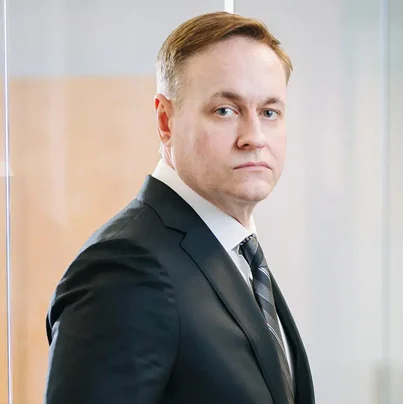
Aaron A. Herbert is a Texas attorney, Board Certified in Personal Injury Trial Law by the Texas Board of Legal Specialization.
For over a decade he has shown an unwavering commitment to clients who were seriously injured by major accidents and industrial catastrophes. During that time he has earned the reputation as one of America’s most aggressive trial lawyers by achieving noteworthy recoveries from judges and juries, as well as substantial settlements prior to trial, the majority of which contained negotiated confidentiality agreements at the request of the defense. When asked about these cases, Mr. Herbert has said that each case not only justified the recovery level, but that no one would trade places with any one of these victims in return for any amount of money, once they know the facts and severity of the injuries and tragedy involved. According to Mr. Herbert, “there can be no substitute for passion, preparation and persistence in the practice of law”. He is known not only for this tenacious preparation, but also for his imagination in the courtroom. He is passionate and persistent in seeking to obtain the maximum case value for each individual client at trial or through settlement, while reducing the stress of litigation on his clients. Born and raised in Dallas, Texas, Mr. Herbert enlisted in the United States Marine Corps after high school and later received an Honorable Discharge. After the Marines, he obtained a Bachelor of Science in Criminal Justice from Texas A&M University, then a Juris Doctorate from the University of Oklahoma College of Law. There he graduated in the top of his class and became an eternal Sooners Football fan. Aaron has worked as a zealous advocate for injured clients at several boutique personal injury litigation firms where he amassed numerous jury verdicts. After spending a year as the top earning litigation attorney at a firm that frequently tops verdict search as one with the highest number of trial wins in Texas, Aaron accepted a position as a the managing pre-litigation attorney at another Dallas personal injury firm. Over the next seven years he transitioned to the managing litigation attorney, and that firm grew to one of the largest personal injury firms in Dallas. In 2010 he formed the Law Firm of Aaron A. Herbert, to get back to a focus on developing each individual case and maximizing case value for each client. Mr. Herbert practices law with the belief that a well taken care of, highly engaged and motivated team of employees working in a cooperative team environment will result in superior representation and great results for the firm clients. He believes in always setting a goal of achieving the best possible results for each and every client.
Education
Texas A&M University (B.S. Criminal Justice, 1999)
University of Oklahoma College of Law (J.D., 2002)
Professional Associations
Licensed to practice in Texas (2002)
Board Certified in Personal Injury Trial Law – Texas Board of Legal Specialization (2008)
Member
State Bar of Texas
American Bar Association
American Trial Lawyer Association
Texas Trial Lawyers Association
Dallas Trial Lawyers Association
Dallas County Bar Association
Tarrant County Bar Association
Million Dollar Advocates Forum
Nation Trial Lawyers – Top 100 Trial Lawyers
Publications
Litigating Dog Bite Cases, Texas Dog Law Seminar, Dallas 2009