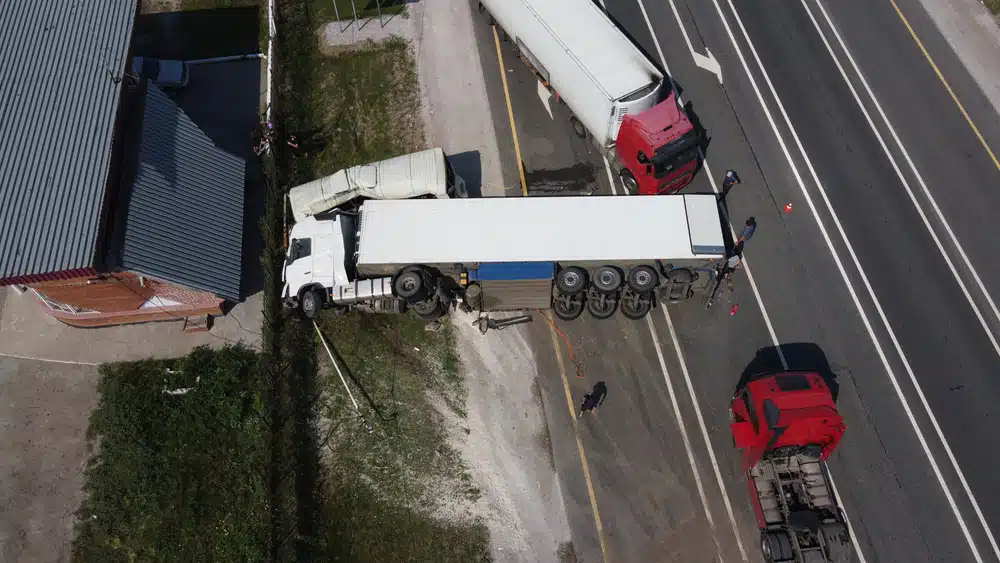
Most people assume a truck accident happens because of a momentary lapse in judgment. A driver sneezes, looks at a billboard, or misjudges a braking distance. However, many catastrophic crashes on Texas highways stem from deliberate choices made by trucking corporations to prioritize profit over human life, something a Dallas truck accident lawyer often uncovers during an investigation.
When a company knowingly violates federal safety rules to move cargo faster, it stops acting as an accidental actor and becomes a reckless endangerer. Turning FMCSA safety violations into punitive damages requires proving that the trucking company knew the risk and chose to ignore it anyway.
Texas law provides a mechanism to punish this specific type of behavior. While standard compensation covers your medical bills and lost wages, punitive damages exist to punish the wrongdoer.
These damages send a message to the entire trucking industry that safety regulations remain mandatory rather than optional. We dig deep into the company history and operational practices to find the evidence that transforms a standard negligence case into a high-stakes battle for justice.
Fast Facts
- Gross Negligence Standard: Punitive damages require proving gross negligence, meaning the company showed a conscious indifference to the rights and safety of others.
- Federal Regulations: The Federal Motor Carrier Safety Administration sets the baseline for safety, and knowing violations often serve as the foundation for punitive claims.
- Intentional Misconduct: Evidence must show the company or driver knew about the danger but proceeded anyway, distinguishing malice from simple mistakes.
- Corporate Complicity: Management pushing drivers to break Hours of Service rules implicates the company directly, opening the door to higher penalties.
- Higher Burden of Proof: You must prove gross negligence by clear and convincing evidence, a higher standard than the preponderance of the evidence used for standard negligence.
- Punitive Leverage: Establishing a strong case for punitive damages forces insurance companies to offer higher settlements to avoid the risk of a massive jury verdict.
Moving From Simple Negligence to Gross Negligence
Standard negligence involves carelessness. A driver merging without checking a blind spot commits negligence. They did not mean to hurt anyone, but they failed to act safely. Gross negligence involves a higher level of culpability.
Texas law defines it as an act or omission involving an extreme degree of risk, of which the actor had actual, subjective awareness, but proceeded with conscious indifference.
Bridging the gap between a mistake and a complete lack of care requires specific proof.
The Subjective Awareness Test
We must prove the trucking company knew its actions created danger. A mechanic reporting that the brakes on a truck failed inspection creates subjective awareness if the dispatch manager sends that truck out on a run anyway. They knew the risk existed.
Conscious Indifference
We must then prove they did not care. Sending that truck with bad brakes onto the LBJ Freeway demonstrates conscious indifference. The manager decided the profit from the load mattered more than the lives of the families driving next to that truck. This specific mental state triggers the potential for punitive damages.
The Clear and Convincing Standard
Civil courts usually require a preponderance of the evidence, meaning the defendant likely caused the harm. Punitive damages require clear and convincing evidence. The jury must hold a firm belief or conviction that the allegations represent the truth. Building a case to meet this standard demands a rigorous investigation into internal company communications and data.
FMCSA Violations That Signal Gross Negligence
The FMCSA creates rules to prevent crashes. Companies invite disaster when they treat these rules as suggestions. Certain violations reveal gross negligence more clearly than others because they involve deliberate planning, something truck accident lawyers often uncover during an investigation.
Hours of Service Manipulation
Fatigue kills. Federal law limits driving time to prevent exhaustion.
- The Violation: A company forces a driver to drive 16 hours straight to meet a hot delivery window.
- The Evidence: Dispatch logs show the deadline was impossible to meet legally. Emails show the driver complaining about fatigue and the manager threatening to fire them if they stopped.
- The Argument: The company chose to gamble with public safety to make a delivery fee. This represents a business decision to break the law rather than an accident.
Ignoring Maintenance Red Flags
Trucks require constant upkeep.
- The Violation: Failing to replace bald tires or fix a leaking air brake system.
- The Evidence: Driver Vehicle Inspection Reports show the driver flagged the issue three weeks ago. Maintenance records show the shop signed off on the truck without buying new parts.
- The Argument: The company saved money on repairs by risking a blowout that could kill a family. This financial calculation constitutes gross negligence.
Hiring Unqualified Drivers
Companies must vet their drivers.
- The Violation: Hiring a driver with a suspended license or a history of DWI.
- The Evidence: The Driver Qualification File lacks a background check, or the background check sits in the file with red flags ignored.
- The Argument: Putting a known dangerous driver behind the wheel of an 80,000-pound weapon demonstrates a total lack of regard for public safety.
Using Punitive Leverage to Maximize Settlements
We use a strategy called punitive leverage to increase the value of your case without necessarily going to trial. Insurance companies exist to manage risk. They hate uncertainty. A standard negligence case carries a predictable value, and a truck accident lawyer in Dallas can help you use this strategy to strengthen your claim.
A gross negligence case carries the potential for a runaway jury verdict that could cost them millions.
Discovering evidence of gross negligence changes the negotiation dynamic. We show the insurance company that we possess the clear and convincing evidence needed to secure punitive damages. This creates fear.
The insurance carrier realizes that if they take the case to court, a jury might punish their client severely. Avoiding this risk leads the insurance company to pay a premium on the compensatory damages.
They pay more for your medical bills, pain, and suffering just to settle the case and make the punitive claim disappear. This leverage allows us to secure maximum compensation for you while avoiding the delays of a trial.
The threat of the hammer often works better than swinging the hammer itself.
The Corporate Culture of Non-Compliance
Gross negligence rarely happens in a vacuum. It usually rots from the head down. We investigate the corporate culture to see if safety violations represent the rule rather than the exception. We look for a pattern of behavior suggesting the company views FMCSA fines as merely the cost of doing business, which can strengthen a truck accident claim.
Training and Supervision Failures
Companies that fail to train drivers on safety protocols set them up to fail. Finding that the company holds no safety meetings, lacks a disciplinary process for bad drivers, and provides no ongoing training allows us to argue that the company fostered a dangerous environment. Lack of supervision proves they did not care if their drivers followed the law.
Incentivizing Bad Behavior
Pay structures often reveal true priorities. Companies actively encourage negligence by paying bonuses for speed but penalizing drivers for safety delays. We analyze the payroll records to see if the company financially rewarded the exact behavior that caused your crash.
Prior Violations and Audits
We pull the company safety rating and the history of DOT audits. FMCSA warnings about bad brakes six months prior prove conscious indifference if the company did nothing to fix the fleet. They received a warning and chose to ignore it.
Investigating the Paper Trail
Trucking companies generate mountains of data. Finding the evidence of gross negligence requires sifting through terabytes of digital information and filing cabinets full of paper. We know exactly what to ask for during the discovery process.
We demand these specific documents:
- Qualcomm Messages: These text messages between the driver and dispatch often contain the smoking gun. We look for messages ordering drivers to ignore logs or speed up.
- Electronic Control Module Data: The black box shows how the truck operated. Consistently high speeds or erratic braking can show a pattern of reckless driving that the company should have monitored.
- Deposition Testimony: We put safety directors and corporate executives under oath. We ask them specific questions about their knowledge of the regulations. Admitting they lacked knowledge of the rules, or knew them and ignored them, provides our evidence.
- Financial Records: We look at the maintenance budget. A sudden cut in the maintenance budget that correlates with a spike in breakdowns suggests the company stripped safety funding to boost profits.
Why Insurance Companies Fear Punitive Damages
Insurance policies work to cover accidents. They do not cover crimes or willful acts of recklessness. Policies frequently exclude coverage for punitive damages, meaning the trucking company would have to pay that money out of its own bank account when common truck accident injuries result from such reckless conduct.
This exclusion creates a conflict of interest letter from the insurance company to the trucking company. It scares the trucking company executives. They realize their personal assets and corporate fleets sit at risk.
Leverage in Settlement Negotiations
We use the threat of punitive damages as a lever. Presenting clear and convincing evidence of gross negligence during mediation often forces the insurance company to pay a premium on the compensatory damages just to make the punitive damages claim go away.
They pay more to avoid the risk of a jury getting angry and hitting them with a massive verdict.
Reputation Risk
Publicly traded trucking companies or large logistics firms hate the publicity of a punitive damages verdict. It signals to their investors and customers that they run an unsafe operation. Settling quietly often matters more to them than the money itself in a truck accident case.
FAQs: Punitive Damages in Trucking Cases
Can I get punitive damages in every truck accident case?
No. Punitive damages apply only to cases involving gross negligence, malice, or fraud. Most accidents result from simple negligence. We must find evidence of extreme risk and conscious indifference to pursue these damages. We evaluate every case to see if this evidence exists.
Does the driver or the company pay the punitive damages?
Usually, the company pays. While the driver committed the act, the company acts as the employer. Under the theory of respondeat superior, the employer answers for the employee. Proving the company committed independent acts of gross negligence like bad hiring or forced dispatch makes the company directly liable.
Will the insurance company pay for punitive damages?
It depends on the specific language of the insurance policy and Texas law. Some policies exclude punitive damages. However, even if the policy excludes them, the threat of a punitive verdict usually forces the insurer to offer a higher settlement for the covered damages to protect their client from personal financial ruin.
How long does a punitive damages case take?
These cases often take longer than simple fender benders. They require extensive discovery, depositions of corporate officers, and expert analysis. We must build a mountain of evidence to meet the clear and convincing standard. However, the potential recovery justifies the extra time and effort.
What happens if the trucking company files for bankruptcy?
Trucking companies sometimes file for bankruptcy to avoid paying judgments. However, large commercial carriers usually have substantial insurance policies that remain valid even in bankruptcy. We also look for other liable parties, such as the logistics broker or the manufacturer, to ensure you get paid.
Contact The Law Firm of Aaron A. Herbert, P.C.
Trucking companies believe they possess too much power to fail. They think they can cut corners, ignore safety rules, and pay off victims with small settlements. The Law Firm of Aaron A. Herbert, P.C. exists to prove them wrong. We fight to turn their safety violations into justice for your family.
Our board-certified legal team knows how to find the evidence of gross negligence that others miss. We act quickly to preserve data and demand answers from corporate executives. Located in North Dallas on the LBJ Freeway, we stand ready to fight for you.
Call us today to discuss your case. We charge no fees unless we win. Se habla español.

ABOUT THE ATTORNEY
Aaron A. Herbert
Founding Attorney
Board Certified in Personal Injury Trial Law
Aaron founded The Law Firm of Aaron A. Herbert in 2010 to focus on developing each client's case and seeking its maximum value. For over a decade, he has represented people seriously injured in major accidents and industrial catastrophes, pursuing trial verdicts and settlements while working to reduce the stress of litigation.
Education
- Texas A&M University · B.S., Criminal Justice, 1999
- University of Oklahoma College of Law · J.D., 2002; graduated in the top of his class
Trial experience & approach
Aaron earned numerous jury verdicts at boutique personal injury litigation firms. According to his biography, he spent a year as the top-earning litigation attorney at a firm that frequently appeared in verdict searches as having one of the highest numbers of trial wins in Texas. At another Dallas personal injury firm, he moved from managing pre-litigation attorney to managing litigation attorney over seven years as the firm grew into one of Dallas's largest personal injury firms.
His biography describes a reputation as one of America's most aggressive trial lawyers, with noteworthy recoveries from judges and juries and substantial pretrial settlements. Most of those settlements included confidentiality agreements requested by the defense. Aaron has said the recoveries were justified by the injuries and losses involved, which no amount of money could make someone choose to experience.
His approach combines passion, preparation, persistence and courtroom imagination. He believes a well-supported, engaged and motivated team working cooperatively helps deliver strong representation, with the goal of achieving the best possible result for every client.
Dallas roots, military service & publication
Born and raised in Dallas, Aaron enlisted in the United States Marine Corps after high school and later received an Honorable Discharge. He completed his university and law degrees after his military service and became a lifelong Sooners football fan in law school.
Publication: “Litigating Dog Bite Cases,” Texas Dog Law Seminar, Dallas, 2009.
Professional affiliations & recognition
Professional affiliations and recognition listed in Aaron’s biography:
- State Bar of Texas
- American Bar Association
- Association of Trial Lawyers of America (now American Association for Justice)
- Texas Trial Lawyers Association
- Dallas Trial Lawyers Association
- Dallas Bar Association
- Tarrant County Bar Association
- Million Dollar Advocates Forum
- The National Trial Lawyers – Top 100 Trial Lawyers
Trial experience & approach
Aaron earned numerous jury verdicts at boutique personal injury litigation firms. According to his biography, he spent a year as the top-earning litigation attorney at a firm that frequently appeared in verdict searches as having one of the highest numbers of trial wins in Texas. At another Dallas personal injury firm, he moved from managing pre-litigation attorney to managing litigation attorney over seven years as the firm grew into one of Dallas's largest personal injury firms.
His biography describes a reputation as one of America's most aggressive trial lawyers, with noteworthy recoveries from judges and juries and substantial pretrial settlements. Most of those settlements included confidentiality agreements requested by the defense. Aaron has said the recoveries were justified by the injuries and losses involved, which no amount of money could make someone choose to experience.
His approach combines passion, preparation, persistence and courtroom imagination. He believes a well-supported, engaged and motivated team working cooperatively helps deliver strong representation, with the goal of achieving the best possible result for every client.
Dallas roots, military service & publication
Born and raised in Dallas, Aaron enlisted in the United States Marine Corps after high school and later received an Honorable Discharge. He completed his university and law degrees after his military service and became a lifelong Sooners football fan in law school.
Publication: “Litigating Dog Bite Cases,” Texas Dog Law Seminar, Dallas, 2009.
Professional affiliations & recognition
Professional affiliations and recognition listed in Aaron’s biography:
- State Bar of Texas
- American Bar Association
- Association of Trial Lawyers of America (now American Association for Justice)
- Texas Trial Lawyers Association
- Dallas Trial Lawyers Association
- Dallas Bar Association
- Tarrant County Bar Association
- Million Dollar Advocates Forum
- The National Trial Lawyers – Top 100 Trial Lawyers